Robotic Surgery: How It Works and When It May Help
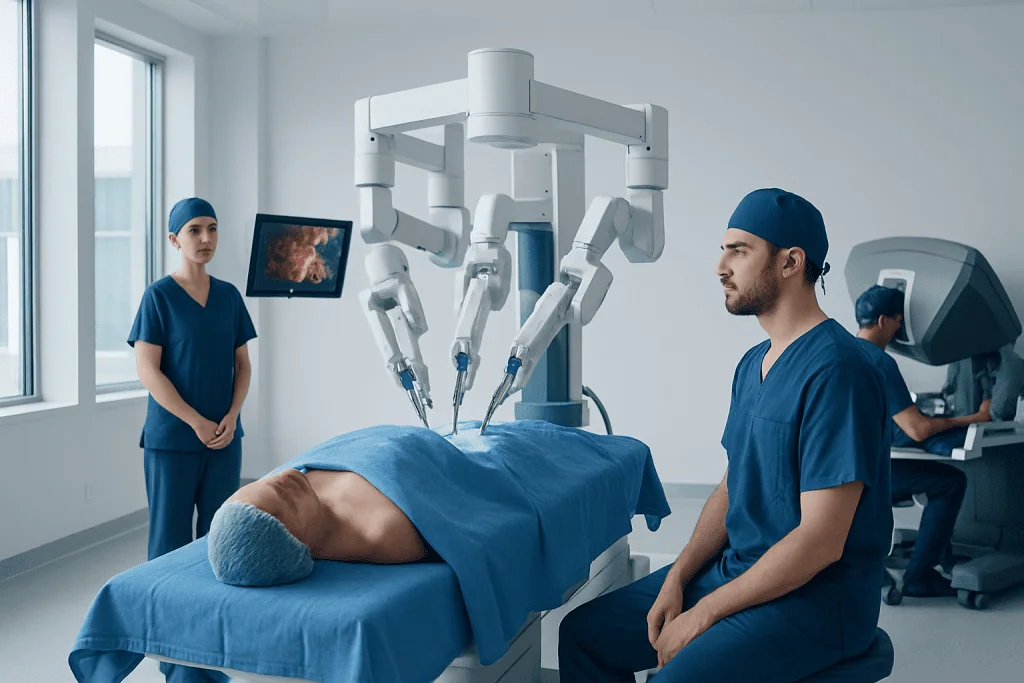
Robotic surgery is not performed by a robot alone; the surgeon controls every movement of the instruments. It may help in selected urologic, gynecologic, colorectal, thoracic, bariatric, orthopedic, and other procedures.
Key Takeaways
- Robotic surgery is not performed by a robot alone; the surgeon controls every movement of the instruments.
- It may help in selected urologic, gynecologic, colorectal, thoracic, bariatric, orthopedic, and other procedures.
- Potential benefits include smaller incisions, improved precision, less blood loss in some operations, and a smoother recovery for some patients.
- Robotic surgery is still surgery, with risks such as bleeding, infection, anesthesia complications, and possible conversion to open surgery.
- Patients should ask about alternatives, the surgeon’s experience, expected recovery, and whether robotic surgery is appropriate for their individual case.
Robotic surgery is a form of minimally invasive surgery in which a trained surgeon controls robotic instruments from a console. It may offer advantages for selected procedures, but the best choice depends on the condition, the patient’s health, and the surgical team’s experience.
Overview
Robotic surgery, also called robot-assisted surgery, is a surgical technique that allows a surgeon to perform an operation using computer-guided instruments. The surgeon sits at a console and controls robotic arms that hold a camera and small surgical instruments. The robot does not make decisions or operate independently; it follows the surgeon’s hand movements in real time.
Most robotic procedures are performed through small incisions, similar to laparoscopic surgery. A high-definition, three-dimensional camera provides a magnified view of the surgical area, while the instruments can bend and rotate in ways that may be difficult with standard straight instruments. This can be useful in narrow or delicate areas of the body.
Robotic surgery is one option among several surgical approaches. Depending on the procedure, a patient may be offered open surgery, conventional laparoscopy, endoscopic techniques, or a non-surgical treatment. The most appropriate choice depends on the diagnosis, the patient’s overall health, the surgeon’s expertise, and the expected benefits and risks.
How Robotic Surgery Works
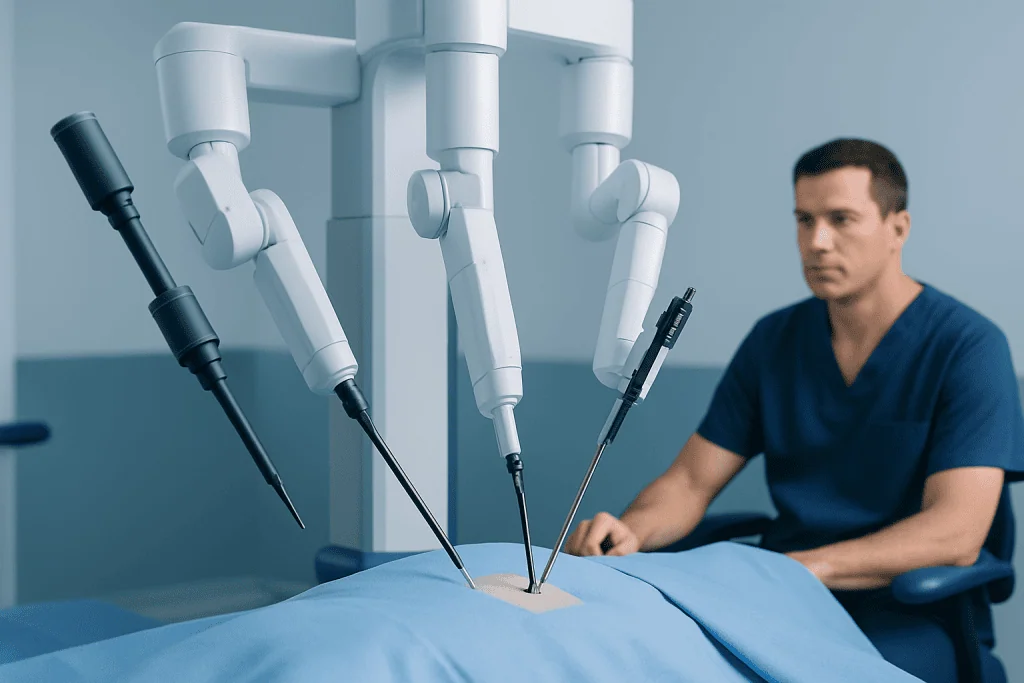
During robotic surgery, the patient is positioned on the operating table under the care of an anesthesia team. After anesthesia is given, the surgeon makes small incisions and places ports through which the camera and instruments enter the body. Carbon dioxide gas may be used in many abdominal or pelvic procedures to create space for safe visualization and movement.
The surgeon then operates from a nearby console, using hand controls and foot pedals. The robotic system translates the surgeon’s movements into precise movements of the instruments inside the body. The system may filter natural hand tremor and allow fine movements in confined spaces, but it remains fully under the surgeon’s control.
A trained operating room team assists throughout the procedure. This team may include an assistant surgeon, scrub nurses, circulating nurses, anesthesiologists, and technicians. They help position instruments, monitor the patient, manage equipment, and respond quickly if the surgical plan needs to change.
When Robotic Surgery May Help

Robotic surgery may be considered when minimally invasive access is appropriate and the robotic platform offers a practical advantage. It is often used in areas where precision, visibility, and instrument mobility are especially important. However, not every patient or procedure benefits from a robotic approach.
Common fields where robot-assisted surgery may be used include:
- Urology: prostate surgery, kidney surgery, and selected bladder procedures.
- Gynecology: hysterectomy, fibroid surgery, endometriosis surgery, and pelvic floor procedures.
- General and colorectal surgery: hernia repair, gallbladder procedures in selected cases, colon and rectal surgery.
- Thoracic surgery: selected lung, mediastinal, and esophageal procedures.
- Bariatric surgery: selected weight-loss operations and complex revisional procedures.
- Orthopedics: some robotic-assisted joint replacement systems help plan and guide bone preparation.
The decision is individualized. For example, a person with extensive prior abdominal surgery, severe scar tissue, advanced disease, or certain heart and lung conditions may need a different approach. A careful preoperative evaluation helps determine whether robotic surgery is safe and likely to be useful.
Potential Benefits
For selected patients, robotic surgery may offer benefits similar to or sometimes greater than conventional minimally invasive surgery. Smaller incisions can mean less tissue disruption than open surgery. In some procedures, this may be associated with less blood loss, reduced postoperative pain, shorter hospital stay, and faster return to daily activities.
The surgeon may also benefit from improved visualization and instrument flexibility. The magnified 3D view can help identify small structures such as nerves, blood vessels, and tissue planes. The wristed instruments can make suturing and dissection easier in deep or narrow spaces, such as the pelvis.
It is important to understand that these benefits are not guaranteed. Outcomes depend on the patient’s condition, the complexity of the operation, the surgical team’s experience, and the quality of postoperative care. In some situations, standard laparoscopy or open surgery may be equally effective or safer.
Risks and Limitations
Robotic surgery is still a surgical procedure and carries general surgical risks. These may include bleeding, infection, blood clots, injury to nearby organs or tissues, anesthesia-related complications, and pain after surgery. The specific risks vary according to the operation being performed and the patient’s health status.
There are also practical limitations. Robotic surgery may take longer in some cases, especially during complex procedures or when setup time is included. Equipment issues are uncommon but possible, and the team must be prepared to continue safely using another method if needed. In some operations, the surgeon may decide to convert to laparoscopic or open surgery to protect the patient’s safety.
Robotic surgery is not automatically the most advanced or best choice for every patient. A well-performed operation using the most suitable technique is more important than the technology itself. Patients should feel comfortable asking why a robotic approach is recommended and what alternatives are available.
Preparing for a Robotic Procedure
Preparation is similar to other types of surgery. The patient usually has a preoperative assessment that may include blood tests, imaging, electrocardiogram, medication review, and evaluation by anesthesia specialists. The surgical team explains the planned operation, expected recovery, possible risks, and what to do before arriving at the hospital.
Patients should tell their doctor about all medications, supplements, allergies, prior surgeries, and medical conditions such as diabetes, heart disease, lung disease, kidney disease, or bleeding disorders. Some medicines, especially blood thinners, may need special instructions. Patients should not stop prescribed medication unless a qualified doctor advises them to do so.
Helpful questions to ask before robotic surgery include:
- Why is robotic surgery recommended for this condition?
- What are the alternatives, including non-surgical options?
- How many similar procedures has the surgical team performed?
- What are the main risks in this individual case?
- How long is the expected hospital stay and recovery period?
- What symptoms after surgery should prompt urgent medical advice?
Recovery and Self-Care After Robotic Surgery
Recovery varies widely depending on the type of surgery, the patient’s age and health, and whether any complications occur. Many patients are encouraged to walk soon after surgery, as gentle movement can support circulation and reduce the risk of blood clots. Pain is usually managed with a plan tailored to the procedure and the patient’s needs.
After discharge, patients may receive instructions about wound care, bathing, diet, activity limits, breathing exercises, medication use, and follow-up visits. Even when incisions are small, internal healing takes time. Patients should avoid lifting, strenuous exercise, driving, or returning to work until their medical team confirms it is safe.
It is important to contact a doctor if symptoms such as increasing pain, fever, wound redness or drainage, shortness of breath, chest pain, leg swelling, persistent vomiting, heavy bleeding, or difficulty urinating occur. These symptoms do not always mean there is a serious problem, but they should be assessed promptly.
When to See a Doctor
A person may wish to discuss robotic surgery with a doctor if they have been diagnosed with a condition that may require an operation and want to understand all suitable treatment options. A surgeon can explain whether robotic, laparoscopic, open, endoscopic, or non-surgical care is most appropriate.
Patients should seek a second opinion if they feel uncertain, if more than one surgical approach is possible, or if the expected benefits and risks are not clear. Shared decision-making is important: the patient’s priorities, recovery needs, medical history, and personal preferences should be considered alongside clinical recommendations.
Acibadem International’s multidisciplinary specialists and JCI-accredited hospitals diagnose and treat a wide range of conditions, including those for which robotic surgery may be considered, for international patients. The decision to use robotic technology is made after individual evaluation and discussion with the care team.
Frequently asked questions
Is robotic surgery performed by a robot or by a surgeon?
Robotic surgery is performed by a trained surgeon using robotic instruments. The robot does not operate on its own, make decisions, or replace the surgeon. The system translates the surgeon’s hand movements into precise instrument movements inside the body.
Is robotic surgery safer than open surgery?
Robotic surgery may reduce certain risks for selected procedures, such as larger incisions or greater blood loss, but it is not always safer for every patient. Safety depends on the diagnosis, surgical complexity, the patient’s health, and the team’s experience. A surgeon can compare the expected risks of robotic, laparoscopic, and open approaches for the individual case.
Will recovery be faster after robotic surgery?
Some patients recover faster after robotic or other minimally invasive procedures than after open surgery. Smaller incisions may help reduce discomfort and shorten hospital stay in selected cases. However, recovery also depends on the type of operation and the healing of internal tissues, so patients should follow their doctor’s activity instructions.
Can robotic surgery be used for cancer operations?
Robotic surgery can be used for selected cancer operations, including some prostate, kidney, gynecologic, colorectal, and thoracic procedures. The main goal is always safe and effective cancer treatment, including appropriate removal of the tumor and staging when needed. Suitability depends on cancer type, stage, location, and the patient’s overall condition.
What happens if the robotic system cannot be used during surgery?
Surgical teams are trained to manage unexpected situations. If needed, the surgeon may continue with conventional laparoscopy or convert to open surgery. Conversion is not a failure; it is a safety decision made to complete the operation in the best way for the patient.
How should a patient choose a robotic surgeon?
Patients should ask about the surgeon’s training, experience with the specific procedure, expected outcomes, and possible complications. It is also reasonable to ask how the hospital supports robotic surgery, including anesthesia, nursing, intensive care, and emergency readiness. The best choice is usually a team that can explain the options clearly and recommend the safest approach for the individual patient.
References
- American College of Surgeons
- Society of American Gastrointestinal and Endoscopic Surgeons
- U.S. Food and Drug Administration
- European Association of Urology
- American Society of Anesthesiologists
This article is for general information only and is not a substitute for professional medical advice. Please consult a qualified doctor about your individual situation.
Explore treatments in Turkey — costs, top hospitals & a free quote
JCI-accredited · board-certified surgeons · reply within 24h