

Sleep Apnea Symptoms: The Night-Time Signs Your Partner Notices First
Key Takeaways
- Witnessed breathing pauses — silences of 10 seconds or more ending in a snort or gasp — are the most telling sleep apnea symptom, more specific than snoring alone.
- Severe sleep apnea means 30 or more breathing interruptions per hour, yet the brief arousals that restart breathing are rarely remembered by the sleeper.
- Sleep apnea can occur without loud snoring, especially in women, whose symptoms more often surface as insomnia, fatigue, and morning headaches.
- Untreated obstructive sleep apnea is linked to high blood pressure, atrial fibrillation, stroke, and type 2 diabetes — and it multiplies drowsy-driving crash risk immediately.
- Many adults can now be diagnosed with a home sleep test worn in their own bed; the key result is the AHI, with 5–15 events per hour classed as mild and 30+ as severe.
- Alcohol within a few hours of bedtime and back-sleeping both measurably worsen airway collapse, while losing around 10% of body weight can meaningfully cut nightly events.
Quick Answer
The most telling sign of sleep apnea is witnessed pauses in breathing: loud snoring interrupted by silences of ten seconds or more, followed by a snort, gasp, or choking sound as breathing restarts. Because the sleeper is usually unaware of these episodes, a bed partner is often the first to notice. Daytime clues include severe sleepiness, morning headaches, dry mouth, and irritability. Repeated witnessed pauses warrant asking a doctor about a sleep study.
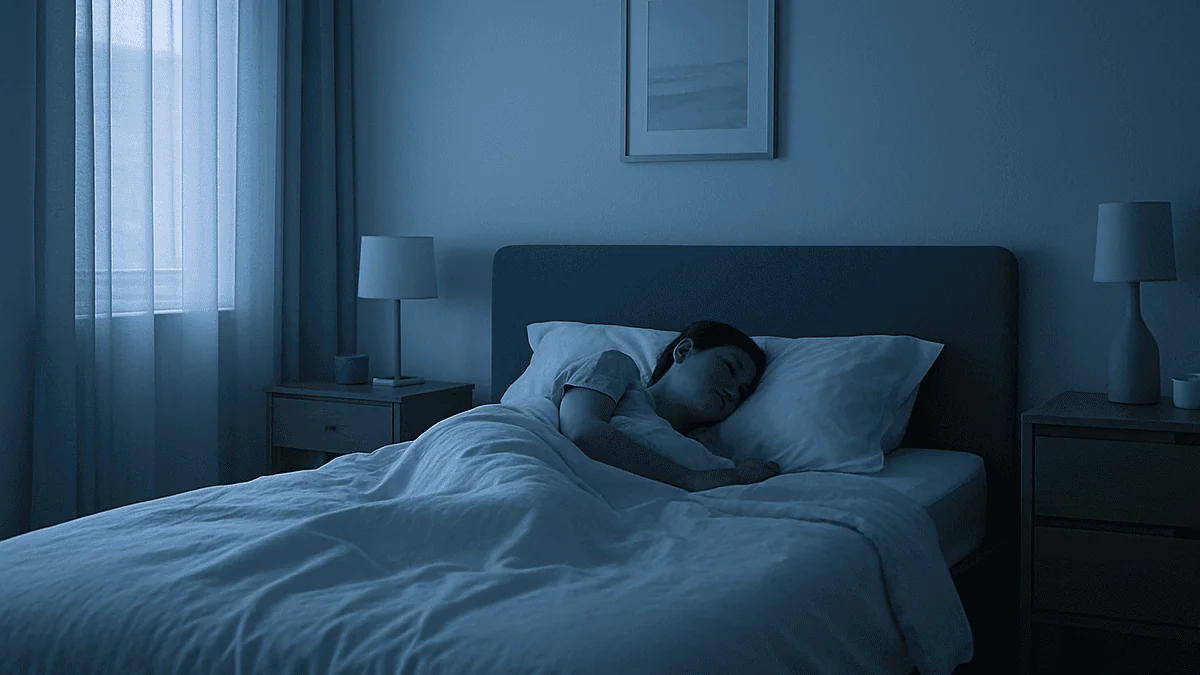
It usually starts with an elbow to the ribs at 2 a.m. “You stopped breathing. Again.” The person delivering that message is often the most accurate screening tool sleep apnea has — because the person with the condition sleeps through nearly all of it.
The classic sleep apnea symptoms come in two shifts. At night: loud snoring broken by eerie silences, then a snort or gasp as breathing restarts, sometimes dozens of times an hour. By day: crushing sleepiness, morning headaches, a dry mouth, and a fuse that seems shorter than it used to be. The most telling sign of all — breathing that visibly stops during sleep — is almost always reported by someone else.
This guide walks through what a bed partner actually sees and hears, what causes it, what the evidence says happens if it goes untreated, and when a sleep study is worth requesting.
What is the most telling symptom of sleep apnea?
Witnessed pauses in breathing. Snoring gets the headlines, but plenty of people snore without sleep apnea. What separates the two is the stop-and-restart pattern: breathing halts for ten seconds or longer, then resumes with a snort, gasp, or choking sound. When another person reports seeing that happen, sleep specialists take it seriously — the Mayo Clinic lists these witnessed episodes among the defining symptoms of the condition.
Here is the mechanism behind that unsettling silence. In obstructive sleep apnea, the muscles of the throat relax during sleep and the airway narrows or collapses — the tongue and soft palate essentially fall backward and block the pipe. Airflow stops even though the chest keeps trying to pull air in. Blood oxygen dips. The brain registers the emergency and triggers a micro-arousal, just enough to tighten the throat muscles and reopen the airway. Cue the gasp. Then sleep resumes, the muscles relax, and the cycle starts over.
In severe cases, this loop repeats 30 or more times every hour, all night long. That means someone with severe sleep apnea may experience hundreds of oxygen dips and brain arousals before breakfast — and remember none of them. The pauses matter more than the volume of the snoring, which is exactly why the quiet moments are what a partner should pay attention to.
Why your bed partner notices before you do
There is a cruel asymmetry to this condition: the arousals that rescue your breathing are usually too brief to form a memory. The brain surfaces for a few seconds — enough to reopen the airway — then sinks back under. People with significant sleep apnea routinely insist they slept straight through the night, while the person beside them describes a soundscape of sawing, silence, and gasping.
This is why the medical intake for suspected sleep apnea so often involves two chairs, not one. A partner can answer questions the patient genuinely cannot: How long do the pauses last? Does he gasp or choke? Does she thrash, sweat, or wake up multiple times? Sleep clinics have relied on this second-hand testimony for decades because it works.
The partner pays a price, too. Sharing a bed with untreated sleep apnea can mean losing an hour or more of your own sleep to noise and worry — some couples end up in separate rooms, which quietly removes the one witness the condition had. If that has happened in your household, the snoring did not stop; the reporting did.
No partner? A smartphone works. Record audio for a night or two, or set a camera facing the bed. Several minutes of recorded crescendo-snore-silence-gasp is remarkably persuasive evidence to bring to an appointment.
The night-time signs: what sleep apnea actually sounds and looks like
Ask sleep technologists what obstructive apnea sounds like, and they describe a rhythm rather than a noise. The snoring builds — louder, more labored — as the airway progressively narrows. Then it cuts out entirely. Ten seconds pass, sometimes twenty or thirty. The silence ends abruptly with a snort, gasp, or choking sound, and the cycle rebuilds.
Beyond the soundtrack, the NHS and Cleveland Clinic describe a cluster of overnight signs worth logging:
- Waking with a gasping or choking sensation, sometimes with a racing heart
- Restless, thrashing sleep — sheets in a knot by morning
- Night sweats without an obvious cause
- Waking repeatedly to urinate (the pressure swings and hormonal shifts of disrupted breathing increase night-time urine production)
- A dry mouth or sore throat on waking, the residue of hours of open-mouth breathing
None of these signs is specific on its own. Nocturia has a dozen possible causes; so do night sweats. But when several show up together — especially alongside witnessed pauses — the pattern points somewhere specific. A useful habit: keep a two-week note on your phone. Frequency and clustering are exactly what a clinician wants to see, and “it happens most nights” carries far more weight than “sometimes, I think.”
Is it just snoring? How to tell the difference
Roughly half of adults snore at least occasionally, and most of them do not have sleep apnea. Simple snoring — clinicians call it primary snoring — is turbulence: air vibrating relaxed tissue on its way through. Annoying, yes. Dangerous, usually not. Sleep apnea is obstruction: the air stops moving altogether. The distinction matters because one is a nuisance and the other is a treatable medical condition with cardiovascular consequences.
| Simple snoring | Likely sleep apnea | |
|---|---|---|
| Sound pattern | Steady, continuous | Builds, stops, then a gasp or snort |
| Breathing pauses | None observed | Silences of 10+ seconds, witnessed |
| Daytime sleepiness | Minimal | Dozing in meetings, at lights, on the couch by 8 p.m. |
| Morning state | Generally refreshed | Headache, dry mouth, unrefreshed after a full night |
| What it warrants | Monitoring; positional tweaks | A conversation with a doctor and possibly a sleep study |
Two caveats keep this table honest. First, loud nightly snoring alone — even without witnessed pauses — is worth mentioning to a doctor if it comes with any daytime symptoms. Second, the absence of snoring does not rule sleep apnea out, a point that matters enough to get its own sections below. The table is a starting filter, not a verdict.
The daytime clues people blame on everything else
Sleep apnea’s daytime symptoms rarely announce themselves as a breathing problem. They masquerade as personality, workload, or age — which is a big reason estimates consistently suggest most people with the condition remain undiagnosed.
Excessive daytime sleepiness leads the list. Not garden-variety tiredness, but the kind where you nod off during a conference call, in front of the television by mid-evening, or — most dangerously — behind the wheel at a red light. The physiology is straightforward: a brain aroused dozens of times per hour never completes the deep, restorative sleep stages, no matter how many hours you log in bed.
Morning headaches are another signature, typically a dull, pressing ache across the forehead that fades within an hour or two of waking. Repeated breathing pauses let carbon dioxide accumulate overnight, dilating blood vessels in the head; the headache is the receipt.
Then come the quieter costs the Mayo Clinic and Cleveland Clinic document: trouble concentrating, forgetfulness, irritability, low mood, and reduced interest in sex. People attribute these to stress, a demanding job, or simply getting older. Sometimes that is exactly what they are. But when they travel together — and especially when they share a bed with loud, interrupted snoring — the common thread is worth pulling. Fragmented sleep degrades nearly every daytime system it touches, and the person experiencing it is often the last to connect the dots.
What are the causes of sleep apnea?
Obstructive sleep apnea, by far the more common form, comes down to a mismatch: a throat that is too narrow, too crowded, or too floppy to stay open once its muscles relax in sleep. Several factors can create that mismatch, and most people with the condition have more than one.
Anatomy sets the stage. A naturally narrow airway, large tonsils or adenoids, a large tongue, a thick neck, chronic nasal congestion, or a recessed lower jaw all reduce the margin for error. Much of this is inherited, which is why sleep apnea runs in families.
Excess body weight is the most significant modifiable factor. Fat deposits around the upper airway narrow the passage from the outside, and extra tissue in the tongue and throat crowds it from within. This is a mechanical relationship, not a moral one — and it also means the condition is far from exclusive to people with higher body weight. Plenty of lean people have sleep apnea on anatomy alone.
Behavior and biology fill out the picture. Alcohol and sedating medicines deepen muscle relaxation in the throat, making collapse more likely — a nightcap can measurably worsen the night’s numbers. Smoking inflames and swells airway tissue. Age loosens muscle tone throughout the body, throat included, which is one reason prevalence climbs through midlife. Sleeping on your back lets gravity pull the tongue toward the airway, stacking the deck further.
Obstructive vs. central sleep apnea: two different problems
Not all sleep apnea is a plumbing problem. In central sleep apnea, the airway stays open — the brain simply fails to send the signal to breathe. The chest goes still, no effort, no struggle, until the signal resumes. It is a wiring issue rather than a blockage, and it changes both the symptoms and the workup.
The bedside picture differs in telling ways. People with central sleep apnea are less likely to snore loudly, since air is not fighting through a narrowed passage. Partners may describe stretches where breathing simply fades out and back — sometimes in a distinctive waxing-and-waning rhythm called Cheyne-Stokes breathing. The person may wake short of breath or struggle with insomnia rather than sheer sleepiness.
Context matters for this type. The NIH’s National Heart, Lung, and Blood Institute notes that central sleep apnea most often appears alongside other conditions — heart failure and prior stroke are the classic associations — and can also occur with some prescription pain medicines or at high altitude. It is considerably rarer than the obstructive form.
Some people have both patterns at once, which is one more reason self-diagnosis falls short. A sleep study does not just count breathing interruptions; it distinguishes an airway that collapsed from a breath that was never ordered — and that distinction shapes everything that follows.
Who is most at risk?
Sleep apnea can affect anyone, including children, but risk is not evenly distributed. Knowing where you sit on the map helps you decide how seriously to take a partner’s 2 a.m. report.
The established risk factors, per the Mayo Clinic and NIH:
- Sex and age. Men are two to three times more likely to have obstructive sleep apnea than premenopausal women; the gap narrows substantially after menopause. Risk rises through the middle decades of life for everyone.
- Excess weight. The strongest modifiable factor, through direct crowding of the airway.
- Neck circumference. A thicker neck — commonly flagged above roughly 17 inches in men and 16 in women — tracks with a narrower airway.
- Family history. Airway shape is heritable; a parent or sibling with sleep apnea raises your odds.
- Alcohol, sedatives, and smoking. The first two relax the throat; the third inflames it.
- Chronic nasal congestion. A blocked nose forces mouth breathing and destabilizes the airway.
- Certain medical conditions. High blood pressure, type 2 diabetes, and heart failure all appear more often in people with sleep apnea — the relationships run in both directions.
In children, the story is usually different: enlarged tonsils and adenoids are the leading cause, and the daytime signs often look like hyperactivity or school trouble rather than sleepiness.
Why sleep apnea symptoms look different in women
The textbook picture — a loud snorer who gasps and dozes off in meetings — was written largely from studies of men, and it has cost women diagnoses. Research summarized by Johns Hopkins and others shows women with sleep apnea often present differently: insomnia rather than sleepiness, fatigue rather than dozing, morning headaches, and mood changes that get labeled anxiety or depression before anyone thinks to ask about breathing.
Women also tend to snore more softly, or intermittently, or not at all — and social expectations mean some underreport snoring even when it is there. Partners may not register quiet pauses the way they register window-rattling noise. The result is a condition hiding behind a different mask.
Menopause changes the math considerably. Estrogen and progesterone appear to help maintain upper-airway muscle tone and breathing drive; as they decline, sleep apnea rates in women climb toward those of men of the same age. A woman who never snored at 40 may develop textbook symptoms at 55 and reasonably assume the poor sleep is “just menopause.” Sometimes it is. Sometimes both things are true at once, and only a sleep evaluation can sort them out.
The practical upshot: if you are a woman with persistent unrefreshing sleep, unexplained fatigue, or new morning headaches — particularly in the years around menopause — sleep apnea belongs on the list of questions to raise, whether or not anyone has heard you snore.
What happens if sleep apnea is left untreated?
The honest answer: nothing dramatic tonight, and a slow accumulation of measurable risk over years. Each apnea triggers an oxygen dip and a surge of stress hormones — heart rate jumps, blood vessels constrict, blood pressure spikes. Multiply that by dozens of events per hour, every night, and the cardiovascular system never gets its overnight rest.
The evidence base here is substantial. Untreated obstructive sleep apnea is associated with high blood pressure — including hypertension that resists usual management — as well as atrial fibrillation and other rhythm disturbances, higher stroke risk, and worsening heart failure. Metabolically, fragmented sleep and repeated oxygen dips impair how the body handles blood sugar, and the condition is linked to a higher likelihood of type 2 diabetes. These are documented associations, and treating the apnea is part of managing them; no one can honestly promise that treatment erases the risks, but the physiological logic and the trial evidence both point the same direction.
The most immediate danger is more mundane: drowsy driving. Untreated sleep apnea multiplies motor-vehicle crash risk, and unlike heart disease, that risk is present tomorrow morning. There is also a surgical dimension — anesthesia relaxes the airway further, so untreated apnea complicates operations, which is why pre-surgical questionnaires ask about snoring and witnessed pauses.
The frame worth keeping: this is not a condition to fear, it is a condition to find. It is common, it is diagnosable with a straightforward test, and the evidence shows treatment reliably reduces the breathing interruptions themselves.
How doctors diagnose it: what a sleep study actually measures
The path from suspicion to answer is shorter than most people expect. It begins with a conversation — your symptoms, your partner’s observations, a validated sleepiness questionnaire, a look at your airway and neck. From there, testing takes one of two forms.
A home sleep apnea test is now the first step for many adults with straightforward, likely obstructive cases. You sleep in your own bed wearing a small kit — typically a breathing sensor, a chest band, and a fingertip oxygen monitor — and return it the next day. An in-lab polysomnogram is the fuller version: a night in a sleep center with brain waves, heart rhythm, muscle activity, and breathing all recorded. It is the tool of choice when central sleep apnea, another sleep disorder, or a complicated medical picture is in play.
Either way, the headline result is the apnea-hypopnea index, or AHI — the average number of breathing interruptions per hour of sleep. Standard adult thresholds: 5 to 15 events per hour is mild, 15 to 30 is moderate, and above 30 is severe. Fewer than 5 is considered normal. The report also captures how far oxygen levels fell and whether events clustered in certain positions or sleep stages, details that directly shape treatment.
One quiet advantage of testing: it replaces years of “maybe it’s just snoring” with a number. Numbers end arguments — including the one you may have been having with yourself.
How do you fix sleep apnea? What treatment really involves
“Fix” deserves an honest asterisk. Sleep apnea is managed rather than cured in most adults — but managed well, it can be dramatically improved, and the evidence for the main treatments is strong.
Positive airway pressure therapy is the standard for moderate to severe cases. A bedside machine delivers gently pressurized air through a mask, acting as an invisible splint that holds the airway open. It is not a medicine and does not force you to breathe; it simply keeps the passage from collapsing. Studies consistently show it reduces breathing interruptions and daytime sleepiness, and modern masks are far lighter and quieter than the equipment people remember from a decade ago. The catch is adherence — the machine only works on nights you wear it, and the first weeks take patience.
Alternatives exist for milder cases or for people who cannot tolerate a mask. A dentist-fitted oral appliance repositions the lower jaw forward, enlarging the airway. Positional therapy helps people whose events occur mainly on their back. For select anatomy — enlarged tonsils, jaw structure — surgical options are on the table, along with implanted devices that stimulate the nerve controlling the tongue during sleep.
Lifestyle measures carry real weight rather than serving as consolation prizes. Losing even a modest share of body weight — research suggests around 10% — can meaningfully lower the number of nightly events. Skipping alcohol in the hours before bed, treating nasal congestion, and side-sleeping all reduce airway collapse. None of this requires waiting for a diagnosis to begin.
When to see a doctor
Some symptoms warrant a routine appointment; one warrants urgency. Start with the urgent case: if you have ever caught yourself nodding off while driving — drifting at the wheel, jolting awake at a light — treat that as a now problem, not a someday problem. Until you are evaluated, take drowsy driving as seriously as impaired driving, because physiologically it is.
Make an appointment with a primary care clinician or ask about a sleep referral if any of the following describes your nights or mornings, per Mayo Clinic and NHS guidance:
- Someone has witnessed you stop breathing, gasp, or choke during sleep
- Your snoring is loud enough to disturb another person, and you also feel sleepy or foggy by day
- You wake unrefreshed most mornings despite seven or more hours in bed
- Morning headaches, a chronically dry mouth, or frequent night-time waking have become your normal
- Your blood pressure is proving hard to control, and any sleep symptoms are present
Bring your witness if you can — a partner’s description of the pauses is genuine clinical data — or bring a phone recording if you sleep alone. Come with a rough count: how many nights a week, how long you think the pauses last, whether alcohol or back-sleeping makes it worse. Fifteen minutes of preparation can move you from vague concern to a sleep study order in a single visit.
What to do tonight if you suspect sleep apnea
You cannot diagnose yourself before breakfast, but you can start building the case file tonight — and take a few evidence-backed steps that help regardless of what the eventual test shows.
First, gather data. Set a phone to record audio, or position it to capture video of your sleep. One or two nights is usually enough to catch the pattern if it exists. Start a simple log: bedtime, wake time, how you felt at 10 a.m., whether you drank alcohol, which position you woke up in. Ask your partner to jot down what they notice rather than relying on bleary 2 a.m. memory.
Second, run a low-cost experiment. Skip alcohol within three hours of bed and try sleeping on your side — a pillow wedged behind the back, or the old tennis-ball-in-the-shirt trick, keeps most people off their spine. If the snoring and gasping ease noticeably, you have learned something useful about your airway; note that easing does not rule the condition out, and the recording still belongs at your appointment.
Third, book the appointment before motivation fades. Sleep apnea has a way of stealing the very energy needed to deal with it, and the average person waits years between first symptoms and diagnosis. The gap between suspecting and knowing is one night in a lab or one small sensor kit on your nightstand. That is a short trip for an answer this consequential — and your partner, frankly, has waited long enough for a quiet night.
Frequently asked questions
What is the most telling symptom of sleep apnea?
Breathing that visibly stops during sleep, reported by another person, is the most telling symptom. These pauses last 10 seconds or longer and typically end with a snort, gasp, or choking sound before snoring resumes. Snoring alone is common and often harmless; it is the stop-and-restart pattern, repeated many times per hour, that distinguishes sleep apnea and warrants a medical evaluation.
What are the causes of sleep apnea?
Obstructive sleep apnea occurs when relaxed throat muscles let the airway narrow or collapse during sleep. Contributing causes include excess weight around the neck, inherited airway anatomy such as large tonsils or a recessed jaw, aging muscle tone, chronic nasal congestion, alcohol or sedatives near bedtime, and smoking. The rarer central form happens when the brain fails to send breathing signals, often alongside heart failure or prior stroke.
How do you fix sleep apnea?
There is no universal cure, but management is highly effective. Positive airway pressure therapy — a bedside device delivering gentle air through a mask — is the standard for moderate to severe cases and reliably reduces breathing interruptions. Alternatives include dentist-fitted oral appliances, positional therapy, and surgery for select anatomy. Weight loss, avoiding alcohol before bed, side-sleeping, and treating nasal congestion all reduce event counts as well.
What happens if sleep apnea is left untreated?
Untreated sleep apnea is associated with high blood pressure, atrial fibrillation, stroke, worsening heart failure, and type 2 diabetes, because repeated oxygen dips and stress-hormone surges strain the cardiovascular and metabolic systems night after night. The most immediate risk is drowsy driving, which multiplies crash risk. Untreated apnea also complicates anesthesia during surgery. The condition is diagnosable and treatable, which makes finding it the priority.
Can you have sleep apnea without snoring?
Yes. Central sleep apnea often involves little or no snoring, since the airway stays open while the breathing signal fails. Women with obstructive sleep apnea also frequently snore softly or intermittently, presenting instead with insomnia, fatigue, or morning headaches. If you wake unrefreshed most days, wake gasping, or have unexplained daytime sleepiness, sleep apnea remains possible even in silence — a sleep study can settle the question.
Can thin people get sleep apnea?
Absolutely. While excess weight is the strongest modifiable risk factor, airway anatomy matters just as much: a narrow throat, large tonsils, a large tongue, or a recessed lower jaw can cause sleep apnea at any body size. These traits run in families, which is why the condition does too. A lean person with loud snoring, witnessed pauses, or persistent daytime sleepiness deserves the same evaluation as anyone else.
How is sleep apnea diagnosed?
Diagnosis starts with a symptom history — ideally including a bed partner’s observations — followed by a sleep study. Many adults qualify for a home sleep apnea test using a small kit with breathing, effort, and oxygen sensors. Complex cases get an in-lab polysomnogram. The key result is the apnea-hypopnea index: 5–15 events per hour is mild, 15–30 moderate, and above 30 severe.
Does sleep apnea go away on its own?
Rarely in adults. Because the underlying causes — airway anatomy, muscle tone, weight distribution — tend to persist or progress with age, untreated sleep apnea usually continues or worsens. Meaningful weight loss can substantially reduce or occasionally resolve obstructive events in some people. Children are the main exception: apnea driven by enlarged tonsils and adenoids often resolves once that tissue is addressed. Adults with symptoms should seek evaluation rather than wait.
How many breathing pauses per night are normal?
Fewer than five breathing interruptions per hour of sleep is considered within the normal range for adults. Brief, occasional irregularities happen to nearly everyone, especially during dream sleep. Sleep apnea is diagnosed when interruptions reach five or more per hour alongside symptoms, or fifteen or more regardless of symptoms. Severe cases exceed thirty hourly events — potentially hundreds of oxygen dips per night, none of them remembered.
Can children have sleep apnea?
Yes, and it often looks different than in adults. Enlarged tonsils and adenoids are the leading cause in children. Night-time signs include snoring, pauses, restless sleep, mouth breathing, and bedwetting; daytime signs often resemble hyperactivity, inattention, or behavioral and school difficulties rather than obvious sleepiness. A child who snores regularly or has witnessed breathing pauses should be evaluated by a pediatric clinician.
References
- Sleep Apnea: What It Is, Causes, Symptoms & Treatment (Cleveland Clinic)
- Sleep apnoea (NHS)
- Sleep Apnea (NIH National Heart, Lung, and Blood Institute)
- Sleep Apnea (MedlinePlus)
This article is for general information only and is not a substitute for professional medical advice. Please consult a qualified doctor about your individual situation.