

How to Treat a Burn: First Aid in the Right Order
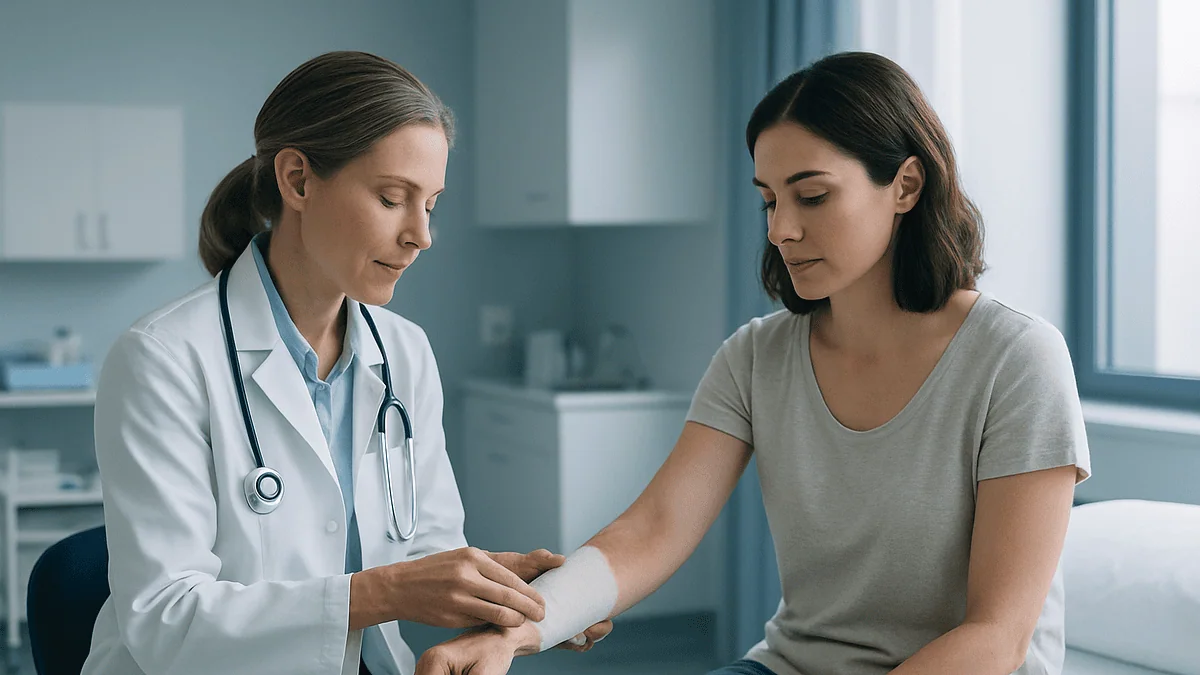
Key Takeaways
- Cooling a burn under running water for 20 minutes still helps if started up to three hours after the injury, so a late start beats no start.
- Ice on a burn constricts blood flow and can cause frostbite-type damage on top of the heat injury, effectively deepening the wound.
- A person's own palm equals roughly 1% of their body surface area — any burn bigger than that, or any second-degree burn over about 3 inches, warrants medical care.
- Cling film laid (not wrapped) over a cooled burn is an NHS-recommended dressing: near-sterile off the roll, non-stick, and transparent for assessment.
- A burn blister is a sterile biological dressing — popping it converts protected tissue into an open wound with a real infection risk.
- Newly healed burn skin can repigment abnormally or re-burn easily, so it needs sunscreen or covering for at least a year.
Cool the burn under cool (not cold) running water for a full 20 minutes as soon as possible, remove rings, watches, and tight items near the area, then cover it loosely with cling film or a clean non-stick dressing. Avoid ice, butter, and toothpaste. Seek urgent care for burns that are deep, larger than the palm, on the face, hands, feet, joints, or genitals, or caused by chemicals or electricity.
It happens in half a second. The oven mitt slips, the pan handle finds bare skin, and before the pain even registers you’re already at the freezer, reaching for ice — or worse, remembering something your grandmother said about butter.
That reflex moment matters more than most people realize. Burn specialists have a saying: the injury doesn’t stop when the heat source goes away. Skin keeps cooking for minutes afterward, and what you do — or don’t do — in that window can change whether a burn heals in a week or scars for a lifetime.
The good news is that the correct response is simple, cheap, and available at nearly every sink in the country. The catch is that the order of the steps matters, most of us cut the crucial one short, and several of the most popular home remedies actively make things worse. Here’s the sequence, backed by evidence rather than folklore.
Why the first 20 minutes decide so much
A burn is not a snapshot injury — it’s a process. When heat hits skin, the center of the contact area is damaged immediately, but around it sits a ring of tissue that researchers call the zone of stasis: cells that are injured but salvageable. Deprive that ring of prompt cooling and it can die over the following hours, converting a shallow burn into a deeper one. Cool it properly and much of it survives.
That’s why burn organizations and the NHS are so specific about first aid: cool running water, roughly 20 minutes, started as soon as possible. Studies behind that guidance found that adequate early cooling is associated with shallower wounds, faster healing, and a lower likelihood of needing skin grafting compared with burns that were cooled briefly or not at all.
There’s a generous grace period, too. Cooling still offers benefit if started within about three hours of the injury, according to NHS guidance — so if you burned yourself an hour ago and only iced it briefly, it’s worth going back to the tap now.
One mental shift helps here. Most people treat burn first aid as pain relief: cool until it stops hurting, then move on. Think of it instead as damage control. The water isn’t just soothing the nerves at the surface; it’s pulling heat out of tissue layers you can’t see, where the real fight is happening.
Step 1: stop the burning — before you treat anything
First aid can’t begin while the injury is still happening, and this step is easy to fumble in a panic.
- Flames: the old drill still applies — stop, drop, and roll, or smother flames with a blanket or coat. Running fans the fire.
- Scalds: hot liquid soaked into fabric keeps burning skin long after the spill. Get wet clothing off fast — a soaked sock or sleeve is essentially a heat pack strapped to the wound.
- Contact burns: move the person away from the stove, iron, radiator, or exhaust pipe. It sounds obvious, but pain and shock make people freeze.
- Electrical burns: do not touch the person until you’re certain the power source is off or they’re clear of it. Otherwise you become the second casualty.
One critical exception: if clothing is melted or stuck to the burn, leave it. Pulling it off can tear away skin and deepen the wound. Cool through and around the fabric and let medical staff deal with removal.
While you’re at it, do a quick safety scan. Is the stove off? Is a child near the spilled kettle? Is there smoke? If someone was in an enclosed fire — even briefly — treat possible smoke inhalation as its own emergency, whatever the skin looks like. Airway swelling can develop over hours, and it’s far more dangerous than most visible burns.
Step 2: cool running water for 20 minutes — yes, the full 20
Hold the burn under cool or lukewarm running water for 20 minutes. Not a splash, not until the sting fades, not ten minutes because your arm got tired. Twenty.
This is the step almost everyone shortchanges. The surface of a burn stops hurting long before the deeper tissue has shed its heat, so the pain-based instinct to quit early undersells the job. Set a timer on your phone; it removes the guesswork and keeps you honest.
The details that matter:
- Cool, not cold. Tap-cold is fine. Ice water is not — extreme cold constricts blood vessels and can worsen tissue damage.
- Running, not soaking. Flowing water continuously carries heat away; a still bowl of water warms up around the wound. If there’s genuinely no tap, frequently refreshed cool compresses are a distant second choice.
- No creams, gels, or ointments yet. Anything greasy applied now insulates the burn and traps the heat you’re trying to remove.
One important safety note, especially for babies, young children, and older adults: cool the burn, not the person. Large-area cooling can drive body temperature down dangerously. Keep the rest of the body warm with a blanket and dry clothes while the injured area sits under the water. If the burn is extensive, call emergency services first and cool while you wait — don’t choose between the two.
Step 3: take off rings, watches, and anything tight — now
This step has a deadline measured in minutes, which is why it comes before dressing the wound and even overlaps with cooling.
Burned tissue swells, and it swells fast. Fluid leaks from damaged blood vessels into the surrounding skin, and a finger that slid easily out of a ring at the moment of injury can balloon past the point of no return within the hour. At that stage, the ring stops being jewelry and becomes a tourniquet — cutting off circulation to everything beyond it. Emergency departments keep ring cutters on hand for exactly this scenario, and it’s a situation worth thirty seconds of prevention.
While the burn is still under the water, remove:
- Rings, watches, and bracelets anywhere near the burned area
- Belts and waistbands if the torso is involved
- Tight shoes or boots for burns on the feet or lower legs
- Loose clothing around the burn — with the firm exception, again, of anything stuck or melted to the skin
If a ring already won’t budge, don’t wrestle with it through a fresh burn; soap and cool water may help it slide, but forcing it risks tearing fragile skin. Note it, keep the hand elevated, and flag it immediately if you seek medical care.
Elevation begins here too. Raising a burned hand or foot above heart level uses gravity to limit swelling — simple physics, meaningful comfort, and less pressure on healing tissue.
Step 4: cover the burn loosely — cling film is genuinely recommended
Once the 20 minutes are up and the burn is cooled, it needs protection. Exposed burned skin weeps, hurts when air moves across it, and offers bacteria an open door.
Here’s the tip that surprises most people: ordinary kitchen cling film is a first-aid dressing that the NHS specifically recommends. It sounds improvised, but the logic is sound. The film is essentially sterile on the roll (discard the first turn or two, which have been handled), it doesn’t stick to raw tissue, it locks in moisture, and it’s transparent — so a clinician can assess the wound without peeling anything painful away.
Technique matters: lay a piece of film over the burn in layers rather than wrapping it around a limb. A circumferential wrap can tighten as swelling continues and squeeze like a band. For a burned hand or foot, a clean, clear plastic bag does the same job neatly.
No cling film? Use a sterile non-stick dressing or, failing that, a clean, lint-free cloth. What to avoid:
- Fluffy materials — cotton balls and fuzzy towels shed fibers into the wound
- Adhesive bandages stuck directly on burned skin — removal takes healing tissue with it
- Tight wrapping of any kind
Keep the covering loose, clean, and changeable. For a minor burn managed at home, a fresh non-stick dressing daily — or whenever it gets wet or dirty — is a reasonable rhythm, per MedlinePlus aftercare guidance.
Step 5: manage pain and keep the person comfortable
Burns hurt out of proportion to their size — skin is densely packed with nerve endings, and even a coin-sized scald can throb for a day. Once cooling and covering are done, pain control is legitimate first aid, not an afterthought.
An over-the-counter pain reliever, used exactly as the label directs — or as a pharmacist advises for the person’s age and health history — can take the edge off. This matters practically as well as humanely: people in less pain sleep better, leave dressings alone, and cooperate with care. For children, always check age-appropriate options with a pharmacist rather than guessing.
Beyond that:
- Elevate the burned area above heart level where possible, especially in the first 24 to 48 hours, to limit swelling and the throbbing that comes with it.
- Keep the person warm overall. After prolonged cooling — particularly in children — a blanket and a warm drink counteract the chill without warming the wound itself.
- Watch for signs of shock with larger burns: pale, clammy skin, rapid breathing, weakness, or confusion. Lay the person down, raise their legs if injuries allow, keep them warm, and call emergency services.
A word on expectations: a minor burn typically hurts most in the first day or two, then settles as the skin begins to close. Pain that escalates after day two or three runs against that pattern — and is one of the earliest signals of infection worth acting on.
How bad is my burn? First-, second-, and third-degree, explained
Everything above applies to burns in general, but what happens next depends on depth. Clinicians classify burns by how far the damage extends into the skin, and you can make a reasonable first read at home — with the caveat that burns evolve over 24 to 48 hours and often look worse (or reveal themselves as deeper) on day two.
| Depth | What it looks and feels like | Typical healing | Where to treat |
|---|---|---|---|
| First-degree (superficial) | Red, dry, painful, no blisters — think mild sunburn | About 3–7 days, often with light peeling | Home, with proper first aid |
| Second-degree (partial thickness) | Blisters, weeping, intense pain, red or mottled skin | Roughly 1–3 weeks; deeper ones may scar | Home if small; medical care if larger than about 3 inches (7.5 cm) or in a sensitive area |
| Third-degree (full thickness) | White, brown, charred, or leathery; may feel oddly painless because nerves are destroyed | Does not heal on its own; needs specialist care | Emergency department — always |
Two traps worth flagging. First, the pain paradox: the deepest burns can hurt the least, because the nerve endings themselves are gone. A burn that looks dramatic but doesn’t hurt is a red flag, not a relief. Second, size beats appearance — a shallow burn covering a forearm can be more serious than a deep one the size of a fingertip. A useful yardstick from burn medicine: the patient’s own palm equals roughly 1% of their body surface area.
Do you put butter on a burn? No — and here's why the myth won't die
The butter remedy has genuinely deep roots — versions of greasing a burn appear in household manuals going back centuries, and a nineteenth-century surgical text even endorsed it. The theory was that sealing the wound from air would ease pain. The theory was wrong.
Butter fails on three counts. It traps heat — applied to a fresh burn, a layer of fat acts as insulation, holding warmth in the tissue at exactly the moment you should be pulling it out. It’s not sterile — butter can carry bacteria onto skin that has just lost its main defensive barrier. And it complicates care — a greasy film has to be cleaned off before a clinician can assess or dress the wound, which is exactly as unpleasant as it sounds.
Why does the myth persist? Partly because a coating of anything can briefly blunt the sting of air on exposed nerve endings — so it feels helpful for a moment, and human memory does the rest. Partly because burn injuries are common enough that everyone’s family has an inherited remedy.
Butter has company in the folk-remedy hall of shame. Mayo Clinic and other mainstream sources advise against all of the following on a fresh burn:
- Toothpaste (irritating, non-sterile, hard to remove)
- Egg whites (infection risk, no evidence of benefit)
- Cooking oils of any pedigree — coconut oil included
- Mustard, mayonnaise, and other condiments that belong on sandwiches
The honest summary: nothing in your kitchen treats a burn better than the thing already plumbed into it.
Why ice is one of the worst things you can put on a burn
Ice feels like the logical opposite of a burn, which is precisely why this mistake is so common. The freezer is often closer than the tap, and the numbing relief is immediate. But physiologically, ice compounds the injury.
Two mechanisms are at work. First, vasoconstriction: extreme cold clamps down the small blood vessels in and around the wound. Burned tissue — especially that salvageable ring in the zone of stasis — is depending on blood flow to survive the next few hours. Choke off that supply and you can push borderline tissue over the edge, effectively deepening the burn.
Second, cold injury on top of heat injury. Skin that has just been burned has lost much of its protective barrier and its ability to regulate temperature. Ice held against it can cause frostbite-type damage remarkably quickly — the burn victim ends up with two overlapping wounds instead of one. Mayo Clinic’s first-aid guidance calls this out directly: no ice, and no ice water immersion.
The numbness ice provides is also deceptive. It silences the nerve endings that would otherwise tell you how the wound is doing, making it easier to underestimate the injury.
Cool running tap water hits the sweet spot: cold enough to draw heat out of the tissue steadily, warm enough to keep blood flowing to the cells trying to recover. It’s less dramatic than an ice pack. It’s also the version supported by evidence.
Should you pop a burn blister?
Leave it alone. A blister is not a defect in the healing process — it is the healing process, or at least its security system.
That dome of fluid is essentially a sterile, custom-fitted biological dressing. The intact skin on top keeps bacteria out; the fluid underneath cushions the raw tissue and bathes it in the plasma components it needs to rebuild. Puncture it and you trade all of that for an open wound in exactly the spot least equipped to fight infection. Mayo Clinic, the NHS, and MedlinePlus all give the same instruction: don’t break burn blisters.
Some practical realities, because blisters don’t always cooperate:
- If a blister breaks on its own — and ones on hands and feet often do — gently clean the area with mild soap and water, apply a thin layer of a bland, fragrance-free emollient (plain petroleum jelly is the classic choice), and cover with a non-stick dressing.
- Don’t peel the deflated skin. Even collapsed, it protects the surface underneath. Let it separate on its own schedule.
- Large or awkwardly placed blisters — across a joint, on the sole of a foot — are worth showing to a clinician. Sometimes a professional will drain one with sterile technique, which is an entirely different proposition from a sewing needle at the kitchen table.
One more reason for restraint: blistering signals a second-degree burn. If the blistered area is large, spans a joint, or sits on the face, hands, feet, or genitals, the question isn’t how to manage the blister — it’s when you’re being seen.
What actually helps a burn heal quickly
Once first aid is done, healing speed is mostly determined by burn depth and biology — but the environment you give the wound genuinely matters, and the evidence points in a slightly counterintuitive direction: moist beats dry.
The old advice to “let it breathe” and form a hard scab has been superseded. Decades of wound research show that skin cells migrate and close a wound faster in a moist, covered environment than under a dry crust. In practice, for a minor burn that means:
- A thin layer of bland emollient — plain petroleum jelly, applied once the skin is fully cooled — keeps the surface from drying and cracking. Skip fragranced lotions and anything with alcohol.
- A non-stick dressing, changed daily or when wet or soiled, per MedlinePlus aftercare guidance. Wash gently with mild soap and water at each change; don’t scrub.
- Aloe vera has modest supporting evidence for minor burns and is reasonable if you like it — pure gel, not scented blends.
The rest is whole-body logistics. Wound repair is construction work, and construction needs supplies: adequate protein, overall balanced eating, and good hydration. Smoking is the single most underrated saboteur — nicotine constricts the small blood vessels that deliver oxygen to healing tissue, and healing measurably slows in smokers.
Finally, resist the urge to inspect constantly. Every unnecessary dressing peel disturbs the fragile new surface. A first-degree burn should look meaningfully better within a week; a small second-degree burn within two to three. Slower than that, get it looked at.
When to go to the ER for a burn — and when a doctor's visit can wait
Most household burns heal at home. The ones that shouldn’t be managed at home tend to announce themselves by depth, size, location, cause, or the person they happened to. Go to the emergency department — or call emergency services — for any of the following:
- Any third-degree burn: white, charred, leathery, or strangely painless skin
- Second-degree burns larger than about 3 inches (7.5 cm) across, or any burn bigger than the person’s palm
- Burns on the face, hands, feet, genitals, buttocks, or across a major joint — high-function, high-stakes territory where scarring causes lasting problems
- Chemical or electrical burns — both can hide damage far beyond what the skin shows
- Any burn that wraps fully around a limb, finger, or the chest
- Smoke exposure, facial burns, singed nasal hair, hoarseness, or coughing after a fire — airway swelling can develop over hours
- Burns in babies, young children, older adults, or anyone with diabetes or a weakened immune system, whose skin is thinner and healing slower
- Signs of shock: pale clammy skin, rapid shallow breathing, confusion, fainting
A same-week visit to a primary care clinician — rather than the ER — makes sense when a burn you’re managing at home shows signs of infection (increasing pain after day two, spreading redness, swelling, pus, fever), or simply isn’t healing: no clear improvement in a week, or an open wound past two weeks.
When in doubt, err toward being seen. Burns are routinely underestimated in the first 24 hours, even by the people wearing them.
Chemical, electrical, and sunburns: the rules change
The 20-minutes-of-water rule covers heat burns — flames, scalds, hot surfaces, steam. Three other burn types play by modified rules.
Chemical burns. If the chemical is a dry powder, brush it off first — some substances react with water. Then rinse the area with a steady stream of running water for at least 20 minutes, positioning the flow so runoff doesn’t wash the chemical across unburned skin or into eyes. Remove contaminated clothing and jewelry as you rinse, protecting your own hands. Bring the product container or its name with you to medical care; treatment can depend on knowing exactly what it was. Chemical burns to the eye are always an emergency: rinse continuously and get help immediately.
Electrical burns. These are the icebergs of burn injuries. Current travels through the body between entry and exit points, and it can injure muscle, nerves, and heart rhythm while leaving only small marks on the skin. Cleveland Clinic and other sources are unanimous: every electrical burn deserves medical evaluation, even one that looks trivial. Anyone struck by high voltage or lightning needs emergency services, full stop.
Sunburn. Usually first-degree and home-manageable: cool showers or compresses, a fragrance-free moisturizer while skin is still damp, extra water to drink, and strict shade until it settles. Escalate if there’s widespread blistering, fever, chills, dizziness, or signs of dehydration — sun poisoning is a real clinical picture, and children are especially vulnerable to it.
Aftercare: infection signs, the itching phase, and protecting new skin
A burn’s story doesn’t end when the dressing comes off. Two things deserve your attention in the weeks that follow: infection surveillance early, and skin protection late.
Infection watch (first two weeks). Burned skin has lost its barrier, and infection is the most common complication of home-managed burns. The pattern to watch is a wound trending the wrong way. See a clinician promptly for:
- Pain that increases after the second or third day instead of easing
- Redness spreading outward from the wound edge, or red streaking
- Swelling, warmth, thick or foul-smelling drainage
- Fever or generally feeling unwell
The itching phase. Somewhere between days five and fourteen, most healing burns begin to itch — sometimes maddeningly. This is a normal byproduct of nerve regrowth and histamine release, not a warning sign. Keep the area moisturized, keep fingernails short, use cool compresses over closed skin, and don’t scratch through the new surface. Persistent, severe itching is worth mentioning to a clinician, who has options.
Sun protection (the long game). Newly healed burn skin lacks mature pigment protection and can darken permanently — or burn again with startling ease — after sun exposure. Standard guidance is to keep the area covered or protected with broad-spectrum sunscreen for at least a year. A healed patch that looks pink and fragile is exactly that.
Gentle massage with a plain moisturizer once the skin is fully closed can help keep healing tissue supple. And if a scar becomes raised, tight, or limits movement across a joint, ask for a referral — early scar management works better than late.
Frequently asked questions
Do you put butter on a burn?
No. Butter traps heat in the tissue at exactly the moment you need to remove it, isn’t sterile, and has to be cleaned off before a wound can be properly assessed. The same goes for toothpaste, egg whites, and cooking oils. The evidence-backed alternative is cool running water for 20 minutes, followed by a loose, clean, non-stick covering.
What will help heal a burn quickly?
Thorough early cooling, then a moist, protected wound environment. Cool the burn under running water for 20 minutes, then keep it covered with a non-stick dressing changed daily, with a thin layer of plain petroleum jelly to prevent drying. Leave blisters intact, don’t pick peeling skin, stay hydrated, eat adequate protein, and avoid smoking, which slows tissue repair. Minor burns typically heal in one to three weeks.
What is the best way to treat a first-degree burn?
Run cool water over it for 20 minutes, remove any tight items nearby, then cover it loosely with a non-stick dressing or lay cling film over it. Once cooled, a bland fragrance-free moisturizer or pure aloe vera gel can ease dryness, and an over-the-counter pain reliever used per the label can help with discomfort. First-degree burns — red, painful, no blisters — usually heal within a week.
When should I go to the ER for a burn?
Go for any burn that is white, charred, leathery, or painless; larger than the person’s palm; on the face, hands, feet, genitals, or across a joint; caused by chemicals or electricity; or accompanied by smoke exposure, breathing changes, or signs of shock. Burns in babies, older adults, and people with diabetes or weakened immunity also deserve prompt professional assessment, even when they look modest.
Should I pop a burn blister?
No. An intact blister acts as a sterile natural dressing that protects the raw tissue underneath and lowers infection risk, so mainstream guidance from Mayo Clinic and the NHS is to leave it alone. If a blister breaks on its own, clean gently with mild soap and water, apply plain petroleum jelly, and cover with a non-stick dressing. Large blisters or ones over joints should be assessed by a clinician.
Can I put ice on a burn?
No — ice makes burns worse. Extreme cold constricts the blood vessels that injured tissue depends on to survive, and it can cause frostbite-type damage on skin that has already lost its protective barrier. The numbing relief also masks how the wound is really doing. Cool or lukewarm running tap water for 20 minutes removes heat effectively while keeping blood flowing to healing tissue.
Is toothpaste good for burns?
No. Toothpaste on a burn is a persistent myth with no supporting evidence. It isn’t sterile, its ingredients can irritate raw skin, and the paste seals in heat while making the wound harder to clean and assess later. Any brief cooling sensation comes from ingredients like menthol, not from anything therapeutic. Use cool running water instead, then a clean non-stick covering.
How long does a minor burn take to heal?
A first-degree burn typically heals in about three to seven days, often with some light peeling. A small second-degree burn with blisters usually takes one to three weeks, depending on depth. Burns often look worse on day two before improving, which is normal — but a wound showing no clear progress after a week, or still open after two weeks, should be examined by a clinician.
Should a burn be covered or left open to air?
Covered. The old advice to let burns “breathe” and scab has been replaced by decades of wound research showing skin heals faster in a moist, protected environment. Cover a cooled burn with a sterile non-stick dressing or loosely laid cling film, change it daily or when soiled, and avoid fluffy materials like cotton balls that shed fibers into the wound.
Does aloe vera help burns?
It may help minor ones. Studies of aloe vera on first-degree and mild second-degree burns suggest modest benefits for comfort and possibly healing time, though the research is not uniformly strong. Pure aloe gel — not scented blends with alcohol — is a reasonable choice after the burn has been fully cooled with water. It is never a substitute for that initial 20 minutes of cooling, and never appropriate for deep burns.
References
- Burns and scalds — NHS
- Minor burns – aftercare — MedlinePlus Medical Encyclopedia
- Burns: Types, Symptoms & Treatment — Cleveland Clinic
This article is for general information only and is not a substitute for professional medical advice. Please consult a qualified doctor about your individual situation.

More from the Blog
What Causes Cold Feet? Beyond Bad Circulation
Cold feet most often reflect normal temperature regulation: skin blood vessels narrow to protect core organs, and the feet cool first. Persistent or one-sided…
Water in the Ear: How to Get It Out Safely
Water trapped in the ear canal usually drains on its own within minutes to hours. To help it along, tilt your head toward the…
Does Asthma Go Away, and Can You Grow Out of It?
Asthma cannot be cured, but for many people it can go quiet for years, a state doctors call remission. Childhood asthma sometimes eases or…

How Lymphoma Is Diagnosed, What Causes It and Whether It Is Hereditary
Lymphoma is diagnosed by removing all or part of a swollen lymph node and examining it under a microscope; no blood test alone can…

How to Stop a Runny Nose: Causes and Quick, Safe Relief
To calm a runny nose safely, rinse or spray the nasal passages with saline, breathe warm humidified air, drink plenty of fluids, and rest.…
Peripheral Neuropathy: Can It Be Reversed, Is It Dangerous, and How to Sleep with It
Peripheral neuropathy itself is rarely fatal, but the conditions behind it, such as poorly controlled diabetes, kidney disease, or heavy alcohol use, can be,…