

Psoas Stretch: The Deep Muscle Connecting Stress and Posture

Key Takeaways
- The psoas is the only muscle connecting your spine to your legs, running from the lumbar vertebrae to the inner thigh bone, which is why tightness there can show up as back pain, hip pain, or groin ache.
- A feeling of tightness does not always mean the muscle is short — measured hip range is often normal, and strengthening frequently relieves the sensation better than stretching alone.
- The evidence-based dose is modest: 20-to-30-second holds, two to four per side, most days, with lasting range-of-motion gains typically appearing after four or more weeks.
- The single most common stretching mistake is arching the lower back in a lunge; tucking the pelvis first is what actually loads the psoas.
- Because the diaphragm's spinal attachments sit beside the psoas origin, slow long exhales during a stretch measurably calm muscle tension — most people feel the difference within three breaths.
- Deep hip pain with fever, night pain, numbness down the leg, or a groin bulge is not a stretching problem — those signs warrant a doctor's visit, not a longer hold.
A psoas stretch gently lengthens the deep hip flexor running from your lower spine to your thigh. For most people, a half-kneeling lunge with the pelvis tucked, held 20 to 30 seconds per side and repeated two to four times, is a safe starting point. Stretching alone rarely resolves tightness; pairing it with strengthening, frequent movement breaks, and stress management works better, and persistent hip or groin pain deserves medical evaluation.
Watch anyone climb out of a car after a four-hour drive. The first few steps are a shuffle — torso pitched slightly forward, hips reluctant to open, hands pressed into the lower back. That stiff, folded feeling has a lot to do with a muscle you will never see in a mirror.
The psoas sits behind your abdominal organs, threading from the lower spine, through the pelvis, to the top of the thigh bone. It fires every time you take a step, lift a knee, or sit up in bed. It also spends most of the modern workday in a shortened position, which is why it has become the internet’s favorite scapegoat for everything from back pain to buried emotions.
Some of that reputation is earned. Some of it is marketing. Here is what the evidence actually supports — and how to stretch this muscle in a way that helps rather than irritates it.
What exactly is the psoas, and where is it hiding?
Pronounce it SO-az — the p is silent. The psoas major begins at the sides of your lowest thoracic vertebra and all five lumbar vertebrae, roughly the span from the bottom of your rib cage to the top of your pelvis. From there it travels down and forward, crosses the front of the hip joint, and anchors to a bony knob on the inner thigh bone called the lesser trochanter. Along the way it merges with the iliacus, a fan-shaped muscle lining the inside of the pelvis; together they form the iliopsoas, your body’s most powerful hip flexor.
Two details make this muscle unusual. First, it is the only muscle that directly connects your spine to your legs, which means it influences both how your hip moves and how your lower back is positioned. Second, it lies deep — behind the intestines, beside the kidneys — so you cannot poke it from the surface the way you can a calf or a quad, whatever a foam-rolling video may suggest.
Functionally, the psoas lifts your thigh when you walk, run, or climb stairs, and it helps stabilize the lumbar spine when you stand. Cleveland Clinic notes that it works in almost every act of upright movement, which is precisely why a cranky psoas can announce itself in so many different places: the front of the hip, the groin, even the lower back.
Why does the internet call it the "muscle of the soul"?
Scroll through wellness content long enough and you will meet the claim that the psoas stores trauma, hoards fear, and releases waves of emotion when stretched. It is a poetic idea. It is not something the scientific literature supports in that form.
No credible study has shown that specific emotions are stored in a specific muscle. What research does support is more modest and, frankly, more useful: psychological stress raises overall muscle tension through the sympathetic nervous system, changes breathing patterns, and can amplify how strongly the brain interprets pain signals. A person under chronic stress often sits more, moves less, sleeps worse, and holds a guarded, slightly flexed posture — all of which can leave the front of the hips feeling locked down.
So the honest version of the myth goes like this: stress does not live in your psoas, but stress reliably changes the conditions your psoas works in. That distinction matters for how you fix the problem. If tension were trapped trauma, one dramatic release session would cure it. Because tension is a byproduct of nervous-system arousal and daily habits, the fix is repetitive and unglamorous — regular movement, gradual stretching, decent sleep, and calming the system through practices like slow breathing, which Harvard Health and others have long linked to the body’s relaxation response.
Less mystical. More fixable.
What are the symptoms of a tight psoas muscle?
A tight or irritated psoas tends to announce itself in patterns rather than one dramatic symptom. People commonly describe:
- A deep ache or pinch at the front of the hip or groin, especially when standing up after long sitting
- Difficulty standing fully upright for the first few steps — that bent-forward shuffle
- A pulling sensation across the front of the hip at the end of a walking or running stride
- A nagging lower back ache that eases when you lie down with knees bent
- A tendency toward an exaggerated arch in the lower back, sometimes called anterior pelvic tilt
Here is the caveat most listicles skip: none of these sensations is unique to the psoas. Hip joint arthritis, labral tears, hernias, tendon problems, and referred pain from the spine can all produce a nearly identical deep groin ache. You cannot reliably diagnose a psoas problem by feel, and neither can an online quiz.
One practical clue: genuine muscle tightness usually feels worst after prolonged stillness and improves with gentle movement and warmth. Pain that worsens with activity, wakes you at night, or comes with clicking, locking, or giving way points toward the joint or another structure — and toward a clinician rather than a stretching routine. Treat the symptom list above as a reason to try two to three weeks of sensible stretching and movement, not as a diagnosis.
Does stress actually tighten the psoas?
Indirectly, yes — and the mechanism is more interesting than the myth. When your brain registers threat, real or spreadsheet-shaped, the sympathetic nervous system raises baseline muscle tone throughout the body. Studies of stress and musculoskeletal pain have documented this most clearly in the neck and shoulders, but the hip flexors are not exempt from a system-wide effect.
There is also a plumbing connection. The diaphragm, your main breathing muscle, attaches to the spine through two tendinous strips called crura, which descend along the same lumbar vertebrae where the psoas originates. The two muscles are near neighbors sharing connective tissue. When stress flips you into shallow chest breathing, the diaphragm’s spinal attachments and the psoas region work under changed conditions. This anatomical closeness is likely one reason a slow exhale can noticeably soften how a hip stretch feels — a phenomenon many physical therapists use deliberately.
Add the behavioral layer: stressed weeks usually mean more sitting, fewer walks, and worse sleep, and each of those independently stiffens the front of the hips. So the stress-psoas link is real but ordinary — a chain of nervous-system arousal plus habit change, not a mystical reservoir of emotion.
The encouraging flip side: anything that calms the system counts as psoas care. A ten-minute walk, six slow breaths before a stretch, an earlier bedtime. Unimpressive on their own, cumulative in effect.
What aggravates the psoas muscle?
The psoas has two enemies: too little movement and too much, too suddenly. The most common irritants fall into a short list.
- Prolonged sitting. A seated hip rests at roughly 90 degrees of flexion, holding the psoas in a shortened position for hours. The muscle does not permanently shrink from one desk day, but months of eight-hour sitting shift what your nervous system treats as its resting length.
- Sudden training spikes. Hip flexors do heavy work in sprinting, kicking, hill running, and cycling. Jumping from zero to five runs a week — or adding steep hills overnight — is a classic recipe for an irritated iliopsoas.
- High-volume sit-ups and leg raises. Both movements load the hip flexors intensely. Hundreds of repetitions with an arched lower back can leave the psoas overworked and the front of the hip sore.
- Aggressive stretching. Counterintuitive but common: forcing a deep lunge with the back arched, bouncing at end range, or grinding a massage ball into the abdomen can inflame the very tissue you are trying to soothe.
- Sleeping tightly curled. A fetal position keeps hips flexed all night; some people notice more morning stiffness because of it.
The pattern is worth noticing: the psoas tolerates gradual change well and abrupt change poorly. Whatever you add — mileage, stretching, standing time — add it in small weekly increments.
What is the fastest way to release the psoas?
The honest answer first: there is no instant, permanent release, and anyone selling one is overpromising. Muscle tone is set by the nervous system moment to moment, so the fastest legitimate change comes from convincing that system to stand down — which takes minutes, not seconds, and needs repeating.
The quickest evidence-aligned combination looks like this. Start with sixty to ninety seconds of easy movement: walking, marching in place, gentle leg swings. Warm tissue stretches more comfortably, a point Mayo Clinic makes in its general stretching guidance. Then move into a half-kneeling stretch — described in detail below — and hold it 20 to 30 seconds while breathing slowly, letting the exhale be longer than the inhale. Slow breathing engages the relaxation response, and many people feel the front of the hip soften noticeably within two or three breath cycles.
If kneeling is uncomfortable, try constructive rest instead: lie on your back, knees bent, feet flat, arms resting on your ribs, for three to five minutes. This position takes the psoas off duty entirely, and for an irritated muscle, unloading often relieves more than stretching does.
What to skip: digging into your abdomen with balls or tools in pursuit of the psoas. The muscle sits behind your intestines and major blood vessels; deep self-massage there is neither proven effective nor clearly safe. Relief that arrives gently tends to last longer anyway.
How do you fix a tight psoas? A realistic four-part plan
One stretch will not undo forty hours of weekly sitting. What works, based on general flexibility research summarized by Mayo Clinic and Harvard Health, is a small system practiced most days.
Part one: gentle daily stretching. Two to four holds of 20 to 30 seconds per side, at an intensity of mild pull rather than pain. Flexibility studies consistently show measurable range-of-motion gains take roughly four or more weeks of consistent practice — expect a slow trend, not a breakthrough.
Part two: strengthening. A muscle that feels tight is often weak or overworked, and it guards by tensing. Training the hip flexors through their range — standing marches, controlled knee lifts — plus strengthening the glutes on the opposite side of the joint frequently relieves that guarding better than stretching alone.
Part three: movement snacks. Break up sitting every 30 to 60 minutes with two minutes of standing or walking. The CDC’s activity guidelines emphasize that moving more throughout the day matters alongside formal exercise, and for the psoas, frequency beats intensity.
Part four: downshift the nervous system. Slow breathing during stretches, a daily walk outdoors, consistent sleep. Because baseline muscle tension tracks with stress, this part is not optional garnish — it is half the recipe.
Give the full system three to four weeks before judging it. If pain persists or worsens despite sensible effort, that is diagnostic information, and a clinician should hear it.
The half-kneeling psoas stretch, done properly
This is the workhorse — simple enough for a hallway, precise enough to matter. Most people do it wrong in one specific way, so read the cues before you drop into position.
- Kneel on your right knee with your left foot planted in front, both knees at roughly 90 degrees. Place a folded towel under the kneeling knee if it complains.
- Before anything else, tuck your pelvis: gently squeeze the right glute and draw your tailbone down and under, as if zipping a snug pair of jeans. Keep your ribs stacked over your pelvis, not flared upward.
- Now shift your whole body forward an inch or two — often that is all it takes. You should feel a clear pull at the front of the right hip and thigh.
- Hold 20 to 30 seconds, breathing slowly with long exhales. Repeat two to four times, then switch sides.
The common mistake: lunging far forward while the lower back arches into a deep sway. That arch lets the pelvis tip forward, which slackens the psoas at one end while you strain at the other — you feel an impressive stretch in the wrong place and irritate the lumbar spine as a bonus. The pelvic tuck is the stretch. If tucking alone produces a strong pull before you shift forward at all, stay right there; the muscle is telling you where its current range ends.
Raising the same-side arm overhead and leaning slightly away adds length through the muscle’s spinal attachments, since the psoas begins up near the last rib. Optional, and worth trying once the basic version feels stable.
Four more stretches worth your time
Variety is less about novelty and more about access — different bodies and different settings need different entry points. These four cover most situations, from an office to a bed.
| Stretch | Setup | Hold | Best for |
|---|---|---|---|
| Standing hip flexor stretch | Stagger stance, back heel down, pelvis tucked, shift weight forward slightly | 20–30 sec × 2–3 | Desk breaks; no kneeling required |
| Bed-edge (Thomas-style) stretch | Lie back at the edge of a bed, hug one knee to chest, let the other leg hang off the side | 30 sec × 2 | Mornings; isolates one hip while protecting the back |
| Low lunge with overhead reach | Half-kneeling position, same-side arm reaches up and slightly across | 20–30 sec × 2 | Reaching the psoas’s upper, spinal portion |
| Glute bridge | On your back, knees bent, lift hips by squeezing glutes; stop before the back arches | 5–8 sec × 8–10 | Active hip opening plus strengthening in one move |
Two notes on technique across all of them. Intensity should sit at a mild, breathable pull — Mayo Clinic’s stretching guidance is blunt that pain means backing off. And the pelvic tuck from the half-kneeling version applies everywhere: whenever the lower back starts to arch, the stretch has stopped reaching the psoas and started stressing the spine.
The popular “couch stretch,” with the back foot elevated against a wall, earns a caution rather than a recommendation. It is intense, easy to overdo, and unnecessary for anyone who has not yet made the gentler versions feel easy. Earn it first.
Why strengthening matters as much as stretching
Here is the finding that surprises most people: a hip flexor that feels tight is often not short at all. When clinicians actually measure hip extension range, plenty of people with chronic front-of-hip tightness have normal length — what they have is a muscle that is weak, overworked, or guarded, producing a sensation of tightness as a protective signal. Stretching a muscle like that brings twenty minutes of relief and no lasting change. Strengthening it often quiets the signal for good.
Three movements cover the essentials, no equipment required:
- Standing march with a pause. Lift one knee to hip height, hold three to five seconds without leaning back, lower with control. Eight to ten per side. This trains the psoas exactly where it works in daily life.
- Glute bridge. Strong glutes share the job of controlling pelvic position, which reduces how hard the hip flexors must grip. Ten to fifteen slow repetitions.
- Dead bug. On your back, arms and knees toward the ceiling, lower one arm and the opposite leg slowly while keeping the lower back gently pressed down. Six to eight per side. This teaches the trunk to stabilize so the psoas can move the leg without bracing the spine.
Two or three strength sessions a week is plenty. If you have time for only one intervention, and your tightness has resisted months of stretching, choose strengthening. The evidence for building capacity is at least as good as the evidence for lengthening tissue — and the results tend to stick.
Breathing, the diaphragm, and your deep hip
It sounds like wellness poetry — breathe into your hips — but there is respectable anatomy underneath the phrase. The diaphragm anchors to the lumbar spine through two long tendinous pillars, the crura, which run down the same vertebrae where the psoas takes its origin. The two muscles are structural neighbors, sharing fascia and real estate in a way few other muscle pairs do.
That proximity has a practical consequence. Shallow, rapid chest breathing — the signature of a stressed nervous system — keeps the whole region working under tension. Slow diaphragmatic breathing does the opposite: it engages the parasympathetic relaxation response, which lowers heart rate and baseline muscle tone. Harvard Health has written extensively about this response, and while studies have not isolated the psoas specifically, the whole-body effect on muscle tension is well documented.
Try this pairing during your next half-kneeling stretch. Inhale through the nose for a count of four, letting the lower ribs expand sideways. Exhale for a count of six, unhurried. Repeat for the length of the hold. Most people notice the stretch deepening slightly on the third or fourth exhale without moving an inch — the nervous system easing its grip, not the tissue suddenly lengthening.
Ninety seconds of this, twice a day, costs nothing and stacks neatly onto stretches you were doing anyway. As interventions go, the return on investment is hard to beat.
Desk life: how to outsmart the chair
No stretch performed at 7 p.m. fully cancels nine hours of sitting that preceded it. The math simply does not work — which is why the most powerful psoas intervention for desk workers happens during the workday, not after it.
The core habit: interrupt sitting every 30 to 60 minutes with two to three minutes upright. Walk to refill water. Take one phone call standing. Do a single standing hip flexor stretch at your desk — stagger your feet, tuck your pelvis, shift forward, done in thirty seconds and invisible to coworkers. Researchers studying sedentary behavior consistently find that the pattern of sitting matters alongside the total, and frequent brief breaks are the most realistic fix. The CDC’s physical activity guidance carries the same theme: move more, more often, throughout the day.
A few supporting moves help the habit stick:
- Set a recurring timer or use meeting transitions as your cue — habit anchors beat willpower.
- If you use a sit-stand desk, alternate rather than standing all day; hours of static standing trade one problem for another.
- Check chair height: hips level with or slightly above knees keeps hip flexion a little less extreme than a low, slouchy seat.
- End the workday with a five-to-ten-minute walk before sitting down again at home — a clean hinge between chair and couch.
None of this is dramatic. All of it compounds. A body that changes position fifteen times a day rarely develops the deep, stubborn stiffness that a marathon sitter knows too well.
When should you see a doctor about hip or groin pain?
Most front-of-hip tightness responds to a few weeks of the sensible routine above. Some does not — and some pain that feels like a tight psoas is something else wearing its costume. See a doctor promptly if hip or groin pain comes with any of the following:
- Fever, chills, or feeling generally unwell alongside deep hip pain — a rare but serious psoas abscess can present this way
- Pain that wakes you at night or does not ease with rest and position changes
- Numbness, tingling, or weakness running down the leg, which points toward nerve involvement
- Pain following a fall or other trauma, especially if bearing weight is difficult
- Unexplained weight loss accompanying the pain
- A visible bulge in the groin, which may indicate a hernia rather than a muscle problem
- Clicking, catching, or a sensation of the hip giving way — possible signs of a joint or labral issue
Beyond the red flags, use a simple time rule: if three to four weeks of consistent, gentle stretching, strengthening, and movement breaks have produced no improvement — or if things are worsening — stop troubleshooting alone. Hip osteoarthritis, tendon problems, stress fractures in runners, and referred pain from the lumbar spine all mimic hip flexor tightness, and each calls for a different plan. A physical exam, and sometimes imaging, sorts this out quickly. Stretching harder at an undiagnosed joint problem is the one strategy guaranteed not to work.
How long until stretching actually makes a difference?
Set your expectations by the research rather than the testimonials. Flexibility studies reviewed in mainstream guidance from Mayo Clinic and Harvard Health point to a fairly consistent timeline: a single session produces short-term easing that fades within hours, while measurable, lasting gains in range of motion typically require somewhere around four to eight weeks of stretching most days.
Interestingly, much of the early improvement is not the muscle physically lengthening at all. It is your nervous system raising its tolerance — deciding, through repeated safe exposure, that the end of your range is not a threat worth guarding against. This is why consistency beats intensity so decisively. Thirty gentle seconds daily retrains that threshold; one heroic ten-minute session on Sunday does not, and may leave you sore enough to skip Monday.
A realistic progress arc looks like this. Week one: stretches feel awkward, relief is brief, and mornings are unchanged. Weeks two to three: standing up after long sitting gets noticeably easier, and the end-of-stride pull softens. Weeks four to six: the half-kneeling stretch that once bit at the first pelvic tuck now needs a forward shift to feel anything, and the lower back complains less by evening.
Track one concrete marker — how the first ten steps after an hour of sitting feel — rather than chasing a vague sense of looseness. If that marker has not budged after a month of honest effort, revisit the strengthening section, and consider whether a clinician should take a look. Progress in this muscle is quiet, but it should be detectable.
Frequently asked questions
What is the fastest way to release the psoas?
There is no instant permanent release, but the quickest reliable relief comes from one to two minutes of easy walking, followed by a half-kneeling stretch held 20 to 30 seconds with slow, extended exhales. Alternatively, lie on your back with knees bent for three to five minutes to unload the muscle entirely. Skip deep abdominal massage tools — the psoas sits behind your organs, and digging for it is neither proven nor clearly safe.
What are the symptoms of a tight psoas muscle?
Typical signs include a deep ache or pinch at the front of the hip or groin, difficulty standing fully upright after prolonged sitting, a pulling sensation at the end of your walking stride, and a lower back ache that eases when you lie with knees bent. These symptoms overlap heavily with hip joint problems, hernias, and spine-referred pain, so persistent or worsening pain deserves a medical evaluation rather than self-diagnosis.
How do you fix a tight psoas?
Combine four things: gentle daily stretching (20-to-30-second holds, two to four per side), strengthening for both hip flexors and glutes, movement breaks every 30 to 60 minutes of sitting, and stress reduction through slow breathing and regular walks. Research on flexibility suggests giving this system at least four weeks. If pain persists or worsens despite consistent effort, see a clinician — some conditions that mimic psoas tightness need different treatment.
What aggravates the psoas muscle?
The main irritants are prolonged sitting, which holds the muscle shortened for hours, and sudden training spikes in running, cycling, kicking, or hill work, which overload it. High-volume sit-ups and leg raises, aggressive or bouncing stretches, and sleeping tightly curled can also provoke it. The common thread is abrupt change — the psoas tolerates gradual increases in activity or stretching well and sudden ones poorly.
How long should I hold a psoas stretch?
Hold for 20 to 30 seconds at a mild, breathable pull — never into pain — and repeat two to four times per side. Mayo Clinic’s general stretching guidance supports this range for most healthy adults. Longer or more forceful holds do not speed results and can irritate the muscle or the lower back. Consistency across weeks matters far more than the length of any single hold.
Can a tight psoas cause lower back pain?
It can contribute. Because the psoas attaches along the lumbar vertebrae, a shortened or guarded psoas can pull the pelvis into a forward tilt and increase the arch of the lower back, which some people experience as an ache that eases when lying with knees bent. That said, back pain has many causes, and pain with numbness, leg weakness, or no improvement over a few weeks should be evaluated by a doctor.
Should I stretch or strengthen a tight psoas?
Ideally both, but if forced to choose, strengthening often wins. A muscle that feels tight is frequently weak or overworked rather than short, and it guards by tensing — a signal that stretching soothes only temporarily. Standing marches with a pause, glute bridges, and dead bugs build the capacity that quiets the guarding. Gentle stretching remains useful for short-term comfort and for people whose hip extension range is genuinely limited.
Does the psoas really store trauma or emotions?
No study has demonstrated that emotions are stored in a specific muscle. What the evidence does show is that psychological stress raises overall muscle tension through the nervous system, alters breathing, and encourages sedentary, guarded postures — all of which can leave the hip flexors feeling chronically tight. The practical takeaway is the same either way: stress management, slow breathing, and regular movement genuinely help, just through ordinary physiology rather than stored emotion.
Is walking good for a tight psoas?
Yes, for most people it is one of the best low-effort options. Each stride takes the hip through gentle flexion and extension, moving the psoas through its range without heavy load, and walking also lowers overall stress-related muscle tension. A ten-minute walk after long sitting is particularly useful. The exception is walking that reproduces sharp groin pain — that pattern suggests something beyond simple tightness and warrants a clinical assessment.
Can I foam roll or massage the psoas directly?
Direct self-massage of the psoas is not recommended. The muscle lies deep behind the intestines and near major blood vessels, so pressing balls or tools into the abdomen carries risk without proven benefit. Surface rolling of the quads and the front of the thigh is fine and may ease adjacent tightness. For the psoas itself, positional rest, gentle stretching, slow breathing, and strengthening are safer and better supported by evidence.
References
This article is for general information only and is not a substitute for professional medical advice. Please consult a qualified doctor about your individual situation.

More from the Blog
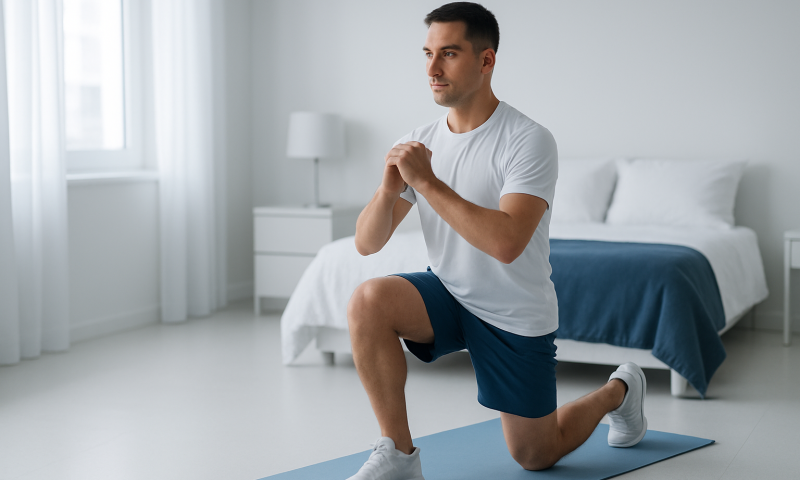
Best Exercises for Bone Health: Load-Bearing Moves Your Skeleton Responds To
The best exercises for bone health pair impact work—jumping, jogging, stair climbing, dance—with progressive resistance training such as squats, lunges, rows, and overhead presses,…
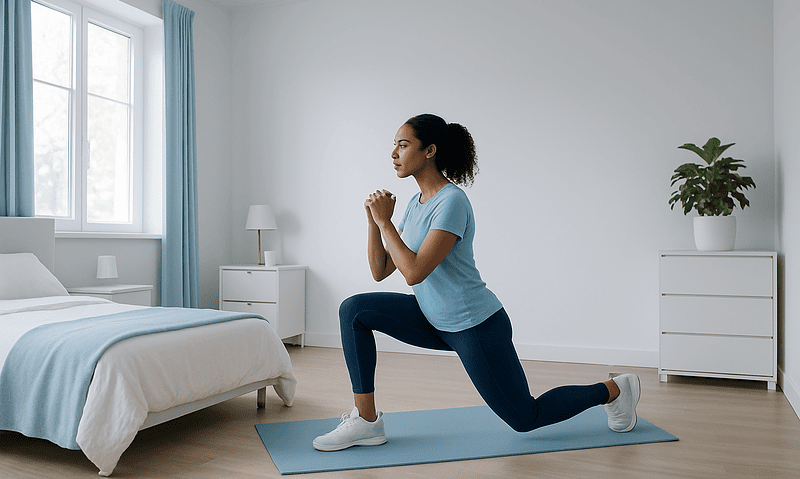
Somatic Exercises: Gentle Movement for a Nervous System on Edge
Somatic exercises are slow, low-intensity practices—body scans, extended-exhale breathing, gentle shaking, grounding—that direct attention to internal body sensations rather than reps or calories. Practiced…
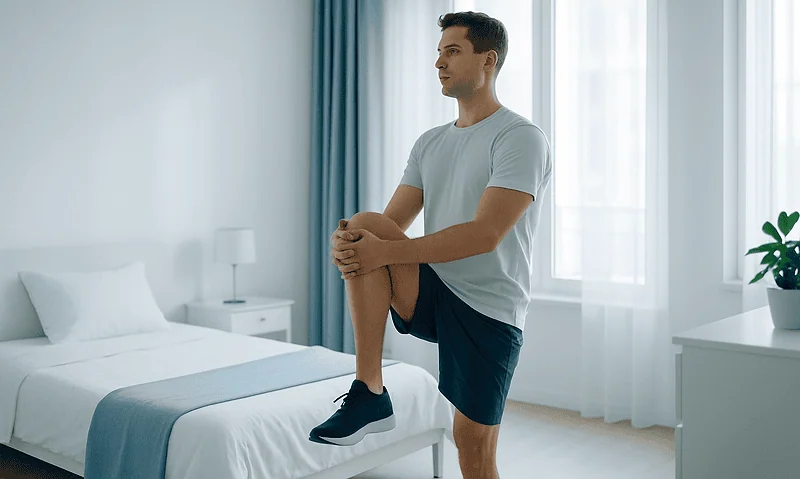
Best Exercises for Metabolism: What Training Really Does to Your Burn
The best exercises for metabolism combine strength training—which builds calorie-burning muscle—with regular aerobic activity and plenty of everyday movement. Resistance work two or more…

How to Do a Push-Up: Form, Progressions and Why It Is the Perfect Test
To do a push-up, start in a straight-arm plank with hands slightly wider than your shoulders and your body in one rigid line from…
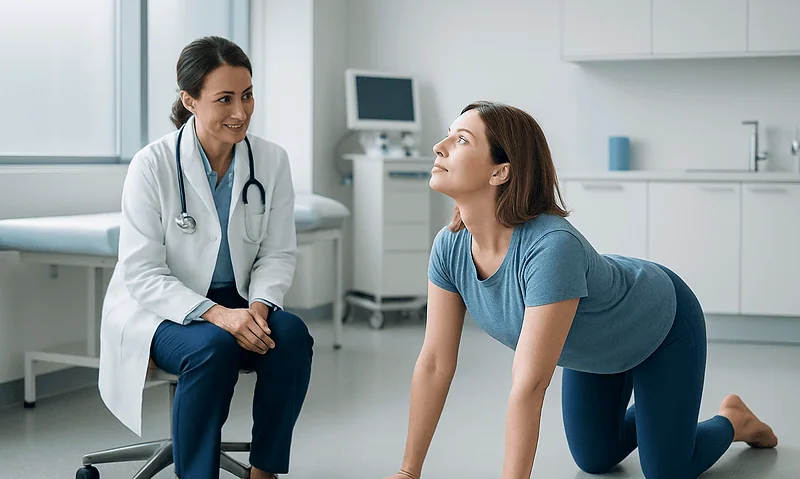
Cat-Cow Stretch: Why Physios Keep Prescribing This Simple Flow
The cat-cow stretch is a gentle spinal mobility exercise done on hands and knees, alternating between arching and rounding the back with each breath.…

How Many Steps a Day? What the Research Actually Landed On
For most adults, the health benefits of walking rise steeply up to about 8,000–10,000 steps a day, then level off; for adults 60 and…