

When Do Babies’ Eyes Change Color? The Melanin Timeline
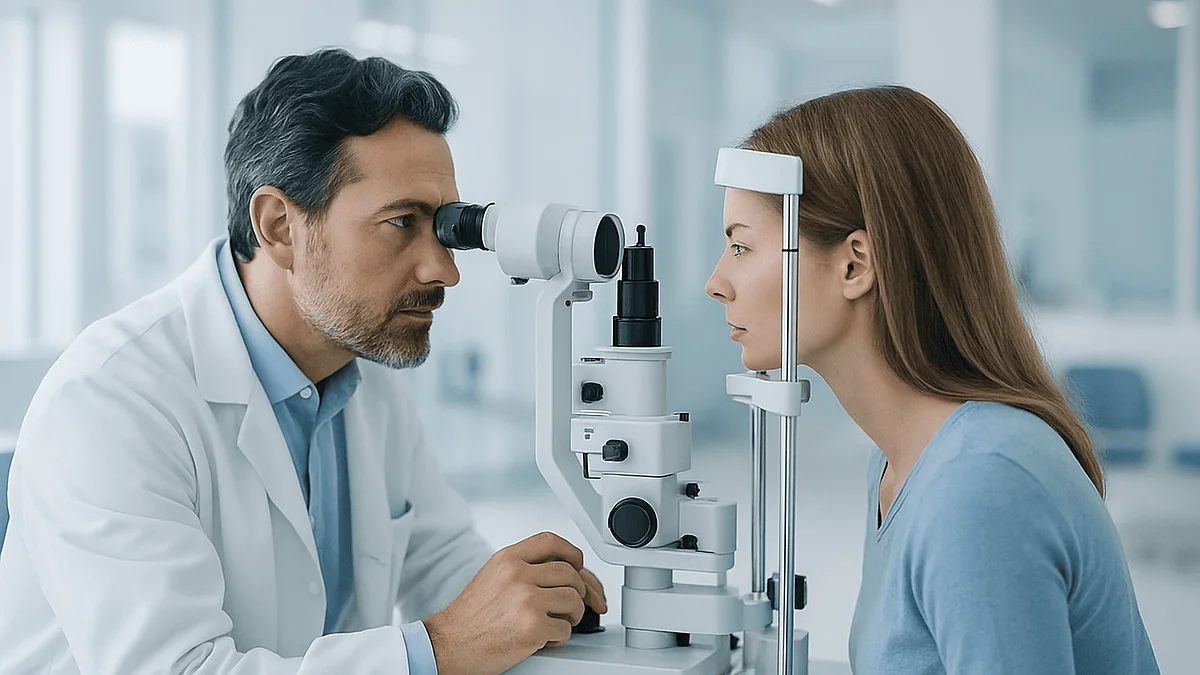
Key Takeaways
- The fastest and most visible eye color changes happen between 3 and 6 months, when iris melanocytes hit peak pigment production.
- Most babies' eye color is essentially settled by 9 to 12 months, though roughly one in ten children keeps shifting subtly until about age 3.
- The 'all babies are born with blue eyes' story is a myth — in one study of about 200 US newborns, nearly two-thirds arrived with brown eyes.
- No human eye contains blue pigment; blue irises simply scatter light the same way the atmosphere does, which is why low melanin reads as blue.
- As many as 16 genes influence eye color, which is why two blue-eyed parents can occasionally have a brown-eyed child and siblings often differ.
- Gold or brown flecks appearing near the pupil around 6 months are the classic early clue that light eyes are headed toward hazel or brown.
Most babies' eyes change color gradually over the first year as melanin builds up in the iris. The most noticeable shifts usually happen between 3 and 6 months, and color is largely settled by 9 to 12 months, though subtle deepening can continue until about age 3. Babies born with brown eyes almost always keep them; lighter eyes may stay light or darken to green, hazel, or brown.
Every family has a version of this scene. Someone leans over the bassinet, studies the baby’s face with the seriousness of an art appraiser, and announces: “She has her grandfather’s eyes.” The eyes in question, meanwhile, are a noncommittal slate grey — a color that belongs to almost no adult on either side of the family — and they may have other plans entirely.
Newborn eye color is less a verdict than an opening bid. The iris a baby is born with is a work in progress, waiting on pigment cells that have barely clocked in yet. Over the coming months those cells will decide, gene by gene, how much melanin to deposit — and the answer determines whether that grey becomes blue, green, hazel, or a deep brown.
The timeline is more predictable than most parents expect, and the folklore around it is mostly wrong. Here is what the evidence actually shows, month by month.
Do all newborns have blue eyes?
No — and this may be the most durable myth in the nursery. The idea that every baby arrives with blue eyes comes largely from observations of fair-skinned infants of European descent, whose irises often do start out blue or grey. Babies of African, East Asian, South Asian, Hispanic, and Indigenous descent are usually born with brown eyes, which tend to deepen rather than transform.
Real numbers make the point. When researchers tracked roughly 200 newborns at a Northern California hospital, nearly two-thirds were born with brown eyes; only about one in five had blue — and those blue-eyed newborns were overwhelmingly white. Blue is a common starting point in some populations, not a universal human default.
The reason some babies start light is simple biology. The pigment cells in the iris, called melanocytes, are present at birth but have produced very little melanin during gestation. Pigment production is developmentally programmed to ramp up after delivery, on roughly the same schedule that skin and hair pigment mature. A baby whose genes call for lots of melanin overall — darker skin, darker hair — has usually deposited enough iris pigment before birth to look brown-eyed from day one.
So if your newborn’s eyes are already a rich brown, you likely have your answer. If they’re grey-blue, you’re at the start of a slower reveal.
What actually gives eyes their color?
One pigment, in different amounts. That’s the whole system. Human irises contain melanin — the same molecule that colors skin and hair — deposited in a spongy front layer called the stroma. Brown eyes hold a lot of it; the melanin absorbs most incoming light, and the iris reads as dark. Green and hazel eyes hold a moderate amount. Blue eyes hold very little.
Here’s the part that surprises people: there is no blue pigment anywhere in a blue eye. The color is an optical effect. When light enters an iris with sparse melanin, the shorter blue wavelengths scatter back out of the stroma while longer wavelengths pass through and are absorbed. It’s essentially the same physics that makes the sky blue — scattering, not paint.
Melanin itself comes in two forms. Eumelanin runs brown to black; pheomelanin runs red to yellow. The ratio matters. Hazel and amber eyes owe their warmth partly to pheomelanin layered over that blue scattering effect, which is why hazel eyes can seem to shift between green and gold depending on the light.
This one-pigment system explains the entire infant timeline. A baby’s eye color “changes” only in the sense that melanocytes are steadily adding pigment to a canvas that started nearly bare. Nothing is being erased or swapped — the iris is simply filling in.
The melanin timeline: what happens month by month
Iris pigmentation follows a fairly consistent arc, though every baby moves through it at their own pace. The table below reflects the pattern pediatric sources such as Cleveland Clinic describe.
| Age | What’s happening in the iris | What parents typically notice |
|---|---|---|
| Birth | Melanocytes present but low output; genetically darker-eyed babies already have substantial pigment | Grey, blue, or slate in lighter-pigmented babies; brown in many others |
| 0–3 months | Melanin production begins ramping up | Subtle warming or deepening; often hard to pin down |
| 3–6 months | Peak period of pigment deposition | The most visible shifts — grey turning green, blue turning hazel, brown deepening |
| 6–9 months | Production slowing for most infants | Color stabilizing; flecks near the pupil hint at the final shade |
| 9–12 months | Pigment largely settled in the majority of babies | What you see is usually close to permanent |
| 1–3 years | Minor additional deposition in a minority of children | Slight deepening — hazel edging browner, for example |
Two things stand out in this arc. First, the window of dramatic change is narrower than folklore suggests — a few months in the middle of the first year, not a slow drift through toddlerhood. Second, the direction is nearly always one way: toward more pigment, never less. A grey eye may become brown; a brown eye does not become grey.
When can you tell a baby's actual eye color?
For most babies, the first birthday is a fair moment to call it. By 9 to 12 months, melanin deposition has largely run its course, and the color you see is usually the color that stays. Some pediatric sources note that a modest minority of children — often estimated around one in ten — continue to show subtle shifts up to age 3, but these are refinements, not reversals. Hazel might settle a shade browner; a light green might warm slightly. Blue does not suddenly become deep brown at age 2.
If waiting a year feels unbearable, the 6-month mark offers a decent preview. Look at your baby’s irises up close in natural daylight (a window works better than a lamp, which adds its own color cast). Pale, uniform blue-grey at 6 months, with no warm flecks, tends to stay in the light family. Gold, amber, or brown flecks radiating out from the pupil are the classic early sign that melanocytes are busy and the eyes are headed toward hazel or brown.
One honest caveat: none of this is a guarantee for an individual child. Pigmentation timelines are population patterns, and a baby who looks decisively blue-eyed at 6 months can still surprise you by 12. Treat any early call as a strong hunch, not a certificate.
Why do babies' eyes darken but almost never lighten?
Because melanin, once deposited in the iris, tends to stay put. The infant eye is an accumulation story: melanocytes add pigment over the first year, and the body has no routine process for withdrawing it. That’s why the color pathway runs in one direction — blue toward green, green toward hazel, hazel toward brown — and why a baby born with brown eyes keeps them essentially without exception.
This one-way logic is worth internalizing, because it lets you rule things out early. If your newborn’s eyes are already dark brown, no amount of waiting will turn them blue, whatever a hopeful relative predicts. If they’re pale grey, the range of outcomes is genuinely open, from staying grey-blue to landing at brown.
The asymmetry also explains a useful red flag. In an established eye — an older child’s or an adult’s — noticeable lightening or a change in one iris isn’t part of normal pigmentation and deserves medical attention, since certain eye conditions can alter iris color. In infancy, gradual darkening across both eyes is expected; a change confined to one eye, or any lightening, is the pattern worth mentioning to your pediatrician. (More on specific warning signs in the doctor section below.)
Parents sometimes swear their baby’s eyes lightened for a week or two. Almost always, that’s lighting, pupil size, or the color of the outfit reflecting into the iris — perception shifting, not pigment.
Will my baby's grey eyes turn brown?
They might — grey is the least committed color a newborn can have. A grey iris means very little melanin plus a stromal structure that scatters light somewhat differently than a classic blue eye does. From that starting point, the full menu remains open: some grey eyes settle into blue or stay a true grey, others pick up enough pigment to become green or hazel, and a substantial share continue on to brown.
Two clues can narrow the odds. The first is trajectory. If the grey holds steady through 6 to 9 months with no warming, the eyes will probably stay in the light range. If you start noticing a ring of gold or brown emerging around the pupil by mid-year, melanin production is clearly underway and darker shades become likely.
The second clue is the family portrait. Eye color is strongly heritable, so two brown-eyed parents make brown a likelier destination than two blue-eyed parents do. But — and this matters — heritability is not a formula. Because more than a dozen genes contribute, siblings with identical parents routinely end up with different eye colors, and family history can only tilt the probabilities.
The honest answer, then: watch the flecks, note the relatives, and expect a verdict around the first birthday. Grey eyes are the one starting color where genuine suspense is justified.
Can two blue-eyed parents have a brown-eyed baby?
Yes — uncommon, but genetically possible, and the reason says a lot about how eye color really works. Many of us learned a tidy classroom model: brown dominant, blue recessive, one gene, done. That model predicts two blue-eyed parents can only produce blue-eyed children. Reality is messier, and the classroom version has been retired by geneticists.
According to MedlinePlus Genetics, eye color is a polygenic trait shaped by as many as 16 genes. Two of them do most of the work — OCA2 and HERC2, which sit next to each other on chromosome 15 and together regulate how much melanin the iris produces. HERC2 contains a switch that dials OCA2 up or down; a common variant of that switch reduces melanin output and produces blue eyes. But because a dozen-plus other genes each nudge pigment production a little, combinations occasionally arise that override the expected outcome.
The practical upshots for expectant parents:
- Brown-eyed parents can have blue-eyed children if both carry low-melanin variants — this is common enough that nobody should raise an eyebrow.
- Blue-eyed parents can, rarely, have a brown- or hazel-eyed child through the combined effect of minor genes.
- Sibling variety is normal. The same two parents can produce blue, green, hazel, and brown across four children.
Online “eye color calculators” that use the two-gene model are entertainment, not prediction. The genome doesn’t do Punnett squares this simple.
What is the rarest eye color in babies?
Green, by most global estimates — commonly cited figures put green eyes at roughly 2% of the world’s population, making it the rarest of the common colors. True grey that persists into childhood appears to be rarer still, though it’s often lumped with blue in surveys, which makes clean statistics hard to come by. Amber — a solid golden-copper color, distinct from hazel’s shifting mix — is also uncommon and shows up more often in some populations than others.
At the other end of the spectrum sits brown, the world’s default: an estimated 70 to 80% of people have brown eyes, with the highest concentrations across Africa, Asia, and Latin America. Blue eyes cluster heavily in northern and eastern Europe and among people with ancestry from those regions.
A few notes on colors people ask about:
- Hazel isn’t a single pigment level but a layered effect — moderate melanin concentrated near the pupil over a light periphery — which is why hazel eyes appear to change with lighting and clothing.
- Red or violet appearances occur in some forms of albinism, where the iris carries so little melanin that light reflects off blood vessels inside the eye. This isn’t a pigment color at all, and children with albinism benefit from early ophthalmology care.
Worth remembering: rarity statistics vary by study and region, and none of them changes anything about your baby’s eye health. Rare is a conversation piece, not a medical category.
Why does my baby have two different colored eyes?
The term is heterochromia, and in babies it comes in three patterns: complete (each eye a different color), sectoral (a wedge of contrasting color in one iris), and central (an inner ring that differs from the outer iris). It’s uncommon, often striking, and — this is the key point — frequently harmless. Many cases are simply a quirk of how melanin distributed itself, sometimes running in families, with no effect on vision whatsoever.
That said, heterochromia in an infant is one finding pediatricians take seriously enough to check, because it occasionally travels with an underlying condition. Cleveland Clinic and MedlinePlus both note associations including Waardenburg syndrome (a genetic condition that can affect hearing and pigmentation), Horner syndrome (a nerve-pathway issue that can also cause a drooping eyelid and smaller pupil on one side), and congenital glaucoma. None of these is the likely explanation — they’re the ones worth ruling out.
Timing changes the calculus. Heterochromia present from birth, stable, and unaccompanied by other signs is usually the benign kind, though it still merits a mention at a well-child visit and often a baseline eye exam. A color difference that appears after infancy, or one eye that changes while the other doesn’t, is a firmer reason to see an eye specialist promptly, since acquired heterochromia can signal inflammation or injury inside the eye.
If the workup comes back clear — as it often does — you’re left with nothing but a distinctive feature and a good story.
Can anything you do change your baby's eye color?
No. This deserves a plain answer because the internet suggests otherwise with some regularity. No food, supplement, feeding method, sleep habit, or amount of sunlight will alter the color your baby’s genes have specified. Iris melanin production runs on a genetic program, not on inputs a parent controls. Claims that certain foods during pregnancy or breastfeeding influence eye color have no support in medical evidence — eye color is set by DNA at conception, and the first year merely reveals it.
What can change, dramatically and daily, is how the color looks. Parents often report their baby’s eyes shifting from morning to evening, and they’re not imagining the effect — just misattributing it. Several ordinary factors move the needle:
- Lighting. Warm indoor bulbs push light irises toward green or amber; overcast daylight pulls them cooler and bluer.
- Pupil size. A tired or crying baby’s pupils dilate, showing less iris and making eyes read darker; bright light constricts pupils and reveals more color.
- Surroundings. A green blanket or blue onesie reflects into the eye, especially in light-eyed babies with hazel-style layered pigment.
- Tears. A watery eye scatters light differently and can look glassier and lighter.
So photograph the eyes in consistent daylight if you’re tracking the change — and skip any product or protocol promising to influence the outcome. The genome finished that conversation before your baby was born.
Do premature babies follow the same eye color timeline?
Broadly yes, though the research here is thinner than for full-term infants. Iris pigmentation continues after birth on a developmental schedule, and a baby born early simply starts that postnatal phase sooner in a less mature eye. Parents of preemies often notice the same arc — a light or indeterminate color at birth, the most visible shifts in the middle of the first year, stabilization around 12 months — sometimes running a bit later when measured from the due date rather than the birth date. Because the evidence is limited, it’s fair to say the exact timing in preterm infants hasn’t been precisely mapped; what’s clear is that the mechanism, melanin gradually filling the iris, is the same.
Eye color, though, is the least important eye topic for a family with a preemie. Babies born significantly early are routinely scheduled for specialized eye exams to screen for retinopathy of prematurity, a condition affecting blood vessel development in the retina — an interior structure that has nothing to do with iris color. Those screening appointments matter far more than any cosmetic timeline, and keeping them is one of the most concrete things parents can do for a preterm baby’s vision.
If your baby was born early, fold the eye color question into those existing visits. An ophthalmologist who’s already examining the eye can tell you more about your individual child in two minutes than any general timeline can.
When to see a doctor about your baby's eyes
Normal eye color change is gradual, symmetrical, and headed darker. Anything outside that pattern deserves a professional look — usually starting with your pediatrician, who examines the eyes at every well-child visit anyway. Contact them promptly if you notice:
- A white or cloudy pupil, in person or as a white glow in flash photos where the other eye shows the usual red reflex. This can indicate a congenital cataract or, rarely, a tumor called retinoblastoma, and it warrants urgent evaluation.
- One eye changing color while the other doesn’t, or any iris that seems to be lightening rather than darkening.
- A hazy or unusually large-looking cornea, especially with heavy tearing and strong sensitivity to light — possible signs of congenital glaucoma, which needs rapid treatment to protect vision.
- A drooping eyelid paired with a smaller pupil on the same side, which can accompany Horner syndrome.
- Eyes that don’t track a face or object by around 3 months, per developmental guidance from sources like Mayo Clinic.
- Persistent crossing or drifting of one eye beyond about 4 months. Occasional misalignment is normal in young newborns; constant or worsening misalignment is not.
Two reassurances belong alongside that list. First, these conditions are uncommon; the overwhelming majority of color changes parents notice are ordinary pigmentation. Second, routine well-child exams are designed to catch most of these findings early, which is exactly why keeping those appointments matters more than any amount of at-home iris-watching.
How to make an educated guess before the big reveal
You can’t order a result, but you can read the odds like a seasoned handicapper. Start with the family. Two brown-eyed parents most often produce brown-eyed children; two blue-eyed parents most often produce blue; mixed pairs genuinely can go either way, and grandparents’ eye colors add useful hints about the hidden variants each parent carries. Just hold every prediction loosely — with up to 16 genes in play, the same couple can produce the full palette across their children.
Then read the iris itself. Around 6 months, in indirect daylight, look for the tell: warm flecks or a gold-brown ring spreading outward from the pupil signal active melanin deposition and point toward hazel or brown. A uniformly cool, pale iris at that age usually stays light. Between those extremes — a little warmth, a lot of blue — you’re likely headed for green or hazel, the in-between shades that moderate melanin produces.
And then, honestly, let it be a pleasure rather than a project. So much of modern parenting arrives pre-optimized, tracked in apps and benchmarked against percentiles. Eye color is one of the few first-year developments with no action item attached: nothing to supplement, schedule, or stimulate. The pigment will land where the genes decided long ago. In a season of sleep logs and feeding charts, a slow-motion surprise you can only watch — checked over months, in good light, with no stakes beyond curiosity — is worth savoring for exactly what it is.
Frequently asked questions
When can you tell a baby's actual eye color?
Around 9 to 12 months for most babies, when melanin deposition in the iris has largely finished. The biggest visible changes happen between 3 and 6 months, so a look at 6 months gives a strong preview — gold or brown flecks near the pupil suggest hazel or brown is coming. A minority of children show subtle additional deepening until about age 3, but reversals from dark to light don’t occur.
Do all newborns have blue eyes?
No. Blue or grey eyes at birth are common mainly in fair-skinned babies of European descent. Babies of African, Asian, Hispanic, and Indigenous descent are usually born with brown eyes, because their genes drive earlier melanin production. In one study of roughly 200 US newborns, nearly two-thirds had brown eyes at birth and only about one in five had blue, so the universal-blue idea is folklore, not biology.
What is the rarest eye color in babies?
Green is the rarest common eye color, found in roughly 2% of people worldwide by most estimates. True grey that persists past infancy appears even less often, though surveys frequently group it with blue. Amber is also uncommon. Brown sits at the other extreme, covering an estimated 70 to 80% of the global population. Rarity varies by ancestry and region, and it has no bearing on eye health.
Will my baby's grey eyes turn brown?
Possibly — grey is the most changeable newborn color, and outcomes range from staying grey-blue to becoming green, hazel, or brown. Watch two clues: warm gold-brown flecks spreading from the pupil by about 6 months suggest melanin is ramping up and darker shades are likely, while a uniformly pale iris at 6 to 9 months usually stays light. Family eye colors tilt the odds but can’t guarantee a result.
Can a baby's brown eyes turn blue?
No, not as part of normal development. Iris color change in infancy runs one direction — toward more melanin and darker shades — because the body deposits pigment but doesn’t remove it. A baby born with brown eyes keeps them. If one of your child’s eyes ever appears to lighten or changes independently of the other, that’s outside the normal pattern and worth discussing with your pediatrician or an eye specialist.
When do babies' eyes stop changing color?
For most children, by the first birthday. Melanin production in the iris peaks between 3 and 6 months, slows through the second half of the first year, and is largely complete by 9 to 12 months. A modest minority — often estimated around one in ten — show slight further deepening up to about age 3, such as hazel edging browner. Dramatic changes after age 1 are uncommon and worth mentioning to a doctor.
Why do my baby's eyes look a different color in some lights?
Because light-colored irises reflect their surroundings and reveal more or less color depending on pupil size. Warm indoor lighting pushes light eyes toward green or amber; daylight pulls them bluer. A tired or crying baby’s dilated pupils show less iris, making eyes look darker, and a green blanket or blue shirt can literally reflect into the eye. The pigment isn’t changing day to day — the optics are.
Does breastfeeding or diet affect a baby's eye color?
No. Eye color is determined by genes fixed at conception, and no feeding method, food, or supplement — during pregnancy or afterward — influences how much melanin the iris produces. Claims to the contrary have no support in medical evidence. Nutrition matters enormously for a baby’s overall growth and eye health, but it plays no role in whether those eyes end up blue, green, hazel, or brown.
Is it normal for a baby to have two different colored eyes?
It can be. Heterochromia — two different colored eyes, or two colors within one iris — is often a harmless genetic quirk with no effect on vision. Because it occasionally accompanies conditions such as Waardenburg syndrome, Horner syndrome, or congenital glaucoma, any infant with heterochromia should be mentioned to the pediatrician and typically gets a baseline eye exam. A color difference that appears suddenly or affects only one eye deserves prompt evaluation.
Can two brown-eyed parents have a blue-eyed baby?
Yes, and it’s not unusual. Eye color is shaped by as many as 16 genes, with OCA2 and HERC2 on chromosome 15 doing most of the work. Brown-eyed parents frequently carry low-melanin gene variants without showing them; when a child inherits those variants from both sides, blue eyes result. The reverse — blue-eyed parents having a brown-eyed child — is rarer but also genetically possible, which retired the simple one-gene model.
References
- Is eye color determined by genetics? — MedlinePlus Genetics
- Heterochromia — MedlinePlus Medical Encyclopedia
This article is for general information only and is not a substitute for professional medical advice. Please consult a qualified doctor about your individual situation.

More from the Blog
Why Do Some Chickenpox Spots Leave Scars and How Is Early Healing Supported?
Most chickenpox spots heal without a mark. Scars form when a blister damages deeper skin, usually because it was scratched open, infected, or healed…

What the Start of Chickenpox Looks Like: Early Spots, Symptoms and Day-By-Day Changes
Chickenpox usually starts with a day or two of fever, tiredness and loss of appetite, followed by pink or red spots on the face,…

How Whooping Cough Is Diagnosed: Nasal Swab, Blood Tests and Why Early Sampling Matters
Whooping cough is usually diagnosed with a swab taken from the back of the nose, tested by PCR or culture for the bacterium Bordetella…

When Do Babies Start Teething? Signs, Timeline and Soothing
Most babies cut their first tooth around 6 months of age, usually a lower front incisor, though anywhere from 4 to 12 months falls…

Neuroblastoma Survival Rate: What the Statistics Mean, Stage by Stage, and What Changes Them
Neuroblastoma survival depends far more on risk group than on stage alone. According to the National Cancer Institute, more than 95% of children with…
Childhood Liver Cancer: What It Means, What to Expect and When to See a Specialist
Childhood liver cancer is rare, accounting for roughly 1 to 2 percent of cancers in children. The two main types are hepatoblastoma, usually found…