

EEG Test in Turkey: What Neurology Patients Can Expect
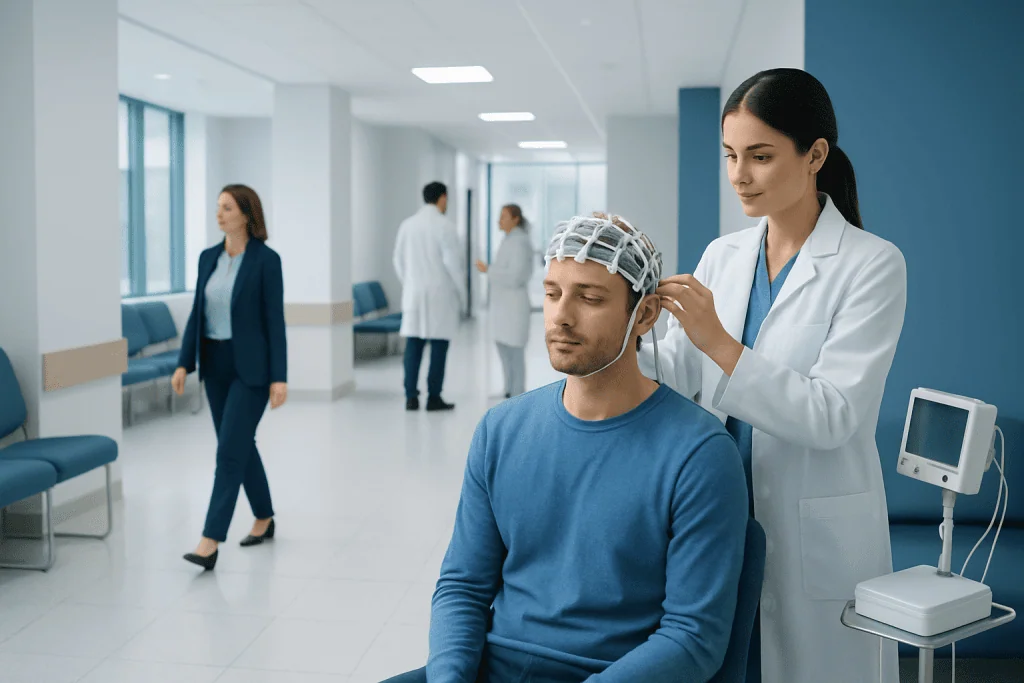
An EEG test records the brain’s electrical activity through small sensors placed on the scalp and is commonly used to help evaluate seizures, epilepsy, sleep-related disorders, and other neurological symptoms. At Acibadem in Turkey, neurology patients can expect specialist assessment, preparation guidance, the EEG procedure itself, and follow-up interpretation to support diagnosis and treatment planning.
If your neurologist has recommended an EEG, you may be wondering what the test feels like, how long it takes, and how to plan it as an international patient. This guide explains the practical side of having an EEG test in Turkey, from appointment preparation to interpreter support and follow-up.
At a glance
- Purpose: Records the brain's electrical activity to support neurological assessment.
- Typical setting: Neurology or neurophysiology unit, usually as an outpatient test.
- Comfort level: Non-invasive and generally painless; electrodes are placed on the scalp.
- Planning needs: Clean hair, medication list, prior reports, and clear travel timing.
- Support available: Interpreter, appointment coordination, and travel guidance can be arranged.
What an EEG test is and why you may need one
An electroencephalogram, often called an EEG, is a test that records electrical activity from your brain through small sensors placed on your scalp. It does not send electricity into your body and it is not a treatment. Your neurology team uses the recording as one piece of information alongside your symptoms, medical history, examination, and any imaging or laboratory tests.
You may be asked to have an EEG if you have had episodes such as fainting, seizures, unexplained confusion, unusual movements, memory gaps, sleep-related events, or changes in awareness. Some patients travel to Turkey for a planned neurology evaluation, while others add an EEG to a broader assessment after a consultation. The test can help your doctor understand patterns of brain activity, but the meaning of the result depends on your full clinical picture.
At Acibadem International, EEG appointments are coordinated through neurology services within JCI-accredited hospital settings. For international patients, this means your test can be planned together with your consultation, interpreter needs, hotel or transfer questions, and follow-up timeline so you are not left trying to connect each step on your own.
Before you travel: documents and medical details to share
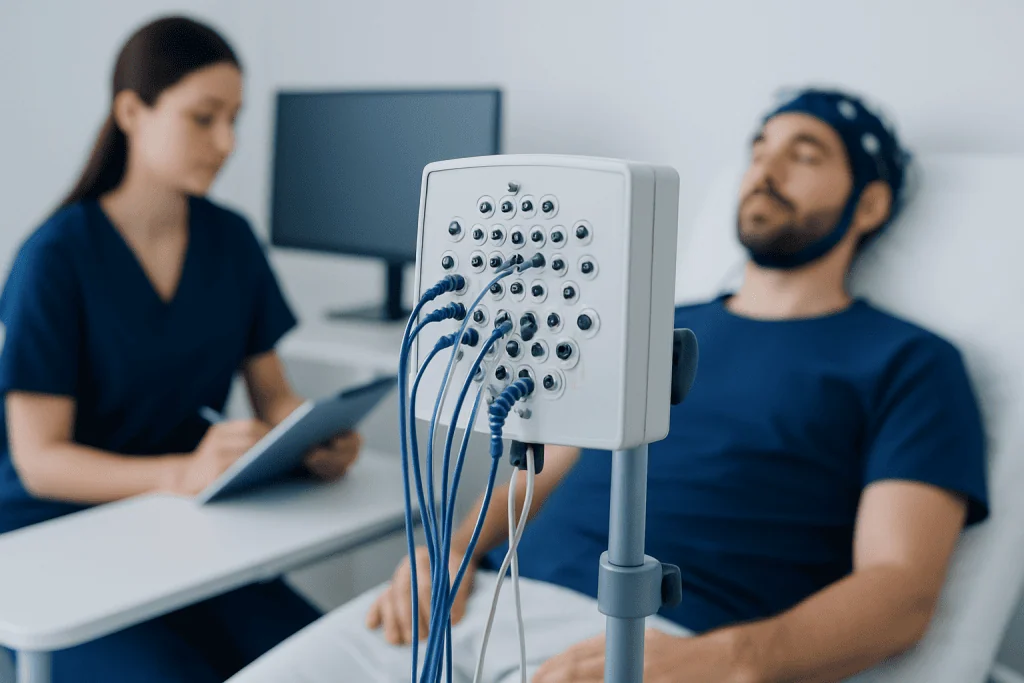
Good preparation starts before you arrive in Turkey. Send any previous neurology reports, hospital discharge notes, brain MRI or CT results, prior EEG reports, medication lists, and a short description of the episodes that led to the referral. If someone has recorded a video of your event, ask your coordinator whether it may be useful to share securely with the medical team.
Be specific about your current medications, including anti-seizure medicines, sleeping tablets, antidepressants, blood thinners, supplements, and over-the-counter products. Do not stop or change any medication for an EEG unless your doctor clearly instructs you to do so. If the neurologist needs a sleep-deprived EEG or a medication-related plan, you should receive individualized instructions in advance.
If you are travelling with a companion, ask them to help prepare a simple timeline: when symptoms began, how often they happen, how long they last, what you feel before and after, and whether there are triggers such as sleep loss, stress, alcohol, fever, flashing lights, or missed medication. This practical summary often helps the consultation feel calmer and more focused.
How to prepare on the day of your EEG

Most EEG preparation is simple. Wash your hair the night before or the morning of the test, and avoid hair oil, gel, mousse, heavy conditioner, or spray because these can make it harder for the electrodes to make good contact with the scalp. Wear comfortable clothing and consider a top that is easy to remove or adjust if the team needs access around the neck or shoulders.
Eat normally unless you have been told otherwise. Bring water and a snack, especially if you are also seeing a doctor or having other tests on the same day. If you are asked to sleep less than usual before the test, follow only the instructions provided by your care team, and arrange safe transport because you may feel tired.
For children, older adults, or patients with anxiety, preparation can also include comfort planning. A familiar companion, a favorite small item, extra time to arrive, and clear language about what will happen can make the visit easier. If you have sensory sensitivities, mobility needs, or a history of panic in medical settings, tell your international patient coordinator before the appointment so the team can plan with you.
What happens during the appointment
When you arrive, the team will confirm your identity, review the request, and explain the test steps. A trained technician will measure areas of your scalp and place small electrodes using a conductive paste or gel. You will usually sit in a reclining chair or lie comfortably while the recording is taken.
During the EEG, you may be asked to relax, keep your eyes closed, open and close your eyes at certain moments, breathe deeply for a short period, or look at a flashing light. These activation steps are not used for everyone and are performed according to the neurologist’s request and your safety considerations. Tell the technician immediately if you feel unwell, anxious, dizzy, or need a break.
The test is generally painless, although the paste may feel cool or sticky and your hair may need washing afterward. The recording itself is usually not long, but your total visit time can be longer because of check-in, electrode placement, removal, cleaning, and coordination with consultation or other tests. If you have a same-day neurology appointment, your coordinator can help you understand the sequence and where to go next.
After the test: results, follow-up, and next decisions
After the electrodes are removed, you can usually return to normal activities unless your doctor has given different instructions. You may want to bring a comb, wipes, or a hat because small amounts of paste can remain in the hair. If you were sleep-deprived or feel tired, it is safer to avoid driving and to rest before continuing with travel plans.
An EEG recording is reviewed by a qualified physician, usually a neurologist or neurophysiology specialist. Results are interpreted in the context of your symptoms, exam findings, medications, and other tests. A normal EEG does not always rule out a neurological condition, and an abnormal pattern does not automatically mean one specific diagnosis; your doctor will explain what the report means for you.
As an international patient, ask how and when you will receive your report, whether it will be in English or translated, and whether you need an in-person or online follow-up. Acibadem International can help coordinate report delivery, interpreter-supported discussions, and sharing relevant documents with your referring doctor when appropriate and with your consent.
Planning your stay in Istanbul or Turkey around an EEG
An EEG is often arranged as an outpatient test, but your overall schedule depends on why you are being evaluated. Some patients need only a consultation and EEG, while others may also need MRI, blood tests, sleep evaluation, medication review, or additional specialist input. Try not to book tight return flights until your care team confirms the realistic timeline.
If you are coming from abroad, think through practical details such as airport arrival time, hotel distance from the hospital, local transport, rest after travel, and whether you need a companion. Jet lag and poor sleep can affect how you feel during a neurology visit, so arriving with some recovery time can be helpful, especially if your symptoms are triggered by fatigue.
Acibadem International’s patient services can assist with appointment coordination, interpreter arrangements, hospital navigation, and general travel or accommodation guidance. This support is especially useful when your EEG is part of a larger neurology pathway and you want one clear plan rather than separate, confusing appointments.
Comfort, safety, and communication tips
It is normal to feel nervous before a neurological test, especially if you have recently had frightening symptoms. The EEG team is used to supporting patients who are anxious, tired, or worried about results. You can ask questions at any point, including how long the placement will take, whether you can move, and what to do if you feel uncomfortable.
Tell the team if you have a scalp condition, recent head surgery, implanted devices, skin sensitivity, adhesive allergies, pregnancy, severe headaches, or a history of events triggered by flashing lights or hyperventilation. These details help the staff adapt the session safely. If you do not speak Turkish, request an interpreter rather than relying on guessing or incomplete understanding.
For the clearest experience, keep one folder on your phone and one printed folder if possible. Include your passport details, appointment confirmation, medication list, allergies, previous reports, emergency contacts, and insurance or payment documents. Simple organization can reduce stress and help your hospital day move more smoothly.
Step by step
- Share your neurology history before booking. Send previous reports, imaging results, medication details, and a short symptom timeline to the patient coordination team. This helps the neurologist decide whether a routine EEG, sleep-related EEG, or additional assessment may be appropriate.
- Confirm the appointment plan. Ask whether the EEG is scheduled before or after your neurology consultation and whether other tests are planned the same day. Confirm the hospital location, arrival time, expected duration, interpreter needs, and whether you should bring a companion.
- Follow preparation instructions. Wash your hair and avoid styling products so the electrodes can attach properly. Continue medications as prescribed unless your doctor gives specific instructions, and ask in advance if sleep deprivation or any special preparation is required.
- Arrive with time to spare. Plan for traffic, hospital registration, and wayfinding, especially in Istanbul. International patient staff or interpreters may guide you, but arriving early helps the appointment feel less rushed.
- Complete the EEG recording. The technician will place electrodes on your scalp and guide you through the recording. You may be asked to rest quietly, open or close your eyes, breathe deeply, or look at flashing lights if medically appropriate.
- Review next steps with your care team. Ask when the report will be ready and how the neurologist will explain the findings. If you are travelling soon, clarify whether results can be discussed before departure or through a remote follow-up.
- Keep copies for home care. Before leaving Turkey, make sure you know how to access your EEG report and related recommendations. Share them with your local doctor if ongoing medication management or follow-up is needed.
Your checklist
- Passport or official ID and appointment confirmation
- Current medication list with doses and timing
- Previous EEG, MRI, CT, blood test, or hospital reports
- Written description of episodes, triggers, and recovery time
- Clean hair with no oil, gel, spray, or heavy conditioner
- Comfortable clothing and a comb or hat for after the test
- Interpreter request confirmed if you do not speak Turkish
- Companion contact details and emergency contact information
- Insurance, payment, or guarantee documents if applicable
Key takeaways
- An EEG test in Turkey is usually an outpatient, non-invasive recording of brain electrical activity.
- Clean hair, a complete medication list, and previous reports make the appointment smoother.
- International patients should confirm timing, interpreter support, report delivery, and follow-up before travelling.
- The result needs specialist interpretation and should be considered alongside symptoms and other tests.
- Acibadem International can help coordinate neurology appointments, hospital navigation, interpreters, and practical travel support.
Frequently asked questions
Is an EEG test painful?
No, an EEG is generally not painful. Small electrodes are placed on the scalp with paste or gel to record activity, and the test does not send electricity into your brain. You may feel mild discomfort from sitting still or from the sticky paste in your hair afterward.
How long should I stay in Turkey for an EEG?
The EEG itself is often completed as an outpatient visit, but your total stay depends on your consultation, other tests, and when the report will be reviewed. If you are travelling internationally, avoid scheduling your return flight too tightly. Your coordinator can help you understand a realistic timeline before you book travel.
Can I take my usual medications before the EEG?
In many cases, patients continue their usual medicines, but this must be confirmed by your doctor. Do not stop anti-seizure medication, sleeping medication, or other prescribed treatment unless you have been given clear medical instructions. Bring a full list of medicines to the appointment.
Will I receive my EEG results the same day?
Timing varies depending on the hospital schedule, the type of EEG, and the need for specialist review. Ask in advance when the report is expected and whether your neurologist can discuss it before you leave Turkey. International patient services can help coordinate report delivery and follow-up communication.
Do I need someone to come with me?
A companion is not always required, but it can be very helpful if you have seizures, fainting episodes, memory gaps, mobility needs, or anxiety. A companion can also describe events you may not remember and help with travel after the appointment. If you are sleep-deprived for the test, having someone with you is especially practical.
What should I do if I have a seizure risk during travel?
Discuss travel safety with your neurologist before flying or making long transfers, especially if your episodes are recent or uncontrolled. Carry medications in your hand luggage, keep a written medical summary with you, and avoid missed doses, sleep loss, and alcohol if these are triggers for you. Seek urgent medical help if you have prolonged, repeated, or unusual events.
Can Acibadem International help if I do not speak Turkish?
Yes, interpreter support can be arranged for international patients, including during registration, consultations, and key explanations when available. It is best to request language support before your appointment so the schedule can be planned properly. Clear communication is important for both comfort and safety.
Add us as a Preferred Source to see more of our trusted health content across Google Search, AI Overviews and Discover.

More Patient Guides

Medical Test Results in Turkey: How to Understand the Next Step in Your Plan
Medical test results in Turkey usually lead to a clear next-step plan: review findings, confirm urgency, ask for copies, and arrange follow-up…
8 min read
Blood Tests and Scans Before Treatment in Turkey: Why They May Be Repeated
Blood tests and scans before treatment in Turkey may be repeated to confirm safety, compare methods, and meet hospital standards before your…
9 min read
Sending Medical Records to a Hospital in Turkey: What to Include and How to Organize Them
Sending medical records to a hospital in Turkey is easiest when you group reports, scans, medicines and IDs into clear folders before…
9 min read