

Traveling to Turkey with CPAP: Sleep Apnea Checklist for Hospital Patients

Traveling to Turkey with CPAP is manageable with the right checklist for flights, power, hospital admission, and recovery planning in Turkey.
If you use CPAP for sleep apnea, you can travel to Turkey and prepare for a hospital stay more smoothly with a few practical steps. This guide helps you organize your device, documents, flights, power needs, and communication with your care team so you feel ready from departure to discharge.
At a glance
- Best for: Patients with sleep apnea traveling with a personal CPAP device
- Main goal: Safe, uninterrupted CPAP use during travel and hospital stay
- What to prepare: Device, mask, tubing, power adapters, prescription, cleaning supplies
- Who to inform: Airline, hospital team, anesthesiologist, and international patient coordinator
- Helpful support: Interpreter, admission guidance, and accommodation planning
- Key reminder: Keep your CPAP in your hand luggage, not checked baggage
Why planning ahead matters when you travel with CPAP
If you use CPAP every night, it is part of your normal health routine, not an optional extra. When you are traveling for tests, surgery, or a hospital stay in Turkey, keeping that routine as consistent as possible can help you rest better, reduce stress, and make your treatment journey feel more predictable.
Sleep apnea is also important information for your medical team. Sedation, anesthesia, pain medicines, and sleeping in an unfamiliar setting can all affect breathing and sleep quality. That is why it helps to tell your hospital in advance that you use CPAP, what type of machine you have, and whether you depend on it every night or only in certain situations.
If you are coming to Acibadem International, the international patient services team can help you think through practical details before arrival, including what documents to bring, how to note your CPAP use in your admission information, and how to plan your stay with less disruption. Simple preparation usually prevents last-minute problems at the airport, hotel, or hospital.
What to pack in your CPAP travel bag
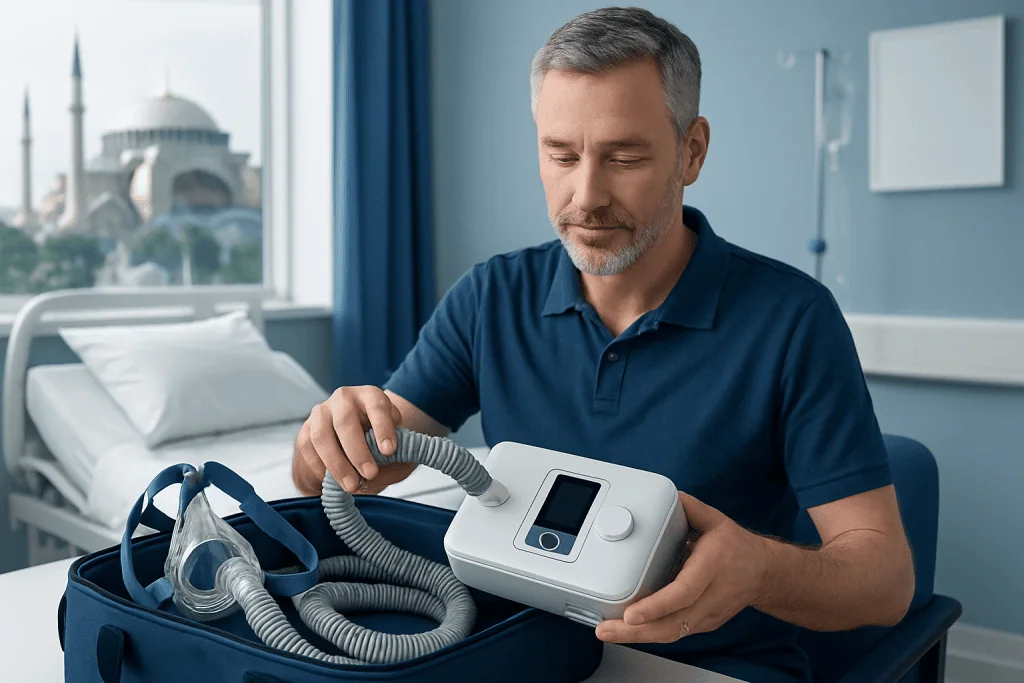
Your CPAP should travel with you in cabin baggage whenever possible. Checked luggage can be delayed, damaged, or exposed to rough handling, and you do not want to arrive in Turkey without an item you use for sleep and breathing support.
Pack the machine in its own case if you have one, and keep the essentials together so security checks and hospital admission are easier. Label the bag clearly with your name, phone number, and destination address.
A practical CPAP packing list usually includes:
- CPAP machine
- Mask and headgear
- Tubing
- Power cord and power supply
- Plug adapter suitable for Turkey
- Extension lead if you find it helpful
- Humidifier chamber, if you use one
- Distilled water if practical for short use, or a plan to buy suitable water locally if advised for your device
- Filter replacements if needed
- Cleaning wipes or simple cleaning supplies
- A copy of your prescription or sleep apnea report
- A short medical letter stating that you use CPAP
If you also use related equipment, such as a mandibular device, chin strap, battery pack, or pulse oximeter, pack those as well. Bring one or two spare small parts if you have them, especially items that are difficult to replace quickly while abroad.
Flights, airports, and power planning in Turkey
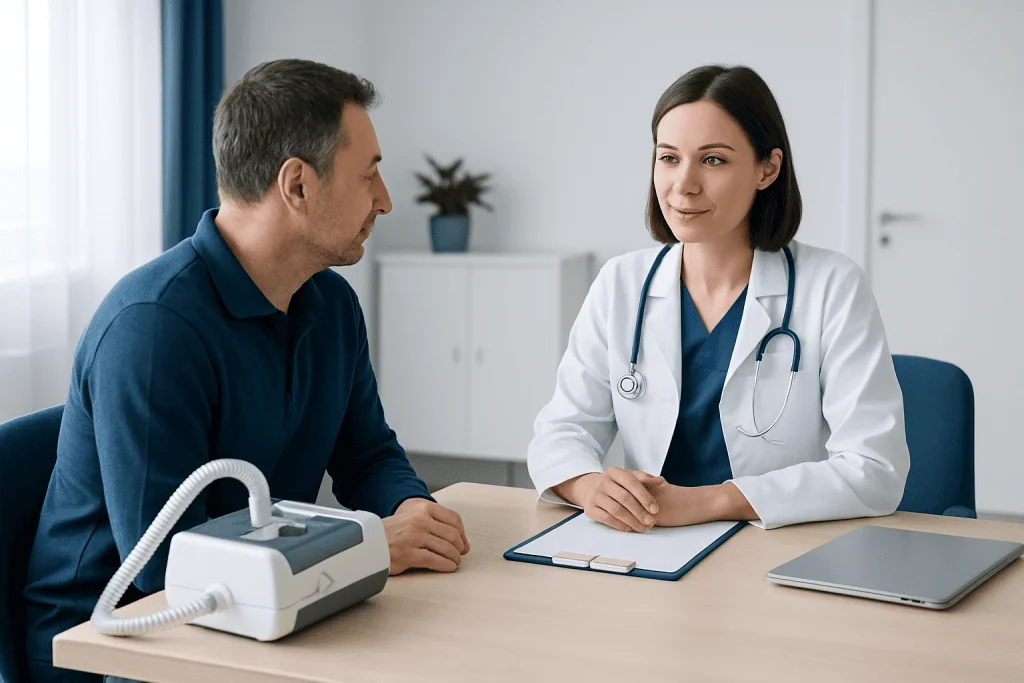
Before you fly, check your airline’s policy for carrying medical devices. Many airlines allow CPAP machines in addition to your usual hand luggage, but rules vary, so it is worth confirming this in writing or by email. If you expect to use the machine during a long flight, ask ahead about onboard power availability and whether battery use is required.
At airport security, CPAP machines are common, but screening procedures may differ by country. Place the device where it can be inspected easily, and consider carrying it in a clear protective bag inside its case. Keep your prescription or medical letter easy to reach in case anyone asks why you are carrying the equipment.
Turkey uses Type C and Type F plugs, and the standard voltage is typically 220V with 50Hz frequency. Many modern CPAP machines are dual voltage, but you should still check your device label or user manual before travel. If you need a converter rather than a simple plug adapter, arrange it before departure.
If you are staying in a hotel before or after your hospital visit, ask about bedside electrical outlets and whether a kettle or bottled water is available if you use humidification. If you are coordinating your trip through Acibadem International, you can also ask the team for practical guidance on accommodation and room setup that supports your usual nightly routine.
What your hospital team needs to know before admission
Tell your hospital as early as possible that you have diagnosed sleep apnea and use CPAP. This is especially important if you will have surgery, sedation, endoscopy, imaging that involves sedation, or overnight observation. Your doctors and nurses do not need only the diagnosis; they also need to understand your usual pattern of use and any difficulties you have had in the past.
Share details such as your machine model if known, your mask type, whether you use humidification, and whether you have ever needed oxygen or special monitoring after anesthesia. If you have a recent sleep study report, prescription, or letter from your sleep specialist, bring copies in English if possible. If your records are in another language, a brief translated summary is very useful.
At a JCI-accredited hospital such as Acibadem International, coordinated communication between the admitting team, anesthesiologist, ward nurses, and relevant specialists helps reduce avoidable confusion. Interpreter support can also help you explain your routine clearly, including how you fit your mask, what settings you normally use, and what usually helps you sleep comfortably.
If you are unsure whether to bring your own device or whether the hospital can support CPAP use during admission, ask in advance rather than assuming. Policies can vary depending on the type of admission, the department, infection control procedures, and the complexity of your treatment plan.
Using CPAP during your hospital stay and recovery
Bring your CPAP to the hospital on the day of admission unless you have been told otherwise. Keep it with your personal belongings and mention it again during check-in, even if you already noted it on your forms. Repeating important safety information is helpful, not inconvenient.
Once you are admitted, ask where and when you should use your machine, especially if you expect to nap after a procedure or stay overnight. If you normally need CPAP whenever you sleep, make that clear to the nurses. After anesthesia or pain medication, your team may want closer observation, and your own machine can be part of that planning.
You may also want to discuss comfort details, such as whether you prefer a nasal mask or full-face mask, whether dry air bothers you, and how you usually position your tubing. Small practical preferences can make a real difference when you are tired and recovering.
Before discharge, check that you have all parts of your device packed correctly and nothing has been left by the bed or plugged into the wall. It is easy to forget a power supply, mask clip, or humidifier chamber when you are focused on transport, medicines, and paperwork.
Cleaning, hygiene, and backup plans while away from home
Travel often changes your routine, so aim for simple, realistic CPAP care rather than perfect routines. Pack basic cleaning supplies that are safe for your device and easy to use in a hotel or hospital bathroom. If you normally do a deeper weekly clean at home, you may need a lighter temporary routine during your trip.
Do not use unfamiliar cleaning methods or harsh chemicals just because you are away. Follow the manufacturer’s instructions for your machine, mask, tubing, and humidifier chamber. If you are staying several days, allow parts to dry properly before repacking them.
It is also wise to plan for minor problems. Save a photo of your machine label, settings screen if appropriate, and prescription on your phone. Bring extra mask cushions or filters if you are due to replace them soon, and note the contact details of your home equipment provider in case you need advice while in Turkey.
If a part is lost or damaged during your trip, tell your patient coordinator or ward team early. They may not be able to replace every brand-specific component immediately, but early notice gives more time to explore practical options and avoid a stressful late-night scramble.
How to make the journey easier for you and your companion
If someone is traveling with you, ask them to learn the basics of your CPAP setup before the trip. They do not need to become technical experts, but it helps if they know how to identify the machine, mask, tubing, and power supply, and how to tell staff that you use CPAP every time you sleep.
Build extra time into your journey. Airport screening, admission paperwork, and moving between hotel and hospital all take longer when you are carrying medical equipment. A calmer schedule makes it easier to stay organized, especially if you are also managing medications, fasting instructions, or mobility needs.
Try to keep one folder or phone note with your key information: diagnosis, prescription, medication list, allergies, emergency contact, and your hospital details in Turkey. If you are being cared for through Acibadem International, keeping your coordinator’s contact information handy can be especially helpful for practical questions about arrival, interpreters, or next-day logistics.
Most importantly, do not be embarrassed about repeating that you have sleep apnea and use CPAP. In travel and hospital settings, repeating essential information is part of protecting your own comfort and safety.
Step by step
- Confirm your travel and hospital plan early. As soon as your trip dates are set, tell the hospital and your airline that you use CPAP. Ask whether you should bring your own device, whether any forms are needed, and whether there are special instructions for surgery, sedation, or overnight stay.
- Prepare your documents. Carry your CPAP prescription, a brief medical letter, and any recent sleep study or clinic summary if available. Keep digital copies on your phone as a backup in case paperwork is misplaced during travel.
- Pack your CPAP in hand luggage. Do not place the machine in checked baggage unless you have no alternative. Keep the device, mask, tubing, power supply, adapters, and essential accessories together so you can access them quickly at security, in transit, and on arrival.
- Check power compatibility. Look at your machine label or user manual to confirm voltage compatibility and whether you only need a plug adapter for Turkey. If you use a battery for flights or power interruptions, charge it fully and confirm airline rules before departure.
- Repeat your sleep apnea history at admission. Even if you submitted forms in advance, tell the admissions team, nurses, and anesthesiologist that you use CPAP. Mention whether you need it for every sleep period, including daytime naps after a procedure.
- Set up your sleeping space as soon as possible. Once you reach your hotel or hospital room, check outlet access, machine placement, and whether all parts are working. Solving setup issues early is much easier than trying to fix them when you are tired late at night.
- Repack carefully before discharge or transfer. Before leaving the hospital, check for the mask, tubing, humidifier chamber, power supply, and any small accessories. A quick final review helps prevent leaving behind the items that are easiest to forget.
Your checklist
- CPAP machine packed in hand luggage
- Mask, tubing, headgear, and power supply included
- Turkey plug adapter and any needed voltage converter checked
- Prescription or medical letter printed and saved digitally
- Airline policy for medical devices confirmed
- Hospital informed about sleep apnea and CPAP use
- Recent sleep study or clinic summary available if possible
- Basic cleaning supplies and spare small parts packed
- Coordinator, hotel, and emergency contact numbers saved
- Companion knows you use CPAP and where it is packed
Key takeaways
- Keep your CPAP in cabin baggage and pack all essential parts together.
- Tell your airline and hospital in advance that you use CPAP for sleep apnea.
- Check plug type and voltage compatibility before traveling to Turkey.
- Repeat your CPAP needs at admission, especially before sedation or surgery.
- Bring documents, simple cleaning supplies, and a backup plan for small equipment issues.
Frequently asked questions
Can I bring my CPAP on a flight to Turkey?
In many cases, yes. Airlines commonly allow CPAP devices as medical equipment, but policies are not identical, so you should confirm with your airline before travel. If you plan to use it during the flight, ask specifically about onboard power, battery requirements, and seating rules.
Should I pack my CPAP in checked baggage or carry-on?
Carry it with you whenever possible. A CPAP machine is important medical equipment, and checked baggage can be delayed, lost, or damaged. Keeping it in your hand luggage also makes it easier to explain at security and use immediately if needed after arrival.
Do I need to tell the hospital that I have sleep apnea if I am already bringing my CPAP?
Yes, definitely. Your team needs to know about your sleep apnea diagnosis and your normal CPAP use, especially if anesthesia, sedation, pain medicines, or overnight monitoring are involved. Bringing the device is helpful, but it does not replace clear communication.
Will my CPAP work in Turkey?
Many CPAP machines are designed for international voltage ranges, but you must check your own device label or manual. Turkey typically uses 220V electricity and Type C or Type F plugs, so you may need a plug adapter and, in some cases, a converter depending on your equipment.
Should I bring my sleep study report or prescription?
Yes, if you have them. A prescription, sleep study summary, or brief letter from your doctor can help explain your diagnosis, your treatment, and your usual settings. English-language copies are especially useful when traveling internationally.
Can I use my CPAP in the hospital after a procedure?
Often yes, but the exact plan depends on your treatment, level of monitoring, and the hospital's procedures. Tell the team if you usually need CPAP every time you sleep, including naps. They can then advise you on when and where to use it safely during recovery.
What if I forget a part of my CPAP or something breaks during the trip?
Tell your patient coordinator or ward team as soon as possible rather than waiting until bedtime. Immediate replacement may not always be possible, especially for brand-specific items, but early notice gives the team more time to help you explore practical options. Carrying small spares and digital copies of your prescription can make these situations easier.

More Patient Guides

Staying Near the Hospital in Turkey: How to Choose the Right Area
Staying near the hospital in Turkey is easiest when you choose an area with short transfers, safe walking routes, and nearby daily…
9 min read
Medical Fitness to Fly to Turkey: When You Need Clearance Before Travel
Medical fitness to fly to Turkey means checking if you need clearance before travel, plus airline letters, medicines and airport support.
9 min read
Arriving in Turkey with Mobility Equipment: Wheelchairs, Walkers, and Assistance
Arriving in Turkey with mobility equipment is manageable with airline notice, airport assistance, and hotel planning in Turkey or Istanbul.
9 min read