

When Is an In-Person Evaluation Needed Before Treatment in Turkey?

Learn when an in-person evaluation in Turkey is needed before treatment. Plan your trip with confidence as an international patient in Turkiye.
If you are planning treatment in Turkey, an in-person evaluation may be necessary when your doctor needs to examine you directly, repeat tests, or confirm that the proposed treatment is still the safest option. Knowing when this step is required helps you plan your trip, timing, and expectations with less stress.
At a glance
- Best for: Patients planning treatment in Turkey who want to know whether they can be scheduled remotely or need to be examined first
- Main question: Whether records and online consultation are enough, or whether a face-to-face assessment is needed before treatment
- Common reasons: Physical examination, updated imaging, lab work, anesthesia review, or multidisciplinary planning
- What to prepare: Medical records, imaging files, medication list, passport details, and travel dates
- Helpful support: International patient coordinators, interpreters, and travel guidance can help organize the visit
Why an in-person evaluation is sometimes necessary
Many treatment plans can begin with remote review of your reports, scans, pathology, and medical history. This first step is useful because it helps the medical team understand your situation, decide whether Turkey is an appropriate option, and explain what further information may be needed before you travel.
However, some decisions cannot be made safely from documents alone. Your specialist may need to examine you in person, assess how your symptoms appear on the day, or compare older records with new findings. This is especially important when your condition has changed, your imaging is outdated, or the recommended treatment depends on details that are only clear during a face-to-face assessment.
An in-person evaluation is not a sign that something is wrong. It is often simply part of careful planning. At Acibadem International, international patient teams commonly help patients understand whether remote review is enough for a preliminary opinion or whether they should plan an evaluation visit before any treatment is scheduled.
Situations where you are more likely to need a face-to-face assessment
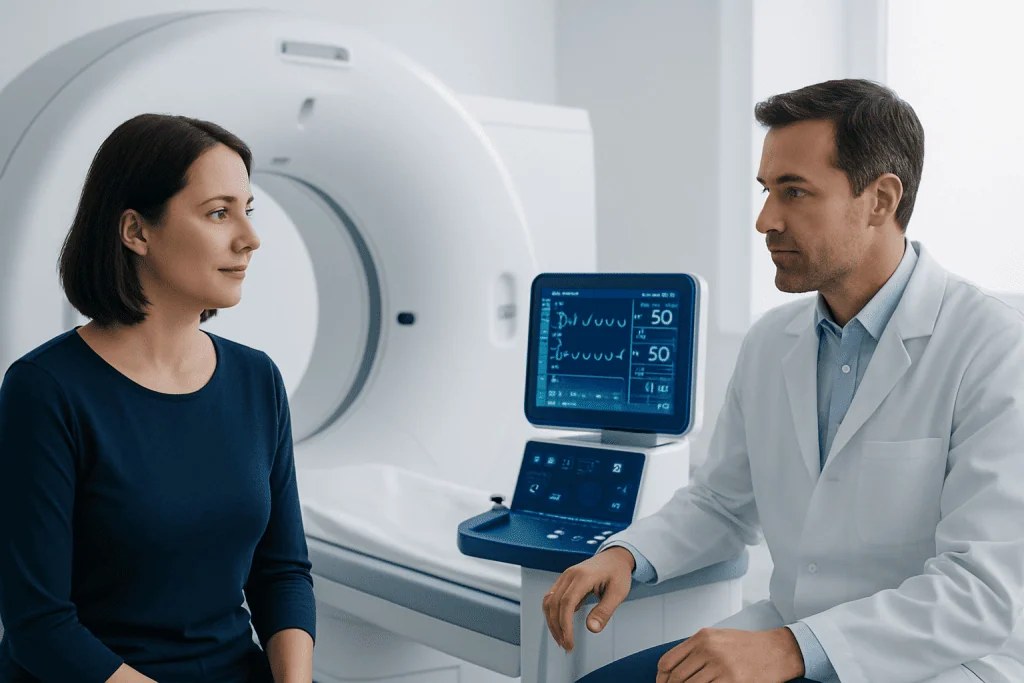
You are more likely to need an in-person evaluation if your treatment depends heavily on physical findings. Orthopedics, neurology, rehabilitation, ENT, plastic or reconstructive procedures, some dental and maxillofacial cases, and many surgical specialties may require the doctor to assess movement, strength, pain points, skin condition, swelling, airway issues, or anatomy directly.
You may also need to be seen in person if your records are incomplete or difficult to interpret. For example, scans may be old, done using a different protocol, missing key views, or not matched with a clear written report. Pathology may need review, blood tests may need updating, or one specialist may need input from another before the plan is finalized.
Another common reason is safety. If anesthesia, cardiology clearance, infection risk, medication interactions, or chronic health conditions could affect your treatment, the team may arrange pre-procedure testing and specialist review after you arrive. In a large system such as Acibadem International, multidisciplinary teams and JCI-accredited hospital processes can help coordinate these checks efficiently for international patients.
- Your symptoms have recently changed or worsened
- Your imaging or lab results are outdated
- The treatment decision depends on a hands-on examination
- You have several medical conditions or take multiple medications
- More than one specialist needs to confirm the plan
When a remote review may be enough at first

In some cases, a remote consultation is enough to provide a preliminary opinion and help you decide whether to travel. This is more likely when your diagnosis is already well established, your records are recent and complete, and the next step depends mainly on documented findings rather than a physical examination.
Even then, remote review is usually not the same as final treatment approval. Many hospitals still confirm details after you arrive, repeat selected tests, or adjust timing based on your current condition. It is best to think of the online stage as a planning tool rather than a guarantee that treatment will happen exactly as first discussed.
If you are unsure, ask a practical question: “Can the treatment be confirmed from my records alone, or should I expect an examination and tests first?” International patient coordinators can often clarify this before you book flights, and they may explain whether your trip should be planned as an evaluation visit, a treatment visit, or both.
What happens during the in-person evaluation
Your in-person evaluation usually starts with document review and a consultation. The doctor will ask about your symptoms, previous treatments, allergies, medications, and any changes since your records were created. If needed, the team may arrange blood tests, imaging, heart assessment, anesthesia review, or consultations with other specialists.
Sometimes the evaluation and treatment happen close together, but sometimes they are separated by a day or more. This depends on your diagnosis, the need for additional testing, operating room planning, and whether the team wants to discuss your case in a multidisciplinary setting. It is wise to leave some flexibility in your travel schedule rather than assuming everything will happen immediately.
For international patients, logistics matter just as much as medical planning. At Acibadem International, patient services may help with appointment sequencing, interpreter support, airport-hotel-hospital planning, and practical communication so you know what is happening and when. That can make the evaluation stage feel more manageable, especially if this is your first treatment journey abroad.
How to plan your trip if an evaluation is required
If you are told that you need an in-person evaluation before treatment in Turkey, plan your travel around uncertainty, not around the most optimistic timeline. Build in time for tests, specialist review, and possible plan changes. If possible, choose flexible flights and accommodation that can be adjusted if your stay needs to be extended.
Bring all relevant records in both digital and paper form. Include imaging files on CD, USB, or secure links; written reports; pathology reports if applicable; operative notes; your medication list; allergy information; and a summary of major diagnoses. If reports are not in English, ask in advance whether translation is needed or whether the hospital can guide you on what is essential.
You should also prepare for ordinary travel needs: a valid passport, visa if required, comfortable clothing, chargers, insurance documents if relevant, and contact details for your companion. If you are traveling to Istanbul or another major city in Turkey for care, ask your coordinator how far your hotel is from the hospital and whether traffic could affect early appointments.
Questions to ask before you book anything
Before you confirm flights, make sure you understand the purpose of your first hospital visit. Ask whether it is only an evaluation, whether treatment might happen the same trip, and what could delay or change the plan. This helps you avoid unrealistic expectations and reduces stress if the doctor recommends a different approach after examining you.
You should also ask which documents are essential, whether new imaging will likely be repeated in Turkey, and whether you need to arrive fasting for any tests. If you have medical devices, mobility needs, or complex medications such as blood thinners, mention these early because they may affect scheduling and preparation.
Finally, ask who your main point of contact will be. A clear communication channel matters. Many international patients appreciate having one coordinator who can relay updates, arrange interpreter support, and explain next steps in plain language throughout the process.
- Is my first appointment an evaluation only, or could treatment follow soon after?
- How many days should I plan to stay before a final decision is made?
- Which of my existing tests are acceptable, and which may need repeating?
- Do I need clearance from anesthesia or another specialist?
- Should I bring a companion?
Step by step
- Send your records for initial review. Share your reports, imaging, pathology, medication list, and a short medical history before making travel plans. This first review helps the team decide whether a remote opinion is enough to start planning or whether you should travel for an in-person evaluation first.
- Clarify the goal of your first visit. Ask directly whether your first hospital day is meant to confirm diagnosis, assess treatment suitability, or prepare for a procedure. Knowing the purpose of the visit helps you understand whether treatment may happen during the same trip or only after the evaluation results are reviewed.
- Prepare for updated tests. Even if you already have scans or lab work, some tests may need to be repeated to match hospital standards or reflect your current condition. Plan your time and expectations around the possibility of imaging, blood work, or specialist consultations after arrival.
- Book flexible travel if possible. Avoid scheduling a very short stay when your treatment depends on in-person confirmation. Flexible flights and accommodation can be helpful if your evaluation leads to more testing, a revised plan, or a recommendation to remain in Turkey longer than expected.
- Keep your documents organized. Carry digital and printed copies of your records, plus passport details, emergency contacts, and any prior discharge summaries. Good organization can prevent delays and helps the team review your history quickly once you arrive.
- Use patient coordination support. If available, work with an international patient coordinator to sequence appointments and understand the timeline. At Acibadem International, this kind of support can also help with interpreters, travel questions, and practical guidance during the evaluation stage.
- Stay open to plan changes. A face-to-face assessment may confirm the original recommendation, refine it, or occasionally lead to a different treatment path. Try to view this as part of safe decision-making rather than as a setback, because the goal is to build the most appropriate plan for you.
Your checklist
- Recent medical reports and diagnosis summary
- Imaging files and written radiology reports
- Pathology reports, if relevant
- Current medication and allergy list
- Passport, visa documents, and travel itinerary
- Questions for your doctor about timing and next steps
- Comfortable clothing and essentials for hospital visits
- Companion contact details and emergency numbers
Key takeaways
- An in-person evaluation before treatment in Turkey is often needed when a physical exam, updated tests, or safety review must confirm the plan.
- Remote review can provide a useful preliminary opinion, but it may not be the final approval for treatment.
- Build flexibility into your travel dates because evaluation findings can affect timing and next steps.
- Bring complete, organized records to reduce delays and make your consultation more productive.
- International patient services, interpreters, and coordinated scheduling can make the process easier to navigate.
Frequently asked questions
Can I be accepted for treatment in Turkey without being seen in person first?
Sometimes yes, but usually only at a preliminary level. A remote review may indicate that treatment is possible, while the final decision is confirmed after examination, updated tests, or specialist clearance once you arrive.
How do I know if I need an in-person evaluation before treatment in Turkey?
You are more likely to need one if your condition requires a hands-on exam, your records are outdated or incomplete, or your overall health could affect anesthesia or procedure safety. The easiest way to find out is to submit your records first and ask whether they are enough for treatment planning.
Will I have treatment on the same trip as my evaluation?
Possibly, but not always. Some patients are evaluated and treated within the same stay, while others need extra testing, more than one specialist opinion, or additional time before a final plan is confirmed.
What if my scans or tests from home are very recent?
Recent tests are often helpful and may reduce duplication, but they may still need to be repeated if the imaging format, quality, protocol, or timing is not suitable for the planned treatment. This does not necessarily mean there is a problem; it is often about accurate planning and patient safety.
Should I travel with a companion for the evaluation?
It is often a good idea, especially if you expect multiple appointments, possible treatment during the same trip, or language support needs outside the hospital. A companion can also help you remember information and manage practical arrangements.
What support is available for international patients during this stage?
Many hospitals offer international patient services that help with scheduling, document review, interpreter support, and practical travel coordination. At Acibadem International, these services can be especially useful if your evaluation involves several departments or a tight timeline.
Does needing an in-person evaluation mean my case is complicated?
Not necessarily. It often simply means the doctor wants to confirm details directly before recommending treatment, which is a normal part of careful planning for many specialties.
Add us as a Preferred Source to see more of our trusted health content across Google Search, AI Overviews and Discover.

More Patient Guides

How to Organize Your Medical Records for a Faster Review in Turkey
Medical records for treatment in Turkey should be clear, complete, and translated where needed to speed review in Istanbul or across Turkey.
9 min read
When You May Need Pre-Travel Tests Before Treatment in Turkey
Pre-travel tests before treatment in Turkey may include blood work, imaging, heart checks, and infection screening, depending on your treatment plan.
9 min read
How to Prepare Your Home Before Traveling to Turkey for Treatment
Prepare your home before traveling to Turkey for treatment with a simple plan for safety, bills, pets, food, and post-return recovery.
9 min read