Diagnosis Explained: How Doctors Combine Symptoms, Exams, Labs, and Imaging

Diagnosis is a step-by-step process that brings together history, examination, tests, and imaging. Symptoms help guide the first impression, but they are usually not enough on their own.
Key Takeaways
- Diagnosis is a step-by-step process that brings together history, examination, tests, and imaging.
- Symptoms help guide the first impression, but they are usually not enough on their own.
- Laboratory tests and imaging can confirm, narrow, or rule out possible causes.
- Doctors interpret test results in context because normal and abnormal findings can have more than one meaning.
- Sometimes diagnosis takes time and follow-up, especially when symptoms are mild, early, or overlap with other conditions.
Medically reviewed by the Acıbadem International Medical Board — July 13, 2026
A medical diagnosis is rarely based on just one clue. Doctors usually combine a person’s symptoms, medical history, physical exam findings, laboratory tests, and imaging results to understand what is causing a health problem and choose the safest treatment.
Overview: What a Diagnosis Means
A diagnosis is the medical explanation for a person’s symptoms, signs, or abnormal test results. It helps answer an important question: what is most likely causing the health problem? Once doctors understand the likely cause, they can recommend the most appropriate treatment, decide whether urgent care is needed, and explain what to expect next.
In most situations, diagnosis is not based on a single test. Instead, it is a careful process that combines different types of information. A person’s own description of symptoms, their medical history, the physical examination, blood or urine tests, and imaging studies can each provide part of the picture. Doctors then compare these findings with known patterns of disease.
This process is often called clinical reasoning. Doctors consider several possible explanations at the start, then narrow them down as new information becomes available. Sometimes the answer is straightforward, such as a simple infection confirmed by symptoms and a lab test. At other times, diagnosis may require repeat visits, monitoring over time, or more specialized testing.
The First Step: Symptoms and Medical History
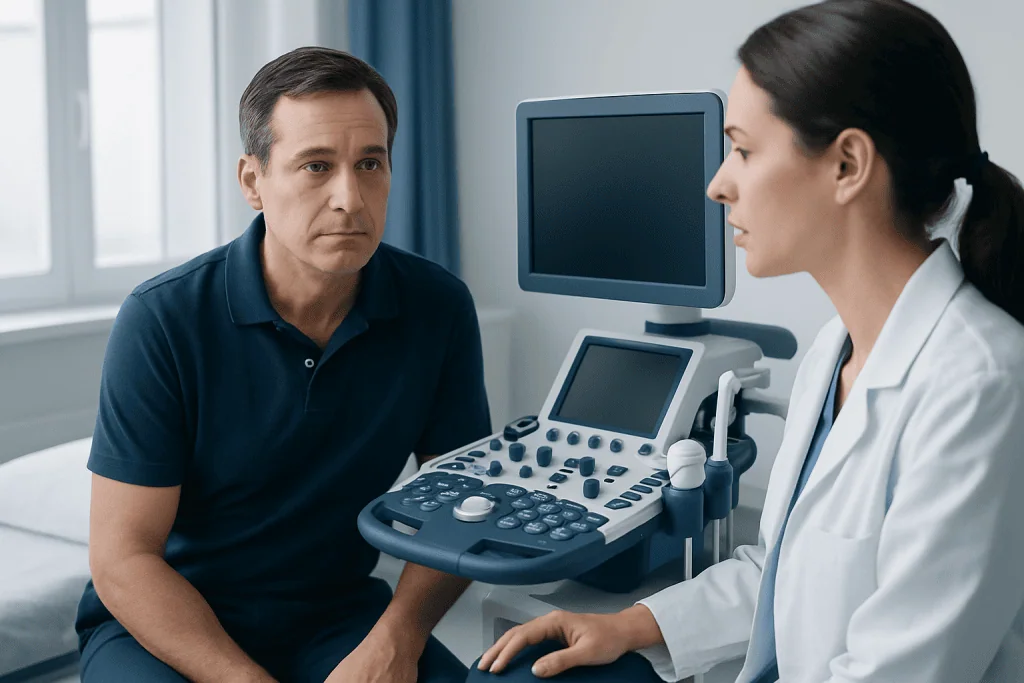
The diagnostic process usually begins with listening. Doctors ask when symptoms started, how they feel, how severe they are, what makes them better or worse, and whether they come and go or remain constant. Even small details can be useful. For example, chest discomfort during exercise may suggest a different cause than chest discomfort after eating.
Medical history adds important context. Doctors often ask about past illnesses, surgeries, current medicines, allergies, family history, travel, smoking, alcohol use, work exposures, and recent infections. In children, pregnancy and birth history may also matter. These details can reveal risk factors, inherited conditions, or environmental causes that are not obvious from symptoms alone.
Symptoms can sometimes be non-specific, meaning they occur in many different conditions. Fatigue, fever, weight loss, dizziness, and pain may each have many possible explanations. That is why history-taking is so valuable: it helps doctors understand the pattern, timing, and overall context, which often guides the next best test rather than ordering every test at once.
- When did the symptoms begin?
- Where is the symptom located, and does it spread?
- How often does it happen, and how long does it last?
- Are there any triggers, such as meals, movement, stress, or exercise?
- Are there other symptoms happening at the same time?
Why the Physical Exam Still Matters

After taking a history, doctors usually perform a physical examination. This may include checking temperature, blood pressure, heart rate, breathing rate, oxygen level, and general appearance. Depending on the complaint, the doctor may listen to the heart and lungs, examine the abdomen, assess the skin, test reflexes, or look at the ears, nose, throat, and joints.
A physical exam can provide immediate clues that no questionnaire can fully replace. Swelling, tenderness, weakness, changes in skin color, enlarged lymph nodes, heart murmurs, wheezing, or limited range of motion may all point in a particular direction. In some cases, the exam can also help identify signs that need urgent attention, such as severe dehydration, confusion, or breathing difficulty.
Importantly, a normal exam does not always rule out disease. Some conditions are present before obvious physical signs appear. For this reason, doctors combine exam findings with history and testing rather than relying on any single part of the assessment. The exam is one piece of the overall diagnostic puzzle.
How Laboratory Tests Help
Laboratory tests can show what is happening inside the body in ways that symptoms and examination cannot. Blood tests may look for infection, inflammation, anemia, organ function, hormone levels, blood sugar, clotting, or markers that suggest certain diseases. Urine, stool, and swab tests can also provide valuable information, depending on the symptoms.
These tests are often used to confirm a clinical suspicion, rule out dangerous causes, or help decide on treatment. For example, blood counts may help explain fatigue or fever, kidney and liver tests can guide medication choices, and urine testing may support the diagnosis of a urinary tract problem. In some situations, doctors may also request cultures, antibody tests, or genetic testing when they need more detailed information.
Test results are not interpreted in isolation. A result outside the usual range does not always mean a person is ill, and a normal result does not always exclude a condition. Age, sex, medications, hydration, recent exercise, and other health conditions can affect values. Doctors look at whether the result fits the patient’s symptoms and whether repeating or expanding testing is necessary.
Sometimes a lab result raises the possibility of a related condition that needs separate assessment, such as anemia in a person being evaluated for weakness or shortness of breath. In this way, one finding can lead to a broader but still focused investigation.
The Role of Imaging and Other Diagnostic Tests
Imaging helps doctors see structures inside the body. Different tools are used for different questions. X-rays can help assess bones and some chest conditions. Ultrasound is useful for soft tissues, blood flow, pregnancy, and abdominal organs. CT scans provide detailed cross-sectional images and are often used when doctors need a fast, broader view. MRI offers especially detailed images of soft tissues, the brain, spine, and joints.
Imaging is usually ordered to answer a specific question rather than simply to “look everywhere.” For example, a doctor may request an MRI scan to examine the brain after certain neurological symptoms, a CT scan to assess internal injuries or complex pain, or an ultrasound to evaluate the abdomen, thyroid, or pelvic organs. Targeted testing helps reduce unnecessary procedures and improves the chance of finding clinically useful answers.
Other diagnostic tests may also be important. Depending on the symptoms, doctors may use electrocardiography to assess heart rhythm, lung function tests for breathing complaints, endoscopy for digestive symptoms, or biopsy when a tissue sample is needed. A biopsy can help distinguish inflammation, infection, benign growths, or cancer, especially when imaging alone cannot provide a final answer.
Imaging findings must also be interpreted carefully. Some abnormalities are incidental, meaning they are found by chance and may not be causing symptoms. Doctors consider whether an imaging result matches the history, exam, and lab findings before deciding what it means and whether follow-up is needed.
How Doctors Put the Pieces Together
Diagnosis is often a process of narrowing possibilities. Doctors begin with a list of likely causes, sometimes called a differential diagnosis. This list is based on the person’s age, symptoms, exam findings, medical history, and risk factors. As test results come in, some possibilities become less likely while others move higher on the list.
For example, chest pain could come from muscles, the lungs, the digestive system, or the heart. If the history suggests exertional symptoms, the exam shows certain signs, and heart-related tests are abnormal, the diagnosis may move toward a cardiac cause. If tests point elsewhere, the doctor adjusts the plan. This step-by-step approach helps avoid both missed diagnoses and unnecessary testing.
Sometimes more than one condition is present at the same time. A person may have an infection and dehydration, or arthritis together with a nerve problem. In other cases, one condition can mimic another, such as migraine causing symptoms that may overlap with other neurological concerns. This is one reason why careful follow-up and re-evaluation are so important when symptoms change or do not improve as expected.
Many patients worry when a diagnosis is not immediate. In reality, uncertainty can be a normal part of medicine, especially early in an illness. Doctors may recommend observation, repeat tests, or referral to a specialist when the picture is still evolving. This does not mean concerns are being dismissed; it means the team is working methodically to reach the most accurate conclusion.
Limits of Testing and the Importance of Follow-Up
No test is perfect. Some tests are very sensitive and good at finding possible problems, while others are more specific and better at confirming a suspected condition. A result can occasionally be falsely positive or falsely negative. Because of this, doctors often interpret results in combination rather than relying on one abnormal value or one scan alone.
Timing also matters. Early in a disease, blood markers or imaging changes may not yet be visible. In other situations, symptoms may improve before all test values return to normal. Doctors may repeat tests after a period of time if they believe the initial result does not match the clinical picture or if symptoms continue.
Follow-up appointments are an important part of diagnosis. They allow the doctor to see how symptoms are progressing, whether treatment is helping, and whether any new warning signs have appeared. If necessary, the plan can be revised. A diagnosis is sometimes confirmed not only by test results, but also by how the condition behaves over time and how it responds to treatment.
What Patients Can Do and When to Seek Medical Care
Patients can help the diagnostic process by giving clear, honest information and keeping track of symptoms. Notes about timing, triggers, temperature readings, blood pressure or blood sugar logs, medicines taken, and previous test results can all be useful. Bringing a list of questions to the appointment may also help patients understand why certain tests are recommended and what the next steps will be.
It is also sensible to ask when results are expected, what findings would change the treatment plan, and whether any follow-up is needed. If symptoms worsen, new symptoms appear, or treatment does not seem to help, patients should let their doctor know. Good communication often improves both speed and accuracy of diagnosis.
Urgent medical care is important for symptoms such as severe chest pain, sudden shortness of breath, stroke-like symptoms, heavy bleeding, severe allergic reactions, confusion, fainting, or a sudden severe headache. These symptoms do not always mean a serious diagnosis, but they need prompt assessment.
For people who need coordinated evaluation, Acibadem International’s multidisciplinary specialists and JCI-accredited hospitals diagnose and treat complex conditions for international patients, using appropriate tools such as check-up programs when clinically indicated.
Frequently asked questions
Why can’t doctors diagnose every illness from symptoms alone?
Many symptoms are shared by different conditions. For example, pain, fatigue, fever, and dizziness can have many possible causes. Doctors use exams, tests, and imaging to narrow the possibilities and make treatment safer and more accurate.
Does a normal test result mean nothing is wrong?
Not always. Some conditions do not show up early, and some tests are better at ruling out disease than confirming it. Doctors interpret normal results together with symptoms, physical findings, and follow-up over time.
Why might a doctor order imaging after blood tests?
Blood tests can suggest that a problem exists, but imaging can show where it is and how extensive it may be. For example, imaging may help identify inflammation, injury, blockage, or structural changes that lab tests cannot show directly.
What is a differential diagnosis?
A differential diagnosis is a list of possible causes for a person’s symptoms. Doctors start with the most likely and most important possibilities, then narrow the list as more information becomes available from the history, exam, and testing.
Why do some diagnoses take more than one visit?
Some illnesses evolve over time, and early findings may be unclear. Repeat exams or tests can reveal patterns that were not visible at first. Follow-up also helps doctors see whether symptoms are improving, staying the same, or getting worse.
Should patients ask questions about recommended tests?
Yes. It is reasonable to ask what the test is looking for, how to prepare, when results will be available, and what the next step will be depending on the result. Clear communication helps patients take an informed part in their care.
References
- World Health Organization
- Centers for Disease Control and Prevention
- MedlinePlus
- National Institutes of Health
- American College of Radiology
This article is for general information only and is not a substitute for professional medical advice. Please consult a qualified doctor about your individual situation.
Explore treatments in Turkey — costs, top hospitals & a free quote
JCI-accredited · board-certified surgeons · reply within 24h

More from the Health Library



Related Specialists

Prof. Dr. Ercan Karaarslan
Radiology
Prof. Dr. Bora Peynircioğlu
Interventional Radiology
Prof. Dr. Koray Güven
Interventional Radiology
Assoc. Prof. Dr. Deniz Can Aliş
Radiology