

1,500 to 5,000 Grafts: What Each Session Size Costs and Covers

Key Takeaways
- A graft is a follicular unit of one to four hairs (about two on average), so a 2,000-graft transplant moves roughly 4,000 individual hairs.
- Turkish clinics typically price by all-inclusive package up to a maximum graft count, meaning 1,500 and 3,800 grafts often cost exactly the same, while UK and US clinics usually bill per graft.
- Our guide range for an all-inclusive FUE package is EUR 2,600–5,850, against a Turkish market average of EUR 2,000–4,500, UK typical GBP 3,000–10,000 and US typical USD 8,000–15,000.
- The safe donor zone is finite: many surgeons estimate a lifetime FUE budget of roughly 4,000–6,000 grafts, which is why a single 5,000-graft megasession can spend most of your reserve.
- Sessions above about 4,000 grafts are often split over two consecutive days because graft survival depends partly on minimising each graft's time outside the body.
- Transplanted hairs usually shed within weeks, regrow from month three or four, and reach their final result at 12–18 months, and crown coverage frequently needs a planned second session.
A 2,000-graft hair transplant typically costs EUR 2,600–5,850 under our all-inclusive guide range in Turkey, where clinics price by package rather than per graft; the Turkish market average is EUR 2,000–4,500. UK clinics usually charge GBP 3,000–10,000 and US clinics USD 8,000–15,000, often billed per graft. The final figure depends on a clinical assessment of your donor area, hair characteristics and coverage goals.
It is usually a late-night ritual. A man in his thirties tilts his phone under the bathroom light, photographs the top of his head, and starts comparing quotes: one clinic says he needs 2,000 grafts, another promises 3,500, a third will not name a number until it sees his donor area. Three opinions, three prices, one scalp.
The confusion is built into the way this surgery is sold. In some countries you pay per graft, like buying tiles by the square metre. In others, Turkey most famously, you pay for a package, and whether the surgeon places 1,800 grafts or 3,800 barely moves the invoice. Neither model is dishonest. They are simply different, and knowing which one you are looking at changes how you read every quote.
This guide walks through what each session size, from 1,500 to 5,000 grafts, realistically covers, what it costs in three markets, and where the numbers stop being medicine and start being marketing.
Why do clinics count grafts instead of hairs?
A graft is not a hair. It is a follicular unit: a tiny bundle of skin containing one to four hairs that grow together naturally, with an average of roughly two hairs per unit. So a 2,000-graft session moves something in the region of 4,000 individual hairs, and a 5,000-graft session can shift more than 10,000.
Surgeons work in grafts because that is the unit they extract and place. Single-hair units go along the hairline, where anything thicker would look like doll’s hair. Two- and three-hair units sit behind them to build density. The mix matters as much as the total: 2,000 grafts rich in three-hair units will look fuller than 2,000 grafts dominated by singles.
This is the first reason a graft count alone tells you less than it seems to. Two patients with identical numbers can walk away with visibly different results depending on hair thickness, curl, colour contrast against the scalp and how skilfully the units were distributed. Coarse, wavy hair covers more scalp per graft than fine, straight hair: a mechanical fact, not a sales line.
Keep the conversion in your head as you read quotes. When a clinic advertises “6,000 hairs”, it may mean about 3,000 grafts. When another counts every hair as a graft, the same surgery suddenly sounds twice as large. Reputable clinics state clearly which unit they are using; the ones that blur the two are telling you something useful about themselves.
How much does a 2,000 grafts hair transplant cost?
It depends less on the number than on where you have it done, and on how that market charges.
In Turkey, 2,000 grafts almost always falls inside a standard all-inclusive FUE package priced up to a maximum graft count. The Turkish market average for such a package is EUR 2,000–4,500; our guide range for international patients is EUR 2,600–5,850. Within that structure, a 2,000-graft patient and a 3,200-graft patient often pay the same, because the package covers whatever your donor area safely allows up to the ceiling.
British and American clinics tend to work the other way round, billing per graft, so the session size directly drives the bill. A typical UK FUE case lands somewhere in the GBP 3,000–10,000 band, while US patients commonly see USD 8,000–15,000 for comparable work. A 2,000-graft session sits within those ranges; exactly where depends on the clinic’s per-graft rate, the surgeon’s involvement and the city.
Two consequences follow. First, in per-graft markets you have a financial incentive to question an inflated graft estimate, because every extra hundred grafts costs real money. Second, in package markets the incentive flips: the number on the quote costs the clinic effort, not you, so oversized promises are cheap to make. A precise graft count only means something after someone has examined your scalp, ideally with magnification, and measured your donor density, not just admired your photos.
What does 1,500 grafts cover?
A 1,500-graft session is refinement work. It suits early recession: the classic deepening M-shape at the temples that dermatologists grade as Norwood 2 to early Norwood 3, or a hairline that has drifted back a centimetre or two while the rest of the scalp holds firm.
Placed well, 1,500 grafts can rebuild both temple corners and soften the front edge with single-hair units, leaving the multi-hair units to add body just behind the line. It is also the territory of corrective work: patching a previous transplant’s thin spots, lowering an unnaturally high line by a few millimetres, or blending a scar.
What 1,500 grafts cannot do is cover a broad, shiny area of bare scalp. Spread thinly across a Norwood 4 pattern, this number produces a see-through result that satisfies nobody. Surgeons sometimes call this the density trap: coverage and density compete for the same grafts, and a small session must pick one.
There is a strategic argument for starting small, especially for men in their late twenties whose loss is still moving. Androgenetic alopecia is progressive; a conservative first session preserves donor supply for the years ahead. A surgeon who suggests fewer grafts than you asked for, and explains the maths of your donor area while doing it, is usually the one thinking past your next birthday.
What does 2,000 grafts cover?
Two thousand grafts is arguably the most quoted number in this industry, and for a reason: it matches the most common presentation. A man with a Norwood 3 pattern, receded temples, a retreating frontal hairline, an intact crown, is squarely in 2,000-graft territory.
At this size, a surgeon can rebuild the full frontal hairline from temple to temple and push density back into the frontal third of the scalp, the zone that frames your face in every mirror and photograph. Because roughly 4,000 hairs are being moved, there is enough material to layer single-hair units at the edge and stack two- and three-hair units behind them for a result that reads as natural at conversational distance.
The frontal third is also where transplants earn their keep. Research on how people perceive hair loss consistently points to the hairline and front as the most visually significant zones: the crown, by contrast, is mostly seen by other people in queues. Spending 2,000 grafts up front usually changes a face more than spreading them everywhere.
What this session size does not stretch to is meaningful crown coverage on top of frontal work. If your loss involves both zones, a 2,000-graft quote is either addressing the front alone (legitimate, if stated) or underestimating the job. Ask the surgeon to draw the planned coverage area on your photos and to tell you, explicitly, what is being left for a possible second session.
What do 2,500 to 3,000 grafts cover?
This is the workhorse range for established loss. A session of 2,500 to 3,000 grafts typically handles a Norwood 3 vertex or Norwood 4 pattern: a rebuilt hairline, a densely packed frontal third, and coverage extending into the mid-scalp, sometimes with a modest contribution toward the front of the crown.
The jump from 2,000 to 3,000 grafts is bigger than it sounds. Those extra 1,000 units carry roughly 2,000 additional hairs, enough to change the plan from “restore the front” to “restore the top”. For many men this is the single-session sweet spot: large enough to transform the visible pattern, small enough to be extracted in one day without pushing the donor area or the surgical team to their limits.
A practical note on time: at this size you are typically in the chair for six to eight hours. Grafts survive best when their time outside the body is short and their handling gentle, one reason experienced teams work in rhythm, extracting and implanting in overlapping phases rather than harvesting everything first.
In package-priced markets this range usually costs no more than a 2,000-graft case, because both sit under the same maximum-graft ceiling. In per-graft markets, expect the quote to climb proportionally, which makes an honest, examined estimate of how many grafts you genuinely need worth far more in London or New York than it is in Istanbul.
What do 3,500 to 4,000 grafts cover?
Now we are into advanced patterns. A 3,500- to 4,000-graft session addresses Norwood 4 to 5 loss: front, mid-scalp and a real attempt at the crown, or very dense work across a slightly smaller area for patients who prioritise thickness over reach.
Around 4,000 grafts is where many surgeons draw the practical single-day line for FUE. Beyond it, the arithmetic of graft survival, team stamina and donor-area strain starts to bite. Some clinics split larger cases across two consecutive days; others simply cap the first session here and schedule a second one after twelve months, once the transplanted hair has matured and the remaining gaps are visible.
The crown deserves its own warning label. It is a spiral, not a flat surface, and hair there grows in a whorl that demands more grafts per square centimetre of visual coverage than the front does. Surgeons routinely describe the crown as a “graft eater”: patients who insist on filling it completely in one session often end up with a thin frontal result, which is the opposite of a good trade.
If a clinic quotes you 4,000 grafts from photographs alone, treat the number as a placeholder. At this scale, the difference between what was promised and what your donor area can actually give, measured in follicular units per square centimetre under magnification, determines whether the plan is surgery or wishful thinking.
Is a 4,500 to 5,000 graft megasession realistic?
Sometimes, but the honest answer starts with your donor area, not your wish list.
Sessions of 4,500 to 5,000 grafts target Norwood 5 to 6 patterns, where loss spans the front, top and crown. Extracting that many follicular units in one sitting requires an unusually dense, laxity-rich donor zone and a large, well-drilled team. Many clinics stage these cases over two consecutive days, both to limit each graft’s time outside the body and to keep extraction spacing even, so the back of the head does not end up visibly thinned.
Physiology sets the ceiling. The safe donor zone: the band of scalp at the back and sides that is genetically resistant to pattern loss, holds a finite lifetime supply, commonly estimated at somewhere around 4,000 to 6,000 FUE grafts for an average head, though individual capacity varies widely. A 5,000-graft megasession can consume most of a patient’s lifetime reserve in one go. If loss progresses afterwards, there may be little left to respond with.
Expectations need calibrating too. Five thousand grafts spread across a large Norwood 6 area produces coverage, not the density of a teenager’s scalp. The result can still be transformative, a framed face, a shadowed crown instead of bare skin, but “full head of hair” is not a phrase evidence supports at this pattern. A surgeon who says so out loud before taking your money is worth more than one who does not.
Which graft count matches which Norwood stage?
The Norwood scale is the shorthand surgeons use to grade male pattern loss from 1 (no visible recession) to 7 (a horseshoe of remaining hair). The pairings below reflect common clinical practice, not a formula, hair calibre, curl, colour contrast and your own priorities all shift the numbers.
| Session size | Typical pattern | What it usually covers |
|---|---|---|
| 1,500 grafts | Norwood 2 – early 3 | Temple corners, hairline refinement, corrective touch-ups |
| 2,000 grafts | Norwood 3 | Full hairline rebuild plus the frontal third |
| 2,500–3,000 grafts | Norwood 3 vertex – 4 | Front and mid-scalp; modest start on the crown |
| 3,500–4,000 grafts | Norwood 4 – 5 | Front to crown coverage, or high density over a smaller zone |
| 4,500–5,000 grafts | Norwood 5 – 6 | Broad coverage across front, top and crown at moderate density |
Read the table as a sanity check rather than a menu. If your pattern is a Norwood 3 and a clinic insists you need 4,500 grafts, someone is either padding the number or planning density you may not need. If you are a Norwood 6 and the quote says 2,000 grafts will “restore everything”, the mismatch runs the other way. Either discrepancy is a reason to seek a second opinion before a deposit changes hands.
What each session size costs: Turkey vs the UK vs the US
Here is the structural difference in one sentence: Turkish clinics generally sell an all-inclusive package up to a maximum graft count, while UK and US clinics generally multiply a per-graft rate by your estimated number. That is why the same 2,000-graft case can produce a flat package quote in Istanbul and an itemised, size-sensitive invoice in Manchester or Chicago.
| Procedure | Turkey market average | Our guide range | UK typical | US typical |
|---|---|---|---|---|
| FUE hair transplant package (max grafts, all-inclusive) | EUR 2,000–4,500 | EUR 2,600–5,850 | GBP 3,000–10,000 | USD 8,000–15,000 |
| DHI hair transplant package | EUR 2,300–4,500 | EUR 3,000–5,850 | GBP 4,000–10,000 | USD 6,000–12,000 |
| Sapphire FUE premium package | EUR 2,300–6,000 | EUR 3,000–7,800 | GBP 4,000–10,000 | USD 8,000–15,000 |
| Unshaven / female hair transplant | EUR 2,500–5,000 | EUR 3,250–6,500 | GBP 4,000–9,000 | USD 8,000–20,000 |
| Afro-type (curly) hair transplant | EUR 2,300–4,500 | EUR 3,000–5,850 | GBP 3,000–8,000 | USD 6,000–12,000 |
Prices last reviewed: August 2026. These are guide ranges for international patients, based on published market data – not a quote. Your exact price depends on your clinical assessment; you will receive a personalised treatment plan and fixed quote after consultation.
Notice what the package model does to the graft-count question. Under a maximum-graft package, 1,500 and 3,800 grafts often cost identical money: the range within each row reflects clinic tier, surgeon involvement and what the package bundles, not your session size. In per-graft markets, session size is the main lever, which is why the UK and US columns stretch so wide.
What is actually inside an all-inclusive package?
The phrase “all-inclusive” earns its keep only if you know what it includes. A typical Turkish package built for international patients bundles the surgery itself under local anaesthesia, pre-operative blood tests, the first post-operative wash and dressing, an aftercare kit, hotel nights near the clinic, airport and clinic transfers, and remote follow-up during the growth year.
Beyond that baseline, packages diverge. Points worth confirming in writing before you book:
- Who performs which step. In many clinics, technicians handle extraction and implantation under a surgeon’s supervision. Ask specifically how much of the procedure the named surgeon performs.
- The real graft ceiling. “Maximum grafts” should mean the maximum your donor area safely yields, not a marketing number printed before anyone examined you.
- PRP add-ons. Some packages fold in a platelet-rich plasma session; others sell it separately, with our guide range at EUR 130–400 per session. Evidence for PRP as a transplant adjunct is still limited and mixed, so treat it as optional, not essential.
- Revision policy. What happens if growth disappoints at twelve months: a documented touch-up policy, or a shrug?
- What is excluded. Flights almost always; sometimes medications, sometimes the companion’s hotel bed.
A package quote that itemises these answers is doing the job a per-graft invoice does elsewhere: making the price legible. One that answers every question with “all included, don’t worry” deserves your scepticism more than your deposit.
FUE vs DHI vs Sapphire FUE: does the technique change the price?
Modestly, yes, and less than the marketing suggests it should.
All three are variations on the same operation: follicular units extracted one by one from the donor zone, then implanted into the thinning area. Standard FUE opens recipient channels with fine steel blades before implanting. Sapphire FUE swaps steel for sapphire-tipped blades, which makers claim allow finer, more precise incisions. DHI skips separate channel-opening altogether, loading each graft into a spring-driven implanter pen that places it in one motion.
On price, the pattern in our guide ranges is consistent: standard FUE packages run EUR 2,600–5,850, DHI EUR 3,000–5,850, and Sapphire FUE stretches to EUR 3,000–7,800 at the premium end. The uplifts reflect slower, more labour-intensive workflows (DHI in particular limits how many grafts fit into one session) and, frankly, positioning.
On outcomes, the honest reading of the evidence is that no large, well-controlled trial has shown any of the three to be clearly superior in graft survival or final appearance. Published comparisons are small and often industry-adjacent. What the literature does support, repeatedly, is that surgical skill, gentle graft handling, short out-of-body time and sensible hairline design predict results far better than the brand of blade or pen.
The practical conclusion: choose the team, then let the team choose the technique. Paying a premium for sapphire in the hands of an average operator buys you sapphire, not a better head of hair.
Your donor area sets the ceiling, not the price list
Every graft in a transplant is borrowed from the band of scalp at the back and sides of your head: the safe donor zone, so called because its follicles are genetically resistant to the hormone-driven miniaturisation that causes pattern loss. Transplanted follicles keep that resistance in their new location, which is the entire biological basis of the surgery.
The zone is generous but not infinite. Average donor density runs in the neighbourhood of 60–100 follicular units per square centimetre, and surgeons can typically harvest only a fraction of them, spaced out evenly, before the area itself starts to look thin. Across a lifetime, many surgeons estimate a total FUE budget of roughly 4,000 to 6,000 grafts for an average patient, with real numbers swinging well above or below depending on density, scalp laxity and hair calibre.
Overharvesting is the injury this maths exists to prevent. Take too many grafts, or take them too close together, and the donor area develops a moth-eaten, over-plucked look that is difficult to disguise and effectively permanent. It is the signature complication of high-volume, low-oversight clinics chasing big graft numbers.
This is why “how many grafts can I get?” is the wrong first question. The right one is “how many grafts can my donor area give across my lifetime, and how should we spend them?” A surgeon who measures your donor density before quoting a number is answering the second question. A price list cannot.
Will one session be enough, or should I budget for two?
Plan as if a second session is possible, and be pleasantly surprised if it is not.
Two forces push toward multiple sessions. The first is biology: androgenetic alopecia is progressive, and a transplant does nothing to protect the native hair around the grafts. A 32-year-old who fills his frontal third today may watch the mid-scalp behind it thin over the following decade, creating a gap between transplanted and retreating hair. Doctors often discuss prescription options that can slow further loss: a conversation worth having before surgery, not after, because stabilising the pattern changes how many grafts the plan needs.
The second force is arithmetic. Large patterns simply need more grafts than one safe session can deliver. A Norwood 5 or 6 case often gets its frontal framework in session one and returns after 12 to 18 months, once the first crop has fully matured, for crown work or added density.
Budget accordingly. In package markets, a second session usually means a second package at the same guide range, so a two-stage plan for extensive loss can plausibly double the total. In per-graft markets the second bill scales with the second count. Either way, a clinic that maps out the full multi-year plan and its likely total cost at the first consultation is giving you the number that actually matters, not the teaser.
Expect patience to be part of the price too: transplanted hairs commonly shed in the first weeks, regrow from around month three or four, and show their final result at 12 to 18 months.
Red flags: when a big graft number is a warning, not a bargain
Most clinics quote in good faith. A minority use graft counts the way street markets use scales, creatively. Patterns worth recognising:
- A precise count from photos alone. “You need exactly 4,200 grafts” is not a measurement anyone can make from a phone picture. Estimates from photos are legitimate; certainty is not.
- Hairs sold as grafts. Because the average graft holds about two hairs, counting hairs doubles the apparent size of the surgery. Ask which unit the quote uses.
- Graft splitting. Dividing natural two- and three-hair units into singles inflates the count while thinning the visual result: you pay for more, and see less.
- Numbers your donor cannot fund. Promises of 6,000 or 7,000 FUE grafts in one session sit outside what most donor areas can safely give, and outside what careful surgical teams attempt.
- No surgeon in sight. If the consultation, planning and procedure are all technician-run and the surgeon’s name only appears on the certificate, the quote is measuring a production line.
- Guaranteed density or “100% growth”. Graft survival is high in skilled hands, but no honest practitioner guarantees a biological outcome.
None of this means large sessions are scams, genuine 4,000-graft cases happen daily in good clinics. The distinction is process: a real number arrives after examination, comes with a drawn coverage plan, and survives your follow-up questions. A marketing number arrives before you do.
When should you see a doctor about hair loss?
Before you see a transplant clinic, genuinely. A hair transplant treats one specific condition, androgenetic (pattern) hair loss, and does nothing for the many other causes that can mimic or accompany it.
Book a medical appointment first, rather than a sales consultation, if any of the following applies:
- Sudden or rapid sheddinghandfuls in the shower over weeks rather than gradual thinning over years, which can follow illness, surgery, childbirth or severe stress and often resolves on its own.
- Patchy losscoin-sized smooth bald patches suggest alopecia areata, an autoimmune condition that transplantation cannot fix and can worsen.
- An itchy, scaly, painful or scarred scalpinflammatory and scarring conditions must be diagnosed and controlled before any surgery is even discussed.
- Hair loss alongside other symptomsfatigue, weight change or menstrual changes can point to thyroid problems, low iron or other treatable causes a blood test can find.
- Diffuse thinning in womenfemale pattern loss behaves differently from male pattern loss, and fewer women are good transplant candidates; specialist assessment matters more, not less.
A dermatologist can confirm the diagnosis, check for reversible causes and discuss non-surgical options, including medicines that may slow further loss, so that if you do proceed to surgery, you arrive as a well-selected candidate rather than a hopeful customer. Transplanting into an undiagnosed scalp condition wastes grafts you can never get back.
How to get an accurate graft count before you pay anything
The gap between a marketing estimate and a surgical plan closes in a fairly predictable sequence, and you can drive it yourself.
Start with standardised photos: front, both sides, top, crown and donor area, taken in flat daylight with dry hair. Send the same set to every clinic you approach, identical inputs make the divergence in their answers informative. A spread of estimates from 2,000 to 4,500 grafts for the same photos tells you at least one clinic is guessing loudly.
Push each contender for specifics. Which zones does the count cover, and which are deferred? What density, in grafts per square centimetre, is planned at the hairline versus the mid-scalp? What is the fallback if your donor yield on the day proves lower than estimated, fewer zones, or a documented second session? Vague answers to concrete questions are themselves an answer.
Insist on an in-person assessment before surgery, even if the booking happened remotely. Proper planning includes examining donor density under magnification, testing scalp laxity, checking for miniaturisation in zones that look healthy in photos, and drawing the hairline on your head, with your input, before a single graft is extracted. Reputable clinics treat the final count as an output of that examination, and will revise a remote estimate downward without drama if the scalp disagrees with the photographs.
Then get the revised plan, the count, the coverage map and the fixed price in writing. Paper has a way of keeping numbers honest.
Frequently asked questions
Is 2,000 grafts a lot for a hair transplant?
It is a solidly mid-sized session: the most commonly quoted number in the industry. Two thousand grafts, carrying roughly 4,000 hairs, typically rebuilds a full hairline and restores density across the frontal third of the scalp, which suits a Norwood 3 pattern. It is not enough to also cover a bald crown, so if your loss extends further back, expect the surgeon to discuss a larger session or a staged plan.
How many hairs are in 2,000 grafts?
Roughly 4,000 hairs, give or take. Each graft is a follicular unit containing one to four hairs, with an average of about two. The exact ratio depends on your own donor hair: some scalps are rich in three-hair units, others skew toward singles and doubles. Ask your clinic for your average hairs-per-graft figure after examination: it affects how full 2,000 grafts will actually look.
How much does 2,000 grafts cost in Turkey?
Usually the same as any session within a maximum-graft package. The Turkish market average for an all-inclusive FUE package is EUR 2,000–4,500, and our guide range for international patients is EUR 2,600–5,850, typically covering surgery, hotel, transfers and aftercare. Because pricing is per package rather than per graft, a 2,000-graft case and a 3,500-graft case at the same clinic often carry an identical price.
Why do UK and US clinics charge per graft instead?
It is simply the dominant billing model in those markets: a per-graft rate multiplied by your estimated count, so session size directly drives the invoice. Typical totals land at GBP 3,000–10,000 in the UK and USD 8,000–15,000 in the US for FUE. The upside is transparency about what you are buying; the downside is that an inflated graft estimate costs you real money, so scrutinise the count carefully.
Can I really get 5,000 grafts in one session?
Only if your donor area can safely supply them, which not every scalp can. Sessions of 4,500–5,000 grafts require unusually good donor density and are often split across two consecutive days to protect graft survival and avoid visibly thinning the donor zone. Be cautious of clinics promising 5,000-plus grafts from photographs alone: the real number should come from measuring your donor density under magnification.
How many grafts do I need for Norwood 3 or Norwood 4 hair loss?
As a broad guide, Norwood 3 patterns commonly need around 2,000 grafts for the hairline and frontal third, while Norwood 4 patterns typically call for 2,500–3,000 to reach the mid-scalp as well. Hair thickness, curl and colour contrast shift these numbers meaningfully in both directions, so treat them as a sanity check for quotes rather than a prescription: the accurate count comes from clinical examination.
Does DHI cost more than standard FUE?
Usually somewhat more. Our guide range for a DHI package is EUR 3,000–5,850 versus EUR 2,600–5,850 for standard FUE, reflecting DHI’s slower, more labour-intensive implanter-pen workflow. Evidence does not show DHI produces clearly better graft survival or final results than well-performed FUE; published comparisons are small. The skill of the surgical team predicts your outcome far better than the technique’s name.
Will the transplanted hair fall out after surgery?
Most of it will, temporarily, and this is expected, not a failure. Transplanted hairs commonly shed in the first two to eight weeks as the follicles enter a resting phase, then new growth appears from around month three or four. Results build gradually, with the final appearance judged at 12 to 18 months. Clinics should explain this shedding phase in advance so it does not come as a shock.
How do I know the clinic actually implanted the number of grafts quoted?
Ask, before booking, how grafts are counted and documented. Reputable teams sort extracted grafts into counted batches by hair number and can show you the tally during or after the procedure; some provide a written breakdown of singles, doubles and triples. A clinic that welcomes the question and has a documentation process is a good sign. One that treats the count as unverifiable is telling you something.
Do I need medication after a hair transplant?
Possibly, because the transplant does not stop your remaining native hair from thinning. Androgenetic alopecia is progressive, and many doctors discuss prescription options that may slow further loss, ideally before surgery rather than after. Whether medication makes sense depends on your age, pattern, and how your loss is behaving, so it is a decision for you and a qualified doctor, not something a price list can answer.
References
This article is for general information only and is not a substitute for professional medical advice. Please consult a qualified doctor about your individual situation.

More from the Blog

PRP Hair Treatment Cost: Per-Session Pricing and How Many Sessions Studies Use
PRP hair treatment typically costs EUR 130-400 per session at internationally oriented hospitals in Turkey (our guide range), compared with roughly GBP 150-600 per…
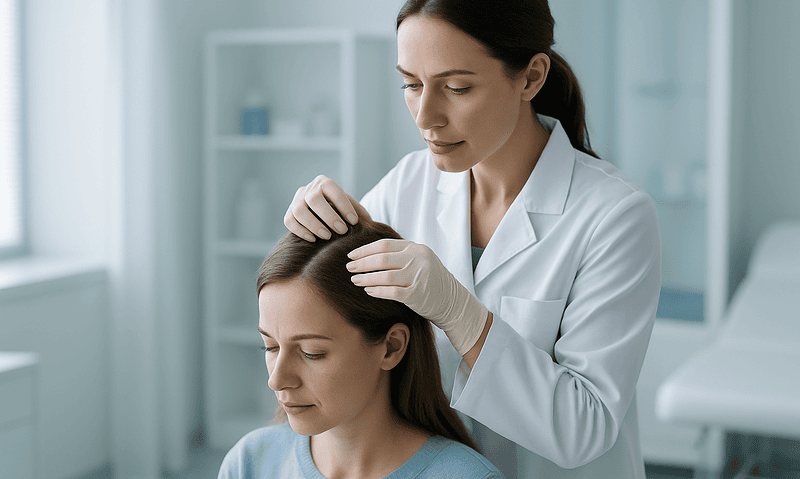
Crown Hair Transplant Cost: Why the Vertex Needs More Grafts Per Visible Result
A crown (vertex) transplant is usually priced as an all-inclusive FUE package: our guide range is EUR 2,600–5,850, rising to EUR 3,000–7,800 for sapphire…

Are Hair Transplants Worth It? Lifetime Cost, Satisfaction Evidence and Who Should Wait
For the right candidate, someone with stable pattern hair loss, a healthy donor area and realistic expectations, hair transplants show consistently high patient satisfaction,…

DHI Hair Transplant Cost: How Implanter-Pen Precision Is Priced
A DHI hair transplant typically costs EUR 3,000-5,850 as an all-inclusive package under our guide range, against a Turkish market average of EUR 2,300-4,500.…

Does Insurance Cover Hair Transplants? Cosmetic Rules and the Rare Exceptions
In most cases, no. Health insurers in the US, UK, and Europe classify hair transplants for pattern baldness as cosmetic surgery and exclude them…
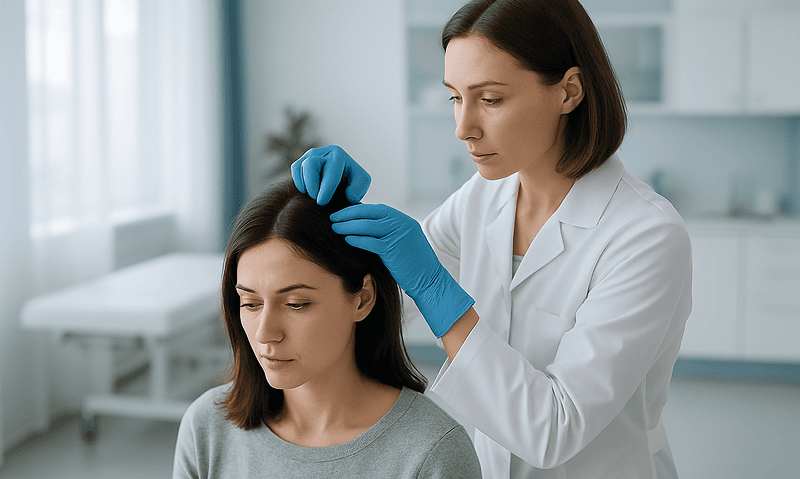
Hair Transplant Cost in the UK: Clinic Prices, What They Include, and the Abroad Comparison
A hair transplant in the UK typically costs £3,000 to £10,000 for a full FUE session, with DHI and sapphire FUE usually starting around…