JCI-accredited · 45+ hospitals & clinics · 90+ countries served · 24/7 multilingual support
Treatment Guides

Hair Transplant in Turkey: Treatment Guide
12 min read Published June 9, 2026 Updated June 26, 2026 Written by Dr. Lanya Qadir Khayat
What is this treatment? — hair transplant in turkey
Quick answer

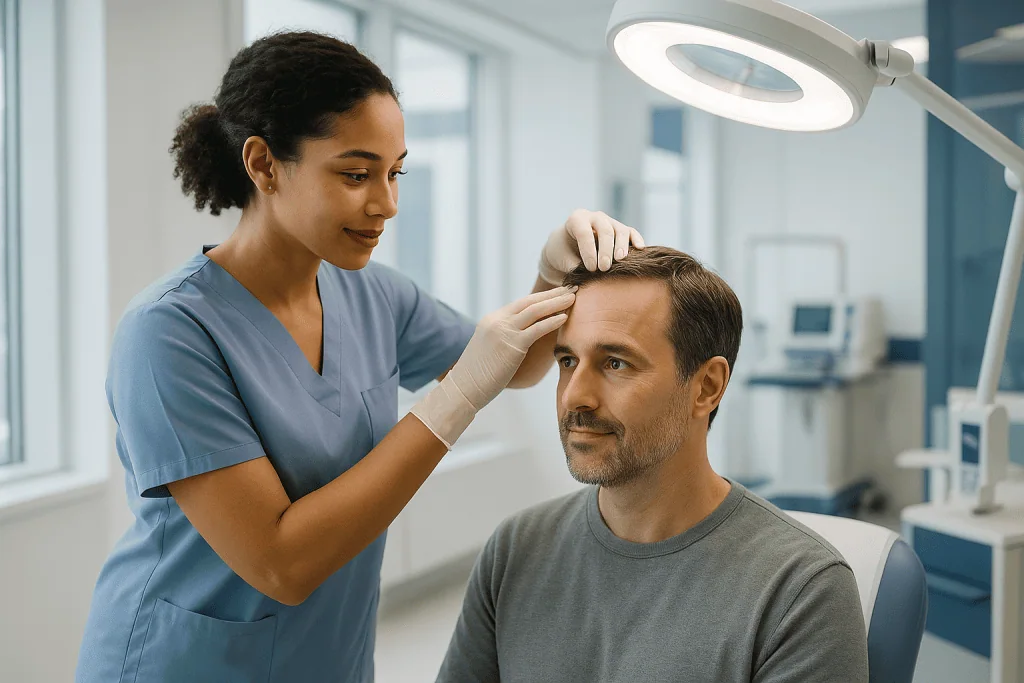
Hair transplant is a procedure that restores hair growth by moving healthy hair follicles from a donor area, usually the back or sides of the scalp, to areas affected by thinning or baldness. In Turkey, it is typically performed with modern techniques such as FUE or DHI after scalp and hair assessment, with treatment planning focused on natural-looking density and…

Medically reviewed by the Acıbadem International Medical Board — June 20, 2026

Dr. Bahadır Kaynarkaya, MD Dr. Şule Eren, MD

This guide explains what you can expect from a hair transplant in Turkey, including available techniques, candidate suitability, recovery, travel planning, cost factors and follow-up. It is designed to help you prepare confidently and understand the importance of an individual medical evaluation.

At a glance

  • Procedure type: Minimally invasive hair restoration procedure
  • Purpose: To redistribute healthy hair follicles to areas affected by thinning or hair loss
  • Anesthesia: Usually local anesthesia; sedation may be considered for selected patients
  • Hospital stay: Typically same-day discharge; overnight stay is not usually required
  • Estimated recovery: Initial healing usually takes 7-10 days; shedding and regrowth continue over months
  • Return to daily life: Many patients return to light daily activities within a few days, depending on physician advice
  • Final result timeline: Visible improvement develops gradually; final density is commonly assessed around 12 months or longer
  • Suitable department: Hair transplantation unit with dermatology, plastic surgery or aesthetic medicine involvement as appropriate
  • International patient support: Online evaluation, interpreters, transfer guidance, appointment coordination and remote follow-up

What is this treatment?

A hair transplant is a medical hair restoration procedure that moves healthy hair follicles from a donor area, most commonly the back or sides of the scalp, to areas affected by thinning or baldness. The goal is not to create new hair follicles, but to redistribute follicles that are typically more resistant to pattern hair loss. When carefully planned, the result can look natural because the transplanted hair grows from your own follicles.

Hair transplantation is most often used for male or female pattern hair loss, but it may also be considered for selected cases of eyebrow restoration, beard enhancement, scarring alopecia or hair loss after trauma or previous surgery. The technique, number of grafts and hairline design are individualized according to your age, hair loss pattern, donor area quality, hair type, expectations and long-term hair loss risk.

At Acibadem International, your pathway begins with a medical assessment rather than a one-size-fits-all promise. A specialist team reviews your photos, history and goals, then explains whether hair transplantation is appropriate, whether medical treatment should be used first or alongside it, and what result is realistically achievable for your situation.

When is it recommended?

When is it recommended? — hair transplant in turkey

A hair transplant may be recommended when hair loss has created areas of reduced density or baldness and there is an adequate donor area to provide grafts. It is commonly considered when hair thinning has become stable enough for surgical planning and when non-surgical options alone are unlikely to meet your goals. For many patients, it is part of a broader long-term hair restoration plan rather than a single isolated event.

The treatment may be considered for a receding hairline, thinning at the crown, diffuse density loss in selected patterns, or repair of previous hair transplant work. It may also be appropriate for some scars where hair no longer grows, but scar tissue requires careful evaluation because blood supply and healing may differ from normal scalp.

Hair transplantation is not always the first or best option. If hair loss is active, sudden, patchy, related to nutritional deficiency, thyroid disease, autoimmune conditions, medication effects, infection or other medical causes, your doctor may recommend diagnostic tests or medical treatment before considering transplantation. A safe recommendation depends on identifying the cause and pattern of hair loss.

Who is a good candidate?

Who is a good candidate? — hair transplant in turkey

You may be a good candidate if you have realistic expectations, a healthy donor area, a suitable hair loss pattern and no uncontrolled medical condition that would increase procedure or healing risks. Good candidates understand that a transplant improves coverage and hairline appearance but cannot reproduce the density of teenage hair or stop future hair loss in untreated areas.

Your donor hair quality is especially important. Hair caliber, curl, color contrast with the scalp, density and scalp laxity can all influence the visual result. The specialist also considers your age, family history, progression of hair loss and whether you may need future sessions if hair loss continues over time.

You may need further medical evaluation if you have uncontrolled diabetes, bleeding disorders, active scalp disease, a tendency to poor scarring, significant heart or lung disease, immune suppression, or if you take blood-thinning medications. These factors do not always exclude treatment, but they must be reviewed carefully so your care can be planned safely.

Treatment options

The most widely used modern hair transplant method is FUE, or follicular unit extraction. In FUE, individual follicular units are removed from the donor area and implanted into recipient sites. It avoids a long linear scar and usually allows shorter hairstyles after healing, although small dot-like marks may still be visible if the scalp is shaved very closely.

DHI, often called direct hair implantation, is a variation in which grafts are placed using an implanter tool. This may help in selected cases where precise angle, depth and density planning are important, such as hairline work or adding density between existing hairs. However, the suitability of DHI depends on your hair characteristics, graft number and surgeon preference; it is not automatically better for every patient.

Other approaches may include sapphire blade channel creation, combined FUE and DHI strategies, eyebrow or beard transplantation, and revision hair transplantation. FUT, or strip harvesting, is less commonly preferred in many international hair transplant journeys but may be discussed for selected cases. The best technique is the one that protects your donor area, supports natural direction and density, and matches your long-term plan.

A responsible treatment plan also includes hairline design. A natural hairline is not simply low or dense; it should match your facial proportions, age, hair type and future hair loss risk. Overly aggressive graft use can limit future options, so donor management is a key part of safe and aesthetically balanced planning.

Online evaluation before travel

Before you travel to Turkey, an online evaluation helps the medical team understand your goals and whether your case appears suitable for in-person assessment. You will usually be asked to share clear photos of your hairline, temples, crown, donor area and full scalp from different angles. If you have had previous hair transplant procedures, photos and records are especially useful.

You should also provide information about your age, hair loss history, family pattern, current medications, allergies, previous surgeries, medical conditions and any treatments you have already tried. If you have sudden shedding, scalp itching, redness, scaling or patchy hair loss, mention this clearly because it may require dermatological assessment before any transplant plan.

The preliminary review can provide guidance about likely technique, estimated graft range, expected length of stay and preparation steps. However, it cannot replace the in-person consultation, scalp examination and pre-procedure tests. The final decision and treatment plan are confirmed only after you are examined by the physician in Turkey.

Before the treatment

Before your hair transplant, your medical team will review your health information and may request blood tests or other checks to support safe treatment. You should be open about all medications, supplements, allergies, smoking, alcohol use and previous reactions to anesthesia. Some medicines or supplements may need to be paused, adjusted or continued according to physician instructions.

You will receive practical instructions about washing your hair, avoiding certain hair products, planning clothing and arranging your schedule. A button-up or zip-front top is often helpful because it can be removed without touching the newly transplanted area. You may also be advised to avoid alcohol and smoking for a period around the procedure because they can affect healing.

It is important to arrive with realistic expectations. Your doctor will discuss your donor area, the planned recipient zones, estimated graft number, hairline shape and the possibility that future hair loss may require maintenance treatment or an additional procedure. Clear communication before the treatment helps you feel prepared and reduces uncertainty on the day of the procedure.

What happens during the treatment

On the day of treatment, the team confirms your medical details, reviews the treatment plan and marks the donor and recipient areas. Photographs may be taken for medical documentation. The hairline design is discussed with you before the procedure begins, because natural shape, symmetry and long-term planning are central to the final appearance.

Local anesthesia is used to numb the scalp. During FUE, follicular units are carefully extracted from the donor area, prepared and kept under appropriate conditions until implantation. Recipient sites are then created or grafts are placed with an implanter tool, depending on the technique selected. The team pays attention to graft direction, angle, distribution and density to support a natural-looking result.

A hair transplant can take several hours, especially when a larger number of grafts is planned. You may have breaks during the procedure, and the team monitors your comfort throughout. Because it is meticulous work, patience and careful handling of grafts are important parts of the process.

Hospital stay and discharge

Most hair transplant patients are discharged on the same day after a short observation period. Your scalp may feel tight, numb or mildly uncomfortable, and you may have small crusts or redness in the treated areas. The donor area may be covered with a dressing, depending on the technique and the physician’s preference.

Before discharge, you receive written and verbal aftercare instructions. These usually cover sleeping position, washing, medications if prescribed, how to protect the grafts, what to avoid and when to return for the first control. If you are an international patient, interpreter support can help ensure you understand each instruction clearly before leaving the clinic or hospital.

You should not plan strenuous activities or long sightseeing immediately after the procedure. It is best to rest, keep your head protected and follow the aftercare plan closely. Your international patient coordinator can help align your appointment schedule with your travel arrangements and first follow-up visit.

Recovery timeline

Recovery after a hair transplant is gradual. The first days focus on protecting the grafts, reducing swelling and allowing the donor and recipient areas to begin healing. Small scabs commonly form around transplanted follicles and usually resolve with proper washing and care as advised by your medical team.

It is common for transplanted hairs to shed in the weeks after the procedure. This can feel discouraging, but it is often part of the normal hair growth cycle after transplantation. New growth usually develops gradually over months, with density and texture improving over time.

Timeframe What to expect
First 24 hours Rest, protect the grafts, follow sleeping and medication instructions, and avoid touching or scratching the recipient area.
First week Redness, mild swelling, tenderness and crusting may be present. Gentle washing is usually introduced according to your doctor’s protocol.
Weeks 2-4 Most crusts settle. Transplanted hairs may begin to shed, while the follicles remain beneath the skin.
Months 1-3 Shedding may continue and early growth can be minimal. Patience is important during this quiet phase.
Final result Visible growth and density improve gradually. The final result is commonly assessed around 12 months or longer, depending on the area and individual healing.

Your recovery may differ depending on your technique, graft number, skin sensitivity, health status and how closely aftercare instructions are followed. Always follow the timeline given by your physician, as it is tailored to your own treatment.

What to avoid after treatment

After a hair transplant, your main priority is to protect the grafts while they settle. Avoid touching, rubbing, scratching or picking at the transplanted area, especially during the first days. You should also avoid wearing tight hats or helmets until your doctor confirms it is safe, because pressure and friction can disturb healing.

Strenuous exercise, heavy lifting, saunas, steam rooms, swimming pools and direct intense sun exposure are typically restricted for a period after treatment. Sweating, heat and water exposure can irritate the scalp or increase infection risk during early healing. Your care team will give you a specific timeline for returning to these activities.

Smoking and alcohol may negatively affect healing, so you may be advised to avoid them around the procedure. Do not start or stop medications, topical hair products or supplements without medical advice. If you normally use hair dyes, styling chemicals or medicated shampoos, ask when it is safe to resume them.

Risks and possible complications

Hair transplantation is generally considered a safe procedure when performed in an appropriate medical setting by trained professionals, but every procedure has risks. Possible temporary effects include redness, swelling, itching, numbness, tenderness, crusting and mild bleeding. These usually improve with proper care, but you should report any symptoms that seem unusual or worsening.

Less common complications can include infection, poor healing, prolonged numbness, folliculitis, visible scarring, shock loss of existing hair, uneven density, unnatural hair direction or dissatisfaction with the hairline. Some patients may need additional treatment or revision if the result does not meet goals or if hair loss continues in untreated areas.

Risk is reduced by careful candidate selection, realistic graft planning, donor area preservation, sterile technique and clear aftercare. This is why medical supervision matters. Your physician should discuss your personal risk factors before treatment, especially if you have medical conditions, previous scalp surgery or active skin disease.

Warning signs: when to contact a doctor

Some redness, tightness, swelling and mild discomfort can be expected after a hair transplant. However, you should contact your medical team promptly if symptoms are severe, worsening or different from what you were told to expect. Early communication helps the team guide you safely, even after you return home.

Contact a doctor or your Acibadem International follow-up team if you notice any of the following:

  • Heavy or persistent bleeding that does not improve with the instructions provided
  • Increasing pain, warmth, swelling or redness around the donor or recipient area
  • Pus, foul-smelling discharge or signs of infection
  • Fever, chills or feeling generally unwell
  • Sudden severe swelling of the face or around the eyes
  • Allergic symptoms such as rash, difficulty breathing or swelling of the lips or throat
  • Severe headache, dizziness, fainting or chest discomfort
  • Any accidental trauma, scratching or impact that may have affected the grafts

If you experience urgent symptoms such as breathing difficulty, chest pain, fainting or a severe allergic reaction, seek emergency medical care immediately. For non-urgent concerns, remote follow-up can help your team review photos and advise next steps.

Results and expectations

Hair transplant results develop slowly. The transplanted hairs often shed first, then new growth appears gradually. Early changes may be visible after several months, but density, texture and coverage continue to mature over time. The final appearance is usually judged around one year or longer, particularly for crown areas, which can mature more slowly.

A natural result depends on many factors: donor quality, graft survival, hairline design, implantation angle, hair caliber, curl, color contrast, scalp health and future hair loss. A transplant can improve coverage but cannot guarantee full density or stop ongoing hair loss in non-transplanted areas. Medical maintenance treatment may be recommended in selected patients to help preserve existing hair.

Revision or an additional session may sometimes be needed, especially if hair loss progresses, if the desired density requires staged treatment, or if previous transplant work needs correction. Your doctor should help you understand what is achievable now and what may be needed in the future, so your expectations are realistic and your donor hair is used responsibly.

International patient travel planning

For international patients, planning should include enough time for arrival, in-person consultation, pre-procedure tests, the hair transplant and the first control visit. Although many patients are discharged the same day, it is important not to schedule a flight immediately after the procedure. Your medical team will advise when you are fit to travel based on your condition and treatment details.

Before booking flights, share your preferred dates, medical history and photos with the international patient team. They can help coordinate appointments and provide practical guidance about airport transfers, hotel options, interpreter support and what to bring. If you are traveling with a companion, the team can also help you understand clinic visit timing and waiting arrangements.

During your stay in Turkey, keep your schedule calm and flexible. Avoid planning activities that involve sun exposure, sweating, swimming or physical exertion soon after the procedure. After returning home, you can usually continue follow-up remotely by sharing updates and photos as requested by the medical team.

Cost and package information

The cost of a hair transplant depends on several factors, including the technique used, the estimated number of grafts, complexity of hairline or crown work, whether revision is needed, the extent of medical evaluation, anesthesia requirements and the level of follow-up included. Patients who have previous transplants, scarring, limited donor hair or complex density goals may require more detailed planning.

A typical international patient package may include medical consultation, the hair transplant procedure, standard pre-procedure tests, nursing care, post-procedure instructions, first control appointment, interpreter support and coordination services. Some packages may also include airport transfers or accommodation guidance, depending on the arrangement confirmed before travel.

Items not included may vary and can include flights, accommodation, extended hotel stays, companion expenses, additional diagnostic tests, treatment for unrelated medical issues, extra medications, special requests or future procedures. You should request a written quotation that clearly explains what is included, what is not included and under what circumstances the plan may change after in-person evaluation.

Why choose Acibadem

Acibadem International supports patients who travel to Turkey by combining medical coordination with practical international patient services. Care is provided within a healthcare group known for JCI-accredited hospitals, structured clinical processes and multidisciplinary access when additional medical input is needed. This can be reassuring if you value a hospital-based environment rather than a purely cosmetic setting.

For hair transplantation, safe planning includes more than counting grafts. The team considers donor area protection, scalp health, natural hairline design, infection prevention, anesthesia safety and realistic long-term expectations. If your hair loss suggests an underlying dermatological or medical cause, appropriate evaluation can be recommended before proceeding.

International patient services can help with appointment scheduling, interpreters, transfer arrangements, accommodation guidance and remote follow-up after you return home. The goal is to make the process understandable and organized, so you can focus on your health, recovery and informed decision-making.

Medical review and disclaimer

This guide has been reviewed by the Acibadem International medical team. It is intended to provide general information for international patients considering hair transplant treatment in Turkey. It does not replace a personal consultation, physical examination or individualized medical advice from a qualified physician.

Hair transplant suitability depends on your hair loss pattern, donor area, scalp health, medical history, medications, expectations and in-person examination findings. The treatment plan, technique, graft number and aftercare instructions can only be confirmed after physician evaluation.

All medical procedures carry potential risks, and results vary from person to person. No guide can guarantee a specific outcome. If you are considering treatment, you should discuss benefits, alternatives, limitations and risks with your doctor before making travel or treatment decisions.

Step by step

  1. Initial contact. You contact Acibadem International and share your treatment interest, preferred travel dates and main concerns about hair loss.
  2. Medical record and photo submission. You send clear scalp photos from several angles, your medical history, medication list, allergies, previous procedures and any relevant test results.
  3. Preliminary medical review. The medical team reviews your information to assess whether hair transplantation appears appropriate and whether further information is needed.
  4. Treatment plan and quotation. You receive a preliminary plan outlining the likely technique, estimated graft range, expected stay, inclusions and factors that may change after in-person evaluation.
  5. Travel planning. International patient services help coordinate appointment dates, airport transfer guidance, accommodation options and interpreter needs.
  6. Arrival. You arrive in Turkey and attend your scheduled appointments with support from the international patient coordination team.
  7. In-person consultation. The physician examines your scalp, donor area and hair loss pattern, discusses your expectations and finalizes the treatment plan.
  8. Pre-operative tests. Required blood tests or other checks are completed to support safe treatment and confirm that you are fit to proceed.
  9. Treatment. The hair transplant is performed under local anesthesia using the planned technique, with careful graft extraction, preparation and implantation.
  10. Hospital stay. Most patients are observed for a short period and discharged the same day with detailed aftercare instructions.
  11. First control. You return for a follow-up visit so the team can check early healing and review washing, sleeping and activity instructions.
  12. Discharge and travel clearance. Your doctor confirms whether you are ready to travel and provides instructions for the flight and first weeks at home.
  13. Remote follow-up. After returning home, you share progress photos and questions with the team according to the follow-up schedule provided.

Your checklist

  • Valid passport and travel documents
  • Clear photos of hairline, temples, crown, donor area and full scalp
  • Medical history, including chronic diseases and previous diagnoses
  • List of current medications, supplements and topical hair products
  • Known allergies, especially to medications, antiseptics or anesthesia
  • Details of previous hair transplants, scalp surgeries or cosmetic procedures
  • Relevant blood tests, dermatology reports or imaging if available
  • Current symptoms such as itching, scaling, redness, shedding or scalp pain
  • Family history and timeline of hair loss progression
  • Smoking, alcohol use and lifestyle information that may affect healing
  • Preferred travel dates and companion details if someone will accompany you
  • Questions about expectations, hairline design, recovery and follow-up

Key takeaways

  • A hair transplant may suit you if you have stable hair loss and enough healthy donor hair, but suitability must be confirmed by a physician.
  • Most hair transplants are performed under local anesthesia and allow same-day discharge, with early healing over the first 1-2 weeks.
  • You should plan enough time in Turkey for consultation, pre-procedure checks, the procedure and the first control visit before travel clearance.
  • Transplanted hair growth is gradual; temporary shedding is expected and final results take months to mature.
  • Choosing a medically supervised setting is important because donor area planning, hygiene, realistic graft numbers and aftercare affect safety and natural-looking outcomes.

Frequently asked questions

Am I suitable for a hair transplant in Turkey?

Suitability depends on your hair loss pattern, donor hair quality, age, medical history and expectations. Clear photos can help with a preliminary review, but the final decision requires an in-person physician evaluation. Some patients may need medical treatment or diagnostic tests before transplantation is considered.

Which technique is better: FUE or DHI?

Neither technique is automatically better for every patient. FUE and DHI are both modern approaches, and the best choice depends on your graft number, hair characteristics, recipient area, density goals and surgeon planning. Your doctor will explain which method is most appropriate for your case.

How long should I stay in Turkey for a hair transplant?

You should allow time for arrival, consultation, tests, the procedure and the first control visit. The exact length of stay depends on your treatment plan and travel schedule. Your coordinator can help you plan realistic dates before booking flights.

Is a hair transplant painful?

Local anesthesia is used to numb the scalp, so the procedure is generally well tolerated. You may feel pressure, positioning discomfort or mild soreness afterward. Your medical team will guide you on comfort measures and prescribed medications if needed.

When will I see the final result?

Hair transplant results are gradual. Transplanted hairs often shed in the first weeks, and new growth appears over the following months. Final density and maturation are commonly assessed around 12 months or longer, depending on the area treated and your individual healing.

Can transplanted hair fall out?

Temporary shedding of transplanted hairs after the procedure is common and does not necessarily mean the follicles are lost. Once the follicles enter a new growth cycle, hair can regrow gradually. However, existing non-transplanted hair may continue to thin over time, so maintenance treatment may be discussed.

What affects the cost of hair transplant treatment?

Cost is influenced by the technique, estimated graft number, complexity of the case, revision needs, pre-procedure tests, aftercare and package inclusions. International services such as interpreters, transfers or accommodation guidance may also affect the overall arrangement. You should request a written quotation that clearly lists inclusions and exclusions.

Is it safe to travel after a hair transplant?

Many patients travel home after the first control visit, once the physician confirms they are fit to fly. You should avoid rushing to the airport immediately after treatment and follow instructions for protecting the grafts during travel. Your doctor will give advice based on your healing and procedure details.

Will people notice I had a hair transplant?

In the early days, redness, crusting or donor area changes may be visible. These usually improve as healing progresses. A natural long-term result depends on careful hairline design, graft angle, density planning and your individual hair characteristics.

Can I have a second hair transplant later?

Some patients may need or choose a second session for added density, crown coverage, progression of hair loss or revision of previous work. This depends on remaining donor hair and long-term planning. Responsible donor management is important so future options are not compromised.

Add Acıbadem on Google

Add us as a Preferred Source to see more of our trusted health content across Google Search, AI Overviews and Discover.

Share this page
Was this content helpful?
Your feedback helps us improve.
Dr. Lanya Qadir Khayat
Dr. Lanya Qadir Khayat, MD
Author
View profile →
Keep Reading

More Patient Guides

We’re With You at Every Step

How can we help you today?

We value your privacy We use essential cookies to run this site and, with your consent, analytics cookies to understand how it is used and improve it. You can accept, reject, or choose what to allow. See our Cookie Policy.