

After a Dental Spa Session: Staining Foods, Tobacco and Keeping the Freshness Going
Key Takeaways
- The smooth feeling after polishing comes from removing the pellicle, a protective saliva protein film that naturally rebuilds within a day or two, so its return is healthy rather than a sign the clean has failed.
- No guideline imposes a fasting period after a plain polish; the wait applies only when fluoride varnish was applied, and your team's specific instruction overrides any online number.
- Coffee, tea, red wine and dark sauces stain through pigments called chromogens helped by tannins and acid, and drinking them with meals rather than sipping all afternoon cuts contact time.
- Tobacco deposits tar and oxidized nicotine onto teeth immediately and narrows gum blood vessels, slowing healing after scaling and hiding the bleeding that would normally warn of gum disease.
- The NHS sets check-up intervals from 3 months to 2 years according to individual risk, which is why a fixed six-monthly polish is a habit rather than a rule.
- Systematic review evidence finds little or no gum-health benefit from routine polishing at fixed intervals in adults without gum disease, so daily brushing with fluoride toothpaste and interdental cleaning remain the decisive factors.
After dental spa polishing, most people return to normal eating and drinking the same day, though many teams ask for a short pause if fluoride varnish was applied. Limiting strongly colored foods, drinks and all tobacco on the first day helps the surface stay stain-free longer, while twice-daily brushing with fluoride toothpaste and daily interdental cleaning matter far more than any single treat you skip.
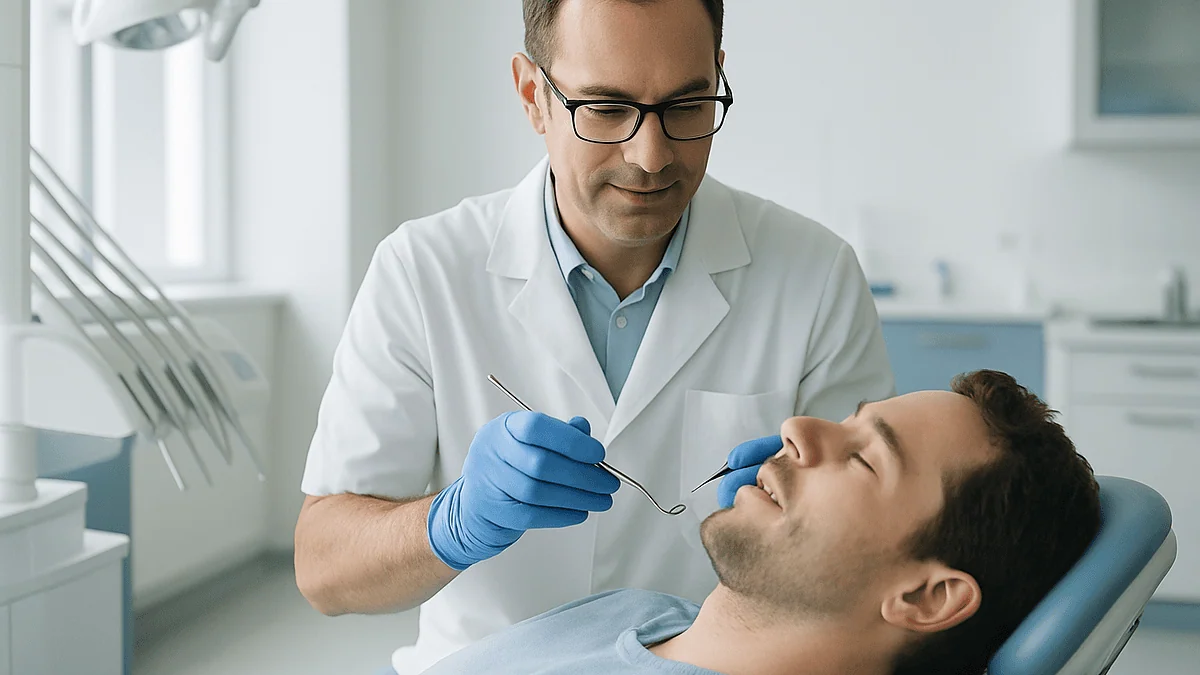
The chair tilts back up, the warm towel comes off your face, and you run your tongue across your front teeth. They feel like glass. Then the practical questions arrive on the drive home: is coffee off the menu, does one cigarette undo everything, and how long will this last?
Those are the right questions, and the answers are more nuanced than the leaflet suggests. The comfort extras of a dental spa session are pleasant, but the part that changes your mouth is ordinary and well studied: scaling and polishing, sometimes followed by fluoride varnish. Aftercare after dental spa polishing is really about two things, protecting a freshly cleaned surface for a day and building the habits that keep it that way.
This explainer separates what the evidence supports from what is folklore, including the famous white diet, the truth about tobacco stain, and why a little sensitivity is not a sign that something went wrong.
What actually happens during dental spa polishing
Dental spa is a marketing phrase, not a clinical category. It describes a routine professional cleaning wrapped in comfort touches such as music, scented towels or a heated chair. Strip those away and you are left with a scale and polish, the procedure the NHS describes as removing plaque, tartar and surface staining.
Scaling comes first. Plaque is the soft, sticky film of bacteria that forms on teeth every day. Tartar, also called calculus, is plaque that has hardened with minerals from saliva and can no longer be brushed off. The hygienist or dentist removes both with fine hand instruments or an ultrasonic scaler, a tip that vibrates thousands of times a second while a water spray cools the tooth and flushes debris away. That buzzing, slightly ticklish sensation along the gumline is the ultrasonic tip at work.
Polishing follows. A small rubber cup spins against each tooth with a gritty paste, often called prophy paste, buffing away stain that scaling missed and leaving the enamel slightly smoother. Some teams use air polishing instead, a jet of fine powder and water that reaches into grooves and between teeth. Either way, the goal is the same: a surface that plaque finds harder to grip.
Many visits finish with fluoride varnish, a sticky coating painted onto the teeth that releases fluoride over several hours to strengthen enamel. If your teeth feel faintly waxy or look yellowish for the rest of the day, that is the varnish, and it brushes off.
None of the spa elements alter this biology. They may lower anxiety, which matters, but the health benefit lives entirely in the scaling and polishing.
Why teeth feel so smooth right after dental spa polishing
That glassy feeling has a specific cause, and understanding it explains most of the aftercare advice.
Every tooth is normally coated in a pellicle, a thin, invisible film of proteins from saliva that settles onto enamel within minutes of any surface being cleaned. The pellicle is protective; it buffers acid and helps repair early mineral loss. It is also what food colorings and tobacco tar bind to, which is why stain sits on the surface rather than soaking into the tooth itself.
Polishing strips the pellicle along with the stain and plaque attached to it. For a short while the enamel is genuinely bare, and your tongue registers that as smoothness. Saliva begins rebuilding the pellicle almost immediately, and plaque bacteria start to recolonize within hours, which is precisely why MedlinePlus and the NHS frame brushing as a twice-daily task rather than an occasional reset.
Two consequences follow. First, the smooth feeling fades within a day or two no matter how carefully you behave, because a healthy pellicle is supposed to return. That is not stain coming back; it is your mouth doing its job. Second, the brief window before the pellicle matures is when strongly colored molecules may attach more readily, which is the plausible mechanism behind advice to go easy on coffee, red wine and tobacco for the rest of the day.
How long that vulnerable window truly lasts has not been pinned down in major guidance, so the honest position is this: the precaution is reasonable and low cost, but it is a courtesy to your fresh polish, not a medical rule with a stopwatch attached.
Who a dental spa session is usually for, and who is asked to wait
Routine scaling and polishing suits most adults and older children with a full set of permanent teeth, and it sits comfortably inside the check-up rhythm the NHS describes, where the interval is set by your dentist according to your risk. People who build tartar quickly, drink a lot of tea or coffee, or use tobacco often benefit most visibly. Pregnancy is not a reason to skip cleaning; the NHS notes that hormonal changes make gums more prone to inflammation, so professional plaque removal is generally welcomed, with the team informed of the pregnancy.
Some situations prompt a conversation or a postponement rather than a refusal:
- Active gum disease with deep pockets, where a cosmetic polish is the wrong tool and periodontal treatment (cleaning below the gumline, sometimes under local anesthetic) is what the dentist will discuss instead.
- Anticoagulant or antiplatelet medicines, which can increase gum bleeding during scaling. Tell the team what you take; never pause a prescribed medicine on your own initiative for a cleaning.
- Certain heart valve conditions or recent joint replacement, where some cardiologists or surgeons prefer to be consulted about whether antibiotic cover is appropriate. That decision belongs to those clinicians.
- An active cold sore, mouth ulcer flare or acute infection, when instruments near the area may spread virus or cause pain. Rescheduling is common.
- A recent extraction or surgical site, which the team will simply avoid.
Children usually receive gentler polishing and fluoride varnish rather than heavy scaling, and the team adapts the pace to the child. If you are unsure whether you fit any of these groups, ask before you book; a two-minute phone call spares a wasted appointment.
How long after dental polishing can you eat and drink?
There is no guideline that imposes a fasting period after a plain scale and polish. If nothing else was applied, you can eat and drink as soon as you feel like it, and many people head straight for lunch with no ill effect.
The picture changes if fluoride varnish was painted on. Varnish works by clinging to the teeth and slowly releasing fluoride, so anything that scrapes or dissolves it early shortens its contact time. Teams therefore commonly ask you to wait before eating, and to avoid hot drinks, hard or crunchy foods and sticky sweets for the rest of that day. The exact waiting period varies between practices and products, so follow the specific instruction you were given rather than a number from the internet.
Tender gums add a practical consideration. Scaling around inflamed gums can leave them sore for the evening, and very hot, spicy or sharp-edged foods may sting. Lukewarm soups, yogurt, eggs, pasta, rice and soft fruit are easy choices for a first meal, not because the polish requires them, but because they are comfortable.
Staining is the third factor, and the one people worry about most. Because the protective pellicle is temporarily gone, a first-day meal built around lighter colored foods and plenty of water is a sensible courtesy to your fresh polish. If you do have coffee or a glass of red wine that evening, nothing is ruined; rinse with water afterward and carry on with your normal routine.
One caution the NHS gives for every day, not just this one: do not brush immediately after eating or drinking something acidic. Wait about an hour so softened enamel can re-harden before the toothbrush arrives.
Which foods and drinks stain freshly polished teeth most
Stain comes from chromogens, pigmented molecules that latch onto the pellicle, and it is worsened by tannins, plant compounds that help those pigments stick, and by acids that etch the surface just enough to give stain a foothold. The table below groups everyday culprits by mechanism and suggests a lower-impact option for the first day.
| Food or drink | Why it stains | Gentler first-day option |
|---|---|---|
| Coffee, black tea | Dark chromogens plus tannins that bind pigment to the pellicle | Water, milk, a light herbal infusion |
| Red wine, dark beer | Chromogens, tannins and acid together | Sparkling water, if you would like a glass of something |
| Cola and dark sodas | Caramel color plus phosphoric or citric acid | Plain or sparkling water |
| Blueberries, blackberries, cherries, beet | Intense natural pigments | Banana, pear, peeled apple |
| Tomato sauce, curry, soy sauce, balsamic | Turmeric and dark pigments that cling to rough spots | Cream or white bean based sauces, olive oil and herbs |
| Sports and energy drinks | Artificial color combined with acid and sugar | Water; the sugar also feeds plaque |
Two habits reduce stain regardless of what is on the plate. Drinking colored beverages with a meal rather than sipping across an afternoon shortens contact time, and swishing plain water afterward dilutes both pigment and acid. A straw keeps cola and iced coffee away from the front teeth, though it does nothing for the back.
Keep perspective. The stain that builds between visits is the product of months of daily habits, not one celebratory dinner. If your normal week includes four coffees a day, the polish will fade faster than your neighbor’s regardless of how disciplined the first evening was.
What tobacco does to teeth and gums after a polish
Nothing reverses a polish faster than tobacco, and the reason is chemical rather than cosmetic prejudice. Cigarette smoke deposits tar, a sticky brown residue, directly onto the pellicle and into the microscopic pits of enamel and any exposed root surface. Nicotine itself is colorless but turns yellow when it meets oxygen. Together they produce the tenacious brown-yellow stain that hygienists spend the longest time removing, and they begin depositing again with the first cigarette after the appointment.
The deeper damage is to the gums. The NHS lists smoking among the main risk factors for gum disease, and the NIH’s dental research institute explains the mechanism: tobacco narrows blood vessels in gum tissue, starving it of oxygen and immune cells, which slows healing after scaling and masks the bleeding that would normally warn you of inflammation. Smokers’ gums can look deceptively calm while bone is being lost underneath. Tobacco also reduces saliva flow, and saliva is the mouth’s built-in rinse.
Smokeless tobacco stains and irritates the gum where it sits, and carries its own cancer risk in that spot. Vaping produces far less tar, so heavy brown stain is less typical, but nicotine and the drying effect remain, and long-term evidence on gum health is still accumulating; absence of stain is not evidence of safety.
The day after a cleaning is a natural moment to consider stopping, because the reward is visible every time you smile in a mirror. Your dentist or physician can connect you with stop-smoking support, and if nicotine replacement or prescription options come up, those decisions sit with the prescribing clinician. What the evidence supports without caveat is that quitting improves gum healing and slows stain far more than any aftercare trick.
How long does dental polishing last?
Polishing does not have a shelf life the way a filling does, so the question needs unpacking. There are three separate things that fade at different speeds.
The sensation of smoothness disappears first, typically within a day or two, as the natural pellicle rebuilds. This is normal and healthy, and it is the reason many people wrongly conclude the cleaning has already worn off.
Visible brightness lasts as long as your habits allow. Surface stain accumulates in proportion to coffee, tea, wine, dark sauces and, above all, tobacco, offset by how thoroughly plaque is removed each day. A light-drinking non-smoker who brushes twice daily and cleans between teeth may see little change for many months; a heavy tea drinker who smokes may notice dulling within weeks. No guideline puts a number on this because the variables are personal.
The health benefit lasts until tartar rebuilds enough to shelter bacteria against the gum. That is why the NHS recommends the interval between check-ups be set by your dentist according to risk, anywhere from 3 months to 2 years, rather than a fixed six-monthly rule. Hygiene visits follow the same logic; people who mineralize plaque quickly or have a history of gum disease are usually seen more often.
What extends all three is unglamorous: two minutes of brushing twice a day with fluoride toothpaste, daily cleaning between teeth, water after colored drinks, and no tobacco. What shortens them is the belief that a professional cleaning substitutes for home care rather than complementing it. Think of the polish as a reset of the clock, not a pause button.
Is dental polishing good or bad for your teeth?
Both positions get argued online, and the evidence sits somewhere more interesting than either camp.
On the benefit side, polishing removes surface stain and residual plaque and leaves enamel smoother, which most people value and which makes home brushing marginally more effective. Combined with scaling, it takes away tartar that no toothbrush can dislodge, and tartar removal is what protects the gums.
On the caution side, prophy paste is abrasive by design. Enamel is the hardest tissue in the body and tolerates occasional polishing well, but exposed root surfaces, where the softer dentin sits, do not have that protection. Repeated aggressive polishing of roots or of teeth with thin enamel can wear them over years. Many teams now polish selectively, treating only surfaces with visible stain rather than every tooth on autopilot, and they choose finer pastes for people with recession.
The more surprising finding concerns routine scaling and polishing itself. A Cochrane systematic review of adults without established gum disease found little or no difference in gum bleeding or plaque levels between people given routine scale and polish at fixed intervals and those who were not, over periods of up to three years. Participants did tend to have less tartar, and they reported valuing the cleaner feel. The reviewers rated the evidence as low certainty, so this is not proof that cleaning is pointless; it is a reminder that for healthy mouths the decisive factor is daily home care, and that the interval should be tailored rather than ritual.
The fair summary: polishing is good when it is selective and paired with scaling in someone who needs it, neutral in someone with a spotless mouth, and potentially unhelpful only when it is heavy-handed or treated as a substitute for brushing.
What should you not do after scaling and polishing?
The list is short, and most of it is about not overreacting to a mouth that feels different for a day.
Do not skip brushing that night because your gums feel tender. Bleeding from inflamed gums usually settles as plaque is kept off them, and the NHS is explicit that bleeding is not a reason to stop brushing. Use gentle pressure and a soft brush; scrubbing harder does not clean better and can abrade the very surfaces that were just polished.
Do not reach for abrasive home remedies. Baking soda scrubs, charcoal powders and lemon juice all promise extra whiteness and all work by removing enamel or etching it, which makes stain return faster. Whitening strips on the day of a cleaning can sting sensitized gums; if whitening interests you, raise it with the team rather than self-starting.
Do not rinse with mouthwash straight after brushing. The NHS notes it washes away the concentrated fluoride left by toothpaste. If you use a mouthwash, choose a different time of day.
Do not pick at your gums with toothpicks or fingernails to chase the smooth feeling. Interdental brushes or floss, used gently, are the tools for between teeth.
Do not smoke or vape for the rest of the day if you can possibly avoid it, and ideally longer; the stain deposits immediately and the gums heal more slowly.
If fluoride varnish was applied, do not chew hard or sticky foods or drink very hot beverages that day, since both strip the coating early.
Finally, do not treat sensitivity as an emergency. A zing from cold water is common for a few days after tartar is removed from root surfaces. It is a signal to be gentle, not a sign of damage, and it is covered in the next section.
Teeth polishing sensitivity: what the next days usually look like
Recovery from a routine cleaning is measured in days, and it follows a recognizable arc.
On the day itself, teeth feel slick and gums may be slightly puffy or tender, especially where tartar had built up. A little pink in the sink when you brush that evening is common and reflects inflammation that was already present, not injury from the instruments. Fluoride varnish, if applied, can make teeth look dull or yellowish until it is brushed off.
Over the first two or three days, the most frequent complaint is a sharp, brief sensitivity to cold air or water. The mechanism is straightforward: tartar that had been covering exposed root surfaces is gone, and the dentin beneath contains microscopic tubules that transmit temperature changes to the nerve. As the pellicle and minerals from saliva recoat those tubules, the zing usually eases. Lukewarm drinks and breathing through the nose in cold weather help in the meantime.
By the end of the first week, gums that were inflamed generally tighten and bleed less, provided plaque is being removed daily at home. That improvement is the real measure of a successful cleaning, more than the whiteness.
If sensitivity is still bothering you after a couple of weeks, or if it is getting worse rather than better, mention it to the team. Toothpastes formulated for sensitive teeth work by blocking the dentin tubules or calming the nerve, and your hygienist can advise whether one is worth trying; they may also check for an exposed root or a small area of decay that the sensitivity is pointing to. Persistent sensitivity is worth investigating, but it is rarely a sign that polishing harmed the tooth.
Keeping the freshness going: the home routine that actually works
The most effective aftercare is the routine you run every day for the next six months, and it is the same routine public health bodies have recommended for decades. The details matter more than most people realize.
Brush for about two minutes twice a day, and the NHS is specific that one of those times should be last thing at night, because saliva flow drops during sleep and plaque bacteria get an undisturbed run. Use a fluoride toothpaste and a soft or medium brush held at a slight angle to the gumline, letting the bristles do the work rather than your forearm. Electric brushes with a small oscillating head can make gentle, thorough brushing easier, though a well-used manual brush achieves the same result.
Spit after brushing but do not rinse with water or mouthwash straight away. That leaves a film of fluoride on the enamel where it continues strengthening the surface. It feels odd for a week and then becomes automatic.
Clean between the teeth once a day with floss or interdental brushes sized to fit your gaps. A toothbrush cannot reach those surfaces, and they are where gum inflammation and stain between teeth begin. Bleeding at first is expected and usually fades within days of consistent use.
Replace your brush or brush head roughly every 3–4 months, or sooner when the bristles splay, as MedlinePlus advises, because worn bristles clean poorly and can scratch gums.
Around meals, the NHS suggests waiting about an hour after eating or drinking, particularly anything acidic, before brushing. Rinse with water in the meantime. Keep sugary and acidic drinks to mealtimes rather than sipping through the day, since frequency of exposure drives both decay and stain more than total quantity does.
Dental polishing vs teeth whitening vs deep cleaning: what is actually different
Three procedures get muddled in conversation, and confusing them leads to disappointment.
Polishing removes extrinsic stain, meaning color sitting on the outside of the tooth, bound to pellicle and plaque. It returns the tooth to its own natural shade. It cannot lighten the tooth beyond that shade, and it does nothing for intrinsic discoloration, the color built into the tooth from within by factors such as certain antibiotics taken in childhood, excess fluoride during development, a knock that damaged the nerve, or simply the thinning of enamel with age that lets yellower dentin show through.
Whitening is a different process altogether. It uses peroxide-based gels that penetrate enamel and break down pigment molecules inside the tooth, genuinely changing its shade. The NHS describes it as a dental procedure that should be carried out under a registered dental professional’s supervision, with tray-based home systems supplied and monitored by the team. It commonly causes temporary sensitivity, does not affect crowns or fillings, and its results fade over time. Whether it suits you, and what to expect, is a conversation for your dentist; no polish, however thorough, produces the same effect.
Deep cleaning, more formally scaling and root planing, treats established gum disease. It cleans below the gumline where pockets have formed between tooth and gum, smoothing the root surface so the gum can reattach. It is often done in sections, sometimes with local anesthetic, and is followed by more frequent review than a routine hygiene visit. A dental spa polish is not a substitute for it, and a team that finds deep pockets during a spa visit should say so and recommend the appropriate periodontal care.
Knowing which of the three you have had, and which you might need, is the single best way to set realistic expectations.
What people often get wrong after dental spa polishing
Aftercare folklore is abundant, and some of it does harm.
The polish is a whitening treatment. It is not. Polishing removes what was added to the surface and reveals your natural shade. Anyone promised a dramatically whiter smile from a spa clean has been oversold.
The 24-hour white diet is a proven rule. The mechanism is plausible, since the pellicle is temporarily gone, but no major guideline specifies a duration and the long-term stain picture is set by months of habits. Treat it as a sensible courtesy, not a contract.
Sensitivity means the hygienist damaged the tooth. Cold sensitivity for a few days after tartar is removed from root surfaces is common and usually settles. Persistent or worsening sensitivity deserves a check, but it is rarely caused by the cleaning itself.
Bleeding gums mean stop brushing there. The opposite is true. Bleeding signals inflammation from plaque, and consistent gentle cleaning is what resolves it. The NHS specifically warns against easing off.
A professional clean buys a few weeks off flossing. Plaque begins re-forming within hours. The cleaning resets the clock; it does not stop it.
Vaping is harmless to teeth because it does not stain. Less tar means less brown stain, but nicotine still constricts gum blood vessels and dries the mouth, and evidence on long-term gum health is still developing.
More frequent polishing keeps teeth healthier. For people without gum disease, systematic review evidence finds little or no gum benefit from routine polishing at fixed intervals, and unnecessary polishing adds abrasion. Frequency should be tailored to your risk by your team, not maximized.
Scrubbing harder makes the smooth feeling last. Pressure abrades enamel and gums. Technique and time, not force, remove plaque.
Questions to ask your care team
A hygiene appointment moves quickly, and the moment of rinsing at the end is not ideal for a detailed conversation. Arriving with a few questions turns a passive spa experience into a genuine review of your oral health.
- Did you find any areas of gum disease, deep pockets or bleeding that I should know about, and does that change how often I should come back?
- Was fluoride varnish applied today, and exactly how long should I wait before eating or drinking, and what should I avoid this evening?
- Did you polish all my teeth or only stained areas, and is my enamel or any exposed root thin enough that we should limit polishing in future?
- Which teeth have exposed roots or early recession, and what brushing angle or brush type would protect them?
- Are there spots I am consistently missing at home? Can you show me, with a mirror, where plaque was heaviest?
- Which interdental brush sizes fit my gaps, and should I use floss anywhere the brushes do not reach?
- Is the staining you removed mostly from diet or tobacco, and realistically, how quickly will it return with my habits?
- I am interested in a whiter shade. Is whitening appropriate for me, what would it involve, and what would it not change?
- I take blood-thinning or other regular medicines. Is there anything about them you need to know before my next scaling?
- If I want to stop smoking, who can you refer me to?
Write down the answers, or ask for them in your visit summary. The recommended recall interval in particular is worth recording, because it is easy to default to a habit of six months when your team has suggested something shorter or longer based on what they actually saw.
When to call your doctor or dentist
Serious problems after a routine scale and polish are uncommon, but a few signs should not be waited out.
Contact your dental team the same day if you have gum bleeding that does not stop with gentle pressure from a clean gauze or damp tea bag after about twenty minutes, particularly if you take anticoagulant medicines; a sharp, throbbing or worsening pain in one tooth rather than general tenderness; a tooth that suddenly feels loose; swelling of the gum, cheek or jaw; a bad taste or pus around a tooth; or numbness in your lip or tongue that persists for many hours beyond what you were told to expect after local anesthetic.
Seek urgent medical care, by calling emergency services if necessary, for any sign of an allergic reaction to fluoride varnish or other materials, such as hives, swelling of the lips or face, wheezing or difficulty breathing. These reactions are rare but need immediate treatment. Facial swelling combined with fever, difficulty swallowing or trouble opening your mouth can indicate a spreading infection and is also an emergency.
Less urgent, but still worth a call within the week: cold sensitivity that has not eased or is getting worse after a couple of weeks; bleeding when brushing that is not improving despite daily cleaning between teeth; a persistent sore or ulcer in the mouth that has not healed within about three weeks, which the NHS advises should always be checked.
Whatever the symptom, describe what was done at the visit, when it started, and what makes it better or worse. Your dentist or physician remains the person to interpret it; no article can replace an examination, and every decision about further treatment belongs with the team that knows your mouth.
Frequently asked questions
How long does dental polishing last?
There is no fixed lifespan; the smooth sensation fades within a day or two as the natural pellicle rebuilds, while visible brightness lasts as long as your diet and tobacco habits allow. The health benefit, tartar removal, lasts until tartar rebuilds, which is why the NHS asks dentists to set recall intervals individually, from 3 months to 2 years, rather than by a fixed schedule.
How long after dental polishing can you eat?
If only scaling and polishing were done, you can eat and drink straight away. If fluoride varnish was applied, most teams ask you to wait a short while and to avoid hot drinks, hard foods and sticky sweets for the rest of the day so the varnish stays on. Follow the specific instruction your team gave, since practices and varnish products vary.
Is dental polishing good or bad for your teeth?
Polishing is beneficial when it is selective, removes stain and plaque, and is paired with scaling in someone who needs it. It is mildly abrasive, so heavy repeated polishing of exposed roots or thin enamel is best avoided. For healthy mouths, systematic review evidence shows little added gum benefit from routine polishing, so frequency should be tailored by your team rather than maximized.
What should you not do after scaling and polishing?
Avoid tobacco, abrasive home remedies such as baking soda or charcoal, and whitening strips on the day. Do not skip brushing because gums are tender, do not scrub harder, and do not rinse with mouthwash right after brushing because it washes fluoride away. If varnish was applied, skip hard, sticky or very hot foods that day. Pick nothing at your gums with toothpicks.
Is eating after teeth polishing likely to stain them straight away?
One colored meal will not undo a polish. The protective pellicle is temporarily gone, so pigments may attach more readily for a short period, which is why lighter foods and water are a sensible first-day courtesy. Long-term stain is driven by months of coffee, tea, wine and tobacco habits, not one dinner. Rinsing with water after colored drinks helps at any time.
Why do my teeth feel sensitive after a dental spa polish?
Removing tartar from root surfaces exposes dentin, whose microscopic tubules transmit cold to the nerve, so brief sensitivity to cold air or water is common for a few days and usually eases as saliva recoats the surface. If it persists beyond a couple of weeks or worsens, tell your team; they may suggest a toothpaste for sensitive teeth or check for an exposed root or early decay.
Does one cigarette after a dental cleaning really matter?
Yes, in two ways. Tar and oxidized nicotine begin depositing stain onto the freshly cleaned surface immediately. More importantly, smoking constricts blood vessels in the gums, slowing the healing that scaling sets in motion, and it is a major risk factor for gum disease according to the NHS and NIH. The day after a cleaning is a widely used moment to seek stop-smoking support.
Can dental polishing whiten my teeth?
No. Polishing removes stain sitting on the surface and returns teeth to their natural shade; it cannot lighten them beyond that. Whitening uses peroxide-based gels that change the color inside the tooth and, per the NHS, is a dental procedure that should be supervised by a registered dental professional. Discoloration built into the tooth, such as from childhood antibiotics or trauma, does not polish off.
Can I have a dental spa polish while pregnant or on blood thinners?
Usually, yes, but tell the team. The NHS notes pregnancy hormones make gums more prone to inflammation, so professional cleaning is generally welcomed. Anticoagulant or antiplatelet medicines can increase bleeding during scaling; never stop them on your own for a cleaning. Your dentist may coordinate with your physician, and the decision about timing rests with them.
Is a dental spa cleaning the same as a deep cleaning?
No. A spa session is a routine scale and polish above and just below the gumline, treating stain and mild plaque and tartar. Deep cleaning, or scaling and root planing, treats established gum disease by cleaning within pockets below the gumline, often in sections and sometimes with local anesthetic. If a spa visit reveals deep pockets, the team should recommend periodontal care instead.
References
- NHS: How to keep your teeth clean
- NHS: Gum disease
- MedlinePlus: Dental care – adult
- NIH National Institute of Dental and Craniofacial Research: Periodontal (Gum) Disease
This article is for general information only and is not a substitute for professional medical advice. Please consult a qualified doctor about your individual situation.

More from the Blog
Broken Bracket or Poking Wire: Metal Braces Problems and When to Call the Orthodontist
If a bracket breaks or comes loose, the usual first step is to leave it in place, cover any sharp edge with orthodontic wax,…

How Gingival Aesthetics Is Performed: Mapping the Gum Line, Reshaping and Final Checks
A gum contouring procedure reshapes the edge of the gums so the teeth look longer, more even or better proportioned. The dentist or periodontist…

Recovering From Impacted Tooth Surgery: Swelling, Limited Mouth Opening and Soft Foods
Recovery from impacted tooth surgery usually takes up to two weeks, according to the NHS. Swelling of the cheek tends to peak around the…

Why a Dental Evaluation Comes Before Heart Surgery or Cancer Therapy: The Coordinated Check
Surgeons and oncologists ask for a dental evaluation before heart surgery or cancer therapy because the mouth is one of the body's largest reservoirs…
How Fluoride Application Strengthens Enamel: Early Decay Explained and How Care Is Planned
Fluoride strengthens enamel by joining the repair process that happens on every tooth after acid exposure. When minerals return to a weakened surface, fluoride…

Which Anesthesia for Oral and Maxillofacial Surgery? Local, Sedation or General Explained
Oral and maxillofacial surgery is usually done under one of three approaches: local anesthesia, which numbs only the surgical area while you stay awake;…