

Berberine: Nature’s Ozempic? What Trials Show and What They Do Not

Key Takeaways
- Pooled trial data link berberine to roughly 4–6 pounds of weight loss over 2–3 months, about one-fifth of the 10–15% body-weight reductions seen in yearlong trials of prescription GLP-1 medications.
- Less than 1% of swallowed berberine reaches the bloodstream, so researchers believe much of its effect happens in the gut, including on gut bacteria.
- In small trials, berberine lowered hemoglobin A1c by roughly half to one percentage point and LDL cholesterol by about 20–25 mg/dL, but no trial has ever measured whether it prevents heart attacks or diabetes complications.
- Berberine inhibits liver enzymes that clear many common prescriptions, meaning it can quietly raise the blood levels of blood thinners, transplant medications, and more.
- Berberine crosses the placenta and can trigger dangerous bilirubin buildup (kernicterus) in newborns, so mainstream guidance rules it out entirely during pregnancy, while breastfeeding, and for infants.
- U.S. supplements are not FDA-reviewed before sale; a USP or NSF seal verifies that the bottle matches its label: it does not verify that berberine works.
Berberine is a plant compound that modestly lowered blood sugar, cholesterol, and body weight in small, short clinical trials, typically a few pounds over two to three months, far less than prescription GLP-1 medications achieve. The studies are limited in size and length, long-term safety is unknown, and berberine interacts with many common medications, so talk with a clinician before trying it.
The video is forty seconds long. A confident voice, a yellow-tinted bottle, and a promise: the famous weight-loss injection everyone is talking about, minus the prescription, for roughly the price of a takeout dinner. By 2023, clips like it had piled up hundreds of millions of views, and pharmacists began fielding a new question at the counter: do you carry berberine?
It is a fair question, and it deserves a better answer than a caption. Berberine is not snake oil. It is a genuinely interesting plant compound with centuries of traditional use and a real, if modest, body of clinical research behind it. It is also not what the videos say it is.
So let’s do what a forty-second clip cannot: walk through the actual trials, the honest-sized numbers they produced, and the safety fine print that never makes it on screen.
First, what is berberine, and why is everyone suddenly talking about it?
Berberine is a bitter, intensely yellow alkaloid found in several plants, including barberry, goldenseal, Oregon grape, and tree turmeric. The color is so vivid that the compound doubled as a fabric dye for centuries. In traditional Chinese and Ayurvedic medicine, berberine-containing plants were used for digestive complaints and infections long before anyone could measure blood sugar.
The modern chapter began in research labs studying metabolism, then exploded on social media around 2023, when creators branded it “nature’s Ozempic” and sales spiked. That nickname did most of the marketing work, and most of the damage to public understanding, because it implies a similarity that the evidence does not support.
Two framing points matter before we get to trials. Berberine is not a vitamin or a mineral; there is no such thing as a berberine deficiency, and your body does not require it. And despite being sold on the supplement shelf, it behaves pharmacologically: it activates cellular enzymes, alters how the liver processes other substances, and produces measurable changes in blood chemistry. That makes it more interesting than most supplements, and it also means it deserves the kind of caution you would extend to a medication, not a multivitamin. The National Center for Complementary and Integrative Health, part of the NIH, has published a plain-spoken review of the weight-loss evidence, and its conclusion is a useful preview: the studies are small, short, and not strong enough to support the hype.
What does berberine do for the body?
The most-cited mechanism involves an enzyme called AMPK, sometimes nicknamed the body’s “metabolic master switch.” When AMPK is activated, cells shift toward burning fuel rather than storing it, and tissues tend to respond better to insulin. Berberine activates AMPK convincingly in lab and animal studies, which is why researchers took it seriously in the first place.
Here is the wrinkle: berberine is absorbed remarkably poorly. Estimates suggest less than 1% of a swallowed amount reaches the bloodstream intact. That has pushed scientists toward a second explanation: that much of berberine’s action may happen inside the gut itself, where concentrations stay high. Proposed gut-level effects include:
- Slowing the breakdown and absorption of carbohydrates after meals
- Shifting the composition of gut bacteria in ways that may influence metabolism
- Modestly increasing the gut’s own signaling hormones, though human data here are thin
In the liver, berberine appears to help cells pull more LDL cholesterol out of circulation, working through a different route than standard cholesterol medications. Each of these mechanisms is biologically plausible and reasonably well documented in laboratory settings.
A mechanism, though, is a hypothesis about why something might work, not proof that it does, or by how much. Plenty of compounds with elegant mechanisms have produced trivial results in people. The only way to know what berberine actually does for a human body is to look at human trials, so that is where we go next.
Is berberine really “nature’s Ozempic”?
No, and the comparison falls apart quickly once you look at how each one works and what the trials measured. Prescription GLP-1 medications mimic a hormone that slows stomach emptying and acts directly on appetite centers in the brain. Berberine does neither in any clinically established way; its effects run through cellular energy sensing and the gut. Different mechanism, different scale, different evidence base.
The numbers make the gap concrete:
| Berberine (supplement) | Prescription GLP-1 medications | |
|---|---|---|
| Typical weight change in trials | Roughly 4–6 pounds (2–3 kg) | Roughly 10–15% of body weight |
| Usual trial length | 8–12 weeks | A year or longer |
| Typical trial size | Dozens to a few hundred people | Thousands of people |
| Regulatory review | None before sale | Approved after large safety and efficacy trials |
For a 200-pound person, 15% of body weight is 30 pounds. The berberine trials, at their most optimistic, describe something closer to one-fifth of that, over a much shorter window, in far smaller studies, with no data on whether the change lasts.
None of this makes berberine worthless. It makes the nickname misleading. “A plant compound with modest, short-term metabolic effects in small trials” would never trend on social media, but it is what the evidence actually describes.
Does berberine help you lose weight?
Possibly a little, and “a little” is doing honest work in that sentence. Pooled analyses of randomized trials have found average weight reductions on the order of 2 to 3 kilograms, about 4 to 6 pounds, over two to three months. Some individual studies found less; a few found effects only in people who started with obesity or metabolic syndrome.
The NIH’s complementary-health center reviewed this literature and reached a blunt conclusion: the existing studies are too small and too methodologically weak to establish that berberine is effective for weight loss. That is not the same as proving it does nothing, but it is a long way from proof that it works.
Three gaps matter most. First, duration, almost no trials follow people beyond a few months, so nobody knows whether early losses persist, plateau, or reverse. Second, the trials rarely isolate berberine; many combined it with diet counseling or other interventions, which muddies the credit. Third, there is no evidence at all on the question people actually care about: keeping weight off over years.
A useful comparison: structured lifestyle programs studied in large trials, the kind built around food changes, activity, and regular support, have produced 5 to 7% body-weight reductions sustained over years. That is a stronger, better-documented result than anything in the berberine literature, without the interaction risks discussed later in this article.
What do trials show for blood sugar?
This is berberine’s strongest suit, and the honest summary is: intriguing but unfinished. The study that put berberine on the metabolic map was a 2008 pilot in adults with newly diagnosed type 2 diabetes. Over three months, hemoglobin A1c, the standard measure of average blood sugar, fell by roughly two percentage points in the berberine group, a reduction comparable to a widely used first-line diabetes medication given to a parallel group.
That result was striking, and later work partially backed it up. A 2015 pooled analysis of 27 randomized trials, covering more than 2,000 participants, found that berberine plus lifestyle changes lowered blood sugar more than lifestyle changes alone. Across meta-analyses, typical A1c reductions land somewhere around half to one percentage point.
Now the caveats, which are substantial. Most trials were small, often a few dozen people. Most ran twelve weeks or less. The vast majority were conducted in one region, using varied products and designs, and the pooled-analysis authors themselves graded the underlying study quality as low. No trial has tested whether berberine prevents the complications that make high blood sugar dangerous, nerve damage, kidney disease, heart disease, because trials that short and small cannot answer such questions.
One point cannot be stated strongly enough: nothing here supports replacing prescribed diabetes treatment with a supplement. Stopping proven medication in favor of berberine trades established benefit for an open question, and that is a bad trade with high stakes.
Can berberine lower cholesterol?
Pooled analyses of small randomized trials suggest it can move the numbers modestly. LDL cholesterol, the kind most closely tied to heart disease risk, fell by roughly 20 to 25 mg/dL on average in these analyses, with triglycerides declining as well. The proposed mechanism is credible: berberine appears to increase the liver’s capacity to clear LDL from the blood, through a pathway distinct from the one standard cholesterol medications use.
Before anyone reorganizes their heart-health plan around that, two distinctions matter.
Lowering a number is not the same as lowering risk. Prescription cholesterol medications earned their place through enormous, years-long trials showing fewer heart attacks and strokes, actual outcomes, not just improved lab values. Berberine has no such outcome data. Zero trials have tested whether it prevents a single cardiovascular event. A 25-point LDL drop is meaningful if it translates into protection, and for berberine, that “if” remains completely untested.
The trials also share the familiar weaknesses: small groups, short durations, variable products, and quality ratings that reviewers consistently describe as low. For someone with genuinely elevated cardiovascular risk, relying on berberine instead of proven therapy means gambling on an unverified assumption while a well-verified option sits on the table.
Where might it reasonably fit? That is a conversation for a clinician who knows your full risk picture, which is precisely the conversation the supplement aisle skips.
Why the research isn’t the last word
Read enough berberine studies and a pattern emerges, not of fraud, but of limitation. Understanding those limits explains why cautious experts and enthusiastic headlines can look at the same data and reach different conclusions.
Size comes first. Typical berberine trials enroll 30 to 100 people. Small trials are statistically noisy: they can exaggerate real effects, manufacture apparent ones, and miss uncommon side effects entirely. A safety signal that appears in one of every 500 users is essentially invisible in a 60-person study.
Duration compounds the problem. Eight to twelve weeks tells you what happens in eight to twelve weeks. Metabolic health plays out over decades, and the trial literature simply goes dark past the three-month mark.
Then there is concentration, most trials come from a single country’s research ecosystem, using different formulations, amounts, and comparison groups. Replication across independent teams, populations, and products is a cornerstone of medical confidence, and berberine largely lacks it. Reviewers also flag publication bias: small positive studies are likelier to see print than small negative ones, which can tilt pooled analyses toward optimism.
Finally, every trial measured surrogate markers, weight, A1c, LDL, rather than outcomes like heart attacks, complications, or quality of life. Surrogates are useful signposts, but medicine has been burned before by treatments that improved the signpost and not the destination. The honest reading: berberine has earned further study, and the study it has earned has not yet been done.
Why don’t doctors recommend berberine?
Not because of a conspiracy, and not because physicians are indifferent to natural compounds, several major medications began as plant chemistry. The reluctance is structural, and it rests on four legs.
Evidence standards come first. Before recommending something, clinicians want large, replicated, longer-term trials showing meaningful benefit and characterizing harm. Berberine’s file contains small, short studies of low-to-moderate quality. By the bar applied to any new therapy, that file is incomplete.
Regulation is the second leg. Dietary supplements in the United States are not reviewed by the FDA for safety or effectiveness before they are sold. A doctor recommending a specific bottle cannot verify what is in it, a problem covered later in this article, which makes any recommendation partly a guess.
Third is the interaction profile. Berberine affects the liver enzymes that clear many common medications, so a casual “sure, try it” could quietly change how a patient’s existing prescriptions behave. For a clinician managing someone on three or four medications, that is not a small consideration.
The fourth leg is opportunity cost. The people most drawn to berberine, those with rising blood sugar, creeping weight, borderline cholesterol, are exactly the people for whom proven interventions exist. Every month spent hoping a supplement will handle it is a month of delayed, evidence-backed care.
Some clinicians will still discuss berberine openly with patients who are set on trying it, focusing on safety and monitoring. That conversation is worth having, with them, not with a comment section.
Is there a downside to taking berberine?
Several, and they deserve equal billing with the benefits. The most common problems are digestive. Across trials, participants reported constipation, diarrhea, gas, nausea, and stomach cramping: a plausible pattern for a poorly absorbed compound that lingers in the gut. These effects appeared more often at larger amounts and drove some participants out of studies. Unpleasant rather than dangerous, usually, but common enough that it is the rule rather than the exception to notice something.
Low blood sugar is a sharper risk for a specific group: people already taking blood-sugar-lowering medication. Because berberine has glucose-lowering activity of its own, stacking it on top of prescribed treatment can push blood sugar too far down. Shakiness, sweating, sudden hunger, irritability, and confusion are the warning signs, and they warrant immediate attention.
The deepest downside is what nobody can tell you. With trials capped at roughly three months, long-term safety is genuinely unknown, not “probably fine,” but unstudied. There are no data on what daily berberine does to a human body over five or ten years, no monitoring system tracking users, and no large population to draw reassurance from. “Natural” offers no protection here; nature produces both chamomile and hemlock, and the only way to know where a compound falls on the safety spectrum is testing that, for long-term berberine use, has never been performed.
Then there are the interactions, significant enough to earn their own section.
The interaction problem hiding in plain sight
If one safety issue deserves top billing, it is this. Berberine inhibits several of the liver’s cytochrome P450 enzymes: the chemical disposal crew that clears a large share of common prescriptions from the body. Slow the crew down, and medications can accumulate to higher levels than the prescriber ever intended. The medication label does not change; the effective amount in your bloodstream does.
Categories where caution is repeatedly flagged include:
- Blood thinners, where higher levels can raise bleeding risk
- Blood-sugar-lowering medications, where stacked effects can drive glucose too low
- Anti-rejection medications used after organ transplants, where blood levels are calibrated with extreme precision
- Certain heart-rhythm and blood-pressure medications
- Some sedatives and other drugs cleared by the affected liver enzymes
Because these enzymes handle so many compounds, no list is exhaustive, which is exactly the point. A person cannot reliably self-screen for berberine interactions by searching online, because the interactions run through shared metabolic machinery rather than a handful of named drugs.
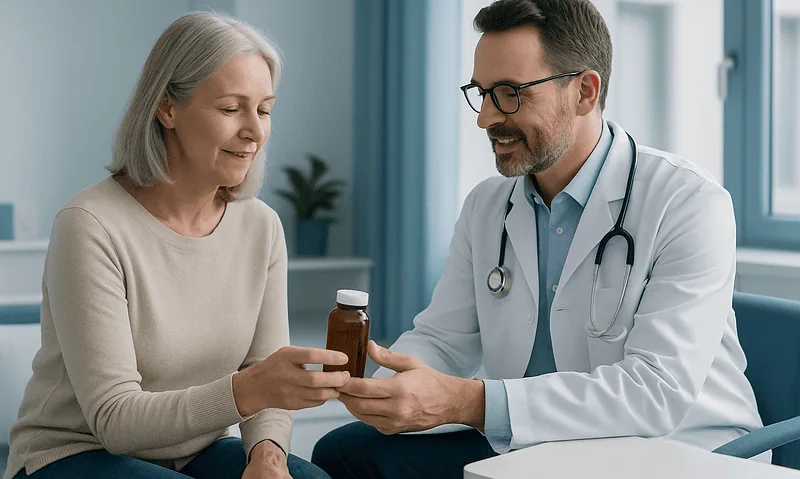
The practical safeguard is simple and free: bring the berberine bottle, or a photo of its label, to your pharmacist. Pharmacists are trained specifically in interaction screening, can check your full medication list in minutes, and answer this exact category of question all day. It is a five-minute conversation that closes off the most preventable way a supplement causes real harm. Skipping it to save an errand is a poor bargain.
Who should not take berberine at all?
For a few groups, this is not a weigh-the-tradeoffs situation: the mainstream guidance is a flat no.
Pregnancy tops the list. Berberine crosses the placenta and can harm the developing fetus. It also interferes with the newborn body’s handling of bilirubin, the yellow pigment produced when red blood cells break down. Displaced bilirubin can accumulate in an infant’s brain, causing a rare but devastating condition called kernicterus. The NIH’s guidance on goldenseal, a major berberine source, states the risk plainly: not during pregnancy, not while breastfeeding, and never given directly to newborns or infants. This is one of the least ambiguous safety warnings in the supplement literature.
Several other groups should treat berberine as off-limits without explicit medical clearance:
- Anyone who has received an organ transplant, given the interaction with anti-rejection medications
- People taking blood thinners or multiple prescriptions cleared by the liver
- People with significant liver disease, since the compound is processed there and the enzyme effects are less predictable
- Children, for whom no meaningful safety data exist at any age
Notice a pattern in that list: the common thread is reduced margin for error. Berberine’s risks concentrate in bodies where drug levels, bilirubin handling, or organ function are already finely balanced. A healthy adult taking no medications occupies the lowest-risk category, and even there, “lowest risk” describes a compound whose long-term profile remains unwritten.
What’s actually in the bottle?
Here is the part of the supplement story that surprises people most. Under U.S. law, dietary supplements do not require FDA review or approval before they are sold. The manufacturer is responsible for safety and label accuracy; the FDA steps in mainly after problems surface. MedlinePlus, the NIH’s consumer health service, spells this out clearly in its guidance on dietary supplements, and it means the gap between the label and the contents is wider than most shoppers assume.
Independent testing of supplements across categories has repeatedly found products containing more active compound than labeled, less, or occasionally none. For most supplements that is a consumer-protection annoyance. For berberine it is a genuine safety variable, because the amount you swallow determines both the digestive side effects and the strength of any interaction with your medications. An unlabeled double amount is not a bonus; it is an uncontrolled experiment.
Two practical filters improve the odds considerably. Look for a third-party verification seal, USP and NSF are the most established, which confirms that an independent lab found the contents to match the label and screened for common contaminants. Understand what the seal does not mean: it verifies identity and purity, not effectiveness or safety for you. A verified bottle of berberine is an accurately labeled bottle of a compound with modest, short-term evidence, nothing more.
And be wary of proprietary blends that fold berberine into a mix of other ingredients. Every added compound multiplies the interaction math and subtracts from your ability to know what you are actually taking.
When to see a doctor, and what to bring with you
Some conversations belong before the first capsule. Book one if you take any prescription medication, live with diabetes, liver disease, kidney disease, or a heart condition, are pregnant or planning to be, or are considering berberine because of symptoms, unusual thirst, fatigue, unexplained weight change. Symptoms are information, and treating them with a supplement before anyone identifies their cause can bury the signal a clinician needs.
If you are already taking berberine, certain signs mean stop and call promptly:
- Signs of low blood sugar, shakiness, sweating, sudden hunger, confusion, a racing heartbeat, especially if you take diabetes medication
- Unusual bruising or bleeding if you take a blood thinner
- Yellowing of the skin or eyes, dark urine, or persistent pain in the upper right abdomen
- Severe or persistent vomiting, diarrhea, or any sign of an allergic reaction, such as swelling or difficulty breathing
Bring the actual bottle to your appointment, or photograph the full label. Product names rarely tell clinicians what they need; the ingredient panel does. And say the words out loud, surveys consistently find that a large share of supplement users never mention them to their doctors, which leaves the one person screening for interactions working with an incomplete list.
One editorial opinion, earned by the evidence: the strongest metabolic interventions on record are unglamorous, food patterns, movement, sleep, and proven medications when needed. Berberine is a footnote to that story, not a substitute for it. Spend your effort where the trials are large.
Frequently asked questions
What does berberine do for the body?
Berberine activates AMPK, an enzyme that shifts cells toward burning fuel rather than storing it, and it appears to slow carbohydrate absorption and alter gut bacteria. In small, short trials, these mechanisms translated into modest reductions in blood sugar, LDL cholesterol, and body weight. The effects are real but limited in size, and because less than 1% of berberine is absorbed, much of its action likely happens in the gut rather than the bloodstream.
Does berberine help you lose weight?
Possibly a small amount, pooled trial data suggest roughly 4 to 6 pounds over two to three months. The NIH’s complementary-health center reviewed these studies and concluded they are too small and methodologically weak to establish effectiveness. No trial has followed users beyond a few months, so whether any loss lasts is unknown. That is a fraction of the double-digit percentage losses documented for prescription GLP-1 medications in large, yearlong trials.
Is berberine really “nature’s Ozempic”?
No. The nickname compares two things that work differently and perform differently. Prescription GLP-1 medications mimic an appetite-regulating hormone and produced roughly 10–15% body-weight loss in trials of thousands of people over a year or more. Berberine works through cellular energy pathways and the gut, and its small, short trials show weight changes closer to 4–6 pounds. Similar aisle in the imagination; different order of magnitude in the data.
Why don’t doctors recommend berberine?
Because the evidence has not met the bar applied to any recommended therapy. Berberine’s trials are small, short, and rated low quality by reviewers; long-term safety is unstudied; supplements are not FDA-reviewed before sale, so contents vary; and berberine interacts with liver enzymes that clear many prescriptions. Clinicians also worry that people will substitute it for proven care. Many doctors will still discuss it candidly with patients who want to try it.
Is there a downside to taking berberine?
Yes, several. Digestive effects, constipation, diarrhea, nausea, gas, and cramping, are the most common complaints in trials. Combined with diabetes medication, berberine can push blood sugar dangerously low. It also slows liver enzymes that clear many prescriptions, potentially raising their levels. The largest unknown is long-term safety: trials rarely exceed three months, so nobody has data on what years of daily use do to the body.
Does berberine lower blood sugar?
Small trials suggest it does, modestly. A 2008 pilot in newly diagnosed type 2 diabetes found A1c reductions comparable to a first-line medication over three months, and pooled analyses report typical A1c drops of roughly half to one percentage point. The studies are small, short, and of low quality, however, and none measured long-term complications. It should never replace prescribed diabetes treatment, and combining the two requires medical supervision because of hypoglycemia risk.
Does berberine lower cholesterol?
Pooled analyses of small trials show LDL reductions of roughly 20–25 mg/dL, with triglycerides falling too, likely because berberine helps the liver clear LDL from the blood. The critical caveat: no trial has tested whether berberine prevents heart attacks or strokes, which is the standard proven cholesterol medications had to meet. Lowering a lab number is only valuable if it lowers actual risk, and for berberine that link remains unverified.
Can I take berberine with my other medications?
Not without checking first. Berberine inhibits cytochrome P450 liver enzymes that clear a large share of common prescriptions, so it can raise blood levels of blood thinners, transplant anti-rejection drugs, some heart and sedative medications, and more. It also stacks with diabetes medications, risking low blood sugar. Because the interactions run through shared metabolic machinery, self-screening online is unreliable. Bring the bottle to your pharmacist, interaction screening is exactly their specialty.
Who should avoid berberine completely?
Anyone pregnant or breastfeeding, and infants, full stop. Berberine crosses the placenta and can displace bilirubin in newborns, risking kernicterus, a rare but devastating form of brain injury; NIH guidance on berberine-containing goldenseal states this plainly. Transplant recipients, people on blood thinners or multiple liver-cleared medications, people with significant liver disease, and children should also avoid it unless a clinician who knows their full history explicitly clears it.
How do I choose a berberine supplement if I decide to try one?
Prioritize verification over marketing. Supplements are not FDA-reviewed before sale, and independent testing across the industry has found products containing more, less, or none of the labeled ingredient. A USP or NSF seal means an independent lab confirmed the contents match the label and screened for contaminants, though it says nothing about effectiveness. Avoid multi-ingredient blends, which complicate interaction screening, and clear your full medication list with a pharmacist before starting.
References
- Berberine and Weight Loss: What You Need To Know: NCCIH (NIH)
- Goldenseal (a berberine-containing herb): Safety and Use: NCCIH (NIH)
- Dietary Supplements: What You Need to Know: MedlinePlus (NIH)
This article is for general information only and is not a substitute for professional medical advice. Please consult a qualified doctor about your individual situation.

More from the Blog
Resveratrol: Why the Red Wine Molecule Disappointed in Human Trials
Resveratrol is a plant polyphenol found in grape skins, red wine, peanuts and berries. In yeast and mice it switched on longevity-linked enzymes, but…

Types of Magnesium: A Buyer’s Map of Forms and Purposes
Magnesium supplements differ mainly in the compound attached to the mineral. Citrate, chloride, lactate, and glycinate are generally better absorbed and gentler than oxide…

Vitamin A: Vision, Skin, Immunity, and the Overdose Line
Vitamin A helps cells in the retina, skin, and mucous membranes develop and work normally, which is why it matters for night vision, skin…

Apple Cider Vinegar Gummies and ACV Before Meals: What Blood Sugar Studies Show
Small, short randomized trials suggest that vinegar taken with a carbohydrate-rich meal can modestly blunt the after-meal rise in blood sugar, mainly in people…

Alpha Lipoic Acid: Nerve Pain, Blood Sugar and the Evidence Behind the Supplement
Alpha lipoic acid is an antioxidant the body makes in small amounts and that is also sold as a dietary supplement. The strongest evidence…

Krill Oil vs Fish Oil vs Algae Omega-3: Absorption, Side Effects and Sustainability
Krill oil, fish oil and algae oil all supply the omega-3 fats EPA and DHA. Krill oil carries part of its omega-3 bound to…