

Best Exercises for the Lymphatic System: Movement as Your Second Heart
Key Takeaways
- Your lymphatic system returns roughly three liters of fluid to the bloodstream daily with no dedicated pump, relying on muscle contractions, breathing, and one-way valves instead.
- In the landmark PAL trial, slowly progressive weightlifting roughly halved lymphedema flare-ups in breast cancer survivors, overturning decades of don't-lift advice.
- Chest-deep water applies bottom-up hydrostatic pressure that works like a gentle full-leg compression garment, making pool exercise uniquely suited to leg swelling.
- Rebounding's famous lymph-drainage percentages trace back to no rigorous trial; the oft-cited 1980 NASA study measured exercise efficiency, not lymphatic flow.
- Plain water is the only beverage with an evidence-honest link to lymphatic function, since lymph is derived from plasma and is mostly water.
- Sudden one-sided leg swelling with pain, warmth, or redness can signal a blood clot and warrants same-day medical care, not home drainage techniques.
The best exercises for the lymphatic system are rhythmic, whole-body movements: brisk walking, swimming or water walking, cycling, gentle rebounding, and slowly progressive strength training, paired with deep diaphragmatic breathing. Because lymph has no central pump, muscle contractions and breathing pressure changes push fluid through its one-way vessels. Aim for about 150 minutes of moderate movement weekly; people with lymphedema should begin gradually under a clinician's guidance.
Peel your socks off after a long flight and you can read the day’s story in your skin: a ribbed line pressed into each ankle, a puffiness that wasn’t there at breakfast. Nothing is broken. You simply sat still for six hours, and one of your body’s quietest transport systems noticed.
The lymphatic network runs alongside your blood vessels, collecting the fluid, proteins, and immune cells that leak out of circulation every day. But unlike blood, lymph has no heart of its own. Its main engines are your calf muscles, your diaphragm, the swing of your arms on a walk.
That’s why the fitness industry’s obsession with detox teas and drainage gadgets has always struck me as backwards. The most powerful lymphatic tool ever designed is already attached to you, free of charge, and it responds to something as ordinary as standing up and moving.
Why do people call movement the lymphatic system's second heart?
Here’s the anatomical fact that makes this whole article necessary: the lymphatic system has no dedicated pump. Your heart pushes roughly 20 liters of plasma out into tissues each day through capillary walls, and about 17 liters get reabsorbed directly back into the bloodstream. The remaining three liters or so become lymph, which must travel back to your circulation through a network of thin-walled vessels and about 600 lymph nodes, according to the Cleveland Clinic.
How does that fluid move without a heart behind it? Three ways. The vessels themselves have segments called lymphangions that contract weakly on their own, a slow rhythmic squeeze. Nearby arteries pulse against lymphatic vessels and nudge fluid along. And then there’s the big one: skeletal muscle. Every time your calf contracts, it compresses the lymphatic vessels threading through and around it, forcing fluid upward. One-way valves inside the vessels keep it from sliding back down.
Physiologists have long called the calf muscles a “second heart” for venous blood return, and the same mechanics apply to lymph. When you walk, climb stairs, or rise onto your toes, you are literally pumping fluid out of your lower legs. When you sit motionless for hours, that pump idles, which is why ankles swell on planes and why your grandmother was right about not sitting around all day.
This is the frame I’d ask you to keep for the rest of this article. Every exercise recommendation that follows works through one of those three mechanisms, and none of them can be bottled.
How does exercise actually move lymph? The mechanics in plain terms
Picture a garden hose fitted with a series of one-way flap valves, lying inside a sleeve of muscle. Squeeze anywhere along the sleeve and water moves forward through the next valve, and the valve behind it snaps shut. Release, and the segment refills from below. That’s a lymphatic vessel during exercise, in miniature.
Two features of this design shape what “good” lymphatic exercise looks like:
- Rhythm beats intensity. The pump works on a squeeze-and-release cycle. A steady 30-minute walk delivers thousands of gentle contractions; a single maximal effort delivers a few hard ones. For fluid movement, the walk wins.
- Breathing is part of the pump. Lymph from the lower body eventually collects in the thoracic duct, which empties into a large vein near your left collarbone. Every deep inhale drops the pressure inside your chest, and that pressure change helps draw lymph upward through the duct, the way sipping lowers pressure in a straw. Shallow chest breathing barely engages this; slow belly breathing engages it fully.
There’s a third piece worth knowing. Exercise also increases the rate at which lymphatic vessels contract on their own and raises overall lymph flow during and after activity, part of why physically active people tend to handle tissue fluid loads better. The takeaway is refreshingly simple: movements that are repetitive, involve large muscle groups, and make you breathe deeply are, almost by definition, lymphatic exercises. You don’t need a specialized routine. You need a body in motion.
Is walking good for the lymphatic system?
Walking may be the single most underrated lymphatic exercise, and I’d argue it should be the foundation before anything trendier enters the conversation. Every stride fires the calf and thigh muscles that compress lymphatic vessels in the legs, exactly where gravity makes fluid most likely to pool. Pick up the pace and your breathing deepens, recruiting the thoracic pump at the same time. Arm swing adds a modest upper-body contribution. It is, mechanically speaking, a full-system workout disguised as an errand.
The CDC’s physical activity guidelines call for at least 150 minutes of moderate-intensity activity per week for adults, and brisk walking is the canonical example. Split however you like: 30 minutes five days a week, or three 10-minute walks a day. For lymphatic purposes, frequency matters as much as duration, because the pump only runs while you’re moving.
A few practical upgrades:
- Break up sitting. Stand and walk for two to three minutes every hour. Long uninterrupted sitting is when lower-leg fluid quietly accumulates.
- Use hills or stairs when you can. Climbing demands stronger calf contractions, a firmer squeeze on those vessels.
- Walk after long travel. A 15-minute walk after a flight or road trip does more for puffy ankles than any product sold in the airport.
For people managing diagnosed lymphedema, the NHS specifically lists walking among recommended activities, usually alongside prescribed compression garments. The garment provides external pressure; your muscles provide the pump. Together they move fluid better than either alone.
Can deep breathing really help lymphatic drainage?
It sounds too gentle to count as exercise, but diaphragmatic breathing has a legitimate mechanical claim, strong enough that it’s taught as a standard component of decongestive lymphatic therapy, the structured program clinicians use for lymphedema.
The logic sits in your chest. The thoracic duct, the body’s largest lymphatic vessel, runs up through the torso and drains into the venous system near the left collarbone. When your diaphragm descends on a deep inhale, pressure inside the chest cavity falls while pressure in the abdomen rises. That pressure gradient pulls lymph upward through the duct toward its exit point. Exhale, and the valves hold the gains. Repeat a few hundred times a day and it adds up.
A simple practice, the kind lymphedema therapists commonly teach:
- Sit or lie comfortably with one hand on your belly.
- Inhale slowly through your nose for about four counts, letting your belly, not your chest, rise.
- Exhale slowly through pursed lips for about six counts.
- Do five to ten breaths, two or three times daily, and before or after other exercise.
Two honest caveats. First, deep breathing on its own won’t resolve significant swelling; in clinical settings it’s one tool inside a larger program that includes compression, skin care, and movement. Second, if you feel lightheaded, you’re breathing too hard or too fast. Slow down. The mechanism rewards calm, unhurried breaths, which happens to make this the rare exercise you can do in a waiting room without anyone noticing.
Does rebounding really drain the lymphatic system? An honest look
Mini-trampolines have become the poster child of “lymphatic fitness,” and the marketing usually claims that bouncing multiplies lymph flow dramatically. Time for the evidence-first version.
The plausible part: rebounding is rhythmic, works the calves with every bounce, and adds repeated changes in gravitational load as you rise and fall, which in principle assists the valve-and-squeeze mechanics of lymphatic vessels. It’s also genuinely low-impact compared with running, and small studies suggest it delivers real cardiovascular benefit.
The honest part: direct measurements of lymph flow during rebounding in humans are scarce. The specific claims you’ll see online, that bouncing increases lymphatic drainage by some large fixed percentage, don’t trace back to rigorous published trials. A NASA-funded study from 1980 that rebounders love to cite compared oxygen use and G-forces during trampoline jumping versus treadmill running; it measured exercise efficiency, not lymphatic drainage. Extrapolating from it to lymph is a leap the data doesn’t make.
So where does that leave a curious reader? Here’s my editorial judgment: if you enjoy rebounding, keep bouncing. It checks every mechanical box that walking does, it’s easy on the joints, and enjoyment predicts consistency better than any physiological detail. Just don’t buy one because you believe it does something walking can’t. And mind the practical risks: balance is a genuine issue on an unstable surface, so anyone with dizziness, neuropathy, or fall concerns should choose a model with a stability bar or pick a ground-based activity instead. The lymphatic system doesn’t care whether your calves contract on a trampoline or a sidewalk.
Why swimming and water exercise are quietly excellent for lymph
If I had to name one environment purpose-built for lymphatic movement, it would be a swimming pool, and the reason is pressure, not paddling.
Water pushes on your body from all sides, and the deeper you go, the harder it pushes. Stand chest-deep and the hydrostatic pressure at your feet is meaningfully higher than at your ribs, creating a natural pressure gradient from the bottom up, precisely the direction lymph needs to travel out of the legs. Clinicians sometimes describe water immersion as behaving like a gentle, perfectly fitted compression garment covering everything below the surface. Add movement, kicking, water walking, arm sweeps, and you’ve layered the muscle pump on top of external compression while your breathing works against the water’s resistance, deepening the thoracic pump too.
This triple effect is why aquatic exercise appears in lymphedema management discussions and why many people with leg swelling notice their limbs feel lighter after a pool session. The buoyancy is a bonus: water supports body weight, making movement accessible for people whose joints, weight, or fitness level make land exercise uncomfortable.
You don’t need to swim laps to benefit:
- Water walking in chest-deep water, 15 to 30 minutes, forward, backward, and sideways.
- Gentle aqua aerobics classes, widely available and typically beginner-friendly.
- Easy swimming at a conversational effort, where deep rhythmic breathing comes built in.
One note for people with lymphedema or skin breaks: intact skin matters, because the affected limb is more vulnerable to infection. Check with your care team, and moisturize after chlorine exposure to keep skin from cracking.
Is strength training safe for the lymphatic system, even with lymphedema?
For decades, women treated for breast cancer were told to never lift anything heavy with the affected arm, out of fear that exertion would trigger or worsen lymphedema. It was well-intentioned advice. It was also, as it turned out, wrong.
The pivotal evidence came from the Physical Activity and Lymphedema (PAL) trial, published in the New England Journal of Medicine in 2009. Researchers randomized breast cancer survivors with existing lymphedema to either a slowly progressive, twice-weekly weightlifting program or to no lifting. The lifting group did not experience worse swelling. In fact, they had roughly half the rate of lymphedema flare-ups compared with the control group, along with reduced symptoms and greater strength. The key phrase is slowly progressive: participants started very light and increased gradually, with no sudden jumps in load.
Why might strength training help rather than harm? Stronger muscles produce firmer contractions against lymphatic vessels, a better pump. Gradual progression appears to let the limb adapt, the same way skin adapts to sun exposure in small doses but burns with a sudden blast.
Sensible ground rules drawn from this research and mainstream guidance:
- Start lighter than you think you need to, and add load in small increments over weeks.
- Favor higher repetitions with moderate resistance over maximal single lifts.
- If you have diagnosed lymphedema, work with a certified lymphedema therapist or clinician initially, and wear your prescribed compression garment during sessions.
- Stop and reassess if a limb feels newly heavy, tight, or swollen after workouts.
For everyone else, standard advice applies: two or more strength sessions weekly, covering major muscle groups, per CDC guidelines.
What are the best lymph-drainage exercises for legs and lower body?
Legs bear the brunt of gravity, so they deserve their own routine, especially if you sit most of the day, stand in one spot for work, or notice evening ankle puffiness. The moves below all target the calf and thigh pumps, need no equipment, and take under ten minutes total. Several are the same exercises lymphedema therapists assign, which tells you something about their pedigree.
| Exercise | How to do it | Suggested amount |
|---|---|---|
| Ankle pumps | Seated or lying, point toes away, then flex them toward you, slow and full-range | 15–20 per foot, 2–3 times daily |
| Calf raises | Stand holding a counter, rise onto toes, lower with control | 2 sets of 10–15 |
| Ankle circles | Rotate each foot slowly in both directions | 10 circles each way, per foot |
| Seated marching | Sitting tall, lift one knee toward chest, lower, alternate | 20 total lifts |
| Glute bridges | Lying on your back, knees bent, lift hips, squeeze, lower slowly | 2 sets of 10 |
| Heel-toe rocks | Standing, rock from heels to toes in a smooth rhythm | 20 rocks |
Sequence matters less than consistency, but there’s a useful principle from decongestive therapy: clear the trunk first. Starting with a minute of deep belly breathing before the leg work theoretically empties the central lymphatic “highway” so fluid from the legs has somewhere to go. Finish by elevating your legs above heart level for five to ten minutes if swelling is your concern, letting gravity switch from opponent to ally.
Do this daily during long-travel weeks, desk-heavy stretches, or any time your ankles start printing sock lines.
Do yoga and legs-up-the-wall poses actually help?
Yoga occupies interesting middle ground: less studied than walking or resistance training for lymphatic outcomes, but mechanically sensible and, in small trials involving people with breast-cancer-related lymphedema, generally safe with modest symptom benefits reported. That’s the honest ceiling of the evidence, promising, gentle, not miraculous.
What yoga has going for it, mechanically:
- Breath-linked movement. Most styles pair each posture with slow, deep breathing, so you’re running the thoracic pump continuously, not just during a dedicated breathing drill.
- Full-range muscle contraction. Flowing sequences contract and release large muscle groups rhythmically, the exact pattern lymphatic vessels respond to.
- Positional drainage. Poses that elevate the legs recruit gravity. The simplest, legs-up-the-wall, requires no flexibility at all: lie on your back near a wall, rest your legs vertically against it, and stay for five to fifteen minutes. Fluid that pooled in the lower legs all day now has a downhill path back toward the trunk.
A word on aggressive inversions like headstands: they’re unnecessary for lymphatic purposes and carry neck and blood-pressure risks for beginners. The wall version delivers the gravitational benefit with none of the hazard, which is why it’s the one I’d actually recommend to readers.
People with diagnosed lymphedema should choose gentle or therapeutic classes, mention their condition to the instructor, and keep compression garments on if prescribed. And anyone with uncontrolled high blood pressure, glaucoma, or recent eye surgery should ask their clinician before spending long stretches with legs elevated or head below heart. For most healthy adults, though, ten quiet minutes with legs up the wall is one of the most pleasant items in this entire article.
What are the signs that your lymphatic system is clogged?
Let’s separate marketing from medicine, because this search phrase attracts a lot of the former.
“Clogged lymph” is not a medical diagnosis. Wellness content often attributes fatigue, bloating, brain fog, cellulite, and breakouts to “stagnant lymph,” and sells brushes, teas, and massages to fix it. Those symptoms are real and worth discussing with a clinician, but mainstream evidence doesn’t support sluggish lymph as their cause, and no product has been shown to “unclog” anything.
Genuine lymphatic dysfunction does exist, and it has a name: lymphedema. It occurs when lymphatic vessels or nodes are damaged or malformed, often after cancer surgery or radiation, infection, or from inherited conditions. According to Mayo Clinic and the NHS, the real warning signs include:
- Persistent swelling in an arm or leg, sometimes including fingers or toes, and often on one side
- A feeling of heaviness, tightness, or aching in the limb
- Rings, watches, shoes, or sleeves that suddenly fit tighter on one side
- Skin that thickens, hardens, or develops a texture change over time
- Recurring skin infections in the affected limb
- Reduced flexibility in the nearby joint
Separately, swollen lymph nodes, the tender lumps you might feel in your neck during a cold, usually signal your immune system responding to infection, not a plumbing problem, per MedlinePlus. They typically settle as the illness resolves.
Here’s why the distinction matters: true lymphedema tends to progress if ignored, and early treatment works better than late treatment. Mistaking it for garden-variety puffiness, or treating it with dry brushing instead of a clinical evaluation, costs valuable time.
How do I strengthen my lymphatic system beyond exercise?
“Strengthen” is really the wrong verb; the lymphatic system isn’t a muscle you can bulk up. What you can do is remove obstacles and support the conditions it works best under. Four evidence-grounded levers matter most.
Maintain a healthy weight. This is the big one, and the least advertised. Obesity is a recognized risk factor for developing lymphedema and for worsening existing cases; excess adipose tissue both increases the fluid load and can physically impair lymphatic vessels. Weight management is listed by Mayo Clinic and the NHS among core preventive steps.
Protect your skin. The lymphatic system handles immune traffic, and broken skin is an open door for cellulitis, a bacterial skin infection that can damage lymphatic vessels and, in a vicious cycle, worsen swelling. Moisturize dry skin, treat cuts promptly, wear gloves for gardening, and be careful with nail care, especially on a limb that’s ever been swollen.
Stay hydrated. Lymph is derived from plasma and is mostly water. Adequate fluid intake supports overall fluid balance; there’s no evidence dehydration “thickens” lymph in the way internet posts claim, but chronically skimping on fluids helps nothing.
Avoid prolonged immobility. The pump only runs when you move. Long sitting, whether at a desk or on a flight, lets fluid pool. Hourly movement breaks, ankle pumps during meetings, and post-travel walks all count.
For people with diagnosed lymphedema, add professional tools: prescribed compression garments, manual lymphatic drainage performed by a trained therapist, and a structured exercise plan. These are clinical interventions with actual evidence behind them, unlike most of what the “lymph detox” aisle offers.
What is the best drink for lymphatic drainage?
Water. That’s the whole answer, and I’ll spend the rest of this section explaining why the longer answers you’ve seen elsewhere don’t hold up.
Search this question and you’ll find confident rankings: lemon water, celery juice, herbal detox teas, apple cider vinegar tonics, each credited with “flushing” the lymphatic system. None of these claims rests on clinical evidence. There are no rigorous trials showing that any specific beverage increases lymph flow or drainage in humans. Lemon water is water with lemon in it, pleasant, fine, not medicinal. “Detox” teas have no demonstrated lymphatic action, and some contain stimulant laxatives that cause fluid loss, the opposite of helpful, and can interact with health conditions.
The physiological case for plain water is modest but real: lymph originates from plasma and is overwhelmingly water. Normal hydration supports normal fluid balance throughout the body, including the interstitial fluid that becomes lymph. You don’t need heroic quantities; drinking to thirst, with urine a pale straw color, is a reasonable everyday gauge for most healthy adults. People with heart or kidney conditions should follow their clinician’s specific fluid guidance rather than general rules.
Two beverages deserve a brief note on the other side of the ledger. Alcohol promotes fluid shifts and dehydration, and heavy intake is generally discouraged for people managing lymphedema. Sugary drinks contribute to weight gain, and excess weight is a genuine, well-documented lymphedema risk factor, making soda arguably more relevant to lymphatic health than any detox tea, just in the wrong direction.
If you enjoy a morning lemon water ritual, keep it. Just know that the active ingredient is the water, and the second most active ingredient is the walk you take afterward.
What are the five worst foods for a clogged lymphatic system?
This question deserves a more honest answer than it usually gets, so here it is upfront: no food “clogs” the lymphatic system, and the definitive-sounding five-food lists circulating online are not drawn from clinical evidence. Lymph vessels are not pipes that accumulate residue.
That said, the question points at something real. Certain eating patterns genuinely work against lymphatic health, through two well-documented pathways: fluid retention and body weight.
- High-sodium processed foods. Salty snacks, canned soups, deli meats, and fast food encourage the body to hold onto water, which can worsen tissue swelling. If you’re prone to puffiness or managing lymphedema, sodium is the single most relevant dietary lever.
- Sugary drinks and desserts. Their main lymphatic relevance is caloric: they drive weight gain, and obesity is a recognized risk factor for developing and worsening lymphedema.
- Ultra-processed convenience foods. These combine the previous two problems, high sodium and calorie density, in one package.
- Heavy alcohol intake. Alcohol disrupts fluid balance and adds empty calories; moderation guidance applies doubly if swelling is already an issue.
- Oversized portions generally. Less glamorous than any villain food, but sustained calorie excess and the weight it produces matter more to lymphatic function than any single ingredient.
Flip the list and you get the actual recommendation, which mainstream sources like the NHS make for lymphedema: a balanced diet emphasizing vegetables, fruits, whole grains, and lean proteins, modest in sodium, supporting a healthy weight. Unexciting, evidence-based, and effective, which is roughly the opposite of a detox food list, and roughly the pattern already recommended for your heart, which shares the plumbing.
When should you see a doctor about swelling or lymph nodes?
Most everyday puffiness, ankles after a flight, fingers on a hot day, resolves with movement, elevation, and time. But some presentations deserve a professional’s eyes, and a few deserve them urgently.
Make an appointment if you notice:
- Swelling in an arm or leg that persists beyond a few days or keeps returning, especially on one side only
- Any new swelling in a limb on the side where you’ve had cancer surgery, lymph node removal, or radiation, even years later; early evaluation of possible lymphedema matters, per Mayo Clinic
- A limb that feels heavy or tight, or jewelry and clothing that suddenly fit differently on one side
- A swollen lymph node that lasts more than about two weeks, keeps growing, feels hard or fixed in place, or comes with unexplained fever, night sweats, or weight loss
- Skin on a swollen area that is thickening, hardening, or changing texture
Seek same-day or emergency care if:
- One leg swells suddenly with pain, warmth, or redness, this can signal a blood clot (deep vein thrombosis), which is a medical emergency, particularly with any chest pain or shortness of breath
- A swollen area becomes red, hot, and tender with fever or chills, possible cellulitis, a skin infection that needs prompt treatment
- Swelling appears in the face or around the eyes, or affects your whole body, which can point to kidney, heart, or liver issues
One more reason not to self-diagnose “clogged lymph”: persistent swelling has a long list of possible causes, and several of the serious ones are very treatable when caught early. A clinician can sort them out in a visit; a wellness blog cannot.
A realistic weekly plan: putting the second heart to work
Evidence is only useful if it fits inside an actual life, so here’s how the pieces assemble into a week, calibrated to CDC activity guidelines and the mechanics we’ve covered.
Daily, non-negotiable: Break up sitting every hour, even for two minutes. Do one round of ankle pumps and calf raises, morning or evening, three minutes total. Add five slow diaphragmatic breaths whenever you remember, red lights and elevator waits work fine.
Most days: A 20 to 30 minute brisk walk, outdoors, on a treadmill, or around the office at lunch. This is the backbone. If your evenings end with puffy ankles, close the day with ten minutes of legs-up-the-wall.
Twice a week: Strength training covering the major muscle groups, starting light and progressing slowly. If a pool is available, swap one session for 30 minutes of water walking or gentle swimming and enjoy the built-in compression.
Optional, if you love it: Rebounding, gentle yoga, cycling, dancing. The lymphatic system is agnostic about style; it responds to rhythm, muscle contraction, and deep breathing wherever it finds them.
Notice what’s absent: supplements, teas, brushes, gadgets, and anything sold with the word “detox.” That’s deliberate. The evidence points, with unusual consistency, at movement itself, ordinary, repeatable, free. Your lymphatic system asked for a second heart, and you’ve had one all along in your calves, your diaphragm, and your willingness to stand up. Start with tomorrow’s walk. The plumbing will take it from there.
Frequently asked questions
What are signs that your lymphatic system is clogged?
“Clogged lymph” isn’t a medical diagnosis, but real lymphatic dysfunction, called lymphedema, has clear signs: persistent swelling in an arm or leg (often one side), heaviness or tightness, rings or shoes fitting tighter, skin that thickens or hardens, and recurring skin infections in the limb. Fatigue, bloating, and breakouts are commonly blamed on “stagnant lymph” online, but evidence doesn’t support that link. Persistent limb swelling deserves a clinical evaluation, not a detox product.
How do I strengthen my lymphatic system?
You can’t bulk up lymphatic vessels, but you can optimize how they work. Move regularly, since muscle contractions are the system’s main pump: aim for about 150 minutes of moderate activity weekly plus two strength sessions. Maintain a healthy weight, because obesity is a documented lymphedema risk factor. Protect your skin from cuts and infections, stay normally hydrated, and avoid long stretches of uninterrupted sitting. Those five levers are what the evidence actually supports.
What is the best drink for lymphatic drainage?
Plain water is the honest answer. Lymph is derived from plasma and is mostly water, so normal hydration supports normal fluid balance, but no beverage has been shown in clinical trials to increase lymphatic drainage. Lemon water is fine but not medicinal, and “detox” teas lack evidence, with some containing stimulant laxatives that cause fluid loss. Limiting alcohol and sugary drinks arguably helps lymphatic health more than adding any special drink, since both work against fluid balance and healthy weight.
What are the five worst foods for a clogged lymphatic system?
No food clogs lymphatic vessels, and viral five-food lists aren’t evidence-based. But some eating patterns genuinely work against lymphatic health: high-sodium processed foods promote fluid retention, while sugary drinks, ultra-processed convenience foods, heavy alcohol, and chronic oversized portions drive weight gain, and obesity is a recognized lymphedema risk factor. The evidence-backed approach is a balanced, lower-sodium diet that supports a healthy weight, which mainstream sources like the NHS recommend for people managing lymphedema.
Is rebounding better than walking for the lymphatic system?
There’s no evidence it’s better. Both are rhythmic, low-impact activities that contract the calf muscles and deepen breathing, which is what actually moves lymph. Direct measurements of lymph flow during rebounding are scarce, and the dramatic drainage percentages in marketing don’t trace to rigorous trials. Walking has decades of broader health evidence, costs nothing, and carries no balance risk from an unstable surface. Choose whichever you’ll do consistently; the lymphatic system responds to the rhythm, not the equipment.
How quickly can exercise reduce swelling in my legs?
Positional and everyday fluid pooling often improves within minutes to hours: a brisk walk, ankle pumps, and elevating your legs can visibly reduce flight-related or end-of-day puffiness the same evening. Diagnosed lymphedema is different; it responds over weeks to a structured combination of exercise, prescribed compression, and skin care, and typically requires ongoing management rather than a one-time fix. If swelling persists beyond a few days or affects only one limb, see a clinician before assuming exercise alone will resolve it.
Can lymphatic massage replace exercise?
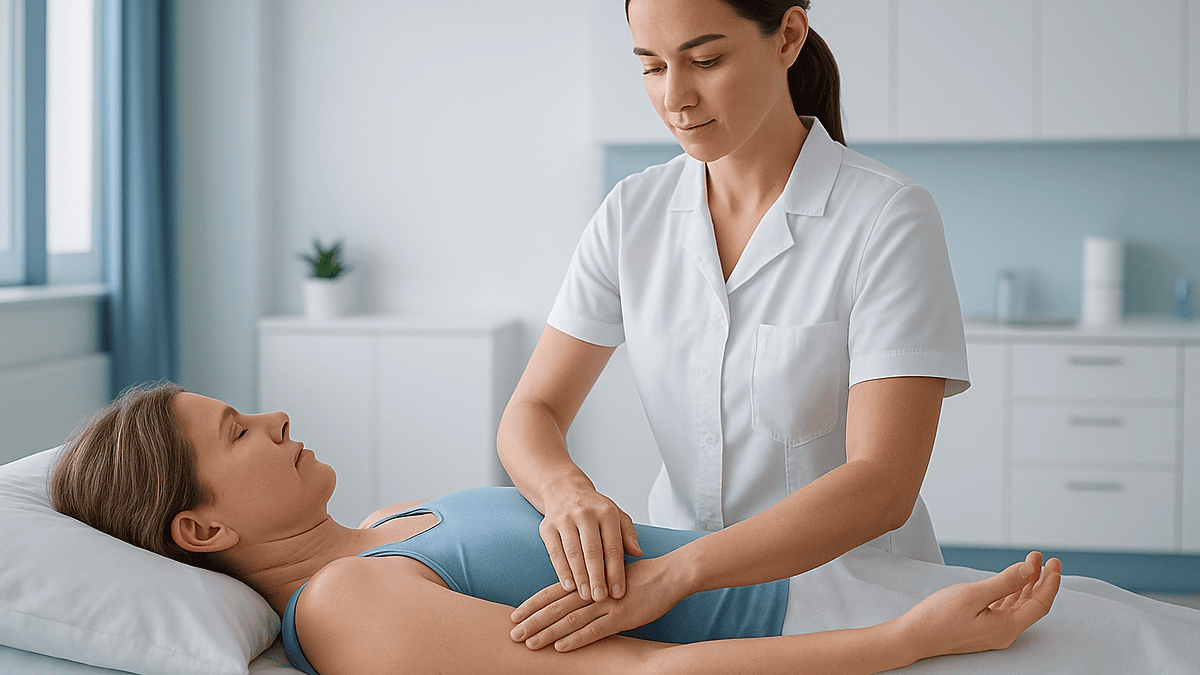
No. Manual lymphatic drainage, a specialized light-touch technique performed by trained therapists, is one component of clinical lymphedema treatment, typically used alongside compression, skin care, and exercise, not instead of them. For healthy people, evidence that spa-style lymphatic massage provides lasting drainage benefits is limited. Exercise engages the muscle and breathing pumps continuously and builds strength the vessels rely on, something no passive treatment replicates. If you have lymphedema, ask about certified lymphedema therapy rather than general massage.
Does dry brushing help the lymphatic system?
There’s little scientific evidence that dry brushing meaningfully moves lymph. The practice involves sweeping a stiff brush across the skin toward the heart, and while it exfoliates and feels invigorating, no rigorous studies show it improves lymphatic drainage or reduces swelling. It’s generally harmless on intact skin, but people with lymphedema, eczema, or fragile skin should be cautious, since scratches raise infection risk in vulnerable limbs. If you enjoy it, fine; just don’t substitute it for movement or prescribed compression.
Can I exercise if I already have lymphedema?
Yes, and evidence suggests you should. The landmark PAL trial found that slowly progressive weightlifting was safe for breast cancer survivors with lymphedema and roughly halved flare-ups compared with not lifting. The NHS and Mayo Clinic both recommend regular activity, including walking, swimming, and gentle strength work, as part of lymphedema management. The keys are gradual progression, wearing your prescribed compression garment during exercise, and initially working with a clinician or certified lymphedema therapist to tailor the plan.
Does sitting all day slow down lymph flow?
Effectively, yes. Lymph from your legs depends heavily on calf and thigh muscle contractions to move against gravity, and those pumps idle when you sit still for hours, which is why ankles swell during long flights and desk-bound days. The fix is simple and cumulative: stand and move for two to three minutes every hour, do seated ankle pumps during meetings, and take a short walk after prolonged sitting. Elevating your legs in the evening lets gravity assist the cleanup.
References
- Cleveland Clinic: Lymphatic System: Anatomy and Function
- NHS: Lymphoedema
- MedlinePlus: Lymphatic Diseases
- CDC: Physical Activity Guidelines for Adults
This article is for general information only and is not a substitute for professional medical advice. Please consult a qualified doctor about your individual situation.

More from the Blog

Jump Rope: The Cardio, Bone and Coordination Benefits, and the Joint Question
Jump rope is a vigorous whole-body cardio exercise that raises heart rate within a minute, loads bone through hundreds of small landings, and trains…
Hip Thrusts: Why the Glute Exercise Matters for Knees, Backs and Running
A hip thrust is a strength exercise in which you rest your upper back on a bench and drive your hips upward against a…

Compression Boots: What Pneumatic Recovery Devices Do, and What Trials Show
Compression boots are inflatable leg sleeves that squeeze the limbs in a rhythmic pattern, a technique called intermittent pneumatic compression. Small randomized trials in…

Dynamic Stretching: Why Warm-Ups Changed and What to Do Now
Dynamic stretching means moving joints and muscles through their range of motion, leg swings, walking lunges, arm circles, instead of holding a stretch in…
Dead Bug and Bird Dog: The Two Core Exercises Physiotherapists Prescribe Most
The dead bug exercise is a floor-based core drill: you lie on your back, arms and knees raised, and slowly lower the opposite arm…

Reformer Pilates vs Mat Pilates vs Yoga: What Each Builds and Who It Suits
Reformer Pilates uses a sliding carriage and adjustable springs to add resistance and support to Pilates movements, so it tends to build more measurable…