

Blood Sugar Spikes: What They Do to Energy, Hunger and Arteries, and How to Blunt Them

Key Takeaways
- In people without diabetes, glucose two hours after a meal usually stays below 140 mg/dL and returns to baseline within three hours, so a brief rise is physiology, not disease.
- Three 10-minute walks after meals lowered post-meal glucose more than one 30-minute walk at another time in randomized crossover trials, because working muscle clears glucose without needing insulin.
- Eating vegetables and protein before starch cut glucose peaks by roughly 30 to 40 percent in small trials of adults with type 2 diabetes and prediabetes; the evidence is promising but comes from studies of fewer than 20 people.
- Post-meal glucose predicted cardiovascular death better than fasting glucose in large cohort studies, yet trials that targeted post-meal peaks with medicines did not reduce heart events, so overall glucose burden matters more than individual bumps.
- A hot shower can produce a false rise on a continuous monitor because heat changes glucose movement in the fluid under the skin, while for insulin users heat can cause a real drop.
- Hypoglycemia, defined as glucose below 70 mg/dL, is a greater immediate danger than most highs and is the main reason clinicians warn against aggressive spike control in people taking glucose-lowering medicines.
Blood sugar spikes are sharp rises in glucose after eating, usually peaking within an hour and settling within two to three hours in healthy people. Large or frequent spikes can trigger rebound fatigue and hunger, and repeated high readings are linked in observational studies to artery damage. Fiber-rich meals, eating protein and vegetables before starches, and a short walk after eating reliably blunt them; anyone with diabetes should follow their clinician's plan.
A colleague recently held up her forearm at lunch and announced that her oatmeal had “betrayed” her. A small sensor on her skin had drawn a mountain on her phone screen, and she had not eaten a grain since. She does not have diabetes. She does, like millions of people as of early 2026, own a continuous glucose monitor bought without a prescription, and she is watching every curve as if it were a verdict.
That is why blood sugar spikes are suddenly everywhere. Over-the-counter glucose sensors cleared by regulators in 2024 put real-time numbers in front of healthy adults for the first time, and social feeds filled with hacks: vinegar shots, savory breakfasts, eating vegetables first. Some of those claims rest on decent trials. Others rest on a single screenshot.
This piece sorts the two. It explains what a post-meal rise does to your energy, appetite and arteries, how strong the evidence is for each fix, and where the spike obsession starts to do more harm than good.
What a blood sugar spike actually is (and what it is not)
Every meal with carbohydrate becomes glucose, the sugar that circulates in blood and fuels cells. After you eat, that glucose enters the bloodstream faster than your tissues can absorb it, so the level rises. The pancreas answers with insulin, a hormone that acts like a key, letting glucose move out of the blood and into muscle, liver and fat. In a person with normal metabolism, the whole episode is over in two to three hours, and the peak usually stays below about 140 mg/dL.
So a rise after eating is not a malfunction. It is the system working. The word “spike” has been stretched to cover any upward wiggle on a sensor graph, which is where confusion begins. Clinicians care about three things: how high the glucose goes, how long it stays there, and how often it happens across a day. A brief bump to 150 after a bowl of rice and a steady return to baseline tells a very different story from a reading parked above 180 for hours.
Two terms will recur. Postprandial glucose simply means blood sugar measured after a meal; fasting glucose is the level after at least eight hours without food. Glycemic variability describes how much readings swing across a day, and it is the measure most of the current trend fixates on. It matters most in people who already have diabetes, where wide swings are associated with poorer outcomes. In people with healthy insulin responses, moderate variability is expected and, by the best available evidence, benign.
What changed recently: sensors without a prescription
Continuous glucose monitors, small sensors worn on the arm that estimate glucose from fluid under the skin every few minutes, were designed for people using insulin. Until 2024, getting one in the United States required a prescription. That year the Food and Drug Administration cleared the first models marketed to adults who do not take insulin, including people with no diabetes at all. The devices pair with phone apps that draw a line for every meal, and that line became content.
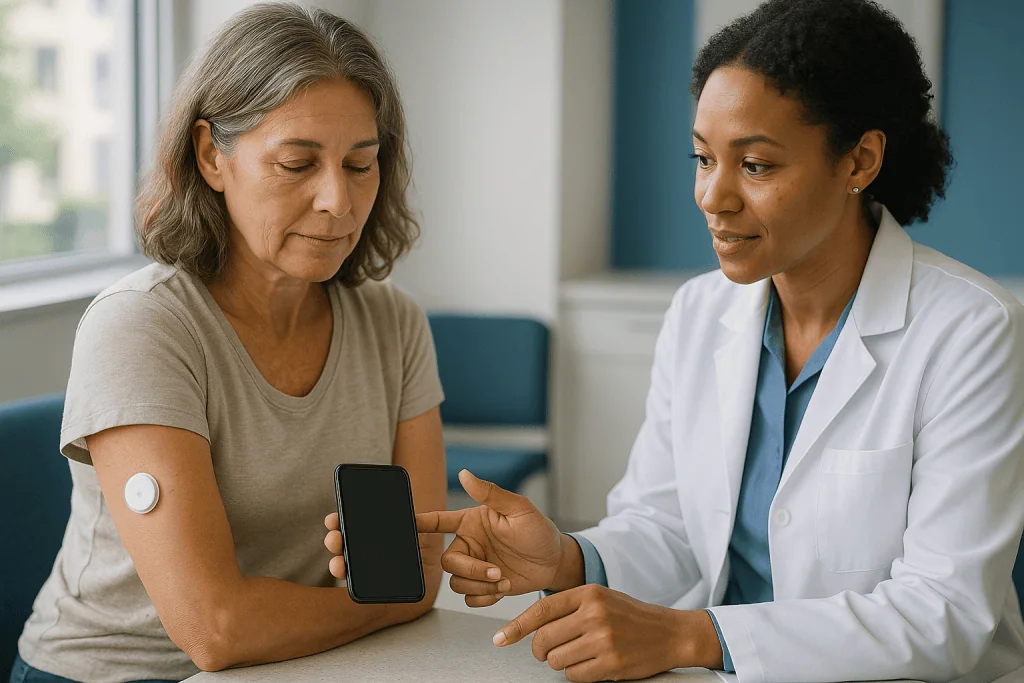
The medical community’s reaction has been measured rather than hostile. Harvard Health published a careful appraisal asking whether glucose monitoring without diabetes is worthwhile and concluded that the data for benefit in healthy people were thin and that normal post-meal rises were being misread as pathology. That assessment, written in 2021 when early-adopter programs first appeared, still describes the evidence gap today: the devices are accurate enough, but no randomized trial has shown that healthy adults who watch their glucose live longer or avoid disease.
What has genuinely advanced is the science of meal structure. Over the past decade, small randomized crossover trials have tested the order in which foods are eaten, the timing of walks, and the role of fiber in flattening the post-meal curve. Mayo Clinic and NHS patient guidance now describes these behaviors in plain language, and the targets they publish, such as keeping glucose under 180 mg/dL two hours after meals for most adults with diabetes, remain stable.
The trend, then, is less a scientific breakthrough than a visibility shift. People can now see a process that was always happening. The job is to interpret it correctly.
What causes blood sugar to spike? The list is longer than dessert
Sugar and refined starch are the obvious drivers, and they deserve their reputation. White bread, white rice, sweetened drinks and breakfast cereals digest quickly, so glucose floods in faster than insulin can clear it. But the people asking Google what would cause their blood sugar to spike are often puzzled because they ate nothing sweet.
Several non-food causes are well documented by Mayo Clinic and the NHS:
- Illness and infection. Fighting a virus releases stress hormones such as cortisol and adrenaline, which tell the liver to pour out stored glucose.
- Poor sleep. Even one short night reduces insulin sensitivity the next day, so a familiar breakfast produces a taller curve.
- The dawn phenomenon. Between roughly 3 and 8 a.m., hormones that prepare the body to wake also raise glucose, which is why some people see their highest reading before eating anything.
- Dehydration, which concentrates glucose in a smaller blood volume.
- Certain medicines, including steroid tablets and some blood pressure and psychiatric drugs. Never stop or adjust these on your own; raise the pattern with the prescriber.
- Emotional stress, menstrual cycle shifts, and skipped meals followed by a large one.
Portion and pairing matter as much as the food itself. Pasta eaten alone behaves differently from the same pasta with chicken and a salad, because protein, fat and fiber slow stomach emptying and the release of glucose into the gut. Caffeine on an empty stomach raises glucose modestly in some people, probably through adrenaline. Intense exercise can briefly push readings up before bringing them down over the following hours.
The pattern, not the single reading, is what a clinician wants to see.
Can a hot shower cause a glucose spike? Heat, hormones and sensor lag
This question surged once people began wearing sensors into bathrooms, and the honest answer has two layers.

The first layer is measurement. A continuous monitor does not read blood. It reads interstitial fluid, the thin layer of liquid between cells under the skin, and converts that estimate into a glucose number. Heat dilates skin blood vessels and changes how quickly glucose moves into that fluid, so a very hot shower or sauna can produce a short, false rise or dip on the graph that a finger-prick test would not confirm. Device makers acknowledge that temperature extremes and pressure on the sensor affect accuracy. Reports of shower “spikes” are mostly this: artifact, not biology.
The second layer is real physiology, and it points in the opposite direction for many people. Heat speeds the absorption of injected insulin from the skin, so people who use insulin can experience a drop, not a rise, after a hot bath. Heat stress also prompts the body to release adrenaline and cortisol, which can nudge glucose up slightly in anyone, but the effect is small and brief.
How strong is this evidence? Weak. There are no large trials on showers and glucose. What exists is sensor validation data, small physiology studies on heat and insulin kinetics, and case reports. That puts it at the level of expert opinion and mechanism, not proof.
Practical takeaway: a surprising reading right after a hot shower is worth ignoring unless it persists for an hour or you feel symptoms. If you take insulin, your care team may have specific advice about heat, and that advice should win over any app graph.
Why blood sugar spikes leave you tired and hungry two hours later
The mid-afternoon slump after a big sandwich and a soda is not imagined. It has a mechanism, and understanding it explains why spikes feel bad even when they are medically harmless.
A fast rise in glucose provokes a large insulin response. In some people that response overshoots, pulling glucose down slightly below where it started two to four hours later. Clinicians call this reactive hypoglycemia when it is pronounced, though most people experience only a mild dip. The brain is exquisitely sensitive to falling glucose, so even a modest drop can register as fogginess, irritability and a craving for something fast and sweet. That craving is the body asking to repeat the cycle.
Hunger is also shaped by how long food sits in the stomach. Refined carbohydrates empty quickly and stimulate less release of the gut hormones that signal fullness, such as GLP-1 and peptide YY. A meal of equal calories built around protein, fiber and some fat empties more slowly, triggers more of those signals, and tends to keep people satisfied for longer. Randomized feeding studies consistently show lower self-reported hunger after lower-glycemic meals, even when calories match.
Energy is a trickier claim. Glucose is fuel, so a spike does not literally drain energy; the fatigue comes from the swing and from the inflammatory and hormonal noise around it. People who smooth their meals often report steadier afternoons, and that experience lines up with the physiology. The evidence here is a mix of mechanism, small crossover trials and a great deal of consistent anecdote, which means it is plausible and reasonable to act on, but not proven in large outcome trials.
What blood sugar spikes do to arteries over the long run
The artery question is where spikes shift from an annoyance to a health concern, and it deserves precise language.
Chronically high glucose damages the endothelium, the single-cell lining of blood vessels that controls how they relax and resist clotting. Excess glucose binds to proteins and forms what are called advanced glycation end products, sticky molecules that stiffen artery walls and provoke inflammation. It also increases oxidative stress, the chemical wear and tear that oxidizes LDL cholesterol and makes it more likely to lodge in plaque. The American Heart Association notes that adults with diabetes are roughly twice as likely to develop heart disease or stroke as those without, and that risk tracks with how long and how high glucose has run.
Where do spikes specifically fit? Observational studies, including large European cohorts, found that glucose measured two hours after a sugar load predicted cardiovascular death better than fasting glucose did, even in people whose fasting numbers looked fine. Laboratory studies show that a single large glucose surge temporarily impairs artery relaxation in both healthy volunteers and people with diabetes. That is the mechanistic case for worrying about peaks.
The counterweight is important. When trials gave medicines designed to blunt post-meal glucose specifically, cardiovascular events did not fall as hoped. Reducing average glucose over months, measured by hemoglobin A1C, lowers the risk of eye, kidney and nerve complications; the heart benefit of flattening individual peaks, on its own, remains unproven.
So the fair summary is this: repeated high post-meal readings are a warning sign and a marker of insulin resistance, and the overall glucose burden clearly matters to arteries. Chasing every small bump in a healthy person is not supported by outcome data.
What the evidence actually says: grading the popular claims
Not every statement in this article carries the same weight, and a reader deserves to know which is which. Here is how the main claims stack up by the type of research behind them.
Strong (multiple randomized trials and consistent meta-analyses). Diet and physical activity programs reduce progression from prediabetes to type 2 diabetes by more than half over three years, a finding replicated across continents. Lowering average glucose in people with diabetes reduces small-vessel complications. Higher-fiber, lower-glycemic diets lower post-meal glucose and A1C modestly.
Moderate (smaller randomized or crossover trials, generally consistent). Walking for 10 to 15 minutes after meals lowers the post-meal peak more than a single longer walk at another time. Eating vegetables and protein before starch reduces the glucose curve by roughly a quarter to a third in trials of people with type 2 diabetes and prediabetes, though the trials were small. Vinegar taken with a high-carbohydrate meal lowers the glucose response modestly in short studies.
Weak (observational data, mechanism or expert opinion). Post-meal glucose predicts heart disease independently in cohort studies, but intervening on it specifically has not cut heart events. Continuous glucose monitoring improves outcomes for insulin users; for people without diabetes, benefit is unproven. Claims about showers, caffeine and specific “flattening” supplements rest on physiology and case reports.
Unsupported. That any food spike in a healthy person is harmful, that a flat glucose line is a health goal in itself, or that any single food “detoxes” sugar. No credible body endorses those ideas.
Hold this grading in mind as the next sections turn to practical fixes.
Blood sugar spike after eating: what the numbers mean
Numbers only help when the reference points are clear, so here they are, drawn from Mayo Clinic, MedlinePlus and NHS guidance. Values are in milligrams per deciliter, the US standard.
| Measurement | Typical for people without diabetes | Prediabetes range | Common target in diabetes care |
|---|---|---|---|
| Fasting glucose | Below 100 | 100–125 | Usually 80–130, set individually |
| Glucose 2 hours after a meal | Below 140 | 140–199 (after a glucose tolerance test) | Below 180 |
| Hemoglobin A1C (3-month average) | Below 5.7% | 5.7–6.4% | Often below 7%, set individually |
| Low blood sugar threshold | Below 70 is treated as hypoglycemia at any age |
Two caveats keep this table honest. First, the prediabetes post-meal range comes from a formal oral glucose tolerance test, in which a person drinks a measured sugar solution in a lab; a sensor reading after a plate of fries is not the same test, and the two should not be compared directly. Second, every diabetes target in the right-hand column is individualized. An older adult with heart disease may be given looser goals to avoid dangerous lows; a pregnant woman will be given tighter ones.
A one-hour peak is less standardized. Research suggests many healthy people briefly pass 140 after large carbohydrate meals, then return to baseline. That transient peak is not, on current evidence, a diagnosis of anything. If your readings sit above 140 two hours after most meals, or above 125 fasting on repeated mornings, those are patterns worth bringing to a clinician, who can confirm them with laboratory testing rather than a consumer sensor.
Food order, fiber and vinegar: do the viral hacks hold up?
The three most shared tricks online all have a kernel of trial evidence, and all have been oversold.
Meal sequencing, eating vegetables and protein before bread or rice, was tested in small randomized crossover studies of adults with type 2 diabetes and prediabetes. When participants ate the same meal in the “carbohydrate last” order, glucose peaks fell by roughly 30 to 40 percent compared with carbohydrate first, and insulin rose less. The mechanism is believable: protein and fiber slow gastric emptying and stimulate gut hormones that prime insulin release. The limitation is size, with most trials enrolling fewer than 20 people over a few meals. Harvard Health’s coverage of this research is appropriately cautious, calling it promising rather than proven. In practice it costs nothing and aligns with eating more vegetables, so it is a sensible habit, not a miracle.
Fiber is the better-supported pillar. Soluble fiber from oats, beans, lentils, chia and many vegetables forms a gel in the gut that slows glucose absorption. Meta-analyses of randomized trials show that higher fiber intake lowers both post-meal glucose and A1C modestly. Most adults eat about half the roughly 25 to 30 grams a day that dietary guidance recommends.
Vinegar, usually apple cider vinegar diluted in water with a high-carbohydrate meal, lowered post-meal glucose in several small trials, likely by delaying stomach emptying and affecting enzymes that digest starch. The effect was modest and short-lived. Undiluted vinegar can erode tooth enamel and irritate the esophagus, so it is not a free intervention, and nobody should drink it in place of prescribed treatment.
None of these change what the carbohydrate eventually becomes. They change the shape of the curve, which is useful, not transformative.
Foods that lower blood sugar: what helps, realistically
Strictly speaking, no food lowers blood sugar the way insulin does. What a food can do is raise glucose less, slow the rise, or improve how the body responds over weeks. With that framing, the evidence favors a consistent cast.
Legumes lead the list. Beans, lentils and chickpeas combine protein with slowly digested starch and soluble fiber; Harvard Health’s glycemic index tables place most of them well below bread and rice, and randomized trials of legume-rich diets show lower A1C in people with type 2 diabetes. Non-starchy vegetables, leafy greens, broccoli, peppers and the like, deliver volume and fiber with almost no glucose load.
Nuts and seeds blunt the glucose response of a meal they accompany, and cohort studies tie regular intake to lower cardiovascular risk. Whole, intact grains such as steel-cut oats, barley and farro digest more slowly than their milled versions; the difference between steel-cut and instant oatmeal on a sensor is often startling, and it comes down to how much processing has already done the digesting. Fatty fish, eggs and yogurt add protein that slows gastric emptying.
Whole fruit deserves a defense. Its sugar comes packaged with fiber and water, and observational data link fruit intake to lower, not higher, diabetes risk. Juice, which strips the fiber, behaves more like soda.
Two honest qualifiers. The glycemic index measures a food eaten alone; real meals are mixtures, and the whole plate decides the curve. And individual responses vary more than the tables imply, which is the one genuinely interesting thing personal sensors have revealed. The broad principles still hold for nearly everyone: more fiber, less refined starch, protein at every meal, and liquids that are not sweet.
Movement after meals: the ten-minute walk and why timing matters
If one tactic in this article deserves to be adopted by nearly everyone, it is this one. Working muscle pulls glucose out of the blood through a pathway that does not depend on insulin, so a short bout of movement after eating acts as a second clearance route exactly when glucose is arriving fastest.
Randomized crossover trials in adults with type 2 diabetes compared three 10-minute walks taken after each meal with a single 30-minute walk at another time of day. Total activity was identical; the post-meal walks lowered glucose after dinner by around 20 percent more. Trials in healthy adults show smaller but consistent reductions in post-meal peaks from light activity begun within 30 minutes of eating. Even standing and light housework beat sitting, according to studies that interrupted prolonged sitting with brief movement.
The effect scales with timing more than intensity. A gentle walk during the hour after a meal does more for the peak than a hard workout six hours later, though the hard workout improves insulin sensitivity for the following day or two, which matters more for the long game. The two are complementary, not competing.
A few practical points keep this safe. People who use insulin or certain glucose-lowering tablets can drop too low with unaccustomed exercise and should check with their care team about adjusting their routine, never their medicines, on their own. Walking after a very large meal can be uncomfortable; a stroll, not a jog, is the goal. And the evidence is moderate in strength: trials are small and short, but the finding is consistent, mechanistically obvious and risk-free for most people, which is about as good a case as lifestyle research produces.
Common myths about blood sugar spikes, corrected
The spike conversation online has produced a set of confident claims that the evidence does not back. Five come up constantly.
“A flat glucose line means you are healthy.” A healthy pancreas produces rises and falls; that is the system responding to food. Extremely flat lines in people without diabetes often reflect very low carbohydrate intake, which has its own trade-offs and has not been shown to extend life. Flatness is not a biomarker anyone validated.
“Fruit is as bad as candy.” Whole fruit produces a smaller, slower rise than refined sweets of equal sugar, and population studies associate fruit intake with lower diabetes risk. Juice is the exception.
“Everyone needs a sensor.” For people using insulin, continuous monitoring reduces dangerous lows and improves A1C in randomized trials. For adults without diabetes, Harvard Health’s review found no evidence of benefit and some potential for anxiety and unnecessary food restriction.
“If my fasting glucose is normal, spikes do not matter.” Partly wrong. Post-meal readings can reveal early insulin resistance before fasting values change, which is why the oral glucose tolerance test exists. The nuance is that a lab test, not a sensor after a random meal, is the way to confirm it.
“A supplement can block spikes.” Berberine, cinnamon, chromium and others have small, inconsistent trials with modest effects at best. None is approved to treat diabetes, product quality varies, and some interact with prescribed medicines. Anyone considering them should ask the prescriber first rather than adding them to a regimen quietly.
The thread through every myth is the same error: mistaking a visible number for a clinical outcome.
Symptoms of low blood sugar: the flip side of chasing flat lines
The quest to avoid highs has a predictable casualty: lows. For people who take insulin or certain tablets that stimulate insulin release, skipping carbohydrate, adding vinegar, exercising after every meal and tightening targets can push glucose below 70 mg/dL, the threshold MedlinePlus and the NHS define as hypoglycemia. Lows are more immediately dangerous than most highs, and they are the main reason clinicians resist aggressive spike control.
Early symptoms arise from the adrenaline surge the body uses to raise glucose: shakiness, sweating, a pounding or fast heartbeat, sudden hunger, anxiety, pale skin and tingling around the mouth. As the brain runs short of fuel, a second set follows: confusion, trouble concentrating, slurred speech, blurred vision, clumsiness, unusual irritability and, in severe cases, seizures or loss of consciousness. Lows during sleep may show up only as night sweats, nightmares or a headache on waking.
People who have had frequent lows can lose the warning symptoms, a condition called hypoglycemia unawareness, which makes continuous monitoring genuinely valuable for them.
People without diabetes rarely drop that low, because insulin release simply switches off as glucose falls. Reactive dips after large sugary meals can produce mild versions of the early symptoms, which is unpleasant but not dangerous for most. Recurrent true lows in someone not on glucose-lowering medicine are unusual and warrant medical evaluation rather than dietary guesswork.
Anyone prescribed diabetes medicines should have a written plan from their care team for recognizing and treating a low with fast-acting carbohydrate and rechecking afterward. That plan, not an app, is the authority; no one should change medicine timing or amounts to chase a flatter graph.
When to see a doctor about blood sugar spikes or lows
Most post-meal rises in healthy adults need no appointment. Certain patterns and symptoms do, and a few require emergency care.
Book a routine visit if you notice persistent thirst, urinating more than usual, especially at night, unexplained weight loss, blurred vision, recurring skin or genital yeast infections, slow-healing cuts, or constant fatigue. These are the classic signs of sustained high glucose described by Mayo Clinic and the NHS. The same applies if a home sensor repeatedly shows readings above 140 two hours after meals or above 125 before breakfast, if you have a family history of diabetes, had gestational diabetes, or have prediabetes and have not been tested in a year. A clinician can confirm with fasting glucose, A1C or a glucose tolerance test, which consumer devices cannot replace.
Seek urgent care the same day for repeated readings above 300 mg/dL, or for any low that recurs despite eating, or for lows in someone who takes insulin or sulfonylurea tablets without an obvious cause.
Call emergency services for the red flags of diabetic ketoacidosis or severe hypoglycemia: vomiting with high glucose, fruity-smelling breath, deep or rapid breathing, abdominal pain, confusion, drowsiness that cannot be roused, seizure or loss of consciousness. These are life-threatening and time-sensitive.
Finally, talk to your prescriber before acting on anything in this article if you take any glucose-lowering medicine, blood pressure medicine, steroids or psychiatric medicines, or if you are pregnant. Food order and walks are safe for almost everyone, but the right targets, the right monitoring and any change to treatment belong to the clinician who knows your history. Trends come and go; that relationship is the part that lasts.
Frequently asked questions
What would cause my blood sugar to spike if I did not eat anything sweet?
Refined starches such as white bread and rice raise glucose as fast as sugar, and non-food triggers matter too: illness, a poor night’s sleep, stress, dehydration, the early-morning dawn phenomenon, and medicines such as steroids. Large portions eaten without protein or fiber digest faster. If the pattern repeats, record meals and readings and bring them to a clinician rather than guessing.
What are the best foods to eat to lower blood sugar?
No food lowers glucose like insulin, but legumes, non-starchy vegetables, nuts, intact whole grains, fish, eggs, yogurt and whole fruit raise it less and slow the rise. Trials show fiber-rich, lower-glycemic meals reduce post-meal glucose and, over months, A1C modestly. Pairing carbohydrate with protein and vegetables matters more than any single ingredient.
Can a hot shower cause a glucose spike on my monitor?
It can produce a brief false rise, because sensors read fluid under the skin and heat changes how glucose moves there. True biological effects are small, and for people who inject insulin, heat tends to lower glucose by speeding absorption. Evidence comes from device validation and case reports, not large trials; ignore a shower reading unless it persists or you have symptoms.
What are the symptoms of low blood sugar?
Early signs are shakiness, sweating, a fast heartbeat, sudden hunger, anxiety and pale skin. As glucose falls further, confusion, slurred speech, blurred vision, clumsiness and irritability appear, and severe lows can cause seizures or unconsciousness. Below 70 mg/dL counts as hypoglycemia. People on diabetes medicines should follow the written treatment plan from their care team and seek urgent help for recurring lows.
What is a normal blood sugar spike after eating?
For adults without diabetes, glucose typically peaks within an hour, often between 110 and 140 mg/dL and occasionally a little higher after large carbohydrate meals, then returns toward baseline by two to three hours. A two-hour reading consistently above 140 is worth discussing with a clinician, who can confirm with laboratory testing rather than a consumer sensor.
Do blood sugar spikes matter if I do not have diabetes?
Occasional post-meal rises in a person with normal insulin response are expected and, on current evidence, harmless. Repeated high two-hour readings can be an early sign of insulin resistance, so a persistent pattern is worth a lab check. No randomized trial shows that healthy adults benefit from tracking or flattening every peak.
Does eating food in a certain order really control blood glucose?
Small randomized crossover trials found that eating vegetables and protein before starch lowered glucose peaks by roughly a third in adults with type 2 diabetes or prediabetes. The mechanism, slower stomach emptying and earlier gut hormone release, is plausible. The studies were tiny, so the habit is reasonable and free, not a substitute for prescribed treatment.
How long does a blood sugar spike last?
In people with healthy insulin function, glucose usually peaks 30 to 60 minutes after eating and settles within two to three hours. In people with diabetes or insulin resistance the rise is higher and slower to clear, sometimes lasting several hours. Meal size, fiber, fat, protein content and physical activity afterward all change the duration.
Is a continuous glucose monitor useful for someone without diabetes?
The evidence says not yet. Randomized trials show clear benefit for people who use insulin, including fewer dangerous lows. For adults without diabetes, Harvard Health’s review found no proven health benefit and a risk of anxiety or unnecessary food restriction from misreading normal rises. Anyone considering one should discuss it with a clinician.
Why do I get tired and hungry a couple of hours after a big meal?
A rapid glucose rise prompts a large insulin response that can pull glucose slightly below baseline two to four hours later. The brain senses the drop as fog, irritability and craving. Refined carbohydrates also leave the stomach quickly and release fewer fullness hormones. Meals built around protein, fiber and some fat produce steadier energy in feeding studies.
References
This article is for general information only and is not a substitute for professional medical advice. Please consult a qualified doctor about your individual situation.

More from the Blog
Vinegar Before Meals and Food Order: Two Blood-Sugar Hacks Under the Evidence Lens
Eating vegetables and protein before the carbohydrate portion of a meal (food order) and taking a small amount of diluted vinegar before eating both…

What the Robot Does in Robotic Heart Surgery: Arms, a 3D Camera and Small Chest Incisions
In robotic heart surgery, the robot does not operate on its own. A cardiac surgeon sits at a console a few feet from the…

Life After a Heart Transplant: Rejection Checks, Infection Prevention and Medication Routine
Life after a heart transplant is organized around three routines: scheduled rejection checks (clinic visits, blood tests, echocardiograms and, especially in the first year,…

When Does Angina Need More Than Medication? How Cardiologists Decide on Stents or Bypass
Angina usually needs more than medication when symptoms keep limiting daily life despite well-adjusted medicines, when tests show a large area of heart muscle…

After Arrhythmia Treatment: Which Sensations Are Normal and When to Call Your Cardiologist
After arrhythmia treatment, mild palpitations, a faster resting pulse, fatigue, a bruised access site and skin soreness after cardioversion are common and usually settle…
TAVI Recovery Timeline: Early Walking, the Cardiac Unit Stay and the First Two Weeks Home
After TAVI, most people are helped to sit up and take their first steps within hours of the procedure, spend roughly one to three…