

Cellulitis When You Have Diabetes or Lymphedema: Why Care Is Monitored More Closely

Key Takeaways
- Cellulitis is not more infectious in diabetes; it is harder to sense, fight, heal and drain, which is why clinicians review it within 48–72 hours instead of waiting for symptoms to worsen.
- Around half of people with diabetes have some nerve damage, so a painless patch of warm, spreading skin on the lower leg deserves the same urgency as a painful one.
- Infection itself raises blood glucose through stress hormones, and persistently high readings during cellulitis are a severity signal to report, not a dietary failing.
- Cellulitis is listed by the NHS as one of the most common complications of lymphoedema, and each episode damages lymphatic drainage further, raising the risk of the next.
- Most adults are treated at home with oral antibiotics and should start to feel better within two to three days; spread beyond the pen line after 48 hours means the plan needs revisiting.
- Fungal infection between the toes is one of the most common preventable entry points, which makes daily foot inspection and keeping toe webs dry a genuine defense against recurrence.
Cellulitis with diabetes or lymphedema is monitored more closely because high blood sugar weakens the immune response, nerve damage can hide early pain, reduced circulation slows healing, and a lymphedema limb clears bacteria poorly. Clinicians typically review the infection within 48–72 hours, watch blood glucose, and use a lower threshold for hospital assessment. Treatment decisions always rest with the treating team.
The sock comes off and there it is: a warm, slightly shiny patch on the shin that was not there yesterday, spreading like a stain on a tablecloth. For most people, that moment leads to a pharmacy visit and a course of antibiotics. For someone who has lived with diabetes for twenty years, or who has managed a swollen leg since cancer surgery, the same patch prompts a phone call, a same-day appointment, and a nurse drawing a line around the redness with a marker.
Cellulitis with diabetes is not a different disease. The bacteria are the same, the skin is the same, and so are the antibiotics. What changes is the margin for error. A body that struggles to sense, fight and drain an infection gives clinicians less warning when things go wrong, so they choose to look more often.
This explainer walks through why that extra attention exists, what it involves, and what the first weeks usually look like.
Why is cellulitis with diabetes monitored more closely than in other adults?
Cellulitis is a bacterial infection of the deeper layers of the skin and the fat beneath it, most often caused by streptococci or staphylococci entering through a break in the skin (NHS). In a healthy adult it usually settles within days of starting antibiotics. The reason clinicians treat it differently in diabetes or lymphedema comes down to four vulnerabilities that stack on top of each other.
The first is sensing. Diabetes damages small nerves, so the early sting or ache that would send most people to a doctor may never register. Around half of all people with diabetes have some degree of nerve damage, according to the CDC, and the feet and lower legs are hit first. The second is fighting. Elevated glucose impairs the white blood cells that swallow bacteria, so the infection can gain ground before the immune system responds. The third is healing. Narrowed arteries in the legs deliver less oxygen and fewer antibiotics to the tissue that needs them. The fourth is draining. In lymphedema, the lymphatic vessels that normally carry bacteria and fluid away from the tissue are damaged or missing, so the limb becomes a reservoir where infection lingers and returns.
None of these means the infection is untreatable. It means that a clinician cannot rely on the usual reassurance that a patient will feel worse before the situation becomes dangerous. Closer monitoring, in practice, replaces the warning signals the body can no longer provide. That is the whole logic of the approach, and everything that follows flows from it.
How cellulitis actually works in the skin
Think of the skin as a two-layer roof. The outer layer, the epidermis, is a waterproof barrier. Underneath sits the dermis, thick with blood vessels, nerves and connective tissue, and below that a cushion of fat. Cellulitis happens when bacteria slip past the outer layer through a crack, a scratch, an insect bite, a fungal infection between the toes, or an ulcer, and start multiplying in the dermis and fat (Mayo Clinic).
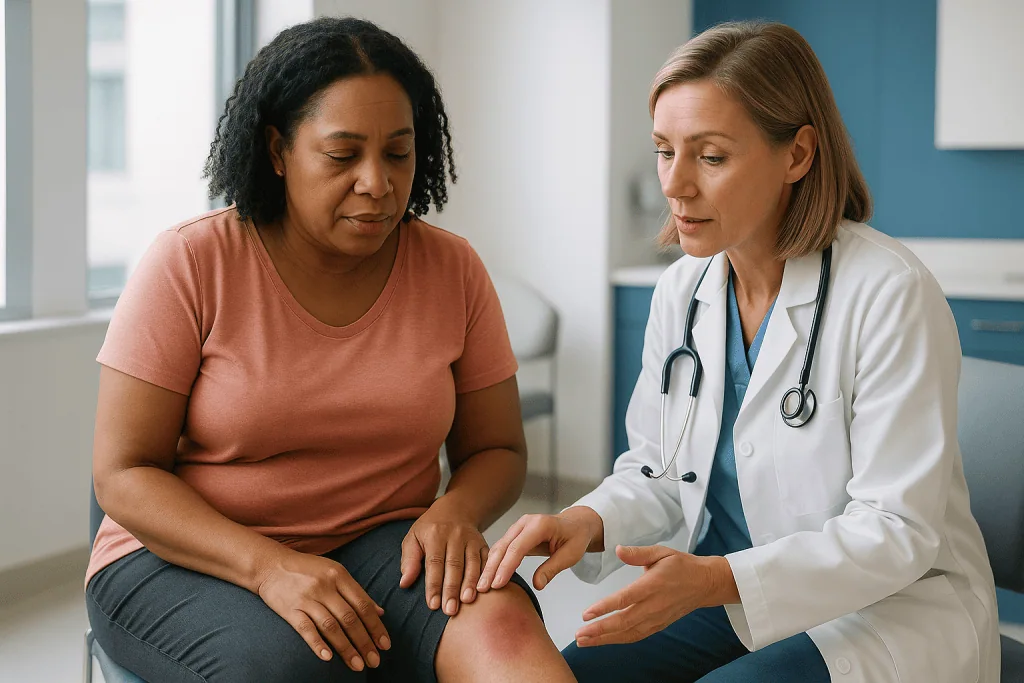
The body responds with inflammation. Blood vessels widen to rush immune cells to the site, which is why the area becomes red or darker than surrounding skin, warm to the touch and swollen. Fluid leaks from the vessels into the tissue, producing the tight, glossy appearance that many people describe. The border of a cellulitis patch is typically irregular and blends into normal skin, unlike the sharply raised edge of erysipelas, a related but more superficial streptococcal infection.
Left to itself, the infection can travel along tissue planes and reach the bloodstream. The most common organisms are group A streptococcus and Staphylococcus aureus (CDC). Streptococci tend to spread quickly through the tissue; staphylococci more often form pockets of pus, or abscesses, that need draining rather than antibiotics alone.
Antibiotics work by interfering with bacterial cell walls or protein manufacturing, and they need adequate blood flow to reach the infected tissue in useful concentrations. This is one of the quiet reasons circulation matters so much: an antibiotic that reaches a well-perfused calf may struggle to reach a foot supplied by narrowed arteries. The drug is the same; the delivery system is not.
What diabetes does to the immune system and the skin
Glucose is fuel, but too much of it in the blood behaves more like sand in the gears. Neutrophils, the front-line white blood cells that engulf bacteria, move more slowly and kill less effectively when blood sugar runs high. This is a well-documented mechanism rather than a theory, and it means an infection that would be contained quickly in someone without diabetes can establish itself over hours instead of being stopped at the door.
The relationship runs both ways. Infection triggers stress hormones such as cortisol and adrenaline, which push the liver to release more glucose. Someone whose readings are normally steady may see them climb sharply during cellulitis, even if they have eaten nothing unusual. That climb further weakens the immune response, creating a loop that clinicians watch for closely. Persistently very high readings, or ketones in the urine or blood, can signal a serious metabolic emergency and are one of the main reasons a person with cellulitis with diabetes may be asked to come into hospital rather than be treated at home.
Skin changes add to the risk. Diabetes can leave skin dry and prone to cracking, particularly on the heels. Fungal infections between the toes, known as athlete’s foot, are more common and create tiny entry points. Nerve damage means a blister from a new shoe may go unnoticed until it has become an ulcer, and an ulcer is an open invitation to bacteria (CDC).
Circulation completes the picture. Peripheral artery disease, the narrowing of the leg arteries, is more common in long-standing diabetes. The tissue receives less oxygen, which slows healing and reduces the antibiotic concentration reaching the infected area. Clinicians often check foot pulses during a cellulitis assessment for exactly this reason.
Cellulitis and lymphedema: why a swollen limb is a vulnerable limb
Lymphedema is chronic swelling caused by damage to or absence of lymphatic vessels, the network that drains protein-rich fluid from tissue back into the bloodstream (NHS). It can follow cancer treatment that removes or irradiates lymph nodes, or arise from a congenital weakness of the lymphatic system. The result is a limb where fluid sits rather than flows.
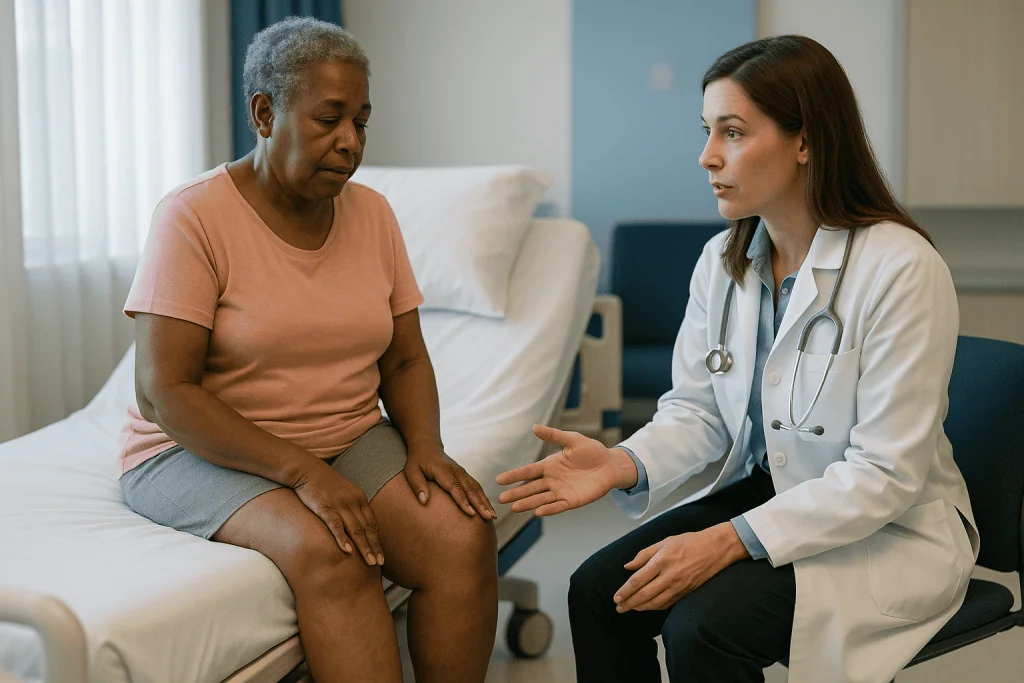
Lymph is not just plumbing. The lymphatic system is part of the immune system, carrying bacteria and immune cells to the lymph nodes where infections are recognized and fought. When that transport fails, bacteria that enter through a tiny break in the skin are not cleared efficiently. The stagnant, protein-rich fluid also happens to be a comfortable environment for them. The NHS lists cellulitis as one of the most common complications of lymphoedema, and people who have had one episode are at meaningfully higher risk of another.
The skin itself changes over time. Chronic swelling stretches it, causes thickening and, in advanced cases, produces a warty texture or small fluid-weeping blisters. Folds and creases trap moisture and harbor fungi. Each of these creates an entry point.
An episode of cellulitis then damages the lymphatics further, worsening the swelling and raising the risk of the next episode. This cycle is why specialists in lymphedema treat cellulitis with such urgency: every infection is not only an acute problem but a step toward more swelling and more infections. Breaking the cycle early, by treating promptly and returning to compression once the acute inflammation settles, is a central aim of care. The specific timing of that return is a judgment the treating team makes, and it varies from person to person.
What does diabetic cellulitis look like on legs and feet?
People searching for pictures of cellulitis usually expect angry red skin, and on lighter skin that is often what appears: a patch of redness with fuzzy edges, warm, swollen and tender, most commonly on the lower leg (MedlinePlus). On darker skin, the color change may be subtle, showing as a deepening or dusky purple-brown tone rather than obvious red, so warmth and swelling become the more reliable clues. Clinicians are trained to compare the affected limb with the other one and to rely on touch as much as sight.
In diabetes, the presentation can be quieter than expected. Because damaged nerves blunt pain, the area may feel oddly painless for its size. The infection often starts near an existing problem: a cracked heel, a toe web softened by fungus, a callus that has broken down, or a healed or unhealed ulcer. The redness may track upward from the foot along the shin. Sometimes the first noticeable sign is not the skin at all but an unexplained rise in blood sugar, fatigue or a general sense of being unwell.
On a lymphedema leg, cellulitis can be harder to distinguish from the baseline swelling. What tends to change is temperature, a new tightness or pain, a flu-like feeling, and a color change that develops over hours rather than weeks.
A few features suggest something more serious than straightforward cellulitis and need urgent assessment: skin that is turning gray, black or blistering; pain far out of proportion to what the skin shows; a crackling feel under the skin; or rapid spread over a few hours. These are not self-diagnosis criteria. They are reasons a clinician needs to see the limb quickly.
Who is usually treated at home, and who is usually asked to come in
Most adults with cellulitis are treated with oral antibiotics at home (NHS). The decision to do the same for someone with diabetes or lymphedema depends less on the size of the patch than on the whole person: how unwell they are, how their glucose is behaving, what the circulation is like, and whether the infection sits over a joint, an ulcer or a surgical site.
Hospital assessment or admission is more likely when there are signs the infection has spread into the bloodstream, when glucose or ketones are dangerously high, when the person has vomiting that would prevent oral antibiotics from staying down, when a first course of oral antibiotics has not helped, or when the foot shows deep infection, bone involvement or poor blood supply. Intravenous antibiotics, given through a vein, bypass the gut and deliver a reliable concentration; in some areas they can be given at home by a visiting nurse.
| Factor the team weighs | Points toward home care with review | Points toward hospital assessment |
|---|---|---|
| General condition | Well, eating and drinking normally | Fever with shivering, confusion, low blood pressure, vomiting |
| Blood glucose | Raised but manageable with the usual plan | Very high readings or ketones present |
| Site | Shin or calf, no ulcer beneath | Foot ulcer, near a joint, around the eye, or on the face |
| Circulation | Foot pulses present, warm foot | Weak or absent pulses, cool or discolored foot |
| Response so far | First episode, no prior antibiotics | Spreading despite 48 hours of oral antibiotics |
Even when home care is chosen, it comes with a shorter leash. A review within two or three days is typical, and many teams ask patients to photograph the marked border daily so change can be seen rather than remembered.
How to treat diabetic cellulitis: what the care team actually does
The first step is confirmation and mapping. A clinician examines the limb, feels for warmth and tenderness, checks the foot pulses and looks between the toes and under the heel for the entry point. A pen line around the edge of the redness gives a baseline; if the color spreads past the line over the next day or two, the treatment is not working and needs to change. Blood tests may check the white cell count, inflammatory markers, kidney function and glucose. If there is an ulcer or a discharging wound, a swab may identify the organism, though skin surface swabs often grow harmless bacteria and are interpreted with caution.
Antibiotics are the core of treatment. The usual first choice targets streptococci and staphylococci; penicillin-type antibiotics or, for people allergic to them, alternatives from other classes are commonly used (NHS). The prescriber chooses based on local resistance patterns, kidney function, allergies and whether a foot ulcer suggests a broader range of bacteria. Diabetic foot infections in particular may involve several organisms at once, which is one reason the antibiotic choice for a foot differs from the choice for a shin. The specific medicine, its dose and its duration are decisions for the prescribing clinician, and a course that is stopped early because the skin looks better invites relapse.
Supporting measures matter more than most people expect. Elevating the leg above hip level when resting helps fluid drain and reduces pain. Fluids, rest and treating any fungal infection between the toes remove the conditions the bacteria enjoy. Glucose is watched and the diabetes plan adjusted by the diabetes team if readings climb. If an abscess has formed, it is drained, because antibiotics penetrate pus poorly. In a diabetic foot, any dead tissue may need removing and the wound offloaded so pressure does not reopen it. Each of these is a joint decision with the treating team.
Can cellulitis be treated without antibiotics?
The honest answer is no, not safely, and the answer is firmer still for people with diabetes or lymphedema. Cellulitis is a bacterial infection in tissue the immune system is already struggling to reach. Elevation, rest, warm compresses and good hydration all help the body and ease symptoms, but they do not kill bacteria in the dermis. Mainstream guidance from the NHS, Mayo Clinic and MedlinePlus is consistent: cellulitis is treated with antibiotics, and delay increases the risk of spread to the blood, the deeper tissues or the bone.
Some confusion arises because a few conditions mimic cellulitis and genuinely do not need antibiotics. Stasis dermatitis, an inflammation of the lower legs caused by long-standing poor vein drainage, produces redness and scaling on both legs and improves with compression and moisturizers. Gout, a deep-vein clot, an allergic reaction to an insect bite and contact dermatitis can all look similar. Cellulitis, by contrast, is almost always on one side, is warm, and usually comes with a general sense of being unwell. Distinguishing these is a job for a clinician, and it is one reason a same-day assessment is worth the inconvenience.
There is no evidence that herbal poultices, essential oils, colloidal silver or high-dose vitamin regimens treat cellulitis, and the NIH Office of Dietary Supplements does not support supplements as a treatment for skin infection. Anything applied to broken skin can also introduce new bacteria or irritate it.
What people can do without a prescription is meaningful but supportive: keep the limb raised, stay hydrated, monitor glucose more often than usual, mark the edge, photograph it and attend the review. Those steps improve the odds that the antibiotic does its job, and they give the care team the information to change course quickly if it does not.
What the first days and weeks usually look like
The first 48 hours are the anxious stretch. Redness may spread slightly beyond the pen line in the first day even when treatment is working, because inflammation that has already started takes time to switch off. What clinicians want to see by the second or third day is a halt in that spread, less warmth, less pain and a settling fever. The NHS advises that people should start to feel better within two to three days of starting antibiotics, and that the full course is usually around a week, longer if the infection is slow to respond.
For someone with diabetes, that window also includes glucose. Readings often run high for the first few days and drift back down as the infection comes under control. Persistent very high readings, or readings that climb rather than fall after the second day, are a signal to contact the team rather than wait for the scheduled review.
The review itself is straightforward: the clinician compares the limb to the photographs and the pen line, checks temperature and pulse, asks about appetite and energy, and may repeat blood tests. If things are improving, the plan continues. If the line has been crossed or the person feels worse, the antibiotic may be changed or given intravenously.
Skin recovery lags behind infection control. Discoloration can take one to two weeks or more to fade, and a mild peel of the skin surface is common as the swelling recedes. In a lymphedema limb, the extra swelling caused by the infection may persist for several weeks, and some people find the limb never quite returns to its previous size, which is why prompt return to compression, when the team judges it safe, matters (NHS). Tiredness for a week or two after a significant infection is normal and not a sign of failure.
Caring for a lymphedema limb during and after cellulitis
Compression garments are the daily backbone of lymphedema management, and one of the first questions people ask is whether to keep wearing them during an infection. The general principle, described in NHS lymphoedema guidance, is that compression may be uncomfortable or inadvisable while the skin is acutely inflamed and painful, and that it is usually resumed as soon as the acute phase settles and the limb can tolerate it. When that is depends on the person, and the lymphedema therapist or treating clinician makes the call. Stopping compression for too long lets swelling worsen; restarting too early on hot, tender skin can be painful and may damage fragile skin.
Manual lymphatic drainage, the gentle massage technique used to move fluid, is generally paused during active cellulitis because it can spread bacteria through the tissue. It is reintroduced once the infection has resolved. Elevation is safe throughout and helps.
Skin care during an episode is about protection. Wash gently with a mild, unperfumed cleanser, dry thoroughly including between toes or fingers, and apply a plain emollient to intact skin to prevent cracking. Avoid applying anything to the inflamed area beyond what the team advises, and do not scrub, exfoliate or shave the limb.
Afterward, the priorities shift to prevention. Each infection erodes lymphatic function, so the weeks after an episode are a good time to review the whole routine: garment fit, since the limb may have changed shape; footwear, since pressure points create entry sites; and fungal infection, since athlete’s foot is a leading trigger. Some people who have had recurrent episodes are offered long-term preventive antibiotics; the NHS describes this as an option for those with repeated attacks, and it is a decision weighed carefully against the risks of long-term antibiotic use by the treating team.
Preventing recurrent cellulitis in the leg when you have diabetes or lymphedema
Cellulitis comes back more often than people expect, and each recurrence is a little more likely than the last. The most effective prevention is unglamorous: closing the doors bacteria use to get in.
Daily foot inspection is the single habit the CDC emphasizes most for people with diabetes, precisely because nerve damage means a problem cannot be trusted to announce itself (CDC). Check the soles, the heels and between the toes, using a mirror or a family member if bending is difficult. Look for cracks, blisters, color changes, and soft white or peeling skin between the toes that suggests fungus. Treat fungal infection promptly; it is one of the most common preventable entry points for cellulitis in both diabetes and lymphedema.
Moisturize intact skin every day to prevent cracking, but keep creams out of the toe webs, where moisture breeds fungus. Wear shoes that fit, and never go barefoot, even indoors, if you have neuropathy. Cut nails straight across or have a podiatrist do it if vision or dexterity is limited.
For lymphedema, add consistent use of well-fitted compression, protection from cuts and insect bites during gardening or outdoor work, and avoidance of blood draws or blood pressure cuffs on the affected limb where possible.
Glucose control is prevention too. Steadier readings mean neutrophils that work, skin that heals and nerves that deteriorate more slowly. That is a longer conversation with the diabetes team, but cellulitis is often the event that makes it feel urgent.
Finally, weight, vein health and swelling all influence recurrence. Managing leg swelling from any cause, whether through compression, elevation or treatment of vein problems, reduces the stagnant fluid in which bacteria thrive (Mayo Clinic). None of these steps guarantee there will never be another episode. Together, they shift the odds substantially.
What people often get wrong about cellulitis with diabetes
“If it doesn’t hurt, it can’t be serious.” In diabetes, absence of pain is often a symptom, not a reassurance. Damaged nerves mute the alarm. Warmth, swelling and spread are the signs to trust.
“Cellulitis is contagious.” It is not spread by touch from one person to another (Cleveland Clinic). The bacteria live harmlessly on most people’s skin; the problem is a break in the barrier plus a body that clears them slowly.
“Antibiotics failed because the redness got bigger on day one.” A small increase in the first 24 hours can happen as existing inflammation runs its course. What matters is the trend by day two or three, which is exactly why the pen line and the scheduled review exist.
“Once the skin looks normal, I can stop the tablets.” Visible improvement precedes bacterial clearance. Stopping early is a common route to relapse and to resistance. Any change to the course is the prescriber’s decision.
“My glucose is high because I ate badly.” Infection alone raises blood sugar through stress hormones. High readings during cellulitis are a marker of the infection’s severity and should be reported, not hidden.
“Compression will trap the infection in my leg.” Compression is paused during acute inflammation for comfort and skin protection, not because it spreads bacteria. Prolonged avoidance afterward causes far more harm through worsening swelling.
“The swelling in my leg is just cellulitis; it will go away.” Persistent swelling after infection can point to underlying lymphedema, vein disease or a clot. Swelling that outlasts the infection deserves its own assessment.
“Home remedies can replace antibiotics if I catch it early.” No evidence supports this, and in a limb with poor circulation or drainage the price of a failed experiment can be an admission, a deeper infection or tissue loss.
Questions to ask your care team
A cellulitis consultation moves quickly, and the questions that matter most are easy to forget in the moment. These are the ones that tend to change what happens next.
- Where do you think the bacteria got in, and what should I do about that entry point now?
- How will I know by tomorrow evening whether the antibiotic is working, and what exactly should make me call before my review?
- When is my review, and who do I contact if I cannot get through?
- What glucose readings would you want to hear about immediately, and should I check for ketones?
- Do I need to adjust anything in my diabetes plan while I am unwell, and who makes that decision?
- Should I keep wearing my compression garment, and when do you expect I can restart it if I stop?
- Should I pause manual lymphatic drainage, and for how long?
- Is there any sign of infection in the bone or deeper tissue, and how would you check?
- Are my foot pulses normal? If not, does that change the plan?
- What is the full length of the antibiotic course, and what should I do if I miss a dose or cannot keep it down?
- Given this is my second or third episode, is preventive antibiotic therapy something you would consider for me, and what are the trade-offs?
- Who should look at my feet regularly from here on, and how often?
- Is there anything about my kidney function or other medicines that affects the antibiotic choice?
Bring the photographs of the limb, a list of current medicines, recent glucose readings and the name of anyone else involved in your care, such as a lymphedema therapist or podiatrist. Continuity between those people is one of the most protective things a patient can arrange.
When to call your doctor
Cellulitis in someone with diabetes or lymphedema should be assessed by a clinician the same day it is noticed. Do not wait to see whether it improves on its own. Once treatment has begun, the following signs mean the plan needs to be revisited promptly rather than at the next scheduled review.
Contact your care team the same day if the redness or color change has spread beyond the marked line after 48 hours of antibiotics; if pain, warmth or swelling is increasing rather than easing; if your blood glucose readings are persistently much higher than your usual range or are not falling by the second day; if you cannot keep the antibiotics down because of vomiting; or if a wound or ulcer beneath the area begins to discharge, smell or enlarge.
Seek emergency care immediately, by calling emergency services or going to the nearest emergency department, if any of the following occur (NHS, Mayo Clinic):
- A high fever with shaking chills, or feeling very cold and clammy
- Confusion, drowsiness, difficulty staying awake or slurred speech
- A racing heart, rapid breathing or feeling faint on standing
- Skin over the area turning gray, purple-black or blistering, or pain that feels far worse than the skin looks
- A crackling sensation under the skin, or numbness spreading across the area
- Redness spreading visibly over a few hours or tracking as a red line toward the groin or armpit
- Ketones in the urine or blood, or symptoms of very high glucose such as extreme thirst, frequent urination, abdominal pain or fruity-smelling breath
- Cellulitis around the eye, with swelling, pain on eye movement or changes in vision
These signs can indicate sepsis, a deep tissue infection or a metabolic emergency, all of which are time-critical. If you are unsure, err toward calling. Clinicians would far rather review a limb that turns out to be settling than see one that was left too long.
Frequently asked questions
What does diabetic cellulitis look like?
It usually appears as a warm, swollen, tender patch with blurred edges on the lower leg or foot, red on lighter skin and dusky purple-brown on darker skin. In diabetes it may be strangely painless because of nerve damage, and it often starts near a cracked heel, a fungal toe web or an ulcer. A sudden unexplained rise in blood sugar can be the first clue before the skin change is noticed.
What are the early diabetic cellulitis symptoms I should not ignore?
Warmth in one area of the leg or foot, new swelling, a color change that develops over hours, tight or shiny skin, and a general flu-like feeling are the usual early signs. Fever, shivering or blood sugar readings that climb without explanation add urgency. Because pain may be absent in diabetes, rely on comparing the limb with the other side rather than waiting for it to hurt.
Can cellulitis be treated without antibiotics?
No. Cellulitis is a bacterial infection in the deeper skin, and mainstream guidance from the NHS, Mayo Clinic and MedlinePlus treats it with antibiotics. Elevation, rest and fluids help but do not clear bacteria. Delay in diabetes or lymphedema raises the risk of spread to the blood, deeper tissue or bone. Conditions that mimic cellulitis, such as stasis dermatitis, may not need antibiotics, but only a clinician can tell them apart.
How to treat diabetic cellulitis at home safely?
Home treatment means taking the prescribed antibiotics for the full course, keeping the leg raised above hip level when resting, drinking fluids, checking glucose more often than usual, marking the edge of the redness and photographing it daily. Attend the review, usually within two to three days, and call sooner if the border spreads, pain increases or glucose stays high. All medicine decisions belong to the prescribing clinician.
What does cellulitis look like on legs compared with other causes of redness?
Cellulitis is almost always on one leg, warm to the touch, swollen and tender, with an irregular border and often a feeling of being unwell. Stasis dermatitis tends to affect both legs, is scaly and itchy and is not hot. A deep-vein clot causes swelling and pain, often in the calf, with less surface redness. Gout is localized to a joint. A clinician makes the distinction.
Why does cellulitis and lymphedema go together so often?
Lymphatic vessels normally carry bacteria and fluid out of the tissue to the lymph nodes. In lymphedema they are damaged, so bacteria that enter through a small skin break are cleared slowly and the stagnant, protein-rich fluid supports their growth. Chronic swelling also thickens and cracks the skin, creating entry points. The NHS lists cellulitis among the most common complications of lymphoedema.
How long does cellulitis take to heal when you have diabetes?
The NHS advises that people should start to feel better within two to three days of starting antibiotics, with a course usually lasting around a week and longer if response is slow. Skin discoloration can take one to two weeks or more to fade, and swelling in a lymphedema limb may last several weeks. Poor circulation or an underlying ulcer can extend these ranges, so the team sets expectations individually.
Why is my blood sugar so high while I have cellulitis?
Infection triggers stress hormones such as cortisol and adrenaline, which prompt the liver to release extra glucose regardless of what you eat. High glucose in turn weakens the white blood cells fighting the infection, so the two feed each other. Readings usually drift down as the infection settles. Persistently very high readings or ketones are reasons to contact your team the same day.
Should I keep wearing my compression garment during cellulitis?
Compression is often paused while the skin is acutely hot, tender and inflamed because it is uncomfortable and can damage fragile skin, then resumed once the acute phase settles. Manual lymphatic drainage is usually paused too. The exact timing is a decision for your lymphedema therapist or treating clinician. Stopping compression for too long allows swelling to worsen, so ask when to restart at your review.
What causes recurrent cellulitis leg infections and can they be prevented?
Recurrence is driven by persistent entry points such as athlete’s foot, cracked skin or ulcers, and by conditions that slow clearance, including lymphedema, vein disease, obesity and high blood sugar. Prevention centers on daily foot inspection, treating fungal infection, moisturizing intact skin, well-fitted footwear, consistent compression where prescribed and steadier glucose. For repeated episodes, the NHS describes preventive antibiotics as an option the treating team may consider.
References
This article is for general information only and is not a substitute for professional medical advice. Please consult a qualified doctor about your individual situation.

More from the Blog
Peptides in Skincare: What Signal Peptides Do and What the Studies Show
Peptides in skincare are short chains of amino acids applied topically to signal skin cells, most often to encourage collagen production or soften expression…
How to Get Clear Skin: What Actually Works, According to Dermatology Trials
Dermatology trials show that clear skin comes mainly from treating acne consistently: a gentle cleanser, benzoyl peroxide, an adapalene retinoid, daily sunscreen, and patience…

Why Is Cellulitis Not Improving? Spreading Redness, Fever and When to Contact Your Care Team
Cellulitis usually begins to improve within about 48 hours of starting antibiotics, although redness can spread slightly at first. When it keeps worsening after…

Why Does Shingles Appear Years After Chickenpox? How Herpes Zoster Is Diagnosed and Treated
Shingles appears years after chickenpox because the varicella-zoster virus never leaves the body. After the childhood infection clears, it lies dormant in nerve-root clusters…
Is Coconut Oil Good for Your Skin? Where It Helps, Where It Clogs
Coconut oil moisturizes dry body skin well: small clinical trials found virgin coconut oil hydrated as effectively as mineral oil and improved mild-to-moderate eczema…
What a Scalp Injection Session for Alopecia Areata Involves: Comfort, Timing and Repeat Visits
Alopecia areata scalp injections are corticosteroid shots placed just under the skin of a bald patch to calm the immune attack on hair follicles.…