

Blood Tests in Turkey: Same-Day Lab Visit Guide

Most routine blood tests in Turkey can be collected the same day at hospital-based laboratories, and standard panels are often reported within hours. Specialised, genetic or send-out tests take longer. Bring your passport, the test request and a full medication list, confirm fasting rules before you arrive, and ask in advance whether an English report is available.
You can usually walk into a hospital laboratory in Istanbul in the morning, have blood taken within a short wait, and be back at your hotel before lunch. That part is genuinely simple. What decides whether the visit goes smoothly is everything around the needle: whether you fasted when you needed to, whether your documents match the tests requested, and whether you know when, and in what language, the report will reach you.
This guide covers blood tests in Turkey for international patients: routine checks, pre-treatment testing and follow-up during a stay. It explains preparation, documents, what happens at the laboratory, realistic reporting times, how costs are quoted, and where blood tests fit into the wider Turkish healthcare picture. It does not tell you what any result means for you personally: that interpretation belongs to a doctor who knows your history.
At a glance
- Best for: Routine, pre-treatment or follow-up blood tests during a stay in Turkey
- Typical timing: Most samples can be collected the same day; routine panels are often reported within hours, while specialised tests take longer
- Preparation: Some tests require fasting or morning collection; medication questions belong to your treating doctor
- Documents: Passport or ID, the test request, previous reports and a full medication list
- Support available: Interpreter services, English reports on request and coordination between departments at hospital-based laboratories
- Where: Hospital laboratories and outpatient clinics across Turkey, including Istanbul
When a Same-Day Blood Test in Turkey Makes Sense
International patients arrange blood tests in Turkey for a handful of practical reasons: a pre-operative work-up before planned treatment, monitoring a known condition while away from home, checking medication levels, a general health screen during a longer stay, or follow-up testing after a consultation. In each case the questions are the same. Can it be done quickly? Do I need to fast? How do I get the results in a language I can use?
For common tests, full blood count, kidney and liver panels, glucose, lipids, thyroid function and similar: a same-day visit is usually realistic, provided the request is clear and you arrive with the right documents. Some tests are less flexible. Certain hormones must be drawn in the morning. Some markers need a physician’s request before the laboratory will process them. A few tests are sent to specialist laboratories and cannot be reported quickly no matter how efficiently you plan.
There is one honest caveat worth stating early. If your blood tests in Turkey are connected to planned treatment, the hospital may ask to repeat tests you have already had at home, even recent ones. This is not a sales tactic; laboratories rely on their own validated methods and reference ranges before clinical decisions are made. The reasoning is explained in detail in our guide on why blood tests and scans may be repeated before treatment in Turkey.
How to Prepare Before You Go
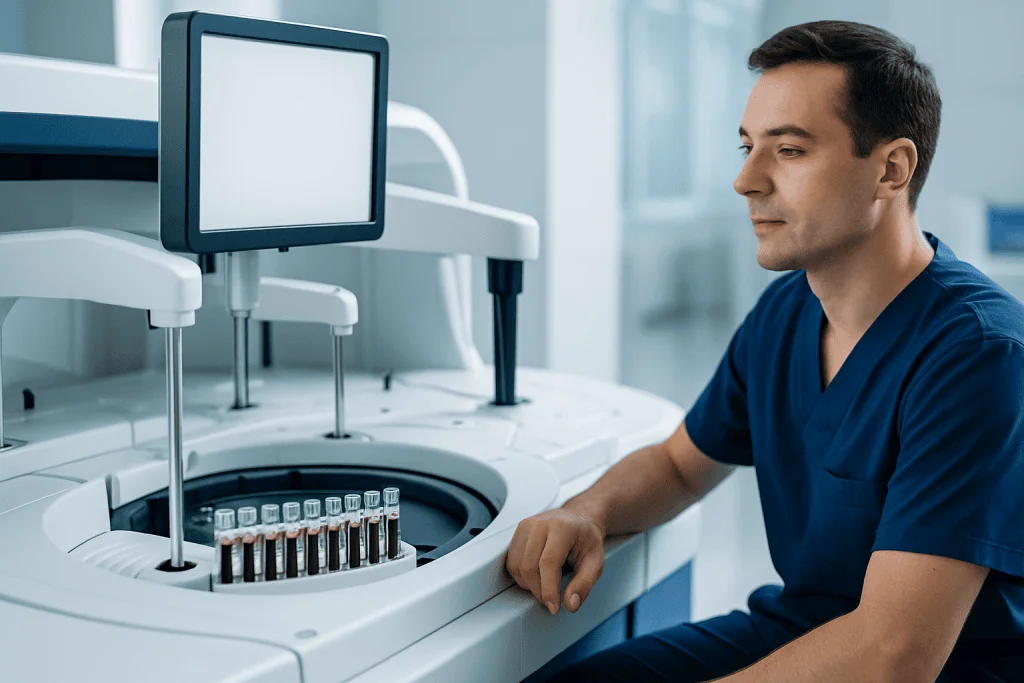
Preparation depends entirely on which tests have been requested, so the first step is knowing exactly what is on the list. Some tests can be done at any time of day with no restrictions. Others require fasting, morning collection, or avoidance of certain foods, supplements or strenuous exercise beforehand. Guessing is the worst option: a sample taken under the wrong conditions may need to be repeated, which costs you a second visit.
Fasting, where it applies, usually means no food for a defined period before the draw. Plain water is often allowed unless you are told otherwise. Coffee, tea, chewing gum, smoking and a hard gym session can all shift certain results, so if the instructions say to avoid them, take that literally rather than approximately.
Two points sit outside this guide’s remit and should. First, questions about pausing a medicine or supplement before a test belong to the doctor who prescribed it, not to a travel guide, and not to your own judgement on the morning of the draw. Second, if you have diabetes, are pregnant, take blood thinners, have kidney disease or have fainted during blood draws before, that context should reach the clinical team before the appointment, because it can change how the test is scheduled and handled.
Bring previous laboratory reports, imaging summaries, prescriptions and the written name of each requested test, ideally in English. Test names differ between countries, and a precise written request prevents the most common source of delay: staff pausing to confirm what was actually ordered. If your tests are part of a broader plan at an Acibadem hospital, there is a dedicated guide on how to prepare for blood tests, scans and pre-op checks.
What to Bring to the Lab Visit
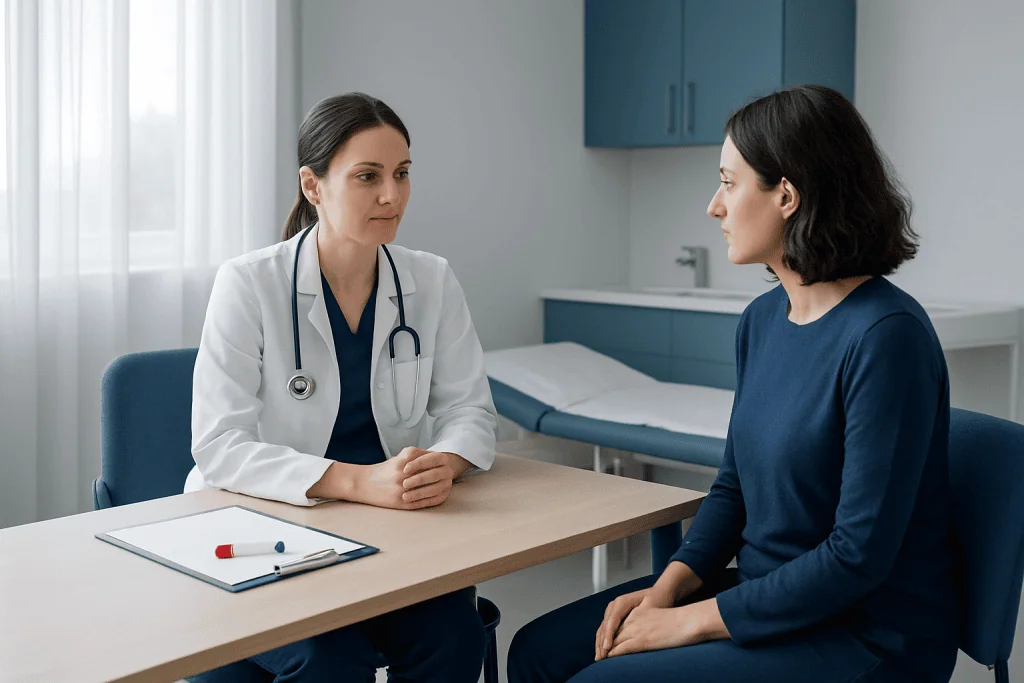
A smooth same-day visit starts with unglamorous paperwork. Registration at a Turkish hospital requires your passport or official ID. You will also want the doctor’s request or referral note, your contact details, and, if insurance or a company guarantee is involved, the relevant authorisation documents. Do not assume any test is covered until eligibility has been confirmed in writing; travel insurance in particular rarely covers planned, non-emergency testing.
Bring a complete medication list: prescription medicines, over-the-counter drugs, vitamins, herbal products and injections. Recent medication, supplements, dehydration, a recent illness, intense exercise and food intake can all influence results. The more of this context the clinical team has, the more responsibly your report can be interpreted.
- Passport or ID used for registration
- Doctor’s request, referral note or written test list
- Previous laboratory reports and relevant medical summaries
- Medication, supplement and allergy list
- Insurance or payment authorisation documents, if applicable
- Correct email address and phone number for receiving results
- Interpreter request, noted in advance if you prefer support in your language
What Happens During a Same-Day Lab Appointment
After registration, your requested tests are checked and entered into the hospital system. If anything is unclear: an ambiguous test name, an unconfirmed fasting status, a marker that needs a physician’s sign-off, staff will pause to resolve it before collection. This is a safety step, not an obstacle, and it is most common when requests come from doctors abroad using different naming conventions.
The draw itself is brief. A healthcare professional confirms your identity against the labels, chooses a vein, cleans the site and collects blood into labelled tubes. This is the moment to mention difficult veins, anxiety, previous fainting, or blood thinners; simple adjustments such as lying down, a smaller needle or a few extra minutes make a real difference and are entirely routine to ask for.
Afterwards you press on the puncture site for a short time, and most people return to normal activity immediately. If you were fasting, eat once the sample is taken, unless another test or procedure the same day requires the fast to continue, which is worth confirming before you reach for the snack. Timing your arrival matters more than most patients expect, particularly for morning-collection tests: mornings fill first, fasting windows leave little slack, and a late arrival can push a same-day plan into a second visit.
Understanding Timing and Results
Reporting time depends on the test, not on how urgently you would like the answer. The patterns below are typical, not promised, laboratory workload, confirmation runs and send-out logistics all move the timeline.
| Test group | Collection | Typical reporting pattern |
|---|---|---|
| Routine chemistry, full blood count, lipids, glucose | Same day, often any time | Frequently reported the same day |
| Hormone and vitamin panels | May require morning collection or fasting | Same day to a few days |
| Infection serology and immunology | Same day | Varies; confirmatory testing can add time |
| Tumour markers | Same day, sometimes with timing rules | Often within days; interpretation always needs a doctor |
| Genetic and send-out tests | Same day collection | Days to weeks, depending on the destination laboratory |
Results arrive as a formal laboratory report with reference ranges. Treat those ranges with caution in both directions: a value outside the range is not automatically an emergency, and a value inside it does not always explain symptoms. Interpretation depends on your history, medications, age, sex, the timing of collection and the reason the test was ordered. This is especially true for tumour markers, which are widely misread by patients searching online; the tumour marker blood tests guide explains what these tests can and cannot tell you.
Before you leave the laboratory, it is reasonable to ask three things: when the report is expected, how it will be delivered, and whether an English version is available. If you plan to hand the report to your doctor at home, ask for both digital and printed copies and confirm the file format. Continuity after you fly home has its own logistics, covered in how to plan follow-up blood tests after returning home from Turkey.
Full Check-Ups, Single Tests and How Costs Are Quoted
Many visitors searching for blood tests in Turkey are actually looking for a full check-up: a structured half-day or full-day assessment combining blood panels with imaging, cardiac tests and a physician review. Large hospital groups, including Acibadem, run dedicated check-up programmes in their hospitals, typically organised so that blood collection, imaging and the closing consultation happen in one visit. What a given programme includes varies by age, sex and risk factors, so the sensible first question is always “what exactly is on the list?” rather than “is it comprehensive?”. A realistic picture of what fits into a single day is set out in what can be done in a single hospital visit.
This guide deliberately quotes no prices, because any figure would be misleading. What the cost of laboratory testing depends on is straightforward to describe:
- The number and type of tests. Routine panels sit at one end; genetic and send-out tests at the other.
- Whether a physician consultation is included. Some tests require one; check-up programmes build one in.
- Where the sample is processed. In-house testing and external specialist laboratories are priced differently.
- Urgency. Expedited processing, where available, may carry a different fee.
- Payment route. Self-pay, insurance and company guarantees each follow their own paperwork and confirmation steps.
The practical protection is an itemised written quote before testing, with confirmation of what is and is not included. If additional tests are proposed after you arrive, which happens, and is often clinically sensible, you are entitled to the same clarity before agreeing. How mid-trip additions affect both schedule and budget is covered in when unexpected tests are needed in Turkey.
Healthcare in Turkey: What International Patients Should Know
A few background questions come up constantly, so here are plain answers. Turkey runs a mixed healthcare system: a public system funded through national social insurance, alongside a large private hospital sector. International patients almost always use private hospitals, where English-speaking coordination, interpreter services and international patient departments are standard parts of the operation rather than add-ons.
Tourists do not receive free healthcare in Turkey. The public insurance system covers people enrolled in it, residents, employees, certain long-stay categories, not visitors. Emergency departments will treat urgent cases regardless of nationality, but the care is invoiced. For planned testing or treatment, you pay as a private patient or through insurance that explicitly covers care abroad; standard travel policies generally cover emergencies only, not elective medicine.
As for the country’s health profile: according to World Health Organization data, diseases of the circulatory system, heart disease and strokeare the leading cause of death in Turkey, much as they are across Europe. That is one reason check-up programmes here place weight on lipid profiles, glucose, blood pressure and cardiac assessment. None of this predicts anything about you individually; it simply explains why those tests dominate the standard panels.
Language, Travel and Comfort Support
For an international patient, the laboratory visit is never only about the test. It is also directions in an unfamiliar building, registration in a second language, and a schedule that has to coexist with hotel checkout and a flight. These details matter when your entire testing window is a day or two.
At Acibadem hospitals, international patient services handle the practical layer: appointment scheduling, interpreter support, navigation between departments, and communication so that a blood draw, a scan and a consultation land in a workable order rather than a scattered one. Companions can usually assist with check-in and waiting-area logistics, within hospital policy and patient privacy rules.
On the day itself: wear sleeves that roll up easily, drink water if your instructions allow it, and do not rush straight from the chair to a taxi. If you feel lightheaded after a draw, sitting for a few minutes is the entire treatment for most people. If you are anxious about needles, say so before collection begins: it changes how the draw is done, and nobody in a hospital laboratory is surprised by it.
Safety, Privacy and Follow-Up
Hospital-based laboratories use identity checks, barcode sample labelling and quality-control processes to reduce errors. You are part of that system too: check that your name and date of birth are correct on the registration form and on the tube labels. It takes ten seconds and closes the most common gap.
Your medical information is private. Before you leave, confirm how results will be delivered, who is authorised to receive them, and whether your companion may discuss them with staff. If a report needs to reach a doctor abroad, verify the email address, the file format and any consent step required: a report stuck in an inbox nobody checks helps no one.
For any abnormal finding, the useful path is a medical review that puts the number in context, not a late-night search of the reference range. A single value, on its own, is a data point; your history is what turns it into information.
Step by step
- Get the test list in writing before travelling. A written request from your doctor, ideally in English, is what the laboratory works from. It also determines whether same-day collection is realistic and what preparation applies.
- Confirm fasting and timing instructions. Ask specifically whether you should fast, whether water is allowed, and whether morning collection is required. Direct any question about pausing a medicine to the doctor who prescribed it.
- Choose a practical appointment slot. Mornings suit fasting tests and full days of consultations. Build in margin around flights and checkout rather than planning the day to the minute.
- Assemble your documents. Passport or ID, the test request, previous reports, a full medication and supplement list, and any insurance authorisation papers.
- Register and verify your details. Your identity and the requested tests are checked before collection. Confirm your name, date of birth and contact details, especially if results will be sent digitally.
- Have the sample collected. Mention anxiety, previous fainting, blood thinners or difficult veins before the draw. Afterwards, press on the site as instructed and rest briefly if needed.
- Confirm the report logistics before leaving. When it will be ready, how it will be delivered, whether an English version is available, and who reviews it with you if the results feed into treatment planning.
Your checklist
- Passport or official ID for hospital registration
- Doctor’s request, test list or referral note in writing
- Previous blood test reports and relevant medical summaries
- Current medication, supplement and allergy list
- Fasting and timing instructions confirmed in advance
- Water and a light snack for after fasting, if allowed
- Itemised quote or insurance authorisation confirmed before testing
- Interpreter request noted before arrival, if needed
- Correct email address and phone number for receiving results
- Sleeves that roll up easily
Key takeaways
- Same-day collection is usually realistic for routine panels; specialised and send-out tests take longer.
- A written test list, your passport, previous reports and a full medication list prevent most delays.
- Fasting and morning-collection rules depend on the specific test, confirm them in advance and follow them literally.
- Tourists pay for healthcare in Turkey; confirm coverage or an itemised quote in writing before testing.
- Results need interpretation by a doctor in the context of your history, reference ranges alone mislead in both directions.
- Interpreter support, English reports and coordination between departments are standard at hospital-based international patient services.
Frequently asked questions
Can I get blood tests in Turkey on the same day?
Usually, yes, for common tests such as full blood count, chemistry panels, glucose and lipids, same-day collection at a hospital laboratory is realistic when you arrive with a clear written request and the right documents. Some tests need morning collection, a physician’s order or external processing, which extends the timeline regardless of planning.
Do I need to fast before a blood test?
It depends on the test. Some require a defined fasting period, often with plain water allowed; others have no restrictions at all. Confirm the exact rules for your test list before the appointment. Any question about taking or pausing a medicine around the test belongs to the doctor who prescribed it.
Will my blood test report be in English?
English reports can usually be arranged through international patient services, but request this when the appointment is set up rather than after the sample is taken. If the report is for a doctor in your home country, confirm the file format and ask for both digital and printed copies while you are still in Turkey.
How long do blood test results take?
Routine panels are often reported the same day. Hormone panels may take a few days, serology can require confirmatory runs, and genetic or send-out tests can take days to weeks. Ask for the expected reporting time for your specific tests before leaving the laboratory, and confirm how the report will be delivered.
Where can I get a full body check-up in Turkey?
Large hospital groups, including Acibadem, run dedicated check-up programmes in their hospitals in Istanbul and other cities, combining blood panels, imaging, cardiac tests and a physician review, usually within a single visit. Programme content varies by age, sex and risk factors, so ask for the exact list of included tests rather than relying on a package name.
Do tourists get free healthcare in Turkey?
No. Turkey’s public insurance system covers people enrolled in it, such as residents and employees, not visitors. Emergency departments treat urgent cases regardless of nationality, but the care is invoiced. Planned tests and treatment are paid privately or through insurance that explicitly covers care abroad; standard travel policies generally cover emergencies only.
How good is Turkey’s healthcare system?
Turkey has a mixed system: a broad public network alongside a large, modern private hospital sector that serves most international patients. Private hospitals in major cities are generally well equipped, with international patient departments, interpreter services and structured check-up programmes. As anywhere, quality varies by institution, so it is reasonable to ask any hospital about its laboratory quality processes and how it handles international reports.
What is the biggest cause of death in Turkey?
According to World Health Organization data, diseases of the circulatory system, heart disease and stroke, are the leading cause of death in Turkey, as in much of Europe. This is why standard check-up panels there emphasise lipid profiles, glucose and cardiac assessment. Population-level patterns say nothing about any individual’s risk, which only a doctor can assess in context.
Add us as a Preferred Source to see more of our trusted health content across Google Search, AI Overviews and Discover.

Update history
- PublishedJune 16, 2026
- Medical review approvedSeptember 13, 2026
- Last content updateSeptember 12, 2026
References3
- How to Prepare for a Lab Test: MedlinePlus medlineplus.gov
- Fasting for a Blood Test: MedlinePlus medlineplus.gov
- Blood Tests: NHS nhs.uk
More Patient Guides
Sleep Apnea Testing in Turkey: What Happens During Your Evaluation
Sleep apnea testing in Turkey may include a consultation, overnight sleep study or home test, and a clear review of your results…

How to Organize Your Test Results Before Traveling to Turkey
Organize your test results before traveling to Turkey by sorting records, images, medicines and timelines so your Istanbul care team can review…

When Extra Tests Are Needed Before Treatment in Turkey
Extra tests before treatment in Turkey may be needed to confirm diagnosis, timing, and safety. Here is what you can expect in…

At Acibadem, How to Prepare for Blood Tests, Scans, and Pre-Op Checks
Blood tests, scans, and pre-op checks at Acibadem in Turkey help confirm you are ready for treatment and avoid delays on the…