

Tumor Marker Blood Tests in Turkey: Patient Guide

Tumor marker blood tests measure substances that cancer cells, or the body responding to them, can release into the blood. In Turkey they are ordered as part of a wider assessment, alongside imaging, pathology and your medical history, to support diagnosis, treatment planning or monitoring. Most involve a standard blood draw. No single marker result confirms or excludes cancer on its own.
Perhaps a specialist has asked for a tumor marker test before your consultation, or you are returning for follow-up and quietly dreading the number. The worry is common. It also rests on a misunderstanding worth correcting early: these tests are rarely read alone. Doctors interpret them alongside imaging, pathology reports and your history, and a single value seldom decides anything by itself.
This guide explains how tumor marker blood tests in Turkey work in practice, what the tests can and cannot tell you, how to prepare, what happens on the day, how results are reported, and what actually determines the cost of testing for international patients.
At a glance
- Main purpose: Support diagnosis, treatment planning, monitoring or follow-up when a doctor decides a marker is clinically relevant
- Sample type: Usually a standard blood sample taken from a vein in the arm
- Result timing: Varies by marker and laboratory method; some results arrive the same day, others need longer
- Important limit: Markers can rise for benign reasons and stay normal in the presence of disease: they are never read in isolation
- Support available: International patient coordination, interpreters, appointment planning and document handling before arrival
What tumor marker blood tests are, and what they can honestly tell you
Tumor markers are substances, usually proteins, that cancer cells can produce or that the body produces in response to cancer. A tumor marker blood test measures the level of one of these substances in a sample taken from a vein. Depending on your situation, a doctor may order one marker or several, to support a diagnosis, plan treatment, monitor how treatment is working, or watch for recurrence after treatment ends.
What these tests are not is a yes-or-no cancer test. Many markers rise for entirely benign reasons: inflammation, infection, liver conditions, benign growths, smoking, pregnancy, menstruation or a recent procedure can all push certain values above the reference range. The reverse is also true, some cancers produce little or no marker, so a normal result does not rule disease out. This is why tumor marker blood tests in Turkey, as anywhere else, sit inside a wider assessment rather than replacing one.
Blood is not the only sample type used in this field, either. Some conditions are assessed with urinary biomarkers, and tissue from a biopsy usually carries far more diagnostic weight than any blood value. Your doctor chooses the combination that fits the question being asked.
Markers you may hear about
The right test depends on your sex, age, history and diagnosis. The table below lists markers that come up often, with the caveat that none of them is a standalone answer.
| Marker | Often discussed in relation to | Worth knowing |
|---|---|---|
| PSA | Prostate conditions | Can rise with benign prostate enlargement, infection or recent prostate procedures |
| CA-125 | Ovarian conditions | Can rise with menstruation, endometriosis, fibroids and pelvic inflammation |
| CEA | Bowel and some other cancers | Smoking and inflammatory conditions can raise it |
| CA 19-9 | Pancreatic and biliary conditions | Bile duct blockage and liver disease can affect it; some people do not produce it at all |
| AFP | Liver and germ cell conditions | Also rises in pregnancy and some benign liver conditions |
| Beta-hCG | Germ cell conditions | Raised in normal pregnancy |
| CA 15-3 | Breast cancer monitoring | Mainly used to follow known disease, not to screen healthy people |
Two things follow from this table. First, the marker a doctor orders answers a specific clinical question, so a blanket panel of everything is rarely good medicine. Second, a benign explanation exists for almost every raised value, which is why interpretation belongs to the doctor who knows why the test was ordered.
When you may be asked to have these tests in Turkey
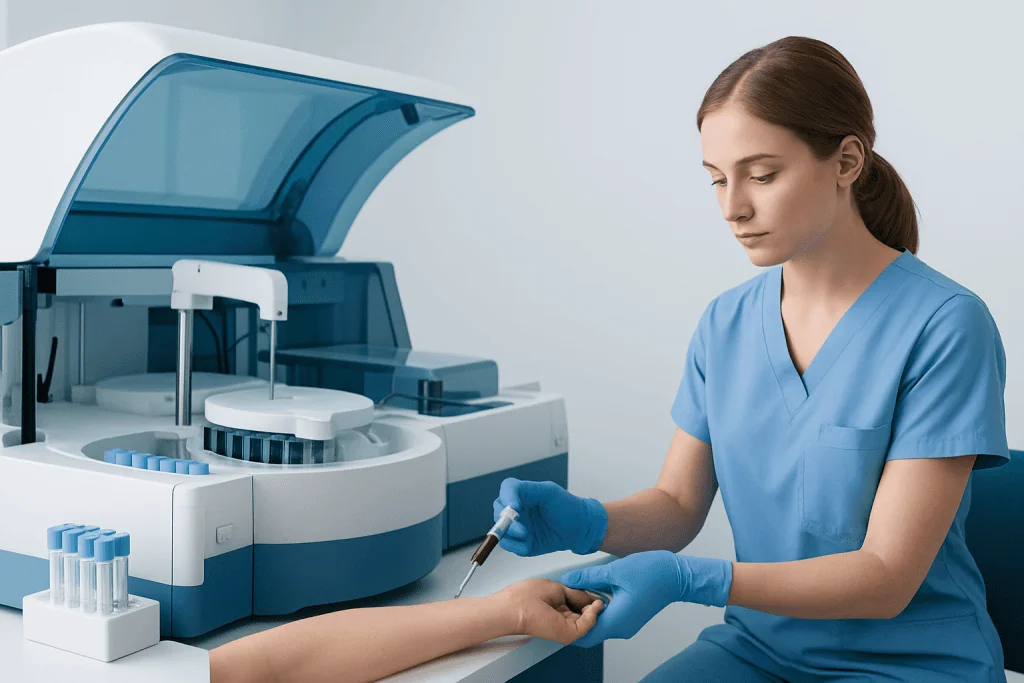
Tumor marker blood tests in Turkey are typically requested at defined points in a care pathway: before a first oncology consultation, during a second-opinion review, before surgery or systemic treatment, at intervals during treatment, or as part of surveillance afterwards. For international patients, the blood draw is often scheduled shortly before a consultation, so the specialist reviews fresh values rather than months-old reports.
At Acibadem, marker testing usually sits inside a broader oncology workflow. Depending on the case, this can include imaging, pathology review, genetic or molecular testing, and input from surgical, medical and radiation oncology teams. The blood test is one data point feeding that process, not a gate you pass or fail.
If you already have a diagnosis, the trend often matters more than the number. A value rising or falling across several tests, ideally run with the same laboratory method, can say more than any single result. Doctors in Turkey may also repeat tests you have already had at home; there are practical reasons blood tests and scans are sometimes repeated before treatment, including differences between assays and how much time has passed since the original result.
Preparing for your blood test

Most tumor marker tests need nothing more than a standard blood draw, without fasting. The complication is that they are often ordered alongside general blood work, glucose or lipid tests, for example, that does require fasting. Follow the instructions given for your specific appointment rather than assuming either way. There is a separate guide on preparing for blood tests, scans and pre-op checks at Acibadem that covers the practical detail.
Before the test, tell the team about medicines and supplements you take, recent infections, pregnancy or menstrual timing where relevant, recent surgery, urinary symptoms or prostate procedures, and any liver condition. Each of these can move certain markers, and mentioning them in advance helps the doctor interpret the result correctly. Do not change any medication on your own initiative; decisions about medicines belong to your treating doctor.
If you are travelling from abroad, bring previous laboratory reports, with dates, units and reference ranges, not just the headline numbers. Different laboratories use different assays, and a specialist will often weigh the method and the trend rather than comparing raw figures literally. Coordinators at Acibadem International routinely gather documents before arrival and advise which reports need translating.
What happens on the day
The visit itself is short. You register, confirm your identity and are directed to the blood collection area; if you use international patient services, a coordinator or interpreter can accompany you. The draw takes a few minutes: the skin is cleaned, a small needle placed into a vein, the required tubes filled and pressure applied afterwards. Expect a brief pinch. Mild bruising happens occasionally, more often if you take blood thinners or bruise easily, mention this to the nurse beforehand.
Afterwards you can usually return to normal activity unless other tests are planned for the same day. If you feel light-headed, say so and stay seated until it passes; water and food help, particularly if you were fasting. For the wider logistics of a laboratory visit, timing, queues, how same-day reporting works, see the same-day lab visit guide.
How results are reported and read
A tumor marker report normally shows four things: the marker name, your value, the unit of measurement and the laboratory’s reference range. Units matter more than most patients expect. The same marker can be reported in different units by different laboratories, and reference ranges shift with the assay used, so a value that looks high against one range may be unremarkable against another.
Interpretation then happens in layers. The specialist compares the value with your previous results, with imaging, with pathology and with your treatment timeline. Sometimes the sensible next step is simply repeating the test after an interval, because a single measurement cannot separate a real change from ordinary fluctuation. In other cases the team may recommend imaging, endoscopy, a pathology review or a multidisciplinary discussion. Occasionally the answer is that the result changes nothing and monitoring continues as planned: an outcome that feels anticlimactic but is often welcome.
If a result surprises you, four questions are worth asking the specialist: Is this marker considered reliable for my condition? Could a benign cause explain it? Was the same laboratory method used as last time? Does this value change my care plan? Those questions turn a frightening number into a manageable clinical conversation.
What determines the cost of tumor marker testing
Public price lists rarely translate meaningfully to an individual case, because the cost of tumor marker blood tests in Turkey depends on variables that differ from patient to patient. This guide does not quote figures; it can tell you what a quote is built from:
- Which markers are ordered, and how many. A single marker is a different request from a panel combined with general blood work.
- What accompanies the test. Consultations, imaging or pathology review scheduled in the same visit usually shape the total more than the blood tests themselves.
- The laboratory method. Some markers need specialised assays or additional verification, which affects both cost and turnaround time.
- Whether monitoring is planned. Follow-up of a known condition involves repeat draws over time, which changes how testing is scheduled and estimated.
In practice, hospitals prepare a written estimate after reviewing a patient’s records, so the quote reflects the tests a doctor actually considers relevant rather than a generic menu. If a specialist recommends further investigations after seeing initial results, the guide on extra tests after arriving in Turkey explains how such changes affect scheduling and estimates.
Planning the visit as an international patient
For many patients the blood test is one component of a short medical trip that also includes consultations, imaging and possibly a same-week follow-up. Records shared in advance let the hospital build a realistic schedule and reduce waiting between appointments. Acibadem International coordinators handle appointment planning, interpreter arrangements, hospital navigation and communication between departments; if you travel with a companion, they also explain where to wait, what documents to carry and how results are shared.
Two planning habits pay off. First, before booking flights, ask whether the doctor expects tests beyond the markers, imaging and biopsy-related services need more time and sometimes specific preparation. Second, keep a day or two of flexibility in your itinerary. A specialist reviewing fresh results may reasonably want a repeat test or an additional consultation, and rigid travel plans turn a small adjustment into a logistical problem.
After results: records, follow-up and returning home
Once results are available, the doctor explains what they mean in your context and how they fit the broader picture. Ask for copies of every report, digital and printed, both for your own records and for your physician at home. Reports that cross borders should include units and reference ranges, for the reasons described above.
If monitoring continues after you leave, a written follow-up plan is worth securing before departure: when to repeat which markers, whether the same laboratory method matters for comparison, and how future results will reach the team that treated you. The guide on planning follow-up blood tests after returning home covers the practical side.
One caution for the journey home: avoid drawing conclusions from marker changes on your own. If a local result differs from one taken in Turkey, the difference may reflect assay variation, timing or an unrelated condition rather than disease. The doctors involved can weigh those possibilities; a number on its own cannot.
Step by step
- Gather your medical records before you travel. Recent blood tests, imaging reports, pathology reports, treatment summaries and a medication list help the care team decide which markers are relevant and what else to schedule in the same visit.
- Confirm preparation instructions. Ask whether fasting is needed and whether any supplements affect the planned tests. Any change to prescribed medicines is a decision for your treating doctor, not something to do on your own.
- Plan the appointment day practically. Bring your passport or ID, prior reports and a list of questions. If several tests share one day, allow extra time for registration and laboratory queues.
- Have the blood sample taken. The draw takes a few minutes. Tell the nurse if you bruise easily, take blood thinners or have felt faint during blood tests before.
- Wait for results with context in mind. Timing depends on the marker and the laboratory process. Try not to interpret the number in isolation before your doctor has reviewed it against your history.
- Review the result with the right specialist. Depending on the marker, an oncologist, urologist, gynaecologist or gastroenterologist may interpret it. Ask what the result changes, if anything, in your plan.
- Leave with a follow-up plan. Before returning home, collect copies of all reports and clarify when to repeat testing, who will review future results and how they will be shared.
Your checklist
- Passport or official ID for hospital registration
- Previous tumor marker results with dates, units and reference ranges
- Imaging reports and CDs or digital access links if available
- Pathology and biopsy reports, including translations if needed
- Medication list, including blood thinners, hormones and supplements
- Details of recent infections, procedures, surgery or treatments
- Questions you want to ask your specialist about interpretation
- Contact details for your doctor at home
- A travel schedule with some flexibility for additional appointments
Key takeaways
- Tumor marker blood tests in Turkey are part of a wider assessment or follow-up plan, never a standalone cancer diagnosis.
- Preparation is usually simple, but fasting and timing instructions depend on what else is ordered, confirm them for your specific appointment.
- Trends across comparable tests often matter more than one isolated value, so previous reports with units and reference ranges are genuinely useful.
- Cost has no single figure: it depends on which markers are ordered, the laboratory method and what else the visit includes, and is set out in a written estimate after records review.
- Review results with a qualified specialist before drawing conclusions from any single abnormal number.
Frequently asked questions
Is there a blood test that shows cancer markers?
Yes, tumor marker tests measure substances that some cancers release into the blood. But no single blood test can show whether a person has cancer. Markers can be raised for benign reasons and can stay normal when disease is present, so doctors use them alongside imaging, biopsy results and clinical history rather than as a standalone answer.
Can tumor marker blood tests detect cancer early?
Most tumor markers are not reliable screening tests for healthy people. They are mainly useful when there is a specific clinical question: a known diagnosis, a suspicious finding under investigation, or follow-up after treatment. Whether any marker is appropriate in a given case is a decision for a doctor who knows the person’s history.
How much does a tumor marker blood test cost?
There is no single figure. The cost depends on which markers are ordered and how many, the assay the laboratory uses, and whether the tests are combined with consultations or imaging in the same visit. Hospitals prepare a written estimate after reviewing a patient’s records, so the quote reflects the tests actually considered relevant to that case.
Do I need to fast before tumor marker testing?
Many tumor marker tests do not require fasting, but you may be asked to fast if other blood work is ordered at the same time. Follow the instructions given for your specific appointment rather than assuming either way.
What if my tumor marker is higher than normal?
A high result does not automatically mean cancer or cancer progression. Benign conditions, inflammation, recent procedures, liver problems and laboratory differences can all affect certain markers. Depending on the situation, a specialist may recommend repeating the test, adding imaging, or simply continuing planned monitoring.
How quickly will results be ready in Turkey?
Timing depends on which markers are ordered, the laboratory workload and whether additional verification is needed. Some results are available quite quickly; others take longer. The expected timing for your specific tests can be confirmed when the appointment is planned.
Should I repeat the test in the same laboratory?
When a condition is monitored over time, using the same laboratory method makes comparison easier. If you must repeat the test in another country, keep the full report with units and reference ranges so differences can be interpreted cautiously rather than at face value.
Can I have tumor markers checked without seeing a doctor?
The tests are most useful when a physician chooses them for a specific reason and interprets them in context. Testing without a clinical question can produce anxiety over benign fluctuations, false reassurance from a normal value, or unnecessary further investigations.
Add us as a Preferred Source to see more of our trusted health content across Google Search, AI Overviews and Discover.

Update history
- PublishedJune 16, 2026
- Medical review approvedAugust 30, 2026
- Last content updateAugust 30, 2026
References2
- Tumor Markers: National Cancer Institute cancer.gov
- Tumor Marker Tests: MedlinePlus medlineplus.gov
More Patient Guides
Sleep Apnea Testing in Turkey: What Happens During Your Evaluation
Sleep apnea testing in Turkey may include a consultation, overnight sleep study or home test, and a clear review of your results…

How to Organize Your Test Results Before Traveling to Turkey
Organize your test results before traveling to Turkey by sorting records, images, medicines and timelines so your Istanbul care team can review…

When Extra Tests Are Needed Before Treatment in Turkey
Extra tests before treatment in Turkey may be needed to confirm diagnosis, timing, and safety. Here is what you can expect in…

At Acibadem, How to Prepare for Blood Tests, Scans, and Pre-Op Checks
Blood tests, scans, and pre-op checks at Acibadem in Turkey help confirm you are ready for treatment and avoid delays on the…