

One-Day Evaluation in Turkey: What Can Be Done in a Single Hospital Visit

A one-day evaluation in Turkey can usually combine a specialist consultation, blood and urine tests, ECG, ultrasound, X-ray and selected CT or MRI scans, followed by a results discussion and a written next-step plan. It works best when the hospital reviews your records in advance. Biopsies, sedation, pathology and multi-specialty reviews often need a second day or a separate appointment.
Wondering whether one hospital day is really enough, and whether to book the return flight for tomorrow or next week? It is a fair question, and the honest answer is: it depends on what needs to be done. A one-day evaluation in Turkey can often bring together consultations, imaging, blood tests and treatment planning in a single organised visit. It cannot compress everything, and knowing where the line sits helps you pack, schedule and arrive with realistic expectations.
At a glance
- Best for: Initial assessments, second opinions, diagnostic testing and treatment planning
- Often possible in one day: Specialist consultation, blood and urine tests, ECG, ultrasound, X-ray, selected CT or MRI, and a written next-step plan
- Usually needs more time: Biopsies, sedated procedures, pathology results, multi-specialty case reviews and cycle-timed fertility testing
- What makes it work: Records shared in advance, preparation instructions followed, and coordinated appointment sequencing
- What to bring: Passport, previous reports, scan discs or links, medication list, and insurance or payment documents
What a one-day evaluation in Turkey usually means
A one-day evaluation in Turkey means the hospital organises the most important parts of your assessment into a single visit, so you move from registration to tests to specialist review with as little dead time as possible. It is not a special medical product. It is a scheduling approach: the same consultations and tests you would have anywhere, arranged so that a person who has travelled for care does not spend three days doing what one well-planned day can hold.
For international patients, this is often the most practical way to begin. You may want a diagnosis confirmed, a second opinion on a plan made at home, or a clear answer on whether treatment is needed before you commit to a longer stay. In many cases the day includes an initial consultation, a review of your previous records, blood tests, basic heart checks if relevant, and imaging such as ultrasound, X-ray, CT or MRI. The exact mix depends on your symptoms, the specialty involved, whether fasting or other preparation is required, and how quickly each department can report results on the same day.
At Acibadem, one-day evaluations are typically supported by international patient coordinators who arrange the appointment sequence, guide you between departments and organise interpretation where needed. That practical layer matters more than it sounds. A day of testing succeeds or fails on logistics: whether the blood draw happens before breakfast, whether the scan slot lands before the afternoon consultation, whether the radiologist’s report is ready when the specialist sits down with you. If you want a broader picture of when hospitals ask patients to attend in person at all, see when an in-person evaluation is needed before treatment in Turkey.
What can often be done in a single hospital visit
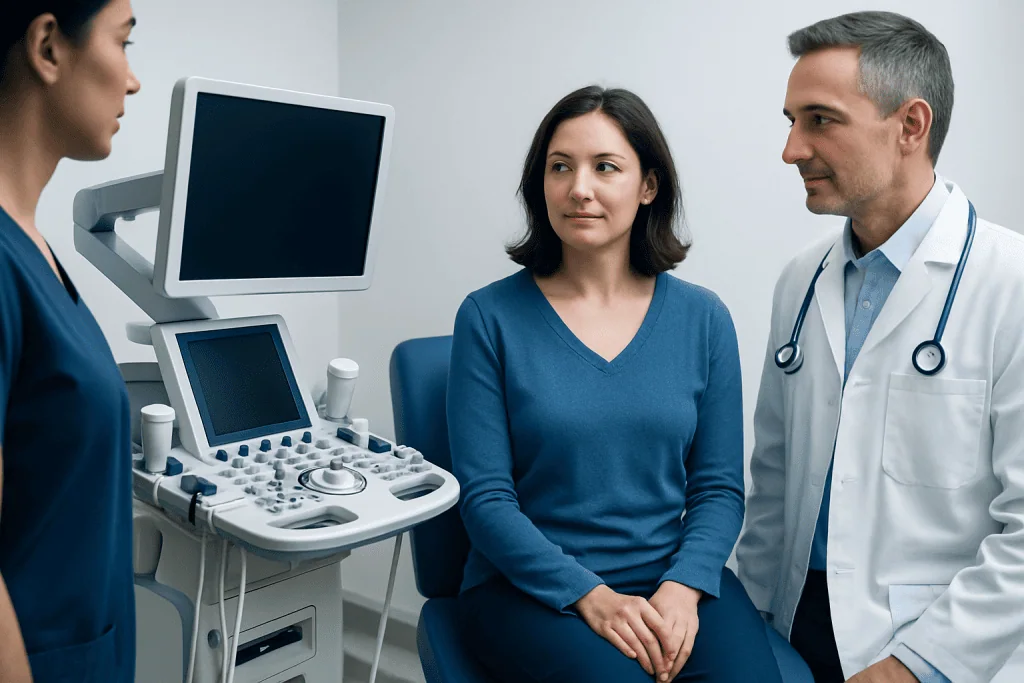
Most non-invasive tests and specialist reviews fit comfortably into one visit when the case is focused and the appointments were coordinated in advance. The realistic same-day list includes:
- Consultation with one or more specialists
- Physical examination and history review
- Blood work and urine testing, including many same-day laboratory panels
- Basic cardiac testing such as ECG, and often echocardiography
- Ultrasound, X-ray, mammography and selected CT or MRI scans
- A results meeting where the doctor explains findings and recommendations
A one-day evaluation in Turkey is most realistic when the goal is diagnosis, a second opinion or treatment planning rather than immediate intervention. A common pattern: you arrive with prior reports, the hospital repeats or updates the tests that actually matter, and you meet the doctor again later the same day to discuss what the results mean and what happens next. That final conversation is usually the most valuable hour of the visit: it is where you learn whether treatment is needed now, later, or not at all.
Some things do not fit neatly into one day, and it is better to know this before you book flights. Services that require special preparation, pathology processing, sedation, operating theatre scheduling or observation afterwards generally need a second day or a separate appointment. Biopsies fall into this group: the sample can sometimes be taken quickly, but the pathology report takes days, not hours. Endoscopy with sedation, cycle-timed fertility testing, advanced cardiac investigations and highly specialised imaging follow similar logic. If a hospital tells you a one-day plan is too compressed for your case, treat that as a sign of careful planning rather than an inconvenience. If your visit does end with a recommended procedure, the day-procedure checklist covers what that separate visit involves.
How your day is usually organised

The day begins before you arrive. A workable one-day schedule is built from the records you share in advance, reports, scan images, pathology results, a medication list and a short summary of your main concern. With that material, the team can decide which tests are genuinely useful, which previous results are recent enough to trust, and whether anything requires fasting or other preparation. This step is what separates an efficient day from a day of duplication and waiting.
On the day itself, the sequence usually runs: registration, first consultation, then laboratory tests and imaging. The order is not arbitrary. In some specialties, the doctor cannot say anything useful until certain results exist, so testing comes first. In others, the consultation comes first precisely to narrow down which tests are worth doing. A coordinator typically walks you between departments so the sequence holds together and gaps stay short. Expect real waiting at some points anyway, imaging departments serve inpatients and emergencies alongside scheduled visitors, and reporting takes time even when the scan itself is quick.
Later in the day, once results are in, the specialist reviews everything and explains the findings in plain language. If English is not your strongest language, an interpreter can sit in on this conversation; it is worth arranging in advance rather than relying on a phone app for the most important discussion of the day. The guide to interpreter services during hospital visits in Turkey explains how that support works. The last part of the day should focus on decisions: whether more tests are needed, whether treatment can be scheduled, and what that means for your travel timeline.
What can affect whether everything fits into one day
The biggest factor is complexity. A focused question, one symptom, one organ system, one decision to make, often resolves within a single coordinated day. Several symptoms across different systems, multiple chronic conditions or a long surgical history change the arithmetic. Doctors may need more time, more specialties or additional studies that cannot responsibly be rushed, and a forced one-day answer would be a worse answer.
Preparation is the second factor. Some blood tests require fasting. Some imaging needs contrast planning or a kidney function result before the scan can proceed. Some departments have fixed schedules or cut-off times after which same-day reporting is no longer possible. Arriving late, arriving without your records, or arriving after breakfast when fasting was required can push parts of the day into tomorrow. None of this is dramatic, but it is avoidable with one pre-arrival conversation about preparation rules.
The third factor is whether your assessment might lead directly to a procedure. Diagnostic appointments and treatment appointments are not interchangeable. Even when the evaluation identifies a clear next step, a biopsy, endoscopy or operation usually still requires pre-anaesthesia review, consent discussions and safety checks before it can be scheduled. Think of a one-day evaluation in Turkey as a fast, organised decision-making visit, not a promise that every medical need will be resolved before you leave the building.
Finally, findings can change plans. Updated imaging sometimes shows something the original reports did not, and the recommended approach shifts accordingly. That is a normal part of careful medicine, and it is worth understanding in advance what happens if your in-person evaluation changes the initial plan.
How to prepare before you travel
The more complete your information is before you arrive, the smoother the day runs. Useful material includes recent reports (in English if available, or in the original language if translation can be arranged ahead of time), imaging discs or cloud links, pathology reports, operative notes, allergy information, and an up-to-date list of medicines and supplements with doses. Carry physical or digital copies with you on the day as well, advance copies plus copies in hand is the combination that prevents repeated tests.
Ask in advance about preparation rules: whether you should come fasting, whether your usual morning medicines can be taken as normal, and whether caffeine, smoking or exercise should be avoided before specific tests. Do not change any medication on your own initiative, timing questions around regular medicines belong to the treating doctor, and the answer depends on which tests are planned. If there is any chance the day could include sedation, ask whether you should bring a companion and avoid travelling alone afterwards.
Plan the logistics conservatively. Choose accommodation that keeps travel stress low, allow generous time for Istanbul traffic, and keep your passport, payment method and contact numbers within easy reach. Costs for an evaluation day depend on which consultations and tests are actually performed, so the final scope becomes clear only once the schedule is set; asking for the planned test list in advance is the practical way to understand what the day will involve.
What you should expect at the end of the visit
By the end of a well-run one-day evaluation, you should leave with more than a folder of results. You should understand the working diagnosis or main concern, what has been ruled out, what remains uncertain, and which next steps are recommended. Those steps might be treatment in Turkey, additional testing, monitoring at home, or a review by another specialty.
Ask for a written summary, and confirm the report language, many departments can provide English documentation for international patients, but formats vary by test type, so raise it before you leave rather than after you fly home. Some results, especially pathology and highly specialised studies, will not be final on the same day. For anything pending, establish three things before you go: when to expect the result, who will send it to you, and whether a video consultation can be arranged to talk it through once it arrives.
A realistic one-day visit should give you clarity, not pressure. The point of compressing the logistics is to speed up assessment, never to rush the decision that follows it. If the honest outcome of the day is “we need one more test” or “take a week to think about this at home”, that is still a successful evaluation.
Step by step
- Share your records before you book flights. A hospital can only judge what fits into one day after seeing your reports, scan images, medication list and a short description of your main concern. Early sharing also reveals whether any preparation is needed.
- Confirm the schedule and preparation rules. Ask whether fasting is required, how to handle your usual morning medicines (a question for the treating doctor, not for guesswork), and whether anything like caffeine should be avoided before testing.
- Arrive early with documents accessible. Passport, appointment details, prior records, insurance information if relevant, and a payment method. Comfortable clothing makes a long testing day easier.
- Follow the planned sequence. Resist the urge to reorder appointments on the day. Some results must exist before the specialist can say anything useful, so the sequence is usually deliberate.
- Use interpreter and coordinator support. If English is not your preferred language, ask for an interpreter for the results discussion so small but important details are not lost.
- Leave with a written plan. Know which results are final, which are pending, when the pending ones arrive, and how follow-up works if you return home before every report is complete.
Your checklist
- Passport or official ID
- Previous medical reports and scan discs or links
- Medication and supplement list with doses
- List of allergies and past surgeries
- Insurance or payment documents
- Comfortable clothing and any glasses or hearing aids
- Phone charger and a small snack for after fasting tests
- Companion details if someone is travelling with you
Key takeaways
- Consultations, blood work, ECG, ultrasound, X-ray and selected CT or MRI can often be organised into one hospital visit in Turkey.
- The day works best when records are reviewed in advance and preparation instructions are followed exactly.
- Biopsies, sedation, pathology results and complex multi-specialty cases usually need more than one day.
- Coordinators and interpreters make the day easier to navigate, especially for the results discussion.
- Leave with a written next-step plan and a clear arrangement for any results that are still pending.
Frequently asked questions
Can I get a diagnosis in one day in Turkey?
Sometimes, yes, particularly when the concern is focused and the needed tests report on the same day. In more complex cases, you may receive an initial assessment and a plan on the first day, while the final diagnosis waits for pathology, additional imaging or another specialty’s review.
What tests are usually included in a one-day evaluation?
Commonly: blood and urine tests, ECG, ultrasound, X-ray and selected CT or MRI scans, alongside a specialist consultation and a results discussion. The exact combination depends on your symptoms, your history and whether any preparation such as fasting is required.
How long does a one-day evaluation take?
Plan for most of a working day. Registration, consultation, testing, reporting and the final results meeting each take time, and imaging departments serve scheduled and unscheduled patients alike. Booking evening flights on the same day is rarely a good idea.
Do I need to stay overnight after a one-day hospital visit?
Usually not, if the visit involves consultation and non-invasive testing only. An overnight stay or a second day becomes relevant if you need sedation, a biopsy, observation afterwards, or if the team wants additional studies the next morning.
Should I bring my old scans and reports?
Yes. Previous reports and the actual scan images help the specialist compare changes over time and often prevent repeated testing. Ideally the hospital sees them before you travel, and you carry copies on the day as backup.
Will I receive my results in English?
Many departments can provide reports or summaries in English for international patients, though formats vary by test type. If English documentation matters for follow-up in your home country, confirm this before the appointment rather than at the end of the day.
Is one day enough before deciding on treatment?
For some patients, yes: the evaluation gives enough clarity to decide whether treatment is needed and when to schedule it. For others, especially when findings are unexpected or several specialties are involved, an extra day of review leads to a better-informed and more comfortable decision.
Add us as a Preferred Source to see more of our trusted health content across Google Search, AI Overviews and Discover.

Update history
- PublishedAugust 6, 2026
- Medical review approvedSeptember 13, 2026
- Last content updateSeptember 12, 2026
References2
More Patient Guides

HoLEP in Turkey: How It Compares With TURP and What Recovery Involves
HoLEP in Turkey treats enlarged prostate tissue with laser enucleation; learn how it compares with TURP, recovery, travel and follow-up.

Porcelain Veneers in Turkey: Who Is Suitable and How Many Visits Are Needed?
Porcelain veneers in Turkey can enhance tooth shape and colour in two visits for suitable patients after a personalised dental assessment.

How to Prepare for a Sedation Procedure in Turkey
Prepare safely for a sedation procedure in Turkey with guidance on fasting, medicines, travel, recovery and follow-up.
Treatment Delays in Turkey: What Happens If Tests or Recovery Change Your Schedule
Treatment delays in Turkey can happen if tests or recovery change your plan. Learn how to manage appointments, travel, accommodation and follow-up.