

Day Procedure in Turkey: Same-Day Hospital Visit Checklist

A day procedure in Turkey means you arrive, are treated and leave hospital the same day, but plan for a full day, not a quick visit. Bring your passport, appointment confirmation, medication list and previous reports, confirm fasting instructions in writing, arrange return transport in advance, and avoid booking flights or fixed plans for the same evening unless your doctor has approved them.
How long will a “day procedure” actually take, and can you plan anything afterwards? It is one of the questions international patients ask most, and the honest answer is: leave the whole day open. Same-day discharge does not mean a short visit.
A day procedure in Turkey feels far easier when you know what to bring, how the hospital day unfolds and how you will get back to your hotel. This guide walks you through the practical side: documents, fasting rules, timing, communication and discharge, with the things that commonly go wrong flagged before they happen.
At a glance
- Best for: International patients booked for a same-day consultation, test, treatment or minor procedure at a Turkish hospital
- Key priority: Arrive early with documents, a complete medication list and a safe plan for the return journey
- Realistic timing: Registration, checks, the procedure itself, observation and discharge, keep the full day free
- Support available: International patient desk assistance, interpreter coordination and transfer guidance
- Before arrival: Confirm fasting, medication instructions, appointment time and pickup arrangements in writing
- After discharge: Rest, follow the written instructions and know exactly who to contact if symptoms concern you
What counts as a day procedure in Turkey?
A day procedure in Turkey is a planned hospital visit where you arrive, receive your consultation, test, treatment or minor intervention, recover under supervision if needed and leave on the same day. It can involve imaging, endoscopy, interventional radiology, dermatology, ophthalmology, dental treatment, minor surgery, fertility-related appointments or other scheduled services. Whether your visit is suitable for same-day discharge is a medical decision, not a booking preference: your treating team confirms it based on the procedure, the type of anaesthesia or sedation involved, and your overall health.
Here is the part brochures skip: even when the medical step itself takes twenty minutes, the hospital day rarely does. Registration and file creation, identity checks, consent forms, pre-procedure tests, waiting for laboratory or imaging results, the procedure, post-procedure observation and discharge paperwork all add time. For international patients there is often translation on top. Treat the appointment as a full-day commitment. Do not book sightseeing, business calls or onward travel for the same day.
It also helps to understand where the line sits between a day procedure and day surgery. Some operations are routinely done with same-day discharge; others start as day cases and become overnight stays if your team wants longer observation. If your visit involves an operation rather than a test or minor treatment, read our companion guide on whether you can leave hospital the same day after day surgerythe discharge criteria are stricter and worth knowing in advance.
At Acibadem, same-day visits are coordinated between the relevant hospital units, specialist teams and international patient services. Expect to move between registration, the clinical department, imaging or laboratory areas, payment points and a discharge desk. Knowing the route exists helps you plan calmly instead of feeling herded.
Which treatments are commonly handled as same-day visits?
People travel to Turkey for a wide range of treatments, and many of the diagnostic and minor therapeutic steps can be organised as day visits. Common examples include blood panels and imaging, endoscopic examinations, dermatology and minor skin procedures, many dental treatments including laser-assisted options, certain eye procedures, and a broad group of non-surgical procedures that do not require a hospital bed overnight.
Be careful with assumptions in the other direction. Larger cosmetic operations, a facelift, a tummy tuck, abdominal etching, are surgical procedures, and in most cases they are not day cases. They typically involve general anaesthesia, drains or dressings, and at least one night of monitored recovery. If a provider anywhere offers a significant operation with same-day discharge and a same-day flight, treat that as a question to raise, not a convenience to accept. Similarly, cardiac interventions such as stent placement or ablation may involve observation periods that your cardiologist decides on individually; do not plan around same-day discharge until your team confirms it.
If your goal is assessment rather than treatment, scans, consultations and test results compressed into one visit, see our guide to a one-day evaluation in Turkey, which explains what genuinely fits into a single hospital day and what does not.
Documents and information to prepare before you leave your hotel
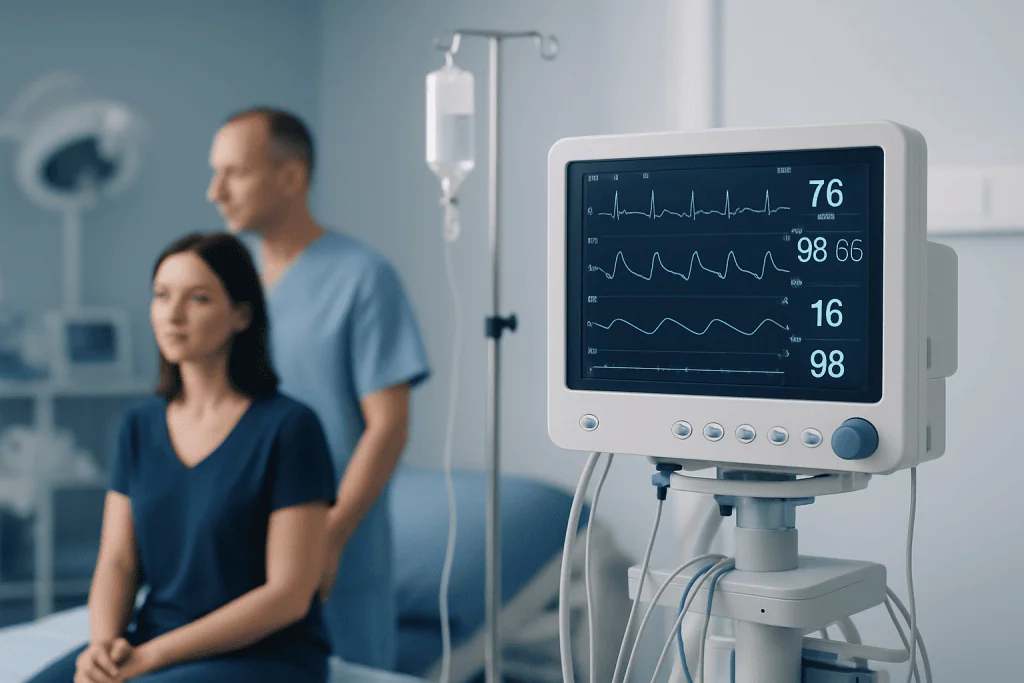
Pack your passport, appointment confirmation, hospital contact details and any payment or insurance documents you were asked to bring. Gather previous medical reports, imaging files, laboratory results, prescription lists and allergy information into one folder, physical or on your phone. Digital copies work for most purposes, but some departments still ask to see original reports or imaging CDs when they exist, so bring originals if you have them.
Your medication list matters more than almost anything else in your bag. Write down the exact names, doses and timing of everything you take: blood thinners, diabetes medicines, blood pressure tablets, supplements and herbal products included. If you are unsure whether to take a particular medicine on the morning of the procedure, ask the hospital team before your appointment. Do not decide on your own, and do not stop or change anything without their instruction: the answer depends on the procedure and on you.
If you do not speak Turkish, do not rely on informal translation from a taxi driver or hotel receptionist. Ask in advance whether interpreter support is arranged for registration, the clinical discussion and discharge instructions. Acibadem’s international patient services can help coordinate language support so that both the practical and medical instructions reach you accurately. For the full packing list, item by item, see what to bring for a day procedure in Turkey.
Food, drink and medication rules: confirm, do not guess

Some same-day procedures require fasting; many do not. If sedation, anaesthesia, endoscopy or certain imaging tests are planned, you may be told not to eat or drink for a specific number of hours beforehand. These instructions exist for your safety during sedation, get them in writing and follow the exact timing your care team gives you, not a general rule you found online.
If you accidentally eat, drink or take a medicine you were told to avoid, tell the team the moment you arrive. Do not hide it because you are worried the procedure will be delayed. It might be, and that is the point. The team can then decide safely whether to continue, adjust the timing or reschedule. A postponed procedure is an inconvenience; an undisclosed breakfast before sedation is a hazard.
Bring a small bottle of water, but do not drink it until you are told you may. If you have diabetes, are pregnant, have kidney disease or take medicines that must be taken with food, ask for personalised instructions before travel day: a general checklist cannot cover these situations, and your team can. Patients travelling with diabetes in particular should plan fasting windows with the hospital in advance rather than improvising on the morning.
What to wear and bring for comfort
Choose loose, comfortable clothing that is easy to take off and put back on. A front-opening shirt, soft trousers and slip-on shoes make the day noticeably easier, especially if you change into a gown or feel tired afterwards. Leave expensive jewellery at the hotel safe and carry only the valuables you genuinely need.
Hospitals are often cooler than visitors expect, so pack a light cardigan or scarf. If you use glasses, hearing aids, dentures, contact lenses or mobility aids, bring the storage cases and supplies that go with them: you may be asked to remove some items before a procedure and will want somewhere safe to put them. A phone charger, power bank and headphones make observation periods far more bearable.
Useful items for the day include:
- Passport and appointment details
- Medication list and allergy information
- Previous reports, imaging or laboratory results
- Comfortable clothing and a light extra layer
- Phone charger, power bank and local contact numbers
- A small snack for after discharge, if permitted
- Your hotel address written down or saved in Turkish
Arrival, registration and communication at the hospital
Arrive earlier than your appointment time, particularly on a first visit. International patient registration, file creation, consent forms and payment or insurance checks all take time, and traffic in Istanbul and other large Turkish cities is genuinely unpredictable. Build in a buffer of an hour rather than aiming for a precise landing. Our hospital check-in checklist covers the admission steps in detail.
When you arrive, go straight to the international patient desk or the department named in your confirmation message. Keep your passport and appointment details within easy reach: you will be asked for them more than once. If you are unsure where to go next, ask; hospital campuses can be large, and wandering between units wastes energy you will want later in the day.
During the clinical discussion, ask practical questions alongside medical ones. Useful ones: how long will observation last, when can I eat afterwards, what level of discomfort is normal, when can I shower, and who exactly do I contact after discharge. If an interpreter is present, speak in short sentences and pause often. Interpretation is accurate when it has room to breathe; nothing important should be lost to speed.
Discharge planning: your safest route back to the hotel
For some day procedures you can leave independently. For others, especially anything involving sedation, anaesthesia, strong pain medicine or a procedure that affects balance or alertness: you will need a responsible adult to accompany you. You must not drive yourself after sedation, and you may be advised not to sign important documents, drink alcohol or make significant decisions for the rest of the day. These are standard precautions, not local quirks.
Before you leave, make sure you hold written discharge instructions in a language you understand, or have had them explained clearly through an interpreter. They should cover medication use, eating and drinking, activity limits, wound or dressing care where relevant, the warning symptoms that matter for your specific procedure, and follow-up arrangements. If any line is unclear, ask before you walk out: a two-minute question at the desk beats a worried phone call at midnight.
Arrange transport in advance whenever you can. A hotel car, pre-booked transfer or companion-assisted taxi is more comfortable and more predictable than negotiating transport while tired. Acibadem’s international patient teams can advise on transfers and accommodation logistics, particularly for patients new to Turkey. For a detailed look at when it is genuinely safe to go straight back to your room, read our guide on returning to your hotel after a same-day procedure.
The first evening after your same-day visit
Back at your accommodation, keep the evening deliberately dull. Rest, hydrate if permitted, eat light food if allowed, and skip the walking tour. Even if you feel well, your body may still be processing the sedation, the procedure or simply the stress of a long hospital day. The energy you think you have at 7pm is not always the energy you have at 9pm.
Follow the medication plan exactly as written. If you were given a new prescription, check the dose, the timing and whether it should be taken with food. Do not mix medicines with alcohol, and do not add extra painkillers on your own initiative, if pain is not controlled by what you were given, that is a reason to contact the hospital, not the hotel pharmacy.
Know your warning signs before you need them. Your discharge paper will list the ones specific to your procedure. As a general rule, if you experience heavy bleeding, chest pain, severe breathing difficulty, fainting, confusion or repeated vomiting, call your local emergency number or go to the nearest emergency department now. For milder concerns, unexpected pain, low-grade fever, nausea, uncertainty about an instruction, use the hospital contact number on your discharge documents. Calling to ask is always better than waiting in silence.
Step by step
- Confirm your appointment and instructions 24–48 hours before. Ask for the exact arrival time, hospital location, department name and whether fasting is required. Confirm medication instructions with the team, especially for blood thinners, diabetes medicines and regular prescriptions.
- Prepare a small hospital day bag. Pack your passport, medical documents, medication list, phone charger, glasses or hearing aid supplies and a light layer. One easy-to-carry bag keeps you mobile between departments.
- Plan transport with extra time. Traffic and registration take longer than expected, so avoid a tight arrival. If sedation or anaesthesia is possible, arrange a companion or assisted transport for the return journey now, not on the day.
- Check in at the correct desk. Go to the international patient desk or the department named in your confirmation. Ask for interpreter support if it was arranged, or if you realise on arrival that you need it.
- Ask practical questions before the procedure. Confirm how long you will stay, when you can eat or drink, and what symptoms are normal afterwards. Raise worries about pain, nausea, mobility or the journey back before the procedure begins.
- Review discharge instructions before leaving. Make sure you understand medicines, activity limits, wound care if relevant, warning symptoms and who to call. Ask for everything in writing, in a language you understand.
- Keep your evening quiet. Return to your accommodation, rest, and avoid alcohol, strenuous activity and unnecessary outings. Keep your phone charged and your discharge papers within reach.
Your checklist
- Passport and appointment confirmation
- Previous medical reports, imaging files and laboratory results
- Full medication list with doses, plus allergy information
- Fasting and medication instructions confirmed in writing
- Comfortable clothing, light layer and slip-on shoes
- Phone charger, local SIM or roaming access and hospital contact numbers
- Interpreter support or language plan confirmed if needed
- Return transport and companion arranged if sedation may be used
- Hotel address written in Turkish or saved on your phone
- Discharge instructions reviewed and understood before leaving the hospital
Key takeaways
- A day procedure in Turkey involves registration, checks, treatment, observation and discharge paperwork, keep the entire day free.
- Confirm fasting and medication instructions with your team in advance; never guess, and never hide a mistake from the care team.
- Bring your passport, medical records, medication details, allergy information and a charged phone in one bag.
- Larger operations such as a facelift or tummy tuck are usually not day cases; be sceptical of anyone who suggests otherwise.
- If sedation or anaesthesia is planned, arrange accompanied transport and do not drive yourself afterwards.
- Before leaving hospital, make sure discharge instructions, warning symptoms and follow-up contacts are clear and written down.
Frequently asked questions
What procedures do people get done in Turkey as day visits?
Common same-day visits include blood tests and imaging, endoscopic examinations, dermatology and minor skin procedures, many dental treatments, certain eye procedures and a range of non-surgical treatments. Larger operations, including most cosmetic surgery, usually require at least one night in hospital. Your treating team decides which category your treatment falls into.
Is it a good idea to get a facelift in Turkey as a day procedure?
A facelift is a surgical operation, not a day procedure, and it typically involves general anaesthesia and monitored recovery. Whether surgery in Turkey suits you depends on the surgeon’s assessment, the facility, your health and your ability to stay long enough for follow-up. Be cautious of any offer that pairs major surgery with same-day discharge or an immediate flight home.
What is the safest country to have plastic surgery?
There is no single “safest country”. Safety depends on the individual surgeon’s qualifications, the facility’s standards, honest pre-operative assessment, anaesthesia care and structured follow-up, factors that vary within every country, including Turkey. Judge the specific hospital and team, ask direct questions, and give more weight to clear, cautious answers than to bold promises.
Which hospital in Turkey is best for plastic surgery?
“Best” is not a label any single ranking can settle, and you should be wary of sites that claim otherwise. Compare specific hospitals on the surgeon who would actually treat you, how they assess candidacy, what happens if a complication arises, and how follow-up works after you fly home. Written answers to those questions tell you more than any list.
Can I fly home the same day after a day procedure in Turkey?
Do not assume same-day discharge means same-day flying is safe. Your doctor should advise on travel timing based on the procedure, any sedation or anaesthesia, bleeding risk, mobility and your overall health. Where possible, keep flexibility in your return travel plans rather than booking a fixed same-day flight.
Do I need someone with me for a same-day hospital visit?
It depends on the appointment and whether sedation, anaesthesia or medicines affecting alertness will be used. If any of these are possible, a responsible adult should accompany you back to your hotel, and you must not drive yourself. Ask the hospital before the visit so you can plan properly.
What if I do not speak Turkish?
Tell your international patient coordinator before the appointment so interpreter support can be planned where available. You should fully understand consent discussions, medication instructions and discharge guidance before agreeing to proceed or leaving the hospital. Translation apps are useful for small talk, not for medical consent.
Who should I call if I feel unwell after returning to the hotel?
Use the contact number on your discharge instructions, or your international patient coordinator if that is the route you were given. For severe symptoms such as chest pain, heavy bleeding, breathing difficulty, fainting or confusion, call your local emergency number or go to the nearest emergency department now. Keep your passport, hospital papers and hotel address within reach.
Add us as a Preferred Source to see more of our trusted health content across Google Search, AI Overviews and Discover.

Update history
- PublishedJune 8, 2026
- Medical review approvedSeptember 13, 2026
- Last content updateSeptember 12, 2026
References3
- Medical Tourism: Travel to Another Country for Medical Care: CDC Travelers' Health wwwnc.cdc.gov
- Anaesthesia: NHS nhs.uk
- After Surgery: MedlinePlus medlineplus.gov
More Patient Guides
When a Hospital Stay in Turkey Becomes Longer Than Planned: What to Arrange
If your hospital stay in Turkey is longer than planned, arrange medical updates, accommodation, travel changes, insurance and support for your companion.
Waiting for Test Results in Turkey: How to Use Time Between Appointments
Waiting for test results in Turkey is easier with a clear plan for appointments, rest, records, questions and support in Istanbul.
Unexpected ICU Stay in Turkey: What Patients and Families Should Expect
Unexpected ICU stay in Turkey: learn what patients and families can expect, from communication and visiting to care updates and travel support.

How to Manage Special Diets During Medical Travel in Turkey
Special diets during medical travel in Turkey are easier to manage when you share your needs early, confirm meals and carry safe…