

Day Surgery in Turkey: Can You Leave Hospital the Same Day?

For selected procedures and medically stable patients, yes, day surgery in Turkey means you can return to your hotel the same day, but only after your surgical and anaesthesia team confirm you meet discharge criteria. The decision rests on the procedure, the anaesthesia used, your health and how your first hours of recovery go. If anything is uncertain, an overnight stay is the safer plan.
You have surgery booked in Turkey, and the question on your mind is a practical one: will you sleep at the hospital that night, or back at your hotel? The answer shapes everything else, how long you book your room for, when your companion should arrive, and when it is realistic to think about flying home.
This guide explains what day surgery in Turkey actually means, which procedures suit it, how doctors decide whether same-day discharge is safe, and what international patients should build into their travel plans before and after treatment.
At a glance
- Care pathway: Outpatient (ambulatory) or short-stay surgical care, not one specific operation
- Purpose: To perform suitable procedures safely without an overnight hospital stay, when the medical team confirms it is appropriate
- Anaesthesia: Local, sedation, regional or general, depending on the procedure
- Time in hospital: Usually several hours covering admission, surgery and monitored recovery; some patients stay overnight if recovery is slower
- Recovery: Begins the same day; the full timeline depends on the procedure performed
- Return to daily life: Often within days for minor procedures, longer for others
- Common specialties: General surgery, ENT, orthopaedics, gynaecology, urology, ophthalmology, plastic surgery
- Travel note: Same-day discharge does not mean same-day or next-day flights; travel clearance is a separate medical decision
- International patient support: Interpreters, transfers, accommodation guidance, care coordination and remote follow-up
What is day surgery?
Day surgery, also called outpatient or ambulatory surgery, means you have a planned operation and return to your hotel or home on the same calendar day, provided your medical team confirms it is safe. It is not a single treatment. It is a way of organising surgical care, used for many different procedures that do not normally need prolonged inpatient monitoring.
Whether you can leave hospital the same day depends on a set of linked factors: the type of procedure, the anaesthesia used, your general health, how well your pain and nausea are controlled afterwards, and whether you pass a series of discharge checks. If any concern arises at any point, the team keeps you longer. That flexibility is built into the pathway, not a failure of it.
For international patients, day surgery in Turkey can be practical: it shortens time spent inside the hospital while still giving you a full operating theatre, an anaesthesia team and a monitored recovery area. What it does not shorten, on its own, is the total time you should plan to spend in the country. Those are two different clocks, and this guide keeps them separate throughout.
When is it recommended?
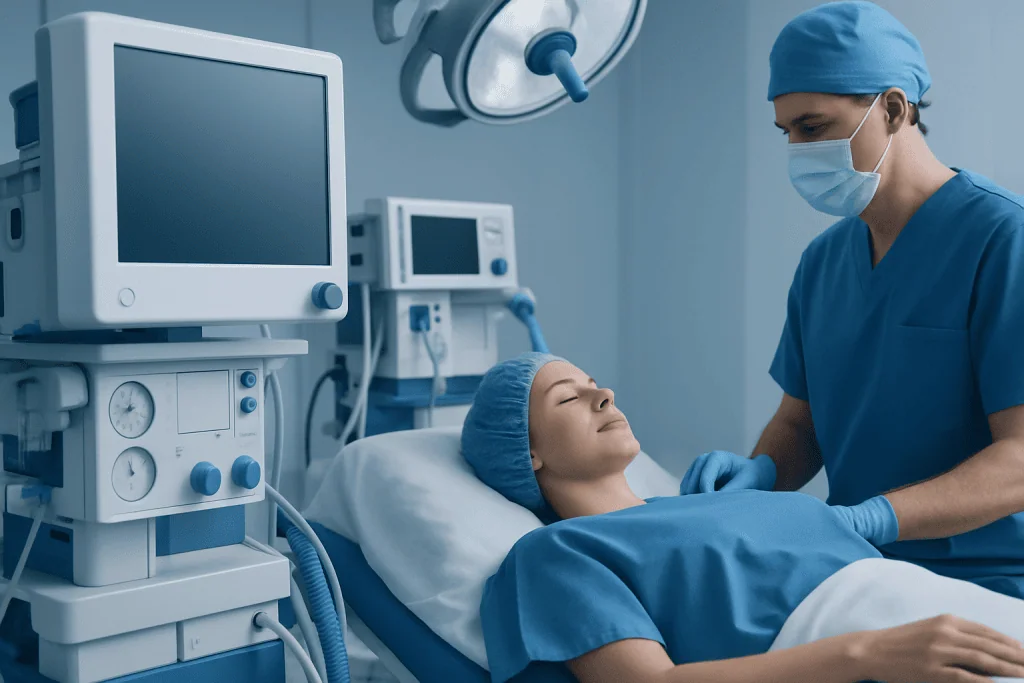
Day surgery is recommended when the procedure itself is suitable for same-day discharge and the doctor expects that the first hours of recovery can be monitored safely without overnight admission. It is commonly used for selected minor and intermediate procedures in ENT, orthopaedics, ophthalmology, gynaecology, urology, plastic surgery and general surgery.
The pattern behind suitable cases is fairly consistent: the condition is straightforward, expected blood loss is limited, pain is usually manageable with standard medicines, and the operation does not normally require intensive postoperative monitoring. Practical conditions matter as well: a safe place to stay nearby, clearly understood aftercare instructions, and a way to reach medical support if something changes.
Doctors tend not to recommend same-day discharge when significant medical conditions need closer observation, when the procedure turns out more complex than planned, or when early recovery is simply slower than expected. In those situations an overnight stay is not a setback. It is the safer of two options, chosen deliberately.
Who is a good candidate?

Broadly, a good candidate is medically stable, understands the treatment plan, and is having a procedure that is routinely done on an outpatient basis. The surgeon and anaesthesia team review health history, current medicines, allergies, previous operations and anything that could affect early recovery, sleep apnoea, diabetes, heart or lung disease, and bleeding risks are typical examples.
Practical factors carry real weight in this assessment. For most procedures involving sedation or general anaesthesia, a responsible adult should be with you after discharge. You should also be staying within reasonable reach of the hospital for the period your doctor recommends, rather than heading straight for the airport or a long onward journey.
One point worth stating plainly: a good candidate is not simply someone who wants to leave quickly. It is someone whose operation, medical profile and post-discharge situation all line up. Suitability is always confirmed by the treating physicians, and only after in-person assessment.
Which procedures suit day surgery, and which do not
Day surgery covers many different operations rather than one treatment. Typical examples include endoscopic procedures, hernia repair, selected arthroscopic operations, cataract surgery, minor hand surgery, some nasal and ear procedures such as adenoidectomy in appropriate cases, skin and soft-tissue surgery, certain gynaecological and urological interventions, and selected plastic and reconstructive procedures. The exact option always depends on your diagnosis and the specialist’s assessment.
At the other end of the scale, larger operations, for example most bariatric and metabolic surgery or major abdominal procedures such as gastric laparoscopic surgeryare planned as inpatient care from the start, because they need structured monitoring beyond the first hours. Knowing which category your procedure falls into is the single most useful thing you can establish before booking travel.
The anaesthesia plan also shapes the pathway. Local anaesthesia generally allows the shortest recovery-room time. Sedation, regional blocks and general anaesthesia require longer monitored recovery before discharge can even be considered. And some treatments that begin as planned day surgery are converted to short-stay or inpatient care during the day, because the operation became more extensive, because extra monitoring is needed, or because the surgeon prefers to observe you longer. This is normal, and worth understanding in advance.
- Minor procedures under local anaesthesia usually allow the earliest discharge.
- Sedation or general anaesthesia means longer recovery-room monitoring first.
- Operations involving drains, mobility restrictions or higher expected pain often need overnight observation.
- Your final pathway is individual, set after consultation and preoperative review.
Online evaluation before travel
Before travel, a preliminary remote review is usually possible, based on your health information, test results and, where relevant, photographs or imaging. This early review helps establish whether the procedure is likely to suit a day-surgery pathway, whether further testing will be needed on arrival, and roughly how long to plan for in Turkey.
For international patients, the value of this step is realism. A remote review can clarify whether same-day discharge is likely, possible but uncertain, or unlikely for your case. It can also flag issues that change the plan, blood thinners, chronic illness, smoking, recent infection, previous anaesthesia problems. Those are better discovered before flights are booked than after.
A preliminary opinion is a planning tool, not a decision. Final suitability for day surgery in Turkey, and the actual discharge timing, are confirmed only after in-person assessment by the treating physicians.
Before the treatment
Preparation begins with a full medical review: previous surgeries, medicines, supplements, allergies, smoking, alcohol, chronic conditions, and any recent illness such as cough, fever or infection. Depending on your age, background and procedure, you may need blood tests, an ECG, imaging or specialist clearance before surgery.
If sedation or general anaesthesia is planned, you will receive fasting instructions. Follow them exactly: they exist for your safety on the day. Tell the team about blood thinners, diabetes medicines, weight-loss injections, herbal products and sleep apnoea treatment; some medicines may need adjusting before the procedure, and any adjustment is decided by the treating doctor, never on your own.
Practical preparation matters just as much. Arrange comfortable accommodation, bring a companion if advised, wear loose clothing on the day, and keep the schedule around your procedure empty. Even after a smooth same-day discharge, you will be tired and will want quiet recovery time, not sightseeing, meetings or a dash to the airport.
What happens on the day
You check in, meet the nursing team, and usually have a final review with your surgeon and anaesthetist. They confirm the planned procedure, revisit your history, answer remaining questions and explain what to expect immediately afterwards. Consent is taken only once you understand the proposed treatment and its alternatives.
The operation itself varies by specialty. Some procedures are brief and done under local anaesthesia; others need sedation or general anaesthesia in a fully equipped operating theatre. Throughout, your vital signs are monitored and the team follows standard surgical safety checks.
Afterwards you move to a recovery area, where nurses monitor pain, nausea, bleeding, blood pressure, oxygen levels and general comfort. Same-day discharge is considered only once the team is satisfied that recovery is proceeding as expected.
Discharge: how the decision is actually made
Even when same-day discharge is planned, expect to spend several hours at the hospital covering admission, preparation, the procedure and monitored recovery. Before you leave, the team checks a specific set of criteria: you are alert enough, pain is controlled, nausea is manageable, there is no concerning bleeding, and you can drink fluids or walk if your procedure requires it.
You leave with instructions covering medicines, wound care, bathing, activity limits, eating and drinking, and follow-up appointments. After sedation or general anaesthesia, you should not drive, sign important documents or stay alone if your doctor advises against it: the after-effects of anaesthesia outlast the feeling of being awake.
If recovery is slower than expected, the doctor may keep you longer or admit you overnight. This decision is made on safety grounds, not convenience, and it is one reason flexible travel plans matter so much for this kind of trip.
Recovery timeline
Recovery after day surgery is faster in one specific sense: you return to your accommodation sooner. Your body still needs its full healing time, which depends on the procedure, the tissues involved, the anaesthesia used and your general health. Your surgeon gives you procedure-specific instructions; the table below shows the general shape.
| Timeframe | What to expect |
|---|---|
| First 24 hours | Monitored recovery at the hospital, then rest at your accommodation if discharged. Drowsiness, mild discomfort or nausea are common after anaesthesia. |
| First week | Pain relief, wound care and reduced activity as instructed. Follow the guidance on showering, eating, walking and medicines. |
| Weeks 2–4 | Many patients gradually resume normal routines, depending on the procedure. Swelling, stiffness or tenderness may persist. |
| Months 1–3 | Healing continues internally even when you feel well externally. Activity limits are lifted progressively after medical review. |
| Final result | Depends on the procedure performed. Your doctor explains when function, comfort or visible results can be judged reliably. |
It is normal to feel tired, mildly sore or less active in the first days. Some procedures allow a quick return to desk-based work; others require more rest. Follow your own plan rather than comparing progress with anyone else, recovery speed is individual, and the comparison rarely helps.
What to avoid after treatment
Do not read same-day discharge as “no restrictions”. For at least the first day, often longer, depending on the procedure, the usual advice is to avoid driving, alcohol, smoking, strenuous exercise, heavy lifting, swimming and important decisions while the effects of anaesthesia wear off.
Avoid changing or stopping any prescribed medicine on your own; adjustments belong to your treating doctor. If you have been given compression garments, dressings, nasal care, eye protection or mobility instructions, follow them precisely. Small details of aftercare often have an outsized effect on comfort and healing.
Travel deserves the same caution. Do not book a same-day flight unless the medical team has explicitly confirmed it is appropriate, which is uncommon after most procedures. Air travel timing depends on your operation, bleeding and swelling risk, your mobility and your overall condition: it is a clinical decision, not a scheduling one.
Risks and possible complications
All surgery and anaesthesia carry some risk, whether you stay overnight or go home the same day. General risks include bleeding, infection, pain, nausea and vomiting, dizziness, medication reactions, wound problems and a slower-than-hoped return to normal activity. The specific risks depend on the exact procedure, and your surgeon should walk you through them before consent.
Same-day discharge does not lower safety standards. It means the procedure and the patient have been selected so that discharge is possible if recovery is uncomplicated, and that the plan changes if it is not. Extended monitoring or admission when something needs watching is part of good practice, not a complication in itself.
There is also a practical risk specific to international care: misunderstanding instructions, travelling too soon, or being far from familiar medical help when a question arises. Clear discharge planning, interpreter support where needed and realistic scheduling reduce this risk considerably, which is why they get so much attention in this guide.
Aftercare instructions and warning signs
Most patients recover without major problems. Before you leave hospital, you receive written discharge instructions, and it is worth understanding what they cover: the medicines you are taking home, wound-care steps, activity limits, when the first follow-up visit takes place, and the warning signs that need prompt medical attention, things like heavy bleeding, fever, breathing difficulty, severe uncontrolled pain, persistent vomiting or rapidly worsening swelling.
Good discharge paperwork also states who to contact and when, both while you are still in Turkey and once you are home. Read it before you leave the hospital, keep it with you, and ask the team to clarify anything unclear, in your own language, through an interpreter if needed, while you are still there. The standing clinical notice at the top of this page applies here as everywhere on this site.
Flying home: how travel timing is decided
Plan the trip around medical safety rather than the shortest possible stay. Same-day discharge from hospital does not translate into next-day flights. The recommended time in Istanbul or elsewhere in Turkey depends on the procedure, your recovery and any postoperative checks your doctor wants to complete before clearing you to travel.
The factors behind a travel-clearance decision are concrete: bleeding risk, swelling, pain control, your mobility, cabin-pressure considerations for certain procedures, and the length of the flight itself. Long periods of sitting also matter after some operations, which is why doctors sometimes give specific advice about movement during the journey.
Choose accommodation that is comfortable, accessible and not too far from the hospital, stairs and long taxi rides through city traffic are tiring when mobility is limited. Bring your passport, medical records, medication list and any imaging with you, and confirm interpreter arrangements in advance if you do not speak Turkish. Build a buffer into your return date: if day surgery in Turkey converts to an overnight stay, or a follow-up check falls later than expected, a flexible ticket saves both money and stress.
Results and expectations
The main benefit of day surgery is that, for suitable cases, you recover in your own accommodation rather than a hospital bed. That is convenient and efficient, but it is not a shortcut. The quality of the result depends on the right indication, careful technique, good postoperative care and your own adherence to the instructions you take home.
What you can expect afterwards depends entirely on the underlying procedure. Some operations aim to relieve symptoms, some to restore function, others to address appearance or quality of life. Your doctor should explain what may change quickly, what takes weeks or months, and what limitations may remain. Results vary from person to person, and occasionally extra follow-up or further treatment is needed, honest counselling before surgery is what makes those possibilities manageable rather than alarming.
Cost: what a quotation depends on
The cost of day surgery in Turkey is not a single figure, because day surgery is not a single procedure. A quotation reflects the exact operation, the specialist team involved, the complexity of your condition, the type of anaesthesia, the expected monitoring time, the tests needed beforehand, and whether items such as pathology, implants, advanced imaging or additional consultations apply.
Packages for international patients commonly combine some mix of hospital services, surgeon and anaesthesia fees, standard theatre use, routine nursing care, interpreter support and selected transfers or coordination services. What is included varies, so a written breakdown is worth requesting and reading carefully.
Equally important is what is usually not included: treatment of unexpected complications, extra hospital nights, medicines after discharge, special devices, companion costs, flights, visa-related expenses, personal hotel arrangements, and unrelated medical findings during evaluation. A final quotation is normally confirmed after medical review, and it can change if the treatment plan changes. Knowing this in advance prevents the most common source of friction in international care.
How Acibadem supports international patients
For patients travelling from abroad, the operation is only part of the journey. Acibadem International coordinates the rest: planning before travel, multilingual communication, and practical help with appointments, transfers and follow-up. That coordination matters most when the treatment timeline is short, as it often is with day surgery.
Acibadem hospitals are set up to support modern surgical pathways end to end: preoperative assessment, anaesthesiology review, monitored recovery and structured discharge planning, with access to broader hospital resources if your care needs change during the day. Day-surgery decisions are made by the treating physicians, based on your procedure and your clinical status, not on a schedule.
Where pre-existing health issues, imaging findings or anaesthesia considerations call for input from another specialty, that coordination happens within the same hospital system. For an international patient on a limited timeline, that integrated structure is what makes the care predictable.
Medical review and disclaimer
This guide has been medically reviewed by the Acibadem International medical team. It is intended to give clear, general information about day surgery and same-day hospital discharge in Turkey.
It does not replace a consultation, diagnosis or personalised treatment plan from a qualified physician. The suitability of day surgery, the need for overnight observation and the timing of travel after treatment can only be determined after proper medical evaluation by the treating doctors.
Step by step
- Initial enquiry. The process begins with your treatment question, relevant history and preferred travel dates.
- Medical record submission. Passport details, medical history, medication list, previous reports and photos or imaging where relevant.
- Preliminary medical review. The appropriate specialist team reviews the case and whether a day-surgery pathway may suit it.
- Treatment plan and quotation. A preliminary plan outlines the likely procedure, expected stay, the realistic chance of same-day discharge, and what the quotation includes.
- Travel planning. Flights and accommodation are arranged with flexibility for preoperative checks and postoperative review.
- Arrival. Transfers and hospital scheduling are coordinated.
- In-person consultation. Final examination by the surgeon and, where needed, the anaesthesiology team; the plan is confirmed or adjusted.
- Pre-operative tests. Blood tests, ECG, imaging or other assessments as required.
- Treatment. The procedure is performed with the planned anaesthesia and standard safety monitoring.
- Monitored recovery. Several hours in the postoperative area, longer if clinically needed.
- Discharge checks. Pain, nausea, bleeding, mobility and overall readiness are assessed against discharge criteria.
- Discharge and travel clearance. Medicines, written instructions, and guidance on when local travel or a return flight may be safe.
- Remote follow-up. After return home, follow-up can continue remotely, alongside advice on when local care is the right route.
Your checklist
- Passport and travel details
- Brief medical history and current symptoms
- List of current medications and supplements
- Known drug, food or latex allergies
- Details of previous surgeries or anaesthesia reactions
- Relevant blood tests, ECG or specialist reports if available
- Imaging or procedure-specific reports where relevant
- Photos if requested for visible conditions
- Information about chronic conditions such as diabetes, heart, lung or bleeding disorders
- Companion details if someone will assist you after discharge
- A flexible return ticket, in case your doctor recommends a longer stay
Key takeaways
- Day surgery suits selected procedures and medically stable patients, final suitability is a physician decision made in person.
- Same-day discharge happens only after recovery, pain control and discharge checks are all satisfactory.
- Hospital discharge and travel clearance are separate decisions; do not plan flights around the first one.
- Most procedures under sedation or general anaesthesia require a responsible adult companion after discharge.
- Recovery reaches your hotel sooner, but healing takes its full time and restrictions still apply.
- Your written discharge instructions list the warning signs that need prompt attention and who to contact, read them before leaving the hospital.
Frequently asked questions
Can you really leave the hospital the same day after surgery in Turkey?
Yes, for selected procedures and suitable patients, same-day discharge is often possible. You leave only once your surgeon and anaesthesia team confirm your recovery is stable and the discharge criteria are met. If more observation is needed, an overnight stay is recommended instead, and planned trips should allow for that possibility.
Does day surgery mean the operation is minor?
Not necessarily. Some day surgeries are small procedures; others are more involved operations that still suit same-day discharge in carefully selected patients. The deciding question is whether the team expects safe early recovery without overnight inpatient monitoring, not how big the operation sounds.
How do doctors decide whether same-day discharge is safe?
They weigh the type of procedure, the anaesthesia plan, your age and overall health, chronic conditions and medicines, and how your first hours of recovery actually go. Practical factors count too: whether you have a companion and a safe place to stay near the hospital after discharge.
How long should I stay in Turkey after day surgery?
It depends on the procedure, the anaesthesia used and whether follow-up checks are needed before flying. Leaving hospital the same day does not shorten this, many patients still need to remain in Turkey for several days or longer. Your doctor advises a timeframe based on your individual recovery.
Can I travel alone for day surgery?
For some very minor treatments under local anaesthesia it may be possible, but most procedures involving sedation or general anaesthesia require a responsible adult with you after discharge. For international patients, travelling with a companion is usually the safer and more comfortable choice.
What if the plan changes and I cannot go home the same day?
This happens, and it is sometimes the right medical decision. Common reasons include more extensive treatment than expected, slower recovery from anaesthesia, pain or nausea that needs managing, bleeding concerns, or the surgeon preferring observation. Plan your trip with enough flexibility to absorb an extra night without stress.
Can I fly soon after day surgery?
Sometimes, but not automatically. The team considers bleeding risk, swelling, pain control, mobility and flight length before giving travel clearance. Same-day discharge from hospital and clearance to fly are two separate decisions made at different times, never assume one implies the other.
What affects the cost of day surgery?
The main factors are the exact procedure, surgeon and anaesthesia requirements, hospital resources used, preoperative tests, and whether extra services or overnight observation become necessary. Package inclusions vary, so a written breakdown matters, and a final quotation is normally confirmed after medical review.
Add us as a Preferred Source to see more of our trusted health content across Google Search, AI Overviews and Discover.

Update history
- PublishedAugust 14, 2026
- Medical review approvedSeptember 1, 2026
- Last content updateSeptember 1, 2026
References3
- NHS: Having an operation (surgery) nhs.uk
- CDC Travelers' Health: Medical Tourism wwwnc.cdc.gov
- MedlinePlus: Surgery medlineplus.gov
More Patient Guides

HoLEP in Turkey: How It Compares With TURP and What Recovery Involves
HoLEP in Turkey treats enlarged prostate tissue with laser enucleation; learn how it compares with TURP, recovery, travel and follow-up.

Porcelain Veneers in Turkey: Who Is Suitable and How Many Visits Are Needed?
Porcelain veneers in Turkey can enhance tooth shape and colour in two visits for suitable patients after a personalised dental assessment.

How to Prepare for a Sedation Procedure in Turkey
Prepare safely for a sedation procedure in Turkey with guidance on fasting, medicines, travel, recovery and follow-up.

Treatment Delays in Turkey: What Happens If Tests or Recovery Change Your Schedule
Treatment delays in Turkey can happen if tests or recovery change your plan. Learn how to manage appointments, travel, accommodation and follow-up.