

When Is an In-Person Evaluation Needed Before Treatment in Turkey?

Sometimes, yes. A remote review of your records can produce a preliminary opinion, but treatment is usually confirmed only after a doctor examines you, reviews or repeats tests, and checks that the plan is still safe and suitable. You are more likely to need a face-to-face evaluation when the decision depends on physical findings, your records are outdated or incomplete, or anaesthesia and other safety checks are required.
You have sent your reports. You have an opinion by email. Now you are looking at flight dates and wondering whether anything can actually be booked before a doctor has seen you. It is the right question to ask, because the answer shapes your travel dates, your length of stay, and how firm your quoted plan really is.
The short version: a remote review of your records is usually the starting point, not the finish line. Some treatments can be planned largely from documents. Others cannot be confirmed until a specialist has examined you, repeated selected tests, and checked that the proposed approach is still the safest one. This guide explains which situation you are likely to be in, and how to plan around it.
At a glance
- Best for: Patients planning treatment in Turkey who want to know whether scheduling can happen remotely or only after a face-to-face assessment
- Main question: Whether records and an online consultation are enough, or whether an in-person evaluation must come first
- Common reasons for an evaluation visit: Physical examination, updated imaging or lab work, anaesthesia review, and multidisciplinary planning
- Key planning principle: Treat the remote opinion as preliminary; build flexibility into flights and accommodation
- What to prepare: Medical records, imaging files, medication and allergy lists, passport details, and realistic travel dates
- Helpful support: International patient coordinators, interpreters, and appointment sequencing
So, is an in-person evaluation needed before treatment in Turkey?
There is no single answer that covers every patient, and any hospital that tells you otherwise is simplifying. Whether an in-person evaluation is needed before treatment in Turkey depends on three things: what the treatment is, how complete and recent your records are, and whether your general health raises questions that documents cannot settle.
Most international treatment journeys begin remotely. You share your reports, scans, pathology and medical history, and a specialist reviews them to form a preliminary opinion. This step is genuinely useful. It tells you whether the treatment you are considering is plausible for your case, what it would broadly involve, and what further information the team needs. At Acibadem, this records review is treated as a structured first look, not a final commitment.
But some decisions cannot be made safely from paper. A surgeon may need to feel a joint, see how you walk, assess skin quality, examine your mouth and jaw, or compare what your scans show with what your body shows on the day. An anaesthetist may need to assess your airway, heart and lungs before agreeing to a procedure. When the treatment decision depends on findings like these, an in-person evaluation is needed before treatment in Turkey can be confirmed, and no amount of emailing changes that.
Needing an evaluation visit is not a sign that something is wrong with your case. It is usually a sign that the team is doing the planning properly rather than promising a schedule they cannot yet justify.
Situations where a face-to-face assessment is more likely
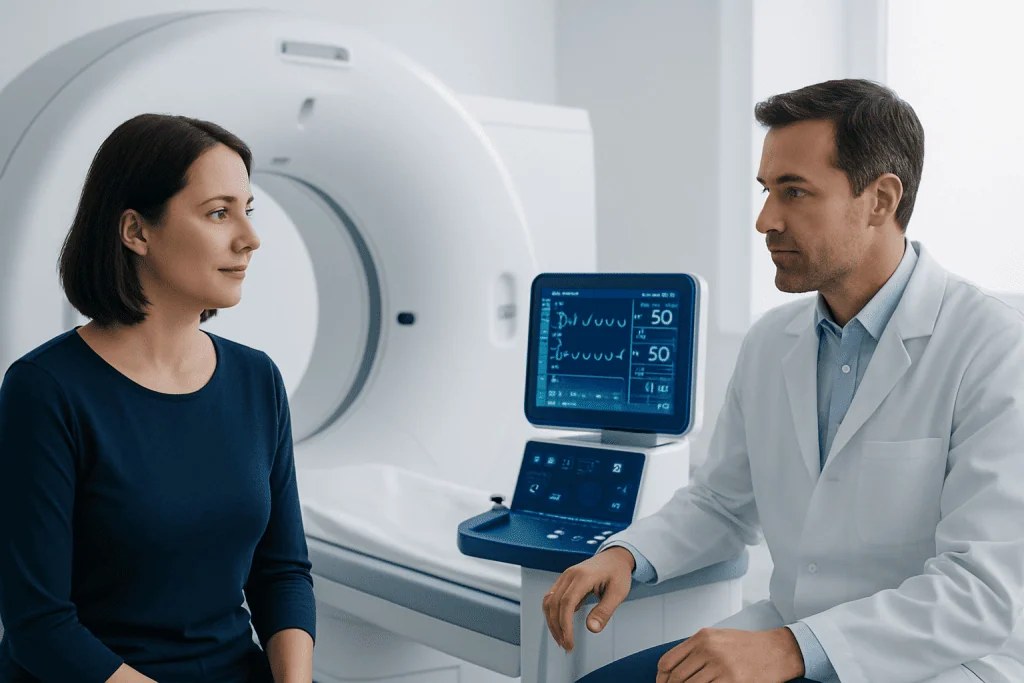
You are more likely to need an in-person evaluation if your treatment depends heavily on physical findings. Orthopaedics, neurology, rehabilitation, ENT, plastic and reconstructive procedures, some dental and maxillofacial cases, and many surgical specialties often require the doctor to assess movement, strength, pain points, swelling, skin condition, airway anatomy or bite alignment directly. A scan shows structure; it does not show how you move, how tissue feels, or how your symptoms present on the day.
Incomplete or hard-to-interpret records are the second common trigger. Scans may be old, taken with a different protocol, missing key views, or unaccompanied by a clear written report. Pathology slides may need re-review. Blood work may be too dated to rely on. In these cases the hospital may ask you to attend so that extra tests can be done under its own standards before anything is scheduled.
The third trigger is safety. If anaesthesia fitness, cardiac status, infection risk, medication interactions or chronic conditions could affect your treatment, the team will usually want pre-procedure testing and specialist review after you arrive, rather than relying on assumptions. Larger hospital systems with multiple specialties on site can coordinate these checks in sequence, which is one reason evaluation visits are often shorter than patients fear.
In practical terms, expect a face-to-face assessment to matter more when:
- Your symptoms have recently changed or worsened since your last reports were written
- Your imaging or lab results are more than a few months old, or were done for a different question
- The treatment decision depends on a hands-on examination rather than documented findings
- You have several medical conditions, or take multiple regular medications
- More than one specialist, for example a surgeon plus an anaesthetist or cardiologist, must agree on the plan
- The proposed procedure has meaningful alternatives, and choosing between them requires examining you
When remote review may be enough at first

Remote review carries more weight when your diagnosis is already well established, your records are recent, complete and clearly reported, and the next step depends mainly on documented findings. In these cases a hospital may be able to give you a fairly detailed preliminary plan, an indicative length of stay, and a quote, all before you travel.
Even then, remote review is rarely the same as final treatment approval. Most hospitals confirm details after you arrive: a physical examination on your first day, selected repeat tests, an anaesthesia consultation before any procedure. Some tests are repeated not because your originals are doubted, but because the treating team needs results produced under its own protocols and timelinesthis guide explains why blood tests and scans are often repeated.
The honest way to think about the online stage is as a planning tool. It answers “is this treatment plausible for me, and roughly what would it involve?” It does not answer “will treatment happen exactly as first described, on the exact dates I want?” That second answer only becomes firm after examination.
If you are unsure which category you fall into, one practical question cuts through most of the ambiguity: “Can this treatment be confirmed from my records alone, or should I expect an examination and tests first?” A clear hospital will answer that directly, and will tell you whether to plan your trip as an evaluation visit, a treatment visit, or both.
What happens during the in-person evaluation
The evaluation itself is usually less dramatic than the anticipation. It typically starts with a document review and consultation: the doctor asks about your symptoms, previous treatments, allergies, medications, and anything that has changed since your records were created. Then comes the physical examination relevant to your condition.
Depending on what the examination shows, the team may arrange blood tests, updated imaging, a cardiac assessment, an anaesthesia review, or consultations with other specialists. For surgical cases, this overlaps with standard pre-operative testing for international patients. Some of these steps happen the same day; others need a day or more, particularly if results must be discussed in a multidisciplinary meeting.
Sometimes the evaluation and the treatment sit close together in the same trip. Sometimes they are deliberately separated, because a test result is pending, because operating room scheduling requires it, or because the team wants time to weigh options. Occasionally the examination changes the recommendation itself: a different technique, a staged approach, or added preparation. That is not a failure of the remote review; it is the reason the in-person step exists. Acibadem explains what happens if your in-person evaluation changes the initial plan, including how revised plans and quotes are communicated.
Logistics matter as much as medicine at this stage. International patient teams can help with appointment sequencing, interpreter support, and airport-hotel-hospital coordination, so that a two- or three-appointment evaluation day does not become a navigation exercise in an unfamiliar city.
How the evaluation relates to costs and quotes
Many patients ask what a consultation, a health check or a full treatment costs in Turkey. No responsible guide can give you a single figure, because there is not one. What can be explained is the structure, which matters more than any number you might read online.
Fees for consultations and check-ups vary by hospital, by specialty, and by what is bundled in: a consultation alone is priced differently from a consultation plus imaging plus laboratory work. Treatment quotes depend on the procedure, the technique, implant or material choices where relevant, expected length of hospital stay, and whether pre-operative testing is included. This is exactly why the in-person evaluation matters commercially as well as medically: a quote issued before examination is an estimate based on your documents, and it can change if the examination reveals something the documents did not show.
Before accepting any figure, ask what it includes, what it excludes, and under what circumstances it would change. There is a separate guide on the questions to ask before accepting a treatment quote in Turkey, and it is worth reading before you compare offers from different providers.
Is Turkey a reasonable place for medical treatment?
Turkey is one of the world’s larger destinations for international patients, with major hospital groups in Istanbul and other cities that treat people from many countries and run dedicated international patient departments. That scale is real, and it brings genuine advantages: broad specialty coverage under one roof, experience with cross-border logistics, and interpreter support as a routine service rather than an exception.
Scale does not replace judgement, though. The sensible approach is the same as anywhere: check that the hospital will review your records before quoting, that a named specialist takes responsibility for your plan, that risks are explained in writing before you commit, and that the plan includes what happens if the evaluation changes things. If a provider is willing to schedule complex treatment without ever examining you, treat that as a warning sign, not a convenience.
Standard travel-safety guidance from your own government also applies to a medical trip exactly as it would to any other trip; the references at the end of this guide point to official advisory pages.
How to plan your trip if an evaluation is required
Plan around uncertainty, not around the most optimistic timeline. Build in time for tests, specialist review, and possible plan changes. Choose flexible flights and accommodation where you can, so a recommendation for one more test does not force a rebooking scramble. The guide on when to arrive before surgery in Turkey covers timing in more detail.
Bring your records in both digital and paper form: imaging files on disc, USB or secure link; written radiology reports; pathology reports if applicable; operative notes from previous procedures; a current medication list with doses; allergy information; and a short summary of your major diagnoses. If your reports are not in English, ask in advance whether translation is needed or whether the hospital can tell you which documents are essential.
Ordinary travel needs still apply: a valid passport, a visa if your nationality requires one, insurance documents if relevant, chargers, comfortable clothing, and contact details for anyone travelling with you. If you are heading to Istanbul or another large city, ask how far your hotel is from the hospital and whether traffic could threaten an early fasting appointment. If someone is coming with you, the guide on bringing a companion to Turkey for treatment covers what to arrange for them too.
Questions to ask before you book anything
Before you confirm flights, pin down the purpose of your first hospital visit. Is it an evaluation only? Could treatment follow in the same trip? What would delay or change the plan? Clear answers here prevent the most common disappointment in medical travel: arriving expecting a procedure and finding the first days are assessment.
Ask which of your existing documents are essential, which tests will likely be repeated in Turkey, and whether you need to arrive fasting for any of them. If you use medical devices, have mobility needs, or take complex regular medications such as blood thinners, mention these early: they can affect scheduling and preparation, and the treating doctor will want to plan around them rather than discover them on the day.
Finally, ask who your main point of contact will be. One coordinator who relays updates, arranges interpreters and explains next steps in plain language makes the whole process considerably calmer, especially on a first treatment trip abroad.
- Is my first appointment an evaluation only, or could treatment follow soon after?
- How many days should I plan to stay before a final decision is made?
- Which of my existing tests are acceptable, and which may need repeating?
- Do I need clearance from anaesthesia or another specialist before the procedure?
- What exactly does the quote include, and what could change it after examination?
- Should I bring a companion, and can they attend consultations with me?
Step by step
- Start with a records review. Share your reports, imaging, pathology, medication list and a short medical history with the hospital you are considering before making any travel plans. This first review determines whether a remote opinion is enough to start planning or whether you should travel for an in-person evaluation first.
- Clarify the goal of your first visit. Ask directly whether your first hospital day is meant to confirm the diagnosis, assess suitability for treatment, or prepare for a procedure. Knowing the purpose tells you whether treatment may happen during the same trip or only after the evaluation results are reviewed.
- Prepare for updated tests. Even recent scans and lab work may be repeated to match the hospital’s standards or reflect your current condition. Plan your time and expectations around the possibility of imaging, blood work or specialist consultations after arrival.
- Book flexible travel where possible. Avoid a very short stay when your treatment depends on in-person confirmation. Flexible flights and accommodation absorb the impact if your evaluation leads to more testing, a revised plan, or a longer stay than expected.
- Keep your documents organised. Carry digital and printed copies of your records, plus passport details, emergency contacts and prior discharge summaries. Good organisation prevents delays and lets the team review your history quickly once you arrive.
- Use patient coordination support. Where available, work with an international patient coordinator to sequence appointments and understand the timeline, including interpreter arrangements and practical travel questions during the evaluation stage.
- Stay open to plan changes. A face-to-face assessment may confirm the original recommendation, refine it, or occasionally lead to a different treatment path. That is part of safe decision-making, not a setback: the goal is the most appropriate plan for you, not the fastest one.
Your checklist
- Recent medical reports and a diagnosis summary
- Imaging files and written radiology reports
- Pathology reports, if relevant
- Current medication and allergy list
- Passport, visa documents and travel itinerary
- Written questions for your doctor about timing and next steps
- Comfortable clothing and essentials for hospital visits
- Companion contact details and emergency numbers
Key takeaways
- An in-person evaluation before treatment in Turkey is often needed when a physical exam, updated tests or a safety review must confirm the plan.
- Remote review of records gives a useful preliminary opinion, but it is rarely the final approval for treatment.
- Quotes issued before examination are estimates based on documents; the evaluation is what turns them into a firm plan.
- Build flexibility into your travel dates, because evaluation findings can affect timing and next steps.
- Bring complete, organised records to reduce delays and make your consultation more productive.
- International patient services, interpreters and coordinated scheduling make the evaluation stage easier to manage.
Frequently asked questions
Can I be accepted for treatment in Turkey without being seen in person first?
Sometimes, but usually only at a preliminary level. A remote review of your records may indicate that treatment is possible and outline a likely plan, while the final decision is confirmed after examination, updated tests or specialist clearance once you arrive.
How do I know if I need an in-person evaluation before treatment in Turkey?
You are more likely to need one if your condition requires a hands-on examination, your records are outdated or incomplete, or your overall health could affect anaesthesia or procedure safety. The most reliable way to find out is to have your records reviewed first and ask whether they are sufficient for treatment planning.
Is Turkey good for medical treatment?
Turkey has large hospital groups with broad specialty coverage and long experience with international patients, which is why many people travel there for care. As with any destination, quality depends on the specific hospital and team, so check how they review records, who takes responsibility for your plan, and how risks and plan changes are explained before you commit.
How much does a doctor’s consultation or full health check cost in Turkey?
There is no single figure. Fees vary by hospital, specialty and what is included: a consultation alone is priced differently from a consultation bundled with imaging and laboratory work. Ask for a written breakdown of what any quoted amount covers and what would be charged separately.
Will I have treatment on the same trip as my evaluation?
Possibly, but not always. Some patients are evaluated and treated within the same stay, while others need extra testing, more than one specialist opinion, or additional planning time before the final schedule is confirmed. Ask before booking flights so your stay matches the realistic timeline.
What if my scans or tests from home are very recent?
Recent tests often help and can reduce duplication, but they may still be repeated if the format, quality, protocol or timing does not match what the treating team needs. This is usually about accurate planning and safety standards, not a suggestion that your originals were wrong.
Should I travel with a companion for the evaluation?
It is often sensible, especially if you expect several appointments, possible treatment in the same trip, or language support needs outside the hospital. A companion can also help you remember what was said and manage practical arrangements while you focus on the medical side.
Does needing an in-person evaluation mean my case is complicated?
Not necessarily. It usually means the doctor wants to confirm details directly before recommending treatment, which is a normal part of careful planning in many specialties, from orthopaedics to dental and reconstructive work.
Add us as a Preferred Source to see more of our trusted health content across Google Search, AI Overviews and Discover.

Update history
- PublishedAugust 14, 2026
- Medical review approvedSeptember 13, 2026
- Last content updateSeptember 12, 2026
References2
- Medical Tourism: CDC Travelers' Health wwwnc.cdc.gov
- Foreign travel advice: Turkey: GOV.UK gov.uk
More Patient Guides

CyberKnife Radiosurgery in Turkey: Candidacy, Treatment Schedule, and Travel Plans
CyberKnife radiosurgery in Turkey involves eligibility review, several planning steps and short outpatient visits; international patients can arrange care in Istanbul.

Traveling to Turkey for Biopsy Review: What Happens Before Treatment Is Confirmed
Biopsy review in Turkey helps confirm your diagnosis before treatment, using pathology slides, reports and specialist assessment in Istanbul.

Flying to Turkey with Recent Scan Results: How to Organize Reports and Images
Organize recent scan results for travel to Turkey by bringing reports, original image files, dates, and a clear medical summary for your…

Complications During Treatment Abroad: How International Patients in Turkey Can Prepare
Complications during treatment abroad can be managed with planning, clear contacts and follow-up support for international patients in Turkey.