

Traveling to Turkey for Biopsy Review: What Happens Before Treatment Is Confirmed
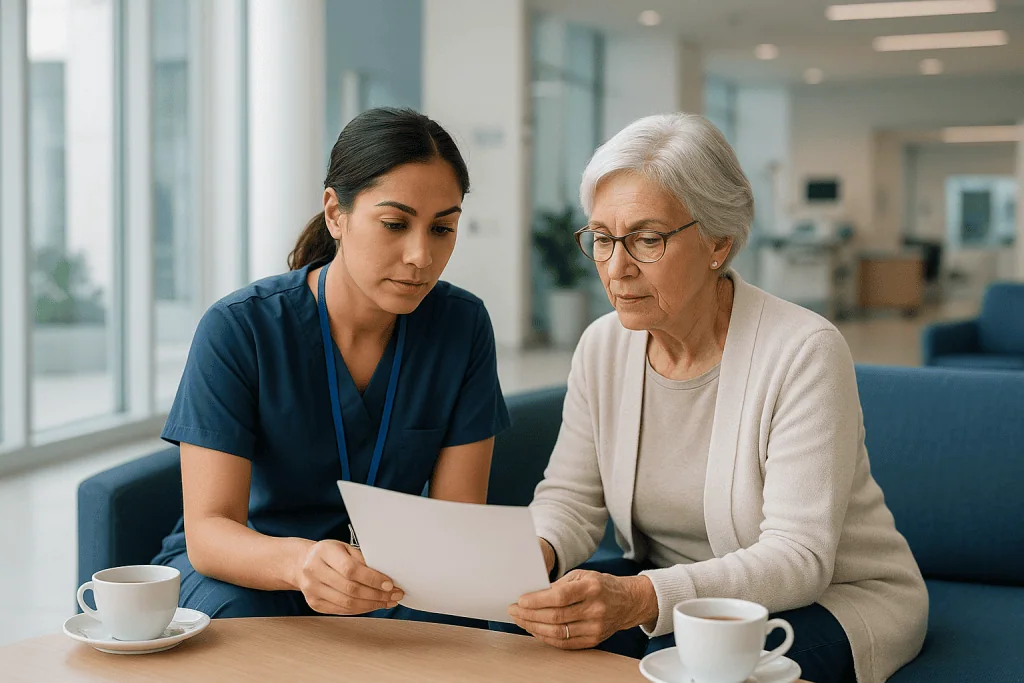
A biopsy review means a pathologist re-examines your original tissue, usually the glass slides or paraffin blocks, not just the written report, before any treatment is confirmed. If you are traveling to Turkey for biopsy review, arrange the release of pathology material and records before fixing flights, keep travel dates flexible, and expect the outcome to be confirmation, further testing, or a request for new tissue.
You have a pathology report, a proposed treatment plan, and a reasonable wish: to have the diagnosis checked once more before anything irreversible begins. That is what a biopsy review is for. It is not a repeat of your biopsy. It is a fresh examination of the tissue you already gave, by a pathologist who has not seen it before. This guide explains what traveling to Turkey for biopsy review actually involves, what to gather, how the review works, and what can happen afterwards, so you can plan the trip around the medicine, not the other way round.
At a glance
- Main purpose: to confirm, refine or question a diagnosis before treatment is chosen
- What the review needs: the pathology report plus original slides, tissue blocks or digital pathology files: the report alone is often not enough
- Timing: depends on the material, whether extra stains or molecular tests are needed, and whether a multidisciplinary discussion follows
- Who may be involved: pathologists, the relevant specialist, radiologists and international patient coordinators
- Travel planning: confirm what material is needed and when it should arrive before booking non-refundable flights
- Possible next steps: a treatment recommendation, further testing, or a request for new tissue
Why a biopsy review may be requested before treatment
A biopsy is a sample of tissue or cells examined under a microscope by a pathologist. It is often the single most influential test in a diagnosis, particularly where cancer is suspected, because treatment decisions rest on what the pathologist reports: the type of disease, its grade, and the markers it carries. Before major treatment begins, surgery, systemic medicines, radiotherapy, a care team may ask for that original material to be reviewed again. You will see this called a pathology second opinion, an expert review, or a biopsy slide review. They mean the same thing.
Traveling to Turkey for biopsy review does not imply that your original diagnosis is wrong or that your first doctors were careless. Pathology is genuinely difficult. Some tumours are hard to classify. Laboratory techniques and marker panels evolve, and a second laboratory may have access to tests the first did not run. A review can confirm the diagnosis exactly as written, sharpen it, a more specific subtype, a revised grade, an additional marker, or occasionally change it. Each of those outcomes matters, because they can shift the balance between surgery, medicines, monitoring or another approach entirely.
There is a second, more practical reason patients arrange a review before treatment abroad: the reviewing hospital will want to base its own recommendation on material it has assessed itself. If you are considering treatment in Turkey, the biopsy review is usually part of how a treatment plan is confirmed before you travel, not a separate errand. Understanding that sequence helps you time everything else, flights, accommodation, leave from work, around the step that actually gates the decision.
If you are weighing a review against simply proceeding with the plan you already have, it may also help to read when to get a second opinion before traveling to Turkey for treatment. The short version: the more consequential and less reversible the proposed treatment, the stronger the case for checking the pathology first.
What records and pathology materials you may need
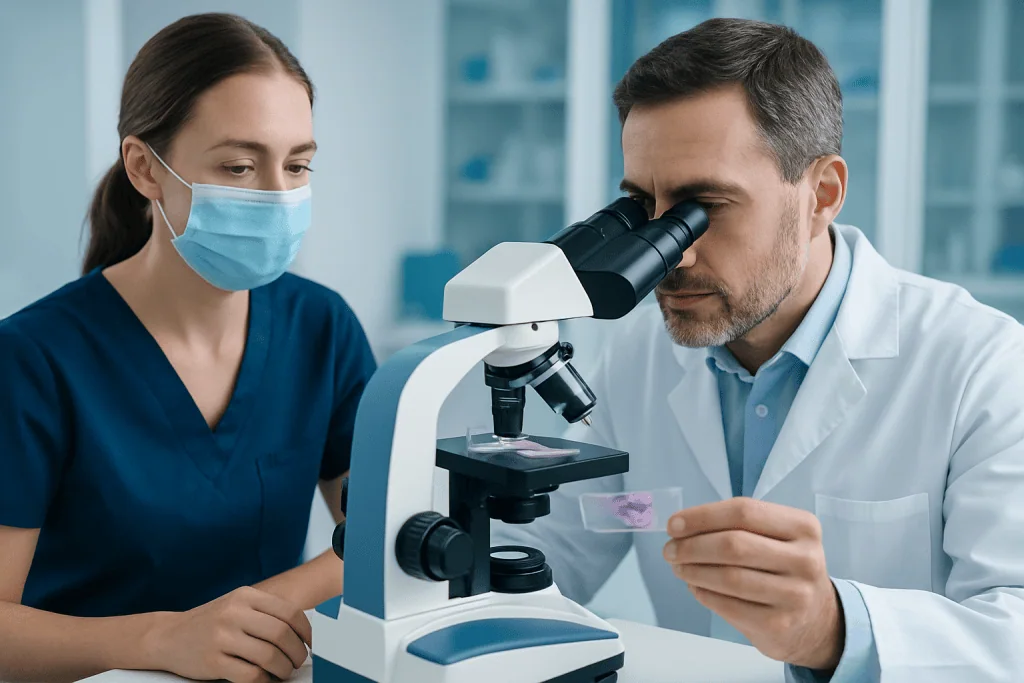
This is where most delays happen, so it deserves your attention early. Your written pathology report is essential, but it is a description of what one pathologist saw: it is not the evidence itself. For a genuine review, the reviewing pathologist usually needs the physical or digital material:
- Glass slidesthe stained sections the original pathologist examined. Laboratories can often cut and stain new slides from stored tissue, so ask what they can release.
- Paraffin tissue blocksthe preserved tissue itself. Blocks matter most when additional stains, immunohistochemistry or molecular tests may be needed, because those tests consume tissue.
- Digital pathology imagessome laboratories scan slides at high resolution. Where available, digital files can sometimes be shared before you travel, which may shorten your time in Turkey.
- Unstained slidesoccasionally requested when the block cannot be released but further testing is anticipated.
Ask the laboratory that performed your biopsy, not just your doctor’s clinic, what it holds, what it will release, and how long its approval process takes. Laboratories have retention and release rules, and some will lend slides but keep blocks. Get the answer in writing, keep copies of all release paperwork, and note the laboratory’s contact details in case the reviewing team needs to request more material later.
The paper trail around the tissue
Alongside the pathology material, assemble a complete clinical file: every pathology report including any amendments, the procedure or operative note from the biopsy itself, imaging reports and the imaging files in their original digital format (DICOM discs or downloads, not phone photos of a screen), recent blood results, clinic letters, and a short summary of your symptoms and previous treatments. Pathology and imaging are read together: a review that has the slides but not the scans is working with half the picture.
If your records are not in English, ask in advance whether certified translations are needed or whether an English medical summary is sufficient; the answer varies with the document. A practical method for putting all of this in order is covered in how to organise your test results before traveling to Turkey.
One caution: do not assume you can simply pick up slides or blocks and carry them like paperwork. They are laboratory materials with chain-of-custody requirements. They need protective packaging, clear labelling that matches your identity documents, and release paperwork from the originating laboratory. Some laboratories will only courier material laboratory-to-laboratory. Confirm the accepted delivery route before anything moves, and never pack irreplaceable pathology material or medical documents in checked baggage.
Planning your journey before treatment is confirmed
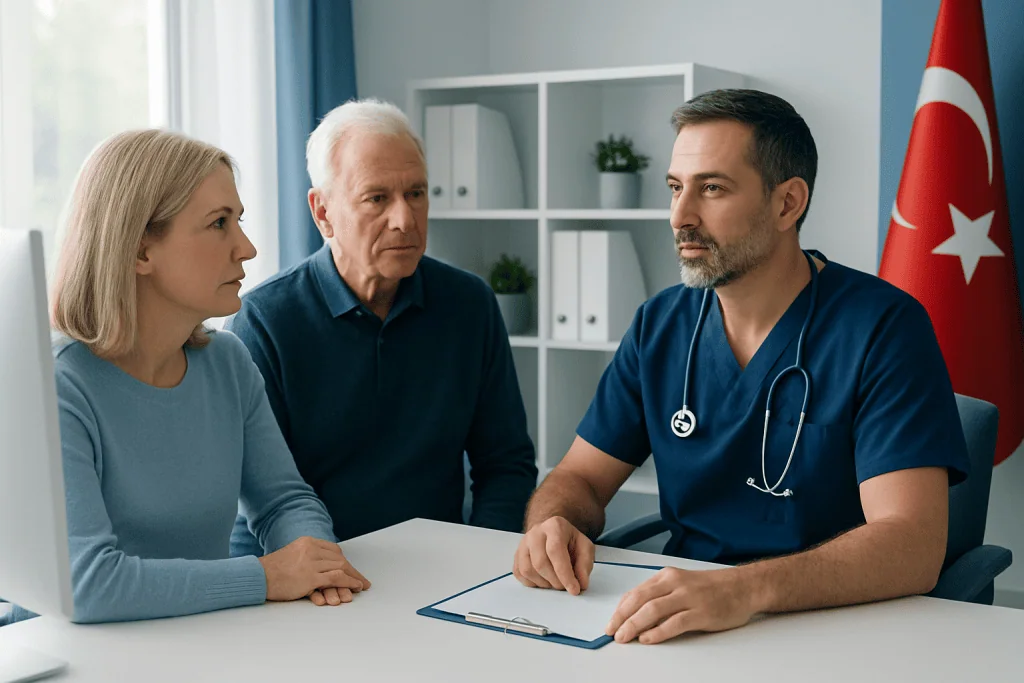
The most common planning mistake when traveling to Turkey for biopsy review is booking fixed, non-refundable travel before the record review has started. The sensible sequence runs the other way. First, reports and imaging are shared and assessed remotely, at Acibadem this preliminary stage is described in how our doctors review medical records before you arrive. That stage identifies which specialists are relevant, whether original slides or blocks are needed, and whether the material should arrive in Turkey before you do. Only then does it make sense to fix dates.
Plan your length of stay around the complexity of the case, not around the cheapest fare. A straightforward consultation and slide review can fit a short visit. But additional stains take days, molecular tests can take longer, and a multidisciplinary discussion happens on the team’s schedule, not yours. Build slack into your itinerary. Choose flexible or refundable bookings where you can, and do not commit to a treatment date, or to time off work, or to arrangements at home, until the findings have been reviewed with you. Anyone travelling with you should plan with the same flexibility.
Istanbul is served by major international airports and has accommodation at every level. Pick somewhere that lets you rest, eat regularly and reach appointments without a stressful commute; you will think more clearly in consultations if the logistics around them are calm. International patient services can assist with interpreter coordination and, where available, guidance on travel and accommodation, availability should be confirmed for your individual visit rather than assumed.
Is it reasonable to travel to Turkey for medical care at all?
Many readers researching a biopsy review are also asking a broader question: is Turkey a sensible destination for medical care? Turkey has a large hospital sector that receives international patients for a wide range of care, commonly surgical specialties, oncology, orthopaedics, ophthalmology, dentistry and cardiovascular medicine, alongside diagnostics such as pathology review and imaging. Whether it is a good idea for you depends on the same factors it would anywhere: whether the hospital has genuine experience in your condition, whether your records can be properly assessed before you commit, whether follow-up after you return home is planned, and whether you have time to make the decision without pressure. A diagnostic visit like a biopsy review is, in that sense, a lower-stakes way to answer those questions than flying out for immediate treatment: you meet the team, see how your case is handled, and decide on treatment only once the diagnosis is settled. General guidance on medical travel, vaccinations, insurance, documentation, is published by public health bodies and is worth reading before any medical trip abroad.
What happens after you arrive for your biopsy review
Your visit typically begins with registration, identity and document checks, and a consultation with the relevant specialist. Expect detailed questions: your symptoms and how they developed, previous treatments and surgeries, family history, allergies, and every medicine and supplement you take. Bring this as a written list, especially if you have received care in more than one country, memory under stress is unreliable, and gaps in the history slow the review down.
Behind the consultation, the pathology team examines the submitted slides or blocks alongside the original report and your clinical information. A radiologist may re-read your scans, because pathology and imaging findings are interpreted together: a finding under the microscope often only makes full sense in the context of what the imaging shows. In some cases the existing material answers every question. In others, the team recommends additional stains or molecular tests on the block, or concludes that the sample is not sufficient and asks whether more tissue can be obtained, if a new biopsy is proposed, how to prepare for a biopsy in Turkey explains what that procedure involves.
For relevant cases, the findings may be taken to a multidisciplinary team: specialists from different fields, typically the treating specialty, pathology, radiology and others as needed, discussing the case together before a recommendation is made. This takes a little longer than a single doctor’s opinion. That is the point. The discussion exists to produce a coordinated plan, not to rush you into a decision.
Understanding possible outcomes of the review
There are broadly four outcomes, and it helps to know them in advance so none of them feels like a failure of the trip.
- Confirmation. The review agrees with the original diagnosis and supports a plan similar to the one already proposed. This is a valuable result: you proceed with more confidence.
- Refinement. The diagnosis is confirmed but sharpened: a more specific subtype, an adjusted grade, or a marker result that opens or closes particular treatment options.
- A request for more information. The sample is limited, degraded, or insufficient for the tests now needed. The team may ask the original laboratory for more material, recommend a new biopsy, repeat an imaging study, or wait for a specialist laboratory result. Frustrating, but treatment decisions are better made on reliable information than on schedule.
- A different interpretation. The reviewing pathologist reads the tissue differently. This does not automatically mean an earlier doctor made a mistake, some conditions sit on genuine classification boundaries, and testing methods evolve. What matters is whether the difference changes the recommended management.
Whatever the outcome, ask the same four questions: What is now confirmed? What remains uncertain? Would further testing change the management? And what is the realistic timeline for the next decision? A good team will answer all four plainly. Understanding how those answers translate into a written proposal is covered in understanding your treatment plan before traveling to Turkey.
How to prepare for consultations and make decisions calmly
Bring a companion if you can. Complex information lands better with two sets of ears, and a companion can take notes while you concentrate on the conversation. If you are traveling alone, ask in advance whether an interpreter can be arranged in your preferred language, so you can follow the discussion rather than the translation.
Before the appointment, write down your priorities, not just your questions. Priorities might include confirming the diagnosis beyond doubt, preserving fertility or a particular function, understanding recovery time, keeping ongoing care close to home, or knowing whether treatment can safely wait for further tests. When the doctor knows what matters to you, the discussion of options becomes concrete instead of generic. Unless your clinical team tells you a decision is urgent, you do not need to decide anything in the room.
Before leaving Turkey, secure three things in writing: a summary of the findings and recommended next steps (useful for your home doctor, your insurer and any later consultation), clarity on who will contact you about any pending results and through which channel, and confirmation of how your records will be shared securely. Ask whether follow-up can happen remotely after you return home. A review trip that ends without a written summary and a named follow-up route is unfinished.
Step by step
- Share your initial information. Once you decide to seek a review, provide the available pathology report, a medical summary and recent imaging reports for preliminary assessment. This identifies the likely specialists involved and whether original slides or tissue blocks will be required.
- Request pathology materials from your local laboratory. Ask the laboratory that performed your biopsy about the release of slides, blocks and any digital images. Allow time for its internal approval process and keep copies of all release documents.
- Confirm the review and appointment plan. Establish how the material should be delivered, whether it must arrive before your consultation, and which appointments are planned. Keep travel bookings flexible in case additional testing or a multidisciplinary review extends the timeline.
- Travel with an organised medical file. Carry reports, imaging files, medication lists and contact details for your doctors and laboratory in hand luggage. Never put irreplaceable medical documents or pathology material in checked baggage.
- Attend the specialist and pathology discussions. The clinical team reviews your history, tissue and imaging together. Use the appointment to ask what is confirmed, what remains uncertain and what further tests, if any, are recommended.
- Receive the recommendation and a written summary. Once findings are available, the doctor explains the proposed next steps and the reasoning. The advice may be to begin treatment, undergo further testing, obtain more tissue, or arrange follow-up with your local team.
- Plan follow-up before you leave. Confirm how pending results will reach you, how records will be shared with your doctor at home, and whether a remote consultation is appropriate for the next stage.
Your checklist
- Current pathology report and any amended reports
- Original biopsy slides, tissue blocks or digital pathology files, if requested
- Written release paperwork from your original laboratory
- Imaging reports and original scan files in digital format
- Medical history summary, including previous treatments and surgeries
- List of medicines, allergies and supplements
- Passport, visa documents and travel insurance information
- Contact details for your home doctor and pathology laboratory
- Your written priorities and questions for the consultation
Key takeaways
- A biopsy review re-examines your original tissue to confirm or refine a diagnosis before treatment is chosen.
- The written report is rarely enough on its own, slides, blocks or digital pathology files are usually needed.
- Arrange record assessment and sample logistics before fixing travel dates, and keep bookings flexible.
- Additional stains, molecular tests or a multidisciplinary discussion can extend the timeline, plan for that, not against it.
- Leave with a written summary, a named follow-up route and clarity on who reports any pending results.
Frequently asked questions
Is it a good idea to travel to Turkey for medical reasons?
It depends on your condition, the hospital’s experience with it, and how well the trip is planned. Turkey has a large, established hospital sector that treats international patients across many specialties. The sensible test is not the destination but the process: whether your records are properly reviewed before you commit, whether the diagnosis is confirmed before treatment starts, and whether follow-up after you return home is arranged. A biopsy review is a reasonable first step precisely because it settles the diagnosis before any treatment decision.
Is Turkey safe to travel to for surgery or diagnostics?
Standards vary between providers in every country, so safety is assessed hospital by hospital, not country by country. Look for institutions that review your full records before proposing anything, explain uncertainty honestly, use multidisciplinary discussion for complex cases and put recommendations in writing. Public health bodies such as the CDC publish general medical-tourism guidance, travel insurance, vaccinations, documentation, that applies to any medical trip abroad, including a diagnostic visit.
What treatments do people travel to Turkey for?
International patients commonly travel to Turkey for surgical specialties, oncology, orthopaedics, ophthalmology, dentistry and cardiovascular care, as well as diagnostics such as pathology second opinions, imaging and endoscopy. Whatever the field, the same principle applies: the diagnosis should be confirmed, often through a biopsy or records review, before a treatment plan is finalised.
Do I need to travel to Turkey for a biopsy review, or can it happen remotely?
Not always. Written reports, imaging and sometimes digital pathology files can be reviewed before travel, and slides or blocks can often be couriered laboratory-to-laboratory. A remote discussion may then be possible, depending on your case and local regulations. However, an in-person consultation, imaging review or further testing may still be recommended before treatment can be confirmed, so many patients combine the review with a planned visit.
Can I bring biopsy slides or tissue blocks on the plane?
Sometimes, but only with the right paperwork. It depends on the material, your laboratory’s release rules and the receiving hospital’s instructions. Do not collect or transport samples until packaging, labelling, documentation and the delivery route have been confirmed in advance. Carry pathology materials and their release paperwork in hand luggage, never in checked baggage.
How long does a pathology second opinion take?
It varies with the diagnosis, the quality and quantity of the material, and whether additional stains or molecular tests are needed. A straightforward slide review is faster than a case requiring new laboratory work or a multidisciplinary discussion. A realistic estimate is only possible once the records and samples have been assessed, which is one more reason to keep travel plans flexible.
What if the review differs from my original pathology report?
Ask the specialist to explain the difference plainly and, most importantly, whether it changes the recommended management. Differences can arise from specialist expertise, additional tests, new clinical information or the genuine complexity of the condition: they do not automatically mean anyone made a mistake. Request copies of both reports so you can discuss them with your doctor at home.
Add us as a Preferred Source to see more of our trusted health content across Google Search, AI Overviews and Discover.

Update history
- PublishedAugust 22, 2026
- Medical review approvedSeptember 13, 2026
- Last content updateSeptember 12, 2026
References3
More Patient Guides
CyberKnife Radiosurgery in Turkey: Candidacy, Treatment Schedule, and Travel Plans
CyberKnife radiosurgery in Turkey involves eligibility review, several planning steps and short outpatient visits; international patients can arrange care in Istanbul.

Flying to Turkey with Recent Scan Results: How to Organize Reports and Images
Organize recent scan results for travel to Turkey by bringing reports, original image files, dates, and a clear medical summary for your…

Complications During Treatment Abroad: How International Patients in Turkey Can Prepare
Complications during treatment abroad can be managed with planning, clear contacts and follow-up support for international patients in Turkey.
At Acibadem, How to Send Medical Records Securely from Abroad
Send medical records securely from abroad by using encrypted portals, clear file names, and identity checks before sharing with Acibadem in Turkey.