

Chemotherapy Before or After Breast Cancer Surgery? How Oncologists Choose the Order
Key Takeaways
- Pooled data from ten randomized trials found no difference in survival or distant recurrence whether chemotherapy came before or after breast cancer surgery.
- In those trials, chemotherapy first raised the rate of breast-conserving surgery from about 49 to 65 percent, with a higher 15-year local recurrence rate of 21.4 versus 15.9 percent.
- HER2-positive and triple-negative cancers are the subtypes most often treated before surgery because their response to drugs guides what is given afterward.
- Small hormone-receptor-positive, HER2-negative cancers are often operated on first because the pathology report may show chemotherapy is not needed at all.
- A marker clip is placed in the tumor before neoadjuvant chemotherapy so the surgeon can find the tumor bed even if the cancer is no longer visible.
- A tumor that vanishes on imaging still requires surgery outside clinical trials, because scans cannot detect microscopic residual cancer.
Chemotherapy can be given before breast cancer surgery (neoadjuvant) or after it (adjuvant), and pooled data from randomized trials show the order does not change long-term survival. Oncologists usually recommend chemotherapy first for larger, node-positive, HER2-positive or triple-negative cancers, where shrinking the tumor can allow a smaller operation and reveals how the cancer responds. Surgery first is common when chemotherapy may not be needed at all.
She has two appointments on her phone and they are in the wrong order. The surgeon she met on Tuesday talked about operating in a few weeks. The oncologist she met on Friday wants to start chemotherapy first and operate months from now. Both were confident. Both were kind. Neither, it seemed to her, had talked to the other, though in fact they had, at length, in a meeting she was not in.
This is the ordinary shape of the chemotherapy before or after breast cancer surgery question. It rarely arrives as a choice laid out on a page. It arrives as two reasonable plans from two specialists, and a person in the middle wondering whether the sequence is a verdict on how serious things are.
It is not. The order is a strategy, and it follows rules that can be learned. This article sets them out, with the trial evidence behind them and the questions that help you hold your own in the room.
Chemotherapy before or after breast cancer surgery: why the order is a decision, not a default
Two people can sit in the same clinic on the same morning with cancers that look alike on a scan and leave with opposite plans. One is booked for surgery within weeks. The other starts chemotherapy first and will not see an operating room for months. Neither plan signals that things are better or worse. The question of chemotherapy before or after breast cancer surgery is answered by biology and logistics, not by urgency alone.
A few definitions help. Neoadjuvant therapy is treatment given before an operation. Adjuvant therapy is treatment given after it. The drugs can be identical; what changes is what each sequence lets the team learn and do. Chemotherapy given first shrinks a tumor while it is still in the body, so the care team can watch, in real time, whether the cancer is responding. Surgery first removes the tumor immediately and produces a full pathology report, the laboratory description of the removed tissue, before any drug decision is made.
For decades the surgery-first route was standard. Neoadjuvant chemotherapy began as a way to make inoperable tumors operable, then widened to smaller cancers as evidence accumulated that the order does not compromise survival. Guideline summaries such as the National Cancer Institute’s now treat the two sequences as options matched to subtype, size and lymph node involvement rather than as a hierarchy.
That framing matters for how you read everything that follows. The order is a tool. The right order is the one that gets you the surgery you need, the drugs you need, and the information your team needs to tailor what comes next.
How neoadjuvant chemotherapy for breast cancer actually works
Chemotherapy drugs damage cells that are dividing quickly. Cancer cells divide faster than most healthy tissue, which is why tumors are hit hardest, though fast-renewing cells in hair follicles, the gut lining and bone marrow, where blood cells are made, are affected too. That is the source of the familiar side effects.
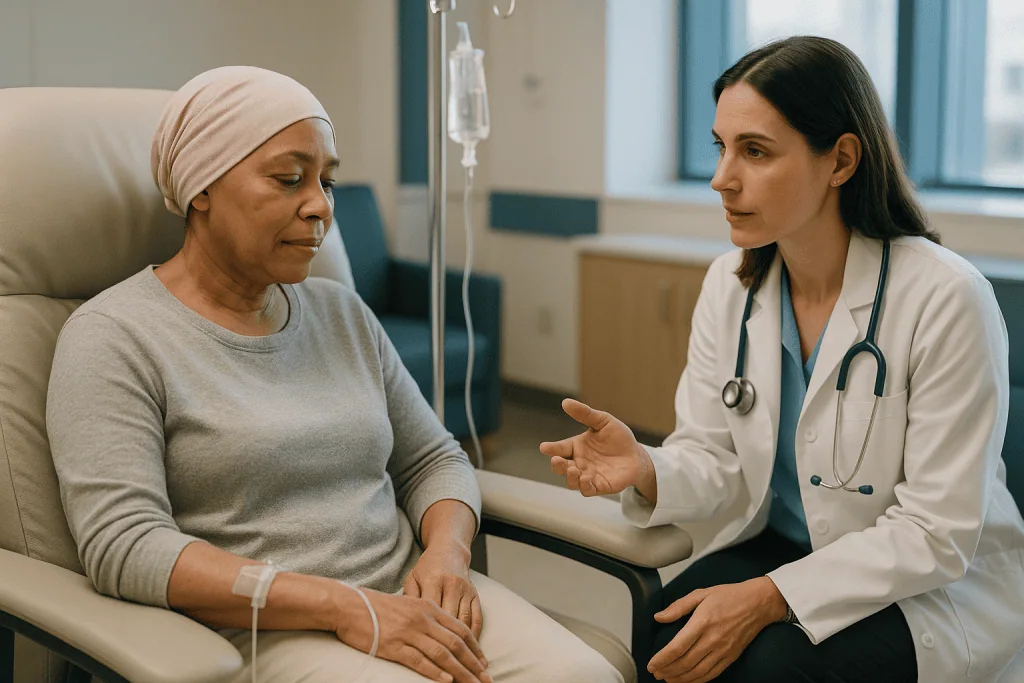
The drugs are given in cycles: a treatment day or days, then a rest period so healthy cells recover. Classes commonly used in breast cancer include anthracyclines and taxanes; for HER2-positive cancers, antibodies that block the HER2 protein are added, and for some triple-negative cancers an immune checkpoint inhibitor, a drug that releases the brakes on the immune system, may be part of the plan. Which drugs, in what sequence, is the oncologist’s call. A full course for breast cancer typically runs three to six months, according to Mayo Clinic.
Before the first cycle, several things happen that people rarely hear about in advance. A radiologist usually places a tiny metal marker clip inside the tumor under imaging guidance. If the cancer shrinks until it is invisible, the clip tells the surgeon where it was. Suspicious lymph nodes may be biopsied and clipped as well. Baseline imaging, usually mammogram and ultrasound and often MRI, records the starting size.
During treatment the tumor is measured by hand and by imaging at set points. A shrinking tumor confirms the drugs are working. One that is stable or growing prompts a change of course, which might mean a different drug class or moving to surgery sooner. That early feedback loop is the single biggest practical advantage of giving chemotherapy first. After the last cycle, repeat imaging maps what remains, and only then is the operation planned.
Is it better to have breast cancer surgery first or chemotherapy? What the trials show
The most useful evidence comes from a pooled analysis of individual patient data from ten randomized trials involving about 4,750 women, published by the Early Breast Cancer Trialists’ Collaborative Group. These trials assigned women to the same chemotherapy either before or after surgery, so the drugs were held constant and only the order differed.
Three findings stand out. First, chemotherapy before surgery made breast-conserving surgery more common: roughly 65 percent of women in the neoadjuvant groups had a lumpectomy rather than a mastectomy, compared with 49 percent in the surgery-first groups. Second, local recurrence, meaning cancer returning in the treated breast or nearby tissue, was higher over 15 years when chemotherapy came first, 21.4 percent versus 15.9 percent. Third, and most important, there was no significant difference in distant recurrence, breast cancer death or death from any cause between the two sequences.
Read together, those numbers describe a trade. Chemotherapy first bought more women a smaller operation, and part of that gain came with a higher chance of local recurrence, likely because surgery and radiotherapy were planned around the shrunken tumor rather than the original one. The authors pointed to careful tumor localization, surgery of the original tumor bed and appropriate radiotherapy as the levers that keep local control strong.
What the trials did not show is any survival penalty for waiting months to operate. That is why oncologists can say with confidence that delaying surgery for chemotherapy does not let the cancer get ahead.
Two cautions. These trials predate modern HER2-targeted drugs and immunotherapy, so they understate what today’s neoadjuvant regimens can do. And they report averages. The subtype sections below explain why your own cancer’s details change the calculation.
Who is usually offered chemo first, and who is usually asked to wait
Guideline summaries from the National Cancer Institute and the NHS describe neoadjuvant chemotherapy as the typical route for cancers that are large relative to the breast, have spread to lymph nodes under the arm, or belong to subtypes where chemotherapy will almost certainly be recommended anyway. Inflammatory breast cancer, an uncommon form in which cancer cells block lymph vessels in the skin, is nearly always treated with chemotherapy first because operating on an inflamed breast is unsafe.
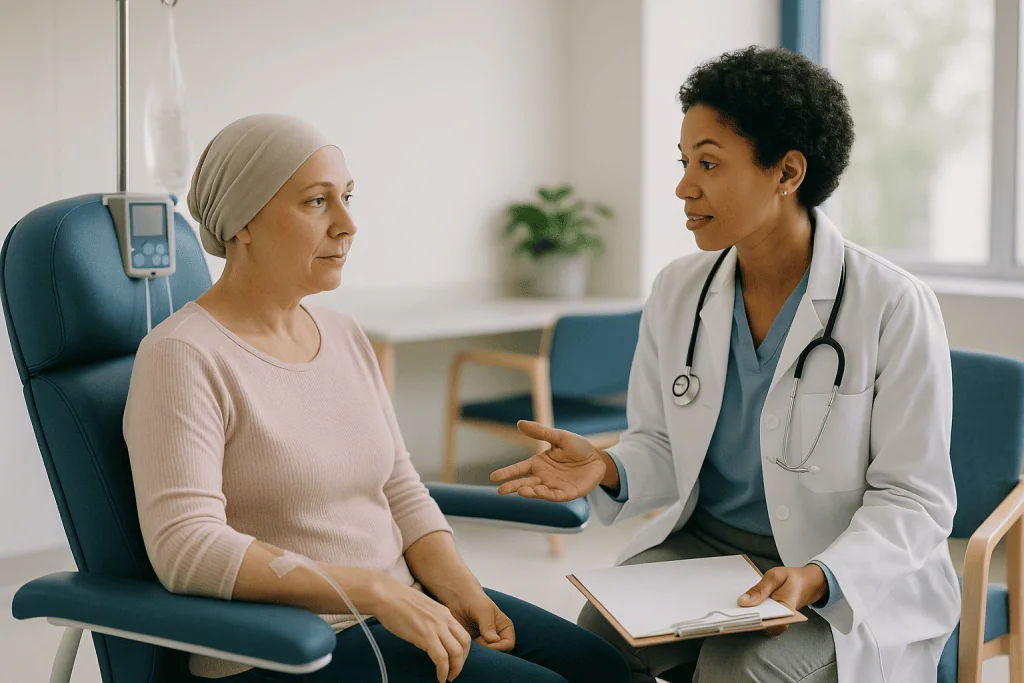
In plain terms, chemotherapy first tends to be favored when:
- the tumor is too big for a lumpectomy but might become small enough;
- a biopsy has already confirmed lymph node involvement;
- the cancer is HER2-positive or triple-negative, where response to drugs guides later treatment;
- the cancer has grown into the skin or chest wall;
- surgery must be delayed for another medical reason and starting treatment now is preferable to waiting.
Surgery first is the usual choice when the main uncertainty is whether chemotherapy is needed at all. For many hormone-receptor-positive, HER2-negative cancers that are small and node-negative on imaging, the chemotherapy decision hinges on the removed tumor’s exact size, node status and sometimes a gene-expression test, a laboratory analysis of the tumor’s genetic activity that estimates how much chemotherapy would add. Those answers come from the pathology report, which only exists after surgery.
Ductal carcinoma in situ, cancer confined to the milk ducts, is treated with surgery and sometimes radiation, not chemotherapy, so order is not a question. People with other conditions that make chemotherapy risky may also be steered to surgery first, with drug decisions revisited later.
None of these rules is absolute. Multidisciplinary tumor boards, where surgeons, oncologists, radiologists and pathologists review a case together, exist precisely because the categories blur.
How tumor biology steers the order: HER2, triple-negative and hormone receptors
Every invasive breast cancer is tested for three features, and together they do more to decide the order than tumor size does.
Hormone receptors are proteins on cancer cells that respond to estrogen or progesterone. Cancers rich in these receptors tend to grow more slowly and respond well to endocrine therapy, drugs that block hormone signaling, but respond less dramatically to chemotherapy. HER2 is a growth-promoting protein; cancers with excess HER2 grow aggressively but are highly sensitive to antibodies that target it. Triple-negative cancer lacks all three markers, grows quickly, and relies on chemotherapy, sometimes with immunotherapy, because there is no hormone or HER2 target to aim at.
HER2-positive and triple-negative cancers are the strongest candidates for treatment before surgery, for two linked reasons. They often shrink substantially under the right drugs, which can convert a planned mastectomy into a lumpectomy. And how completely they shrink carries prognostic weight. The National Cancer Institute’s treatment summary notes that people whose cancer has not disappeared completely after neoadjuvant therapy may be offered additional or different drugs after surgery, an adjustment only possible when chemotherapy went first.
Hormone-receptor-positive, HER2-negative cancer behaves differently. Chemotherapy shrinks it less reliably, and many such cancers do not need chemotherapy at all. Operating first preserves the option of skipping chemotherapy if the pathology is favorable. For some people, particularly those who cannot have surgery soon, endocrine therapy before surgery is used instead of chemotherapy to shrink the tumor over several months.
So when someone asks why a friend with the same cancer had a different order, the honest answer is usually that it was not the same cancer. Subtype, not size on a scan, is doing most of the steering.
What a pathologic complete response means, and what it does not
If chemotherapy goes first, the pathologist examines the removed breast tissue and lymph nodes under the microscope. Finding no invasive cancer cells at all is called a pathologic complete response, often shortened to pCR. It is the result everyone hopes for, and one of the most misunderstood terms in breast oncology.
Here is what it means. On an individual level, pCR is associated with a lower chance of recurrence, especially in HER2-positive and triple-negative disease, according to the National Cancer Institute’s treatment overview. It confirms the drugs matched the cancer, and it simplifies the conversation about what comes next.
Here is what it does not mean. It does not mean surgery was unnecessary. Imaging cannot reliably distinguish a tumor that has vanished from one that has left scattered microscopic cells behind; only the removed tissue can. Clinical trials are testing whether some people with an apparently complete response on imaging and biopsy could safely skip surgery, but that approach remains experimental and is not standard care. Nor does pCR mean the end of treatment: HER2-targeted therapy usually continues after surgery to complete its planned course, radiation may still be recommended based on the original tumor, and endocrine therapy follows for hormone-receptor-positive cancers.
The reverse matters just as much. Not reaching pCR is not failure. Many people with residual cancer do well, and the residual tissue gives the oncologist a target: trials have shown that switching to a different drug class after surgery can benefit people whose cancer did not fully respond. That option is a direct product of treating first and operating second.
Ask your team how they will explain the pathology to you, and what each possible result would change about the plan.
Chemo first or surgery first: a side-by-side comparison
The table condenses the practical differences. It describes patterns, not promises; the figures come from the pooled trial analysis cited at the end of this article and the Mayo Clinic chemotherapy overview.
| Question | Chemotherapy first (neoadjuvant) | Surgery first, then chemotherapy (adjuvant) |
|---|---|---|
| What happens first | Biopsy, receptor testing, marker clip, baseline imaging, then drug cycles | Biopsy, receptor testing, then operation within weeks |
| Time to operating room | Months, after a typical 3–6 month drug course | Weeks |
| Chance of breast-conserving surgery | Higher (about 65% in pooled trials) | Lower (about 49% in pooled trials) |
| Local recurrence over 15 years | Higher (21.4% in pooled trials) | Lower (15.9% in pooled trials) |
| Survival and distant recurrence | No significant difference between sequences in pooled trials | |
| Can the team see whether drugs work? | Yes, by measuring the tumor during treatment | No, the tumor is already removed |
| Full pathology before drug decisions? | No; some decisions rest on the biopsy alone | Yes; chemotherapy may be avoided if pathology is favorable |
| Subtypes where usually favored | HER2-positive, triple-negative, node-positive, inflammatory, large tumors | Small hormone-receptor-positive, HER2-negative cancers; DCIS |
| Reconstruction planning | Months to plan; radiation needs clearer before surgery | Planned alongside the first operation |
Notice what the table does not contain: a winner. The row most people care about, survival, is a tie. The rows that differ concern the size of the operation, the timing, and the information available at each decision point. Those are real differences, and reasonable people weigh them differently, which is why the conversation with your surgeon and oncologist matters more than any grid.
Surgery after neoadjuvant chemo: what the weeks look like
The chemo-first calendar has a rhythm. Cycles are separated by rest periods, and each usually begins with a blood test to confirm the bone marrow has recovered enough to proceed. The course as a whole typically spans three to six months, per Mayo Clinic, though it can be shortened if the plan changes.
Midway through, expect a measurement visit. If imaging shows the tumor shrinking, the plan continues. If not, the team may change drug class or bring surgery forward. Hearing that the regimen is changing can feel alarming, but it is the system working as designed.
After the final cycle comes a pause before surgery, its length set by the team. Blood counts need to normalize so the wound can heal and infection risk falls; repeat imaging defines what remains. The surgeon uses the marker clip to locate the tumor bed. Lymph node surgery is planned at the same time; for people whose nodes were involved at the start, the choice between sampling a few nodes and a fuller dissection depends on how the nodes responded.
Recovery from the operation follows the same arc as any breast surgery, but with less reserve, since months of chemotherapy leave most people more tired than usual. Many describe this stretch as the hardest part emotionally: the drugs are finished, yet the finish line keeps moving.
Once pathology is back, the post-surgery plan takes shape. HER2-targeted therapy resumes to complete its course. Radiation, when recommended, usually starts after surgical healing. Endocrine therapy, for hormone-receptor-positive cancers, typically begins after radiation and continues for years. For people with residual cancer, an additional drug may be introduced.
Keep a written timeline. Appointments multiply at this stage, and a single page showing what comes next is a surprisingly effective anxiety reducer.
Adjuvant chemotherapy after lumpectomy or mastectomy: the surgery-first path
The surgery-first route begins with the operation, usually within weeks of diagnosis, and its first milestone is the pathology report. This document records the tumor’s measured size, its grade (how abnormal the cells look), the margins (whether healthy tissue surrounds the removed cancer), and whether lymph nodes contain cancer. For many hormone-receptor-positive cancers a gene-expression test is run on the tissue at this point.
The oncology visit that follows is where the drug decision is made, and it is the main reason surgery first is chosen: the team is deciding with complete information. For some people the answer is that chemotherapy adds little and endocrine therapy alone is recommended. For others chemotherapy is advised, and it begins once the wound has healed and any drains are out. Waiting for healing does not blunt the drugs’ effect; adjuvant chemotherapy is aimed at microscopic cells that may have escaped, not at a visible mass.
The cycles mirror the neoadjuvant pattern, with the same side effect profile and the same three-to-six month span described by Mayo Clinic. One difference people notice is psychological. With the tumor gone there is nothing to measure, so there is no mid-course moment of seeing it work. Trust in the plan has to come from the evidence rather than from a scan.
Radiation, when needed, usually follows chemotherapy rather than overlapping with it. After a lumpectomy, radiation to the breast is standard for most people, according to the National Cancer Institute. After a mastectomy it is recommended selectively, often based on tumor size and node involvement. Endocrine therapy comes last and continues longest.
If you are on this path and wondering whether you should have had chemotherapy first, the trial data offer reassurance: survival between the two orders was indistinguishable.
Does chemotherapy before surgery affect breast reconstruction?
Reconstruction, the rebuilding of a breast shape after mastectomy, can be done at the time of mastectomy (immediate) or later (delayed), using implants, the body’s own tissue, or both. Chemotherapy sequencing changes the planning conversation more than it changes the options.
Giving chemotherapy first creates time. During those months the surgical team can clarify whether radiation will be needed, which is the single biggest influence on reconstruction choice. Radiation can tighten and scar the tissue around an implant and alter the look of a reconstructed breast, so when radiation is likely many plastic surgeons favor a temporary tissue expander placed at mastectomy with definitive reconstruction later, or a delayed reconstruction with the body’s own tissue after radiation. Knowing the probable radiation plan before the first operation helps avoid redoing work.
Chemotherapy also lowers white blood cell counts and slows healing, which is why surgeons wait for recovery before operating, with or without reconstruction. Once counts have normalized, immediate reconstruction after neoadjuvant chemotherapy is routinely performed. Mayo Clinic’s mastectomy overview describes immediate and delayed reconstruction as options to weigh with the surgical team, and prior chemotherapy does not remove either from the table.
In the surgery-first pathway, a reconstruction placed at mastectomy will be in place during chemotherapy. A wound-healing problem can delay the start of drug treatment, which is one reason some teams prefer a simpler first stage when chemotherapy is expected.
What matters most is that the plastic surgeon is part of the conversation before the first treatment of any kind begins. Reconstruction decisions made after the fact are the ones people most often wish they had asked about earlier. Request the referral early, even if you are unsure whether you want reconstruction at all.
What happens if you don't do radiation after a lumpectomy?
This question belongs beside the chemotherapy order because the two decisions are linked. Shrinking a tumor to allow a lumpectomy only makes sense if the lumpectomy is followed by the treatment that makes it comparable in safety to a mastectomy, and that treatment is radiation.
A lumpectomy removes the tumor with a rim of normal tissue and leaves the rest of the breast. Microscopic cancer cells can remain elsewhere in that breast, which is why radiation to the whole breast is standard after breast-conserving surgery, as both the NHS and the National Cancer Institute describe. Radiation lowers the chance that cancer returns in the same breast; skipping it raises that chance. The pooled neoadjuvant trials found local recurrence already somewhat higher when chemotherapy came first, which makes radiation after a post-chemotherapy lumpectomy more important, not less.
There are exceptions, and they are deliberate. Some older people with small, hormone-receptor-positive, node-negative cancers who will take endocrine therapy may be offered the option of omitting radiation after a discussion of the trade-offs, because in that specific group radiation adds less. That is a shared decision made with a radiation oncologist, not a default.
Radiation does not replace chemotherapy or endocrine therapy. It acts locally, on the breast and sometimes the lymph node regions. Drugs act on the whole body. Each addresses a different risk.
A typical course after lumpectomy is delivered daily over a few weeks, according to the NHS, with schedules that vary by country and by individual factors. If radiation is recommended and you are considering declining it, ask your team to put numbers on your personal recurrence risk with and without it. That is a fair request, and a good team will answer it directly.
What people often get wrong about chemotherapy before or after breast cancer surgery
Chemotherapy first means the cancer is worse. Not necessarily. It often means the subtype responds well to drugs and the team wants to use that response. HER2-positive cancers are routinely treated first not because the outlook is poor but because targeted drugs work so well against them.
Waiting months for surgery lets the cancer spread. Randomized trials comparing identical chemotherapy before and after surgery found no difference in distant recurrence or survival. Chemotherapy treats the whole body, so the cancer is not untreated during the wait.
If the tumor disappears on imaging, surgery can be skipped. Imaging cannot see microscopic residual disease. Outside clinical trials, surgery after neoadjuvant chemotherapy remains standard even when scans look clear.
Surgery first is always the safe choice. It is a sound choice for many cancers, especially small hormone-receptor-positive ones, but it forfeits the chance to watch the cancer respond and to adjust drugs based on residual disease. For some subtypes that information is valuable.
Not being offered chemotherapy means the cancer was caught too late. Usually the opposite. Chemotherapy is omitted when biology and stage suggest it would add little, which is more often true of small, slow-growing, hormone-sensitive tumors.
Chemotherapy before surgery guarantees a lumpectomy. It makes lumpectomy more likely, not certain. Tumor location, multiple tumors in one breast and personal preference still matter, and some people choose mastectomy regardless of response.
A friend’s experience predicts yours. Two breast cancers can share a stage yet differ completely in receptor status, grade and response. The order that was right for someone else may be wrong for you for reasons that are entirely about biology, not about quality of care.
Questions to ask your care team
Good decisions here come from specific questions. These are worth bringing in writing.
- What are my cancer’s subtype, grade and node status, and how does each influence the order you recommend?
- If you recommend chemotherapy first, what do you expect it to change about my surgery?
- If you recommend surgery first, which pathology results would lead you to advise chemotherapy, and which would let me avoid it?
- Will a marker clip be placed before chemotherapy, and will my lymph nodes be biopsied first?
- How will you measure whether the chemotherapy is working, and what happens if it is not?
- Will I still need surgery if the tumor disappears on imaging?
- Is radiation likely either way, and how does that affect my reconstruction options?
- Can I meet a plastic surgeon before anything starts, even if I am undecided about reconstruction?
- How long will the whole sequence take, and in what order?
- Which drugs continue after surgery, and for how long?
- Has my case been reviewed by a multidisciplinary team, and what did the discussion focus on?
- Are clinical trials open to me, and would joining one change the order?
- Which side effects should prompt a call, and whom do I call after hours?
- Is fertility preservation relevant for me, and does the order affect its timing?
Two habits help. Bring someone to take notes, because the volume of information in an oncology visit outruns anyone’s memory. Then ask the team to repeat the plan back as a numbered sequence before you leave. If they hesitate on any step, that is the step to ask more about.
When to call your doctor
Both pathways carry moments when ordinary-sounding symptoms need urgent attention. During chemotherapy the most important is fever. The drugs lower neutrophils, the white blood cells that fight bacteria, and an infection in that state can become dangerous within hours. Your team will give you a temperature threshold and a 24-hour number; treat a reading at or above that threshold as an emergency, even at night, even if you feel reasonably well.
Contact your team the same day for:
- shivering, chills or feeling suddenly unwell, with or without a measured fever;
- vomiting or diarrhea that stops you keeping fluids down for more than a day, or dizziness and very dark urine;
- sudden breathlessness, chest pain or coughing up blood, which can signal a clot in the lung;
- pain, warmth or swelling in one calf or arm, possible signs of a clot;
- mouth sores that prevent eating or drinking;
- unusual bleeding or bruising, or a rash that spreads quickly;
- a breast tumor that seems to be growing during treatment, or new skin changes over it.
After surgery, call for a wound that becomes increasingly red, hot or swollen or leaks pus or cloudy fluid; a fever; a sudden increase in swelling on the operated side; numbness or weakness in the arm; or drain output that abruptly changes in color or volume. Pain not controlled by what you were prescribed also warrants a call.
Seek emergency care immediately, by ambulance if needed, for chest pain, severe breathlessness, fainting, confusion, or any fever during chemotherapy.
One more thing. Persistent low mood, panic or an inability to sleep are medical symptoms too, and oncology teams expect to hear about them. Raise them at any visit.
Frequently asked questions
Is it better to have breast cancer surgery first or chemotherapy?
Neither order is better for survival; pooled analysis of ten randomized trials found no difference in distant recurrence or death between chemotherapy before and after surgery. Chemotherapy first more often allows breast-conserving surgery and shows how the cancer responds, while surgery first gives full pathology before any drug decision. Your subtype, tumor size and node status decide which advantage matters more, and your treating team makes the call.
Chemo first or surgery first: does waiting months for surgery let the cancer spread?
The trial evidence says no. When identical chemotherapy was given before or after surgery, distant recurrence and survival were the same. Chemotherapy is a whole-body treatment, so the cancer is being actively treated during the wait, not ignored. The tumor is also measured during treatment, and if it is not responding the team changes the plan or moves to surgery sooner.
How long does neoadjuvant chemotherapy for breast cancer last before surgery?
A full chemotherapy course for breast cancer typically runs three to six months, according to Mayo Clinic, given in cycles with rest periods between them. The exact length depends on the drug combination your oncologist chooses and on how the tumor responds. Surgery is scheduled after the final cycle, once blood counts have recovered and repeat imaging has mapped what remains.
How soon is surgery after neoadjuvant chemo?
Surgery follows the last chemotherapy cycle after a pause that your team sets, usually measured in weeks. The gap allows blood counts to normalize so the wound heals well and infection risk falls, and it gives time for restaging imaging. Your surgeon and oncologist will agree the date together; it is not fixed by a rule and may shift if counts are slow to recover.
Can chemotherapy before surgery eliminate the need for surgery?
Not as standard care. Even when a tumor disappears on imaging, surgery is still performed because scans cannot detect microscopic residual cancer, and only the removed tissue confirms a pathologic complete response. Clinical trials are testing whether carefully selected people could skip surgery after a complete response on imaging and biopsy, but this remains experimental. Ask your team whether any such trial is open to you.
Does chemotherapy before surgery affect breast reconstruction?
It changes the timing and planning more than the options. The months of chemotherapy give the team time to clarify whether radiation will be needed, which strongly influences implant versus tissue-based reconstruction and immediate versus delayed timing. Surgeons wait for blood counts to recover before operating. Both immediate and delayed reconstruction remain possible after neoadjuvant chemotherapy; meeting a plastic surgeon before treatment starts helps.
What happens if you don't do radiation after a lumpectomy?
The chance of cancer returning in the treated breast rises. Radiation after breast-conserving surgery is standard because microscopic cells can remain elsewhere in the breast, as the NHS and National Cancer Institute describe. Some older people with small, hormone-receptor-positive, node-negative cancers taking endocrine therapy may be offered omission after discussing trade-offs. That is a shared decision with a radiation oncologist, not a default.
How long does it take to recover from breast excision surgery?
Recovery from a lumpectomy is generally shorter than from a mastectomy, and most people resume everyday activities before they feel fully back to normal. Fatigue tends to be greater after months of chemotherapy. Your surgeon will give a timeline for driving, lifting, exercise and returning to work based on the operation you had, whether lymph nodes were removed and whether drains are in place.
What do people say they wish they had known before a mastectomy?
Common themes include how much reconstruction depends on the radiation plan, how numbness across the chest and under the arm can persist, how drains work and how long they stay, and how tiring the weeks after surgery feel when chemotherapy came first. Many also wish they had asked earlier about nipple preservation, scar placement and emotional support. Writing questions down before the pre-operative visit helps.
Is adjuvant chemotherapy after lumpectomy always needed?
No. After a lumpectomy, the decision to recommend chemotherapy rests on the pathology report: tumor size, grade, node status and receptor results, sometimes supplemented by a gene-expression test. Many small hormone-receptor-positive, HER2-negative cancers are treated with radiation and endocrine therapy alone. Your oncologist weighs the expected benefit of chemotherapy against its side effects for your specific cancer and makes an individual recommendation.
This article is for general information only and is not a substitute for professional medical advice. Please consult a qualified doctor about your individual situation.

More from the Blog

Questions to Ask the Transplant Team Before a Bone Marrow Transplant
Before a bone marrow transplant, ask the team which type is planned (your own cells or a donor's) and why it is recommended over…

Surgical Oncology Preparation: Staging Scans, Blood Tests and the Anesthesia Assessment
Preparing for cancer surgery usually means three things happening in parallel: staging scans such as CT, MRI or PET-CT to map where the cancer…
What Neck Cancer Follow-Up Looks Like: Physical Exams, Imaging and Side-Effect Reviews
Follow-up after neck cancer treatment usually combines a hands-on physical exam of the neck, mouth and throat at each visit, a camera check of…
Follow-Up After Cervical Cancer Treatment: Pelvic Exams, Imaging and Recurrence Checks
Cervical cancer follow up after treatment usually combines a review of symptoms, a pelvic exam and, depending on the treatment given, cytology or HPV…
What a Chemotherapy Cycle Looks Like: Treatment Days, Low-Count Days and Recovery
A chemotherapy cycle is one treatment session (or a short run of sessions) followed by a planned rest period, commonly repeating every one to…
Living With Multiple Myeloma: Bone Protection, Kidney Care and Staying Active Safely
People living with multiple myeloma can protect their bones and kidneys through a combination of bone-strengthening medicines chosen by their hematology team, regular dental…