

CoolSculpting After Pregnancy: When It Helps, When It Does Not and Why Timing Matters
Key Takeaways
- Cryolipolysis destroys fat cells with cold and, per Cleveland Clinic, reduces the fat layer in a treated pocket by roughly a fifth to a quarter, not the whole abdomen.
- Around 60 percent of pregnancies involve some separation of the abdominal muscles, according to Cleveland Clinic, and that bulge does not respond to fat freezing.
- Visible change begins at about three weeks and develops over two to three months, so judging results early is unreliable.
- MedlinePlus frames postpartum weight return as a six-to-twelve-month process, which is why clinicians want a stable weight before treating a postpartum area.
- Paradoxical adipose hyperplasia is a rare complication in which treated fat enlarges rather than shrinks and usually needs surgery to correct.
- Evidence on fat freezing during breastfeeding is lacking, so most clinicians advise waiting until nursing has finished and weight has settled.
Cryolipolysis, the fat-freezing treatment sold under the CoolSculpting name, can reduce small, pinchable fat pockets that persist after pregnancy, but it does not tighten loose skin, repair separated abdominal muscles or remove much fat. Most clinicians ask people to wait until the postpartum recovery period is over, weight has stabilized and breastfeeding questions are settled. The treating team decides on suitability.
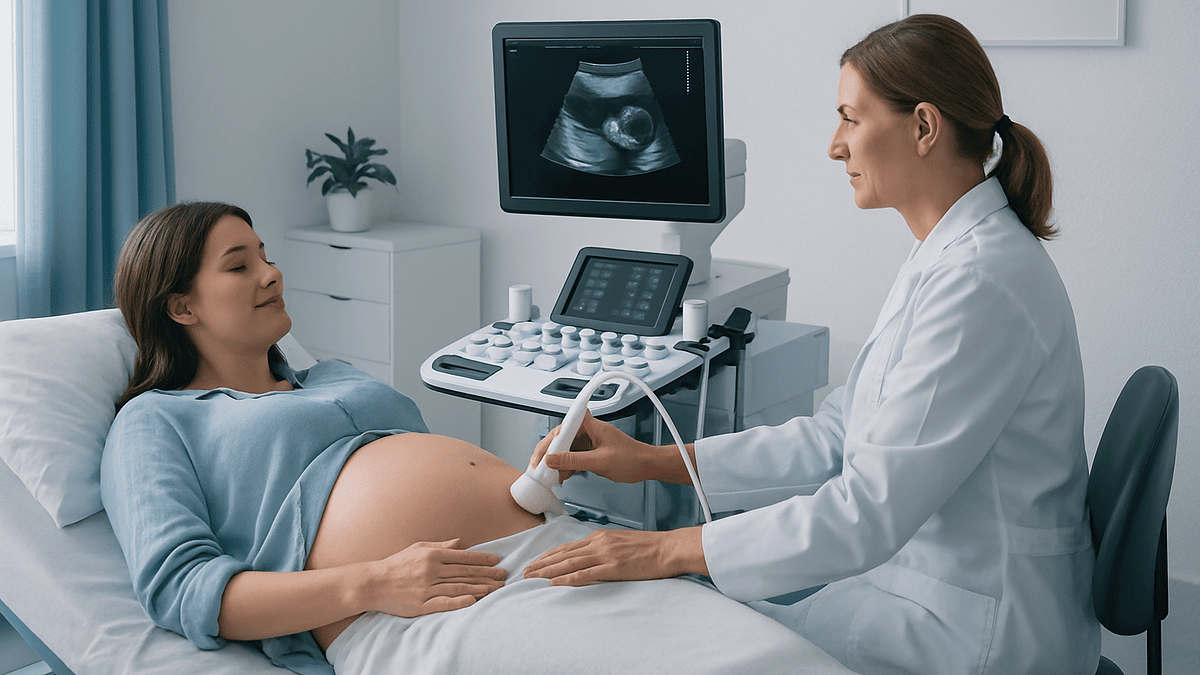
The baby is asleep, the laundry is not, and you are standing sideways in front of the bathroom mirror pressing a hand against a belly that, eight months on, still looks about four months pregnant. You have done the walks. You have eaten the vegetables. A friend mentions fat freezing, and that night you type coolsculpting after pregnancy into your phone at 2 a.m.
You are not alone in that search, and you are not vain for making it. The postpartum body changes in ways that surprise almost everyone, and the marketing around body contouring is loud, confident and light on nuance.
This explainer takes the opposite approach. It walks through what cryolipolysis actually does to fat, what it cannot touch, why the calendar after birth matters more than most advertising admits, and which questions deserve an honest answer from your care team before anyone straps a cold applicator to your abdomen.
Why do so many people search for CoolSculpting after pregnancy?
Two things collide in the first year after birth. The body is still redistributing fat, fluid and muscle tone, and the culture around it expects a quick return to a pre-pregnancy shape. That gap is where the search for a non-surgical fix begins.
Mayo Clinic notes that most people lose roughly 13 pounds during delivery itself, with the remainder coming off gradually over the following months as fluid shifts settle and the uterus shrinks. MedlinePlus advises aiming to return to a healthy weight within about six to twelve months rather than weeks. Yet the abdomen often looks different even when the scale has moved. Skin that stretched over nine months may not snap back, and the two vertical bands of abdominal muscle can remain separated, letting the belly bulge forward regardless of how much fat is underneath.
Fat freezing enters this picture with a tempting promise: no surgery, no anesthesia, back to the school run the same afternoon. The technology is real and has a reasonable evidence base for one narrow job. The problem is that the postpartum belly is rarely one narrow problem. It is usually a mixture of fat, skin laxity, muscle separation and, early on, normal recovery that simply has not finished.
Sorting out which of those is driving what you see in the mirror is the whole game. A treatment aimed at the wrong layer will disappoint, and disappointment after pregnancy carries an emotional weight that a brochure never mentions. So before asking whether the procedure works, it helps to ask what exactly it works on.
How does cryolipolysis, or fat freezing, actually work?
Cryolipolysis is a medical term that simply means destroying fat cells with cold. It relies on a quirk of biology: fat cells are more sensitive to low temperatures than the skin, nerves and blood vessels around them.
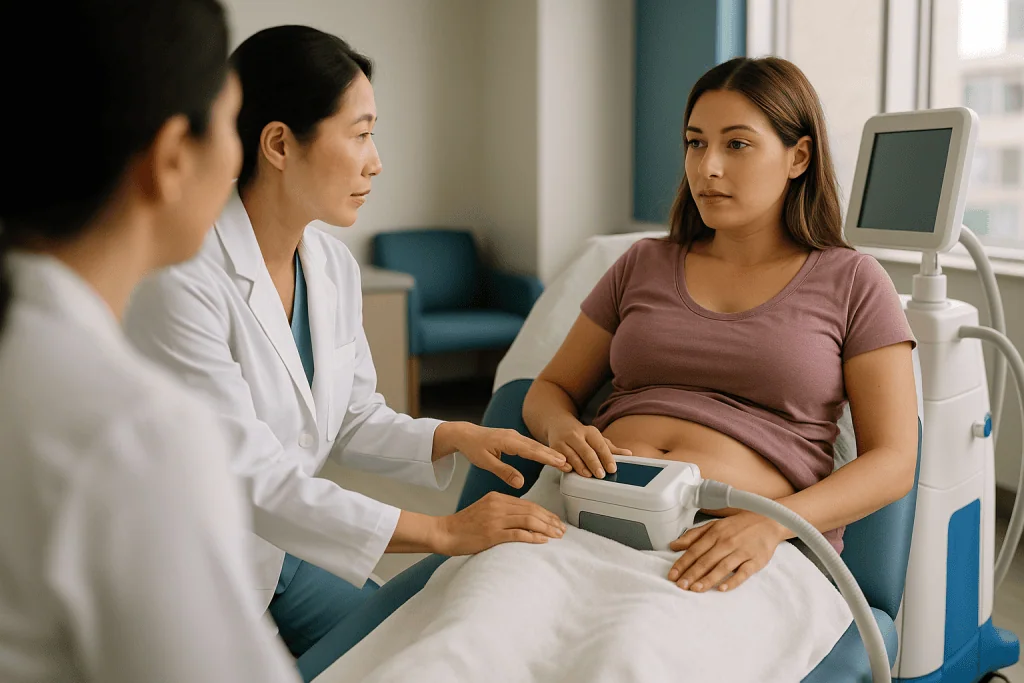
During a session, a clinician places a cup-shaped or flat applicator on a fold of fat. Many devices use gentle suction to draw the tissue into the applicator, then cool it to a controlled temperature for a set period. According to Cleveland Clinic, the cold injures the fat cells without permanently harming the overlying skin. Over the following weeks the body treats those damaged cells as debris; immune cells clear them through the lymphatic system and the liver, and the fat layer in that spot gradually thins.
This is a slow, biological process rather than an instant one. Cleveland Clinic describes changes becoming visible within about three weeks, with fuller results at around two to three months as the clearing process finishes. Some people are offered a second session in the same area if the treating clinician thinks more reduction is realistic.
Notice what is missing from that description. Nothing in the mechanism tightens collagen in the skin, stitches muscle back together or changes where future fat is stored. The device removes a proportion of the fat cells in the treated pocket and leaves everything else as it was. Cleveland Clinic summarizes the typical fat-layer reduction in a treated area as modest, in the range of roughly a fifth to a quarter of the fat in that zone, not a whole-body change.
Understood this way, cryolipolysis is a sculpting tool for a defined bulge. It is not a weight-loss treatment, and after pregnancy that distinction matters more than anywhere else.
What is your body still doing in the first year after birth?
The postpartum period is medically busy even when it feels like nothing is happening. Mayo Clinic describes the uterus shrinking back toward its usual size over about six weeks, accompanied by bleeding and discharge, hormonal shifts, and, for many, breast changes tied to milk production.
Body composition keeps moving well past that six-week mark. Fluid retained during pregnancy drains over the early weeks. Fat stored during pregnancy, a normal reserve for feeding a baby, is mobilized at different rates depending on diet, activity, sleep and whether you are breastfeeding. Mayo Clinic points out that breastfeeding itself uses energy and may help some people lose weight gradually, though the effect varies widely from person to person.
The abdominal wall has its own timeline. NHS guidance explains that the stomach muscles commonly separate during pregnancy to make room for the growing baby and usually return toward their normal position by around eight weeks after birth, though in some people the gap persists. Skin that stretched rapidly may carry stretch marks and reduced elasticity for months, and the final look of the skin often is not clear for a year or more.
Why does this matter for a cold applicator? Because a fat pocket measured at three months may look quite different at nine months without any intervention. Treating a body that is still changing risks freezing fat that would have gone anyway, or targeting fat when the real culprit is muscle. Clinicians who work in this field commonly want to see a stable weight over several months before assessing an area, precisely so they are measuring you rather than a moving target.
Who is usually a candidate for CoolSculpting after pregnancy, and who is asked to wait?
Cryolipolysis was designed for a specific person: someone near a weight that is stable for them, with a discrete, pinchable bulge that resists diet and exercise. After pregnancy that profile still applies, with several extra filters.
People who are commonly considered suitable share a few features. Their postpartum check is complete and their clinician has cleared them for normal activity. Their weight has settled rather than dropping week to week. The area that bothers them is soft fat you can grasp between your fingers, not a firm forward bulge that appears when you sit up. They understand that the goal is a smaller pocket, not a flat stomach.
Others are routinely asked to wait or to consider a different route:
- Anyone still within the early postpartum recovery window, when the body is recovering from birth and, for some, from surgery.
- People whose weight is still changing, whether from breastfeeding, sleep disruption or a return to exercise.
- Those with a noticeable diastasis recti, the medical term for separated abdominal muscles, because the bulge is structural rather than fatty.
- People whose main concern is loose or crepey skin, which cold does not tighten.
- Anyone with a hernia in the area, since suction applicators over a hernia are a safety concern.
- People with cold-sensitivity conditions such as cryoglobulinemia, cold urticaria or paroxysmal cold hemoglobinuria, in which cold exposure itself can trigger illness. Cleveland Clinic lists these as reasons the treatment is not offered.
The person in the best position to sort you into one of these groups is a clinician who examines you in person, ideally one who can assess the abdominal wall and not just the fat on top of it. That assessment, not a questionnaire, is where the decision belongs.
How long after giving birth should you wait for fat freezing?
There is no guideline from a national body that names a precise week. What exists instead is a set of medical milestones that most clinicians want passed before treating a postpartum abdomen, and they add up to a longer wait than many people expect.
The first is the routine postpartum check. Mayo Clinic describes comprehensive postpartum care as occurring within the first several weeks after birth, with a full visit by about twelve weeks, and this is where bleeding, blood pressure, mood, wound healing and pelvic floor concerns are reviewed. Elective cosmetic procedures on the abdomen are not sensible before that conversation has happened.
The second milestone is surgical healing for those who had a cesarean birth. Mayo Clinic notes that recovery from a C-section takes several weeks, with the incision needing time to heal and the abdominal wall regaining strength gradually. Suction and cold over a maturing scar is something a clinician would want to assess directly.
The third is weight stability. MedlinePlus frames postpartum weight return as a six-to-twelve-month process. Treating a bulge while the body is still shedding pregnancy weight means aiming at a target that will move on its own.
The fourth is breastfeeding status, which has its own section below.
Put together, many people find that the earliest reasonable conversation about cryolipolysis lands somewhere between six months and a year after birth, and often later if they are still nursing or still losing weight. This is a common clinical practice pattern rather than a rule, and a treating team may judge an individual case differently in either direction. The point is that patience here is not squeamishness; it is measurement.
Is fat freezing while breastfeeding a good idea?
This is one of the most common questions people ask, and the honest answer is that the evidence is thin, so most clinicians default to caution.
Start with what is known. Cryolipolysis does not involve injected medicines or systemic drugs, so the concern is not about a substance passing into milk. The theoretical worry is different: the treatment triggers an inflammatory clearing process in fat tissue, releasing fat-cell contents into the lymphatic system and bloodstream over weeks. Whether that process has any measurable effect on milk composition has not been studied in a way that would satisfy a guideline committee. Absence of evidence of harm is not the same as evidence of safety, and manufacturers and clinicians generally advise against treatment during pregnancy and often during breastfeeding for that reason.
There is also a practical argument. Mayo Clinic explains that breastfeeding increases energy needs and that many people continue to lose weight gradually while nursing. Fat freezing during that phase means treating a body still in flux, with the risk that the area changes anyway or that a result is obscured by ongoing weight shifts. Treatment of the abdomen or flanks also involves suction and bruising near the body, which can be uncomfortable when you are lifting, carrying and feeding an infant many times a day.
None of this means someone who is nursing can never have the procedure. It means the decision belongs with the treating clinician, ideally in conversation with whoever oversees your postpartum and infant care, and that many people are asked to wait until they have finished breastfeeding and their weight has settled. If a provider brushes the question aside, that is useful information about how carefully they are approaching your case.
Diastasis recti: the postpartum bulge that fat freezing cannot fix
If one idea in this article deserves to be remembered, it is this one. A large share of stubborn postpartum bellies are not fat problems at all.
Diastasis recti is the medical name for a widening of the gap between the two long muscles that run vertically down the front of the abdomen. The connective tissue between them stretches during pregnancy to make room for the baby. Cleveland Clinic reports that around 60 percent of people experience it during or after pregnancy. NHS guidance says the gap usually narrows on its own by about eight weeks after birth, but for some people it stays open, and the result is a soft forward dome that looks like a small pregnancy months or years later.
The tell is how the bulge behaves. Fat tends to sit on the surface and can be pinched. A diastasis bulge often rises up in a ridge when you lift your head from lying down, and you may feel a soft dip between the muscles with your fingertips. Only an examiner can confirm this, but the distinction is critical because a cold applicator on a diastasis does nothing for the muscle gap and may leave the shape unchanged or even more noticeable once overlying fat thins.
What does help? NHS and Cleveland Clinic both describe targeted exercises taught by a physiotherapist who specializes in postpartum recovery, focusing on the deep core muscles rather than sit-ups, which can widen the gap. In persistent, symptomatic cases, surgical repair is an option that a surgeon would discuss.
Asking your clinician to check for diastasis before any body-contouring decision is not overcautious. It is the single most useful thing you can do to avoid paying for the wrong treatment.
Loose skin, stretch marks and what cold does not do
The second most common mismatch between hope and mechanism involves skin. After nine months of stretching, the abdomen may have skin that folds, sags or wrinkles when you bend, along with stretch marks that begin red or purple and fade to silvery lines. NHS guidance notes that stretch marks are extremely common in pregnancy and gradually become less noticeable but rarely disappear entirely.
Cryolipolysis targets fat cells beneath the skin. It does not heat or remodel the collagen and elastin fibers that give skin its firmness, so it cannot tighten laxity. In fact, removing volume from beneath already loose skin can occasionally make the surface look a little emptier, much as a partly deflated balloon shows more wrinkles than a full one. Clinicians assess skin quality for exactly this reason, and someone whose main concern is sagging rather than bulk is usually steered toward other approaches.
Those approaches fall into a few groups. Time and gradual weight stabilization allow skin some natural recovery, and MedlinePlus advises against rapid weight loss after birth partly for this reason. Energy-based skin treatments using radiofrequency or ultrasound heat exist, with evidence that is mixed and generally supports mild improvement at best. For pronounced excess skin, particularly when combined with a persistent muscle gap, surgical removal is the only option that reliably changes the contour, and it carries the recovery, scarring and risk profile of any operation.
A candid assessment sorts your concern into fat, skin, muscle or some combination. Most postpartum abdomens are a combination, which is why single-tool thinking, whatever the tool, so often disappoints. The best conversations start with what you dislike in the mirror and work back to the anatomy, not forward from a device.
Does fat freezing work on a postpartum belly? Options compared
The question people type is whether fat freezing works on a postpartum belly. The accurate answer is that it works on one component of a postpartum belly. The table below sets cryolipolysis beside the other routes people commonly weigh, described in neutral terms so you can see which layer each one addresses.
| Approach | What it targets | What it does not address | Typical timeline, per cited sources |
|---|---|---|---|
| Gradual nutrition and activity changes | Overall body fat, fitness, energy | Localized pockets, muscle gap, skin laxity | MedlinePlus: healthy weight return over about 6–12 months |
| Postpartum physiotherapy | Diastasis recti, pelvic floor, core strength | Fat volume, skin | NHS: muscle gap often improves by about 8 weeks; longer if persistent |
| Cryolipolysis (fat freezing) | Discrete, pinchable fat pocket | Muscle gap, loose skin, overall weight | Cleveland Clinic: changes from about 3 weeks, fuller effect at 2–3 months |
| Surgical abdominoplasty | Excess skin, muscle gap, some fat | General weight; involves scar and recovery | Weeks of recovery; discussed individually by a surgeon |
Two observations follow from the table. First, the non-surgical options each cover a different layer, so combining them in the right order, physiotherapy first, weight stabilization alongside, contouring last if still wanted, makes anatomical sense. Second, surgery is the only single route that addresses all three layers at once, which is why it remains the reference procedure for pronounced postpartum changes even though most people, reasonably, prefer to avoid an operation.
Nothing here ranks one path above another for you. The right sequence depends on what an examination finds, what you want, how you feel about downtime and risk, and what your treating team advises after seeing your abdomen rather than a description of it.
What do the days and weeks after a fat-freezing session usually look like?
Most people are curious about the session itself and then surprised by how long the aftermath quietly runs.
On the day, the treated area is marked, a protective gel pad is applied, and the applicator is fitted. The first minutes bring intense cold and a pulling sensation from the suction that then fades as the tissue numbs. Sessions commonly last under an hour per area, according to Cleveland Clinic, and people read or use their phone. Afterward the clinician removes the applicator and massages the firm, cold block of tissue, which many describe as the most uncomfortable moment.
In the first few days the area is typically red, swollen, bruised and tender, with numbness or tingling that can feel odd when clothes brush the skin. Cleveland Clinic notes these effects usually settle over days to a few weeks. Some people report aching or cramping sensations that come and go in the first week or two. Ordinary activity is generally allowed straight away, which is one reason the treatment appeals to parents of small children, though carrying a baby against a bruised abdomen is not pleasant.
Nothing visible changes for a while. Cleveland Clinic describes results beginning to show at about three weeks and continuing to develop at two to three months as the body clears the damaged fat cells. Photographs taken in good light at the start and at follow-up are the fairest way to judge, because day-to-day mirror checks are unreliable.
Follow-up is where the honest conversation happens: whether the change matches expectations, whether a second session is sensible, and whether anything unexpected has appeared. Keep that appointment even if you feel fine.
What are the risks, including paradoxical adipose hyperplasia?
Cryolipolysis has a favorable safety record compared with surgery, but favorable is not the same as risk-free, and after pregnancy there are specific things to weigh.
Common, short-lived effects include redness, swelling, bruising, tenderness, tingling, numbness and skin sensitivity in the treated zone. Cleveland Clinic lists these as expected and usually resolving within days to weeks. Less often, people report deeper aching or nerve-type pain that lasts longer before fading.
The complication that deserves the most attention is paradoxical adipose hyperplasia, usually shortened to PAH. The phrase means an unexpected enlargement of fat in the treated area rather than a reduction. Weeks to months after a session, the treated zone gradually becomes firmer and larger, sometimes taking on the shape of the applicator. Cleveland Clinic describes it as rare but real, and notes that it does not resolve on its own; correcting it typically requires liposuction or other surgery. Research suggests it may be reported more often in some body areas and in men, though the mechanism is not fully understood. For someone who chose a non-surgical route specifically to avoid an operation, this outcome is worth understanding in full before consenting.
Other risks include frostbite-type skin injury if the protective pad fails, changes in skin color, contour irregularities and, for people with cold-related blood or skin disorders, systemic reactions, which is why those conditions rule the treatment out.
Postpartum-specific considerations are unhealed cesarean scars, undiagnosed hernias behind a bulge and treating an abdomen whose fat is still shifting. A good consultation raises these unprompted. If yours does not, ask.
What people often get wrong about CoolSculpting after pregnancy
Marketing, social media and well-meaning friends have created a set of beliefs about postpartum fat freezing that do not survive contact with the evidence. Here are the most persistent.
It flattens the stomach. It thins a fat pocket. Whether the stomach looks flatter depends on what else is under there. A muscle gap or loose skin will still be visible, sometimes more so.
It is a way to lose the baby weight. Cleveland Clinic is explicit that cryolipolysis is not a weight-loss treatment. The fat removed from one pocket is a small fraction of body fat, and the scale barely moves.
Earlier is better because the fat is fresh. There is no evidence that pregnancy fat responds differently to cold. Earlier is usually worse, because the body is still changing and you may treat fat that would have left on its own.
Results are permanent no matter what. The destroyed cells do not return, but the remaining cells can enlarge with weight gain, and Cleveland Clinic notes that keeping weight stable is what preserves the result.
It is safe in pregnancy or while nursing because it is just cold. Manufacturers exclude pregnancy, and evidence in breastfeeding is lacking, which is why clinicians commonly ask people to wait.
Any bulge is fat. Around 60 percent of pregnancies involve some degree of muscle separation, according to Cleveland Clinic. Many stubborn bellies are structural.
No downtime means no risk. Bruising, numbness and, rarely, paradoxical fat growth are all documented.
The pattern across these myths is a confusion between a targeted sculpting tool and a general body-restoration treatment. Keeping that line clear protects both your expectations and your money.
Hips, face and nipples: the other postpartum changes people ask about
Searches about fat freezing after pregnancy sit alongside a cluster of related questions, and they deserve straight answers because none of them are fat-freezing problems.
Do hips widen after pregnancy? Often, yes, and not mainly because of fat. Pregnancy hormones loosen the ligaments of the pelvis to prepare for birth, and the bony pelvis can sit slightly differently afterward. NHS guidance on the post-pregnancy body notes that joints and ligaments take months to firm up again. Some people find their hips remain a little wider even at their previous weight. That is skeletal and ligament change, and no cold applicator alters it. Fat on the outer thigh or flank is a separate matter and is one area the devices are designed for.
Will my face go back to normal? Facial puffiness in late pregnancy and the early weeks after birth is largely fluid and hormonal. It typically resolves as fluid shifts settle over the postpartum weeks described by Mayo Clinic. Pigmentation changes such as melasma, the medical term for patchy darkening on the cheeks and forehead, fade slowly in many people and persist in some; sun protection helps limit them.
Do dark nipples go away? Darkening of the nipples and areolae is driven by pregnancy hormones acting on pigment cells. NHS notes that skin darkening usually lightens after birth, although the color may not return exactly to what it was, particularly for those with darker skin tones. It is harmless and needs no treatment.
How do I flatten my stomach? Gradual weight stabilization, core and pelvic floor work guided by a physiotherapist, and time cover most of the ground. Contouring, if wanted, comes after those, not instead of them.
Questions to ask your care team before fat freezing after pregnancy
A consultation is an interview in both directions. Arriving with a short list changes the tone and often reveals how carefully a provider thinks about postpartum patients. These are the questions experienced clinicians tend to welcome.
- Have you examined me for diastasis recti and for any hernia in the area you plan to treat, and what did you find?
- How much of what I dislike is fat, how much is skin and how much is muscle, in your judgment?
- Is my weight stable enough to assess this area fairly, and how do you decide that?
- I am breastfeeding, or recently stopped; how does that change your advice, and why?
- I had a cesarean birth; how do you assess the scar and the tissue around it before applying suction?
- What change is realistic for someone with my body, and can you show me outcomes for similar postpartum patients rather than general images?
- What is your experience with paradoxical adipose hyperplasia, how would you recognize it in me, and what would happen next?
- Which medical conditions would make you decline to treat me?
- Who performs the treatment, what is their training, and who is medically responsible if a complication develops?
- What follow-up is included, and at what point would you tell me the treatment has not worked?
- If you were in my position, would you start with physiotherapy, wait longer, or proceed, and why?
Pay attention to how the answers handle uncertainty. A clinician who says the evidence in breastfeeding is limited, or that a bulge is partly muscular and cold will not help that part, is giving you something more valuable than confidence. You can also bring the same questions to the clinician overseeing your postpartum care, who knows your history and has no stake in whether you proceed. Two independent opinions cost you time and little else.
When to call your doctor
Most people who have cryolipolysis experience nothing beyond bruising, numbness and tenderness that fades over days to a few weeks. A short list of signs, though, should prompt a call to the treating team or your usual clinician rather than waiting for the next scheduled visit.
Contact your care team promptly if you notice:
- Severe or worsening pain in the treated area rather than the expected gradual easing, especially pain that disturbs sleep or does not respond to simple comfort measures suggested by your team.
- Skin that becomes blistered, blackened, very pale or breaks down, which can indicate a cold injury.
- Spreading redness, heat, swelling or discharge, or a fever, which may signal infection.
- Numbness that persists well beyond the timeframe your clinician described, or new weakness.
- A treated area that begins to grow firmer or larger over weeks to months instead of smaller, which is how paradoxical adipose hyperplasia usually presents.
- A new lump, or a bulge that appears when you cough or strain, which could suggest a hernia.
Seek urgent care regardless of any cosmetic treatment if you are in the postpartum period and experience heavy vaginal bleeding, chest pain, breathlessness, a swollen painful leg, severe headache with visual changes, a fever with abdominal pain, or thoughts of harming yourself or your baby. Mayo Clinic lists these among the postpartum warning signs that should never wait.
Every judgment about whether you are suitable for treatment, when to have it and what to do if something goes wrong rests with the clinicians who examine you. This article can help you ask better questions; it cannot replace the answers they give in person.
Frequently asked questions
How long after giving birth can you have fat freezing?
There is no official waiting period, but most clinicians want the postpartum check completed, any cesarean scar fully healed, weight stable for several months and breastfeeding questions settled. Taken together, that often means the first sensible conversation is six months to a year after birth, sometimes later. MedlinePlus describes postpartum weight return as a six-to-twelve-month process, and treating before that means aiming at a moving target. Your treating team makes the individual call.
Does fat freezing work on a postpartum belly?
It works on the fat component of a postpartum belly, not the whole picture. Cleveland Clinic describes cryolipolysis as reducing a discrete fat pocket by a modest fraction over two to three months. It does not tighten loose skin or close separated abdominal muscles, which together account for a large share of persistent postpartum bulges. An in-person assessment of which layer is causing the shape you dislike is essential before deciding.
Is fat freezing while breastfeeding safe?
The honest answer is that safety has not been established either way, because studies in breastfeeding people are lacking. The treatment involves no injected medicines, but it triggers a weeks-long inflammatory clearing of fat-cell contents, and its effect on milk has not been examined. Manufacturers exclude pregnancy, and many clinicians ask people to wait until they have finished nursing and their weight has stabilized. Discuss it with your treating clinician.
How can I flatten my stomach after birth?
Most of the change comes from time, gradual weight stabilization and rebuilding the deep core and pelvic floor muscles, ideally with a postpartum physiotherapist. NHS guidance notes separated abdominal muscles often improve by around eight weeks, and specific exercises help when they do not. MedlinePlus advises against crash dieting after birth. Body contouring or surgery are later options for what remains once those foundations are in place.
Can CoolSculpting fix diastasis recti?
No. Diastasis recti is a gap between the two vertical abdominal muscles, and cryolipolysis only affects fat above them. Thinning the fat can even make the ridge more visible. Cleveland Clinic and the NHS describe physiotherapist-guided core exercises as the usual first step, with surgical repair discussed for persistent, symptomatic cases. Ask to be examined for diastasis before any contouring decision.
What is paradoxical adipose hyperplasia after fat freezing?
It is a rare complication in which the treated area gradually becomes larger and firmer over weeks to months instead of smaller, sometimes in the shape of the applicator. Cleveland Clinic notes it does not resolve on its own and usually requires liposuction or other surgery to correct. Any treated area that seems to be growing rather than shrinking should be reported to the treating team promptly.
Do hips widen after pregnancy, and can fat freezing help?
Hips often do sit slightly wider after pregnancy, mainly because hormones loosen the pelvic ligaments and the bones may settle differently, according to NHS guidance on the post-pregnancy body. That change is skeletal and cannot be altered by cold. Fat on the outer thighs or flanks is a separate issue and is one of the areas cryolipolysis devices are designed to treat, subject to the same suitability checks.
Will my face go back to normal after pregnancy?
For most people, yes, largely. Facial puffiness is mostly fluid and hormonal and settles as postpartum fluid shifts resolve over the early weeks described by Mayo Clinic. Pigmentation changes such as melasma fade more slowly and can persist in some people, especially without sun protection. None of this is treated with fat freezing; if changes worry you beyond a few months, ask your clinician.
Do dark nipples go away after pregnancy?
Usually they lighten. Pregnancy hormones stimulate pigment cells, darkening the nipples and areolae, and NHS guidance notes this generally fades after birth, though the color may not return exactly to its previous shade, particularly in darker skin tones. It is harmless, needs no treatment and is unrelated to body contouring decisions.
What is the alternative to fat freezing for a postpartum belly?
It depends on what is causing the shape. For muscle separation, physiotherapy-led core rehabilitation is the usual first step. For overall fat, gradual nutrition and activity changes over six to twelve months, per MedlinePlus. For pronounced loose skin combined with a muscle gap, surgical abdominoplasty is the only route that addresses all layers at once, with the recovery and risks of an operation. Your treating team can help sequence these.
References
- Cleveland Clinic: Diastasis Recti
- NHS: Your post-pregnancy body
- MedlinePlus: Losing weight after pregnancy
This article is for general information only and is not a substitute for professional medical advice. Please consult a qualified doctor about your individual situation.

More from the Blog

How Long Do Fat Grafting Results Last? Graft Take, Volume Settling and Realistic Expectations
Fat grafting results are generally considered long-lasting once the transferred fat has survived, but not all of it does. Published reviews report that roughly…

When a Thigh Lift Needs Revision: Scar Migration, Residual Laxity and Timing of a Redo
A thigh lift revision is a second operation to correct problems left after an earlier thigh lift, most often a scar that has drifted…
When Compression Is No Longer Enough: How Doctors Decide Lymphedema Surgery Is the Next Step
Lymphedema surgery is usually considered only after months of consistent conservative care, including compression, decongestive therapy and skin care, has failed to control swelling,…

Cycling, Running and Tight Clothing After Labiaplasty: A Realistic Return-to-Activity Guide
Exercise after labiaplasty is usually rebuilt in stages: short walks within days, light low-impact activity often from about two weeks, and strenuous exercise, running…

Arm Liposuction Risks: Contour Unevenness, Numbness and Which Signs to Report Early
Arm liposuction risks include contour unevenness (lumps, dents or asymmetry), temporary or occasionally lasting numbness, bruising, fluid collections called seromas, infection and, rarely, blood…

Tumescent Liposuction Recovery: Fluid Drainage in the First Days, Compression and Walking
Tumescent liposuction recovery usually begins with a day or two of pink, watery drainage from the small incisions as leftover anesthetic solution leaves the…