

Core Exercises: The 12 Moves That Actually Build a Stable Middle
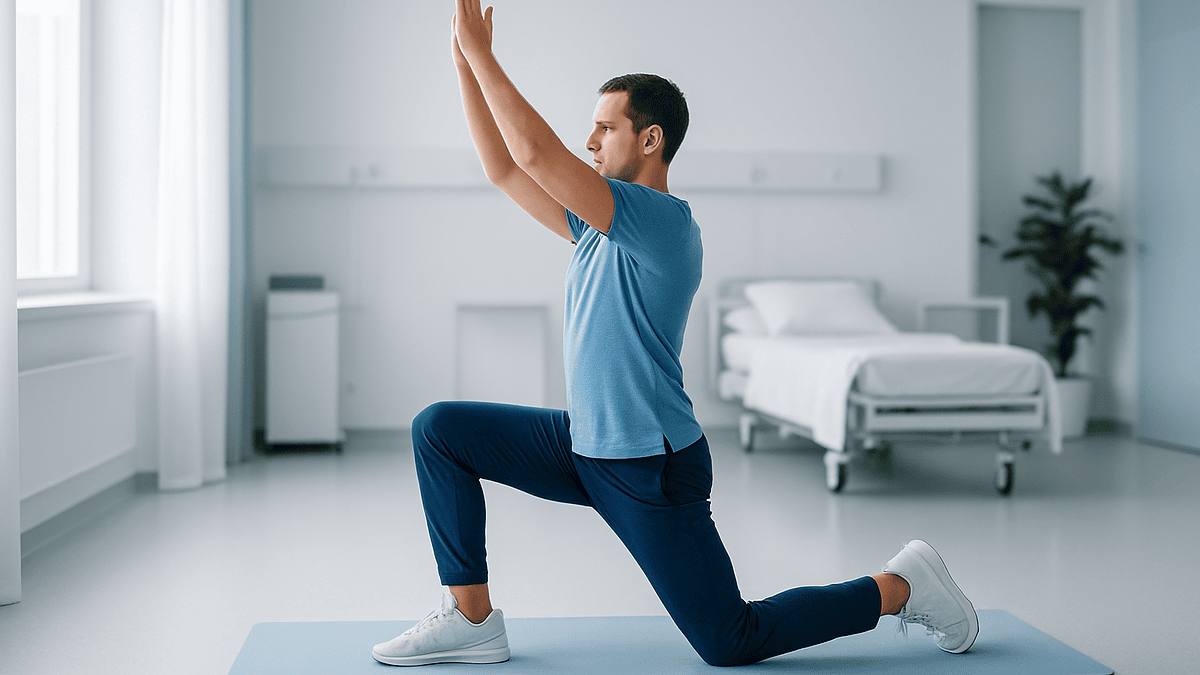
Key Takeaways
- Your core is a pressurized canister of muscle, obliques, transverse abdominis, spinal stabilizers, diaphragm, and pelvic floor, not just the visible six-pack panel.
- The research-backed 'big three' are the modified curl-up, side plank, and bird dog, chosen because they demand high muscle effort while loading the spinal discs lightly.
- Multiple crisp holds of 10 to 30 seconds train trunk endurance better per minute than one long, form-degrading plank marathon.
- The CDC recommends muscle-strengthening work on at least two days a week, and two or three 12-minute core circuits comfortably meet that bar.
- Suitcase carries, walking with a weight in one hand, train the core exactly the way daily life loads it, which most crunch-based routines never do.
- No abdominal exercise burns the fat over the abdominal muscles; spot reduction has repeatedly failed to hold up in research, so train the core for function, not appearance.
Quick Answer
The core exercises with the strongest evidence train your trunk to resist movement rather than create it: planks, side planks, bird dogs, dead bugs, hollow holds, bear holds, modified curl-ups, glute bridges, Pallof presses, loaded carries, slow mountain climbers, and wood chops. Done with controlled form two to three times a week, these moves build the stability that protects your spine during everyday lifting, twisting, and reaching.
Watch someone wrestle a suitcase off an airport carousel. The bag swings wide, their feet stay planted, and for half a second everything depends on the muscles wrapped around their middle. Nobody claps. But that unglamorous moment, trunk braced, spine steady, load moving, is what a strong core actually does for a living.
It’s not what most core content sells. Search the topic and you’ll find lists of 20, 34, even 40 moves, most of them variations on the crunch, most of them promising a visible six-pack. The muscles that keep you upright when a toddler lunges sideways out of your arms deserve better than that.
So here’s a shorter, more honest list. Twelve moves, chosen for what decades of spine and exercise research suggest matters most: not how hard your abs burn, but how well your whole trunk holds its shape under pressure.
What actually counts as your core?
Picture a canister, not a washboard. The rectus abdominis, the muscle behind six-pack ambitions, is only the front panel. Wrapping around your sides are the internal and external obliques, which manage twisting and side-bending. Deeper still sits the transverse abdominis, a corset-like layer that circles your waist and tightens like a weightlifting belt when you brace. Along the spine, the erector spinae and the small multifidus muscles keep each vertebra in line.
The canister has a lid and a floor, too. Your diaphragm caps it from above; the pelvic floor closes it from below. When these muscles contract together, they raise pressure inside the abdomen, and that pressure stiffens the trunk the way air stiffens a tire. Stiffness sounds like a flaw, but in this context it’s the whole point: a rigid trunk transfers force efficiently between your legs and arms, so your spine isn’t bending under loads it wasn’t built to bend under.
The glutes and hip muscles work as close partners. A weak hip on one side forces the trunk to compensate with every step, which is why several moves on this list, bridges, carries, bird dogs, deliberately pull the hips into the conversation. Mayo Clinic’s guidance on core training makes the same point: the target is the linked system of abdomen, back, and pelvis, not one showpiece muscle.
Once you see the core as a pressurized canister rather than a front panel, the exercise choices below start to make obvious sense.
Why crunches alone won’t build a stable middle
Crunches train one thing well: bending the spine forward against light resistance. That’s a real skill, but it’s a small slice of what your core does all day. Most of the time, carrying groceries on one side, reaching overhead, catching your balance on ice, the core’s job is the opposite: resisting motion so the spine stays quiet while the limbs work.
Exercise scientists call these demands anti-extension (not letting the low back sag), anti-rotation (not letting the trunk twist), and anti-lateral-flexion (not folding sideways). A training plan built only on crunches skips all three.
There’s a comfort argument as well. Harvard Health notes that traditional sit-ups can lean heavily on the hip flexors, which attach to the lumbar spine and can tug on the low back when they’re doing more than their share. Spine biomechanics research has also raised questions about high volumes of repeated loaded flexion for people already prone to back discomfort. That doesn’t make every crunch dangerous, a controlled curl-up remains on this list, but it does mean endless sit-up counts are a poor foundation.
One more myth worth retiring: no abdominal exercise burns the fat sitting over the abdominal muscles. Spot reduction doesn’t hold up in research. Core training changes how your middle functions; overall activity, sleep, and eating patterns are what change how it looks. Train for the function, and treat anything visible as a side effect.
What are the ‘big 3’ exercises for the core?
Ask a physical therapist about the “big three” and you’ll usually get the same answer: the modified curl-up, the side plank, and the bird dog. The trio comes from the work of spine biomechanics researcher Stuart McGill, who spent decades measuring which exercises challenge the trunk muscles hard while loading the spinal discs lightly.
That ratio, high muscle demand, low spinal compression, is what makes these three special. Each one covers a different job:
- Modified curl-up: hands tucked under the low back to preserve its natural curve, one knee bent, and only the head and shoulders lift a few inches. The front of the core works hard while the lumbar spine barely moves.
- Side plank: the single best-studied move for the obliques and the deep quadratus lumborum along your side, muscles a forward crunch never seriously touches.
- Bird dog: on hands and knees, opposite arm and leg extend while the trunk refuses to tip or twist. It trains the back extensors and rotational control at the same time.
Notice what’s missing: sit-ups, twisting crunches, toe touches. The big three earned their reputation precisely because they build endurance in the stabilizing muscles without grinding the spine through repeated bending. They anchor this article’s list of twelve, and if you only ever learned three core exercises, these would be a defensible pick.
The 12 core exercises at a glance
Here are the twelve, grouped by the job each one trains. Every move has a gentler version and a harder one, so the same list serves a beginner and someone five years into training. The sections that follow walk through form cues for each group.
| Exercise | Main job | Equipment | Starting level |
|---|---|---|---|
| Front plank | Anti-extension | None | Beginner |
| Dead bug | Anti-extension | None | Beginner |
| Hollow hold | Anti-extension | None | Intermediate |
| Side plank | Anti-lateral-flexion | None | Beginner (from knees) |
| Bird dog | Anti-rotation, back endurance | None | Beginner |
| Pallof press | Anti-rotation | Resistance band | Beginner |
| Modified curl-up | Controlled flexion | None | Beginner |
| Glute bridge | Hip and posterior chain | None | Beginner |
| Bear hold | Whole-trunk stiffness | None | Intermediate |
| Suitcase carry | Anti-lateral-flexion, real-world load | One weight | Beginner |
| Slow mountain climber | Stability with moving limbs | None | Intermediate |
| Wood chop | Controlled rotation | Band or light weight | Intermediate |
A pattern worth noticing: eight of the twelve involve resisting motion, three involve carefully producing it, and only one resembles a classic crunch. That balance mirrors what the core does outside the gym far better than any all-abs circuit.
The anti-extension three: plank, dead bug, hollow hold
These three teach your trunk to hold its shape when gravity or your own limbs try to pull the low back into an arch.
Front plank. Forearms down, elbows under shoulders, body in one line from head to heels. The common failure is a sagging waist or a hiked-up rear, both let the core off the hook. Squeeze the glutes, tuck the ribs slightly, and breathe normally rather than holding your breath. If a full plank is too much, start from the knees; if it’s too easy, lift one foot an inch off the floor.
Dead bug. Lie on your back, arms toward the ceiling, knees bent at 90 degrees over the hips. Lower one arm and the opposite leg toward the floor while your low back stays pressed gently down: that contact is the entire exercise. Move slowly; a set of eight per side done well beats twenty done floppy. This move is especially forgiving for anyone whose back complains during planks, because the floor supports the spine throughout.
Hollow hold. The gymnast’s staple. On your back, press the low spine into the floor, then lift shoulders and legs a few inches, arms reaching past your hips. Keep the legs high and knees bent at first; straightening and lowering them multiplies the difficulty fast. Ten to twenty seconds of a true hollow position is genuinely hard work, which is exactly why gymnasts, arguably the strongest cores in sport, build their training around it.
The anti-rotation three: side plank, bird dog, Pallof press
Life rarely loads you symmetrically. A briefcase, a child on one hip, a dog lunging at a squirrel, most real forces try to twist or side-bend you. These three moves train the refusal.
Side plank. Lie on your side, prop up on your forearm with the elbow under the shoulder, and lift your hips until your body forms a straight line. Beginners can keep the bottom knee down; that alone cuts the load substantially while preserving the pattern. Watch for hips drifting backward or sinking toward the floor: a mirror or phone video catches it instantly. Aim for holds of 10 to 30 seconds per side rather than one heroic marathon.
Bird dog. From hands and knees, extend the opposite arm and leg until they’re level with your torso, pause a breath, and return without letting your hips rock. Imagine balancing a mug of coffee on your low back. Reaching the heel back rather than lifting the leg high keeps the lumbar spine out of an arch.
Pallof press. Anchor a resistance band at chest height, stand sideways to it, hold the band at your sternum with both hands, and press straight out. The band tries to rotate you toward the anchor; your job is to not let it. It looks like nothing and feels like everything. Two or three sets of eight slow presses per side is plenty. Because the load is adjustable by simply stepping closer or farther from the anchor, it scales from rehab settings to serious strength training without changing form.
The strength builders: glute bridge, modified curl-up, bear hold
This trio rounds out the foundation, one move for the back of the body, one controlled nod to the classic crunch, and one that lights up nearly everything at once.
Glute bridge. Lie on your back, knees bent, feet flat and hip-width apart. Drive through the heels and lift your hips until knees, hips, and shoulders line up, no higher, since over-arching shifts work into the low back. Squeeze at the top for two seconds. The glutes are the core’s downstairs neighbors; when they’re weak, the lumbar spine picks up their slack with every step and stair. Progress by holding the top position longer, then by bridging on one leg.
Modified curl-up. The one flexion move that earned its place. Slide both hands under the natural arch of your low back, bend one knee, and lift only your head and shoulders, think inches, not a full sit-up. The hands preserve the lumbar curve while the abdominal wall works isometrically. Hold the top for a slow count of five to ten seconds, breathe, lower, repeat.
Bear hold. Start on hands and knees, tuck the toes, and float the knees one inch off the floor. That single inch converts a resting position into a full-body brace: shoulders, abs, hips, and quads all fire to keep the spine level. Thirty seconds is a legitimate goal. When holds get comfortable, crawl forward and back a few feet without letting your hips sway: the bear crawl, one of the most humbling exercises that requires no equipment at all.
The moving three: carries, slow mountain climbers, wood chops
Static holds build the foundation; these three ask the core to stay stable while something is actually happening, which is how you’ll use it outside the gym.
Suitcase carry. Pick up a single weight, a kettlebell, a dumbbell, or an actual loaded bag, and walk 20 to 40 steps with tall posture, shoulders level. The lopsided load tries to bend you sideways with every stride; the obliques and deep spinal muscles on the opposite side resist. It may be the most honest core exercise ever invented, because it is literally the thing your core evolved to do. Switch sides, walk back, repeat two or three times.
Slow mountain climber. From a high plank, draw one knee toward your chest over a full two-second count, return, and switch. Speed is the enemy here: fast mountain climbers become a cardio bounce, while slow ones force the trunk to stay stone-still as the legs move: the exact skill running, hiking, and stair-climbing demand. Ten controlled reps per side beats forty bouncy ones.
Wood chop. Using a band or a light weight, pull diagonally from low outside one hip to high above the opposite shoulder, rotating through the hips and mid-back while the low back stays relatively quiet. Then reverse, high to low. It’s the one move on this list that trains producing rotation, and it belongs at the end of your learning curve, earn it by mastering the Pallof press first, so you know what a controlled trunk feels like before you start spinning it.
What is the best core workout to do?
The best core workout isn’t a secret sequence: it’s any short circuit that covers the main jobs and gets repeated for months. Here’s a template that does exactly that in about 12 minutes:
- Pick one anti-extension move: plank, dead bug, or hollow hold
- Pick one lateral or anti-rotation move: side plank, Pallof press, or bird dog
- Pick one hip or whole-body move: glute bridge, bear hold, or suitcase carry
- Optional fourth, once the basics are solid: slow mountain climbers or wood chops
Run through the circuit two or three times. For holds, work in the 10-to-30-second range with full effort rather than one long, degrading grind, research on trunk endurance suggests multiple crisp holds train the muscles better per minute than a single sagging marathon. For repetition moves, 8 to 12 slow reps per side is the sweet spot.
Rotate your picks every few weeks so all twelve moves cycle through. Progress by adding a few seconds, a rep, a small load, or a harder variation, never by letting form slide to hit a bigger number.
One honest caveat about “best”: head-to-head studies rarely crown a single superior core routine. What the evidence consistently supports is consistency itself, movement variety, and progressive challenge. A merely good plan done three times a week for six months will beat a perfect plan abandoned in February, every single time.
How often should you train your core?
Two to three focused sessions a week is enough for most people, and conveniently, that lines up with public health guidance. The CDC recommends adults do muscle-strengthening activity involving all major muscle groups on at least two days per week, and the trunk muscles are explicitly on that list alongside legs, chest, and arms.
The core does have one quirk: many of its muscles are built for endurance, packed with fatigue-resistant fibers, because their day job is holding you upright for sixteen hours straight. That means they tolerate somewhat more frequent work than, say, a heavily loaded squat session. Light activation, a few bird dogs and bridges as a morning routine or a warm-up before a run, is fine daily.
What doesn’t hold up is the old “abs every day, as hard as possible” school. Muscles adapt during recovery, not during the workout itself, and the deep stabilizers are no exception. If yesterday’s session left you genuinely sore through the trunk, give it a day. Soreness peaking 24 to 48 hours after a new exercise is normal; pain that is sharp, one-sided, or radiating is not soreness, and it’s covered later in this article.
A realistic weekly picture: two or three 12-minute circuits from the template above, plus the incidental core work hiding inside squats, carries, push-ups, yoga, or a brisk hike. Compound movement counts. Your core doesn’t clock out just because the exercise isn’t named after it.
What are 7 good core exercises for seniors?
Core training matters more with age, not less. Trunk strength contributes to balance, and balance is protective: falls are a leading cause of injury among older adults, which is why the CDC’s activity guidance for people 65 and older adds balance work to the usual aerobic and strengthening recommendations. Here are seven moves that build the core without asking anyone to get down on a hard floor before they’re ready:
- Seated march: sitting tall in a sturdy chair, lift one knee a few inches, lower, alternate: 10 per side. The trunk works to stay upright as the legs move.
- Sit-to-stand: rise from a chair without using hands, sit back down with control. Arguably the most functional exercise in existence.
- Wall plank: hands on a wall, body angled in a straight line, hold 15 to 30 seconds. Same bracing pattern as a floor plank, a fraction of the load.
- Glute bridge: from a bed or mat, lift the hips, squeeze, lower slowly.
- Standing side leg lift: holding a counter, lift one leg out to the side while the trunk stays vertical: the standing cousin of the side plank.
- Bird dog: from hands and knees if comfortable, or standing with hands on a counter, extending one leg back at a time.
- Seated trunk rotation: arms crossed over the chest, rotate gently to each side with a tall spine, 8 per direction.
Two or three rounds, two or three days a week. Anyone with osteoporosis, recent surgery, or an ongoing medical condition should ask their clinician which movements fit their situation, deep forward bending in particular deserves a professional’s input when bone density is low.
The mistakes that quietly undo your core work
Most core training fails in the details, not the exercise selection. Five errors show up constantly:
Holding your breath. Bracing and breathing can coexist, powerlifters manage it under hundreds of pounds. If a plank leaves you gasping the moment you drop, you were pressurizing with breath instead of muscle. Practice steady exhales during every hold.
Letting the hips write checks the core can’t cash. A sagging plank shifts load to the lumbar spine; a piked plank shifts it to the shoulders. Both feel easier because both dodge the actual work. Film a set from the side once a month: the camera is more honest than the mirror.
Craning the neck. In curl-ups and hollow holds, the neck loves to volunteer. Keep a fist’s width of space between chin and chest and let the abdominals do the lifting.
Chasing the burn. A burning sensation reflects muscle fatigue and metabolic byproducts, not effectiveness. A slow Pallof press may never burn at all while training rotational control far better than fifty twisting crunches.
Speed-running reps. Momentum is a subsidy paid by your joints. Dead bugs, mountain climbers, and wood chops earn their value at deliberate tempos, roughly two seconds out, two seconds back. Halving your rep count to double your control is nearly always a good trade.
None of these fixes cost extra time. They just require treating a 12-minute session as skill practice rather than a punishment to survive.
Can core exercises help back pain? Here’s what the evidence shows
This is where honesty matters more than enthusiasm. For chronic, nonspecific low back pain, the common kind with no identified structural cause, exercise is one of the best-supported approaches in the research literature, and core-focused programs reliably help. Harvard Health and Mayo Clinic both point to trunk strengthening as a sensible part of prevention and management.
Here’s the nuance the fitness industry skips: when researchers compare core-specific programs against other forms of general exercise, walking, swimming, whole-body strength training, the core programs usually come out roughly equivalent, not dramatically superior. Movement itself appears to be a large part of the medicine. That’s not a reason to skip core work; it’s a reason to hold it with realistic expectations. A stable trunk plausibly reduces the small daily insults to spinal tissues, and endurance-focused moves like the big three were designed specifically to strengthen without aggravating.
The “weak core causes back pain” story is also less settled than it sounds. Some people with strong trunks hurt; some with modest strength never do. Pain is influenced by sleep, stress, activity history, and factors researchers are still mapping. Anyone promising that planks will fix a back is selling past the evidence.
What you can reasonably expect: better tolerance for daily tasks, improved confidence in movement, and, for many people, less frequent flare-ups over time. Start gentler than you think necessary (dead bugs and bridges before hollow holds), progress slowly, and let symptoms guide the pace. Sharp or worsening pain during an exercise is a stop sign, not a challenge.
When to see a doctor before (or instead of) training your core
Most people can start bodyweight core exercises safely. But some signals mean the smart first move is a clinical appointment, not a plank.
Seek prompt medical care if back or trunk pain comes with any of the following: pain radiating down a leg past the knee; numbness, tingling, or weakness in a leg or foot; new problems with bladder or bowel control; numbness in the groin or inner thighs; unexplained fever or weight loss alongside the pain; or pain that began after a fall, accident, or other significant trauma. The bladder, bowel, and groin symptoms in particular can signal pressure on spinal nerves that needs urgent evaluation: the NHS and Mayo Clinic both flag these as reasons not to wait.
A non-urgent but real conversation with your clinician is also worth having if you’re pregnant or recently postpartum (especially if you notice a visible bulge or doming along the midline of your abdomen during exertion, which can indicate diastasis recti); if you’ve had abdominal or spinal surgery; if you have a hernia, osteoporosis, or uncontrolled blood pressure; or if back pain has lingered beyond a few weeks despite sensible self-care. A physical therapist can tailor the twelve moves in this article to almost any of those situations, usually by changing angles and loads, rarely by eliminating exercise altogether.
One more flag that has nothing to do with the spine: chest pain, unusual breathlessness, or dizziness during any exercise warrants stopping immediately and contacting a medical professional. Core work is low-risk, but no workout is worth ignoring those signals for.
Frequently asked questions
What are the five best core exercises?
A strong five-move shortlist: front plank, side plank, bird dog, dead bug, and glute bridge. Together they cover resisting back-sag, resisting side-bending, resisting rotation, coordinating limbs on a stable trunk, and strengthening the hips that support the spine. All five need zero equipment, scale from beginner to advanced, and put minimal compressive load on the spine, which is why they appear consistently in physical therapy and mainstream medical guidance alike.
What are the big 3 exercises for the core?
The ‘big three’ are the modified curl-up, the side plank, and the bird dog, popularized by spine researcher Stuart McGill. They were selected from biomechanics studies because each challenges the trunk muscles intensely while keeping compressive forces on the spinal discs low. The curl-up trains the front of the core, the side plank targets the obliques and deep lateral muscles, and the bird dog builds back endurance and rotational control.
What is the best core workout to do?
A short circuit covering three jobs beats any single exercise: one anti-extension move (plank or dead bug), one lateral or anti-rotation move (side plank or Pallof press), and one hip move (glute bridge or suitcase carry). Do two or three rounds, holds of 10 to 30 seconds, or 8 to 12 slow reps per side, two or three days a week. Research doesn’t crown one superior routine; consistency and gradual progression matter far more than the exact sequence.
What are 7 good core exercises for seniors?
Seven well-suited options: seated marches, sit-to-stands from a chair, wall planks, glute bridges, standing side leg lifts at a counter, bird dogs, and gentle seated trunk rotations. Each builds trunk strength that supports balance: a real concern, since falls are a leading cause of injury in older adults. Two or three rounds on two or three days a week is a reasonable start. Anyone with osteoporosis or recent surgery should check movements with their clinician first.
How long should I hold a plank?
Ten to thirty seconds with excellent form, repeated for several rounds, serves most people better than one long hold. Trunk endurance research suggests multiple short, high-quality efforts work the stabilizing muscles harder per minute than a single marathon during which form gradually collapses. Once you can hold a crisp 60-second plank, progress by making it harder, lifting one foot, narrowing your base, rather than simply longer. Beyond a minute or so, added time delivers diminishing returns.
Are sit-ups bad for your back?
Not automatically, but they’re a questionable default. Harvard Health notes sit-ups rely heavily on the hip flexors, which attach to the lumbar spine and can strain the low back when overworked, and spine research has raised concerns about high volumes of repeated loaded flexion in people prone to back trouble. A modified curl-up, hands under the low back, small lift, brief hold, preserves the benefit with far less spinal movement. Pain-free people doing moderate sit-ups needn’t panic; they just have better options.
How often should I train my core?
Two to three focused sessions per week is enough for meaningful progress, and it aligns with CDC guidance to strengthen all major muscle groups on at least two days weekly. Light daily activation, a few bird dogs or bridges as a warm-up, is fine, since core muscles are endurance-oriented by design. What doesn’t help is daily maximal effort; muscles adapt during recovery. If your trunk is genuinely sore from a previous session, give it a day before loading it hard again.
Will core exercises flatten my stomach?
Core exercises strengthen the muscles of your midsection, but they don’t burn the fat layer sitting over those muscles, spot reduction has consistently failed to hold up in research. How your midsection looks depends mostly on overall energy balance, total physical activity, sleep, and genetics. That said, a stronger transverse abdominis can modestly improve posture and how you carry yourself. Train the core for stability and function, and treat any visual change as a bonus rather than the goal.
Can I do core exercises if I have back pain?
Often yes, and for common chronic nonspecific low back pain, exercise is among the best-supported approaches, though studies show core-specific programs perform about as well as general exercise, not dramatically better. Start with gentle, spine-friendly moves like dead bugs, bird dogs, and glute bridges, progressing only as comfort allows. See a doctor first if pain radiates down a leg, involves numbness or weakness, affects bladder or bowel control, or followed a fall or injury: those signs need evaluation before any workout.
Do I need equipment for a core workout?
No, ten of the twelve moves in this article use only your body and the floor: planks, side planks, bird dogs, dead bugs, hollow holds, bear holds, curl-ups, bridges, and slow mountain climbers among them. The two loaded options, the Pallof press and the suitcase carry, need only an inexpensive resistance band and any single heavy object with a handle: a loaded grocery bag genuinely works. Equipment adds variety and progression options, but it is never the barrier to starting.
References
This article is for general information only and is not a substitute for professional medical advice. Please consult a qualified doctor about your individual situation.

More from the Blog

DOMS: Why Muscles Hurt Two Days Later and What Actually Speeds Recovery
DOMS, or delayed onset muscle soreness, is muscle pain that peaks 24–72 hours after unfamiliar or intense exercise, especially movements that lengthen a muscle…
How to Do a Pull-Up: A Progression That Works for Beginners
To do a pull-up, hang from a bar with palms facing away and hands slightly wider than your shoulders, pull your shoulder blades down…

Calisthenics: How Bodyweight Training Builds Strength, and Where It Hits a Ceiling
Calisthenics builds strength by loading muscles with your own body weight and progressing through harder leverage, such as moving from incline push-ups to full…

Romanian Deadlift Form: The Hip Hinge That Protects Your Back When Done Right
A Romanian deadlift is a hip-hinge exercise: you hold a barbell or dumbbells, keep knees slightly bent and back neutral, and push your hips…

Walking Pads and Incline Walking: What Desk-Walking Does for Steps, Blood Sugar and Backs
A walking pad is a slim, low-speed treadmill built for slow walking under a standing desk. Used consistently, it adds real steps and light…

Zone 2 Cardio: The Easy-Pace Training Everyone Suddenly Swears By
Zone 2 cardio is steady, easy-pace aerobic exercise done at roughly 60 to 70 percent of your maximum heart rate: a pace where you…