

Culture-Guided Treatment for Urinary Infections: How Lab Results Change the Antibiotic Choice
Key Takeaways
- A urine culture typically returns results in one to three days, which is why clinicians often start an empiric antibiotic first and adjust once the sensitivity report arrives.
- The letters S, I and R on a culture report predict how the organism responds to each drug in the lab, not which drug you should take; the prescriber weighs allergies, kidney function and pregnancy on top.
- Escherichia coli causes most uncomplicated UTIs, but the hardest infections to treat are defined by resistance mechanisms such as ESBL and CRE rather than by species.
- Taking even a single antibiotic dose before giving the sample can suppress growth and produce a falsely negative culture.
- A negative culture with persistent symptoms can reflect prior antibiotics, organisms that do not grow on standard plates, sexually transmitted infections or non-infectious bladder conditions, and warrants a closer look rather than another empiric course.
- Bacteria found in the urine of a person with no symptoms usually do not need treatment, with pregnancy and planned urologic surgery as the main exceptions.
Culture-guided UTI treatment means a urine sample is grown in the lab to identify the exact bacteria and test which antibiotics still work against it. Because results take about one to three days, clinicians often start an initial antibiotic based on local resistance patterns, then confirm, switch, narrow or stop it once the culture and sensitivity report arrives.
She has done this before. The burning, the urgency, the dash to the bathroom for a few drops. Last time a quick dipstick and a prescription settled it in days. This time the nurse asks her to fill a sterile cup and explains that the sample is going to the lab, and that she might get a call in a couple of days asking her to change her antibiotic. Change it? She has barely started.
That phone call is the whole point of culture guided UTI treatment. A dipstick can say “something is probably there.” Only a culture can say which organism it is and which drugs it has already learned to shrug off. In an era when resistant bacteria are increasingly common, that second answer matters as much as the first.
This article walks through what happens to that cup of urine, how to read the report that comes back, why your prescriber might ring you mid-course, and when symptoms mean you should not wait for the lab at all.
What is culture-guided UTI treatment, in plain language?
A urinary tract infection, or UTI, is an infection anywhere along the path urine travels: kidneys, ureters, bladder or urethra. Most are bladder infections, and most are caused by bacteria that normally live in the gut and have migrated a few centimeters to where they do not belong.
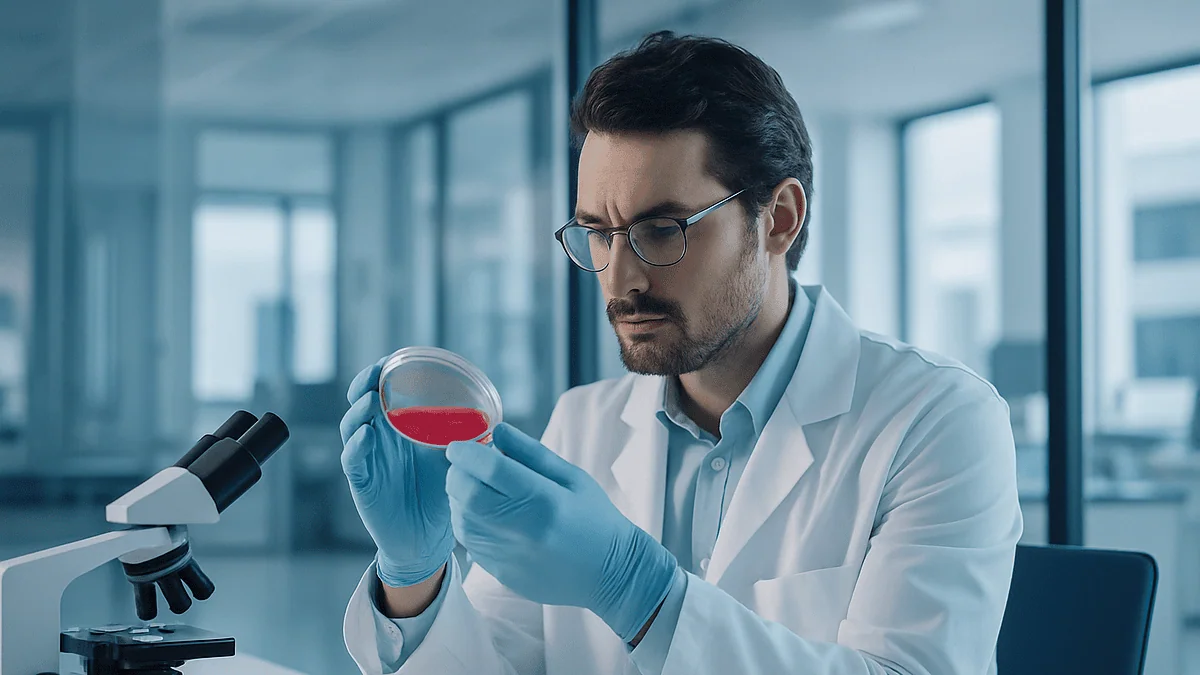
Treating a UTI is, in practical terms, an educated guess followed by a fact check. The guess is called empiric therapy: an antibiotic chosen before anyone knows the exact organism, based on which bacteria usually cause UTIs in your area and how often they resist each drug. The fact check is the urine culture, a lab test in which a measured amount of your urine is spread on nutrient plates and allowed to grow for a day or more, so technicians can count colonies, identify the species and challenge it with a panel of antibiotics. MedlinePlus describes this pairing of culture with antibiotic sensitivity testing as the standard way to confirm which medicine is most likely to work.
Culture-guided treatment simply means the fact check is allowed to change the plan. If the organism turns out to be sensitive to the empiric drug, nothing changes. If it is resistant, the prescriber switches. If the culture shows a narrower, older antibiotic would do the job, many clinicians will “de-escalate” to that one, because sparing the broad-spectrum drugs slows the spread of resistance for everyone.
Why not simply culture every sample and wait? Because waiting hurts. Bladder infections are painful and, left untreated, can climb toward the kidneys. So for an otherwise healthy adult with a straightforward first infection, guidelines from bodies such as the NHS allow treatment to start on symptoms and dipstick alone. The culture becomes essential when the stakes or the uncertainty rise: recurrent infections, pregnancy, men, children, kidney involvement, catheters, or a treatment that is not working. Those situations are where this article spends most of its time.
What actually happens to your urine sample in the lab
The cup matters more than people think. A “clean-catch midstream” sample, collected after cleansing and starting the stream into the toilet first, keeps skin bacteria from contaminating the result. If a sample picks up several species of skin flora in low numbers, the lab may report it as contaminated, and you may be asked to repeat it. Cleveland Clinic notes that this is one of the most common reasons a culture gives an unclear answer.
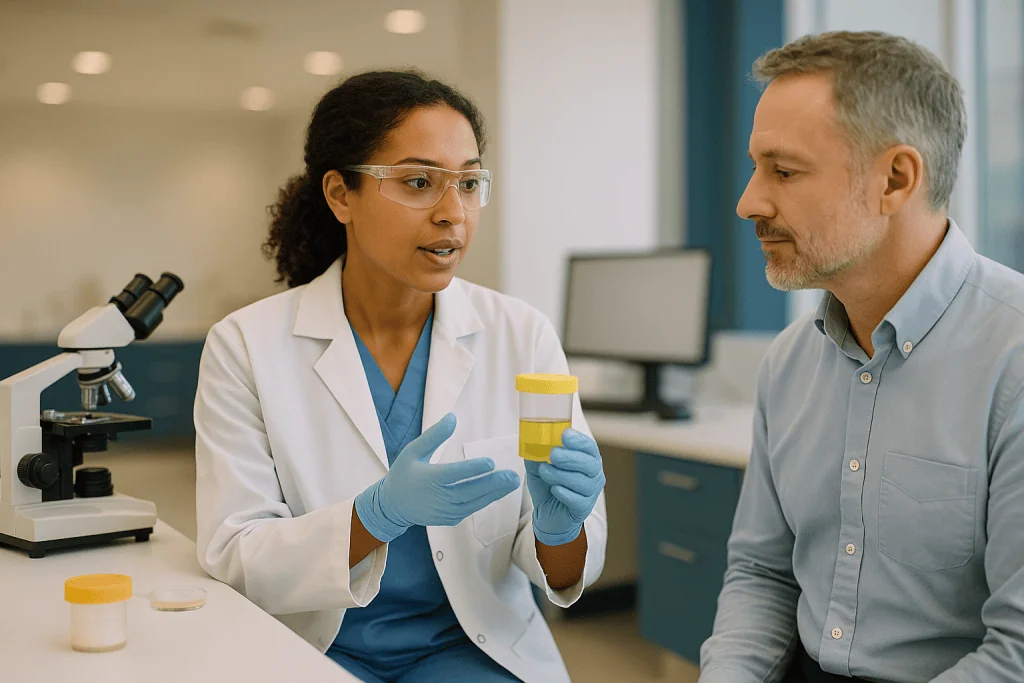
Once the sample reaches the microbiology bench, a calibrated loop transfers a tiny, known volume onto agar plates. The plates go into an incubator at body temperature. Bacteria that were invisible in the cup multiply into visible dots called colonies. Because the loop volume is known, counting colonies lets the lab back-calculate how many organisms were in each milliliter of urine. That number, expressed as colony-forming units per milliliter (CFU/mL), is one of the most misunderstood figures on the whole report, and we return to it below.
Next comes identification. Historically this relied on the colonies’ color, shape and a battery of biochemical reactions; many labs now use rapid mass-spectrometry instruments that recognize a species by its protein fingerprint within minutes once growth is visible.
Finally, sensitivity testing. The identified organism is exposed to a standard panel of antibiotics, either as small paper discs on a plate or in automated wells containing increasing concentrations. If bacteria grow right up to a disc, that drug is useless against them. A wide clear ring means the drug stops them. The lab translates those measurements into the letters you eventually see: S, I and R.
Each step takes time because biology cannot be rushed. Growth needs hours. Sensitivity testing needs a second round of growth. That is why your result is not instant, and why the next section is about the clock.
How long does a urine culture take, and why treatment often starts first
The single most common question patients ask about this test is about timing. According to MedlinePlus, a urine culture usually takes one to three days to produce results. Cleveland Clinic gives a similar window of roughly 24 to 72 hours. Preliminary growth is often visible after the first day; the full sensitivity panel typically needs the extra day or two.
Three days is a long time to burn and ache. So, for many people, the clinician does two things at once: sends the culture and starts an empiric antibiotic. The culture then plays catch-up. Expect one of three outcomes when the report lands:
- The organism is sensitive to what you are already taking. Nobody calls; you finish the course as planned.
- The organism is resistant. You get a call and a different prescription, sometimes before you have noticed whether the first one was helping.
- The organism is sensitive to several options, including a narrower one. Some prescribers switch to the narrower drug to protect the broad-spectrum agents for when they are truly needed.
Two practical points follow. First, giving the sample before the first antibiotic dose matters. Even a single dose can suppress growth enough to produce a falsely negative culture, which is why many clinics insist on collecting the specimen first. Second, the culture does not only serve this episode. If you have recurrent infections, each result becomes part of your microbiological history. A prescriber who can see that your last three infections were all resistant to one drug class can skip the guess next time.
In urgent settings, such as suspected kidney infection or infection during pregnancy, the sample is cultured and treatment begins immediately; the three-day wait never delays care. The lab’s job is to refine the plan, not to gate it.
How to read urine culture and sensitivity results
A culture report can look like a cryptic spreadsheet. Four elements carry almost all the meaning.

Colony count. Historically, 100,000 CFU/mL or more of a single organism in a clean-catch sample was the threshold for “significant” growth, and MedlinePlus still cites this figure. Clinicians interpret lower counts as significant in some situations, such as symptomatic women, men, or samples taken by catheter, so a number below the classic cutoff is not automatically dismissed.
Organism. One species is the usual pattern of a true infection. Three or more species in modest numbers usually means contamination from the skin.
Sensitivity letters. Each antibiotic tested is marked S (susceptible: the drug is expected to work at standard exposure), I (intermediate or “susceptible, increased exposure”: may work in the urinary tract, where many drugs concentrate heavily, or with adjusted dosing decided by the prescriber) or R (resistant: not expected to work).
Comments. Labs flag special resistance mechanisms, such as ESBL, explained in the next section, because they change which drugs are even worth considering.
| Report element | What it means | What it does not mean |
|---|---|---|
| CFU/mL count | How many organisms per milliliter grew | How severe the infection is or how bad you feel |
| Single organism named | Likely the true cause | That it is the only thing that could ever infect you |
| Mixed flora | Probable contamination; repeat may be needed | That you definitely have no infection |
| S / I / R | Predicted response to each drug in the lab | A recommendation; the prescriber weighs allergies, kidney function, pregnancy and side effects |
| “No growth” | Nothing grew under standard conditions | Proof that symptoms have no cause (see later section) |
The last column is the one to remember. An S beside a drug is a lab prediction, not a prescription. Your clinician layers in everything the plate cannot know about you.
Which bacteria cause UTIs, and how UTI antibiotic resistance changes the first choice
Escherichia coli, a normal resident of the large intestine, causes the large majority of uncomplicated UTIs, according to Mayo Clinic and the NHS. Behind it come other gut organisms: Klebsiella, Proteus, Enterococcus and, less often, Pseudomonas. In healthcare settings, with catheters or after repeated antibiotic courses, the cast shifts toward those harder names.
People often ask which UTI bacterium is “hardest to get rid of.” The honest answer is that the species matters less than the resistance genes it carries. Two labels on a report deserve special attention. ESBL stands for extended-spectrum beta-lactamase, an enzyme some E. coli and Klebsiella produce that destroys most penicillins and cephalosporins at once. CRE, carbapenem-resistant Enterobacterales, describes organisms that also defeat carbapenems, among the broadest antibiotics available; the CDC lists CRE as an urgent threat. A UTI caused by either is where culture guidance stops being a refinement and becomes the only way to choose a working drug.
Resistance is not a distant problem. The CDC estimates that antimicrobial-resistant infections cause more than 2.8 million illnesses and about 35,000 deaths each year in the United States. Urinary E. coli is one of the main places this shows up in everyday practice, because it is cultured so often.
This is where local data enters the picture. Hospitals and regions compile antibiograms, tables showing what percentage of recent urinary isolates were susceptible to each drug. When a drug’s local susceptibility falls below a threshold that guidelines consider acceptable for empiric use, prescribers stop reaching for it blindly, even if it worked for a patient a decade ago. The empiric guess, in other words, is itself culture-guided, just by thousands of other people’s cultures rather than yours.
Your own result then personalizes that population picture. The drug that is a poor bet for your region may still be marked S on your plate, and vice versa.
How culture-guided UTI treatment changes the antibiotic: three common scenarios
Abstract rules become clearer with examples. The following are illustrative patterns, not advice; every decision belongs to the clinician who can see your full record.
Scenario one: the match. A woman with a first bladder infection starts an empiric first-line agent. Her culture grows E. coli, more than 100,000 CFU/mL, susceptible to that drug. Nothing changes except her confidence. The culture also joins her record, which will matter if the infection returns.
Scenario two: the switch. A man with a history of two prior infections starts an empiric drug. On day two the lab reports Klebsiella with an ESBL flag, resistant to the current antibiotic and to most oral options. His clinician calls, stops the current drug and chooses one of the few oral agents marked S, or arranges an injectable course if none is suitable. His symptoms have not improved, which fits; the first drug was never going to work.
Scenario three: the narrowing. An older patient admitted with a kidney infection receives a broad intravenous antibiotic immediately, because waiting would be unsafe. Forty-eight hours later the culture shows a fully susceptible E. coli. The team steps down to a narrower oral drug. The patient goes home sooner, and a broad-spectrum agent is spared for someone who truly needs it. Antibiotic stewardship programs, which the CDC describes as structured efforts to use antibiotics only when and how they are needed, treat this de-escalation as a core practice.
Notice what the culture did not decide in any scenario. It did not decide the duration, the dose, or whether the patient could swallow tablets; it did not know about a sulfa allergy or a kidney that filters slowly. Culture-guided treatment is a conversation between a plate and a prescriber, and the prescriber has the last word.
Who usually gets a culture, and who is usually asked to wait
Not every UTI needs a culture, and ordering one for everyone would flood labs without improving care. Guidance from the NHS and Mayo Clinic converges on a practical split.
A culture is routinely sent when the answer is less predictable or the consequences of a wrong guess are higher:
- Pregnancy, where even symptomless bacteria in the urine are treated because of the risk to the kidneys and the pregnancy.
- Men, in whom UTIs are less common and more often linked to prostate or structural problems.
- Children, especially the very young, where an infection can signal an anatomical issue.
- Suspected kidney infection, with fever, flank pain or vomiting.
- Recurrent infections, often defined as two or more in six months or three or more in a year.
- Symptoms that persist or return within weeks of a completed course.
- A urinary catheter, recent urologic procedure or hospital stay.
- Known prior resistant organisms, immunosuppression or diabetes.
Who is usually asked to “wait,” or more precisely to proceed without a culture? Otherwise healthy, non-pregnant women with typical symptoms of a first or infrequent bladder infection. Here the probability of a common, susceptible E. coli is high enough that empiric treatment on symptoms and dipstick is accepted practice. Some guidelines even support a short delay before antibiotics in mild cases, with a backup prescription to use if symptoms do not settle.
One group is deliberately not cultured in routine care: people without symptoms. Bacteria in the urine of a well person, called asymptomatic bacteriuria, is common in older adults and in those with catheters, and treating it generally does not help and does drive resistance. Pregnancy and planned urologic surgery are the main exceptions. If a result turns up incidentally and you feel well, the usual advice is a conversation, not a prescription.
Negative urine culture but UTI symptoms: what it can mean
Few results frustrate people more than “no growth” alongside symptoms that feel unmistakably like infection. Can you have a normal urine culture and still have a UTI? Yes, in several ways, and a thoughtful clinician treats a negative culture as a prompt to look harder rather than a dismissal.
The commonest explanation is timing. If an antibiotic dose, even one, was taken before the sample, growth may be suppressed below the lab’s threshold. A sample that sat too long before reaching the lab, or one that was over-diluted because you drank a lot of water beforehand, can do the same.
Then there are organisms that do not grow on standard plates. Routine culture is designed for the usual gut bacteria. Fastidious or slow-growing organisms, and a minority of bacteria that need special conditions, can be missed. Sexually transmitted infections such as chlamydia and gonorrhea can cause burning and urgency and need their own tests. Vaginal infections and genital herpes can mimic a bladder infection. In postmenopausal women, thinning of the urethral and vaginal tissues from low estrogen produces similar sensations without infection.
Finally, several non-infectious bladder conditions, including bladder pain syndrome (interstitial cystitis), urinary stones and, rarely, bladder tumors, present with UTI-like symptoms and sterile urine. Persistent symptoms with repeatedly negative cultures are a reason for referral to a urologist, not for repeated empiric antibiotics.
Newer molecular tests, which detect bacterial DNA rather than growing the organism, are marketed as a solution to this gap. They are discussed later in this article. For now, the practical message is simple: a negative culture is information, and the right response is usually a careful history, a repeat sample collected properly before any antibiotic, and consideration of what else could explain the symptoms.
Is there a "top 3 antibiotics for UTI"? What guidelines actually say
The search phrase “top 3 antibiotics for UTI” reflects a reasonable wish for a simple list. The honest answer is that major guidelines do name a small group of preferred first-line agents for uncomplicated bladder infection, but the ranking depends on where you live, your history and the organism, and no list replaces a prescription written for you.
Guidelines from the NHS and the summaries published by Mayo Clinic describe the first-line options for uncomplicated cystitis as drawn from a handful of generic agents, including nitrofurantoin, trimethoprim (alone or combined with sulfamethoxazole) and fosfomycin. Each works differently. Nitrofurantoin concentrates in urine and damages several bacterial enzymes at once, which is thought to explain why resistance to it has stayed relatively low. Trimethoprim blocks the bacterium’s ability to make folate, a building block for its DNA; in many regions E. coli resistance to it has climbed high enough that it is no longer a safe empiric guess without a culture. Fosfomycin interferes with cell wall construction.
Fluoroquinolones and broader cephalosporins are deliberately held back for complicated infections, kidney infections or culture-proven resistance, because of side-effect concerns and their outsized role in driving resistance. Many antibiograms now show double-digit percentages of urinary E. coli resistant to fluoroquinolones, and the CDC singles out this class in its stewardship messaging.
So the “top 3” is really a short list that the culture rearranges. A drug at the top of the empiric list may be marked R on your plate. A drug near the bottom may be the only S. That is why the same infection in two neighbors can be treated with two different medicines, both correctly.
None of this is an endorsement of any medicine, and nothing here should prompt anyone to start, stop or swap a prescription. Bring the question to the prescriber, who can read the report against your allergies, kidney function, pregnancy status and prior cultures.
What the following days usually look like
Culture-guided treatment has a rhythm that is easier to tolerate once you know it.
Day zero. You give a clean-catch sample. If you are symptomatic and your clinician judges treatment appropriate, an empiric antibiotic starts the same day. Hydration and pain relief, as advised, are the main comfort measures. Cranberry products and other supplements have mixed evidence for prevention and no established role in treating an active infection; the NHS does not recommend them as treatment.
Days one to three. The culture grows and the sensitivity panel is run. Mayo Clinic notes that with an effective antibiotic, symptoms of a simple bladder infection often begin to ease within a few days. If the lab result requires a change, this is when the call usually comes. Not being called generally means the result matched the plan, though it is reasonable to ask how you will be informed.
By the end of the course. Finish what was prescribed unless your clinician tells you otherwise, even if you feel well early; stopping prematurely is one way resistant survivors are selected. If symptoms have not improved at all after a few days of a culture-matched antibiotic, that is a signal to go back, not to wait it out.
After the course. A routine “test of cure” culture is not usually needed for an uncomplicated infection if symptoms resolve. It is often repeated in pregnancy, after a kidney infection, or when symptoms linger. Keep a note of the organism and its resistance pattern; patients who can tell a new clinician “my last two infections were ESBL E. coli” shorten the next guessing phase considerably.
Timelines above are typical ranges from the cited sources, not promises. Kidney infections, catheter-associated infections and resistant organisms frequently take longer to settle and are managed on their own schedules.
Culture-guided treatment for recurrent UTIs, and what molecular tests add
Recurrent UTI is where cultures earn their keep. Each episode’s report builds a personal antibiogram, and patterns emerge. Some people are reinfected by a new organism each time, often reflecting risk factors such as sexual activity, incomplete bladder emptying or, after menopause, low estrogen. Others relapse with the same strain, which points toward a reservoir such as a stone, a diverticulum or prostate tissue that antibiotics reach poorly. Culture results help distinguish these, because an identical organism with an identical resistance profile returning within weeks suggests relapse.
Prevention strategies for recurrence, discussed by Mayo Clinic and the NHS, range from behavioral measures and vaginal estrogen in postmenopausal women to low-dose antibiotic prophylaxis or a single post-intercourse dose. When prophylaxis is considered, prior cultures guide which agent is even plausible; prescribing a preventive drug to which your usual organism is already resistant offers nothing but side effects. Published work on culture-guided prophylaxis before urologic procedures has reported fewer febrile infections than untargeted prophylaxis, though the quality and settings of those studies vary and guidelines have not adopted it universally. Prophylaxis is always a decision for the treating team, weighing resistance risk against benefit.
Molecular tests, usually based on polymerase chain reaction (PCR, a method that copies and detects bacterial DNA), promise same-day identification of many organisms, including some that standard culture misses. The evidence so far shows they detect more organisms and detect them faster. What they have not yet convincingly shown is that acting on those extra findings improves outcomes. DNA from dead or harmless bacteria is still DNA, and the bladder of a healthy person is not sterile. Professional societies currently regard culture as the reference standard and molecular panels as adjuncts whose role is still being defined. Ask what a positive molecular result would change before agreeing to one.
What people often get wrong
Myths about urine cultures are durable, partly because the test is ordered so casually. A few corrections.
“If the culture says resistant, the antibiotic cannot have helped.” Usually true, but the sensitivity letters are predictions at standard drug levels. A few drugs concentrate so heavily in urine that an “I” result may still be effective for a bladder infection; the prescriber, not the letter, makes that call.
“A high colony count means a bad infection.” CFU/mL reflects how many bacteria were in the sample, which depends heavily on how long urine sat in the bladder and how much you drank. Severity is judged by symptoms, fever and the organ involved, not the count.
“Bacteria in the urine always need antibiotics.” Asymptomatic bacteriuria is common in older adults and in people with catheters. Outside pregnancy and planned urologic surgery, treating it does not reduce future infections and does drive resistance.
“Cloudy or smelly urine proves infection.” Diet, dehydration and supplements change odor and clarity. In frail older adults in particular, these signs alone are not a reason to culture or treat.
“The culture tells the doctor how long to treat.” It does not. Duration depends on the site of infection, sex, pregnancy and other factors set out in guidelines; the plate only says which drugs have a chance.
“Cranberry juice treats a UTI.” Evidence for cranberry is limited to modest prevention in some groups and is mixed even there. The NHS is explicit that it does not treat an established infection.
“A broad antibiotic is the safer bet.” For an uncomplicated infection, broader is often worse: more side effects, more disruption to gut and vaginal flora, and more pressure selecting resistant organisms. Narrow-and-matched is the goal of culture-guided care.
Questions to ask your care team
A culture report invites specific questions, and clinicians generally welcome them. Bring the ones that fit your situation.
- Did my sample go for culture, and if not, what would prompt one?
- Should I give the sample before my first dose, and how should I collect it?
- How and when will I hear the result, and will I be contacted only if something changes?
- What organism grew, and was it fully sensitive to the antibiotic I am taking?
- If I am being switched, what did the lab find, and should I stop the first drug today?
- Was there a resistance flag such as ESBL, and does that change what I should mention at future visits?
- Is there a narrower antibiotic that would work, and is there a reason to stay on the broader one?
- Could this be something other than a bacterial UTI, given my symptoms or a negative culture?
- Do I need a repeat culture after treatment?
- If my infections keep coming back, what would the next step in investigation be?
- How should I keep a record of my results for other clinicians?
Two habits make these conversations more productive. First, write down the organism and the drugs it resisted; a photograph of the report works. Second, tell every prescriber about antibiotic allergies and side effects you have had, because those remove options from the S column before the lab’s ink is dry.
Your care team may not have every answer at the first visit, especially while the culture is still growing. Asking anyway signals that you want to be part of the decision, and in a condition this common, that partnership is one of the better predictors of a good experience.
When to call your doctor
Culture-guided treatment assumes there is time to wait for a result. Some situations remove that luxury. Contact your doctor promptly, or seek urgent care, if any of the following develop:
- Fever, chills or shaking, which can signal infection spreading to the kidneys or bloodstream.
- Pain in the back or side below the ribs, with or without nausea or vomiting, a classic pattern of kidney infection.
- Visible blood in the urine, particularly if new or heavy.
- Symptoms that are no better after a few days of a culture-matched antibiotic, or that worsen at any point.
- Inability to pass urine, or passing very little despite drinking.
- Confusion, drowsiness or a sudden change in behavior, especially in an older adult; infection can present this way without any urinary complaint.
- Rapid heartbeat, breathlessness, dizziness or cold, clammy skin, which may indicate sepsis and need emergency services.
- Any urinary symptoms during pregnancy, in a child, or in someone with diabetes, kidney disease, a transplant or a weakened immune system.
- A new rash, swelling, wheeze or severe diarrhea after starting an antibiotic.
The NHS lists fever, flank pain and confusion among the signs that a UTI may have become a kidney infection and advises urgent assessment. Do not stop a prescribed antibiotic on your own because the culture seems slow; equally, do not continue one that is clearly not working without checking in. Call, describe what has changed, and let the treating team decide whether the plan, the drug or the setting of care needs to change. Every decision about starting, switching or ending treatment sits with them.
Frequently asked questions
How long does a urine culture take to come back?
Most urine cultures take one to three days, according to MedlinePlus and Cleveland Clinic. Visible growth often appears within the first day; identifying the species and testing it against a panel of antibiotics usually needs another day or two. Because of that delay, clinicians often start treatment on symptoms and adjust once the sensitivity report arrives.
What is the hardest UTI bacteria to get rid of?
Difficulty depends less on the species than on the resistance genes it carries. Organisms flagged as ESBL producers or as carbapenem-resistant Enterobacterales (CRE), which the CDC classifies as an urgent threat, leave few oral options and often require culture-directed or injectable therapy. Pseudomonas and some Enterococcus strains can also be challenging, especially with catheters.
What are the top 3 antibiotics for UTI?
Guidelines name a small group of first-line generic agents for uncomplicated bladder infection, commonly including nitrofurantoin, trimethoprim with or without sulfamethoxazole, and fosfomycin, but the best choice varies by local resistance, your history and the culture result. Broader drugs are reserved for complicated or resistant infections. The prescriber, not a list, makes the choice.
Can you have a normal urine culture and still have a UTI?
Yes. A culture can be negative if an antibiotic was taken first, if the sample was dilute or delayed, or if the organism does not grow on standard plates. Symptoms can also come from sexually transmitted infections, vaginal conditions, bladder pain syndrome or stones. Persistent symptoms with negative cultures deserve further evaluation rather than repeated empiric antibiotics.
What do urine culture and sensitivity results mean?
The report shows the colony count, the organism identified, and a list of antibiotics marked S (susceptible), I (intermediate) or R (resistant). A single organism at 100,000 CFU/mL or more in a clean-catch sample is the classic threshold for infection, though lower counts matter in some settings. The letters are lab predictions that your clinician interprets.
Why did my doctor change my antibiotic after the culture?
Usually because the lab showed the bacteria were resistant to the first drug, or because a narrower antibiotic would work just as well with fewer side effects and less resistance pressure. Both are expected parts of culture-guided care. If you are switched, ask whether to stop the first medicine immediately and how the new one differs.
Does UTI antibiotic resistance mean my infection cannot be treated?
No. Resistance to one or several drugs narrows the options, but the sensitivity panel typically identifies agents that still work. For organisms resistant to most oral drugs, injectable or hospital-based treatment may be needed. The CDC estimates resistant infections cause more than 2.8 million illnesses yearly in the US, which is why culture-matched prescribing matters.
Do I need a repeat culture after finishing treatment?
Not usually for an uncomplicated bladder infection whose symptoms resolve. A follow-up culture is more often requested in pregnancy, after a kidney infection, when symptoms persist or return quickly, or before planned urinary procedures. Your clinician decides based on your circumstances and the organism found.
Should I treat bacteria in my urine if I have no symptoms?
Generally no. Asymptomatic bacteriuria is common in older adults and people with catheters, and treating it does not prevent future infections while it does promote resistance. Pregnancy and planned urologic surgery are the main exceptions where treatment is recommended. Discuss any incidental result with your clinician rather than assuming antibiotics are needed.
Are molecular PCR urine tests better than a standard culture?
They are faster and detect more organisms, including some culture misses, but evidence that acting on those extra results improves outcomes is still limited. Detecting bacterial DNA does not prove live, harmful infection. Professional guidance currently treats culture as the reference standard and molecular panels as adjuncts, so ask what a result would change before testing.
References
- Antibiotic Sensitivity Test (MedlinePlus Medical Test)
- Urinary tract infections (UTIs) (NHS)
- About Antimicrobial Resistance (CDC)
This article is for general information only and is not a substitute for professional medical advice. Please consult a qualified doctor about your individual situation.

More from the Blog

Which Tests Come Before Incontinence Treatment? Bladder Diary, Ultrasound and Urodynamics
Before urinary incontinence treatment, most people have a detailed conversation about symptoms, a physical exam that may include a cough test, a urine sample…

Is Paraphimosis an Emergency? What Happens at the Hospital and How It Is Reduced
Yes. Paraphimosis, in which a retracted foreskin becomes trapped behind the head of the penis and cannot be pulled forward, is treated as a…

How Orchiopexy Works: Moving the Testicle Into the Scrotum Step by Step
Orchiopexy is an operation that moves a testicle that has not descended, or that has twisted, into the scrotum and stitches it in place.…

Reading Your Urology CT or MRI Report: What the Radiologist Notes and How the Urologist Uses It
A urology MRI or CT report describes what the radiologist saw, organ by organ, and ends with an impression that ranks the findings by…

Overactive Bladder Myths: Is It Just Drinking Too Much, and Does It Only Affect Women?
Overactive bladder is not caused by drinking too much, and it is not a women's condition. It is a pattern of sudden, hard-to-defer urgency,…

After Laser Lithotripsy: Fluids, Diet and Check-Ups That Help Lower the Chance of New Stones
After laser lithotripsy, the measures with the best evidence for lowering the chance of new kidney stones are drinking enough fluid to produce roughly…