

Cycling, Running and Tight Clothing After Labiaplasty: A Realistic Return-to-Activity Guide

Key Takeaways
- NHS guidance groups running, cycling and other strenuous exercise together and advises avoiding them for roughly six to twelve weeks after labiaplasty, with the surgeon's review deciding where in that range you fall.
- A bicycle saddle applies constant pressure directly to the suture line, which is why outdoor cycling and horse riding usually sit at the very end of the return-to-activity sequence.
- Gentle walking from day one is standard advice because immobility raises the risk of a leg vein clot, so selective rest for the wound is not the same as bed rest.
- Loose clothing in the early weeks is about friction and moisture; compression garments have no proven role over the vulva and can trap heat and sweat.
- The NHS advises avoiding sex and tampons for around four to six weeks, and menstrual cups fall under the same restriction.
- Next-morning swelling, spotting or tenderness after an activity is more informative than how it felt at the time, and is the signal to step back a level.
Exercise after labiaplasty is usually rebuilt in stages: short walks within days, light low-impact activity often from about two weeks, and strenuous exercise, running and cycling only after the surgical team confirms the wound has healed, commonly around six to twelve weeks in NHS guidance. Loose clothing is advised for the first few weeks; leggings and saddle pressure come last. Individual timelines vary.
The cycling shoes are still by the front door. The spin class booking has not been canceled, just quietly moved twice. Sitting on a hard kitchen chair is fine now, mostly, and the swelling has gone from alarming to merely present. So the question surfaces at breakfast, half hopeful, half nervous: is it too soon?
Exercise after labiaplasty is one of the most searched and least clearly answered parts of recovery. Surgeons give a window. Forums give anecdotes. Neither tells you why a treadmill and a saddle behave so differently for a wound the size of a fingertip, or why a pair of leggings can matter as much as a workout.
This guide does that work. It explains what the tissue is doing week by week, which activities load it and how, and what the mainstream guidance actually says, so the conversation with your care team starts from evidence rather than guesswork.
What labiaplasty does, and why exercise after labiaplasty needs a plan
Labiaplasty is surgery that reduces or reshapes the labia minora, the inner folds of skin at the opening of the vagina, and sometimes the labia majora, the outer folds. People seek it for chafing with clothing or sport, discomfort during sex, or because the shape distresses them. The NHS describes the operation as usually taking one to two hours under general or local anesthetic, closed with dissolvable stitches that fall away over the following weeks.
Two techniques dominate. In a trim (or edge) labiaplasty the surgeon removes a strip along the free edge and closes the new border. In a wedge labiaplasty a V-shaped piece is taken from the middle and the remaining edges are joined, preserving the natural rim. Either way, the suture line sits on tissue that moves every time you walk, sit, bend or pedal.
That is why exercise after labiaplasty is not simply a fitness question. A healing wound tolerates rest well and tolerates four things poorly: tension pulling the edges apart, shear as skin slides against skin or fabric, direct pressure such as a saddle, and a warm, damp environment that favors bacteria. Nearly every activity people want back involves at least one. Running adds impact and sweat. Cycling adds sustained pressure exactly where the stitches are. Leggings add compression and a seam.
A sensible plan is therefore not about waiting the longest possible time. It is about reintroducing each of those stresses in an order the tissue can handle, checking the response, and only then adding the next.
Why the vulva heals differently from a knee or a shoulder
The labia are among the most richly supplied tissues in the body, with a dense network of small blood vessels and nerves. After surgery that is a mixed blessing. Good blood flow brings oxygen and immune cells, one reason vulval wounds generally knit well. It also means swelling and bruising can look dramatic in the first days, and a bumped or strained wound bleeds more readily than one on the forearm.
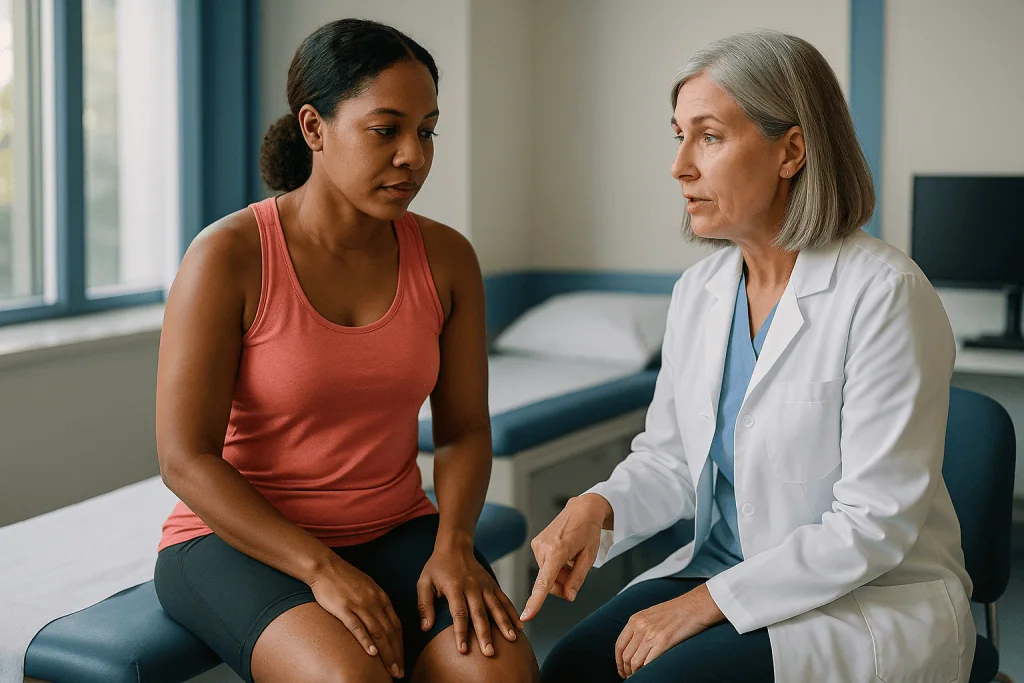
The environment matters too. The area is warm, moist and close to both the urethra and the anus, so the skin carries a mixed population of bacteria. The CDC lists surgical site infection as one of the more common complications of any operation, and moisture, friction and contamination are classic contributors. Sweat from a workout, a damp swimsuit or a tight waistband trapping heat all tilt the odds the wrong way while the wound is still open at a microscopic level.
Then there is strength. Dissolvable stitches hold the edges together but gradually lose tension as they break down, and the tissue’s own collagen has to take over. Skin wounds gain most of their practical strength in the first weeks, yet remodeling continues for months, which is why scars soften slowly rather than overnight. Patient guidance from the NHS and Cleveland Clinic describes swelling that takes weeks to settle and an appearance that keeps refining over the following months.
Put those facts together and the timeline makes sense. Early on, the goal is to avoid tension, moisture and pressure. Later, it is to add load in small steps while the scar is still maturing.
Labiaplasty recovery timeline: what the first two weeks usually look like
Most people go home the same day. The first three to four days tend to be the most uncomfortable: swelling that peaks and then slowly recedes, tenderness when sitting, and a stinging sensation when urine touches the wound. Bruising is common and can spread into the inner thighs. A little blood-stained ooze on a pad is expected; heavy or bright red bleeding is not, and belongs in the red-flag list later in this article.
Practical habits do much of the work now. Cool water poured over the area after using the toilet, then patting dry with a clean towel, keeps the wound clean without rubbing. A cold pack wrapped in cloth, applied over underwear for short spells if your team advises it, takes the edge off swelling. Loose cotton underwear and skirts or wide-leg trousers avoid friction. Sleeping on your back with a pillow under the knees reduces pull on the stitches.
Activity is not zero. Short walks around the home from day one keep blood moving through the legs, which matters because any surgery raises the risk of a blood clot, and working the calf muscles is one of the simplest counters, as Mayo Clinic notes in its guidance on deep vein thrombosis. Stairs are fine at a gentle pace. What to avoid is anything that stretches the labia apart, presses on them, or makes you sweat heavily.
Work is a call made with your team. The NHS says people may need up to two weeks off, less for a desk job with the option of standing and stretching, more for physically demanding roles. A soft cushion and regular breaks from sitting help the desk-bound.
Weeks two to six: the stretch where patience is tested
By the end of week two the sharp discomfort has usually faded into background awareness. Swelling is less, though the labia still look fuller and less even than the eventual result. Stitches begin to dissolve and their ends can feel scratchy. Itching is common as small nerves recover; it signals healing rather than trouble unless it arrives with redness, heat or discharge.
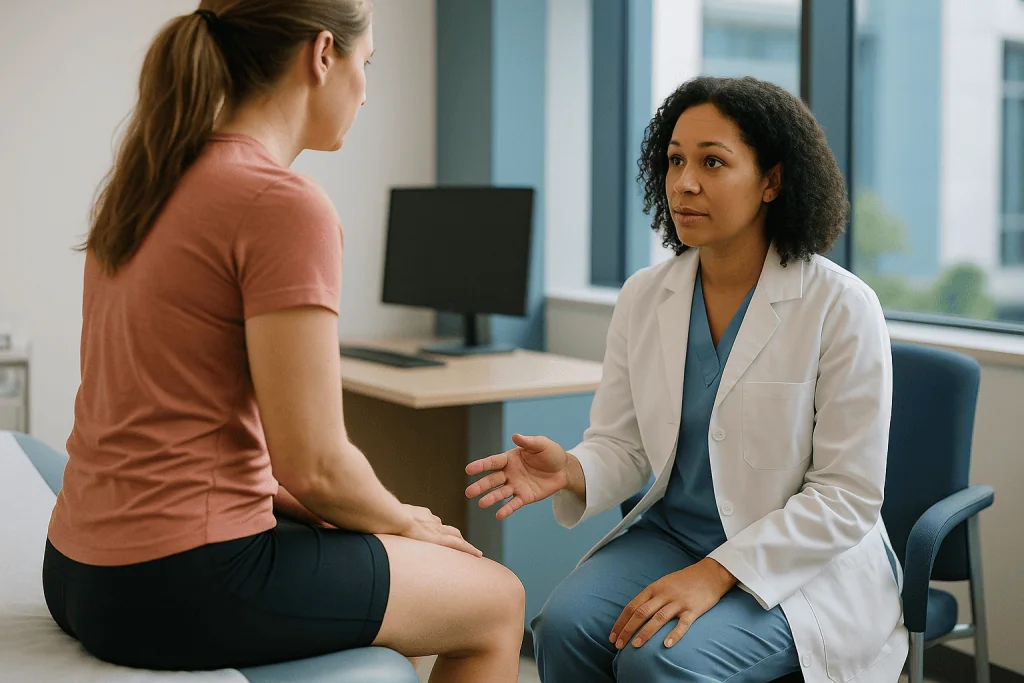
This is the window in which most people feel well enough to do more than the wound is ready for. The NHS advises avoiding sex and tampons for around four to six weeks, and holding off strenuous physical activity for roughly six to twelve weeks. Cleveland Clinic frames recovery similarly, with most everyday activity back well before the last restrictions lift. These are ranges drawn from patient guidance, not promises; your surgeon’s timeline for you may sit at either end depending on how the wound looks at review.
Movement can expand steadily. Longer walks outdoors, gentle standing stretches, and light upper-body work with the legs still and fairly close together are commonly tolerated. Squatting deeply, straddling anything, and sweating through a spin class are not. The scar is immature and the edges are held mostly by new collagen rather than stitches, so a hard tug can reopen a wound that looked closed.
Clothing loosens up in reverse of what many expect: you move from very loose to moderately fitted only once swelling has settled enough that fabric no longer presses on tender tissue. Sensation may be altered, with numb patches or hypersensitivity that usually improves over months as nerves regrow. A follow-up appointment typically falls in this window, and it is the natural moment to ask for specific clearance for each activity you have in mind.
When can I start walking and light exercise after labiaplasty?
Walking is the one form of exercise after labiaplasty that almost every care team encourages from the start, in modest doses, for circulation and mood rather than fitness. A few minutes indoors on the first day, building to short outdoor walks by the end of the first week, is a common pattern in patient guidance. Wear soft underwear, avoid hills that make you sweat, and stop if you feel throbbing, warmth or a pulling sensation.
Light strength work tends to come next, often from around the two-week mark if the surgical review is reassuring and always on your team’s say-so. Standing dumbbell curls, seated shoulder presses on a padded bench with a towel, or resistance bands for the upper body all fit. The rule of thumb is that the hips stay neutral: no wide stances, no lunges, no deep squats, nothing gripped between the thighs. Core work is a gray area because bracing raises pressure in the pelvis and can cause a pulse of swelling; gentle breathing-based activation is generally fine, sit-ups and planks less so early on.
Yoga and Pilates are often assumed safe because they are slow. Many poses, however, open the hips widely or press the perineum against the floor. Lying on your back with knees bent is one thing; pigeon pose or a wide-legged forward fold is another.
The response over the following 24 hours tells you more than how you felt during the session. Extra swelling, spotting on a pad, or increased tenderness the next morning mean the tissue was not ready. Ease back, wait a few days, and try again at a lower level. For general health the American Heart Association recommends 150 minutes of moderate activity a week for adults; that target can be rebuilt gradually over the months after surgery rather than all at once.
When can I cycle after labiaplasty?
Cycling is the activity people ask about most, and for good reason. A saddle presses directly on the perineum and labia, exactly where the stitches lie, and keeps that pressure constant for as long as you ride. Add road vibration, sweat and the friction of padded shorts and all four wound stressors arrive in one session. Patient guidance places cycling firmly among the strenuous activities to avoid until the surgeon confirms healing, which in NHS guidance means a window of roughly six to twelve weeks.
Where you fall within that range is a judgment your team makes at review, based on how the wound edges look, whether swelling has settled, and whether firm chairs are comfortable without a cushion. A useful self-check before asking for clearance: can you sit on a hard wooden chair for an hour with no awareness of the area? If not, a saddle will be worse.
When you do return, build in order. A stationary bike with a wide, well-padded saddle, upright posture and a short, low-resistance session is the gentlest starting point; it avoids vibration and lets you stop instantly. A recumbent bike shifts weight onto the buttocks rather than the perineum and is another option. Spin classes, with their aggressive forward lean and standing climbs, belong at the end of the progression. Outdoor rides come after indoor sessions have passed without next-day swelling.
Two practical points. Padded cycling shorts are tight by design, so treat them like any snug garment and wait until fitted clothing has been cleared. And wash the saddle and shorts after every ride; a damp chamois is a warm, bacteria-friendly surface pressed against a maturing scar. If a ride leaves the area sore, swollen or spotting, that is information, not failure. Step back a level and tell your team if it recurs.
Running after labiaplasty: impact, sweat and thigh friction
Running does not press on the wound the way a saddle does, which leads some people to assume it can return sooner than cycling. The picture is more mixed. Each footstrike sends a shock through the pelvis that jostles swollen tissue, the inner thighs rub with every stride, and half an hour of running leaves the area soaked. In practice most care teams group running with other high-impact, high-sweat exercise and clear it within the same six-to-twelve-week window the NHS gives for strenuous activity, again depending on your review.
The return is best staged. Brisk walking first, then walk-run intervals on a treadmill where you control the pace and can stop the moment anything pulls. Short flat outdoor runs follow; hills, sprints and long distances come last. Moisture-wicking underwear without a center seam, an anti-chafe balm on the inner thighs if your team approves, and an immediate change into dry clothes afterward all reduce the shear and dampness that irritate a young scar.
Other high-impact activities follow the same logic. Jumping, skipping rope, plyometrics and dance load the pelvis with repeated impact. Horse riding combines impact with straddle pressure and is often among the very last things to return. Contact sports carry a small but real risk of a direct blow.
What about the pelvic floor? Labiaplasty does not operate on the pelvic floor muscles, so it does not weaken them the way childbirth or prolapse repair can. Bearing down during heavy lifting or high-impact work does raise pressure in the pelvis, though, and can temporarily increase swelling around the labia. That is why heavy deadlifts and squats sit alongside running in the later phase rather than the early one.
If a run leaves you with bright red bleeding, one-sided swelling that grows over hours, or a gaping wound edge, stop and contact your team the same day.
Tight clothing after labiaplasty: leggings, thongs and waistbands
The NHS advice for the early weeks is plain: wear loose clothing and underwear. The reasoning is friction and moisture. Snug fabric drags across the suture line with every step, seams sit directly on tender tissue, and synthetic compression traps heat and sweat. The first two weeks are usually the strictest, with cotton briefs a size up, skirts, dresses, wide-leg trousers or soft joggers doing the job.
Leggings and skinny jeans come back when swelling has settled enough that fabric no longer presses on tender tissue, and when the stitches have dissolved so no scratchy ends catch. For many people that falls in the middle weeks of recovery, once the swelling that NHS guidance describes as lasting several weeks has eased, but it is a decision made by comfort and by your team’s review, not the calendar. A useful test: if you are aware of the fabric against the area while sitting, it is too soon.
Thongs are a special case. A thin strip running between the labia is almost designed to rub a fresh wound, so most guidance keeps them off until healing is complete. Shapewear and compression garments, which have a role after abdominal or thigh surgery, have none here; there is no evidence that compressing the vulva speeds healing, and it may trap moisture.
Menstruation adds a wrinkle. If a period arrives in the first weeks, pads are the standard option; the NHS advises avoiding tampons for around four to six weeks, and menstrual cups fall under the same restriction. Change pads often, choose unscented, and rinse with water rather than wipes containing alcohol or fragrance.
Fabric matters more than most expect. Cotton and bamboo breathe and dry quickly; nylon and polyester hold sweat against the skin. Once you are back in leggings for exercise, change out of them straight after the session rather than lingering in them.
Swimming, baths, hot tubs and sweaty workouts
Water is soothing and also a problem. Guidance on surgical wounds, including MedlinePlus’s wound care advice, is consistent: showers are usually fine early, but soaking a wound in a bath, pool or hot tub is discouraged until it has fully sealed, because prolonged wetting softens the edges and shared water carries bacteria. For a vulval wound that also means chlorine irritation and a damp swimsuit pressed against the scar all the way back to the changing room.
Swimming therefore tends to return after the wound is confirmed closed, usually alongside or slightly before other strenuous activity, and always after your team has looked. Once cleared, a brief swim followed by an immediate rinse and dry clothes is kinder to the area than a long session in a wet suit. Hot tubs and saunas add heat, which dilates blood vessels and can bring swelling back; they are usually among the later returns and best avoided while any redness remains.
Sweat from land-based workouts deserves the same respect. Soaked leggings against a maturing scar for an hour are not so different from a wet swimsuit. Wick, change, rinse with plain water, pat dry. Avoid scented washes, wipes and powders near the wound; the NHS stitches guidance recommends plain water and mild soap for healing skin and warns against picking at scabs or stitch ends.
Hair removal is another common question. Razors and hot wax near a fresh scar invite nicks and irritation, and altered sensation makes it easier to injure yourself without noticing. Most guidance asks people to wait until the wound has healed fully and feeling has improved. Trimming with scissors well away from the wound is the usual interim answer if hair bothers you.
Activity-by-activity: a realistic summary table
The table gathers typical windows quoted in patient guidance from the NHS and Cleveland Clinic. They describe uncomplicated recoveries and are ranges, not promises; your surgical team’s timeline for you takes priority over any number here. The right-hand column names the specific stress each activity places on the wound, which is the real reason for the order.
| Activity | Typical earliest window in patient guidance | Main stress on the wound |
|---|---|---|
| Walking indoors | From day one, short and gentle | Minimal; helps circulation |
| Desk work | Within days to about two weeks (NHS) | Prolonged sitting pressure |
| Longer walks, light upper-body strength | From around two weeks, after review | Mild sweat; hip position |
| Swimming | After the wound is confirmed sealed | Soaking, bacteria, wet fabric |
| Sex and tampons | Around four to six weeks (NHS) | Friction and stretch |
| Leggings and fitted underwear | Once swelling settles and stitches dissolve | Compression, seams, trapped heat |
| Running, spin, high-intensity classes | Roughly six to twelve weeks (NHS strenuous activity) | Impact, heavy sweat, thigh friction |
| Outdoor cycling, horse riding | Later end of the strenuous window, per team | Direct saddle pressure, vibration |
Read this as a sequence rather than a schedule. Each step should be tolerated for a few days without next-morning swelling, spotting or tenderness before the next is added. If two people have the same operation on the same day, one may be cycling outdoors while the other is still on brisk walks, and both can be healing normally. The wound, not the week number, decides.
Who is usually cleared sooner, and who is usually asked to wait
Labiaplasty is usually offered to adults. The NHS notes it is not normally carried out on girls under 18 because the labia continue to develop through puberty, and many surgeons also ask people who plan further pregnancies to consider timing, since childbirth can change the tissue.
Those who tend to move through the return-to-activity sequence at the earlier end share a few features: a single, uncomplicated trim or wedge without other procedures, no smoking, no conditions that slow healing, and a wound that looks clean and closed at the two-week review. Even then, the earlier end of the range is a possibility, not an entitlement.
Several factors commonly push a team toward the later end or a longer pause. Combined operations, such as clitoral hood reduction or work on the labia majora, mean more suture lines to protect. Smoking narrows small blood vessels and is a recognized risk factor for poor wound healing and surgical site infection in CDC guidance. Diabetes, medicines that suppress the immune system, and long-term corticosteroids slow tissue repair; blood-thinning medicines raise the chance of a hematoma, a collection of blood under the skin that can stretch and threaten the wound. None of these are reasons to change a prescribed medicine on your own; they are reasons the surgeon and prescribing clinician plan together.
A complication in the first weeks restarts the clock. A hematoma, wound separation or infection each needs to settle before the usual sequence resumes, and the team will set new windows once it has.
Finally, the person’s own goals shape the plan. A recreational walker and a competitive triathlete need different conversations, and a good review appointment asks what you actually want to get back to, then works backward from the specific stresses those activities impose.
What people often get wrong about exercise after labiaplasty
If it does not hurt, it is healed. Pain fades well before a scar gains its strength. Nerves in the area are also often temporarily numb, so the usual warning system is muted. Absence of pain is necessary for clearance, not sufficient.
More rest is always safer. Complete bed rest is not the goal. Immobility raises the risk of a blood clot in the leg veins, as Mayo Clinic’s guidance on deep vein thrombosis makes clear, and gentle walking from the first day is standard advice. The aim is selective rest for the wound, not general inactivity.
Tight leggings hold everything in place. Compression helps after some body-contouring operations by limiting fluid build-up in large tissue planes. The vulva is not such a plane. Snug fabric here adds friction and traps moisture without a corresponding benefit, which is why NHS guidance says loose clothing.
Swelling at four weeks means something went wrong. Residual fullness and asymmetry are normal for weeks and the appearance keeps refining for months. Swelling that increases, especially on one side, or that comes with heat, redness or discharge, is the pattern to report; slow, steady improvement is not.
Running is gentler than cycling, so it can come first. Different stress, not less stress. Cycling presses; running jolts, rubs and soaks. Both sit in the strenuous category in patient guidance.
Online photos can tell you whether you are healing normally. Lighting, angle, technique and timing vary so widely that comparisons mislead more than they reassure. The person who has seen your wound is your surgeon; a phone photo sent through the team’s official channel is a better use of your worry than a forum thread.
Once cleared, you can go straight back to your old routine. Clearance means the wound can tolerate the stress; fitness lost over several weeks still needs rebuilding, and the scar is still remodeling. Ramp up as you would after any layoff.
Questions to ask your care team before you lace up
The most useful review appointment is the one you arrive at with specific activities in mind rather than a general question about exercise. The team can then match each one to the state of your wound. Consider asking:
- Which technique did you use, and does that change the timing for any particular activity?
- What does my wound look like today compared with what you expect at this stage?
- Is there anything I should stop doing right now, based on what you see?
- When can I walk for longer, and how will I know if I have done too much?
- When can I try a stationary bike, and when can I cycle outdoors?
- When can I start running, and do you want me to begin with walk-run intervals?
- When can I wear leggings, fitted jeans or padded cycling shorts?
- When can I swim, and is a hot tub or sauna different?
- Are there movements, such as deep squats or wide hip stretches, you want me to avoid for longer?
- What signs should make me stop an activity immediately, and what signs mean I should call you the same day?
- How should I contact you if I am worried between appointments, and is a photo helpful?
- Do any of my regular medicines or health conditions change the usual timeline?
Write the answers down, or ask whether the team can send them in writing. The windows quoted in general guidance are wide precisely because individual healing varies, and a personal plan with your own dates in it is worth more than any table in a magazine. If the answer to a question is that it depends on the next review, that is a legitimate answer; ask what the team will be looking for at that review so you can watch for it too.
When to call your doctor
Most recoveries are uneventful, and most of what people notice, such as itching, mild asymmetry, scratchy stitch ends and slowly fading bruising, is part of normal healing. A short list of signs, however, should prompt a same-day call to your surgical team, or emergency care if severe.
- Bleeding that soaks through a pad in an hour, or bright red bleeding that does not slow with rest and gentle pressure over a clean pad.
- Swelling that grows over hours, especially on one side, with tightness or a firm, tender lump; this can indicate a hematoma.
- Fever, chills, or feeling generally unwell.
- Increasing redness, heat, spreading pain, pus or foul-smelling discharge from the wound; the CDC lists these as typical signs of surgical site infection.
- Wound edges that separate or a gap you can see.
- Pain that worsens after the first few days rather than easing.
- Difficulty passing urine, or being unable to pass urine at all.
- Calf pain, swelling or warmth in one leg, or sudden breathlessness or chest pain; Mayo Clinic describes these as possible signs of a blood clot and they need emergency assessment.
If an activity caused the problem, say so plainly. Teams are far more interested in treating a wound quickly than in judging how it happened, and knowing that a run or ride preceded the bleeding helps them decide what to check.
For anything less urgent, such as persistent numbness, a stitch end that irritates, or uncertainty about whether swelling is settling as it should, use the contact route your team gave you rather than waiting for the next scheduled review. Every decision about when each activity returns, and how to manage any setback, sits with the treating team who can see the wound. This guide explains the reasoning; they set the plan.
Frequently asked questions
When can I cycle after labiaplasty?
Cycling is usually cleared toward the later end of the six-to-twelve-week window that NHS guidance gives for strenuous activity, because a saddle presses directly on the healing labia. Most teams suggest a stationary bike with a wide saddle and short, low-resistance sessions first, then outdoor rides once indoor sessions cause no next-day swelling. Your surgeon confirms the timing at review.
Is running after labiaplasty safe at four weeks?
Four weeks is generally earlier than patient guidance suggests for running, which most teams treat as strenuous, high-impact and high-sweat activity within the same six-to-twelve-week range as cycling. Brisk walking is the usual step at this stage. If you feel ready, ask your surgeon at review about walk-run intervals on a treadmill rather than starting outdoor runs on your own.
When can I start wearing leggings after labiaplasty?
Leggings and other fitted clothing usually return once swelling has settled and the stitches have dissolved, so fabric no longer presses or catches on tender tissue. The NHS advises loose clothing in the early weeks. A practical test is whether you notice the fabric against the area while sitting; if you do, wait longer and check with your team.
What is a typical labiaplasty recovery timeline?
Swelling and discomfort peak in the first few days, with up to two weeks off work in NHS guidance. Sex and tampons are avoided for around four to six weeks, and strenuous exercise for roughly six to twelve weeks. Appearance keeps refining for months as the scar matures. These are ranges from patient guidance; your surgeon sets your own dates.
Can I walk the day after labiaplasty?
Yes, gentle walking indoors is usually encouraged from the first day. It keeps blood moving through the legs, which lowers the risk of a clot after surgery, and it eases stiffness without stretching or pressing on the wound. Keep walks short, wear soft underwear, avoid sweating heavily, and stop if you notice throbbing or a pulling sensation.
When can I swim after labiaplasty?
Swimming usually waits until your team confirms the wound has fully sealed, because soaking softens wound edges and shared water carries bacteria. That often lines up with or slightly precedes clearance for other strenuous activity. Once cleared, keep early swims brief, rinse with plain water afterward, and change out of the wet swimsuit straight away.
Can I lift weights after labiaplasty?
Light upper-body strength work with the hips kept neutral is often tolerated from around two weeks if the review is reassuring. Heavy lifting, deep squats and lunges wait longer, because bearing down raises pressure in the pelvis and wide stances stretch the wound. Rebuild loads gradually and confirm the plan with your surgeon before returning to heavier sessions.
Will exercising too early ruin my labiaplasty results?
Exercising before the wound has healed can cause bleeding, a hematoma, infection or separation of the wound edges, each of which may need treatment and can affect the final scar. That is why guidance staggers the return. Once your team has cleared an activity and you build up gradually, normal exercise is not expected to alter the result.
How do I know if I have overdone it after labiaplasty?
Look at the next 24 hours rather than the session itself. Increased swelling, fresh spotting on a pad, or more tenderness the following morning mean the tissue was not ready, and the sensible response is to ease back for a few days. Bleeding that soaks a pad, one-sided growing swelling, fever or a gaping wound need a same-day call.
Is a stationary bike better than outdoor cycling after labiaplasty?
For the first rides, usually yes. A stationary or recumbent bike removes road vibration, lets you sit upright on a wide padded saddle, and allows you to stop the moment anything feels wrong. Outdoor cycling, with its forward lean, vibration and longer duration, is typically added after indoor sessions have passed without next-day swelling, and only once your surgeon has cleared saddle pressure.
References
- NHS: Labiaplasty (vulval surgery)
- CDC: About Surgical Site Infections
- MedlinePlus: Surgical wound care
This article is for general information only and is not a substitute for professional medical advice. Please consult a qualified doctor about your individual situation.

More from the Blog

How Long Do Fat Grafting Results Last? Graft Take, Volume Settling and Realistic Expectations
Fat grafting results are generally considered long-lasting once the transferred fat has survived, but not all of it does. Published reviews report that roughly…
When a Thigh Lift Needs Revision: Scar Migration, Residual Laxity and Timing of a Redo
A thigh lift revision is a second operation to correct problems left after an earlier thigh lift, most often a scar that has drifted…
CoolSculpting After Pregnancy: When It Helps, When It Does Not and Why Timing Matters
Cryolipolysis, the fat-freezing treatment sold under the CoolSculpting name, can reduce small, pinchable fat pockets that persist after pregnancy, but it does not tighten…
When Compression Is No Longer Enough: How Doctors Decide Lymphedema Surgery Is the Next Step
Lymphedema surgery is usually considered only after months of consistent conservative care, including compression, decongestive therapy and skin care, has failed to control swelling,…
Arm Liposuction Risks: Contour Unevenness, Numbness and Which Signs to Report Early
Arm liposuction risks include contour unevenness (lumps, dents or asymmetry), temporary or occasionally lasting numbness, bruising, fluid collections called seromas, infection and, rarely, blood…
Tumescent Liposuction Recovery: Fluid Drainage in the First Days, Compression and Walking
Tumescent liposuction recovery usually begins with a day or two of pink, watery drainage from the small incisions as leftover anesthetic solution leaves the…