

Diverticulitis Diet Stages: Clear Liquids, Low Fiber, Then Back to High Fiber
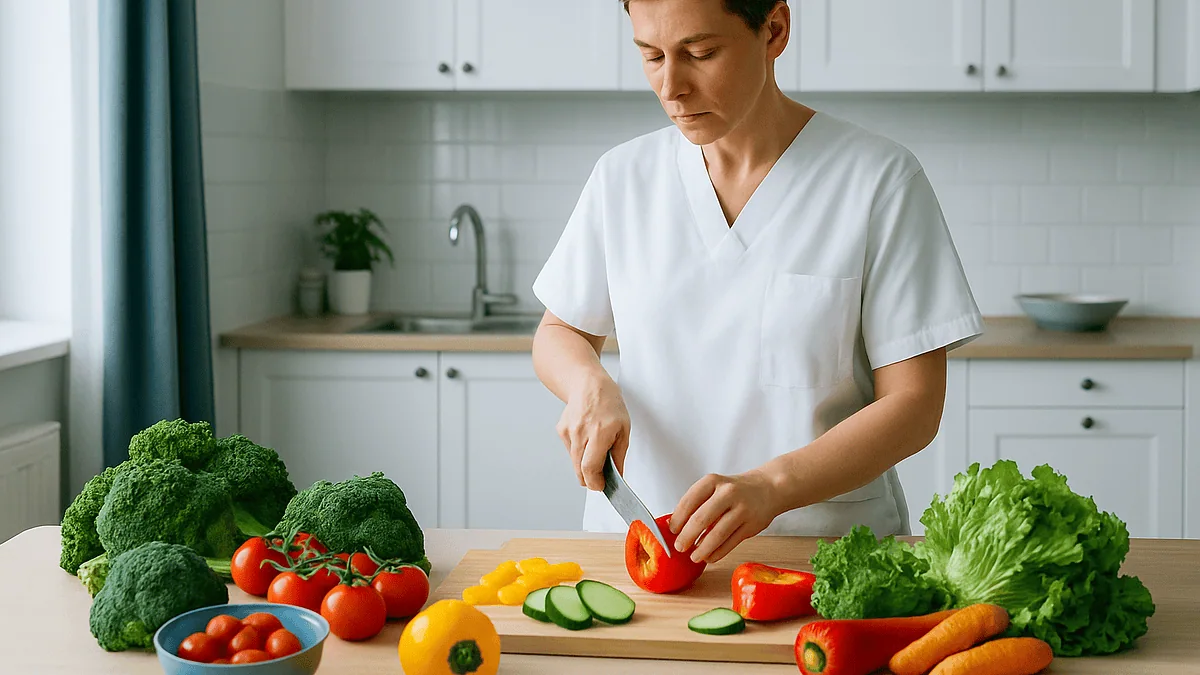
Key Takeaways
- The clear liquid stage of a diverticulitis recovery diet is typically a few days, according to Mayo Clinic, and staying on it longer without improvement is a reason to call rather than continue.
- About three in four people with acute diverticulitis have an uncomplicated episode, since Mayo Clinic reports that roughly a quarter develop complications such as an abscess or perforation.
- Research summarized by the NIH and Harvard Health has not found that nuts, seeds or popcorn raise the risk of diverticulitis, so a lifelong ban is not supported by evidence.
- The NHS target of about 30 grams of fiber a day should be reached gradually over a couple of weeks, with extra fluid, once a flare has completely settled.
- Diverticular bleeding is usually painless and separate from diverticulitis, and more than a small amount of red or maroon blood warrants same-day assessment.
- Stimulant laxatives and bulk-forming fiber are both unsuitable during a flare because they increase bowel work; any laxative choice mid-episode should come from the prescribing clinician.
A diverticulitis diet during recovery usually moves through three stages: clear liquids for a few days while the inflamed colon rests, then low fiber foods as pain eases, then a gradual return to a high fiber diet once symptoms have settled. The timing of each step depends on how you feel and on your care team's advice, since a complicated flare may need a different plan.
The discharge sheet says clear liquids. The pantry says whole-grain crackers, lentil soup and the bag of almonds you bought because every article about colon health told you to eat more fiber. For a day or two the kitchen feels like a trap, and the question that keeps surfacing is simple: what am I actually allowed to eat, and for how long?
That confusion is understandable. The diverticulitis diet during recovery asks you to do, briefly, the opposite of what long-term gut health advice recommends. Fiber is the thing that helps prevent flares, yet during a flare it is the thing you are asked to set aside. Both pieces of advice are right; they just belong to different moments.
This explainer walks through the three stages in order, explains why each exists, separates the evidence from the folklore about seeds and popcorn, and sets out plainly when a stomach ache stops being a diet question and becomes a phone call to your doctor.
Why the diverticulitis diet during recovery changes in stages
Diverticula are small pouches that form where the muscular wall of the colon has weakened, most often in the lower left segment called the sigmoid colon. Having them is called diverticulosis, and it is extraordinarily common: Harvard Health notes that roughly half of people over 60 have these pouches, usually without ever knowing. Diverticulitis is different. It means one or more of those pouches has become inflamed or infected, which is why it hurts.
The staged diet follows the biology of that inflammation. An inflamed segment of bowel is swollen, tender and slower to move contents along. Anything that adds bulk or requires vigorous contractions to push through is likely to increase cramping. So the first move is to give the colon very little work: clear liquids that leave almost no residue. As swelling settles, soft, low fiber foods reintroduce calories and protein without much bulk. Only once the pain has gone does fiber come back, because over the long term a fiber-rich diet keeps stool soft and reduces pressure inside the colon, which is the mechanism thought to matter most for preventing the next episode.
Think of it less as a treatment and more as a sequence of permissions. Mayo Clinic describes the clear liquid stage as lasting a few days, with low fiber foods added as you start to feel better and a return to high fiber once symptoms have resolved. None of those transitions run on a fixed calendar. The signal to move forward is how you feel, and if your care team has prescribed medicines, how you are responding to them.
Stage one: the diverticulitis clear liquid diet, and what counts as clear
Clear does not mean colorless. It means you could read print through it and it leaves next to nothing behind in the bowel. The practical list, drawn from Mayo Clinic and MedlinePlus guidance, is short.
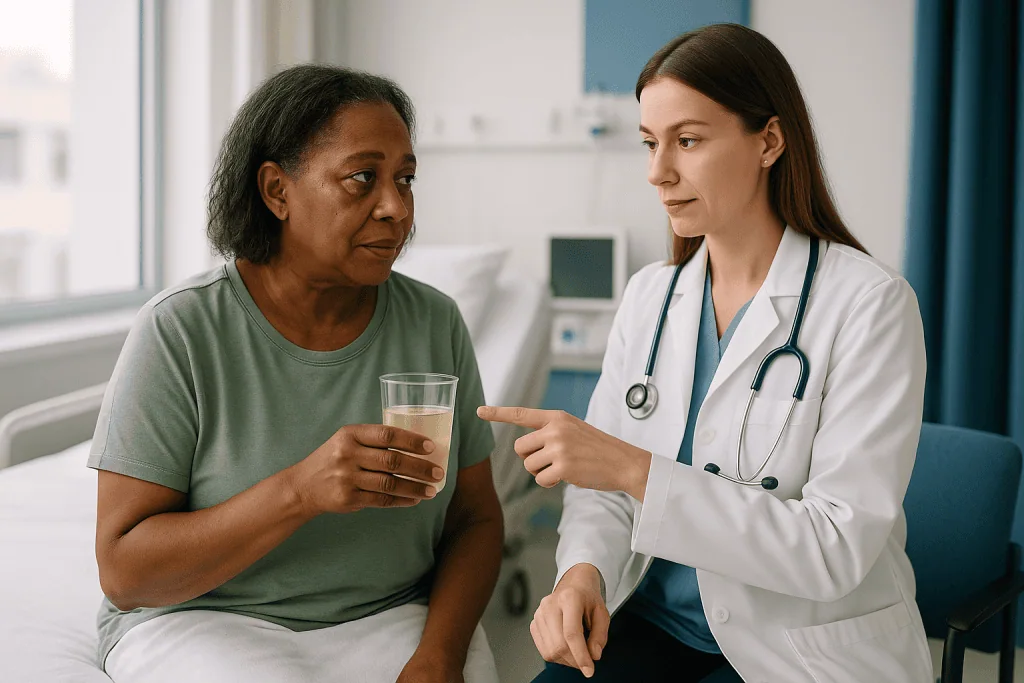
- Water, including sparkling water
- Clear broth or bouillon, strained of solids
- Fruit juices without pulp, such as apple or white grape
- Plain gelatin
- Ice pops without fruit pieces or dairy
- Tea or coffee without milk or cream
What this stage does well is hydration and bowel rest. What it does poorly is nutrition. Clear liquids supply water, a little sugar and some sodium, but almost no protein and few vitamins. That is why Mayo Clinic frames it as a few-day measure, not a week, and why anyone who is still on clear liquids after that window with no improvement should be back in contact with their care team rather than pushing on alone.
Two practical notes help people get through it. First, sip steadily rather than gulping; a swollen colon tolerates small, frequent volumes better than a large glass drunk fast. Second, warm broth with a pinch of salt is often easier on a nauseated stomach than cold sweet juice, and it replaces some of the sodium lost if you have had loose stools.
People who have diabetes, kidney disease or are pregnant should not improvise a clear liquid diet on their own; the sugar load from juice and the low calorie intake can both cause problems that need a clinician’s input. The same applies to anyone who has been told their diverticulitis is complicated, which the next sections explain.
Stage two: the low fiber diet for diverticulitis, sometimes called low residue
Residue is simply the undigested material, mostly fiber, that reaches the colon and forms stool. A low fiber diet for diverticulitis keeps that bulk small while finally giving you real food. MedlinePlus and Mayo Clinic list the typical building blocks.
- White bread, white rice, plain pasta, refined crackers and low fiber cereals
- Eggs, poultry, fish and tender, well-cooked meat without gristle
- Canned or well-cooked vegetables without skins or seeds, such as peeled carrots, green beans and potatoes without skin
- Canned or soft fruit without skin, including applesauce, ripe bananas and canned peaches
- Dairy if you tolerate it: milk, yogurt without added fruit or nuts, mild cheese
- Fruit and vegetable juices without pulp
The foods held back at this stage are the ones that would normally be praised: whole grains, beans and lentils, raw vegetables, fruit skins, nuts and seeds. Their absence is temporary and deliberate.
Portion rhythm matters as much as the list. Small meals every three to four hours tend to be tolerated better than two large ones, because each meal triggers a reflex that makes the colon contract. Cooking methods help too; steaming, poaching and slow cooking soften fibers that remain in otherwise low residue foods.
This stage can feel oddly indulgent, white toast and eggs for breakfast, chicken and white rice for dinner. That is fine for a short stretch. It becomes a problem only if it lingers. A low fiber pattern kept for weeks tends to produce hard, infrequent stools, which is the opposite of what a colon with diverticula needs. Mayo Clinic’s guidance is to begin adding fiber back once you feel better and your care team agrees, and the following section covers how to do that without provoking symptoms.
Stage three: when to reintroduce fiber after diverticulitis, and how fast
The honest answer to when is: once the abdominal pain has resolved and you are eating low fiber foods comfortably, with your care team’s agreement. There is no fixed day on which fiber becomes safe again. Mayo Clinic ties the transition to feeling better rather than to a date, and NHS guidance stresses that fiber should be increased gradually, because a sudden jump causes bloating and wind even in a healthy gut.
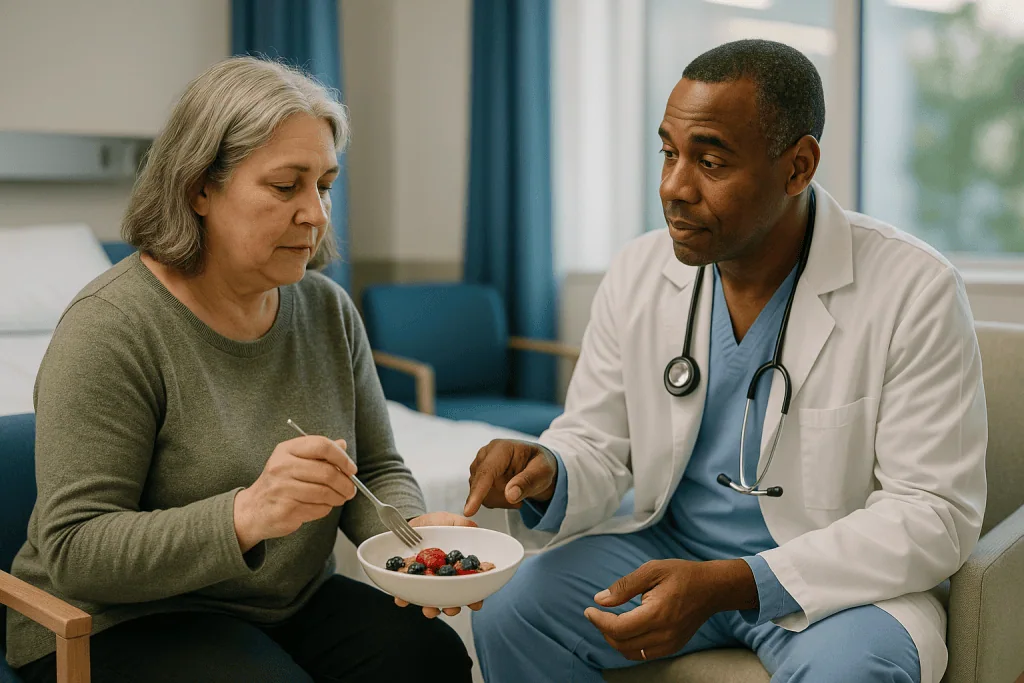
The how is where most people go wrong, usually by being too enthusiastic. A reasonable approach, consistent with NHS and NIH advice, looks like this.
- Add one new higher fiber food every two or three days rather than several at once.
- Start with cooked rather than raw: oatmeal before muesli, stewed fruit before an apple with its skin, well-cooked lentils before a raw salad.
- Increase fluid alongside fiber. Fiber absorbs water, and without enough of it the stool becomes harder, not softer.
- Keep a simple note of what was added and how you felt that day, so a return of cramping can be traced to a specific food rather than blamed on the whole plan.
The target is the ordinary adult recommendation. The NHS puts that at about 30 grams of fiber a day, a figure most adults in the US and UK fall well short of. Reaching it from a low fiber baseline typically takes a couple of weeks of steady additions, and the NHS notes that the benefits of a high fiber diet may take a few weeks to be felt.
One more point deserves plain language. Reintroducing fiber is not optional. It is the part of the diverticulitis diet during recovery that addresses the future rather than the present flare, and skipping it because the low fiber phase felt comfortable leaves you where you started.
Diverticulitis diet during recovery at a glance: a stage-by-stage table
The table below pulls the three stages together. The timing column gives typical ranges drawn from Mayo Clinic and NHS guidance; it is a description of what is common, not a schedule to follow regardless of symptoms.
| Stage | Purpose | Typical foods | Usual duration | Signal to move on |
|---|---|---|---|---|
| Clear liquids | Rest the inflamed colon, keep hydrated | Water, strained broth, pulp-free juice, plain gelatin, tea without milk | A few days (Mayo Clinic) | Pain easing, able to tolerate fluids, care team agrees |
| Low fiber | Restore calories and protein with little bulk | White bread and rice, eggs, poultry, fish, peeled cooked vegetables, soft fruit without skin, plain dairy | Until symptoms resolve, often a few days to a week or so | No abdominal pain, normal appetite, bowel habit settling |
| High fiber | Soften stool and lower colon pressure to reduce future flares | Whole grains, beans and lentils, vegetables, fruit with skin, nuts and seeds | Ongoing, built up over a couple of weeks (NHS) | Reached about 30 g of fiber a day comfortably |
Two caveats sit behind every row. First, the durations overlap because people recover at different rates; someone with a mild first episode may be eating normally within a week, while someone who needed hospital care may be guided through the stages more slowly. Second, the table applies to uncomplicated diverticulitis managed at home. When a flare involves an abscess, a perforation or a blockage, the diet is set by the treating team around the specific complication, and the table is no longer the right guide.
Who is usually asked to follow the staged diet at home, and who is asked to wait
The staged diet is designed for uncomplicated diverticulitis: inflammation confined to the pouch and the tissue immediately around it, with no abscess, no hole in the bowel wall and no obstruction. Most episodes fall into this category. Mayo Clinic notes that about a quarter of people with acute diverticulitis develop complications, which means roughly three in four do not.
For that majority, care is typically at home. It may include a short course of antibiotics, medicines that kill or stop the growth of bacteria, although Mayo Clinic and other guideline sources now note that antibiotics are not always needed for mild, uncomplicated episodes and that this decision rests with the clinician who assessed you. A pain reliever may be suggested. The diet runs alongside, and Mayo Clinic advises that people treated at home commonly start to feel better within two or three days.
Some people are asked to wait before following any home diet plan, or to follow a different one entirely.
- Those with a complication on imaging, such as an abscess (a walled-off pocket of pus), a perforation or a fistula (an abnormal connection between the bowel and another organ), are usually treated in hospital, often with intravenous fluids and antibiotics and sometimes with a drainage procedure or surgery.
- Those who cannot keep fluids down, since the clear liquid stage depends on being able to drink.
- Those with a weakened immune system, significant kidney or heart disease, or who are pregnant, because dehydration and low intake carry extra risk.
- Those whose pain is worsening rather than settling after the first day or two, which may mean the diagnosis or the plan needs revisiting.
Being told to wait is not a setback. It means the team wants a clearer picture of what is happening inside the colon before handing the next steps back to you.
What the following days and weeks usually look like
Recovery from an uncomplicated flare has a recognizable shape, even though the pace varies. The first two or three days are usually the worst for pain and the most restrictive for food. Mayo Clinic’s guidance is that people managed at home typically notice improvement in that window; the cramping becomes less constant, the left lower abdomen is less tender to press, and appetite starts to return.
Around that point, with your care team’s agreement, low fiber foods come in. Over the following several days most people find bowel movements settle into a more predictable pattern. Some mild bloating is common as the gut readjusts to solid food. What should not happen is a return of sharp pain, fever or vomiting; those are reasons to stop advancing and make contact.
Once pain has fully resolved, the fiber rebuild begins and stretches across a couple of weeks or more, as described earlier. The NHS notes that benefits of a higher fiber diet may take a few weeks to show, so a bowel habit that is still slightly irregular at week two is not a sign the plan has failed.
Follow-up is part of this period. Many clinicians arrange a review within a few weeks to confirm the episode has settled, and some recommend a colonoscopy, an examination of the colon lining with a flexible camera, a number of weeks after recovery to make sure nothing else was contributing to the symptoms. Mayo Clinic describes this as common after a complicated episode or a first episode. Whether it is needed in your case is a decision for your care team, and it is worth asking about before you leave the first appointment.
Fatigue often outlasts the pain. Eating very little for days, plus the inflammatory process itself, leaves many people tired for a week or two after they feel otherwise well. Rest, fluids and a gradual return to activity are reasonable; sudden vigorous exercise is not.
Foods to avoid with diverticulitis: what the evidence actually says about nuts, seeds and popcorn
For decades, people with diverticula were told to avoid nuts, seeds, popcorn and anything with small hard particles, on the theory that a fragment could lodge in a pouch and set off inflammation. It was plausible, widely taught and, as far as the best available evidence shows, wrong.
The NIH’s National Institute of Diabetes and Digestive and Kidney Diseases states that research has not found that eating nuts, seeds or popcorn increases the risk of diverticulitis, and Harvard Health reports that a large long-term study of men found no increased risk, with nut and popcorn eaters if anything slightly less likely to develop diverticulitis. Mayo Clinic has reached the same conclusion. These foods are high in fiber, which is precisely what a colon with diverticula benefits from once a flare has passed.
So which foods to avoid with diverticulitis are genuinely worth avoiding? The honest answer separates by stage.
- During a flare: high fiber foods of every kind, because the problem is bulk, not particle size. That includes whole grains, beans, raw vegetables, fruit skins and, yes, nuts and seeds, but for the same reason as everything else on the list.
- After recovery: no specific food is proven to trigger diverticulitis. Observational research summarized by Harvard Health links a pattern high in red and processed meat and low in fiber with higher risk, and a fiber-rich pattern with lower risk. That is about overall eating pattern, not a forbidden-foods list.
If a particular food reliably gives you cramping or bloating, it is sensible to limit it, and a dietitian can help you tell a true intolerance from coincidence. What the evidence does not support is a lifelong ban on an entire category of nutritious food based on a theory that has not held up.
What is the best fiber supplement for diverticulosis?
Food first is the consistent guideline position, because fiber from whole foods comes with water, vitamins and the slow-release energy that supplements lack. The NHS and NIH both frame supplements as a way to close the gap when diet alone does not reach the target, not as a replacement for vegetables, fruit, legumes and whole grains.
Within that frame, the fiber supplements most often discussed in guideline-level sources fall into two broad types. Soluble, gel-forming fibers such as psyllium husk absorb water and soften stool. Methylcellulose works in a similar bulk-forming way. Wheat bran, an insoluble fiber, adds bulk but can be harsher on a sensitive gut and causes more wind for many people. NHS guidance on diverticular disease notes that bulk-forming laxatives may be suggested if constipation is a problem, with the choice and timing left to the clinician.
No supplement has been shown in high-quality trials to prevent diverticulitis outright, and that uncertainty is worth stating plainly. What has reasonable support is the simpler claim that adequate fiber, from any source, keeps stool soft and reduces straining and pressure inside the colon.
If you and your care team decide a supplement is worthwhile, three practical rules apply whatever the product: introduce it only once the flare has fully settled, start with less than the label suggests and build up over a week or two to limit bloating, and drink more water than you think you need, since gel-forming fibers without enough fluid can worsen constipation rather than ease it. Anyone with a history of bowel narrowing or swallowing difficulty should check first, because bulk-forming fibers can be unsuitable in those situations.
Which specific product suits you depends on your bowel habit, other conditions and medicines. That is a conversation for your clinician or a registered dietitian, not a decision to be made from a shelf.
Can I take a laxative with a diverticulitis flare-up, and can exercise aggravate it?
These two questions arrive together because both are about pushing a sore colon to do more. The answers differ.
On laxatives: do not start one on your own during a flare. Stimulant laxatives work by making the bowel wall contract harder, which is the last thing an inflamed segment needs and can sharply worsen cramping. Bulk-forming fibers are also unsuitable mid-flare, for the bulk reasons already covered. If constipation is part of the picture, or if a pain medicine is making it worse, a clinician may choose a gentle stool softener or an osmotic laxative, which draws water into the stool rather than forcing contractions. That is a judgment about your specific situation, including whether there is any sign of blockage, and it belongs to the prescribing clinician. The NHS notes that bulk-forming laxatives are more often a tool for diverticulosis between flares, not during one.
On exercise: during the acute phase, rest. Vigorous activity will not rupture a diverticulum, but it will intensify pain, and the fatigue of eating very little makes exertion unwise anyway. Gentle walking once the worst pain has passed is generally fine and helps bowel movement.
Between flares the picture flips. Harvard Health reports that vigorous physical activity has been associated with a lower risk of diverticulitis in long-term observational studies, likely because activity speeds transit through the colon and reduces pressure. Regular movement, then, sits alongside fiber as part of the long-term plan rather than as a threat to it.
A caution: if exercise brings on new abdominal pain after a flare has settled, that is a reason to stop and check in, not to push through.
Do you bleed with diverticulitis? Why bleeding and inflammation are usually separate problems
People often expect bleeding and pain to arrive together. In diverticular disease they usually do not, and knowing why helps you describe symptoms accurately when you call.
Diverticulitis, the inflamed pouch, typically causes pain, tenderness, fever, nausea and a change in bowel habit. Visible bleeding is not a usual feature, although a small amount can occur. Diverticular bleeding is a different event: a small artery that runs over the dome of a pouch erodes and bleeds into the bowel. Harvard Health and Mayo Clinic describe it as typically painless and often sudden, with bright or dark red blood in the toilet rather than a streak on paper. It can happen in someone who has never had a flare.
What this means in practice:
- A little blood mixed with stool during a flare is worth mentioning at your next contact with the care team.
- Any significant amount of red or maroon blood, with or without pain, is a same-day call and often an emergency department visit, because diverticular bleeding can be heavy even though it often stops on its own.
- Black, tarry stool suggests bleeding higher in the gut and needs urgent assessment regardless of cause.
Diet does not cause or stop diverticular bleeding, so no stage of the recovery diet should be used as a way to manage it. Medicines that affect clotting, including some over-the-counter pain relievers, can raise the risk, which is one reason clinicians usually ask what you take; never stop a prescribed blood thinner on your own because of this concern. Report the bleeding, and let the team weigh the risks.
What people often get wrong about the diverticulitis recovery diet
The myths around this condition are durable because many of them sound sensible. Here are the ones clinicians correct most often.
Staying on clear liquids until the pain is completely gone. A few days is the usual window described by Mayo Clinic. Stretching it to a week or more starves you of protein and energy and slows recovery. If pain persists beyond that, the answer is a call, not more broth.
Treating the low fiber phase as the new normal. It is comfortable, and that comfort tempts people to stay. Weeks of white bread and no vegetables lead to hard stool and more straining, which raises pressure in the colon. The whole point of the sequence is to get back to high fiber.
Banning seeds, nuts and popcorn for life. Covered above, and not supported by the evidence from NIH or Harvard Health.
Adding all the fiber back in one day. The result is bloating, wind and sometimes cramping that gets misread as a new flare. Gradual is the word in every guideline.
Assuming a low fiber diet is the same as a bland diet. Spice is not the issue; bulk is. Plenty of mildly seasoned food is fine in stage two if the fiber content is low. Equally, a very bland but high fiber bowl of bran is wrong for that stage.
Believing probiotics or special supplements will prevent the next episode. Evidence here is limited and inconsistent, and no mainstream guideline currently recommends a specific product for prevention. It is reasonable to say the question is open rather than answered.
Thinking surgery is inevitable. Most people with uncomplicated diverticulitis never need it. Surgery is considered for recurring or complicated disease, and that decision is individual and sits with the treating team.
Questions to ask your care team before you go home
The best time to ask about the diet is while the clinician is still in front of you, because the sheet you take home will not answer the questions specific to you. These are the ones worth writing down.
- Was my diverticulitis uncomplicated on imaging, and does that mean the standard staged diet applies to me?
- How will I know it is time to move from clear liquids to low fiber foods, and what should make me stop and call instead?
- Do I need antibiotics for this episode, and if so what does the typical timeline for improvement look like with them?
- Which pain relievers are suitable for me, and are there any I should avoid because of bleeding risk or my other medicines?
- If I become constipated during recovery, what should I do, and is there a laxative or stool softener you would prefer over others?
- When should I start adding fiber back, and is there a dietitian I can see to plan that?
- Do I need a colonoscopy after this episode, and if so roughly when?
- How long should I avoid strenuous exercise or heavy lifting?
- Do any of my existing medicines or conditions change this advice?
- What symptoms would mean this is becoming a complication, and whom do I call out of hours?
It also helps to say out loud what you are worried about. Someone who dreads a repeat episode will get more useful advice if they say so, because the conversation can then turn to long-term prevention rather than just the next few days. Someone who lives alone or has limited help with cooking should mention that too; a low fiber plan that depends on preparing fresh meals three times a day may need adjusting to what is actually possible in their kitchen.
When to call your doctor: red-flag signs during a diverticulitis recovery diet
Most episodes of uncomplicated diverticulitis improve steadily. The diet stages assume that steady improvement. When it does not happen, or when new symptoms appear, the plan changes from eating carefully to getting assessed. Mayo Clinic, the NHS and MedlinePlus list the following as reasons to contact your care team the same day, or to seek emergency care if severe.
- Abdominal pain that is getting worse rather than better, or pain that has spread across the whole abdomen
- A fever that is high or that returns after settling, or shaking chills
- Repeated vomiting, or inability to keep clear liquids down
- No bowel movement or gas for more than a day or two alongside bloating and pain, which can suggest a blockage
- A rigid, hard abdomen that hurts badly when touched or when you move, which can signal a perforation
- Rectal bleeding of more than a small amount, or black, tarry stool
- Dizziness, fainting, a racing heart or very little urine, which can indicate dehydration or blood loss
- No improvement at all after two or three days of the home plan, which is the window Mayo Clinic describes for expected improvement
Between those extremes there is a quieter category: symptoms that are not dangerous but suggest the plan needs adjusting. Persistent constipation, a food that reliably brings back cramping, or a return of mild pain when fiber is added are all worth a routine call rather than guesswork at home.
No article can tell you which category you are in. The staged diet is a framework that most people move through without trouble, but the judgment about whether your recovery is on track, and every decision about medicines, procedures or a change of plan, belongs to the clinicians who examined you and can see your scan results. Use this guide to ask better questions, not to replace their answers.
Frequently asked questions
What can I drink on a diverticulitis clear liquid diet?
Water, strained broth, fruit juice without pulp, plain gelatin, ice pops without dairy or fruit pieces, and tea or coffee without milk. The test is whether you could see through it and whether it leaves residue in the bowel. Milk, smoothies, soups with solids and juices with pulp do not qualify. Mayo Clinic describes this stage as lasting a few days, after which low fiber foods are added with your care team’s agreement.
How long does a low fiber diet for diverticulitis last?
Usually until abdominal pain has resolved and you are eating comfortably, which for many people with an uncomplicated episode is a matter of days rather than weeks. Mayo Clinic ties the move to high fiber foods to feeling better rather than to a fixed date. Staying low fiber for a prolonged period tends to cause constipation, so once symptoms settle the aim is to begin a gradual return to fiber with your clinician’s agreement.
When should I reintroduce fiber after diverticulitis?
Once pain has fully gone and solid low fiber food is being tolerated, and after your care team confirms the episode has settled. Add one higher fiber food every two or three days, starting with cooked options such as oatmeal or stewed fruit, and increase water alongside. The NHS advises building fiber gradually toward about 30 grams a day, and notes benefits may take a few weeks to be felt.
What are the main foods to avoid with diverticulitis during a flare?
During an active flare the foods to limit are high fiber ones: whole grains, beans and lentils, raw vegetables, fruit with skin, nuts and seeds. The reason is bulk, which makes an inflamed colon work harder. After recovery, no single food has been proven to trigger diverticulitis, and NIH guidance specifically states that nuts, seeds and popcorn have not been shown to increase risk.
What is the best fiber supplement for diverticulosis?
Guidelines favor fiber from food first, with a supplement used to close any gap. Gel-forming soluble fibers such as psyllium and bulk formers such as methylcellulose are the types most often discussed; wheat bran is harsher for many people. No supplement has been proven to prevent diverticulitis. The right choice depends on your bowel habit and other conditions, so decide it with your clinician or a dietitian, introduce it only after a flare has settled, and drink plenty of water.
Can exercise aggravate diverticulitis?
During a flare, strenuous activity worsens pain and is best avoided, with gentle walking resumed as the worst pain passes. Between episodes the evidence points the other way: Harvard Health reports that vigorous physical activity is associated with a lower risk of diverticulitis in long-term observational studies, probably because it speeds transit through the colon. If exercise brings on new abdominal pain after recovery, stop and check with your care team.
Do you bleed with diverticulitis?
Not usually. Diverticulitis typically causes pain, fever and nausea rather than visible bleeding. Diverticular bleeding is a separate event in which a small artery over a pouch erodes; it is often painless and can occur without any inflammation. A small streak of blood during a flare should be mentioned to your care team, while more than a small amount of red or maroon blood, or black tarry stool, needs same-day assessment.
Can I take a laxative with a diverticulitis flare-up?
Not without asking your care team. Stimulant laxatives make the bowel contract harder, which can sharply worsen cramping in an inflamed colon, and bulk-forming fibers add the very bulk the recovery diet is trying to reduce. If constipation is a problem during a flare, a clinician may choose a stool softener or an osmotic laxative after checking there is no sign of blockage. That decision belongs to the prescribing clinician.
Do I need antibiotics for diverticulitis if I am following the diet?
Not always. Mayo Clinic notes that mild, uncomplicated diverticulitis is sometimes managed without antibiotics, while complicated episodes or those in people at higher risk usually are treated with them. Antibiotics work by killing bacteria or stopping their growth, and people treated at home commonly improve within two or three days. Whether you need them, and which one, is a judgment for the clinician who assessed you, and the diet runs alongside whichever plan they choose.
Will I need a colonoscopy after a diverticulitis episode?
Often, but not always. Mayo Clinic describes a colonoscopy some weeks after recovery as common following a complicated episode or a first episode, to examine the colon lining and rule out other causes of the symptoms. It is not performed during the flare itself because the bowel is inflamed. Whether it is recommended in your case depends on your age, imaging findings and history, and is a decision for your treating team.
References
- NHS: Diverticular disease and diverticulitis
- NIH NIDDK: Eating, diet and nutrition for diverticular disease
- MedlinePlus: Diverticulitis and diverticulosis, discharge
This article is for general information only and is not a substitute for professional medical advice. Please consult a qualified doctor about your individual situation.
Add us as a Preferred Source to see more of our trusted health content across Google Search, AI Overviews and Discover.

More from the Blog
Is Early or Delayed Surgery Better for Cholecystitis? What Surgeons Weigh Once It Settles
For most people with acute cholecystitis who are fit for an operation, current evidence favors early laparoscopic gallbladder removal during the same hospital admission…

Which Tests Come Before ERCP? How Blood Work and Scans Shape the Procedure Plan
Tests before ERCP usually include a liver blood panel (bilirubin, alkaline phosphatase, ALT and AST), a pancreas enzyme such as lipase, clotting and platelet…

Sore Throat After Vomiting: Why Stomach Acid Irritates It, What Helps and When It Needs Attention
A sore throat after vomiting is usually caused by stomach acid passing over the delicate lining of the esophagus and throat, plus the physical…
Blood Work, Stool Markers, Scans and Endoscopy: How Crohn’s Disease Is Confirmed
Crohn's disease is confirmed by combining several tests rather than one. Blood work looks for anemia and inflammation markers, a stool test for fecal…

What Does Bile Do? Where It Is Made, How It Digests Fat and What Blocks Its Flow
Bile is a yellow-green digestive fluid made continuously by the liver, stored and concentrated in the gallbladder, and released into the small intestine after…
Finding the Source of Gastrointestinal Bleeding: Endoscopy, Colonoscopy and Capsule Scans
Doctors find the source of gastrointestinal bleeding by matching the test to the most likely location. Upper endoscopy examines the esophagus, stomach and first…