Diverticulitis Treatment
Diverticulitis treatment manages inflamed or infected colon pouches with diet changes, antibiotics, drainage, or surgery for complications, aiming to control infection and prevent recurrence.
Quick answer
Diverticulitis is inflammation or infection of small pouches (diverticula) that form in the wall of the colon. Mild cases are usually treated with rest, fluids, a short modified diet and sometimes antibiotics. Complicated cases, abscess, perforation or obstruction, may need hospital care, image-guided drainage or surgery. After recovery, a high-fibre diet is often recommended to help reduce the risk of further episodes.
What is diverticulitis?
Diverticulitis is inflammation or infection of small pouches, called diverticula, that can form in the wall of the colon. When one or more of these pouches becomes inflamed, the usual result is persistent abdominal pain, most often in the lower left side, sometimes with fever, nausea and a change in bowel habit. Diverticulitis ranges from a mild episode that settles with simple medical care to a serious abdominal infection involving abscess, perforation or obstruction that needs hospital treatment or surgery.
That range is the single most important thing to understand about this condition. Two people with the same word on their diagnosis can need entirely different care. One may recover at home within a week or two on a short modified diet and, in some cases, a course of antibiotics. Another may need intravenous treatment, image-guided drainage of an abscess, or an operation to remove the affected segment of colon. The severity of the inflammation, the presence or absence of complications, your immune status and your overall health decide which path applies to you, not the diagnosis label alone. This is why diverticulitis treatment is not a single medication or operation but a structured plan built around imaging findings and clinical assessment.
Diverticulosis: the condition behind the attack
Diverticulosis means diverticula are present in the colon but are not inflamed. It is common, and it becomes more common with increasing age. Most people with diverticulosis never develop diverticulitis; the pouches sit quietly in the colon wall and are often discovered incidentally during a colonoscopy or a CT scan performed for another reason. Diverticulosis is best understood as an anatomical finding rather than an illness in its own right: the starting condition from which diverticulitis can, in a minority of people, develop. Having diverticulosis on a scan report does not mean an attack is coming, and it does not by itself require treatment.
What are diverticulosis symptoms?
Diverticulosis symptoms are usually absent. Most people do not know they have diverticula until imaging or endoscopy finds them. Some people report intermittent bloating, cramping or an irregular bowel habit, but these complaints overlap heavily with other common gut conditions and cannot reliably be attributed to the pouches themselves. Occasionally a diverticulum bleeds, producing visible blood in the stool without pain. That is a separate problem from diverticulitis and is investigated in its own right, because bleeding from the bowel has several possible causes and some of them are unrelated to diverticular disease altogether.
Diverticulitis symptoms
Diverticulitis symptoms usually centre on abdominal pain that is persistent rather than fleeting: a steady ache or sharp pain that does not fade after a bowel movement or a night’s sleep. Because the sigmoid colon sits in the lower left abdomen, that is where pain most commonly settles, although the location can differ depending on individual colon anatomy; in some people, particularly those of Asian descent, right-sided diverticulitis occurs and can closely resemble appendicitis. Alongside pain, patients may notice fever, chills, nausea, vomiting, bloating, loss of appetite, constipation or diarrhoea, and sometimes urinary discomfort when the inflamed segment of colon lies against the bladder.
What does diverticulitis feel like?
For most people, diverticulitis feels like a constant, localised pain in the lower left abdomen that worsens over hours to days rather than coming and going in waves. Many describe tenderness when the area is pressed, discomfort when moving or coughing, and a general sense of being unwell, tired, feverish, off food. The pain of an acute attack is usually distinguishable from ordinary indigestion or wind by its persistence and its fixed location. In people taking steroids, chemotherapy, biologic immune therapies or transplant medications, the picture can be quieter and more misleading: the immune response that normally produces fever and marked tenderness may be blunted, so a serious infection can present with surprisingly mild complaints. This is one reason doctors assess immunocompromised patients with particular care.
What are the symptoms of a diverticulitis flare-up?
A flare-up typically announces itself with the return of that familiar lower abdominal pain, often accompanied by low-grade fever, bloating, a change in bowel habit and reduced appetite. People who have had previous episodes often recognise the pattern early. What varies is intensity: some flares stay mild and settle with medical care, while others escalate quickly. Features that suggest a flare is becoming complicated include high or climbing fever, pain that spreads across the abdomen rather than staying in one spot, persistent vomiting, abdominal swelling, and inability to pass stool or gas. These findings change the urgency and setting of care, because they raise the possibility of abscess, perforation or obstruction rather than simple inflammation.
What does poop look like with diverticulitis?
There is no single stool appearance that confirms diverticulitis, and in many attacks the stool looks entirely normal. Some people become constipated as the inflamed segment of colon narrows temporarily; others develop diarrhoea as the bowel becomes irritable. Stools may become thinner or ribbon-like if repeated inflammation has scarred and narrowed the colon over time. Blood in the stool can occur with diverticular disease, more often from a bleeding diverticulum than from diverticulitis itself, and mucus is sometimes present. It is worth being honest about the limits here: stool appearance alone can neither diagnose nor exclude diverticulitis, and visible blood is investigated in its own right because it can also signal other conditions, including colorectal cancer.
What causes diverticulitis?
What causes diverticulitis is not fully settled, but the general picture is clear. Diverticula form at weak points in the colon wall, typically where small blood vessels pass through the muscle layer, and pressure inside the colon pushes the inner lining outward through these points. Diverticulitis develops when a pouch becomes inflamed, historically thought to result from a blockage of the pouch by a small piece of stool, and now understood to involve a broader mix of micro-injury to the pouch lining, changes in the local gut bacteria and the body’s inflammatory response.
Several factors are associated with a higher likelihood of developing diverticular disease or an attack: increasing age, a low-fibre diet, low physical activity, obesity, smoking, and the use of certain medications, including nonsteroidal anti-inflammatory drugs in some patients. None of these factors causes diverticulitis on its own, and people without any of them can still have an attack. What they do is shift probability, which is also why long-term management focuses on the modifiable ones: fibre intake, activity, body weight and smoking.
Is diverticulitis hereditary?
Genetics do play a role. Studies of families and twins indicate that inherited factors contribute meaningfully to the risk of diverticular disease, alongside diet and lifestyle. Having a parent or sibling with diverticulitis does not mean you will develop it, but a family history is a reasonable thing to mention to your doctor, because it forms part of the overall risk picture, particularly in younger patients or those with early or recurrent attacks. Heredity is one input among several; environment and habits still matter, and they are the parts you can influence.
How diverticulitis is diagnosed
Diagnosis matters more than it might first appear, because diverticulitis can resemble appendicitis, inflammatory bowel disease, colorectal cancer, kidney stones, urinary tract infection, gynaecological conditions and infectious colitis. Treating presumed diverticulitis without confirming the cause can delay the correct care for a different condition entirely, which is why a structured gastroenterology assessment sits at the start of the pathway.
Assessment usually begins with a detailed history and physical examination. Your doctor will ask about the location and duration of pain, fever, bowel changes, previous episodes, current medications, immune status, prior colonoscopy findings and any history of abdominal surgery. Blood tests help assess inflammation, infection, anaemia and kidney function, and establish whether you are ready for particular medications or procedures. Urine testing may be added when urinary symptoms are present, both to check for infection and because an inflamed sigmoid colon lying against the bladder can produce urinary complaints of its own.
Computed tomography of the abdomen and pelvis is the standard test for confirming diverticulitis and, crucially, for separating uncomplicated from complicated disease. CT can show inflamed diverticula, thickening of the colon wall, an abscess, air outside the colon indicating perforation, obstruction, or an alternative explanation for the pain. Ultrasound or MRI may be used in selected situations, such as pregnancy or when radiation exposure is a specific concern.
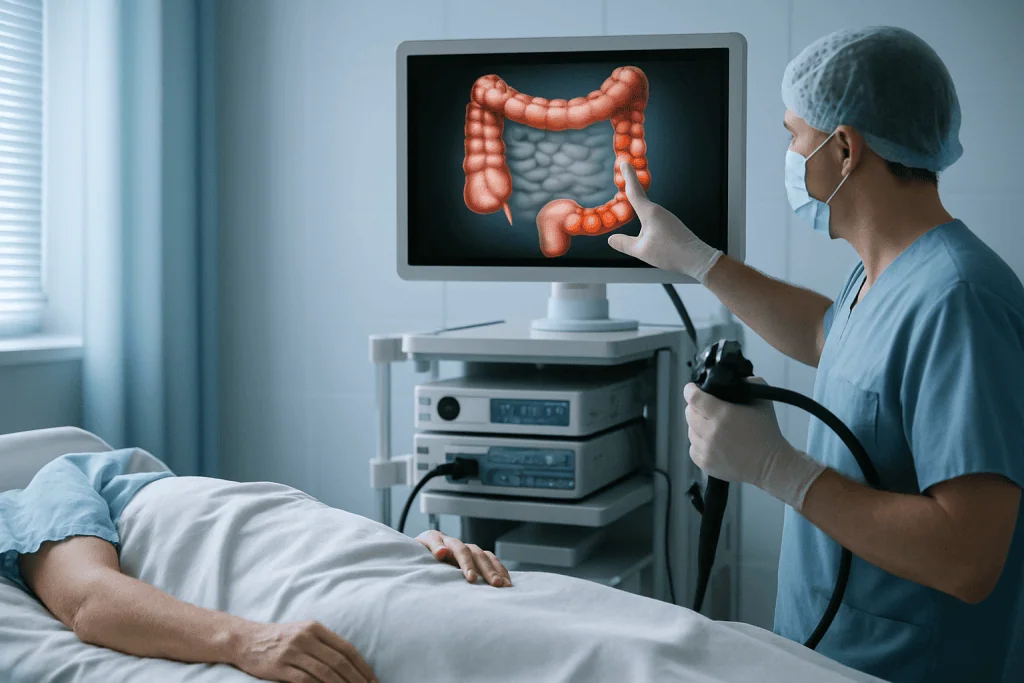
Colonoscopy is deliberately avoided during an acute attack, because the inflamed colon is more vulnerable to injury. After recovery, however, a colonoscopy is often recommended if you have not had a recent high-quality examination. The purpose is to inspect the colon directly and exclude other diseases, including colorectal cancer, that can occasionally mimic diverticulitis on symptoms or imaging. The timing is typically some weeks after the attack has settled, once the bowel has healed.
Conditions and indications addressed by diverticulitis care
Diverticulitis care covers a spectrum, from mild localised inflammation to urgent abdominal infection. The plan is adjusted to the actual diagnosis rather than applied as a standard formula for every patient.
- Uncomplicated acute diverticulitis: localised inflammation without abscess, perforation, fistula, obstruction or widespread peritonitis.
- Diverticular abscess: a pocket of pus near the inflamed colon that may respond to antibiotics or, when large or persistent, require image-guided drainage.
- Perforated diverticulitis: a tear or leak in the colon wall, ranging from a contained microperforation to free perforation with contamination of the abdomen.
- Recurrent diverticulitis: repeated episodes that erode quality of life, cause ongoing anxiety, or prompt discussion of elective surgery.
- Smouldering or persistent diverticulitis: symptoms and inflammation that never fully resolve after standard medical treatment.
- Fistula formation: an abnormal channel from the colon to the bladder, vagina, skin or another organ, which usually requires surgical repair.
- Stricture or obstruction: narrowing of the colon after repeated inflammation, causing difficulty passing stool, bloating or bowel blockage.
- Diverticular disease in medically complex patients: cases involving immune suppression, advanced age, significant heart or lung disease, kidney disease or anticoagulant medication.
The same finding carries different weight in different patients. Mild diverticulitis in a healthy adult may be managed at home; the identical imaging finding in an immunocompromised patient may call for closer monitoring or hospital-based care. Individual risk assessment sits at the centre of safe decision-making.
Diverticulitis treatment: how it is planned and performed
Diverticulitis treatment is matched to severity, and the first task is always the same: establish how serious this episode actually is and whether anything urgent is required. Everything else, diet advice, antibiotics, drainage, surgery, follows from that assessment.
Initial evaluation and treatment planning
A physician reviews your symptoms, examination findings, previous episodes, medications, allergies and underlying conditions. Previous CT scans, colonoscopy reports, operative notes, laboratory results and medication lists all add context before a plan is recommended, particularly when earlier episodes were treated at another hospital. For patients with mild symptoms and stable vital signs, care can often proceed as an outpatient. For patients with severe pain, high fever, vomiting, dehydration, markedly elevated inflammatory markers, immune suppression or imaging signs of complications, hospital evaluation is usually appropriate. When imaging shows an abscess, a perforation, obstruction or a likely need for surgery, the plan is typically discussed across specialties, gastroenterology, general surgery, radiology and, where relevant, infectious diseases and intensive care.
What is the treatment for diverticulitis?
For uncomplicated diverticulitis, treatment usually means bowel rest or a temporarily modified diet, adequate hydration, pain control and, in many patients, antibiotics. Some patients are advised to follow a clear-liquid or low-residue diet briefly, then return step by step to normal eating as pain improves; the aim is to reduce the bowel’s workload during the acute inflammatory phase while keeping fluid intake up. Antibiotics are prescribed when there is fever, significant inflammation, immune suppression, other medical risk factors or more concerning symptoms. In carefully selected patients with mild uncomplicated disease, physicians may choose observation without immediate antibiotics, supported by close follow-up. This reflects current evidence-based practice, but it is a clinical judgement made after assessment and imaging: it is not suitable for every patient, and it is not a decision to make at home.
For complicated diverticulitis, treatment escalates according to the complication: intravenous antibiotics and monitoring for more severe inflammation, drainage for a sizeable abscess, and surgery for free perforation, peritonitis, obstruction, fistula or failure of medical treatment. For recurrent disease, treatment also includes long-term planning, reviewing previous attacks, imaging and colonoscopy results, the impact on your daily life, and the honest risks and benefits of elective colon surgery. Modern practice is more personalised than it used to be: the number of previous episodes alone no longer automatically determines whether surgery is recommended. Severity of the attacks, complications, immune function, age, anatomy and your own preferences all count.
What is the best over-the-counter medicine for diverticulitis?
There is no over-the-counter medicine that treats diverticulitis itself; the underlying inflammation and any infection need medical assessment and, where indicated, prescription treatment. For pain, doctors commonly favour simple paracetamol-based analgesia, because nonsteroidal anti-inflammatory drugs are used cautiously in this condition: they have been associated with gastrointestinal complications in some patients. Which pain reliever is appropriate in your case depends on your medical history, kidney function and other medications, and that judgement belongs to your treating doctor. The broader point is worth stating plainly: masking abdominal pain with over-the-counter products while an attack progresses is the main risk of self-treatment, because pain is one of the signals doctors use to judge whether the disease is responding or worsening.
Hospital-based care for more severe attacks
Hospital treatment may include intravenous fluids, intravenous antibiotics, bowel rest, close monitoring and repeat laboratory testing. If symptoms improve, patients transition to oral medication and a gradually advancing diet. If symptoms persist or worsen, repeat imaging looks for an abscess, perforation, obstruction or an alternative cause of the ongoing illness. When a localised abscess is present, interventional radiology may be involved: using imaging guidance, a specialist places a thin drainage catheter through the skin into the abscess. In selected cases this controls the infection while avoiding emergency surgery entirely, or it stabilises the patient so that any surgery can be done later, electively, under safer conditions. The catheter may stay in place for several days or longer, depending on its output and follow-up imaging. Hospitals with structured dietetic support can also adapt meals to the required diet phase and to any allergies or restrictions, so that nutrition keeps pace with recovery rather than lagging behind it.
Surgery for diverticulitis
Surgery is considered when diverticulitis causes generalised peritonitis, free perforation, uncontrolled infection, bowel obstruction, a fistula, failure of medical treatment, or repeated episodes that significantly affect health or quality of life. The distinction between urgent and elective surgery matters. Emergency surgery focuses on controlling infection and protecting life. Elective surgery, performed after the inflammation has settled, allows for proper planning and may reduce the likelihood of needing a temporary stoma in suitable patients.
The most common operation for recurrent or complicated sigmoid diverticulitis is removal of the diseased segment of colon: a sigmoid colectomy, performed by a general surgery team experienced in colorectal procedures. When conditions are favourable, the healthy ends of bowel are reconnected in a procedure called an anastomosis. In some cases, particularly when infection is severe or the tissues are not safe to join immediately, a temporary ostomy is necessary; a second operation may later reverse it, depending on the patient’s condition and anatomy. Whenever appropriate, minimally invasive techniques are considered: laparoscopic or robot-assisted approaches use small incisions and camera-guided visualisation to remove the affected segment, and in suitable patients may support less postoperative pain and earlier mobility. Open surgery remains necessary in some emergency or complex cases. The approach is chosen on safety, disease severity, previous operations, body habitus, the degree of inflammation and the surgeon’s assessment, not on preference for one technique over another.
Technology used in diagnosis and treatment
Diverticulitis care relies on accurate imaging, precise monitoring and careful procedural planning. Cross-sectional imaging defines the extent of inflammation and detects complications. Image-guided drainage allows some abscesses to be treated through a small catheter rather than a larger operation. Modern operating theatres support high-definition visualisation, advanced energy devices for tissue control and minimally invasive surgical platforms where clinically appropriate. Laboratory monitoring tracks infection and organ function through the course of treatment. Endoscopy is used after the acute phase to evaluate the colon when indicated. Anaesthesia and perioperative monitoring support patient safety during surgery, especially for people with heart, lung, kidney or metabolic conditions.
How long does treatment take?
Duration varies with severity. An outpatient episode may improve over several days, with continued recovery over one to two weeks. Hospital care for complicated diverticulitis takes longer, especially when drainage or surgery is required. A drainage procedure itself may be brief, but the catheter needs ongoing management afterwards. Colon surgery usually means several days in hospital followed by weeks of gradual recovery. Progress is judged by pain control, resolution of fever, the ability to eat and drink, bowel function, mobility, laboratory improvement and, where needed, repeat imaging. Patients leave with instructions covering diet progression, activity, medications, warning signs and follow-up.
Diverticulitis diet: what to eat during and after an attack
A diverticulitis diet changes with the phase of the illness, and this is where much online advice goes wrong by giving one fixed list for all situations. During an acute attack, doctors often advise a temporary clear-liquid or low-residue diet to rest the bowel, followed by a stepwise return to normal food as pain settles. After recovery, the direction reverses: a high-fibre eating pattern, vegetables, fruit, legumes, whole grains, adequate fluids, is generally recommended, unless another medical condition requires something different, because fibre supports softer stool and lower pressure inside the colon. The switch from low fibre during a flare to high fibre afterwards confuses many patients, which is exactly why individual guidance from a nutrition and diet team is more useful than a generic list. A dietitian can also reconcile the diverticulitis plan with food allergies, religious requirements or restrictions imposed by other conditions such as diabetes or kidney disease, so that the phases of the diet remain practical rather than theoretical.
What are the 10 foods to avoid with diverticulitis?
Honest answer: there is no evidence-based list of ten forbidden foods, even though such lists circulate widely. The old advice to avoid nuts, seeds, corn and popcorn, on the theory that fragments lodge in the pouches, is not supported by modern research, and most physicians no longer restrict these foods in people with diverticular disease. What the evidence does support is more general: during an acute flare, temporarily reduce fibre and follow the diet your doctor sets out; after recovery, eat more fibre, not less, and limit patterns associated with higher risk, such as diets heavy in red and processed meat and low in plant foods. If a specific food reliably triggers your symptoms, it is reasonable to discuss it with your doctor or dietitian, but a personal observation is different from a universal rule, and no reputable guideline publishes a ten-item blacklist.
Why acting early matters
Early evaluation can change the course of diverticulitis. When inflammation is identified before complications develop, many patients can be treated with a less intensive plan. Delayed assessment gives infection time to expand, raising the risk of abscess, perforation, peritonitis, sepsis, obstruction or emergency surgery. Doctors treat certain features as markers of possible complicated disease, worsening or spreading pain, high fever, persistent vomiting, abdominal swelling, inability to pass stool or gas, rectal bleeding, and any attack in an immunocompromised patient, who may not mount the typical signs of infection. Findings like these change both the urgency and the setting of care.
Acting early also breaks the cycle of incomplete treatment. Persistent, smouldering inflammation can lead to scarring, narrowing, fistula formation or chronic pain. In recurrent disease, a timely specialist review clarifies whether continued medical management remains reasonable or whether elective surgery deserves discussion, before the decision is forced by another emergency, when options are narrower and risks higher.
Benefits of diverticulitis treatment
The benefits depend on the severity of disease, but the overall aim is consistent: control inflammation, prevent complications and support a safe return to normal life.
| Benefit | What it means for you |
|---|---|
| Control of infection and inflammation | Appropriate medical care reduces pain, fever and inflammatory activity while lowering the risk of progression. |
| Clear diagnosis | Imaging and specialist evaluation distinguish diverticulitis from other abdominal conditions that need different treatment. |
| Prevention of complications | Early treatment may reduce the chance of abscess, perforation, obstruction or emergency surgery in suitable patients. |
| Personalised surgical decision-making | If surgery is needed, its timing and technique are planned around your anatomy, health status and disease severity. |
| Reduced recurrence risk | Long-term strategies, diet improvement, bowel habit management, selective elective surgery, may help reduce future attacks. |
| Improved quality of life | For recurrent or persistent symptoms, effective treatment reduces uncertainty, repeated hospital visits and daily limitation. |
Recovery timeline after diverticulitis treatment
Recovery varies widely depending on whether treatment involved outpatient care, hospital antibiotics, drainage or surgery, but the following timeline describes what many patients can expect.
| Time period | What patients can expect |
|---|---|
| Day 1 | Evaluation confirms the diagnosis and severity, controls pain and nausea, starts fluids, and decides whether antibiotics, admission, drainage or surgery is needed. |
| First week | Many uncomplicated cases begin to improve. Hospitalised patients are monitored for fever, pain, bowel function, laboratory trends and response to antibiotics or drainage. |
| First month | Diet is gradually advanced, strength returns and follow-up planning begins. After surgery, activity stays limited while incisions and internal tissues heal. |
| Six to eight weeks | A colonoscopy may be advised for patients without a recent examination. Elective surgery discussions can take place once inflammation has settled. |
| Longer term | Focus shifts to recurrence prevention: bowel health, fibre intake, weight management where relevant, physical activity and awareness of returning symptoms. |
Factors that influence outcomes
Most patients with uncomplicated diverticulitis improve with appropriate treatment. Outcomes become more complex when disease is complicated by abscess, perforation, fistula, obstruction, immune suppression or delayed diagnosis. A good result depends on matching the intensity of treatment to the actual severity of disease, neither undertreating a complication nor overtreating a mild attack.
Accuracy of the initial diagnosis comes first. CT imaging determines whether a patient has uncomplicated inflammation or a complication that changes management, and it helps physicians avoid unnecessary antibiotics or surgery when the symptoms turn out to have another cause. A confident diagnosis at the start prevents a great deal of wrong treatment later.
Overall health matters as much as the scan. Diabetes, kidney disease, heart disease, lung disease, obesity, smoking, steroid use, immune suppression and anticoagulant therapy each affect infection risk, healing, anaesthesia planning and surgical recovery. None of these necessarily prevents treatment, but each requires preparation, which is why a full medical history is part of every diverticulitis plan rather than an administrative formality.
Timing influences outcomes in two ways. Patients assessed early may avoid progression, while those who present after days of worsening symptoms often need more intensive therapy. And in recurrent disease, elective surgery, when appropriate at all, is generally safer planned after acute inflammation has resolved than performed as an emergency in an inflamed abdomen.
The presence and size of an abscess shape the plan. Small abscesses may respond to antibiotics alone; larger or persistent collections usually need drainage. Successful drainage can stabilise a patient and allow any subsequent surgery to happen later, electively, under better conditions, one of the clearest examples of how staged treatment reduces overall risk.
Surgical outcomes depend on the extent of inflammation, tissue quality, patient stability, previous operations and whether the operation is urgent or elective. In elective settings, minimally invasive surgery is possible for many patients, but the final approach is determined by safety on the day. A temporary ostomy is needed in some cases, particularly when infection is severe or reconnecting the bowel immediately is not advisable.
Long-term recurrence risk is influenced by bowel habits, diet quality, physical activity, smoking, body weight, medication use and individual colon anatomy. A high-fibre eating pattern is usually recommended after recovery unless another condition requires otherwise, while fibre is temporarily reduced during an acute attack: a distinction patients should navigate with physician guidance rather than abrupt self-directed changes. Follow-up ties it together: review of imaging, response to medication, colonoscopy planning, nutritional guidance, surgical consultation where relevant, and a clear plan for recognising and responding to returning symptoms.
Diverticulitis care at Acibadem
Diverticulitis rewards careful judgement more than aggressive intervention. Not every patient needs surgery, not every abscess needs the same procedure, and the value of an experienced centre lies in assessing accurately, escalating only when necessary and explaining the reasoning clearly. At Acibadem, patients with diverticular disease are evaluated through a diagnostic pathway that can involve gastroenterology, general surgery, radiology, infectious diseases, anaesthesia, nutrition and intensive care specialists as the case requires, with complex situations reviewed through multidisciplinary discussion so that decisions reflect more than one perspective.
The practical structure matters as much as the clinical one. Previous CT scans, colonoscopy reports, operative notes, laboratory results and medication lists are reviewed before a plan is proposed, which is particularly relevant for people with a history of recurrent attacks or genuine uncertainty about whether surgery is warranted. A second opinion may confirm an earlier recommendation or offer a different view based on updated evaluation, both outcomes are useful, because the point is clarity about timing and options rather than a predetermined answer. Care planning also extends past discharge: when to return to work and exercise, how the diet should progress, and how findings will be shared with the physician who follows the patient long term are treated as part of the treatment plan, not an afterthought.
Moving forward with clarity
Diverticulitis is painful and unsettling, particularly when it arrives suddenly or returns after previous treatment. The most useful step is understanding severity: mild inflammation, abscess, perforation, obstruction and recurrent disease are genuinely different problems, and they are not managed the same way. A careful diagnosis lets treatment be appropriately cautious where caution serves you and appropriately decisive where it does not. With timely evaluation, evidence-based care and coordinated follow-up, many patients recover well and return to their normal routines; for those with complicated or recurrent disease, a structured plan reduces uncertainty and identifies the safest next step before circumstances choose it for you.
Preparation
- Evaluation usually includes a physical examination, blood tests, and abdominal imaging such as CT to confirm the diagnosis and detect complications. Patients should share all medications, allergies, and previous bowel disease history. Fasting may be required if drainage, colonoscopy planning, or surgery is being considered.
Aftercare
- Follow the prescribed diet plan, antibiotics, hydration advice, and pain control instructions. Seek urgent care for worsening abdominal pain, fever, vomiting, bleeding, or inability to pass stool. A follow-up visit and colon evaluation may be recommended after inflammation has resolved.
Frequently Asked Questions
What affects the cost of diverticulitis treatment?
The main factors are disease severity, need for hospital admission, imaging, antibiotics, drainage, surgery, anaesthesia, intensive care, length of stay and follow up. A personalised quote can only be prepared after a specialist reviews your medical information.
How can I get a personalised quote from Acibadem?
You can request a free consultation and share your CT report, blood test results, discharge notes, medication list and any colonoscopy or surgery reports. The team can then guide you on the likely care pathway and provide a tailored estimate.
Is surgery always needed for diverticulitis?
No. Many patients are managed with diet changes, medication and monitoring, while drainage or surgery is considered for selected complicated or recurrent cases. The decision must be made by a gastroenterologist or colorectal surgeon.
What is usually included in an international patient package?
Depending on the treatment plan, a package may include specialist consultation, imaging review, hospital services, procedure or surgery, anaesthesia, standard medications, interpreter support and care coordination. Items outside the agreed scope may change the final cost.
Can the quote change after arrival?
Yes. Diverticulitis can change quickly, and new findings on examination, imaging or laboratory tests may alter the treatment plan. Your care team should explain any recommended changes before proceeding whenever clinically possible.
Is this information medical or financial advice?
No. It is general educational information. For safe treatment planning and an accurate cost estimate, a specialist consultation and personalised quote are recommended.
Medically reviewed by the Acıbadem International Medical Board August 31, 2026
See our medical review board →
Update history
- PublishedJune 8, 2026
- Medical review approvedAugust 31, 2026
- Last content updateSeptember 8, 2026
References3
- Diverticulitis nhs.uk
- Diverticulosis and Diverticulitis medlineplus.gov
- Diverticulitis my.clevelandclinic.org
Trusted care for international patients
From the Acibadem Blog

Will Diverticulitis Come Back? What Follow-Up Care Does to Lower the Odds of Another Attack
Diverticulitis can return, but most people who recover from a first uncomplicated attack never have another. Consumer health summaries put the chance of a…

Diverticulitis Recovery Timeline: From Antibiotics to Feeling Yourself Again
Most people with mild, uncomplicated diverticulitis start to feel better within about 2 to 3 days of starting treatment, and many feel close to…

Worsening Pain, Fever or Vomiting With Diverticulitis: When It Is Time for the Hospital
Go to the emergency department for diverticulitis when abdominal pain is worsening or spreading, a fever keeps climbing or arrives with shaking chills, you…