

Eating After a Dental Filling: Numbness, Hard Foods and When the Tooth Feels Normal
Key Takeaways
- Composite (white) fillings are fully hardened by a curing light before you leave the chair, so the only reason to delay eating is the numbness itself.
- Amalgam (silver) fillings continue setting for about 24 hours, which is why dentists ask you to avoid hard and sticky foods on that side until the next day.
- Local anesthetic typically wears off within a few hours, and biting a numb cheek or tongue is the most common same-day injury after a filling.
- Cold sensitivity after a filling is expected and usually fades over a few weeks; pain on biting that stops when you release usually signals a high spot that needs a quick adjustment.
- Cavities are driven by how often sugar touches teeth rather than by one food, because each exposure fuels an acid attack lasting roughly twenty to thirty minutes.
- Multiple fillings in one visit are common and often grouped so one injection covers several teeth, but three cavities at once is a signal to review snacking, saliva and cleaning habits.
With a composite (white) filling you can usually eat as soon as the numbness fades, typically within a few hours; with a silver amalgam filling, dentists commonly suggest waiting about 24 hours before chewing hard foods on that side because the metal keeps hardening. Choose soft, lukewarm foods at first, chew on the other side, and expect mild sensitivity to settle over days to a few weeks.
The receptionist says goodbye, the door swings shut, and the first thing you notice on the sidewalk is that your lower lip feels like it belongs to someone else. You had skipped breakfast for the appointment. Now there is a sandwich in your bag and a brand-new filling in your mouth, and the honest question is whether one has to wait for the other.
Eating after dental filling treatment sounds like it should have a single rule. It does not, and that is where most of the confusion starts. The answer depends on which material the dentist used, how deep the cavity was, whether your cheek and tongue are still asleep, and what you plan to bite into. A cup of yogurt and a handful of almonds are not the same request.
This explainer walks through what actually happens to the tooth, why numbness is the real short-term hazard, which foods deserve a day of caution, and how long it usually takes before you forget the filling is there.
What actually happens during a dental filling, and why food matters afterward
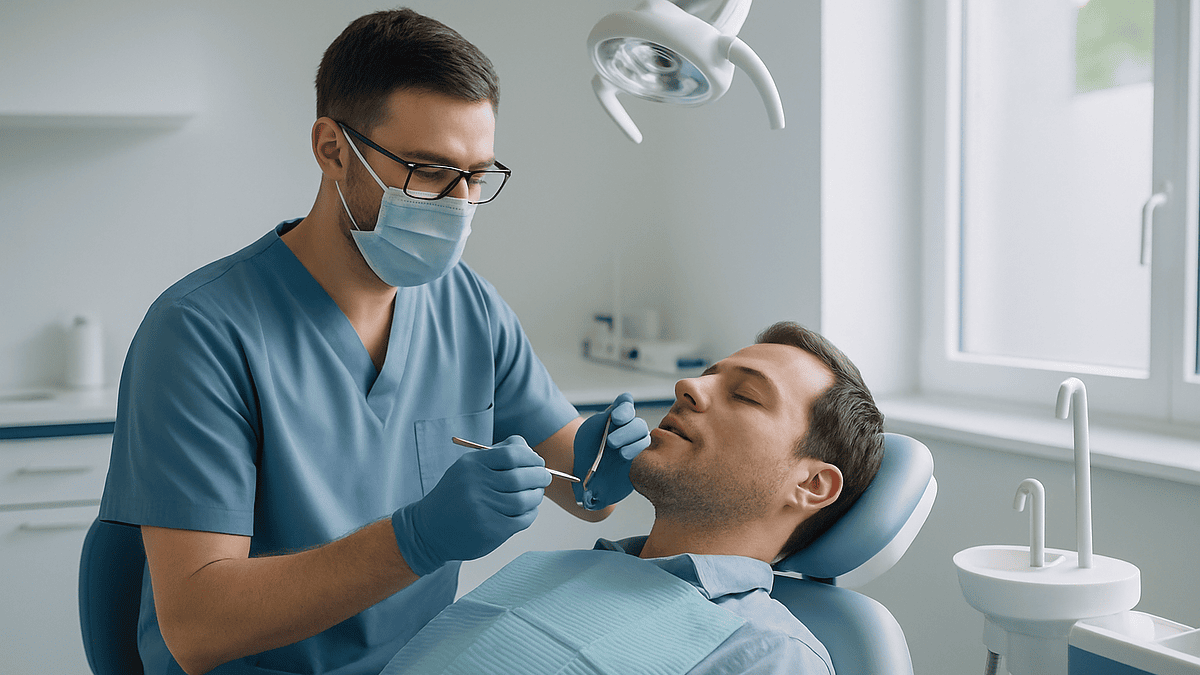
A filling is a repair. The dentist numbs the area with a local anesthetic, a medicine injected near the tooth that blocks the nerves from sending pain signals for a limited time. Then a small drill or laser removes the decayed part of the tooth, the softened enamel and dentin that bacteria have dissolved with acid. What is left is a clean cavity, a literal hollow, that needs to be sealed so bacteria cannot get back in and the tooth can chew normally again.
The material chosen to fill that hollow shapes the advice you are given afterward. Tooth-colored composite resin is applied in soft layers and set hard with a blue curing light before you leave the chair. Silver amalgam is a metal mixture that is packed into place while pliable and continues to harden for roughly a day. Glass ionomer, often used in children or near the gumline, sets chemically within minutes but keeps maturing for longer. The Cleveland Clinic and the NHS both describe these as the common options, each with its own setting behavior.
Food matters for three separate reasons. First, an unset material can be dented or pulled by chewing. Second, a numb mouth cannot feel the difference between a piece of bread and the inside of your cheek. Third, a freshly treated tooth has just been drilled, dried, and refilled; the living tissue inside is mildly irritated, so extremes of temperature and pressure can produce a sharp twinge for a while.
None of this means the filling is fragile in the long run. It means the first few hours are a short window in which sensible choices make the difference between an uneventful evening and a bitten tongue or a dislodged repair. Once that window passes, the tooth is meant to work like a tooth.
Eating after dental filling: how long after filling can I eat?
The short version: it depends on the material, and your dentist’s instruction overrides any general rule. Still, the pattern is consistent across mainstream guidance.

With a composite filling, the resin is fully hardened by the curing light before you stand up. Mechanically, there is nothing to wait for. Most dentists tell patients they can eat as soon as they feel comfortable, and the only real reason to delay is the numbness itself, which the Cleveland Clinic notes usually wears off within a few hours. Eating while numb is a bite-injury risk, not a filling risk.
With an amalgam filling, the metal reaches most of its strength within hours but continues to set for around 24 hours. The usual advice is to avoid chewing hard or sticky foods on that side for the rest of the day and to favor softer textures until the next morning. You do not have to fast; you are simply asked to keep heavy pressure off one spot.
With glass ionomer, early hardness is lower than composite, so dentists often suggest similar caution to amalgam for the first day, especially for a filling that bears chewing load.
Two exceptions push the timeline later. If you had a deep filling near the nerve, the tooth may be tender enough that you naturally prefer soft food for a day or two. And if you were sedated rather than simply numbed, you may be asked not to eat until you are fully alert, with someone present, because swallowing reflexes can be slower.
Treat these as typical ranges drawn from the NHS and Cleveland Clinic descriptions of filling materials, not as guarantees. If your dentist wrote a different instruction on your visit summary, that is the instruction to follow.
Why numbness is the real hazard in the first few hours
Ask an emergency dentist what brings people back the same afternoon, and it is rarely the filling. It is the cheek, lip or tongue that got chewed while it was numb.
Local anesthetic works by blocking sodium channels in nerve fibers, so the signal that would normally say “that is your lip, stop” never arrives. The effect is not all-or-nothing as it wears off. Sensation returns in patches, and the tingling stage can fool you into thinking you have feeling when you do not yet have protective feeling. The Cleveland Clinic describes the numbness as lasting a few hours, and for lower teeth, where the anesthetic often blocks a larger nerve branch, it commonly lasts toward the longer end.
A numb bite injury looks alarming when the feeling returns: a swollen, raw patch on the inside of the cheek or the side of the tongue that stings with salt and citrus for several days. It heals on its own in most cases, but it is entirely avoidable.
Practical steps that follow from the mechanism:
- Wait until you can feel the inside of your cheek with your tongue before chewing anything that needs real bite force.
- If you must eat while numb, choose foods that dissolve or need no chewing, such as smooth yogurt, applesauce or a lukewarm soup, and take small spoonfuls.
- Hot drinks deserve extra care. A numb lip cannot judge temperature, so a scald is possible without any warning.
- Children need supervision here more than adults. A child who is bored with the strange feeling may chew the numb lip simply because it feels interesting.
Once sensation is fully back, the numbness question is over and the material question takes its place.
Do fillings harden immediately? Composite, amalgam and glass ionomer compared
People often assume all fillings are “wet” for a day. Only some are. The table summarizes how the three common materials set and what that typically means for your first meals, based on descriptions from the Cleveland Clinic and NHS.

| Material | How it sets | Chewing-ready | Typical first-day advice |
|---|---|---|---|
| Composite resin (tooth-colored) | Light-cured in layers; fully hard before you leave | Immediately, once numbness fades | Eat normally; avoid biting cheek while numb |
| Amalgam (silver) | Chemical setting continues for about 24 hours | Light use within hours; full strength by next day | Soft foods; chew on the other side; no hard or sticky items |
| Glass ionomer | Acid-base reaction sets in minutes, matures over days | Gentle use same day | Soft foods first day; often used where load is lower |
A few nuances make the table more useful. Composite’s immediate hardness is why it has become so common for back teeth as well as front ones; there is no waiting period built into the material. Its weak point is not chewing but staining and, over years, wear at the edges.
Amalgam’s slow set is the source of the “do not eat for 24 hours” advice that many people remember from childhood. In reality, the metal is firm enough for careful use within a few hours; the caution is against hard pressure and sticky pulling, not against food in general.
Glass ionomer releases fluoride, a mineral that helps enamel resist acid, which is one reason it is chosen for children’s teeth and cavities near the gumline. It is less hard than the other two, so dentists tend to place it where bite forces are lower.
Whatever the material, a filling that feels “high” when you bite, meaning your teeth meet on the filling before anywhere else, is not a hardening issue. It is a shaping issue and a quick adjustment fixes it.
What to eat after a filling on the first day
The first day is about texture and temperature, not nutrition rules. Nothing about a filling changes what your body needs; it changes what your mouth can comfortably handle.
Texture first. Soft foods spare the new filling from heavy pressure while amalgam or glass ionomer finish setting, and they spare a tender tooth from the jolt of biting down on something firm. Scrambled eggs, mashed potatoes, oatmeal, smooth soups, yogurt, ripe bananas, well-cooked pasta and soft fish all fit. Think of foods you could eat with a fork alone.
Temperature second. A tooth that has just been drilled is often briefly sensitive to hot and cold because the drilling and drying irritate the pulp, the living tissue inside the tooth. Lukewarm is the comfortable middle ground for the first meals. Ice water and steaming coffee are not dangerous to the filling, but they may produce a sharp, short pain that makes the whole experience feel worse than it is.
Side of the mouth third. Chewing on the opposite side is the single most effective habit for the first day, especially with amalgam. It removes the pressure question entirely.
Sugar last but not least. A numb, dry mouth with a fresh repair is not the moment for a sugary drink sipped over an hour. The bacteria that caused the cavity are still present, and MedlinePlus notes they turn sugar into acid within minutes of exposure. Water is the drink for the afternoon.
By the second day, most people with composite fillings are eating whatever they like. People with amalgam typically return to normal foods after the 24-hour setting period. If chewing is still uncomfortable beyond that, the cause is usually sensitivity or a high spot rather than the food itself, and both are worth a call.
Hard foods after filling: which ones can actually cause trouble
“Avoid hard foods” is the instruction everyone remembers, and it is worth being specific about why, because the reason differs by material and by timing.
In the first 24 hours after an amalgam filling, hard foods are a setting problem. Biting a nut or an ice cube on an amalgam that has not reached full strength can leave a depression or, at a thin edge, a small fracture. Sticky foods are arguably worse: caramel, taffy and chewing gum can grip the surface and pull. After the setting period, the Cleveland Clinic describes amalgam as one of the more durable filling materials, and everyday hard foods are no longer a special concern.
For composite, the first-day hardness worry does not apply. The long-term concern is different: very hard items bitten with force, such as ice, hard candy, popcorn kernels or bones, can chip the edge of any filling, and composite is somewhat more prone to edge wear than amalgam over years. This is not a reason to avoid crunchy vegetables or nuts forever. It is a reason to stop using teeth as tools and to treat ice as a drink, not a snack.
Foods that deserve a day of caution after any new filling:
- Ice, hard candy, nuts and popcorn kernels, for pressure on an unset or tender tooth.
- Caramel, toffee, taffy and gum, for pulling on a fresh margin.
- Crusty bread and tough meat, mainly because they demand hard chewing on a tooth that may twinge.
There is one more hard-food issue that is not about the filling at all. If the cavity was large, the remaining natural tooth around the filling is thinner than it was. Your dentist may mention that a crown, a cap covering the whole tooth, could be needed later if the tooth shows signs of cracking. That is a conversation for follow-up, not a same-day worry.
Tooth sensitivity after filling: why hot, cold and sweet make it twinge
A short, sharp pain when cold water hits the new filling is the most common thing people notice in the first week, and it is usually a sign of an irritated tooth, not a failed one.
The mechanism is straightforward. Removing decay means drilling close to dentin, the porous layer under enamel that is riddled with microscopic tubes leading toward the pulp. Drilling, air-drying and the chemicals used to bond a composite all disturb that tissue briefly. For a while, temperature changes and sweet foods move fluid in those tubes and the nerve reads it as pain. The Cleveland Clinic and Mayo Clinic both describe this post-filling sensitivity as common and expected to fade over a few weeks.
Three patterns help you and your dentist read what is going on:
- Sharp pain with cold that stops within seconds once the trigger is gone is typical and generally settles.
- Pain when you bite down that goes away when you release often points to a filling that sits slightly high, which is corrected by a quick adjustment.
- Dull, lingering ache that lasts minutes after a hot drink, or wakes you at night, is the pattern that warrants a call, because it can signal the pulp is more inflamed than expected.
Sweet sensitivity deserves a mention because people find it confusing. Sugar itself does not touch the nerve; the concentration difference draws fluid through exposed dentin, which is why a sweet drink can sting a freshly filled tooth even when nothing is wrong with the filling.
Toothpastes formulated for sensitive teeth work by calming the nerve response or blocking those dentin tubes, and dentists often suggest them during this period. Over-the-counter pain relievers, if your dentist or pharmacist agrees they are appropriate for you, reduce the inflammation driving the ache; how and whether to use them is a decision for that conversation, not this article.
Who can eat soon, and who is usually asked to wait
General timelines are drawn for the average filling in a healthy adult. Several situations shift the advice, and it helps to know which category you are in before you leave the office.
People who can usually eat as soon as the numbness fades:
- Adults with a small or medium composite filling on any tooth.
- Anyone whose filling was placed without anesthetic, which sometimes happens for very shallow cavities; there is no numbness window at all.
People commonly asked to wait or be careful for the rest of the day:
- Anyone with an amalgam or glass ionomer filling, for the setting reasons already described.
- Anyone who had a deep filling close to the pulp. These teeth are more tender, and the dentist may have placed a protective liner that benefits from an undisturbed first day.
- Anyone who had a temporary filling, a soft, short-term material used between visits when a crown or root canal is planned. Temporaries are designed to be removed, so sticky and hard foods can pull them out; soft food on the other side until the next appointment is the usual instruction.
- Anyone who received sedation. The NHS describes conscious sedation as leaving people drowsy for hours afterward; eating is delayed until you are fully alert, and a responsible adult should be with you.
Children sit in their own category. A child with a numb lip needs an adult watching for chewing or sucking on the numb side, and soft, cool foods are easiest until sensation is back. Beyond that, the material rules are the same as for adults, and the dental team will tell parents what to expect for that child.
People with conditions that slow healing or affect saliva, such as poorly controlled diabetes or dry mouth from medicines, are not asked to fast longer, but they are often given more emphasis on rinsing with water after eating, because a dry mouth clears sugar and acid more slowly.
Is three fillings at once a lot, and does it change what I can eat?
Three fillings in one visit sounds like a lot when you are the one in the chair. Clinically, it is common and often deliberate. Dentists frequently group fillings that sit in the same quadrant of the mouth, meaning one side, upper or lower, because a single injection numbs all of them. That means one episode of numbness instead of three, one recovery afternoon instead of three, and less total time in the chair.
What changes with multiple fillings is the eating plan, in three ways.
The numb area is larger or lasts longer. Several fillings in one quadrant do not usually require more anesthetic than one, but if teeth on both sides were treated, both cheeks may be numb at once. Chewing on “the other side” stops being an option, and soft, no-chew foods become the sensible choice until feeling returns everywhere.
The sensitivity may be broader. Each treated tooth can have its own few days of temperature twinges, so lukewarm food may be welcome for slightly longer than after a single filling.
The material mix matters. If one of the three is amalgam and two are composite, the amalgam tooth still needs its 24 hours of caution. Ask which teeth got which material; it is a reasonable question and the visit record will show it.
The larger question hiding behind “is three a lot” is why there were three. Multiple cavities at one check-up usually point to a pattern: frequent sugary snacks or drinks, a dry mouth, gaps in brushing or flossing, or a stretch of time between visits. The NIH’s dental research institute describes decay as a process driven by repeated acid attacks, which means the habits that produced three cavities can produce more. That conversation with the dentist or hygienist matters more to your long-term teeth than any first-day food rule.
What the first days and weeks after a filling usually look like
Most people want a timeline, so here is the typical one, with the caveat that these are ranges reported in Cleveland Clinic and Mayo Clinic patient guidance, not promises for any individual tooth.
The first few hours. Numbness dominates. The lip and cheek feel swollen even though they are not, speech is slightly slurred, and the filled tooth feels oddly smooth or oddly large to the tongue. This is the bite-injury window. Soft, cool food if you eat at all.
The rest of the first day. Sensation returns, sometimes with a mild ache at the injection site in the gum. With composite, normal eating resumes. With amalgam, soft foods and chewing on the other side continue until the next morning. A short, sharp response to cold is common tonight.
Days two to seven. The tooth is fully usable. Cold sensitivity typically peaks in these first days and starts to fade. If biting feels uncomfortable in a way that stops when you release, the filling may be slightly high; this is the week to mention it, because a high filling can bruise the ligament around the tooth if left.
Weeks two to four. For most people, sensitivity has faded to nothing or to an occasional twinge with ice. The Cleveland Clinic describes post-filling sensitivity resolving within a few weeks in most cases. Tongue and cheek have stopped noticing the filling’s edges.
Beyond a month. A tooth that still hurts with heat, aches without a trigger, or throbs at night has moved outside the typical pattern. That does not automatically mean the filling failed; it can mean the pulp was more inflamed than it appeared, and the dentist may discuss further treatment. Either way, it is a reason to be seen rather than to wait it out.
Fillings themselves last years, with amalgam often reported to outlast composite, but every filling is checked at routine visits for wear, cracks and new decay at the edges.
Do's and don'ts after a tooth filling that the evidence actually supports
Advice lists after fillings tend to mix real mechanisms with folklore. These are the ones that hold up.
Do wait for full sensation before chewing anything that requires bite force. The reason is your cheek, not your filling.
Do chew on the opposite side for the first day if you had amalgam or glass ionomer. This single habit covers the setting concern completely.
Do brush and floss the filled tooth that same evening, gently. A new filling is not a wound; it is a sealed repair, and the plaque bacteria that caused the cavity are still living on the neighboring teeth. The NHS recommends twice-daily brushing with fluoride toothpaste and daily cleaning between teeth regardless of recent dental work. If the gum is sore from the injection, be gentle, but do not skip it.
Do rinse with water after sugary or acidic food while the tooth is sensitive. It shortens the acid exposure that MedlinePlus describes as the engine of decay.
Don’t test the filling with your tongue or fingernail to see if it is “set.” It tells you nothing useful and can irritate the gum margin.
Don’t chew ice, hard candy or popcorn kernels on any filled tooth, new or old. Edge chipping is the most common way fillings fail early.
Don’t assume pain on biting is normal and will pass. Cold sensitivity usually does; bite pain usually means a high spot that a two-minute adjustment resolves.
Don’t stop or start any prescribed medicine because of a filling. If you take blood thinners, diabetes medicines or anything else, the dentist already accounted for them, and any change is a conversation with the prescriber.
Don’t smoke or use tobacco in the first hours if you can avoid it; a numb mouth burns easily, and tobacco slows healing of any small gum irritation from the procedure.
What is the #1 cavity-causing food? Protecting the teeth next to your filling
People ask this expecting a single villain, usually candy. The evidence points to a habit rather than a food: frequent exposure to sugar, especially the kind that lingers.
Here is the mechanism as MedlinePlus and the NIH’s dental research institute describe it. Bacteria in plaque, the sticky film on teeth, feed on sugars and starches and produce acid. That acid dissolves minerals out of enamel for roughly twenty to thirty minutes after each exposure. Saliva then slowly repairs the damage by depositing minerals back. If exposures are spaced out, the tooth keeps up. If you sip a sweetened drink over two hours or graze on crackers all afternoon, the acid phase never ends and the tooth loses.
So the worst offenders share two traits: they contain fermentable sugar or starch, and they stay in contact with teeth for a long time. That makes sugary drinks sipped slowly, sticky sweets like caramel and dried fruit, and refined starches that pack into grooves, such as chips and crackers, more damaging per gram than a dessert eaten in one sitting with a meal.
Why this matters after a filling specifically: the tooth next to your new repair has the same bacteria, the same grooves and the same diet. A filling treats one cavity. It does not change the environment that produced it. The edge where filling meets tooth is also a place where new decay can begin if plaque sits there.
The changes with the strongest support from the NHS and CDC-aligned guidance are unglamorous: limit sugary foods and drinks to mealtimes rather than between, choose water between meals, brush twice daily with fluoride toothpaste, clean between teeth daily, and keep the check-up interval the dentist suggests. Fluoride, whether in toothpaste, water or a varnish applied at the office, helps enamel resist acid and rebuild after attacks. None of this is exciting. It is what keeps the number of fillings from growing.
What people often get wrong about eating after a filling
Some of the most persistent beliefs about fillings come from a time when almost every filling was amalgam and every patient was told the same thing. Several deserve correcting.
“You cannot eat for 24 hours after any filling.” This applies, loosely, to amalgam, and even then it is about hard and sticky foods rather than all food. Composite is fully hard before you leave the chair. Applying the amalgam rule to a composite filling is harmless but unnecessary, and it leads people to skip meals for no benefit.
“The filling is still soft if it feels smooth.” A set composite feels glassy to the tongue because it has been polished. Smoothness says nothing about hardness.
“Sensitivity means the filling failed.” Cold sensitivity in the first weeks is the expected response of an irritated pulp and, per Cleveland Clinic and Mayo Clinic guidance, usually fades on its own. Persistent heat sensitivity or spontaneous ache is the pattern that needs attention, and even that often reflects the tooth’s condition before treatment rather than a flaw in the work.
“You should not brush the filled tooth for a day.” There is no wound to protect. Skipping brushing leaves plaque on the exact teeth most at risk.
“Hot drinks will melt or loosen the filling.” Neither composite nor amalgam is affected by drink temperatures. The reason to avoid very hot drinks in the first hours is that a numb lip cannot feel a scald.
“A filling lasts forever if you avoid hard food.” All fillings wear and are eventually replaced. Avoiding ice and hard candy delays that, but regular check-ups are what catch edge wear and new decay early.
“Numbness lasting more than a few hours means nerve damage.” Longer numbness happens, particularly after lower back teeth, and usually resolves. Numbness persisting beyond a day is unusual and worth reporting, but it is rare and most often temporary.
Questions to ask your care team before you leave the chair
The few minutes after a filling, while the dentist is still in the room, are the best time to get the instructions that fit your tooth rather than a general leaflet. These questions cover what most people wish they had asked.
- Which material did you use for this filling, and does it need a setting period before I chew on it?
- How deep was the cavity, and should I expect this tooth to be more sensitive than usual?
- Was this a permanent filling or a temporary one, and if temporary, when is the next visit and what should I avoid until then?
- Which side should I chew on today, and for how long?
- If the tooth feels high when I bite, should I call right away or wait a few days to see if it settles?
- How long would you expect cold sensitivity to last for this particular tooth, and what would make you want to see me sooner?
- Is there anything about the medicines I take that changes the aftercare?
- Was the remaining tooth thin enough that you might recommend a crown later, and what would you be watching for?
- Do you want me to use a toothpaste for sensitive teeth, and for how long?
- When should I come back for a routine check, and will you look at this filling then?
Write the answers down or ask for them on the visit summary. Numbness makes people forget conversations, and a written note settles arguments with yourself at dinner time.
If you had more than one filling, ask for a simple map of which tooth received which material. It sounds fussy, but it is the only way to know whether the amalgam caution applies to the tooth you are about to use.
When to call your doctor or dentist after a filling
Most fillings are uneventful, and most post-filling discomfort fades without any intervention. A small set of signs falls outside that pattern and should prompt a call rather than a wait.
Call the dental office promptly if you notice any of the following:
- Pain when you bite down that does not improve after two or three days, or that worsens. A high filling can bruise the ligament around the tooth and is quickly adjusted.
- Sensitivity to heat that lingers for minutes, a spontaneous throbbing ache, or pain that wakes you at night. These suggest the pulp is more inflamed than expected and the dentist may discuss further treatment.
- A filling that feels loose, has a sharp edge, or has visibly chipped or come out, especially a temporary filling.
- Numbness that has not resolved by the following day.
- Swelling of the gum or face near the treated tooth, a bad taste, or pus, which can indicate infection.
- A bitten cheek or tongue that is not healing after several days or shows increasing pain or swelling.
Seek urgent medical care, not just a dental appointment, if you develop facial swelling that spreads toward the eye or neck, difficulty swallowing or breathing, or fever with a spreading area of redness. These are rare after a routine filling but represent an infection that needs prompt treatment.
Also seek urgent care for any signs of an allergic reaction to the anesthetic or materials, such as hives, swelling of the lips or tongue not explained by numbness, wheezing or lightheadedness.
Every decision about adjusting, replacing or further treating the tooth belongs with your treating dentist, who has seen the tooth, the X-rays and your history. This article can tell you what is typical; only they can tell you what is happening in your mouth.
Frequently asked questions
How long after filling can I eat?
With a composite filling you can eat as soon as the numbness wears off, typically within a few hours, because the resin is fully hardened before you leave. With an amalgam filling, dentists usually suggest soft foods and chewing on the other side for about 24 hours while the metal finishes setting. Your dentist’s specific instruction always takes priority over these general ranges.
Do fillings harden immediately?
Composite fillings do; a blue curing light sets each layer hard within seconds, and the filling is at full strength when you stand up. Amalgam fillings become firm within hours but keep setting for roughly a day, and glass ionomer sets in minutes but matures over several days. This difference is the whole reason aftercare advice varies from one filling to the next.
What can I eat after a filling on the first day?
Soft, lukewarm foods that need little chewing work best: scrambled eggs, yogurt, oatmeal, mashed potatoes, smooth soups, soft pasta and ripe bananas. Avoid very hot or very cold items while the tooth is sensitive, and avoid nuts, ice, hard candy and sticky sweets on the filled side, particularly after an amalgam filling. Chewing on the opposite side removes most of the pressure concern.
Is 3 fillings at once a lot?
Three fillings in one visit is common and often planned deliberately, because teeth in the same area can be numbed with one injection and treated together, saving you separate appointments. What changes is the aftercare: a larger numb area, possibly sensitivity in several teeth, and different setting rules if the materials differ. Several cavities at once is also a prompt to review diet and cleaning habits.
What are the do's and don'ts after a tooth filling?
Do wait for full sensation before chewing, chew on the opposite side for a day after amalgam, brush and floss gently that evening, and rinse with water after sugary foods. Don’t chew ice or hard candy, don’t pull at the filling with your tongue, don’t assume bite pain will pass on its own, and never change any prescribed medicine because of dental work without asking the prescriber.
What is the #1 cavity-causing food?
No single food holds that title; the strongest driver is frequent exposure to sugar or starch that lingers on teeth. Bacteria convert sugar into acid that dissolves enamel for around twenty to thirty minutes after each exposure, so a sweetened drink sipped over hours or sticky snacks eaten throughout the day do more harm than a dessert eaten with a meal. Limiting sugar to mealtimes is the key habit.
How long does tooth sensitivity after a filling last?
Short, sharp sensitivity to cold is common in the first days and usually fades over a few weeks as the irritated pulp settles. Sensitivity to heat that lingers for minutes, an ache without a trigger, or pain that wakes you at night falls outside that pattern and should be reported to your dentist, who may check the filling’s height and the tooth’s condition.
Can I drink coffee after a filling?
Once the numbness has gone, yes, though a freshly filled tooth may twinge with very hot drinks for a few days, so lukewarm is more comfortable at first. While still numb, hot drinks carry a scald risk because your lip cannot judge temperature. Coffee does not damage composite or amalgam, although composite can pick up staining over years.
Why does my new filling hurt when I bite?
Pain that appears when you bite down and stops when you release most often means the filling sits slightly high, so that tooth takes the force before the others. It is a shaping issue, not a sign the filling is failing, and a brief adjustment usually resolves it. Call the office rather than waiting; a high filling left for weeks can bruise the tissue around the tooth.
Can I brush my teeth the same day as a filling?
Yes, and you should. A filling is a sealed repair rather than a wound, and the bacteria that caused the cavity are still on neighboring teeth. Brush twice daily with fluoride toothpaste and clean between teeth as usual, being gentle around any gum that is sore from the injection. A toothpaste for sensitive teeth can help during the weeks of cold sensitivity if your dentist suggests it.
References
- Cleveland Clinic: Dental Fillings
- MedlinePlus: Dental cavities
- NIH National Institute of Dental and Craniofacial Research: Tooth Decay
This article is for general information only and is not a substitute for professional medical advice. Please consult a qualified doctor about your individual situation.

More from the Blog

Daily Life With a Removable Appliance: Wear Schedule, Cleaning and Storing It Safely
A removable appliance stays healthiest when you rinse it every time it comes out, brush it daily with a soft brush and mild soap…

Who Is a Candidate for Clear Aligners? Bite Types, Gum Health and Wear Commitment
Clear aligners candidates are usually adults and teenagers with healthy gums, no untreated tooth decay, and mild to moderate problems such as crowding, gaps…
What a Root Canal X-Ray Shows: Infection at the Root Tip and How It Shapes the Plan
A root canal X-ray shows the tooth's inner canals, the bone around the root tip, and any dark area (a radiolucency) where infection has…

How Orofacial Myology Retrains Tongue Thrust and Mouth Breathing Patterns
Orofacial myology, also called myofunctional therapy, retrains tongue thrust and mouth breathing through supervised exercises that teach the tongue to rest on the palate,…
When Fiber Application Is Used: Loose Teeth, Weak Teeth and Root Canal Restorations
Fiber application in dentistry means bonding a thin ribbon of glass or polyethylene fibers, set in tooth-colored resin, to teeth. Dentists use it to…
Questions to Ask Before Teeth Veneers: Enamel Removal, Repairs and Future Replacement
Before veneers, ask how much enamel will be removed (a thin layer, often around half a millimeter, that never grows back), whether porcelain or…