

Elderberry and Zinc for Colds: What the Trials Show About Shortening a Cold

Key Takeaways
- The 2024 Cochrane review pooled 34 zinc trials and found colds may be about two days shorter with treatment, but rated that evidence low certainty and found no prevention benefit.
- The main positive elderberry meta-analysis rests on just four randomized trials and roughly 180 participants, while a 2020 trial in 87 children with influenza found no benefit.
- Nearly every trial in which zinc lozenges helped began treatment within 24 hours of the first symptom, and lozenges that release free zinc ions outperformed forms that bind it.
- Raw, unripe elderberries and the plant's leaves, stems, bark and roots contain cyanogenic glycosides that release cyanide when digested; cooking destroys them.
- Nasal zinc gels and sprays were linked to permanent loss of smell and prompted a US regulatory warning in 2009, so zinc for colds should never go up the nose.
- Neither elderberry nor zinc has been shown to prevent a cold, and no clinical study supports the viral claim that elderberry triggers a cytokine storm.
Elderberry and zinc are the two cold supplements with the most trial data, and both show modest, uncertain benefits at best. A few small randomized trials suggest elderberry extract may shorten upper respiratory symptoms by a couple of days, but the studies are small and inconsistent. Zinc lozenges started within a day of symptoms may shorten a cold by roughly one to two days, with low-certainty evidence and frequent taste and nausea side effects. Neither has been shown to prevent colds.
Somewhere right now a parent is standing in a supplement aisle at 9 p.m., a sniffling child in the cart, phone in hand, reading a post that says a spoonful of dark purple syrup will “knock out” a cold in two days. The post has three million views. It cites no trial.
Elderberry is having another moment, and the timing is not mysterious. As of October 2025, a large Cochrane review of zinc for the common cold, published in 2024, has been circulating in headlines that range from “zinc works” to “zinc is useless,” and the same short-video accounts that pushed elderberry syrup during the 2020 pandemic have rediscovered it for cold season. Search interest for the two together has climbed accordingly.
So it is worth doing something the viral posts never do: reading the actual trials, counting the participants, and saying plainly how strong the evidence is. The honest answer is more interesting than either the hype or the dismissal.
What changed recently with elderberry and zinc research
Two developments explain why the conversation feels new even though the berries and the lozenges are old.
The first is zinc. In 2024, the Cochrane Collaboration, an international network that produces systematic reviews of medical evidence, published an updated review of zinc for preventing and treating the common cold. It pooled 34 randomized trials with more than 8,000 participants and reached a careful verdict: zinc taken as treatment may shorten a cold by around two days, but the certainty of that finding is low, there was no clear benefit for prevention, and side effects were more common than with placebo. That single word, “may,” has been dropped from most of the headlines built on it.
The second is elderberry, where the recent story is one of shrinking claims rather than new proof. A 2019 meta-analysis, a statistical technique that combines results from several trials into one estimate, pooled four randomized controlled trials totaling roughly 180 participants and found that black elderberry extract reduced the duration and severity of upper respiratory symptoms. It remains the most-cited positive result. In 2020, however, a randomized trial in 87 children with laboratory-confirmed influenza found no meaningful difference between elderberry and placebo. That same year, US regulators issued warnings to companies marketing elderberry products with unfounded claims about COVID-19.
The National Institutes of Health’s National Center for Complementary and Integrative Health currently describes the evidence for elderberry in colds and flu as limited, and it stresses that raw or unripe berries and other parts of the plant are toxic. Those two positions, cautious optimism about zinc and genuine uncertainty about elderberry, are the frame for everything that follows.
What is elderberry, and what is actually in it?
Elderberry is the fruit of shrubs in the genus Sambucus. The species in nearly every supplement is European black elder, Sambucus nigra, whose small, glossy, blue-black berries hang in flat clusters in late summer. American elder, Sambucus canadensis, grows wild across much of the eastern United States and is used in the same way. Both have been eaten cooked, in pies, jams, wines and syrups, for centuries.
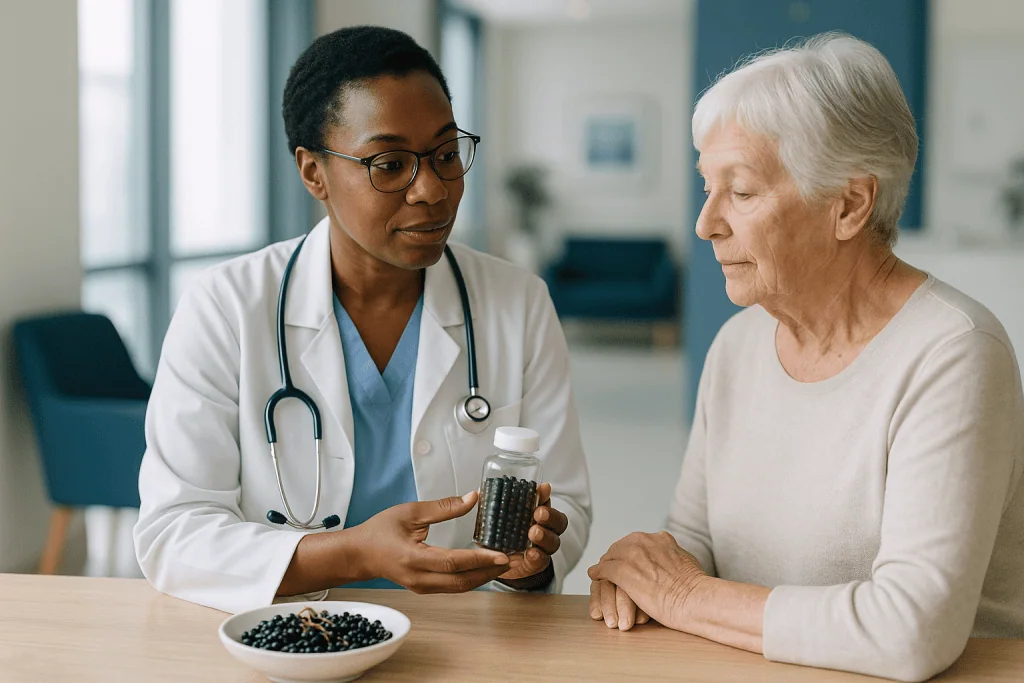
What interests researchers is the pigment. Elderberries are unusually rich in anthocyanins, the plant compounds that give blueberries, black currants and red cabbage their color. Anthocyanins belong to a larger family called flavonoids, which are antioxidants, meaning they can neutralize reactive molecules that damage cells in laboratory conditions. Elderberries also supply vitamin C, dietary fiber and small amounts of potassium.
Laboratory studies, the kind done in test tubes and cell cultures rather than in people, have shown that elderberry extracts can interfere with the way some influenza viruses attach to and enter cells. These studies are the origin of nearly every marketing claim about the berry. They are a reasonable starting point for research. They are not evidence that the same thing happens in a human nose after swallowing a gummy, because concentrations in a dish and concentrations in a living airway are very different things.
The plant’s other parts tell a different story. Leaves, stems, bark, roots and unripe berries contain cyanogenic glycosides, natural compounds that release small amounts of cyanide when digested. Heat destroys them, which is why cooked elderberry is a food and raw elderberry is a cause of emergency visits.
What are the benefits of elderberry? Separating claims from data
Ask a search engine for the benefits of elderberry and you will get a list that runs from colds and flu to heart health, blood sugar, skin, constipation and cancer. Only one item on that list has been tested in more than a handful of people, and even that one is thin.
Colds and influenza are where the human trials exist. The best-known study, published in 2004, randomized 60 adults with flu-like symptoms and found those taking elderberry syrup reported relief about four days earlier than those on placebo. A 2016 trial followed 312 economy-class air travelers and found that those taking elderberry extract who developed a cold had shorter and milder episodes, though the extract did not reduce how many people got sick in the first place. These are the trials that fed the 2019 meta-analysis.
Heart and metabolic claims rest on a smaller foundation. A handful of short trials tested elderberry or anthocyanin-rich extracts on cholesterol, blood pressure or blood sugar markers in healthy volunteers. Results have been mixed and mostly null. Nothing here approaches the level of evidence that would let anyone recommend elderberry for cardiovascular protection.
Antioxidant and “immune-boosting” benefits are the most repeated and the least meaningful. Elderberries do contain antioxidants, as do apples, tea and beans. Whether eating antioxidant-rich foods translates into fewer infections is a question the research has not answered for any single food, and the phrase “immune boost” has no agreed medical definition.
The fair summary: elderberry is a nutritious fruit when cooked, with preliminary trial evidence for shortening upper respiratory symptoms and no reliable human evidence for anything else.
What the evidence actually says about elderberry for colds and flu
Evidence comes in grades. At the top sit large randomized controlled trials, studies in which participants are assigned by chance to a treatment or an identical-looking placebo so that neither hope nor expectation can tilt the result. Below them sit small trials, then observational studies that watch what people already do, then expert opinion and laboratory findings. Elderberry lives in the small-trial tier, and it is worth being specific about why that matters.
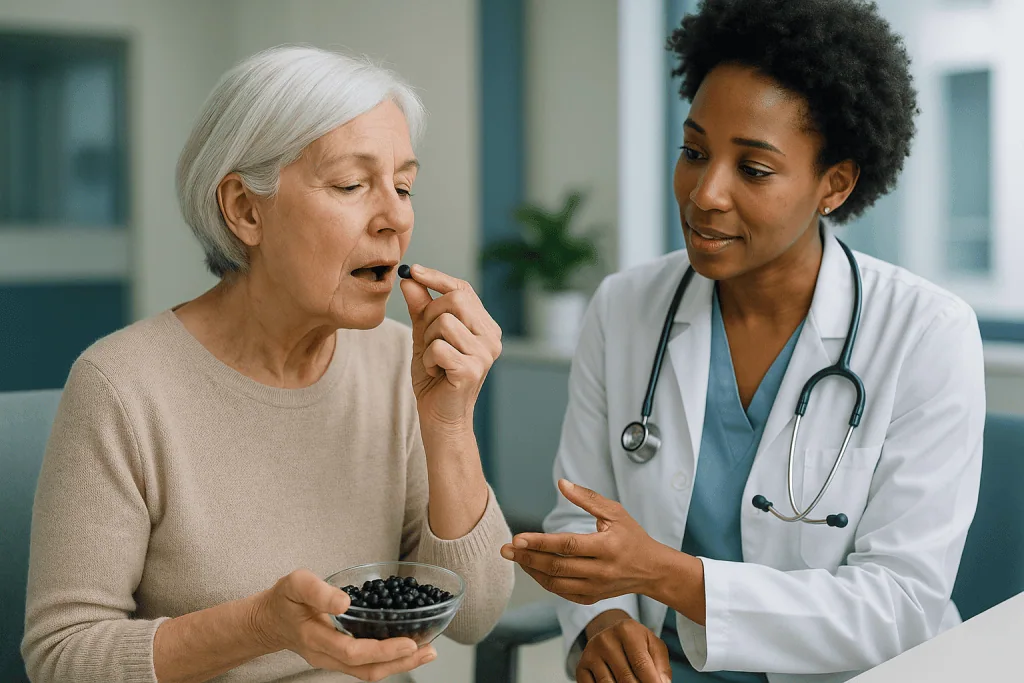
The 2019 meta-analysis combined four randomized trials. Four is a small number, and the total of about 180 participants is smaller than a single well-designed drug trial. The included studies used different products, different definitions of a cold and different ways of measuring symptoms, which makes pooling them statistically awkward. Two of the four were funded or supplied by manufacturers. None of this means the results are wrong. It means the estimate is fragile and could move substantially with one more well-run trial.
One such trial arrived in 2020 and moved it in the wrong direction. Among 87 children aged 5 to 12 with confirmed influenza, elderberry extract did not shorten illness compared with placebo. The trial was small and applied only to flu, not the common cold, but it is the most rigorous pediatric study available, and it was negative.
Graded honestly, the evidence that elderberry shortens a cold or flu is low certainty. It is plausible, it points in a favorable direction in adults, and it has not been confirmed in any large independent trial. The evidence that it prevents infection is weaker still: the air-traveler study found no reduction in how many people caught a cold. Anyone telling you the question is settled, in either direction, is ahead of the data.
Does zinc for colds really work? What the trials show
Zinc has a stronger claim than elderberry, but not a simple one. Zinc is a mineral the body needs for hundreds of enzymes, including several involved in immune cell function. The idea that extra zinc might fight colds dates to a 1984 trial in which lozenges appeared to shorten symptoms dramatically. Dozens of trials followed, with results that swung from impressive to nothing, and the reasons for that swing turned out to be as important as the average.
The 2024 Cochrane review is the current best summary. Across 34 trials, zinc given as treatment was associated with a shorter cold, by roughly two days on average, but the reviewers rated the certainty of that estimate as low because the trials varied widely in design and quality, and many had small numbers. For prevention, taking zinc regularly through the season, the review found no clear reduction in how many colds people caught. Side effects, mainly a bad taste and nausea, were more frequent with zinc than placebo.
Earlier analyses that focused only on lozenges releasing ionic zinc, the free form of the mineral that can act directly on tissues in the throat, reported larger effects, with colds around a third shorter. The formulation appears to matter: lozenges that bind zinc to citric acid or certain sweeteners may release very little free zinc, which could explain some of the null trials. Timing matters too. Nearly every positive trial started treatment within 24 hours of the first symptom.
Where does that leave zinc for colds? At low-to-moderate certainty that lozenges started early may trim a cold by a day or two, with a real chance of unpleasant side effects and no evidence for prevention. Any decision about whether that trade is worthwhile belongs in a conversation with a clinician or pharmacist, especially for anyone taking other medicines.
Elderberry vs zinc: how the trials compare side by side
Laid next to each other, the two supplements look less like rivals and more like different points on the same uncertain map. The table summarizes what the mainstream evidence base, as described by the NIH, Mayo Clinic and the 2024 Cochrane review, actually supports.
| Question | Elderberry | Zinc lozenges |
|---|---|---|
| Number of randomized trials in colds or flu | A handful; the main meta-analysis pooled four | Dozens; Cochrane 2024 pooled 34 |
| Total participants in pooled analyses | Roughly 180 | More than 8,000 |
| Reported effect on duration | Shorter and milder symptoms in adults; one negative pediatric flu trial | About one to two days shorter when started within 24 hours |
| Effect on prevention | No reduction in number of colds in the one trial that measured it | No clear reduction |
| Certainty of evidence | Low | Low to moderate |
| Common side effects | Rare when cooked and ripe; severe vomiting and diarrhea if raw or unripe | Metallic taste, nausea, mouth irritation |
| Serious safety signals | Cyanide-related poisoning from raw plant parts | Permanent smell loss from nasal zinc products; copper deficiency with prolonged excess |
Two patterns stand out. Zinc has far more data behind it, and that data still only earns a “may.” Elderberry has far less, and its most recent rigorous trial was negative. Neither has been shown to keep a cold from starting.
One more contrast matters for everyday use. Zinc’s problems come from the supplement itself: the form, the timing and the side effects. Elderberry’s most serious problem comes from the plant, not the pill, which is why the next sections spend as much time on safety as on efficacy.
How might elderberry and zinc work? The proposed mechanisms
A mechanism is a story about how something could work. It is not proof that it does, but it helps explain why researchers bothered to run trials in the first place, and why some results may have come out the way they did.
For elderberry, the leading story involves the surface of the influenza virus. Flu viruses carry a protein called hemagglutinin that acts like a grappling hook, latching onto cells in the airway before the virus slips inside. In laboratory dishes, elderberry extracts rich in anthocyanins appear to gum up that hook and reduce infection of cultured cells. Other cell studies suggest the extract nudges immune cells to release signaling proteins called cytokines, the chemical messengers that coordinate an immune response. Whether either effect occurs at meaningful levels in a person who has swallowed a dose of syrup is unknown; anthocyanins are absorbed poorly and cleared quickly.
Zinc’s story is more local. The common cold is caused mostly by rhinoviruses, which replicate in the lining of the nose and throat. Free zinc ions, in the test tube, block a rhinovirus enzyme needed for replication and may also occupy the cell receptor the virus uses to enter. This is why lozenges, which bathe the throat in dissolved zinc for several minutes, have performed better in trials than zinc swallowed as a tablet, and why formulations that lock the zinc to other molecules may release too little to matter. Zinc also supports the normal function of white blood cells, which is separate from any direct antiviral action and mostly relevant to people who are deficient.
Both mechanisms are plausible, both are supported mainly by laboratory work, and neither has been demonstrated to be the reason for any effect seen in trials. That gap, between a good story and a proven one, is exactly where honest uncertainty lives.
Are elderberries safe for humans?
Ripe, cooked elderberries are safe for most healthy adults. Commercial extracts, syrups and gummies made from properly processed berries have been used in trials lasting up to two weeks without serious adverse events, and the NIH notes that short-term use appears to be well tolerated. That is the reassuring half of the answer.
The other half is the plant itself. Cyanogenic glycosides in the leaves, stems, bark, roots, seeds and unripe berries release hydrogen cyanide when they meet digestive enzymes. Symptoms of exposure appear within minutes to a few hours: nausea, vomiting, abdominal cramps, diarrhea, weakness and dizziness. In a documented US outbreak in the 1980s, several people fell ill after drinking juice pressed from raw berries along with leaves and branches, and one required hospitalization. Heat breaks these compounds down, which is why the same berries that cause vomiting when raw become a harmless pie filling when cooked.
Beyond poisoning, the safety picture is mostly a picture of missing data. There are no adequate studies of elderberry in pregnancy or breastfeeding, so most sources advise avoiding it during those periods. Long-term daily use has not been studied at all; the trials ran for days, not months. People with autoimmune conditions or those taking medicines that suppress the immune system are often advised to be cautious, on the theoretical grounds that a product marketed to stimulate immunity could work against them. That concern is not proven, but it has also never been tested.
Children add another layer. Many elderberry products are gummies or sweet syrups, and their safety and any benefit in young children have not been established in trials. A pediatrician’s guidance matters more than the label.
Can you eat elderberries off the tree?
No. This is the one question in the whole topic with an unambiguous answer, and it is worth being blunt about because foraging content on social media often gets it wrong.
Fresh elderberries straight from the shrub, even fully ripe ones, still carry enough cyanogenic glycosides to cause nausea and vomiting in some people, and the seeds inside them carry more. Unripe green or red-tinged berries on a black elder are worse. The stems that attach the berries to the cluster are worse still, and they are easy to leave in when stripping fruit by hand. Every case series of elderberry poisoning involves raw or barely processed plant material.
Cooking changes everything. Simmering the ripe berries, then straining out seeds and stems, is how generations of cooks have made elderberry safe. The resulting syrup, jelly or juice retains the anthocyanins that interest researchers and loses the compounds that cause trouble. Dried, commercially processed berries sold for tea are heat-treated for the same reason.
Identification is the second hazard. Black elder and American elder have edible ripe fruit; red elderberry, Sambucus racemosa, which bears bright red berries in cone-shaped rather than flat clusters, is generally considered unsafe to eat and is not used in supplements. Several unrelated shrubs with dark berries, including some that are seriously toxic, can look similar to an untrained eye. A wildlife guide or a local extension service is a better teacher than a video.
If someone has eaten raw berries or other parts of the plant and develops vomiting, diarrhea, weakness or confusion, that is a reason to contact poison control or emergency services, not to wait and see.
What not to mix with elderberry: interactions worth knowing
Documented drug interactions with elderberry are few, largely because it has been studied so little. The cautions below are mostly theoretical, drawn from what the berry appears to do in the body, and every one of them is a reason to ask a pharmacist or prescriber rather than a reason to stop a medicine on your own.
Immune-suppressing medicines head the list. Drugs prescribed after organ transplants or for autoimmune diseases work by damping immune activity, and a supplement promoted for stimulating immunity could, in principle, push the other way. No clinical case has proven this, but the stakes are high enough that most reference sources advise avoiding the combination unless a clinician agrees.
Diuretics, medicines that increase urine output, are a second consideration. Elderberry has a mild diuretic effect in traditional use, and stacking the two might increase fluid and electrolyte loss. The same logic applies to laxatives, since elderberry can loosen stools, particularly in larger amounts.
Diabetes medicines round out the common list. Small studies suggest elderberry may lower blood sugar slightly; combined with insulin or sugar-lowering tablets, that could theoretically increase the risk of low blood sugar. Working against this, many elderberry syrups and gummies are heavily sweetened, which pulls in the opposite direction. Anyone managing diabetes should read the sugar content and talk with their care team.
Zinc has its own, better-documented interactions, detailed in the NIH Office of Dietary Supplements fact sheet. Zinc can reduce absorption of certain antibiotics, including tetracyclines and quinolones, when taken at the same time, and it can interfere with penicillamine, a medicine used for rheumatoid arthritis and Wilson’s disease. Prolonged excess zinc lowers copper levels. Timing and combinations are exactly the sort of detail a pharmacist can sort out in two minutes.
Zinc side effects: taste, nausea and the nasal-spray lesson
The most common complaint about zinc lozenges is not that they fail but that they are unpleasant. In trial after trial, participants reported a lingering metallic taste, dry or irritated mouth and nausea, and these effects were consistently more frequent than with placebo. For a cold that will resolve on its own within a week or so, that is not a trivial trade-off, and it explains why adherence in some studies was poor.
A more serious lesson comes from the nose. In the 2000s, zinc-containing nasal gels and sprays were marketed for colds on the theory that delivering zinc directly to the site of infection would work better than a lozenge. Instead, hundreds of users reported losing their sense of smell, in many cases permanently, and US regulators issued a public warning in 2009. The products were withdrawn. Mayo Clinic and the NIH both single this out as the reason nasal zinc should be avoided entirely. It is a reminder that a mineral safe in one form can be harmful in another.
Long-term excess is the third concern. Zinc and copper compete for absorption in the gut, and taking more zinc than the body needs for weeks or months can drive copper levels down. Copper deficiency can cause anemia, low white blood cell counts, and nerve problems that may not fully reverse. This is a risk of prolonged, high supplemental intake, not of a few days of lozenges during a cold, but people who take zinc year-round for other reasons should know about it.
Finally, zinc is a mineral most Americans already get enough of through diet. Oysters, beef, poultry, beans, nuts and fortified cereals are rich sources. Deficiency is uncommon outside of specific medical conditions, restrictive diets and some older adults, which is one reason preventive zinc has shown so little benefit in trials.
Common myths about elderberry and zinc, corrected
Viral health claims tend to share a structure: a real fragment of science stretched past what it can support. Here are the ones circulating most this season.
“Elderberry kills the flu virus.” In a laboratory dish, elderberry extract can reduce influenza infection of cultured cells. That is a long way from clearing a virus inside a person, and the one rigorous pediatric flu trial found no benefit. Say instead: small adult trials suggest it may ease symptoms, and the evidence is low certainty.
“Elderberry causes a cytokine storm.” This claim spread in 2020 and inverted the previous one. A cytokine storm is a dangerous overreaction of the immune system seen in severe infections. Cell studies show elderberry can increase some cytokines in a dish; no clinical study has linked elderberry to cytokine storms in people. The NIH lists no such adverse event. Both the miracle and the menace are extrapolations from the same test tube.
“Elderberry prevents colds and COVID.” No trial has shown elderberry prevents any respiratory infection. The air-traveler study found the same number of colds in both groups. Regulators warned companies making COVID-19 claims precisely because no evidence existed.
“More zinc means a shorter cold.” Trials do not show a clean relationship between higher amounts and better results, and higher intake raises the risk of nausea and, over time, copper deficiency. Formulation and early timing appear to matter more than quantity.
“Raw elderberries are more potent because they’re unprocessed.” Raw berries are a poisoning risk. Cooking removes the toxic compounds and keeps the anthocyanins.
“Natural means safe to combine with anything.” Both supplements have plausible interactions with prescription medicines. Natural describes an origin, not a safety profile.
When to see a doctor about a cold, a supplement or a suspected poisoning
Most colds run their course in seven to ten days, with the worst symptoms in the first two or three. The NHS and MedlinePlus both describe self-care at home, rest, fluids, honey for cough in those over one year old, and over-the-counter symptom relief as appropriate for the great majority of cases. Supplements are optional at best. What matters more is recognizing when a cold has stopped behaving like a cold.
Contact a clinician promptly if any of the following appear:
- Symptoms lasting longer than ten days, or improving and then suddenly worsening, which can signal a secondary bacterial infection such as sinusitis or pneumonia.
- A high fever that persists beyond three days, or any fever in an infant younger than three months.
- Shortness of breath, wheezing, chest pain or rapid breathing.
- Severe headache, stiff neck, confusion, or an unusual rash.
- Signs of dehydration: very little urine, dizziness on standing, or a child who is not drinking or has no tears.
- Ear pain with fever, or fluid draining from the ear, especially in children.
People with asthma, COPD, heart disease, diabetes, a weakened immune system, pregnancy or age over 65 have a lower threshold for calling, because complications are more likely and antiviral treatment for influenza, if that is the diagnosis, works best when started early.
Seek emergency help or call poison control immediately if someone has eaten raw or unripe elderberries, leaves, stems or bark and develops vomiting, diarrhea, weakness, rapid heartbeat or confusion. Persistent loss of smell after any nasal zinc product, or unexplained numbness, fatigue or anemia in someone taking zinc long-term, also warrants a medical visit.
Every decision about starting, combining or continuing a supplement alongside a prescribed medicine belongs with the prescribing clinician. Bring the bottle to the appointment; ingredient lists on supplements vary far more than on medicines.
A sensible way to think about elderberry and zinc this cold season
Strip away the marketing and the counter-marketing and a reasonable position emerges, one that most clinicians would recognize.
The thing that matters most is expectations. The best available evidence says zinc lozenges started within a day of the first sniffle may shave a day or two off a cold, at the price of a bad taste and possible nausea, and that elderberry extract may do something similar in adults, on the strength of a few small trials that a larger one could easily overturn. That is not nothing. It is also not the two-day knockout the video promised. A person who understands that gap is far less likely to feel cheated, and far less likely to keep buying more when the first bottle does not perform.
Safety matters next, and here the priorities are concrete. Never eat raw elderberries or any other part of the plant. Skip nasal zinc entirely. Keep zinc to short courses unless a clinician has identified a deficiency. Check with a pharmacist before pairing either supplement with immune-suppressing drugs, diuretics, diabetes medicines or antibiotics. Treat pregnancy, breastfeeding and young childhood as reasons to ask first rather than assume.
Then there is the unglamorous truth that the interventions with the strongest evidence for colds are not in the supplement aisle. Hand washing reduces transmission. Sleep and hydration support recovery. Annual influenza vaccination, recommended by the CDC for nearly everyone six months and older, addresses the illness people most often mistake for a bad cold. None of these trend on social media.
Elderberry is a good fruit with a promising laboratory profile and a thin human record. Zinc is an essential mineral with a large, messy, mildly encouraging one. Enjoy the syrup if you like it, understand what it can and cannot do, and let the trials, not the views, set your expectations.
Frequently asked questions
What are the benefits of elderberry?
The only benefit of elderberry with human trial support is a possible shortening and easing of cold and flu symptoms in adults, based on a few small randomized trials of low certainty. Cooked elderberries are also a nutritious fruit rich in anthocyanins, vitamin C and fiber. Claims about heart health, blood sugar, skin or general immune boosting rest on laboratory work or tiny inconclusive studies.
Are elderberries safe for humans?
Ripe, cooked elderberries and properly processed commercial extracts are safe for most healthy adults in short-term use. Raw or unripe berries, seeds, stems, leaves, bark and roots are not, because they contain compounds that release cyanide and cause vomiting, diarrhea and weakness. Safety has not been established in pregnancy, breastfeeding, young children or with long-term daily use.
What not to mix with elderberry?
Elderberry has theoretical interactions with immune-suppressing medicines, diuretics, laxatives and diabetes drugs, so anyone taking these should check with a pharmacist or prescriber first. Zinc, often taken alongside it, can reduce absorption of tetracycline and quinolone antibiotics when taken at the same time and interferes with penicillamine. Never stop or adjust a prescribed medicine to accommodate a supplement without medical advice.
Can you eat elderberries off the tree?
No. Even ripe elderberries straight from the shrub can cause nausea and vomiting, and unripe berries, seeds and stems are more toxic. Cooking the ripe berries and straining out seeds and stems removes the harmful compounds while keeping the beneficial pigments. Red elderberry and several look-alike shrubs with dark berries should not be eaten at all; confident identification matters as much as cooking.
Does zinc for colds work if you start it late?
Probably not much. Almost every trial in which zinc lozenges shortened a cold began treatment within the first 24 hours of symptoms, when rhinoviruses are replicating fastest in the throat. Studies that started later generally found little difference from placebo. Since a typical cold peaks by day two or three, starting zinc on day four offers little theoretical or practical advantage and still carries the taste and nausea side effects.
Does elderberry help with flu?
The evidence is mixed and low certainty. A 2004 trial of 60 adults with flu-like symptoms reported faster relief with elderberry syrup, but a more rigorous 2020 trial in 87 children with laboratory-confirmed influenza found no benefit over placebo. Elderberry is not a substitute for annual influenza vaccination or for prescription antiviral treatment, which a clinician may recommend for higher-risk patients when started early.
Can children take elderberry or zinc for colds?
Neither has established safety or benefit in young children. The one rigorous pediatric elderberry trial was negative, and zinc lozenges are a choking hazard for small children and commonly cause nausea. Many elderberry gummies and syrups are also high in sugar. Parents should discuss any supplement with a pediatrician, and honey is not appropriate for infants under one year.
Is elderberry safe during pregnancy?
There are no adequate safety studies of elderberry in pregnancy or breastfeeding, so major reference sources including the NIH advise avoiding it during these periods. The absence of documented harm reflects a lack of research rather than proof of safety. Pregnant people with a cold should ask their obstetric provider about symptom relief options that have been evaluated in pregnancy.
How long does a cold normally last without supplements?
Most colds last about seven to ten days in adults, with symptoms peaking around days two to three and a cough sometimes lingering longer. Children may have symptoms for up to two weeks. This natural timeline is why trials measure benefit in days rather than complete recovery, and why a supplement that shortens a cold by one or two days can be both real and easy to miss.
Does elderberry cause a cytokine storm?
No clinical evidence supports this. The claim comes from laboratory studies showing elderberry extract can increase certain cytokines in cell cultures, which is not the same as triggering a dangerous immune overreaction in a person. The NIH lists no such adverse event, and trials in people have reported no signs of it. The same test-tube data is also the basis for the opposite claim that elderberry defeats viruses; both are overreaches.
References
This article is for general information only and is not a substitute for professional medical advice. Please consult a qualified doctor about your individual situation.

More from the Blog

Magnesium Glycinate Side Effects: Loose Stools, Drowsiness and Who Should Avoid It
Magnesium glycinate side effects are usually mild and digestive: loose stools, nausea and stomach cramping, especially on an empty stomach. Some people feel drowsy,…

Methylene Blue: From Hospital Drug to Longevity Trend: What It Does and Why Self-Dosing Is Risky
Methylene blue is a prescription dye and drug that hospitals give intravenously to treat methemoglobinemia, a rare blood disorder, and occasionally for low blood…

NAC and Glutathione: What the Body’s Master Antioxidant Does: Pills, IV Drips and Evidence
Glutathione is a small molecule your cells make from three amino acids; it neutralizes free radicals, helps the liver process toxins and recycles other…

Iron Supplements vs Iron Infusions: Side Effects, Absorption and When an Infusion Is Used
Iron supplements and iron infusions correct the same problem by different routes. Oral iron is absorbed slowly through the gut and often causes constipation,…

CoQ10: Heart, Statins and Fertility: What the Trials Show
CoQ10 benefits are best supported in chronic heart failure, where one randomized trial and a low-certainty Cochrane review suggest fewer cardiovascular events when it…

Melatonin Side Effects: Next-Day Grogginess, Vivid Dreams and the Long-Term Questions
Melatonin side effects are usually mild and short-lived: next-day drowsiness, headache, dizziness, nausea and unusually vivid dreams are the most reported. Serious harm is…