

Follicular vs Luteal Phase: What Changes in Hormones, Energy and Appetite Across the Cycle

Key Takeaways
- The follicular phase is the variable half of the cycle and can range from about 10 to more than 20 days, while the luteal phase stays comparatively fixed at roughly 12 to 14 days.
- Basal body temperature rises about 0.5 to 1°F (0.3 to 0.5°C) after ovulation and stays up until just before a period, making a sustained rise the most accessible sign that the luteal phase has begun.
- Resting energy expenditure is typically 2 to 11 percent higher in the luteal phase, roughly 100 to 300 calories a day, and appetite tends to rise in step, so weight over a full cycle stays stable for most people.
- A meta-analysis of 78 studies found only a trivial average dip in exercise performance, and it occurred during menstruation rather than in the luteal phase.
- Premenstrual symptoms cluster in the final five to seven days before bleeding, not across the whole luteal phase, and severe mood symptoms that lift when bleeding starts may indicate PMDD.
- Hormonal contraception that suppresses ovulation prevents a corpus luteum from forming, so there is no natural luteal progesterone surge and phase-based advice does not apply in the same way.
The follicular phase runs from the first day of a period until ovulation and is driven by rising estrogen; the luteal phase follows ovulation, lasts roughly 12 to 14 days, and is dominated by progesterone. Across that shift, body temperature rises slightly, resting energy use and appetite tend to increase modestly, and premenstrual symptoms may appear. Effects vary widely between people, and most claims about dramatic changes are weakly supported.
The notification arrives at 6:40 a.m., before the coffee: “You’re in your luteal phase. Swap today’s run for a gentle walk and add some dark chocolate.” Millions of people now get messages like this from cycle-tracking apps, and as of January 2026 the phrase “luteal phase” is one of the fastest-growing searches in reproductive health. The reason is not a new trial or a new medicine. It is a viral idea called cycle syncing, which promises that if you match your workouts, meals and even your work calendar to your hormones, you will feel and perform better.
Some of that idea rests on real physiology. Progesterone does rise after ovulation. Temperature, appetite and mood do shift for many people. But the confident, day-by-day rules circulating online go well beyond what the studies show.
This piece walks through what actually changes between the follicular phase and the luteal phase, how strong the evidence is for each claim, and where the science quietly disagrees with the algorithm.
What changed recently: why the luteal phase is suddenly everywhere
Nothing in the physiology of the menstrual cycle has changed. What changed is how it is talked about. Short videos explaining “luteal phase fatigue” or “luteal phase hunger” now gather tens of millions of views, and tracking apps have added phase-specific coaching that tells users what to eat and how hard to train on any given day.
The scientific conversation has moved too, mostly toward caution. A 2020 meta-analysis pooling 78 studies of exercise performance across the cycle found that performance was, on average, only trivially lower in the early follicular phase (during a period) and that differences between phases were small and inconsistent. A 2023 systematic review of women’s exercise research went further, rating the overall quality of cycle-phase studies as low because many did not confirm ovulation with a hormone test.
Patient-facing medical sources have also been refreshed to meet the demand. Cleveland Clinic maintains separate explainers on the luteal phase and the follicular phase that define each phase, give typical lengths and describe expected symptoms in neutral terms. Mayo Clinic’s menstrual cycle overview states that adult cycles commonly range from 21 to 35 days, a spread that already undermines any app built around a fixed 28-day template.
The gap between what circulates on social platforms and what appears in these sources is the story here. The trend has real value if it gets people paying attention to their own patterns. It causes problems when it hands out rules that were never tested.
What is the follicular phase, and when does it start?
The follicular phase begins on the first day of menstrual bleeding and ends at ovulation. Its name comes from follicles, the small fluid-filled sacs in the ovary that each hold an immature egg. Early in the phase, the pituitary gland (a pea-sized gland at the base of the brain) releases follicle-stimulating hormone, or FSH, which recruits a group of follicles to start growing.
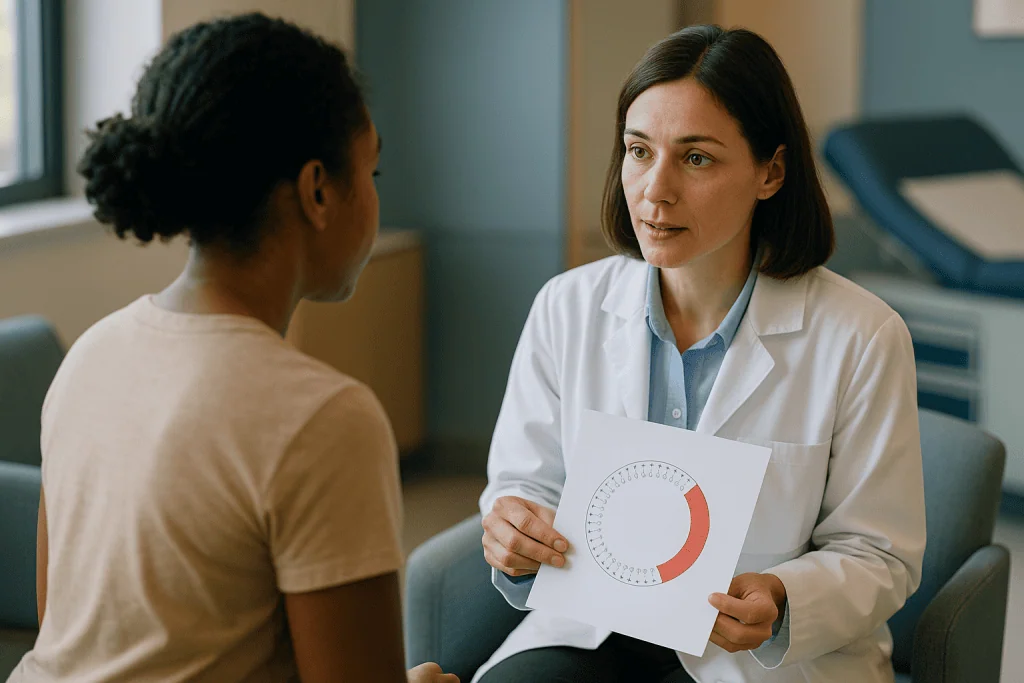
Over the next week or two, one follicle usually outpaces the others and becomes dominant. As it grows, it produces increasing amounts of estradiol, the main form of estrogen during the reproductive years. Estradiol rebuilds the lining of the uterus that was shed during the period and, when it reaches a high enough level, triggers a surge of luteinizing hormone, or LH, from the pituitary. That surge causes the follicle to rupture and release its egg roughly 24 to 36 hours later. Ovulation marks the boundary between the two phases.
Two details matter for anyone comparing phases. First, the follicular phase is the variable part of the cycle. In a textbook 28-day cycle it lasts about 14 days, but in real life it commonly runs anywhere from about 10 to more than 20 days. A person with 35-day cycles almost always has a long follicular phase, not a long luteal phase. Second, the period itself sits inside the follicular phase. The first few days of “low energy” many people report are the menstrual days, when hormone levels are at their lowest point, not a feature of the whole phase.
Hormonally, the late follicular phase is often described as the high-estrogen, low-progesterone window. Estrogen is thought to support endurance and mood for some people, but the effect is modest and far from universal.
What is the luteal phase, and how long does it last?
The luteal phase runs from ovulation to the day before the next period. After the egg is released, the empty follicle collapses and transforms into a temporary hormone-producing structure called the corpus luteum, Latin for “yellow body” because of its color. The corpus luteum pumps out progesterone and, to a lesser degree, estrogen.
Progesterone is the defining hormone of this phase. It thickens and stabilizes the uterine lining, raises core body temperature slightly, and has calming, sedating effects on the nervous system in some people. It peaks around six to eight days after ovulation. If pregnancy does not occur, the corpus luteum degenerates, progesterone and estrogen fall sharply, and the lining is shed. That drop is what starts the next period.
Unlike the follicular phase, the luteal phase is relatively fixed in length. Most sources, including Cleveland Clinic, describe a typical span of 12 to 14 days, with a normal range of roughly 11 to 17 days. A luteal phase consistently shorter than about 10 days is sometimes called a short luteal phase; whether it meaningfully affects fertility is still debated in the research literature.
The luteal phase is often split informally into an early part, when progesterone is climbing and many people feel steady, and a late part, the final five to seven days, when hormones fall and premenstrual symptoms cluster. Lumping the entire two weeks together as one “low” phase misrepresents how most people actually feel. The real turbulence, when it occurs, is concentrated in the last stretch before bleeding begins.
Follicular vs luteal phase: how the hormones compare
Four hormones do most of the work: FSH and LH from the pituitary, and estradiol and progesterone from the ovary. Their rise and fall follows a predictable choreography, even though the exact timing varies from person to person and cycle to cycle.

| Feature | Follicular phase | Luteal phase |
|---|---|---|
| Starts | Day 1 of bleeding | Day of ovulation |
| Typical length | About 14 days; highly variable (10 to 20+) | About 12 to 14 days; relatively fixed (11 to 17) |
| Dominant hormone | Estradiol, rising toward ovulation | Progesterone, peaking 6 to 8 days after ovulation |
| Pituitary signals | FSH early; LH surge at the end | Both suppressed by progesterone |
| Uterine lining | Shed, then rebuilt | Thickened and stabilized |
| Basal body temperature | Lower baseline | Higher by about 0.5 to 1°F (0.3 to 0.5°C) |
| Common reports | Low energy during bleeding; steadier afterward | Steady early; premenstrual symptoms in the last week |
The table shows two things people tend to miss. The follicular phase is not uniform: menstrual days and late-follicular days feel very different because estrogen is near its lowest at the start and near its highest at the end. The luteal phase is not uniform either, because the hormonal cliff comes only at its end.
Hormonal contraception that prevents ovulation changes this picture entirely. Without ovulation there is no corpus luteum and no natural luteal phase, so phase-based advice does not apply in the same way to people using those methods.
How do you feel during your luteal phase?
Honest answer: it depends on the day and the person. In the early luteal phase, many people notice little beyond a slightly warmer feeling and sometimes a lift in calm as progesterone rises. The later luteal phase is where most reported changes cluster, and the list is long because the studies rely on self-report.
Commonly reported late-luteal experiences include breast tenderness, bloating and fluid retention, lower abdominal cramping before bleeding starts, headaches, changes in bowel habits, acne flares, fatigue, disrupted sleep, irritability, low mood or anxiety, and difficulty concentrating. NHS guidance on premenstrual syndrome notes that most people who menstruate experience at least some of these in the days before a period, while a smaller group has symptoms severe enough to disrupt daily life.
The mechanisms are only partly understood. Progesterone’s breakdown products act on the same brain receptors as sedatives, which may explain sleepiness in some and, paradoxically, irritability in others who respond differently to those compounds. The fall in estrogen and progesterone in the final days is thought to affect serotonin signaling, a leading explanation for premenstrual mood changes. Fluid shifts account for bloating and breast fullness.
What the evidence does not support is the idea that everyone feels worse for two full weeks. Diary studies show wide variation: some people record no meaningful change across the cycle, others record a predictable few difficult days, and a minority record severe symptoms. Premenstrual dysphoric disorder, or PMDD, is the name for that severe form, characterized by marked mood symptoms that lift once bleeding begins. Mayo Clinic describes it as a distinct diagnosis, not simply “bad PMS,” and it warrants a clinician’s assessment rather than self-management.
Energy and exercise: does the luteal phase really make workouts harder?
The most repeated cycle-syncing rule is to lift heavy and train hard in the follicular phase, then downshift to walking and yoga in the luteal phase. It is a tidy rule. It is also not what the pooled data show.
The 2020 meta-analysis of 78 studies mentioned earlier compared strength, endurance and power across phases. Its headline finding was a trivial reduction in performance in the early follicular phase, meaning during menstruation, compared with other phases, with high variability between studies. It found no consistent evidence that the luteal phase impairs performance. The authors concluded that a general guideline was not possible and that training should be individualized.
Physiology offers reasons why the luteal phase might feel harder for some people even when measured output does not drop. Core temperature is about half a degree higher, so heat feels more taxing and sweating patterns shift. Progesterone mildly increases breathing rate, which some people perceive as breathlessness at a given pace. Fluid retention can add a pound or two of water weight and a sense of heaviness. None of these is a reason to skip training, but they may explain why the same workout feels different.
The practical reading of the evidence is plain: if you feel strong in the late luteal phase, there is no biological rule saying you should hold back, and if a workout feels rough during your period, the data agree that this is the most common time for a small dip. Recording how sessions actually feel over three or four cycles is more informative than any generic phase chart, and anyone with an ongoing training plan should adjust it based on their own log rather than an app’s assumptions.
Appetite, cravings and the luteal phase
The claim that hunger rises before a period has better support than most cycle claims, though the size of the effect is smaller than the internet suggests.
Controlled feeding studies dating back to the 1980s and 1990s, along with more recent reviews, consistently find that resting energy expenditure, the calories the body burns at rest, is higher in the luteal phase than in the follicular phase. The increase is typically reported in the range of about 2 to 11 percent, which for many adults works out to roughly 100 to 300 additional calories a day. Progesterone’s thermogenic effect, the same one that raises body temperature, is thought to drive most of this.
Food intake tends to rise in step. Studies that measured what people ate, rather than asking them, generally show luteal intake a few hundred calories higher than follicular intake, with a tilt toward carbohydrate and fat. Self-reported cravings for sweet and high-fat foods peak in the late luteal days. The plausible mechanism links falling estrogen and progesterone to changes in serotonin and to shifts in how the body handles glucose and insulin in the days before menstruation.
Two caveats keep this in proportion. The extra energy burned and the extra energy eaten roughly balance, which is why body weight over a full cycle is stable for most people despite premenstrual water retention. And the variation between individuals is large: some studies find no intake change at all in a substantial share of participants.
The useful takeaway is permission, not prescription. Being hungrier in the last week before a period is physiologically expected for many people and does not indicate a failure of discipline. Eating regular, balanced meals across the whole cycle remains the baseline advice from mainstream sources.
How to know if you are in the luteal phase
A calendar cannot reliably tell you, and neither can a search for “how to know if a girl is in luteal phase.” The only definitive marker is that ovulation has occurred, and the luteal phase is everything that follows until the next period. Several practical signals help pin that down.
The most accessible is basal body temperature, meaning your temperature on waking before any activity. It rises by about 0.5 to 1°F (0.3 to 0.5°C) within a day or two after ovulation and stays elevated until just before bleeding. A sustained rise, not a single high reading, is the signal. Wearable rings and patches automate this measurement and are reasonably good at detecting the shift retrospectively, though they cannot predict it in advance.
Cervical mucus changes are a second clue. Around ovulation it becomes clear, slippery and stretchy; in the luteal phase it typically becomes thicker, cloudier and scantier as progesterone takes over.
Urine LH tests, sold as ovulation predictor kits, detect the LH surge that precedes egg release. A positive test followed by a temperature rise is strong evidence that the luteal phase has begun. Some at-home tests also measure a progesterone breakdown product in urine to confirm that ovulation actually happened, since an LH surge can occasionally occur without egg release.
Apps that simply count 14 days back from the expected period are estimating, not measuring. Because the follicular phase varies so much, that estimate can be off by a week or more in irregular cycles. If knowing the phase matters to you, for fertility planning or for understanding symptoms, combining temperature with an ovulation test is far more reliable than a date-based guess, and a clinician can order a blood progesterone level when ovulation needs to be confirmed.
What to avoid during the luteal phase: sorting advice from folklore
Search results for this question overflow with prohibitions: no caffeine, no intense exercise, no fasting, no raw vegetables, no big decisions. Very little of it comes from clinical evidence. Here is what mainstream guidance actually says about the premenstrual window.
NHS and Mayo Clinic guidance on premenstrual syndrome suggests that some people find symptoms ease when they limit salt, caffeine and alcohol in the days before a period. The rationale is mechanistic: salt can worsen fluid retention, caffeine may aggravate breast tenderness and sleep disruption, and alcohol can deepen low mood and disturb sleep. The supporting evidence is largely observational and expert opinion rather than large randomized trials, so these are reasonable things to test on yourself, not rules.
Both sources recommend regular exercise, adequate sleep and stress-management strategies throughout the cycle, with some evidence that aerobic activity reduces the severity of premenstrual symptoms. That directly contradicts the popular “rest for two weeks” message. Skipping exercise is one of the few things the evidence would gently push against.
Extended fasting is another common target of online warnings. There is no high-quality trial showing that fasting is uniquely harmful in the luteal phase, but there is also no trial showing benefit, and given the higher energy expenditure and appetite in this window, aggressive restriction may simply feel worse. The honest position is uncertainty.
What clearly does not belong on any avoid list is your prescribed medicine. If you take a hormonal contraceptive, thyroid medicine, antidepressant or any other prescription, do not pause or adjust it based on cycle phase. If you suspect a medicine interacts with your premenstrual symptoms, that conversation belongs with the prescribing clinician.
Are you prettier during the follicular phase? The attractiveness claim
This question ranks high in searches, so it deserves a straight answer rather than a dismissal. A body of small psychology studies, mostly from the 2000s and 2010s, asked raters to judge facial photographs, voice recordings or body scent samples collected at different cycle points. Several reported that samples from the late follicular phase, around ovulation, were rated slightly more attractive than samples from the luteal phase.
Two things about those findings matter. The effects were small, often a fraction of a point on a rating scale, and detectable only by averaging across many raters. And replication has been mixed. Larger, better-controlled studies that confirmed ovulation with hormone tests have often found weaker effects or none, and the field has been criticized for small samples and for relying on counting days rather than measuring hormones.
There are real physiological changes that could plausibly underlie subtle shifts. Estrogen affects skin hydration and oil production, which is why acne tends to flare in the late luteal phase when estrogen is low relative to progesterone and androgens. Fluid retention before a period can change how the face and body feel and look to the person themselves. Sleep quality, which often dips before menstruation, affects appearance in ways that have nothing to do with hormones directly.
Where does that leave the question? The most accurate reading is that any cycle-related difference in how others perceive attractiveness is small, inconsistent across studies and easily swamped by sleep, stress, lighting and mood. Feeling less attractive premenstrually is common and understandable, especially with bloating or skin changes, but it reflects how you feel far more than a measurable change in how you look. Framing it as a two-week beauty penalty is not supported.
Luteal phase and fertility: implantation and the short luteal phase
For anyone trying to conceive, the luteal phase is where conception either takes hold or does not, which is why it attracts so much attention in fertility forums.
After fertilization in the fallopian tube, the embryo travels to the uterus and implants in the lining about six to ten days after ovulation. Progesterone from the corpus luteum keeps that lining thick, receptive and rich in blood supply during this window. If implantation occurs, the early pregnancy produces a hormone that signals the corpus luteum to keep making progesterone until the placenta takes over. If not, the corpus luteum fades, progesterone drops, and the cycle resets.
The idea of a luteal phase defect, meaning insufficient progesterone or too short a luteal phase to allow implantation, has been discussed for decades. Its status in the evidence is unsettled. Observational studies have linked luteal phases shorter than about 10 days with lower pregnancy rates in some groups, but professional bodies have noted that no reliable test distinguishes a defect from normal variation, and that single progesterone measurements fluctuate too much to be diagnostic on their own. Short luteal phases also occur occasionally in people with completely normal fertility.
Progesterone supplementation is used in specific clinical situations, most consistently in assisted reproduction cycles, where the evidence is strongest. Whether it helps in natural cycles with a short luteal phase is less clear. Any decision to test for or treat a suspected luteal issue belongs with a fertility clinician who can look at the full pattern of cycles, ovulation confirmation and other factors, rather than with a tracking app’s flag.
Tracking luteal length over several cycles is a reasonable, low-effort piece of information to bring to that appointment.
What the evidence actually says, graded by strength
Not every claim about the follicular and luteal phases deserves the same confidence. Here is how the main ones stack up.
Strong evidence (physiological measurements, consistent across studies): estradiol rises through the follicular phase and progesterone dominates the luteal phase; basal body temperature rises after ovulation; the luteal phase is more stable in length than the follicular phase; resting energy expenditure is modestly higher in the luteal phase.
Moderate evidence (repeated findings, some randomized or controlled data, meaningful variation): food intake and cravings increase in the late luteal phase; premenstrual symptoms including bloating, breast tenderness and mood changes are common in the final week; regular aerobic exercise is associated with milder premenstrual symptoms; PMDD is a distinct, diagnosable condition that responds to specific treatments chosen by a clinician.
Weak or inconsistent evidence (small studies, self-report, poor phase verification): the luteal phase meaningfully reduces strength or endurance performance; cycle-synced training schedules improve fitness outcomes; specific foods relieve specific phase symptoms; the follicular phase makes people measurably more attractive to others; fasting is uniquely harmful in the luteal phase.
Expert opinion mainly: limiting salt, caffeine and alcohol premenstrually; the concept of a luteal phase defect in natural cycles.
The pattern is telling. Hormone and temperature changes are well established because they can be measured with a blood test or a thermometer. Claims about how those changes should reshape your week rest on much thinner ground, because studying behavior across cycles is hard, expensive and rarely done well. Recognizing that gap is the single most useful thing a reader can take from the current trend.
Common myths about cycle syncing and the luteal phase
Myth: Every cycle has a 14-day follicular phase and a 14-day luteal phase. The 28-day model is a teaching tool. Adult cycles commonly run 21 to 35 days, and nearly all of that variation sits in the follicular phase. Counting 14 days from your period to find ovulation will be wrong for many people.
Myth: You should not lift heavy or do intense cardio in the luteal phase. Pooled data from dozens of studies do not show a consistent luteal performance drop. If anything, the small average dip appears during menstruation. Train according to how you feel and what your log shows.
Myth: Luteal phase hunger means your metabolism is slowing. The opposite is closer to the truth. Resting energy expenditure rises modestly after ovulation, and appetite tends to rise to match it.
Myth: Feeling emotional before a period means something is wrong with you. Mood changes in the final luteal days are among the most common experiences reported by people who menstruate. They become a clinical concern when they are severe, persistent or disrupt daily functioning, which is when PMDD or another condition should be considered by a clinician.
Myth: An app can tell you which phase you are in. Date-based apps estimate; they do not measure. Temperature tracking and ovulation tests confirm, and a blood test confirms best.
Myth: The luteal phase is two weeks of feeling terrible. The early luteal days are often uneventful. Symptoms, when present, concentrate in the last five to seven days.
Myth: Hormonal contraception has a luteal phase too. Methods that suppress ovulation prevent the corpus luteum from forming, so there is no natural progesterone surge. Phase-based advice built on that surge does not translate.
When to see a doctor about luteal or follicular phase symptoms
Most cycle-related changes are expected and manageable with attention to sleep, activity and regular meals. Some patterns deserve a clinician’s evaluation, and no app or article can replace that assessment.
Arrange an appointment if you notice any of the following:
- Cycles consistently shorter than 21 days or longer than 35 days, or periods that have stopped for three months or more when pregnancy is not the reason.
- Bleeding between periods, bleeding after sex, or bleeding after menopause.
- Periods heavy enough to soak through a pad or tampon every hour for several hours, or lasting longer than seven days.
- Pelvic pain that is severe, worsening cycle to cycle, or present outside your period.
- Premenstrual mood symptoms that include hopelessness, severe anxiety, rage or thoughts of self-harm, or that disrupt work, school or relationships. These may indicate PMDD, which has specific treatments a clinician can discuss.
- Sudden severe one-sided pelvic pain, fainting, fever with pelvic pain, or heavy bleeding with dizziness, which need urgent care the same day.
- Difficulty conceiving after 12 months of trying, or after 6 months if you are 35 or older, or if you have tracked consistently short luteal phases.
- New or worsening symptoms after starting or changing any medicine, including hormonal contraception.
Bring your tracking data if you have it. A few cycles of dates, temperatures and symptom notes can shorten the path to an answer. Do not stop or change any prescribed medicine to test whether it affects your cycle; raise the question with the prescriber instead. Diagnosis and treatment decisions, including any hormone testing or progesterone therapy, belong with your treating clinician, who can weigh your full history rather than a single phase.
Frequently asked questions
How do you feel during your luteal phase?
Most people feel little change in the early luteal phase and notice symptoms, if any, in the final week before a period. Common reports include bloating, breast tenderness, fatigue, altered sleep, cravings and irritability or low mood, driven by the rise and then sharp fall of progesterone and estrogen. The intensity varies enormously between individuals, and a substantial minority report no meaningful change at all.
How can you tell if someone is in the luteal phase?
The only reliable way is confirming that ovulation has happened. A sustained rise in basal body temperature of about half a degree Fahrenheit, a positive urine LH test a day or two earlier, and thicker, scantier cervical mucus together point to the luteal phase. Calendar counting is an estimate that can be off by a week in irregular cycles, and a blood progesterone test is the clinical standard.
What should you avoid during the luteal phase?
Mainstream guidance suggests that limiting salt, caffeine and alcohol in the premenstrual days may ease bloating, breast tenderness and sleep problems for some people, though the evidence is mostly observational. The strongest advice is what not to skip: regular exercise, sleep and balanced meals appear to reduce premenstrual symptoms. Never stop or adjust a prescribed medicine based on cycle phase without talking to the prescriber.
Are you prettier during the follicular phase or the luteal phase?
Some small studies found that photos, voices or scent samples collected around ovulation, in the late follicular phase, were rated very slightly more attractive, but the effects were tiny and larger studies have often failed to replicate them. Skin changes, fluid retention and poorer sleep before a period can affect how you feel about your appearance, which is different from any measurable change in how others perceive you.
How long does the luteal phase last?
The luteal phase typically lasts 12 to 14 days, with a normal range of about 11 to 17 days. It is the more stable half of the cycle because the corpus luteum has a fairly fixed lifespan once ovulation occurs. A luteal phase consistently shorter than about 10 days is sometimes called a short luteal phase, and whether it affects fertility is still debated; a clinician can evaluate it.
What is the difference between the follicular phase and the luteal phase?
The follicular phase runs from the first day of bleeding to ovulation and is dominated by rising estrogen as a follicle matures. The luteal phase runs from ovulation to the next period and is dominated by progesterone from the corpus luteum. The follicular phase varies widely in length; the luteal phase is relatively fixed. Temperature, resting energy use and appetite are modestly higher in the luteal phase.
Does the luteal phase make you gain weight?
Fluid retention in the late luteal phase can add a pound or two on the scale, but this is water, not fat, and it typically resolves once the period starts. Although appetite and intake often rise premenstrually, resting energy expenditure rises by a similar amount, so body weight measured across a full cycle is stable for most people. Persistent weight change is not explained by cycle phase alone.
Is it harder to exercise in the luteal phase?
Measured performance does not consistently drop in the luteal phase. A pooled analysis of 78 studies found only a trivial average reduction, and that appeared during menstruation, not after ovulation. Higher core temperature, slightly faster breathing and fluid retention may make effort feel harder for some people even when output is unchanged. Training based on your own log is more useful than a generic phase chart.
Why am I so hungry in my luteal phase?
Progesterone raises resting energy expenditure by roughly 2 to 11 percent after ovulation, and appetite rises to match, particularly for carbohydrate and fat in the days before a period. Falling estrogen and progesterone in the late luteal phase are also thought to influence serotonin and glucose handling, which can drive cravings. This is an expected physiological pattern for many people rather than a lapse in willpower.
What is a short luteal phase and does it matter for fertility?
A short luteal phase usually means fewer than about 10 days between ovulation and the next period. Some observational studies link it to lower pregnancy rates, but no reliable test defines a luteal phase defect, and short phases also occur in people with normal fertility. If you track consistently short luteal phases while trying to conceive, bring the data to a fertility clinician, who decides whether testing or treatment is appropriate.
References
- Cleveland Clinic: Luteal Phase
- Cleveland Clinic: Follicular Phase
- NHS: Premenstrual syndrome (PMS)
- MedlinePlus: Menstruation
This article is for general information only and is not a substitute for professional medical advice. Please consult a qualified doctor about your individual situation.

More from the Blog

Who Is ICSI Recommended For? Male-Factor Infertility, Prior Fertilization Failure and More
ICSI is usually recommended when sperm are unlikely to fertilize an egg on their own: severe male-factor infertility such as very low sperm count,…

GIFT (Gamete Intrafallopian Transfer) Step by Step: Eggs, Sperm and the Laparoscopic Placement
GIFT, or gamete intrafallopian transfer, is an assisted reproduction technique in which eggs are collected after ovarian stimulation, mixed with prepared sperm, and placed…

GIFT vs IVF: Why Fertilization Location Matters and How Fertility Teams Choose Between Them
GIFT (gamete intrafallopian transfer) places eggs and sperm together into a fallopian tube so fertilization happens inside the body, while IVF fertilizes eggs in…

Ovulation Pain (Mittelschmerz): Why It Happens and When It Is Something Else
Ovulation pain, also called mittelschmerz, is a one-sided lower abdominal ache or twinge that occurs around the middle of the menstrual cycle when a…

Tracking Ovulation: Basal Temperature, Cervical Mucus and the Fertility Window Explained
Cervical mucus changes with estrogen: scant and sticky after a period, then wetter, and finally clear, stretchy and slippery in the days before ovulation,…

Cramping or Spotting After Insemination: What Is Expected and When to Contact Your Clinic
Mild cramping after IUI is common and usually expected. The thin catheter passing through the cervix, the fluid placed in the uterus, and the…