

Who May Be a Candidate for GIFT? Open Fallopian Tubes, Sperm Findings and Other Considerations

Key Takeaways
- GIFT requires at least one open and healthy fallopian tube because fertilization is designed to happen inside the tube, not in a laboratory dish.
- Sperm must be able to fertilize an egg unaided, since the ICSI injection technique that rescues severe male factor cannot be combined with GIFT.
- GIFT involves laparoscopy under general anesthesia, making it more surgically invasive than IVF, whose embryo transfer passes through the cervix without incisions.
- CDC national reporting shows GIFT and ZIFT together account for well under 1 percent of assisted reproduction cycles, so modern success comparisons with IVF do not exist.
- Because fertilization is never observed in GIFT, embryos cannot be selected or frozen, which matters most for older patients or those with diminished ovarian reserve.
- Ovarian hyperstimulation syndrome, ectopic pregnancy and multiple pregnancy are the main cycle-related risks the treating team weighs before offering GIFT.
GIFT, or gamete intrafallopian transfer, is generally considered only for people who have at least one open, healthy fallopian tube, a sperm sample that can fertilize an egg without laboratory help, and a reason to avoid fertilization outside the body. It is rarely offered today because standard IVF gives the team more information with less surgery. Candidacy is always decided individually by a fertility specialist.
The folder on the kitchen table holds two reports. One is a tubal X-ray that came back clear. The other is a semen analysis with numbers circled in pen. A friend at their place of worship has mentioned a procedure with an unusual name, GIFT, and said it might sit more comfortably with their beliefs than IVF. So the question that keeps them up is a practical one: who is a candidate for GIFT, and are they?
It is a fair question, and a surprisingly hard one to answer online. Most pages describing gamete intrafallopian transfer were written when the technique was new. Few explain why it has all but disappeared from fertility clinics, or which findings on those two reports would move a couple toward it, or away from it.
This explainer walks through the anatomy, the sperm findings, the personal reasons and the trade-offs, so that the conversation with your fertility specialist starts from solid ground rather than from rumor.
What is GIFT and how does it actually work?
GIFT stands for gamete intrafallopian transfer. A gamete is a reproductive cell, meaning an egg or a sperm. The name describes the whole idea: eggs and sperm are collected, mixed together, and placed directly into the fallopian tube so that fertilization happens inside the body rather than in a laboratory dish.
The procedure begins the way most assisted reproduction does. The ovaries are stimulated with fertility medicines, a class of hormones that encourage several eggs to mature in one cycle instead of the usual one. When monitoring shows the follicles are ready, the eggs are retrieved, typically with a thin needle guided by ultrasound through the vaginal wall. A semen sample is prepared in the lab to concentrate the most active sperm.
Here the paths diverge. In IVF, the eggs and sperm meet in the dish, embryos develop for several days, and one is transferred into the uterus through the cervix. In GIFT, there is no dish stage. The eggs and prepared sperm are loaded into a fine catheter and, during a laparoscopy, guided into the open end of a fallopian tube. Laparoscopy is keyhole surgery: a small camera and instruments pass through tiny cuts in the abdomen under general anesthesia. The Cleveland Clinic describes this combined retrieval and transfer as usually happening on the same day.
Once the gametes are in the tube, the body takes over. If fertilization occurs, the early embryo travels toward the uterus over the following days, just as it would after natural conception. Nobody sees whether fertilization happened. That single fact, invisible fertilization, explains most of what follows in this article about who is and is not a good fit.
Who is a candidate for GIFT: the short version
Strip the question down and three conditions carry almost all the weight. First, at least one fallopian tube must be open and structurally healthy, because the tube is where fertilization is being asked to happen. Second, the sperm must be capable of fertilizing an egg on their own, with no laboratory injection to help. Third, the person or couple needs a reason to prefer fertilization inside the body over fertilization in a dish, because otherwise IVF answers the same problem with less surgery.

Historically, the groups most often considered for GIFT were couples with unexplained infertility, mild endometriosis, ovulation problems, or a personal or religious objection to embryos being created outside the body. Unexplained infertility means a full evaluation has found no clear cause after the recommended length of trying, which Mayo Clinic gives as 12 months for people under 35 and 6 months for those 35 and older.
Who is usually asked to wait, or steered elsewhere? Anyone with blocked, scarred or removed tubes. Anyone whose partner’s sperm findings are poor enough that natural fertilization is unlikely. Anyone for whom general anesthesia and abdominal surgery carry raised risk, since GIFT requires both. People with a history of ectopic pregnancy, where an embryo implants outside the uterus, are also approached cautiously because placing gametes in the tube adds tubal risk.
Two caveats matter. Candidacy is never a checklist a patient completes alone; it is a judgment the treating team makes after reviewing imaging, hormone results and history. And because GIFT is rarely performed now, the more realistic first question for many people is whether any program near them still offers it at all.
Why open fallopian tubes are the non-negotiable requirement
The fallopian tubes are two thin passages, each roughly the length of a pen, that run from the ovaries to the upper corners of the uterus. In an unassisted pregnancy, the egg is swept into the tube, meets sperm there, and the fertilized egg is nudged toward the uterus by tiny hair-like cilia and gentle muscle contractions over about a week.
GIFT borrows this entire system. It places eggs and sperm where they would naturally meet and then relies on the tube to do three jobs: host fertilization, nourish the very early embryo, and deliver it to the uterus at the right time. A tube that is blocked cannot receive the gametes. A tube that is open but damaged, for example by past pelvic infection or endometriosis, may allow the catheter in yet fail at transport, raising the chance the embryo stalls and implants in the tube itself.
This is why fertility specialists talk about tubes being patent, which simply means open, and also about them being healthy. The two are not the same. A dye test can show fluid spilling freely out of a tube while the lining inside is scarred and the cilia are gone. Hydrosalpinx, a tube swollen with trapped fluid, is a particular concern; that fluid can leak back into the uterus and interfere with implantation.
IVF was, in fact, invented for exactly the people GIFT cannot help. The first IVF births were in women whose tubes were blocked; the dish replaced the tube. So when a report shows tubal disease, the conversation naturally moves away from GIFT and toward IVF, not because one is superior in every case but because the anatomy has already made the choice.
How doctors check whether your tubes are open
Nobody is a GIFT candidate on symptoms alone; the tubes have to be seen. The most common first test is hysterosalpingography, usually shortened to HSG. A thin tube passes through the cervix, contrast dye is introduced, and X-ray images follow the dye through the uterus and out the ends of the fallopian tubes. MedlinePlus notes the test is normally done in the first half of the menstrual cycle, after bleeding stops and before ovulation, and that cramping similar to period pain is common for a short while afterward.
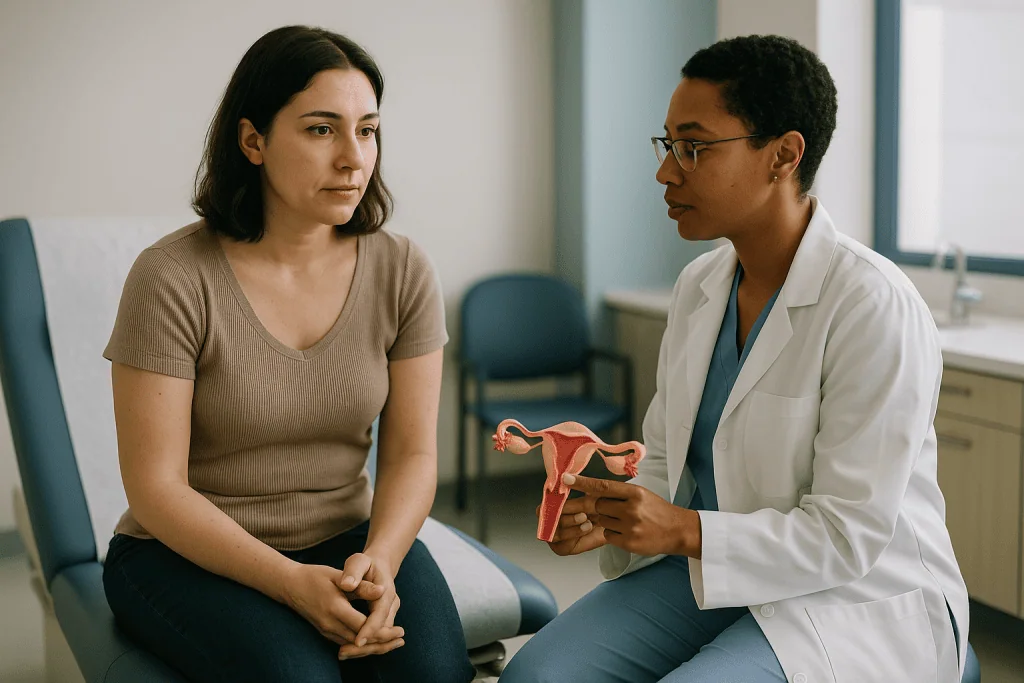
An HSG answers the question “is the tube open?” reasonably well. It answers “is the tube healthy?” less well. It cannot show scar tissue on the outside of the tube, endometriosis deposits nearby, or the state of the inner lining. Some centers use a saline and ultrasound version, sometimes called a sono-HSG, which avoids X-ray exposure and gives similar information about patency.
When the picture is unclear, or when endometriosis is suspected, the team may recommend diagnostic laparoscopy with dye. Under general anesthesia, a camera inspects the pelvis directly while blue dye is pushed through the tubes and watched spilling out. This is the same access route GIFT itself uses, which is why, in the era when GIFT was common, some programs performed the diagnostic look and the transfer as part of one planned pathway.
Test results shape candidacy in predictable ways. Two open, normal-appearing tubes keep GIFT on the table. One open tube may still allow it, since only one tube is used. Bilateral blockage, hydrosalpinx or dense adhesions generally close the door and redirect discussion toward IVF or, in selected cases, tubal surgery followed by natural attempts.
Who is a candidate for GIFT when sperm findings are in the mix?
A semen analysis measures the volume of the sample, the concentration of sperm, the proportion that are moving and how well, and the proportion with normal shape. MedlinePlus lists the typical laboratory reference ranges and explains that results are compared against them rather than judged in isolation. One result below range does not diagnose anything; the test is usually repeated after a few weeks because values swing with illness, heat exposure and abstinence time.
For GIFT the logic is simple. Because fertilization happens unseen inside the tube, the sperm must be able to reach, bind to and penetrate an egg with no help. Laboratory preparation can concentrate the best swimmers, but it cannot compensate for very low counts, very poor movement or a high proportion of abnormally shaped sperm the way IVF can.
That is where a technique called ICSI comes in. Intracytoplasmic sperm injection means a single sperm is injected directly into an egg under a microscope. Mayo Clinic describes it as an option during IVF when sperm quality or number is a problem. ICSI cannot be combined with GIFT, because injecting sperm into eggs creates embryos in the dish, which is exactly what GIFT is designed to avoid.
So the sperm report tends to sort people into rough groups. Findings within or near the reference ranges keep GIFT possible. Mild male factor, where one measure is modestly below range, sits in a gray zone that the treating team weighs against everything else. Severe male factor, or a complete absence of sperm in the ejaculate, points firmly toward IVF with ICSI, sometimes with surgical sperm retrieval. None of these lines is drawn by the patient; the reproductive endocrinologist and the andrology lab interpret the numbers together with the partner’s findings.
Unexplained infertility, endometriosis and ovulation problems
Beyond tubes and sperm, three diagnoses came up repeatedly in the years GIFT was widely used, and they still frame the conversation.
Unexplained infertility is a label of exclusion. Ovulation has been confirmed, the tubes are open, the uterus looks normal and the semen analysis is unremarkable, yet pregnancy has not happened. The NHS notes that a cause is not found in roughly a quarter of couples investigated. GIFT appealed here because it bypasses the unknown: it ensures eggs and sperm are in the same place at the same time in adequate numbers.
Endometriosis is a condition in which tissue similar to the uterine lining grows outside the uterus, often on the ovaries, tubes and pelvic surfaces. In mild forms the tubes may be open and mobile, and GIFT was sometimes considered. In moderate or severe disease, adhesions can tether the tubes and ovaries, chronic inflammation may harm egg and tubal function, and IVF becomes the more usual recommendation. The laparoscopy that is part of GIFT does give the surgeon a direct view of endometriosis, which some teams historically saw as a small advantage.
Ovulation disorders, most commonly polycystic ovary syndrome, are usually addressed first with lifestyle measures and oral ovulation induction medicines, a class that prompts the ovary to release an egg. Mayo Clinic describes stepping up to assisted reproduction only when simpler approaches have not worked. People with these conditions can respond briskly to the stronger injectable stimulation used before GIFT or IVF, which raises the risk of ovarian hyperstimulation syndrome, discussed later, and requires careful monitoring.
In each of these situations the question is not “could GIFT work?” but “does GIFT offer anything IVF does not for this person?” For most, the honest answer today is that it does not, unless the reason is a values-based one.
Age, egg supply and how the team weighs them
Fertility declines with age mainly because the number and quality of eggs fall. Mayo Clinic notes the decline becomes more pronounced in the mid-30s and accelerates after 37. Age matters for every form of assisted reproduction, but it interacts with GIFT in a specific way.
In IVF, the laboratory watches embryos develop for several days and can select the one that looks most likely to implant. It can also freeze extra embryos for later attempts from a single retrieval. In GIFT, none of that is possible. All the eggs judged suitable are placed in the tube at once, unobserved, and there is nothing to freeze unless some eggs are held back and fertilized in the lab, which defeats the reason many people choose GIFT in the first place.
For a younger person with a good ovarian reserve, meaning a healthy remaining supply of eggs as estimated by blood tests and an ultrasound count of small follicles, this loss of information may be a trade-off they accept. For someone older, or someone with diminished ovarian reserve, each egg is precious and each cycle is harder to repeat. Most specialists would want the extra insight and the freezing option that IVF provides, and would say so plainly.
Ovarian reserve testing typically includes anti-Müllerian hormone, a hormone produced by small follicles, and an antral follicle count on ultrasound. These do not predict whether a specific pregnancy will happen; they help estimate how many eggs stimulation might yield, which in turn shapes how many could be transferred and how strongly the team would lean toward or away from GIFT.
Age also feeds into the multiple-pregnancy question. Placing several eggs in a tube can lead to twins or more, and the risks of a multiple pregnancy rise with maternal age. Teams factor this into how many gametes they would consider transferring.
GIFT vs IVF: what actually differs
People searching “gift vs ivf” usually want to know which is better. The more useful framing is which trade-offs each accepts. The table sets them side by side.
| Feature | GIFT | Standard IVF |
|---|---|---|
| Where fertilization happens | Inside the fallopian tube | In a laboratory dish |
| Requires an open, healthy tube | Yes, at least one | No |
| Can help severe male factor with ICSI | No | Yes |
| Fertilization confirmed before transfer | No | Yes, embryos observed |
| Embryo selection possible | No | Yes |
| Embryo freezing for later cycles | Not without lab fertilization | Routine |
| Transfer method | Laparoscopy under general anesthesia | Catheter through the cervix, usually no anesthesia |
| Embryos created outside the body | None | Yes, sometimes surplus |
| Availability today | Rare | Widely available |
Read down the GIFT column and a pattern emerges. Every advantage it offers, above all that no embryo is created or handled outside the body, comes bundled with a loss of information or an added surgical step. Read down the IVF column and the reverse is true: more data, less surgery, and the ethical questions about surplus embryos that some people find unacceptable.
Neither column contains a success figure, and that is deliberate. The CDC’s national assisted reproduction reporting shows GIFT now representing a vanishingly small share of cycles, too few for meaningful modern comparisons. Older data from GIFT’s peak years were gathered when IVF laboratories were far less refined than they are today, so historical head-to-head numbers say little about the present. Anyone quoting a percentage for GIFT should be asked where it comes from and when.
Is GIFT still done, and why did it become rare?
Yes, but seldom. In the 1980s and early 1990s, GIFT was a mainstream option, partly because early IVF laboratories struggled to keep embryos healthy in culture. Letting the body handle fertilization looked safer than a dish that could not yet reliably mimic the tube. Some programs at the time reported GIFT outcomes at least comparable to IVF, which encouraged its use.
Then the laboratories caught up. Culture media improved, incubators became more stable, and embryologists learned to grow embryos for five or six days to the blastocyst stage, when they could be assessed and selected more accurately. ICSI arrived, opening IVF to couples with severe male factor. Freezing techniques advanced so that surplus embryos could be stored with high survival. Transfer through the cervix required no anesthesia and no incisions.
Each of these advances removed a reason to choose GIFT. Why undergo general anesthesia and laparoscopy for a procedure that offers less information, when a non-surgical alternative offers more? The CDC’s assisted reproduction surveillance, which tracks cycles across the United States, has for years shown GIFT and its cousin ZIFT accounting for well under 1 percent of reported cycles.
The technique has not vanished entirely because one reason for it did not depend on laboratory quality at all. For people whose faith or conscience objects to embryos being created, selected or discarded outside the body, GIFT remains the only assisted method that never produces an embryo in a dish. A small number of programs continue to offer it for this reason, and some specialists trained decades ago retain the skills.
Practically, this means the first step for anyone drawn to GIFT is often a phone call asking whether it is available and how recently the team has performed it. Experience with any surgical procedure matters, and it is a reasonable thing to ask about without embarrassment.
Religious, ethical and personal reasons people ask about GIFT
For many people typing this question, the medical findings are almost secondary. They are asking because a religious teaching, a personal ethic or a hard-won conviction makes standard IVF feel impossible.
The concerns tend to cluster around three points. Some object to fertilization occurring anywhere other than inside the body. Some accept fertilization in a dish but cannot accept that embryos may be graded, selected or left unused. Some are troubled specifically by freezing or discarding embryos. GIFT addresses all three at once: no embryo is created outside the body, so none is selected, frozen or discarded.
Religious traditions differ in how they view this. Some have written guidance that regards GIFT as acceptable while regarding IVF as problematic; others accept IVF with conditions; others reject all assisted reproduction. This article cannot speak for any tradition, and it would be inappropriate to try. What a fertility team can do is describe precisely what happens to eggs, sperm and, if applicable, embryos at every step, so that a person can take an accurate description to their own religious or ethical adviser.
Two practical points follow. First, a GIFT cycle sometimes yields more eggs than the team would place in the tube. Patients with values-based motives should ask in advance what would happen to the extra eggs. Options might include discarding unfertilized eggs, freezing unfertilized eggs for a future GIFT attempt, or fertilizing them in the lab, which many in this group would decline. Deciding this before the cycle starts avoids a rushed choice on retrieval day.
Second, values-based candidacy does not override medical candidacy. A person with blocked tubes cannot have GIFT however strong the conviction. In that situation, the honest conversation is about what other paths, including tubal surgery, adoption or a modified IVF approach, might sit within their ethical framework.
What the days and weeks around a GIFT cycle usually look like
Timelines vary between programs and individuals, and what follows describes typical patterns drawn from how stimulation and retrieval are done for IVF, since the early steps are shared. The prescribing clinician sets the actual plan.
Ovarian stimulation usually spans about one to two weeks, according to Mayo Clinic’s description of IVF. Daily injections of fertility hormones encourage several follicles to grow. During this window, clinic visits for blood tests and transvaginal ultrasounds every few days track how the ovaries respond. Bloating, breast tenderness and mood changes are common and are related to rising estrogen levels rather than to anything going wrong.
When the follicles reach the target size, a final “trigger” injection prompts the eggs to complete maturation, and retrieval follows roughly 34 to 36 hours later, again as described by Mayo Clinic. For GIFT, the retrieval and the laparoscopic transfer are usually scheduled as one anesthetic event. The semen sample is produced the same morning and prepared while the eggs are collected.
The first day or two afterward involve recovery from general anesthesia and from the small laparoscopy incisions. Shoulder-tip pain from residual gas used to lift the abdominal wall is common and fades within a couple of days. Most people are advised to rest for a day, then gradually resume light activity as comfort allows; the treating team will give specific guidance about lifting, driving and work.
The following two weeks are the waiting period. Because fertilization was not observed, there is nothing to report until a pregnancy blood test, typically around 12 to 14 days after the procedure. Progesterone support, a hormone that prepares the uterine lining, is often prescribed through this period. Mild cramping and light spotting can occur and are not reliable signs of either success or failure. If the test is positive, an early ultrasound follows to confirm that the pregnancy is in the uterus and to check for multiples.
Risks and side effects: what candidates weigh with their team
GIFT carries the risks of ovarian stimulation and egg retrieval that IVF carries, plus the risks of laparoscopy and general anesthesia that IVF avoids, plus a tubal-specific consideration of its own.
Ovarian hyperstimulation syndrome, or OHSS, is an exaggerated response to fertility medicines in which the ovaries swell and fluid shifts into the abdomen. The NHS describes mild forms as causing bloating and discomfort, and severe forms as causing marked swelling, breathlessness and reduced urination that require urgent care. People with polycystic ovaries and those who produce many follicles are at higher risk, which is one reason monitoring during stimulation is so frequent.
Egg retrieval, whether for GIFT or IVF, carries small risks of bleeding, infection and injury to the bladder or bowel from the needle. Laparoscopy adds incisions, the effects of general anesthesia, and a small chance of injury to abdominal organs or blood vessels. These are uncommon in healthy people but are real, and they are the main reason many specialists no longer recommend GIFT when a non-surgical route exists.
Ectopic pregnancy, where an embryo implants outside the uterus, most often in a tube, is a concern in any assisted cycle. The NHS notes it is more common after IVF than after natural conception. In GIFT the embryo begins life in the tube by design, and a tube that is even subtly damaged may fail to move it along. Early ultrasound after a positive test is therefore standard.
Multiple pregnancy is the other recurring theme. Because several eggs may be placed in the tube, twins or higher-order multiples can result, and these pregnancies carry higher rates of prematurity, low birth weight and complications for the mother. Teams limit the number of eggs transferred with this in mind, and candidates should ask how that number would be decided in their case.
What people often get wrong about GIFT
Because GIFT is old enough to have a mythology and rare enough to be poorly explained, several misconceptions circulate.
“GIFT is more natural, so it must be safer.” Fertilization does happen in the body, but the cycle still involves hormone stimulation, egg retrieval and general anesthesia with abdominal surgery. On the surgical side, it is the more invasive option, not the less.
“GIFT has better success rates than IVF.” Some early reports from the 1980s suggested comparable or favorable outcomes, but laboratories have transformed since then. The CDC’s national data now include too few GIFT cycles to support any modern comparison, so no honest source can tell you GIFT outperforms current IVF.
“If my tubes are open on the X-ray, I qualify.” An open tube is necessary but not sufficient. The lining, the mobility of the tube and the health of the surrounding pelvis matter too, and the semen findings and ovarian reserve weigh just as heavily.
“GIFT avoids all the ethical issues.” It avoids creating embryos outside the body. It does not automatically settle what happens to surplus unfertilized eggs, and it still involves the possibility of multiple pregnancy, which some traditions view with its own concerns. Those conversations still need to happen.
“GIFT and ZIFT are the same thing.” ZIFT, zygote intrafallopian transfer, fertilizes the egg in the lab first and then places the one-day-old fertilized egg into the tube. It shares GIFT’s surgery but not its defining feature; an embryo is created in the dish. People choosing GIFT for conscience reasons should be sure which procedure is being discussed.
“Nobody does GIFT anymore, so it must have been unsafe.” It faded because IVF improved, not because GIFT was found dangerous. It remains a legitimate, if niche, option for a specific group of people.
Questions to ask your care team about GIFT candidacy
A first consultation about GIFT goes better with specific questions than with a general “am I a candidate?” These are the ones that tend to unlock the most useful answers.
- Do you still perform GIFT, and roughly how often has the team done it in recent years?
- Based on my HSG or laparoscopy, do my tubes look open and healthy, or only open?
- What in my partner’s semen analysis supports or argues against relying on natural fertilization?
- Given my age and ovarian reserve results, what do I lose by not being able to observe or select embryos?
- How many eggs would you consider placing in the tube, and how would you decide?
- What would happen to any extra eggs retrieved, and can I decide that before the cycle begins?
- What is my personal risk of ovarian hyperstimulation syndrome, and how would you reduce it?
- What are the specific surgical and anesthetic risks for me, given my medical history?
- If GIFT is not right for me, which alternatives fit both my medical situation and my values?
- Who do I call, and at what hours, if something worries me during or after the cycle?
Bring the actual reports rather than a summary, and consider writing down the answers during the visit. If a religious or ethical adviser is part of your decision, ask the team for a plain written description of every step involving eggs, sperm and embryos so that the adviser is working from accurate information.
One more question is worth asking of yourself as much as of the team: if the answer is that GIFT is medically possible but not what the specialist would recommend, what would you need to hear to feel comfortable either way? Knowing that in advance makes the conversation calmer and the decision, whatever it is, more clearly your own.
When to call your doctor
Most people going through stimulation, retrieval and laparoscopy experience bloating, mild cramping, tiredness and some tenderness around the incisions. These usually settle within days. Certain signs, though, should prompt a same-day call to the fertility team or, if severe, emergency care, whether they appear during stimulation, after the procedure or in the weeks that follow.
Call promptly for rapidly increasing abdominal swelling or a sense that clothing suddenly does not fit, especially with nausea, vomiting or passing much less urine than usual; the NHS lists these among the features of moderate to severe ovarian hyperstimulation syndrome. Shortness of breath, chest pain, or pain and swelling in one calf need urgent assessment, because OHSS and pelvic surgery both raise the risk of blood clots.
After laparoscopy, seek care for a fever, redness or discharge from an incision, worsening rather than easing pain, or heavy vaginal bleeding that soaks through pads. Pain that is sharp and one-sided, particularly with dizziness, fainting or shoulder-tip pain that appears days or weeks later, can signal internal bleeding or an ectopic pregnancy and should be treated as an emergency.
If a pregnancy test is positive, report any bleeding, one-sided pelvic pain or lightheadedness straight away rather than waiting for the scheduled scan. The NHS describes these as the warning signs of ectopic pregnancy, which is more likely when an embryo has started life in a tube.
Emotional distress deserves the same attention. Fertility treatment is hard, the two-week wait especially so, and persistent low mood, anxiety that disrupts sleep, or thoughts of self-harm are reasons to contact the team or a mental health professional without delay. Every program has someone to call. Use them; that is what they are there for.
Frequently asked questions
What are the basic gift fertility treatment requirements?
The core requirements are at least one open, healthy fallopian tube, a semen analysis showing sperm capable of fertilizing an egg without laboratory injection, and fitness for general anesthesia and laparoscopy. Most programs also want a completed infertility evaluation, including ovarian reserve testing. Because GIFT is rarely offered, a further practical requirement is finding a fertility team that still performs it and has recent experience.
Who are typical gamete intrafallopian transfer candidates today?
Today the typical candidate is someone with open tubes and adequate sperm findings who has a religious or ethical objection to embryos being created outside the body. Historically, couples with unexplained infertility, mild endometriosis or ovulation disorders were also considered, but most of those groups are now guided toward IVF because it offers more information with less surgery. The treating specialist makes the final judgment individually.
Can I have GIFT if only one fallopian tube is open?
Possibly, since GIFT uses only one tube. The team would want to confirm the open tube looks healthy as well as open, and would consider why the other tube is blocked, because conditions such as past infection or endometriosis can affect both. A blocked, fluid-filled tube on the other side may itself lower the chance of implantation and would be discussed before proceeding.
Is GIFT still done anywhere?
Yes, but by very few programs. The CDC’s national assisted reproduction data show GIFT and ZIFT making up well under 1 percent of reported cycles. It persists mainly for people whose beliefs rule out fertilization in a laboratory dish. Anyone interested should ask directly whether a program offers it, how recently, and which members of the team have performed it.
How does GIFT differ from ZIFT?
In GIFT, unfertilized eggs and sperm are placed in the fallopian tube and fertilization happens in the body. In ZIFT, zygote intrafallopian transfer, eggs are fertilized in the laboratory first and the one-day-old fertilized eggs are then placed in the tube by laparoscopy. Both involve surgery, but only GIFT avoids creating an embryo outside the body, which is the distinction that matters to many who ask about it.
Does GIFT work with poor sperm results?
Generally it is not recommended when sperm findings are significantly below reference ranges. GIFT relies on sperm fertilizing an egg unaided inside the tube, and the laboratory can only concentrate the best sperm, not compensate for very low count, movement or normal forms. Severe male factor is usually treated with IVF plus ICSI, in which a single sperm is injected into each egg, a step GIFT cannot include.
What happens to extra eggs in a GIFT cycle?
That depends on choices made before the cycle. Extra unfertilized eggs may be discarded, frozen for a future GIFT attempt, or fertilized in the laboratory to create embryos. Many people who choose GIFT for conscience reasons decline the last option. Because retrieval day is not the moment for a rushed decision, teams usually ask patients to settle this in advance and record it.
Is GIFT safer than IVF because fertilization is natural?
Not in surgical terms. GIFT includes the same hormone stimulation and egg retrieval as IVF but adds laparoscopy under general anesthesia, whereas IVF embryo transfer passes through the cervix without incisions. Fertilization inside the body is a values-based advantage for some people, not a safety advantage. Risks of ovarian hyperstimulation, ectopic pregnancy and multiple pregnancy apply to both approaches.
How long does a GIFT cycle take from start to pregnancy test?
Typical patterns mirror IVF: ovarian stimulation lasts about one to two weeks according to Mayo Clinic, retrieval and laparoscopic transfer usually happen on one day roughly 34 to 36 hours after a trigger injection, and a pregnancy blood test follows around two weeks later. Individual plans vary, and the prescribing clinician sets the schedule. No timeline is a promise of outcome.
Can GIFT be done without general anesthesia?
Standard GIFT requires laparoscopy, which is performed under general anesthesia, because the catheter must be guided into the open end of the fallopian tube from inside the abdomen. Some centers have explored placing gametes into the tube through the cervix and uterus under ultrasound, but this is not the established technique. Fitness for anesthesia is therefore part of assessing whether someone is a candidate.
References
This article is for general information only and is not a substitute for professional medical advice. Please consult a qualified doctor about your individual situation.

More from the Blog

Reproductive System Assessment as an International Patient: Sequencing Tests Into One Visit
A reproductive health check for an international patient can usually be fitted into one trip when it is sequenced around the menstrual cycle: early-cycle…

How the Male Reproductive System Works and Where Fertility Problems Usually Begin
The male reproductive system makes sperm in the testicles, matures and stores it in the epididymis, mixes it with fluid from the prostate and…

Bloating, Spotting or Pelvic Pain After GIFT: What Is Expected and When to Call Your Team
Mild bloating, light spotting and crampy pelvic discomfort are common for several days after a GIFT (gamete intrafallopian transfer) cycle, because the ovaries are…

Bloating, Spotting or Pelvic Pain After GIFT: What Is Expected and When to Call Your Team
Mild bloating, light spotting and crampy pelvic discomfort are common for several days after GIFT because the procedure combines ovarian stimulation, egg retrieval and…

Does ICSI Work Better Than IVF for Everyone? Common Misconceptions Corrected Plainly
No. ICSI, where a single sperm is injected directly into an egg, helps most when sperm cannot fertilize eggs on their own, such as…
ICSI Cycle Preparation: Screening Tests, Stimulation Monitoring and the Retrieval Day
ICSI preparation typically involves screening tests for both partners (hormone and infection blood tests, a pelvic ultrasound, and a semen analysis), followed by around…