Ectopic Pregnancy
Ectopic Pregnancy is when a pregnancy implants outside the uterus. Learn symptoms, causes, diagnosis, treatment and when to seek care.

Quick answer
Ectopic pregnancy is a pregnancy that implants outside the uterus, most often in a fallopian tube, and it requires prompt diagnosis and treatment to protect the mother’s health. At Acibadem in Turkey, evaluation typically includes examination, blood tests, and imaging, and treatment may involve medication or minimally invasive surgery depending on the pregnancy’s location, size, and symptoms.
What is ectopic pregnancy?
An ectopic pregnancy is a pregnancy that develops outside the main cavity of the uterus (the womb). In a typical pregnancy, a fertilized egg travels through the fallopian tube, the narrow passage connecting the ovary to the uterus, and attaches to the lining of the uterus, where it has room and blood supply to grow. In an ectopic pregnancy, the fertilized egg implants somewhere else instead. In the large majority of cases, this happens inside a fallopian tube, which is why the condition is sometimes called a tubal pregnancy. Less commonly, an ectopic pregnancy can implant on an ovary, in the cervix (the lower opening of the uterus), in the abdominal cavity, or in the scar left by a previous cesarean delivery.
So, what is ectopic pregnancy in practical terms? It is a pregnancy that cannot continue safely. The fallopian tube and other locations outside the uterus are not built to stretch and support a growing pregnancy. As the pregnancy grows, the surrounding tissue can tear or rupture, causing internal bleeding that can be life-threatening if not treated quickly. Because of this, an ectopic pregnancy is always considered a medical emergency once it is suspected, even when symptoms are still mild.
Ectopic pregnancy can affect anyone who can become pregnant. It occurs in a small percentage of all pregnancies, and it can happen in people with no known risk factors at all. In the international coding system used by hospitals, this condition is listed under ICD-10 code O00.9. Care for suspected and confirmed ectopic pregnancy is usually managed by a gynecology and obstetrics team, sometimes together with emergency medicine specialists when symptoms come on suddenly.
Symptoms of ectopic pregnancy
Ectopic pregnancy symptoms can be confusing because, in the early weeks, an ectopic pregnancy may feel like a normal pregnancy. Many people first notice the same early signs as any pregnancy: a missed menstrual period, breast tenderness, or nausea. A home pregnancy test will usually be positive, because the pregnancy still produces the pregnancy hormone hCG (human chorionic gonadotropin) even when it is in the wrong place.
As an ectopic pregnancy grows, warning symptoms often appear, typically between about four and twelve weeks of pregnancy. Common ectopic pregnancy symptoms include:
- Pelvic or lower abdominal pain, often on one side, which may start as a dull ache and become sharp or cramping
- Vaginal bleeding or spotting that is different from a normal period, often lighter, darker, or watery
- Shoulder tip painpain felt at the top of the shoulder, which can be a sign of internal bleeding irritating nerves near the diaphragm
- Pain or pressure when passing urine or having a bowel movement
- Dizziness, lightheadedness, or fainting
- Weakness, paleness, or a rapid heartbeat
Symptoms often change depending on the stage. Early on, before any tear in the tissue, there may be only mild one-sided discomfort and light spotting, or no symptoms at all. If the ectopic pregnancy ruptures, meaning the fallopian tube or surrounding tissue tears, symptoms tend to become sudden and severe: intense abdominal pain, heavy internal bleeding (which may not be visible from the outside), fainting, and signs of shock such as cold, clammy skin and a fast pulse. Rupture is a surgical emergency.
The location of the ectopic pregnancy can also influence symptoms. A tubal pregnancy usually causes one-sided pelvic pain. A cervical ectopic pregnancy may cause painless but heavy vaginal bleeding. An abdominal ectopic pregnancy, which is rare, can cause more diffuse abdominal pain. Because symptoms vary so much, doctors do not rely on symptoms alone to make the diagnosis; they use blood tests and imaging, described below.
Causes and risk factors
Ectopic pregnancy causes generally come down to anything that slows or blocks the fertilized egg’s journey through the fallopian tube, or anything that affects the tube’s normal movement. The inside of a healthy fallopian tube is lined with tiny hair-like structures (cilia) that sweep the egg toward the uterus. If the tube is scarred, narrowed, inflamed, or shaped abnormally, the egg may implant in the tube instead of reaching the uterus. Often, no specific cause is ever identified.
Known risk factors include:
- A previous ectopic pregnancyhaving had one before raises the chance of another
- Pelvic inflammatory disease (PID)an infection of the reproductive organs, often linked to sexually transmitted infections such as chlamydia or gonorrhea, which can scar the tubes
- Previous surgery on the fallopian tubes or pelvis, including surgery to reverse sterilization
- Endometriosisa condition in which tissue similar to the uterine lining grows outside the uterus, sometimes causing scarring around the tubes
- Fertility treatment, such as in vitro fertilization (IVF), which is associated with a somewhat higher chance of ectopic implantation
- Pregnancy while using an intrauterine device (IUD)IUDs are very effective at preventing pregnancy overall, but if a pregnancy does occur with an IUD in place, it is more likely to be ectopic
- Pregnancy after tubal ligation (“tubes tied”), rare, but when it happens, the risk of ectopic location is increased
- Smoking, which is thought to affect the normal movement of the fallopian tubes
- Older maternal age, generally over 35
It is important to understand that many people who experience an ectopic pregnancy have none of these risk factors. Having a risk factor does not mean an ectopic pregnancy will happen, and an ectopic pregnancy is never the result of anything the pregnant person did wrong.
Diagnosis
Ectopic pregnancy diagnosis usually combines a physical examination, blood tests, and ultrasound imaging. Because early symptoms overlap with normal pregnancy and with miscarriage, doctors often need more than one test, and sometimes repeated tests over several days, before they can confirm what is happening.
Pregnancy test and hCG blood levels. The first step is confirming pregnancy with a urine or blood test that detects hCG, the pregnancy hormone. In a normally developing early pregnancy, blood hCG levels typically rise in a predictable pattern over 48 hours. In many ectopic pregnancies, hCG rises more slowly, plateaus, or falls. Doctors may therefore order two or more blood tests spaced about two days apart to watch the trend.
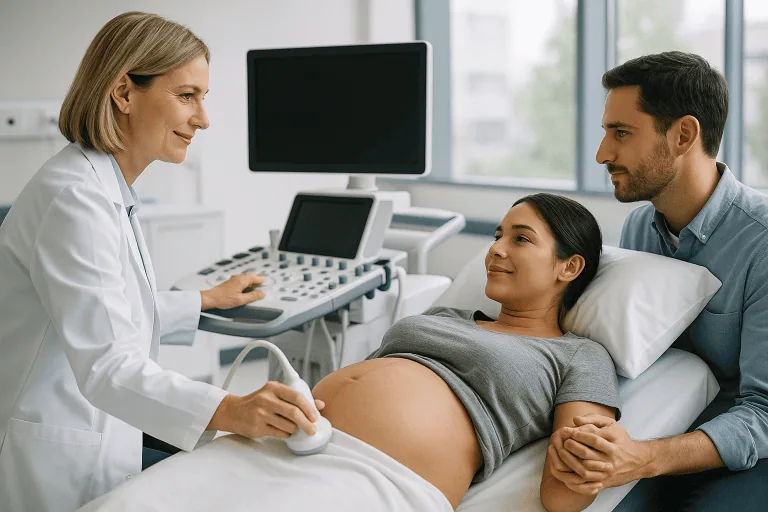
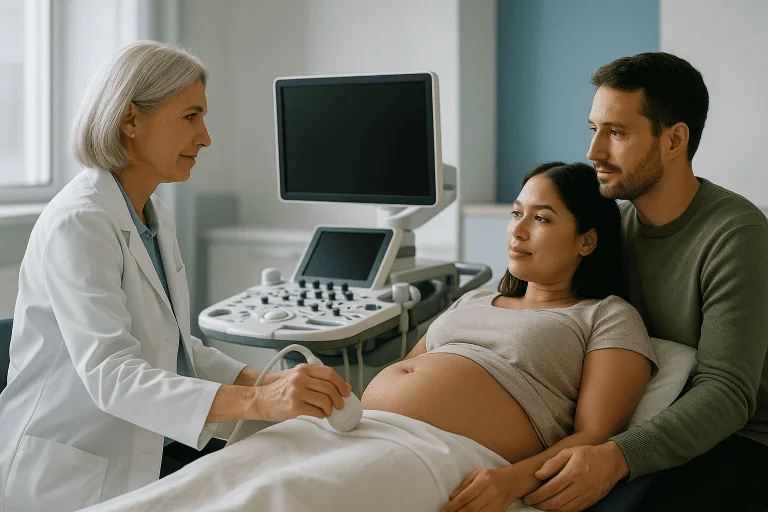
Transvaginal ultrasound. This is the key imaging test. A slim ultrasound probe is placed in the vagina to give a close, detailed view of the uterus, tubes, and ovaries. Doctors look for a pregnancy sac inside the uterus. If the hCG level is above a certain threshold, sometimes called the discriminatory zone, and no pregnancy is visible inside the uterus, an ectopic pregnancy becomes much more likely. Sometimes the ultrasound directly shows a mass or pregnancy sac in the fallopian tube, or free fluid (blood) in the pelvis, which can indicate bleeding.
Pregnancy of unknown location. Early on, tests may not yet show where the pregnancy is. Doctors call this a “pregnancy of unknown location” and usually manage it with close follow-up: repeat hCG tests and repeat ultrasounds until the picture becomes clear. This waiting can be stressful, but it helps avoid treating a very early normal pregnancy by mistake.
Other assessments. A pelvic examination may reveal tenderness on one side. Blood tests can check for anemia (low red blood cell count) from internal bleeding and confirm blood type, since people with Rh-negative blood may need a medication called anti-D immunoglobulin. In an emergency with suspected rupture, doctors may proceed directly to surgery, during which the diagnosis is confirmed by looking inside the abdomen with a camera (laparoscopy).
Treatment options for ectopic pregnancy
Ectopic pregnancy treatment depends on how early the condition is found, where the pregnancy has implanted, the hCG level, whether the pregnancy has a heartbeat, whether there is any sign of rupture, and the patient’s overall health and wishes. It is important to say clearly: an ectopic pregnancy cannot be moved into the uterus, and there is currently no treatment that allows an ectopic pregnancy to continue safely. Treatment aims to protect the patient’s life and health and, where possible, to preserve fertility. Care is generally provided by a specialized Gynecology & Obstetrics department; at hospital groups such as Acibadem, this specialty manages both the emergency and follow-up phases of care.
Expectant management (watchful waiting)
In a small number of carefully selected cases, usually when the ectopic pregnancy is very early, hCG levels are low and falling, and the patient has few or no symptoms, doctors may recommend close monitoring without immediate treatment. Some very early ectopic pregnancies resolve on their own as the body reabsorbs the tissue. This approach requires regular blood tests and quick access to emergency care, and doctors will switch to active treatment if hCG does not fall or symptoms develop.
Medication (methotrexate)
For an unruptured ectopic pregnancy that meets certain criteria, typically a relatively low hCG level, a small pregnancy without a detectable heartbeat, and a stable patient, doctors may offer a medication called methotrexate. Methotrexate is given as an injection and works by stopping the rapidly dividing cells of the pregnancy from growing, allowing the body to absorb the tissue over time. After treatment, hCG levels are checked repeatedly until they fall to zero, which can take several weeks. Some people need a second dose. During this period, patients are usually advised to avoid alcohol, certain vitamins containing folic acid, and pregnancy, and to seek urgent care if severe pain develops, since rupture can still occur while the medication takes effect. Methotrexate is not suitable for everyone, for example, it is generally avoided in people with certain liver, kidney, or blood conditions, or when rupture is suspected.
Surgery
Surgery is needed when the ectopic pregnancy has ruptured or is at risk of rupturing, when medication is not appropriate or has not worked, or when the patient prefers a definitive treatment. Most operations are done by laparoscopy, keyhole surgery through small cuts in the abdomen using a camera, which usually allows a faster recovery than open surgery. There are two main procedures:
- Salpingectomyremoval of the affected fallopian tube along with the ectopic pregnancy. This is often recommended when the tube is badly damaged or bleeding, or when the other tube appears healthy.
- Salpingostomyan opening is made in the tube and the pregnancy tissue is removed, leaving the tube in place. This may be considered when preserving the tube matters for future fertility, though there is a small chance that some pregnancy tissue remains and needs follow-up treatment.
If there is heavy internal bleeding or the patient is unstable, open abdominal surgery (laparotomy) may be necessary, sometimes with a blood transfusion. Non-tubal ectopic pregnancies, such as cervical, cesarean-scar, or abdominal pregnancies, are managed individually and may involve combinations of medication, specialized procedures, or surgery.
After any treatment, follow-up matters. Doctors typically monitor hCG levels until they return to normal, discuss contraception and the recommended waiting time before trying to conceive again, and, when appropriate, offer emotional support or counseling, since losing a pregnancy this way can be distressing.
Living with ectopic pregnancy and outlook
With prompt diagnosis and treatment, most people recover fully from an ectopic pregnancy. Physical recovery from methotrexate treatment mainly involves waiting for hCG levels to fall, which can take weeks, along with some fatigue or mild side effects. Recovery from laparoscopic surgery is often measured in days to a few weeks; recovery from open surgery generally takes longer. Your care team will give guidance on activity, wound care, and when normal routines can resume.
Many people go on to have healthy pregnancies afterward, including those who have had one fallopian tube removed, since the remaining tube can often function normally. However, a previous ectopic pregnancy does raise the chance of another one, so doctors usually recommend an early ultrasound in any future pregnancy to confirm that it is developing inside the uterus. No one can guarantee future fertility outcomes, and results vary from person to person depending on the underlying cause, the treatment used, and the condition of the remaining reproductive organs. If conceiving proves difficult later, fertility specialists can discuss options.
The emotional side of an ectopic pregnancy deserves attention too. It involves both a pregnancy loss and, often, a frightening medical emergency. Grief, anxiety, and worry about future pregnancies are common and normal. Talking with a partner, trusted friends, a counselor, or a support group can help, and it is reasonable to ask your medical team about psychological support during follow-up visits.
Frequently asked questions
What is ectopic pregnancy in simple terms?
It is a pregnancy that implants outside the uterus, most often inside a fallopian tube. Because these locations cannot support a growing pregnancy, the tissue can tear and cause dangerous internal bleeding. An ectopic pregnancy cannot develop into a baby and always requires medical assessment and, in most cases, treatment.
Can an ectopic pregnancy survive or be moved to the uterus?
No. With current medical knowledge, there is no procedure that can move an ectopic pregnancy into the uterus, and a pregnancy growing outside the uterus cannot continue safely. Treatment focuses on protecting the pregnant person’s health and preserving future fertility where possible.
How serious is an ectopic pregnancy?
It is potentially very serious. If the pregnancy ruptures the fallopian tube or surrounding tissue, internal bleeding can become life-threatening within hours. This is why doctors treat any suspected ectopic pregnancy as urgent. When diagnosed early, before rupture, treatment is usually simpler and recovery is often faster.
What do ectopic pregnancy symptoms feel like at first?
Early symptoms often include one-sided pelvic or lower abdominal pain and unusual vaginal bleeding or spotting, sometimes alongside normal pregnancy signs such as a missed period. Some people also notice shoulder tip pain, dizziness, or pain when using the toilet. Because early symptoms can be mild or absent, any pain or bleeding in early pregnancy should be checked by a doctor.
Can I get pregnant again after an ectopic pregnancy?
In many cases, yes. Many people conceive naturally afterward, even with one fallopian tube. That said, the chance of another ectopic pregnancy is higher than average, so doctors usually advise an early ultrasound in the next pregnancy. Individual outcomes depend on the cause, the treatment received, and the health of the remaining tube, so it is worth discussing your specific situation with your gynecologist.
How long does recovery from ectopic pregnancy treatment take?
It varies with the treatment. After methotrexate, blood hCG levels are monitored until they return to normal, which can take several weeks. After keyhole surgery, many people feel largely recovered within a few weeks, while open surgery generally requires a longer recovery. Emotional recovery follows its own timeline and may take longer than physical healing.
Can an ectopic pregnancy be prevented?
There is no guaranteed way to prevent it, but some risks can be reduced. Preventing and promptly treating sexually transmitted infections lowers the risk of pelvic inflammatory disease, a major cause of tubal scarring, and not smoking may also help. People with known risk factors should tell their doctor early in any pregnancy so that the pregnancy’s location can be confirmed promptly.
When to see a doctor
If you are pregnant, could be pregnant, or have missed a period, contact a doctor promptly if you notice pelvic pain, unusual vaginal bleeding or spotting, or shoulder tip pain. Early assessment allows ectopic pregnancy diagnosis before dangerous complications develop.
Seek emergency care immediately, do not wait, if you experience any of the following red-flag signs:
- Sudden, severe abdominal or pelvic pain, especially on one side
- Heavy vaginal bleeding
- Sharp pain at the tip of the shoulder
- Fainting, near-fainting, or severe dizziness
- Rapid heartbeat, cold or clammy skin, or extreme weaknesspossible signs of internal bleeding and shock
- Worsening pain after a known ectopic pregnancy diagnosis, including during methotrexate treatment
An ectopic pregnancy that ruptures is a medical emergency, and rapid treatment saves lives. If you have already been diagnosed with an ectopic pregnancy or are being monitored for a pregnancy of unknown location, follow your care team’s instructions on blood tests and follow-up visits, and report any new or worsening symptoms without delay.
Medically reviewed by the Acıbadem International Medical Board September 2, 2026
See our medical review board →
Update history
- PublishedJune 8, 2026
- Medical review approvedSeptember 2, 2026
- Last content updateSeptember 2, 2026