Endometriosis Treatment
Endometriosis treatment aims to relieve pelvic pain, control lesions, and support fertility. Care may combine hormonal medication, pain management, and minimally invasive laparoscopic surgery when needed.
Quick answer
Endometriosis is a chronic condition in which tissue similar to the uterine lining grows outside the uterus, causing pelvic pain, inflammation, scarring and sometimes infertility. Treatment ranges from hormonal medication and pain management to minimally invasive laparoscopic surgery that removes lesions, cysts and adhesions. The right approach depends on your symptoms, where the disease sits, and whether pregnancy is a goal.
What Is Endometriosis?
Endometriosis is a chronic inflammatory condition in which tissue similar to the lining of the uterus grows outside the uterus. These misplaced implants are most often found on the ovaries, fallopian tubes, the pelvic lining and the ligaments behind the uterus, but they can also involve the bowel, bladder, ureters and deeper pelvic structures. Each menstrual cycle, the tissue responds to the same hormonal signals as the uterine lining: it thickens, breaks down and bleeds. Because that blood has no way to leave the body, the result is inflammation. Over time, repeated inflammation can produce scarring, adhesions, ovarian cysts and genuine changes in pelvic anatomy.
Patients and clinicians often shorten the name to endo. Whatever you call it, the condition can affect far more than a menstrual cycle. For many people, endometriosis shapes work, relationships, travel plans, intimacy and the hope of becoming pregnant. Pain may be dismissed for years as “normal”, even when it is severe enough to cause missed school or work, emergency visits, fatigue, nausea, bowel symptoms or anxiety around each period. For others, the first sign is difficulty conceiving, followed by unexpected findings on ultrasound or during a fertility evaluation.
Endometriosis is not the same in every patient, and this matters when weighing up treatment. Some people have severe pain with relatively small lesions. Others have advanced disease with ovarian cysts or deep pelvic involvement but comparatively few symptoms. The severity of pain does not reliably match the extent of visible disease. Treatment decisions also depend on whether you are trying to become pregnant now, want to preserve fertility for the future, or need long-term symptom control while avoiding unnecessary surgery.
Endometriosis and the endometrium
The endometrium is the lining of the uterus: the tissue that thickens each month in preparation for a possible pregnancy and sheds during a period. In endometriosis, tissue that looks and behaves like the endometrium grows in places it should not. It helps to keep the terms clearly separate: endometriosis is a benign condition, not a form of cancer, and it is a different problem from endometrial cancer, which arises within the uterine lining itself and is investigated and treated in its own right. Confusing the two causes unnecessary alarm, although both conditions deserve proper evaluation when symptoms such as abnormal bleeding appear.
What causes endometriosis?
No single root cause of endometriosis has been identified: that is the honest answer to a question researchers have studied for decades. Several mechanisms are thought to contribute. Retrograde menstruation, in which menstrual blood flows backwards through the fallopian tubes into the pelvis, may allow endometrial-like cells to implant on pelvic surfaces. Other proposed explanations include the transformation of pelvic lining cells into endometrial-like tissue, the spread of cells through blood or lymphatic vessels, and differences in immune function that allow implants to survive rather than being cleared. What is well established is that endometriosis is oestrogen-dependent: the hormone drives the monthly stimulation of implants, which is one reason hormonal treatment can reduce symptoms. Because no single cause has been proven, no treatment can claim to remove the underlying mechanism: a fact that shapes how honest clinicians talk about long-term management.
Is endometriosis genetic?
Endometriosis tends to run in families, so genetics appear to play a part. The condition is seen more often in people whose mother or sister has it, and researchers have identified a number of gene regions associated with it. There is no single “endometriosis gene”, however, and inheriting a family tendency does not mean you will develop the disease. Current evidence points to a combination of genetic susceptibility, hormonal environment and other contributing factors that are still being studied. A family history is worth mentioning during any evaluation, because it can support earlier investigation of suggestive symptoms rather than years of watchful waiting.
Endometriosis Symptoms
Endometriosis symptoms vary widely from one person to the next, which is one of the main reasons the condition is so often diagnosed late. The most typical complaints include:
- Painful periods, often severe enough to interfere with school, work or sleep
- Pelvic pain between periods, sometimes constant, sometimes cyclical
- Pain during or after sexual intercourse
- Pain with bowel movements, particularly during menstruation
- Painful urination during menstruation
- Heavy or irregular bleeding
- Bloating, fatigue, nausea and low back pain
- Difficulty becoming pregnant
The pattern often gives more information than any single symptom. Some patients describe pain that begins a day or two before bleeding and continues for several days afterwards. Others notice bowel or bladder symptoms that recur in a predictable monthly rhythm. A smaller group has little or no pain at all and only discovers endometriosis during a fertility workup or when an ovarian cyst is found on imaging.
What are four symptoms of endometriosis?
The four symptoms most commonly linked to endometriosis are painful periods, pelvic pain between periods, pain during or after sex, and difficulty becoming pregnant. Cyclical bowel pain and painful urination during menstruation are frequent additions, particularly when disease sits close to the rectum or bladder. None of these four proves the diagnosis on its own, each can have other causes, but the combination, especially when it follows the menstrual cycle month after month, should raise suspicion and prompt a structured evaluation rather than reassurance alone.
How to know if you have endometriosis
You cannot confirm endometriosis on your own, because its symptoms overlap with several other conditions, including irritable bowel syndrome, urinary tract disorders, pelvic inflammatory disease, ovarian cysts, fibroids and musculoskeletal pain. Certain features do point towards endometriosis: pain that is cyclical and predictable, pain that has worsened over years, pain that regularly disrupts work or relationships, and pain medication that helps less than expected. Bowel symptoms that recur with periods are sometimes investigated with endoscopy and colonoscopy when a primary bowel condition needs to be excluded. Keeping a simple symptom diary, when pain occurs, how severe it is, and how it relates to bleeding, bowel movements and intercourse, gives any clinician far better material to work with than memory alone. Confirmation, however, requires the structured diagnostic pathway described below.
How Is Endometriosis Diagnosed?
Endometriosis is diagnosed through a combination of a detailed history, pelvic examination, imaging and, in some cases, laparoscopy with tissue confirmation. There is no simple blood test that reliably identifies the condition in all patients. The pathway usually follows this sequence:
- Detailed history. Your physician asks when the pain occurs, how it affects daily activities, whether pain medications help, whether there is pain with sex, whether bowel or bladder symptoms follow a monthly pattern, and about family history, prior surgeries and pregnancy plans.
- Pelvic examination. Examination may identify tenderness, nodularity behind the uterus, reduced uterine mobility, ovarian masses or signs of deep disease. Importantly, a completely normal examination does not exclude endometriosis.
- Imaging. Transvaginal ultrasound can identify ovarian endometriomas and, in experienced hands, may suggest adhesions or deep disease. Pelvic MRI is often recommended when deep infiltrating endometriosis is suspected, particularly if the bowel, bladder, ureters or pelvic sidewalls may be involved.
- Laparoscopy. When the diagnosis remains uncertain or surgical treatment is planned, laparoscopy allows direct visualisation of the pelvis. Lesions can often be treated during the same procedure, and tissue can be sent to pathology to confirm the diagnosis.
Blood tests may be used along the way to assess anaemia, inflammation or ovarian reserve, but they support the picture rather than settle it. In many patients, the diagnosis is made clinically, based on symptoms, examination and imaging, and treatment can begin without any operation at all. Surgery is reserved for situations where it genuinely adds diagnostic clarity or therapeutic benefit.
Surgeons often describe the extent of disease using stages from I to IV, based on the location, depth and spread of lesions and adhesions. It is worth knowing that the stage reflects anatomy, not suffering: a patient with stage I disease may have severe pain, while a patient with stage IV disease may have few symptoms beyond difficulty conceiving. Staging helps plan surgery and fertility care; it does not measure how much a person hurts.
Types of Endometriosis and Who May Need Treatment
Endometriosis appears in several distinct patterns, and the pattern strongly influences which treatment makes sense. Evaluation is worthwhile whenever pelvic pain, menstrual pain or fertility concerns are interfering with daily life or reproductive planning.
Superficial peritoneal endometriosis
Superficial peritoneal endometriosis involves small implants on the pelvic lining. Although the lesions may look limited at surgery, the symptoms can be significant, another example of the mismatch between visible disease and pain. Medical therapy is often effective, and laparoscopic treatment may be considered when pain persists or the diagnosis remains uncertain despite a full non-surgical workup.
Ovarian endometriomas
Ovarian endometriomas are cysts related to endometriosis, sometimes called “chocolate cysts” because of their dark, old-blood content. They may cause pain, affect ovarian function, complicate fertility planning or grow over time. Management is a balancing act: removing the cyst and relieving symptoms while preserving as much healthy ovarian tissue as possible. This balance matters most in patients who want to become pregnant, because ovarian tissue removed with a cyst wall cannot be replaced. Decisions about whether, when and how to operate on an endometrioma deserve unhurried discussion.
Deep infiltrating endometriosis
Deep infiltrating endometriosis extends beneath the surface of pelvic tissues and may involve the uterosacral ligaments, the rectovaginal space, the bowel, bladder, ureters or pelvic nerves. This type can cause severe pain, painful intercourse, constipation, rectal pain, bleeding with bowel movements during menstruation and urinary symptoms. When a ureter is compressed, the kidney above it can come under silent strain, one of the few situations in endometriosis where the disease can quietly damage an organ without dramatic symptoms. Deep disease requires careful preoperative mapping with ultrasound and MRI, and its surgery often involves gynaecological surgeons working alongside colorectal or urological specialists.
Endometriosis-related infertility
Endometriosis can affect fertility through several routes: inflammation in the pelvis, adhesions that distort anatomy, ovarian cysts, altered tubal function and, in some patients, effects on egg quality. Treatment may improve the pelvic environment, but fertility planning must be individualised. For some patients, surgery before trying to conceive is appropriate. For others, moving directly to assisted reproductive treatment is the more efficient path, particularly when age or ovarian reserve argues against delay. The decision rests on ovarian reserve, age, partner factors, the severity of disease and prior fertility history, not on a fixed rule.
Beyond these patterns, treatment may also address chronic pelvic pain, recurrent ovarian cysts, adhesions from previous disease or surgery, painful intercourse and symptoms that continue after earlier hormonal treatment. Some patients have overlapping conditions, adenomyosis, pelvic floor dysfunction, bladder pain syndrome or functional bowel disorders, and recognising these contributors matters, because persistent pain is not always caused by endometriosis alone.
In practice, people usually pursue treatment when pain is no longer manageable, when hormonal therapy is not tolerated or has stopped working, when an ovarian endometrioma is found, when pregnancy is delayed, or when a previous operation did not bring lasting relief. A second opinion is also common and reasonable when the diagnosis is uncertain, when major surgery has been proposed, or when deep disease may need several specialties working together.
Endometriosis Treatment: Planning the Right Approach
Endometriosis treatment is not a single procedure. It is a personalised combination of medical therapy, pain management, minimally invasive surgery and fertility care, sequenced around your symptoms, disease pattern and reproductive goals. Because endometriosis is a chronic inflammatory condition, treatment is not simply about removing visible lesions; it is about managing the disease over years in a way that reflects your age, future pregnancy plans, disease location and previous response to treatment. Some patients do well with medication and follow-up alone. Others benefit from surgery, particularly when pain is significant, imaging shows endometriomas or deep disease, organs are affected, or fertility is a central concern.
Preparation and treatment planning
Good treatment starts with a comprehensive evaluation. The care team reviews symptoms, menstrual history, previous imaging, current medications, fertility goals, prior operations and any pathology reports. Existing ultrasound images, MRI scans, operative notes and laboratory results are genuinely useful at this stage: they help any specialist team prepare a focused plan and avoid repeating tests unnecessarily. Imaging may then be repeated or expanded where more detail is needed, high-quality pelvic ultrasound to evaluate the uterus, ovaries and any endometriomas, and MRI to map deep disease before surgery is even discussed. If bowel or urinary tract involvement is suspected, additional targeted tests may follow. Fertility-related evaluation may include ovarian reserve testing, semen analysis for a partner and assessment of the fallopian tubes. Once the diagnostic picture is clear, the discussion turns to sequence: medication first, surgery first, fertility treatment first, or staged care combining several elements over time.
Medical treatment and pain management
Medical treatment is often the first approach for patients who have no urgent surgical indication and are not actively trying to conceive. Hormonal medication aims to reduce the monthly stimulation that fuels inflammation. Options include continuous combined hormonal contraceptives, progestin-based treatment, hormonal intrauterine systems and medications that temporarily suppress ovarian hormone activity. The choice depends on symptoms, contraindications, side effects, age, bone health, migraine history, clotting risk and fertility plans, and every decision to begin, change or stop a hormonal medication belongs with the treating doctor, who can weigh these factors against your history. Because endometriosis is oestrogen-dependent, hormonal questions occasionally involve colleagues in endocrinology and metabolism when broader hormonal or bone-health issues are in play.
Pain management runs alongside hormonal treatment rather than replacing it. It may include anti-inflammatory medication, an individualised analgesic strategy, pelvic floor physiotherapy, attention to bowel and bladder symptoms, and support with sleep, fatigue and the emotional load of chronic pain. In patients with long-standing symptoms, the nervous system itself can become more sensitive to pain signals, a phenomenon called central sensitisation, and addressing this component can matter as much as treating the lesions. Some patients manage their symptoms well for years with medication and other non-surgical procedures alone.
One limit deserves plain statement: medication controls symptoms, it does not remove disease. Hormonal therapy cannot dissolve scar tissue, endometriomas or deep lesions, and symptoms may return when treatment stops, especially relevant if pregnancy is planned. This is why follow-up is built into any medical strategy, so the plan can be adjusted if pain persists, side effects become unacceptable, imaging changes or fertility priorities shift.
The surgical procedure for endometriosis: laparoscopy
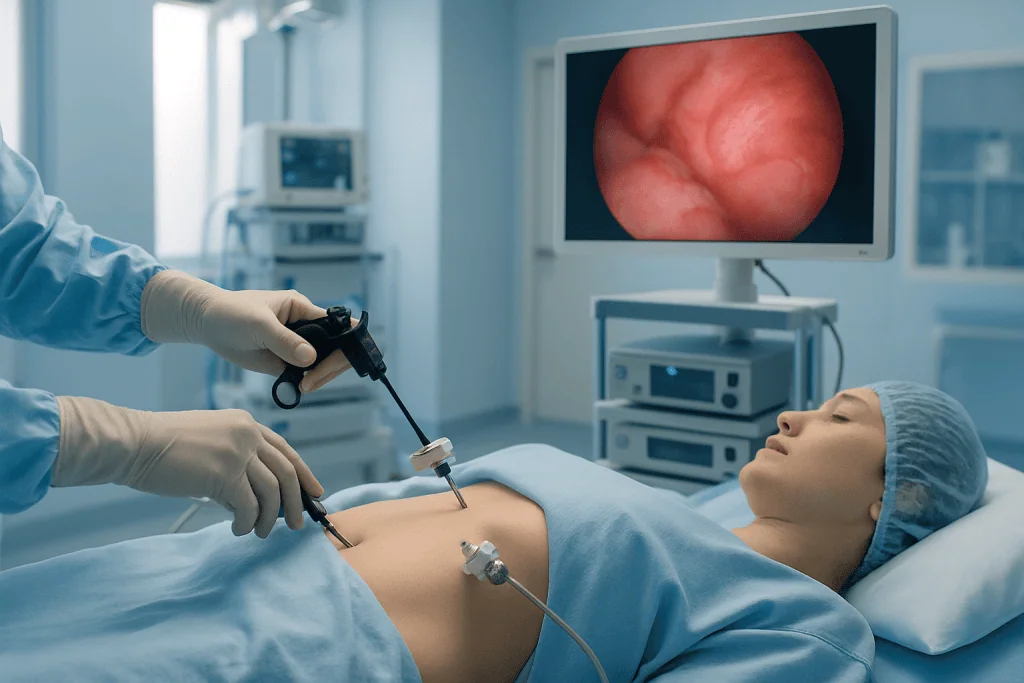
The standard surgical procedure for endometriosis is laparoscopy: a minimally invasive operation performed under general anaesthesia through small abdominal incisions. Surgery is considered when symptoms are significant, the diagnosis is uncertain, medication has not worked or cannot be used, an endometrioma needs treatment, deep disease is suspected, or restoring pelvic anatomy would help fertility planning. A typical operation follows these steps:
- Small incisions are made in the abdomen, and carbon dioxide gas creates working space in the pelvis.
- A high-definition camera provides magnified views, allowing the surgeon to identify subtle lesions, adhesions, cysts and distorted anatomy that imaging may have missed.
- Superficial lesions are excised or destroyed with precise energy instruments. Many specialist surgeons prefer excision for visible disease, particularly deep lesions, because it removes tissue for pathology and may provide more complete treatment in selected cases.
- Adhesions are released to restore mobility of the ovaries, tubes, uterus and bowel.
- If an endometrioma is present, the cyst wall is carefully separated from the ovary, preserving as much healthy ovarian tissue as possible.
- Normal pelvic anatomy is restored as far as the disease allows, and the incisions are closed.
Operating time varies widely. A diagnostic laparoscopy or treatment of limited disease may be relatively short, while extensive deep endometriosis can take several hours. Before the operation, the surgeon explains the expected complexity, the possible findings, and whether additional procedures might become necessary if bowel, bladder or ureteral involvement is confirmed during surgery.
Surgery for deep and complex disease
Deep infiltrating endometriosis changes the character of the operation. The surgeon may need to free the ureters, separate disease from the bowel or bladder, or remove nodules from the rectovaginal space. If bowel involvement is substantial, a colorectal surgeon may join the operation; if the urinary tract is affected, a urological surgeon may be involved. This team-based approach exists to treat disease thoroughly while reducing the risk of organ injury. Technology supports the work rather than replacing judgement: magnified laparoscopic imaging reveals fine tissue planes, advanced energy instruments allow controlled dissection and bleeding control, and in selected complex operations robotic-assisted laparoscopy may support fine movements in deep pelvic spaces. Preoperative mapping with ultrasound and MRI tells the team, before the first incision, whether specialist support should be standing by.
After the procedure and early recovery
After laparoscopy, patients are monitored while the anaesthesia wears off. Some go home the same day; others stay in hospital for observation, particularly after complex surgery or procedures involving the bowel or urinary tract. Abdominal soreness, shoulder-tip discomfort from the laparoscopy gas, fatigue, mild nausea and light vaginal bleeding are all common in the first days and usually settle with prescribed pain relief. Walking soon after surgery helps circulation and bowel recovery. Most patients begin with light activity and avoid heavy lifting, strenuous exercise and sexual intercourse until the surgeon confirms healing. If an endometrioma or deep lesion was removed, recovery takes longer than after a brief diagnostic procedure; desk-based work may resume within days to a couple of weeks, while physically demanding work needs more time. The longer-term plan matters just as much: endometriosis can recur, ongoing hormonal suppression may be discussed for patients not trying to conceive, and for those seeking pregnancy the timing of natural attempts or fertility treatment is planned around healing, age, ovarian reserve and disease stage.
Recovery Timeline After Endometriosis Treatment
Recovery depends on whether treatment is medical, surgical or part of a fertility plan. The timeline below reflects a typical course after laparoscopic treatment; your own course may run faster or slower depending on what was done.
| Time Period | What Patients Can Expect |
|---|---|
| Day 1 | Monitoring after anaesthesia, mild to moderate abdominal discomfort, possible shoulder pain from laparoscopy gas, and gradual return to drinking and eating. |
| First week | Improving mobility, fatigue, light bleeding or spotting, and a focus on walking, wound care, hydration and avoiding strenuous activity. |
| First month | Most daily activities resume gradually. Your physician reviews pathology, surgical findings, medication needs and fertility timing where relevant. |
| Longer term | Ongoing symptom monitoring, hormonal suppression where appropriate, fertility treatment when indicated, and follow-up imaging for selected patients. |
Benefits of Endometriosis Treatment
What treatment can realistically offer depends on the type and severity of disease, the approach chosen and your fertility goals. The table below summarises the main benefits without overstating them, no treatment removes every symptom in every patient.
| Benefit | What It Means for You |
|---|---|
| Relief from pelvic and menstrual pain | Treatment may reduce painful periods, pelvic pressure, pain with intercourse and pain related to bowel or bladder function. |
| Better control of active disease | Hormonal therapy can reduce monthly inflammatory stimulation, while surgery can remove visible lesions, cysts and adhesions when needed. |
| Improved fertility planning | A structured evaluation clarifies whether surgery, assisted reproduction or a combined approach offers the most appropriate path. |
| Protection of pelvic organs | When deep disease affects the bowel, bladder, ureters or ovaries, timely treatment may help reduce organ-related complications. |
| More informed long-term management | Follow-up care monitors recurrence, adjusts medication and responds to changing reproductive or quality-of-life goals. |
Why Acting Early Matters
Endometriosis does not always progress in a predictable way, but delaying evaluation can prolong pain and may allow inflammation, adhesions or cysts to worsen. Persistent severe menstrual pain is not something to simply endure. Early assessment can identify endometriosis, rule out other causes and begin treatment before symptoms become more disruptive, and before years of uncertainty take their own toll.
For fertility, timing can be especially important. Age, ovarian reserve, endometriomas, prior ovarian surgery and the duration of infertility all influence decision-making, and waiting too long may narrow reproductive options for some patients. The opposite error exists too: operating too soon, or too often, can itself affect ovarian tissue. A thoughtful plan protects against both undertreatment and unnecessary intervention.
When deep endometriosis involves the ureters, bowel or bladder, delay carries specific risks: bowel narrowing, recurrent obstruction-like symptoms, urinary tract problems, or silent kidney strain from ureteral compression. These situations call for careful evaluation and coordinated care, and early mapping helps patients understand the true extent of disease before choosing a treatment path.
Acting early also addresses the wider effects of chronic pain. Long-standing pain can contribute to pelvic floor muscle spasm, sleep disruption, sexual pain, anxiety, depression and sensitisation of the nervous system. Treating endometriosis alongside these related issues improves function and quality of life more effectively than focusing on lesions alone.
Factors That Influence Outcomes
A good result in endometriosis care depends on accurate diagnosis, appropriate treatment selection, surgical expertise when surgery is needed, and realistic long-term planning. Because this is a chronic condition, the best outcome is not measured only by what happens immediately after treatment; it includes symptom control over time, fertility progress when desired, a reduced need for repeated interventions and preserved quality of life.
The extent and location of disease are major factors. Superficial lesions, ovarian endometriomas and deep infiltrating endometriosis present different challenges, and disease involving the bowel, bladder, ureters or pelvic nerves requires advanced planning and carries a different recovery profile. Previous operations add complexity, because scar tissue can obscure anatomy. Fertility-related outcomes depend on age, ovarian reserve, sperm factors, tubal function, previous pregnancies and disease severity. Surgery helps some patients, particularly when anatomy is distorted or pain is significant, but it must always be balanced against potential effects on ovarian tissue; in some situations, assisted reproduction is recommended rather than repeated surgery.
The skill and experience of the surgical team matter, especially for endometriomas and deep disease. Careful cyst removal that spares ovarian tissue, recognition of subtle lesions, safe dissection near the ureter or bowel, and coordination with other specialists all influence both symptom relief and complication risk. So does what happens afterwards: attendance at follow-up, appropriate hormonal suppression for patients not trying to conceive, and honest reassessment when pain persists. Chronic pelvic pain can involve more than visible endometriosis, pelvic floor dysfunction, bladder pain, bowel sensitivity, musculoskeletal contributors, nerve sensitisation and emotional stress may all play a part, so coordinated care that addresses these overlapping issues usually serves patients better than assuming one procedure will resolve every symptom.
Can endometriosis be cured?
No current treatment cures endometriosis. Surgery can remove visible lesions, cysts and adhesions, and hormonal therapy can suppress the monthly stimulation that drives symptoms, but the underlying tendency remains and disease can recur. This is not a counsel of despair: it is the reason long-term management exists. Many patients achieve durable symptom control with a well-chosen combination of treatment and follow-up, and symptoms often ease after menopause as hormonal stimulation falls, although this is not universal. Any clinic that promises a definitive, permanent fix is describing something the evidence does not support.
Can you live a normal life with endometriosis?
Yes, many people with endometriosis live full, active lives, working, exercising, travelling and having children. What that usually requires is a correct diagnosis, treatment matched to the disease pattern, and continuity of care rather than a single intervention. The condition varies enormously: some patients need little more than periodic review, while others manage a more demanding course involving surgery, hormonal treatment and fertility care. The realistic goal is a life in which endometriosis is managed rather than in charge, smaller flare-ups handled early, fertility decisions made with full information, and pain treated as a problem to solve rather than a burden to accept.
How Acibadem Approaches Endometriosis Care
At Acibadem, endometriosis care is organised around the individual priorities described throughout this page: reducing pain, controlling active disease, protecting pelvic organs and supporting fertility whenever possible. Because the “right” treatment depends on life stage, a patient trying to conceive soon needs a different strategy from someone seeking long-term pain control; a patient with a recurrent endometrioma needs careful counselling about ovarian reserve; a patient with bowel symptoms needs surgical mapping before any operation is scheduled. Plans are developed after a careful review of symptoms, imaging, prior treatments, surgical history and reproductive goals.
For complex cases, multidisciplinary discussion is part of the process. Gynaecology, reproductive medicine, radiology, colorectal surgery, urology, anaesthesiology, pain management and pathology may all contribute to planning when disease is extensive or fertility is central to the decision. Diagnostic pathways, detailed ultrasound, pelvic MRI where indicated, laboratory evaluation and fertility assessment, define the extent of disease before treatment, and minimally invasive techniques, magnified imaging and controlled energy instruments support careful work in delicate pelvic anatomy.
Moving Forward With Clarity
Endometriosis can be physically and emotionally exhausting, particularly when symptoms have been minimised for years or when fertility feels uncertain. The most useful next step is always the same: a careful evaluation by clinicians who understand the full spectrum of the disease. With accurate diagnostic information, treatment can be tailored to relieve pain, manage lesions, protect reproductive goals and support long-term wellbeing, and the trade-offs of each option, from medication through to complex surgery, can be weighed openly rather than assumed. A condition this variable deserves a plan built around you, not a standard protocol applied to everyone.
Our Specialists Explain
 Multidisciplinary Endometriosis Center of Excellence
Preparation
- Evaluation usually includes a gynecologic examination, ultrasound and sometimes MRI to map suspected endometriosis. Your doctor will review symptoms, fertility goals, medications and previous surgeries. If laparoscopy is planned, you may need blood tests, anesthesia assessment and fasting before the procedure.
Aftercare
- Mild pelvic discomfort, bloating and shoulder pain can occur after laparoscopy and usually improve within days. Patients are encouraged to walk early, avoid heavy lifting and follow instructions on wound care, sexual activity and medication. Follow-up visits help assess symptom control and plan hormonal therapy or fertility treatment if needed.
Frequently Asked Questions
What affects the cost of endometriosis treatment?
Cost depends on the treatment plan, disease complexity, required imaging, medication, whether laparoscopy is needed, hospital stay, anaesthesia, pathology and any involvement of fertility, bowel, urinary or pain specialists.
How can I get a personalised quote?
You can request a free consultation by sharing medical reports, imaging results, symptom history and previous treatment details. A specialist review helps define the likely care plan before a personalised quote is prepared.
Is surgery always required for endometriosis?
No. Some patients are managed with medication and pain control, while others may need laparoscopic surgery. Suitability is decided by a gynaecology specialist based on symptoms, examination, imaging and fertility goals.
Are tests and medications included in the quote?
This depends on the package and the individual care plan. A clear quote should explain what is included, such as consultation, selected tests, hospital services, surgery if planned, medication and follow-up arrangements.
Can fertility goals change the treatment cost?
Yes. Fertility planning may require additional assessment, reproductive medicine input or a more tailored surgical approach. These factors can influence both the treatment plan and the overall cost.
Is this information medical or financial advice?
No. This is general information only. A specialist consultation is needed to confirm medical suitability, and the international patient team can provide a personalised quote based on your case.
Medically reviewed by the Acıbadem International Medical Board September 1, 2026
See our medical review board →
Update history
- PublishedJune 8, 2026
- Medical review approvedSeptember 1, 2026
- Last content updateSeptember 8, 2026
References3
- Endometriosis nhs.uk
- Endometriosis medlineplus.gov
- Endometriosis who.int
Trusted care for international patients
From the Acibadem Blog
Endometriosis in Teenagers: How Care Is Planned Gently and When Laparoscopy Is Considered
Endometriosis in teenagers is real and increasingly recognized, and symptoms can begin within a few years of the first period. Care is usually planned…
Endometriosis Treatment in Steps: Hormonal Medicine, Pain Care and When Surgery Is Added
Endometriosis treatment options are usually built in steps. Most people start with pain care, often anti-inflammatory medicines, and hormonal medicine that lowers estrogen's effect…
What Endometriosis Looks and Feels Like: Symptoms, Pain Patterns and Warning Signs
Endometriosis is tissue similar to the womb lining growing outside the uterus, most often on the ovaries, pelvic lining, bowel or bladder. Inside the…
Does Endometriosis Go Away? What Happens Over Time, After Menopause and with Treatment
Endometriosis rarely goes away on its own. It is a long-term condition driven largely by estrogen, so symptoms often settle after menopause, when estrogen…
Can Endometriosis Cause Cancer, or Be Life-Threatening?
Endometriosis is not cancer, and it does not turn into cancer in the vast majority of people who have it. Large population studies show…

Endometriosis Surgery Recovery: Shoulder Pain, Bloating and the Return to Work and Exercise
Endometriosis surgery recovery usually follows a laparoscopy done under general anesthesia. Shoulder pain and bloating in the first day or two come mainly from…