

Endometriosis Treatment in Steps: Hormonal Medicine, Pain Care and When Surgery Is Added

Key Takeaways
- The World Health Organization estimates endometriosis affects about 10 percent of women and girls of reproductive age, roughly 190 million people, which is why stepwise treatment pathways are well established.
- Hormonal medicines for endometriosis work by flattening the estrogen cycle that feeds the misplaced tissue, and the Mayo Clinic notes symptoms can return once they are stopped, so plans are long-term rather than short courses.
- Laparoscopy is the only way to confirm endometriosis with certainty according to the NHS, yet treatment can and usually does begin on suspected diagnosis because first-step options are low risk.
- Surgical stage (I to IV) describes what the surgeon sees, not how much it hurts; the Cleveland Clinic states that stage 1 disease can cause severe pain while stage 4 may cause little.
- Hysterectomy is not a guaranteed end to endometriosis pain, because lesions outside the uterus can persist, and removing the ovaries brings surgical menopause with its own bone and heart effects.
- After laparoscopy, the NHS describes recovery ranging from days to a couple of weeks for diagnostic procedures and longer when lesions are treated, and restarting hormonal medicine afterward is commonly recommended to reduce recurrence.
Endometriosis treatment options are usually built in steps. Most people start with pain care, often anti-inflammatory medicines, and hormonal medicine that lowers estrogen's effect on the misplaced tissue. If pain persists, a large ovarian cyst is found, or pregnancy is the goal, laparoscopic surgery to remove or destroy lesions may be added. The right sequence depends on symptoms, fertility plans and side effects, and is decided with a gynecologist.
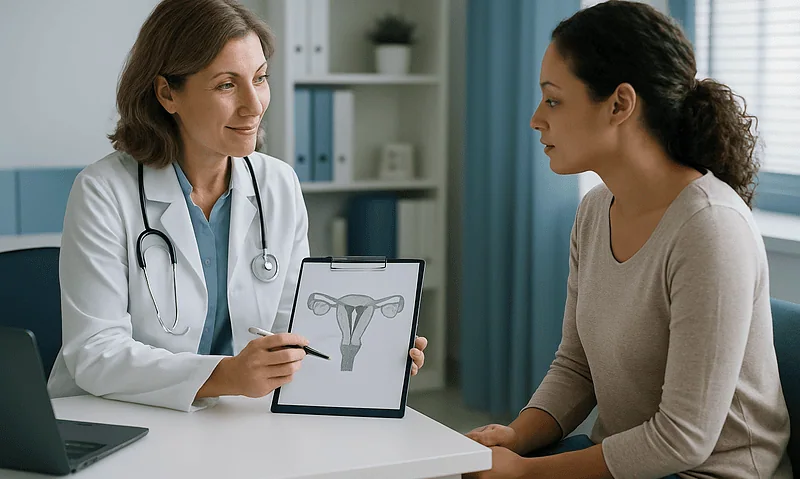
She has a folded sheet of paper in her jacket pocket. On it are questions she has been carrying between appointments for years: why the pain arrives days before her period, why sex sometimes hurts, why one clinician said “probably just heavy periods” and another said the word endometriosis out loud. Now she is sitting in a gynecology clinic being asked what she wants to do next, and the choices sound like a maze.
The maze is real, but it has a shape. Endometriosis treatment options fall into three broad steps: managing pain, using hormonal medicine to quiet the tissue that causes trouble, and adding surgery when medicine is not enough or when the situation calls for it. Each step has trade-offs. None of them is a one-time fix.
This explainer walks through those steps the way a careful clinician would: what each treatment does inside the body, who it usually suits, what the weeks afterward tend to look like, and which common beliefs the evidence does not support.
What endometriosis treatment options are actually trying to do
Endometriosis is a condition in which tissue similar to the lining of the uterus grows outside it, most often on the ovaries, the ligaments that hold the uterus, the outer surface of the bowel or the lining of the pelvis. That tissue behaves a little like the lining it resembles. It responds to estrogen, the hormone that rises through the first half of the menstrual cycle, and it can thicken, bleed and inflame with each cycle. Unlike a period, though, the blood has nowhere to go.
The result is inflammation, which over time can produce scar tissue and adhesions, bands of scar that make organs stick together. Nerve endings in the pelvis become irritated and, in some people, the nervous system itself becomes more sensitive to pain signals. The World Health Organization estimates that endometriosis affects roughly 10 percent of women and girls of reproductive age worldwide, about 190 million people, which is why treatment pathways are so well described in national guidance.
Every treatment on the menu targets one or more parts of that chain. Pain medicines calm inflammation and the pain signal. Hormonal medicines lower the estrogen stimulation that drives the tissue’s activity. Surgery physically removes or destroys lesions and divides adhesions. Fertility treatment works around the disease when pregnancy is the goal.
The honest framing matters: current medical treatment controls endometriosis rather than eliminating it for good. The Mayo Clinic notes that symptoms can return after both hormonal treatment and surgery. That is not a reason for pessimism. It is a reason to judge success by the right measure: fewer days lost to pain, a plan for pregnancy if wanted, and side effects you can live with, rather than a lesion count on an operating room report.
Why endometriosis treatment usually happens in steps
People are sometimes surprised, even frustrated, that a gynecologist offers a hormonal pill before offering to look inside. The stepwise order is not about rationing care. It reflects how the risks and benefits stack up.

Hormonal medicines and anti-inflammatory pain relief are reversible, can be started quickly and do not require general anesthesia. Laparoscopy, the keyhole operation used to diagnose and treat endometriosis, is a surgical procedure with a recovery period and small but real risks to bowel, bladder and blood vessels. Guidance from the NHS and the Mayo Clinic both describe starting treatment on the basis of symptoms and examination when endometriosis is suspected, without waiting for surgical confirmation, precisely because the first-step treatments are low risk and often helpful.
The steps are also not a one-way staircase. Someone may move up to surgery, then return to hormonal medicine afterward to reduce the chance of symptoms coming back. Someone else may try one hormonal class, find the side effects intolerable and switch to another before surgery is ever discussed. A person planning pregnancy might skip hormonal suppression entirely, since those medicines act as contraceptives.
Certain findings change the order. An ovarian cyst filled with old blood, called an endometrioma, that is large or growing, signs that the disease is involving the bowel or urinary tract, or an infertility work-up can each bring surgery forward. Uncertainty about the diagnosis can too, because laparoscopy remains the only way to confirm endometriosis with certainty, according to the NHS.
What holds the steps together is a treating team that keeps asking one question at every visit: is the current plan giving you a life you can live? If the answer is no, the plan changes. Nobody should feel stuck on a rung.
Step one: pain care that does more than mask symptoms
Pain relief is often dismissed as the “just take something” step. Done well, it is more thoughtful than that.
Non-steroidal anti-inflammatory drugs, a class of medicines that includes ibuprofen and naproxen, work by blocking prostaglandins, the chemical messengers that trigger uterine cramping and inflammation around endometriosis lesions. Because prostaglandins surge in the days before and during bleeding, clinicians often describe timing these medicines to the cycle rather than waiting for pain to peak. Whether they are appropriate for you, and how they are used, depends on your stomach, kidney and cardiovascular history, so that conversation belongs with the prescribing clinician. Opioid medicines are generally not recommended as an ongoing strategy for endometriosis pain, and their long-term risks are well documented.
Pain in endometriosis is not only inflammatory. Over time the pelvic floor muscles can tighten and guard, producing pain that persists between periods and during sex or bowel movements. Pelvic floor physical therapy, delivered by a physical therapist trained in pelvic health, addresses that muscular component and is described by the Cleveland Clinic as part of a broader pain plan. Some people also develop central sensitization, a state in which the nervous system amplifies pain signals; here, medicines that act on nerve pathways and psychological approaches such as cognitive behavioral therapy may be discussed.
Heat, gentle movement, sleep and pacing are low-tech and low-risk. The evidence base for each is modest, but they carry almost no downside. Transcutaneous electrical nerve stimulation and acupuncture have been studied, with mixed and limited results, and are best described as options some people find helpful rather than proven therapies.
The key opinion here: pain care should run alongside every other step, not be abandoned once a hormonal medicine or an operation is chosen.
Hormone treatment for endometriosis: how each class works
Because the misplaced tissue is fed by estrogen and by the cyclical rise and fall of hormones, most hormone treatment for endometriosis aims to flatten that cycle. The classes differ in how they do it and in what they cost the body in side effects. The Mayo Clinic and the NHS describe the following main groups.

| Medicine class | What it does in the body | Trade-offs commonly discussed |
|---|---|---|
| Combined hormonal contraceptives (pill, patch, ring) | Suppress ovulation and thin the uterine-type tissue; may be used to skip bleeds | Contraceptive; not suitable for everyone, including some with clot risk or migraine with aura |
| Progestin-only options (pill, injection, implant, hormonal IUD) | Counteract estrogen’s effect on lesions and thin the tissue | Irregular bleeding, mood or weight changes in some; contraceptive |
| GnRH agonists and antagonists | Switch off the signal from the brain to the ovaries, creating a temporary, reversible menopause-like state | Hot flashes, sleep and mood changes; bone-density loss with longer use, often offset with “add-back” hormone |
| Aromatase inhibitors | Block the enzyme that makes estrogen in tissues, including within lesions | Specialist use, usually combined with another hormone; menopause-type effects |
Two facts about this table deserve emphasis. First, none of these medicines treats infertility; they are paused when someone wants to conceive. Second, the Mayo Clinic notes that symptoms can return once hormonal medicine is stopped, which is why clinicians talk about long-term plans rather than short courses.
Timelines are usually framed in menstrual cycles rather than days. The NHS describes trying hormone treatment for a period of months before judging its effect and considering referral. How long, which class and whether to combine with pain care are decisions for the prescribing clinician, who will weigh your bleeding pattern, blood pressure, clot risk and personal priorities.
What is the newest treatment for endometriosis?
This is one of the most-searched questions about the condition, and the answer needs a little nuance.
Among the more recently developed medicine classes are oral GnRH antagonists. GnRH stands for gonadotropin-releasing hormone, the brain signal that tells the ovaries to make estrogen. Older GnRH agonists, given by injection, first over-stimulate then exhaust that signal, so there can be a temporary flare before hormone levels fall. Antagonists block the signal directly, without the initial surge, and being tablets, their effect wears off more quickly when stopped. The Mayo Clinic lists both agonists and antagonists among hormonal options for endometriosis pain. Because both lower estrogen, the side-effect conversation is similar: hot flashes, vaginal dryness, mood changes and bone density with prolonged use, often managed with a small dose of add-back hormone prescribed by the clinician.
Newer does not automatically mean better for a given person. Guidelines still position combined contraceptives and progestins as usual first choices because they have long safety records and fewer menopause-type effects. GnRH-based medicines tend to enter the discussion when first-line hormones fail or cannot be used.
Beyond hormones, research is exploring medicines aimed at inflammation, nerve signaling and the immune environment of lesions, along with better imaging and blood tests for earlier diagnosis. These remain investigational. Anything marketed as a breakthrough for endometriosis, especially a supplement or device sold online, should be judged against the standard of published, peer-reviewed trials, and most have not met it.
A practical way to use the “newest treatment” question in a consultation: ask what has been added to your clinic’s options in recent years and whether any of it fits your situation, rather than asking for the newest thing by default.
Who is usually offered medicine first, and who is usually asked to wait on surgery
Most people whose main problem is pain, who are not currently trying to conceive and whose scans do not show a large cyst or organ involvement are offered pain care and hormonal medicine first. That group is large, and for many of them this is where the plan settles.
Adolescents fit here too. Endometriosis can begin in the teenage years, and guidance from the Cleveland Clinic and the NHS supports treating suspected disease with hormonal medicine before considering surgery, given the aim of avoiding repeated operations over a lifetime.
Surgery tends to be brought forward, rather than waited on, in several situations:
- An endometrioma on the ovary that is large, growing or causing pressure symptoms.
- Evidence on examination or imaging that lesions involve the bowel, bladder or the ureters, the tubes that drain the kidneys.
- Pain that has not responded to two or more hormonal approaches, or hormonal medicine that cannot be used because of clot risk, migraine with aura or other health conditions.
- Infertility, where surgery may be considered as part of a fertility plan.
- Genuine diagnostic uncertainty, since laparoscopy is the only way to confirm the diagnosis, according to the NHS.
Some people are asked to wait for reasons unrelated to endometriosis itself: an operation is usually deferred during pregnancy, while another medical condition is being stabilized, or when a recent operation means further surgery carries higher adhesion risk. People approaching menopause may be counseled that symptoms often ease as estrogen falls, though this is not universal and is not a reason to withhold treatment for pain now.
These are patterns, not rules. The final call rests with the treating gynecologist, who sees the whole picture, including your priorities.
When surgery is added: what laparoscopy for endometriosis involves
Laparoscopy is keyhole surgery. Under general anesthesia, the surgeon makes a small cut near the navel, fills the abdomen with carbon dioxide gas to create working space, and inserts a thin camera. One or more additional small cuts admit instruments. The pelvis is inspected systematically, and lesions can be treated during the same operation.
Two techniques are used on lesions. Excision means cutting the lesion out, including tissue beneath the surface. Ablation means destroying the lesion in place with heat or energy. Surgeons often prefer excision for deeper disease because it removes what lies below the visible surface, while superficial spots may be ablated. Adhesions can be divided to free organs. An endometrioma is usually treated by removing its cyst wall, with care taken to preserve healthy ovarian tissue, an important point for anyone thinking about future fertility.
Deep infiltrating endometriosis, disease that has grown into the wall of the bowel, bladder or the tissues beside the rectum, may require a team that includes colorectal or urology surgeons and a longer operation.
Hysterectomy, removal of the uterus, and oophorectomy, removal of the ovaries, are sometimes discussed for severe symptoms when childbearing is complete. The Mayo Clinic is explicit that hysterectomy is not a guaranteed end to endometriosis pain, because lesions outside the uterus can persist, and that removing the ovaries triggers menopause with its own long-term effects on bone and heart health. That is a large decision taken over more than one conversation.
Risks of any laparoscopy include bleeding, infection, injury to bowel, bladder or blood vessels, reaction to anesthesia, blood clots and new adhesion formation. Your surgeon will put these in the context of your anatomy and disease extent. Alternatives to surgery always remain on the table, including continued medical management.
Endometriosis surgery recovery: what the days and weeks usually look like
The NHS describes laparoscopy as an operation after which many people go home the same day, though a longer stay is planned when the surgery has been extensive or bowel work was involved. What follows is a typical shape, not a promise.
The first day or two often brings a sore, bloated abdomen and an odd pain in the shoulder tip. The shoulder pain comes from residual gas irritating the diaphragm, the muscle under the lungs, and it settles as the gas is absorbed. Walking short distances helps both the gas and the risk of blood clots, which is one of the reasons nurses encourage early movement.
Over the following week, incision sites itch and bruise. Light bleeding or spotting is common, particularly if the uterus was instrumented during the operation. Fatigue can be surprising after “small” surgery; anesthesia and inflammation both take a toll. The NHS notes that recovery from a diagnostic laparoscopy is usually a matter of days to a couple of weeks, and longer when treatment was carried out, which is why surgeons give an individual estimate before discharge.
Pain from the operation and pain from endometriosis can be hard to separate in the first weeks. Many people are asked not to judge the result until the first few cycles have passed.
A decision often made in this window is whether to restart hormonal medicine. The Mayo Clinic notes that hormone therapy after surgery may help reduce the chance of symptoms returning, and many teams offer it unless pregnancy is the immediate goal. Driving, lifting and returning to work are cleared at follow-up based on how you are healing, not on a fixed calendar.
What does stage 4 endometriosis look like, and why stage is not the same as pain
Endometriosis is commonly staged from I to IV using a system developed by the American Society for Reproductive Medicine, which the Cleveland Clinic summarizes. Staging is done during surgery, based on what the surgeon sees: how many lesions, how deep they go, whether the ovaries carry endometriomas and how dense the adhesions are.
Stage 1 describes a few superficial lesions. Stage 2 adds more or slightly deeper implants. Stage 3 involves multiple deep lesions, small endometriomas on one or both ovaries and some filmy adhesions. Stage 4, sometimes called severe endometriosis, typically shows many deep implants, large endometriomas on one or both ovaries and thick, dense adhesions that may fix the ovaries to the pelvic side wall or pull the bowel and uterus together. In advanced disease the space behind the uterus may be sealed off entirely, a finding surgeons call an obliterated cul-de-sac.
Here is the part that surprises people: stage does not predict pain. The Cleveland Clinic is direct that someone with stage 1 disease can have severe pain while someone with stage 4 can have relatively little. Pain depends on where lesions sit relative to nerves, how much inflammation they generate and how the nervous system has adapted, none of which the staging system captures.
What stage does inform is surgical planning and fertility counseling. Higher stages are more likely to involve the bowel or ureters, to need a multidisciplinary surgical team and to affect ovarian reserve. A stage 4 label on an operative report is therefore useful information for the next conversation, but it is not a verdict on how you will feel or on what treatment must follow.
How to stop endometriosis from progressing: what the evidence shows
People searching this phrase deserve a straight answer, and the straight answer is that no intervention has been proven to halt endometriosis in every case. Several approaches, though, are supported by reasonable evidence for reducing symptom recurrence and the burden of disease over time.
Hormonal suppression is the best studied. Because lesions depend on estrogen and cyclic bleeding, medicines that flatten the cycle reduce the monthly stimulus. The Mayo Clinic describes hormonal medicine as helpful for slowing tissue growth and preventing new implants while it is being taken, with the caveat that it is not a permanent fix. After surgery, continuing hormonal therapy is commonly recommended to lower the chance of lesions and symptoms returning.
Surgery removes disease that exists but does not guarantee none will develop; recurrence after laparoscopy is well recognized, and repeat operations carry rising adhesion risk. That is one reason experienced teams try to make each operation count and pair it with medical follow-up.
Lifestyle claims are where the evidence gets thin. Regular exercise, a diet rich in fruit, vegetables and fiber, limited alcohol and not smoking are sensible for overall health and may modestly influence inflammation and estrogen metabolism, but no diet has been shown in high-quality trials to stop endometriosis progressing. Supplements marketed for endometriosis fall into the same category: plausible mechanisms, weak or absent trial data.
Pregnancy and breastfeeding often ease symptoms temporarily because ovulation pauses, but they do not remove the disease, and symptoms frequently return afterward.
The most defensible strategy, then, is not a single secret but a maintained plan: staying in follow-up, using hormonal medicine when it suits your goals, treating pain early rather than enduring it, and revisiting the plan when life changes.
The 5 D's of endometriosis and what they tell your care team
Clinicians sometimes teach the symptoms of endometriosis with a mnemonic built on the Greek prefix “dys,” meaning difficult or painful. Knowing the words helps you describe what you feel in the language your care team uses, which can speed a conversation that too often stalls on “it’s just bad periods.”
Dysmenorrhea is painful periods, often starting days before bleeding and outlasting it. Dyspareunia is pain during or after sex, in endometriosis typically felt deep in the pelvis rather than at the entrance. Dyschezia is pain when passing stool, which in this condition often tracks with the menstrual cycle. Dysuria is pain when passing urine, again frequently cyclical. The fifth D varies by teacher: some use dull chronic pelvic pain, others use infertility or dysfunctional bleeding. The mnemonic is a teaching aid, not a diagnostic score, and having several of these symptoms does not diagnose endometriosis, just as having none does not exclude it.
What the pattern does tell a clinician is where to look and which questions to ask next. Cyclical bowel or bladder pain raises the possibility of lesions near those organs and may prompt imaging. Deep dyspareunia points toward the ligaments behind the uterus. A long history of pain that started in adolescence changes the differential diagnosis, the list of conditions being considered.
Bring specifics rather than adjectives. A note of which days of the cycle hurt, what stops you working, and how pain relates to bowel movements, urination and sex gives the team far more than “very painful.” MedlinePlus and the NHS both encourage keeping a symptom diary before consultations for exactly this reason. Let the professionals do the diagnosing; your job is to describe clearly.
Endometriosis treatment options when pregnancy is the goal
Fertility reshapes the whole plan, because the workhorse hormonal medicines are also contraceptives and must be paused. Endometriosis is associated with difficulty conceiving in some people, through mechanisms that include inflammation in the pelvis, distorted anatomy from adhesions and, when endometriomas are present, effects on the ovary’s egg supply. The Mayo Clinic and the World Health Organization both describe infertility as a recognized consequence for a proportion of people with the condition, while noting that many conceive without intervention.
Three pathways are commonly discussed. The first is time: for someone with mild symptoms and no obvious anatomical problem, a period of trying naturally may be reasonable, with a threshold for referral that depends on age and history and is set by the treating clinician. The second is surgery: laparoscopic removal of lesions and adhesions may be offered when disease is thought to be distorting anatomy, with the surgeon weighing benefit against the risk that operating on the ovary reduces its reserve. The third is assisted reproduction, including in vitro fertilization, where fertility specialists take over and may use a short course of hormonal suppression beforehand in selected cases.
No one can promise a pregnancy from any of these routes, and figures quoted online often come from small or selected studies. Ask your team what the evidence shows for someone with your stage, age and ovarian reserve, and ask specifically how any proposed surgery would affect the ovaries.
Pain does not disappear from the picture during a fertility journey. Non-hormonal pain care, pelvic physical therapy and psychological support remain available and are worth asking about, because the stress of infertility and the stress of pain feed each other.
What people often get wrong about endometriosis treatment
Myths travel fast in waiting rooms and comment threads. These are the ones clinicians correct most often.
“Pregnancy will fix it.” Pregnancy pauses ovulation and often eases symptoms for a while, but the tissue remains and symptoms commonly return after birth or breastfeeding. Advising someone to get pregnant as a treatment is not supported by guidance and ignores the person’s own plans.
“A hysterectomy ends it for good.” The Mayo Clinic is clear that removing the uterus does not guarantee relief, because endometriosis lives outside the uterus. Removing the ovaries lowers estrogen and helps more, but at the price of surgical menopause and its effects on bone and heart health.
“Mild stage means mild pain.” Stage describes what the surgeon sees, not what you feel. Stage 1 disease can be disabling; stage 4 can be nearly silent.
“Teenagers are too young.” Endometriosis can begin with the first periods. Dismissing severe period pain in adolescents delays diagnosis for years.
“Hormone treatment will damage my fertility.” The NHS notes that hormonal treatments do not have a lasting effect on fertility once stopped. They prevent pregnancy while taken; that is different.
“One good operation and it’s over.” Recurrence after surgery is well recognized, which is why post-operative hormonal therapy and follow-up are usually recommended.
“Diet or supplements can replace treatment.” Healthy eating supports general wellbeing, but no diet or supplement has trial evidence strong enough to substitute for guideline-based care.
“Normal scans mean normal pelvis.” Ultrasound and MRI detect endometriomas and deep disease well but can miss superficial lesions. A clear scan does not rule endometriosis out.
Questions to ask your care team about endometriosis treatment options
A consultation goes better when you arrive with questions that open up the reasoning behind a recommendation. The ones below are not a script; pick the handful that matter most to you and write the answers down.
- Based on my symptoms and imaging, what do you think is going on, and how confident are you without a laparoscopy?
- Which step are you suggesting first, and what would make you move to the next one?
- For the hormonal medicine you are proposing, how does it work, what side effects should I expect in the first cycles, and when would we review it?
- If I want to become pregnant in the next year or two, how does that change the plan?
- What are the alternatives to what you are recommending, including doing nothing new for now?
- If surgery is added, would you excise or ablate lesions, and what is your approach to protecting the ovaries?
- Who else would be involved if the bowel or bladder turns out to be affected?
- What does recovery usually look like after the operation you have in mind, and what symptoms afterward would need an urgent call?
- Should I restart hormonal medicine after surgery, and for how long?
- Can I be referred to pelvic floor physical therapy or a pain service alongside this plan?
- How will we measure whether treatment is working, and how often will we meet?
Ask also about the practicalities of communication: who to contact between appointments, and how quickly they respond. Endometriosis is a long-term condition, and the quality of the relationship with your team over years matters as much as any single decision. If a recommendation feels rushed, it is reasonable to ask for time or a second opinion; good clinicians expect both.
When to call your doctor
Most endometriosis symptoms are chronic and can wait for a scheduled appointment. A few situations should not.
Seek urgent care the same day, or emergency care, for sudden, severe pelvic or abdominal pain that is different from your usual pattern, particularly with nausea, vomiting or fainting. An endometrioma can rupture or cause the ovary to twist on its blood supply, a surgical emergency called ovarian torsion. Severe pain in early pregnancy, or pain with a positive pregnancy test, also needs urgent assessment.
After laparoscopy, contact the surgical team promptly for a fever, redness, swelling or discharge from an incision, pain that is worsening rather than easing after the first days, a swollen or hard abdomen, persistent vomiting, inability to pass urine or stool, or bleeding heavier than a normal period. Call emergency services for chest pain, sudden breathlessness or a painful, swollen calf, which can signal a blood clot in the weeks after any operation.
While on hormonal medicine, tell the prescribing clinician about new severe headaches, visual disturbance, chest pain, leg swelling, or marked changes in mood, especially thoughts of self-harm. These may or may not be related to the medicine, but they need review, and you should never stop or change a prescribed medicine on your own without that conversation.
Book a non-urgent appointment if pain is increasing month to month, if bowel or bladder symptoms are becoming cyclical, if bleeding patterns have changed, if you are missing work or school because of pain, or if you are planning a pregnancy and want to review the plan. Each of these is a reason to revisit the steps, and every adjustment belongs with the treating team rather than with a search engine.
Frequently asked questions
What is the first-line treatment for endometriosis?
The usual first step is pain care with anti-inflammatory medicines combined with hormonal medicine, most often a combined hormonal contraceptive or a progestin-only option, as described by the NHS and the Mayo Clinic. These reduce the estrogen stimulation that drives the tissue and are reversible. Surgery is generally added later unless a large ovarian cyst, organ involvement, infertility or diagnostic uncertainty brings it forward. Your gynecologist decides the sequence with you.
What is the newest treatment for endometriosis?
Oral GnRH antagonists are among the more recently developed classes of hormone treatment for endometriosis. They block the brain signal that tells the ovaries to make estrogen, without the initial hormone surge that injectable GnRH agonists cause. They are usually considered after first-line hormones have not worked or cannot be used. Research into non-hormonal medicines targeting inflammation and nerve signaling is ongoing but remains investigational.
What does stage 4 endometriosis look like?
Stage 4, or severe endometriosis, typically shows many deep lesions, large blood-filled ovarian cysts called endometriomas, and thick adhesions that can fix the ovaries to the pelvic wall or bind the bowel and uterus together, according to the Cleveland Clinic. It is assigned during surgery. Importantly, stage does not predict pain; stage 4 disease can be relatively silent while stage 1 can be disabling. Stage mainly guides surgical planning and fertility counseling.
How can I stop endometriosis from progressing?
No method is proven to halt endometriosis in everyone. Hormonal medicine reduces the cyclical stimulation that feeds lesions while it is taken, and the Mayo Clinic notes it may help slow tissue growth and reduce recurrence after surgery. Healthy lifestyle habits are sensible but lack strong trial evidence for slowing the disease itself. The most defensible approach is staying in follow-up and revisiting the plan as symptoms or life goals change.
What are the 5 D's of endometriosis?
The 5 D’s is a teaching mnemonic for symptoms clinicians listen for: dysmenorrhea (painful periods), dyspareunia (deep pain with sex), dyschezia (painful bowel movements), dysuria (painful urination), and a fifth that varies, often dull chronic pelvic pain or infertility. It is vocabulary to help you describe your experience, not a self-diagnosis score. Having several does not confirm endometriosis, and having none does not exclude it; diagnosis rests with your clinician.
Does hormone treatment for endometriosis affect future fertility?
Hormonal treatments prevent pregnancy while you are taking them, but the NHS notes they do not have a lasting effect on fertility once stopped. Ovulation and cycles typically resume after discontinuation, with timing varying by medicine class. If you are planning a pregnancy, tell your team, because hormonal suppression is usually paused and the plan may shift toward time, surgery or fertility treatment depending on your situation.
How long is endometriosis surgery recovery?
The NHS describes recovery from a diagnostic laparoscopy as usually taking days to a couple of weeks, and longer when lesions, cysts or adhesions were treated during the operation. Many people go home the same day. Early days bring abdominal soreness, bloating and shoulder-tip pain from residual gas. Your surgeon gives an individual estimate for returning to work, driving and exercise based on what was done and how you heal.
Will a hysterectomy end endometriosis?
Not necessarily. The Mayo Clinic is clear that removing the uterus does not guarantee relief, because endometriosis lesions grow outside the uterus and can continue to cause symptoms. Removing the ovaries as well lowers estrogen and tends to help more, but it causes surgical menopause with long-term effects on bone and heart health. Hysterectomy is usually discussed only when childbearing is complete and other steps have not worked.
Can endometriosis be treated without surgery?
Yes, many people manage endometriosis long-term with pain care and hormonal medicine alone, without ever having an operation. Guidance from the NHS and Mayo Clinic supports starting treatment on suspected diagnosis. Surgery is added when medicine fails, a large ovarian cyst or organ involvement is found, fertility is the goal, or the diagnosis needs confirming. Pelvic floor physical therapy and pain services can run alongside medical treatment.
Do endometriosis symptoms come back after treatment?
They can. The Mayo Clinic notes that symptoms may return after hormonal medicine is stopped and that endometriosis can recur after surgery. This is why treatment is framed as ongoing management rather than a one-time fix, and why hormonal therapy is often recommended after an operation to reduce recurrence. Regular follow-up lets your team adjust the plan early if pain or other symptoms start returning.
References
- NHS: Endometriosis: Treatment
- NHS: Laparoscopy (keyhole surgery)
- World Health Organization: Endometriosis fact sheet
- Cleveland Clinic: Endometriosis
This article is for general information only and is not a substitute for professional medical advice. Please consult a qualified doctor about your individual situation.

More from the Blog
What Size of Ovarian Cyst Is Dangerous? Centimetres, Millimetres and What They Mean
There is no single size at which an ovarian cyst becomes dangerous. Most cysts are small, fluid-filled and disappear on their own within a…

Pelvic Ultrasound vs Hormone Tests in PCOS: Why Diagnosis Needs More Than One Finding
Neither a pelvic ultrasound nor a blood test can diagnose PCOS on its own. Clinicians use the Rotterdam approach, which requires at least two…
How Fast Ovarian Cysts Grow: Typical Timelines, Warning Signs and When to Treat
Most ovarian cysts are functional cysts that form during a normal menstrual cycle, reach roughly 2 to 5 centimeters, and shrink or disappear within…

What the Robot Actually Changes in a Robotic Hysterectomy: Precision, Incisions and Recovery
In a robotic hysterectomy the robot does not operate on its own. The surgeon sits at a console a few feet from the patient…

Cystectomy vs Oophorectomy: Removing the Cyst or the Ovary and How Surgeons Decide
A cystectomy removes only the cyst and leaves the ovary in place; an oophorectomy removes the whole ovary, sometimes with the fallopian tube. Surgeons…

Blood Pregnancy Test vs Urine Test: Which Is More Accurate and When
Both tests detect the pregnancy hormone hCG. A blood test can pick it up slightly earlier, as soon as about 10 days after conception,…