

Fertility Treatment in Turkey: Partner Attendance and Sample Collection
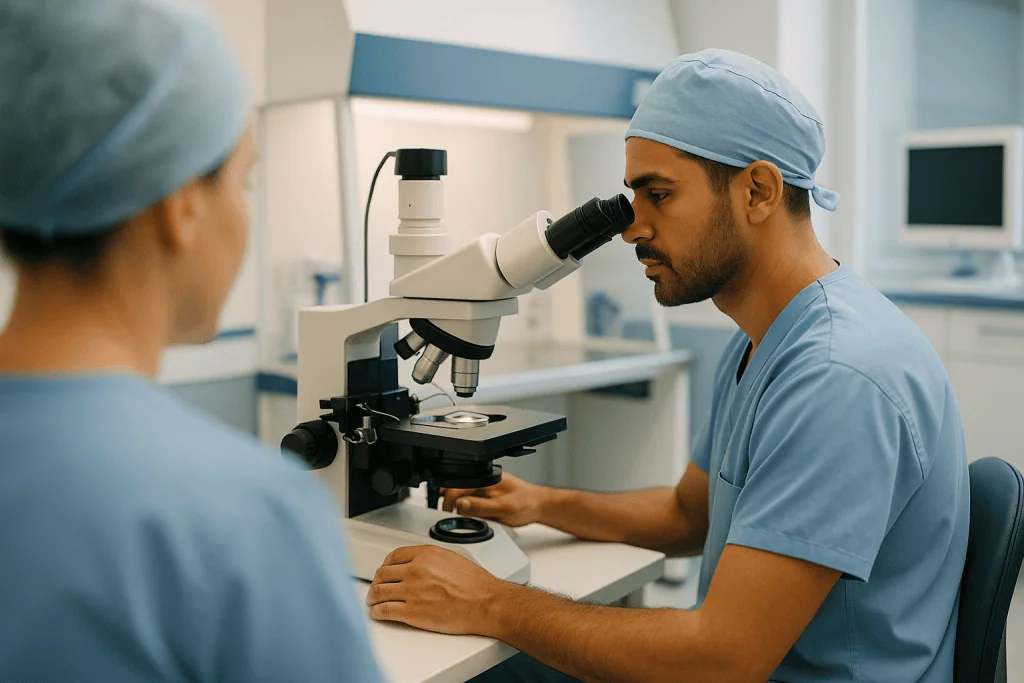
Your partner usually needs to be there for the first consultation, consent forms, screening tests and the day of sperm collection, which is commonly scheduled around egg collection. Not every monitoring visit needs both of you. Because fertility dates shift with your cycle and test results, ask for a date range rather than one fixed day, and book changeable flights.
Does your partner need to fly out with you, or can he arrive later, just for the day that matters? It is one of the first questions couples ask when they start planning fertility treatment in Turkey, and the answer shapes flights, time off work and budget.
Knowing when your partner needs to be present and how sample collection is arranged can make the journey calmer and better organized. This guide explains practical timing, privacy, documents, interpreter support, and what to ask before you travel.
At a glance
- Best for: Couples or partners planning IVF, ICSI, fertility testing, or sample collection in Turkey
- Partner attendance: Often needed for consultations, consent forms, and sperm sample collection, depending on your treatment plan
- Key planning point: Confirm exact appointment dates before booking flights, because fertility schedules can change
- Support available: International patient teams can help with interpreters, hospital coordination, travel, and accommodation guidance
- Privacy: Sample collection is handled discreetly in designated clinical settings, with staff guidance on timing and instructions
What to know before you travel
Fertility treatment in Turkey can involve several appointments within a short period, especially if you are planning IVF or ICSI. You may have consultations, blood tests, ultrasound monitoring, consent formalities, medication instructions, egg collection, sperm sample collection, embryo transfer, and follow-up advice. Not every partner needs to attend every visit, but some steps may require both partners to be present in person.
The most important practical point is that fertility care is time-sensitive. Your schedule may depend on your menstrual cycle, hormone results, ultrasound findings, semen analysis, previous fertility records, and the treatment approach recommended by your specialist. Even when you receive an estimated plan before travel, exact dates can shift by a few days, so it is wise to avoid very tight flight bookings or work commitments.
At Acibadem International, international patient coordination teams can help you understand what is usually needed before arrival, which records to send, and how appointments may be grouped. This support is especially useful if you are travelling as a couple, arriving from different countries, or need interpreter assistance during consent discussions and sample collection instructions.
When your partner may need to attend

Your partner may be asked to attend for the first consultation, medical history review, legal and consent paperwork, semen analysis, infectious disease screening, genetic or additional tests if recommended, and the day of sperm sample collection. In many treatment plans, the partner providing sperm does not need to be present for every monitoring visit, but should be available on key dates that your care team identifies.
For IVF or ICSI, sperm collection is commonly scheduled around the time of egg collection. If the partner is travelling separately, you should confirm the expected date range early and plan arrival with enough flexibility. If there is a known male-factor fertility issue, previous difficulty producing a sample, or a need for surgical sperm retrieval, the care team may advise different timing and additional specialist review.
It is also important to ask about documentation and consent. Fertility treatment often requires signed forms confirming identity, relationship details where relevant, treatment permissions, sample use, embryo handling, and storage preferences if applicable. Requirements may vary depending on your personal situation, nationality, marital status, and treatment plan, so you should clarify these points directly with the hospital before travel.
How sperm sample collection is usually arranged

Sperm sample collection is usually arranged in a private, designated area within or near the fertility unit. The team will explain when to arrive, how the sample should be collected, how to label or hand it over, and what to avoid before the appointment. You should follow the clinic’s instructions exactly, because timing and handling can affect whether the sample can be used.
Many clinics recommend a specific abstinence period before sample collection, commonly a few days, but you should not rely on general advice; ask your care team for your personalized instruction. You should also tell the team in advance if you have previously had difficulty producing a sample under pressure, if you take medications that may affect ejaculation, if you have had urological surgery, or if you may need extra time or a different arrangement.
If a sample is to be collected outside the clinic, this must be specifically approved by the fertility team and handled according to strict timing and transport instructions. Do not assume that a hotel-collected sample can be accepted. For privacy, safety, and accuracy, always ask before the appointment and confirm the allowed container, delivery window, and who should bring it to the laboratory.
Privacy, comfort, and interpreter support
It is normal to feel nervous about sample collection in an unfamiliar country or hospital. Fertility teams are used to supporting international patients discreetly, and you can ask practical questions without embarrassment. If you prefer same-gender staff communication where possible, need extra time, or want your partner to accompany you to the unit reception, mention this in advance so the team can guide you appropriately.
Interpreter support can be valuable, particularly when instructions involve timing, abstinence, consent forms, sample handling, or medication. At JCI-accredited Acibadem hospitals, international patient services can help coordinate language support for appointments and hospital processes. You should still ask for written instructions in a language you understand, especially for dates, medication timings, and sample collection requirements.
Privacy also includes how information is shared between partners. Fertility care often involves sensitive results for both people, including semen analysis, ovarian reserve tests, infectious disease screening, or genetic findings. If you have concerns about confidentiality, consent to share results, or communication by email or messaging apps, raise this before testing begins.
Planning flights, hotels, and flexible dates
For fertility treatment, flexibility is one of the most useful things you can build into your travel plan. While a clinic can often provide an estimated treatment window, your body’s response to medication and monitoring results may change the timing. If possible, book changeable flights, avoid immovable meetings immediately after expected procedures, and consider accommodation that allows date adjustments.
If your partner only needs to attend for sample collection and consent, ask the care team for the likely arrival window rather than a single date. Some couples choose to travel together for the full treatment period for emotional support, while others arrange for one partner to arrive later. The right choice depends on your budget, leave from work, medical history, and how comfortable you feel managing appointments alone.
International patient teams can often advise on airport transfers, nearby accommodation options, and appointment coordination, but they cannot guarantee that fertility timelines will remain unchanged. You should also consider local holidays, weekends, laboratory schedules, and the time needed for pre-treatment test results. If you are travelling to Istanbul, allow enough time for traffic between the airport, hotel, and hospital.
Medical records and documents to prepare
Before travelling, gather your fertility history and send it securely to the care team if requested. Useful records may include previous IVF or ICSI summaries, semen analysis reports, hormone blood tests, ultrasound findings, hysteroscopy or laparoscopy reports, genetic test results, infectious disease screening, medication lists, allergies, and any urology or gynecology notes. Clear records can reduce repeated testing and help your specialist plan more efficiently.
You should also check which identity and relationship documents are required for your treatment. Bring passports, any requested translated or notarized documents, marriage documents if applicable, and copies of previous consent forms or embryo storage records if transferring care. Requirements can vary, so confirm them directly rather than relying on general online information.
Keep digital and printed copies of key documents. Fertility schedules move quickly, and having your records accessible can prevent delays when you are moving between the hotel, consultation room, laboratory, and pharmacy. If you are using interpreter support, make sure names, dates, medication doses, and test results are clearly readable.
Questions to ask your care team
Before you confirm travel, ask your fertility coordinator or specialist for a clear overview of when each partner is likely to be needed. You do not need to know every medical detail, but you should understand the practical sequence: consultation, tests, medication start, monitoring, egg collection, sample collection, embryo transfer, and follow-up. Ask which steps are fixed and which may change based on results.
Helpful questions include: What is the expected treatment window? On which days must my partner be physically present? Is sample collection planned on the same day as egg collection? What abstinence period is recommended? Can we freeze a backup sample if appropriate? What documents and consent forms must be signed in person? What happens if a flight delay affects sample collection?
You can also ask about comfort and logistics: Is interpreter support available for the consent appointment? Where does sample collection take place? How much time should we allow at the hospital? Can the international patient team help with transfers or hotel guidance? Getting these answers early helps you arrive prepared and reduces stress during an already emotional process.
Step by step
- Share your medical history before booking. Send recent fertility records, test results, medication lists, and previous treatment summaries if the care team requests them. This helps the specialist estimate whether your partner needs to attend early or only on key treatment days.
- Confirm the likely partner attendance window. Ask which appointments require both partners and which can be managed by one person. If your partner will travel separately, request a date range rather than relying on a single expected day.
- Check consent and document requirements. Fertility treatment usually involves identity checks and signed consent forms. Confirm whether passports, marriage documents, translations, or in-person signatures are required for your specific plan.
- Plan sample collection instructions in advance. Ask about abstinence timing, arrival time, collection location, and whether any backup plan is recommended. Tell the team early if producing a sample may be difficult or if there are known male-factor fertility concerns.
- Book flexible travel where possible. Fertility treatment dates can shift after monitoring tests. Choose flights and accommodation with flexible change policies if you can, and avoid scheduling your departure too tightly after key appointments.
- Use interpreter and coordination support. If English is not your preferred language, request interpreter support for consent discussions and important instructions. Acibadem International patient teams can help coordinate appointments, hospital navigation, and practical travel support.
- Keep all instructions written and accessible. Save appointment times, medication instructions, sample collection guidance, and emergency contact details on your phone and in printed form. This is especially helpful if you and your partner are staying in different places or arriving at different times.
Your checklist
- Passports and any required identity documents for both partners
- Previous fertility treatment summaries and laboratory reports
- Recent semen analysis, hormone tests, ultrasound reports, and medication list
- Confirmed appointment plan with partner attendance dates or date ranges
- Written sperm sample collection instructions from the clinic
- Consent and legal document requirements confirmed before travel
- Flexible flights and accommodation where possible
- Interpreter request submitted if needed
- Hospital contact details saved for delays or schedule changes
- Comfort items for treatment days, such as snacks, water, and phone chargers
Key takeaways
- Partner attendance is often required for consent, testing, and sperm sample collection, but not always for every monitoring visit.
- Sample collection is arranged discreetly, with specific timing and handling instructions that you should confirm directly with the clinic.
- Fertility schedules can change, so flexible flights and accommodation are strongly recommended.
- Bring complete medical records and confirm document requirements before travelling to Turkey.
- Interpreter and international patient support can help you understand consent forms, appointments, travel logistics, and hospital navigation.
Frequently asked questions
Does my partner need to stay in Turkey for the whole fertility treatment?
Not always. In many plans, the partner providing sperm may only need to attend certain appointments, such as consultation, consent signing, testing, and sample collection. However, timing depends on your treatment plan and results, so confirm the exact attendance window before booking travel.
When is the sperm sample usually collected during IVF or ICSI?
It is commonly collected around the time of egg collection, but your clinic will give you the exact timing. Because egg collection dates can shift after monitoring, your partner should remain flexible and reachable during the expected treatment window. If there are known male-factor issues, the team may plan additional steps.
Can a sperm sample be collected at the hotel?
Only if the fertility team specifically allows it and gives written handling instructions. Many clinics prefer collection in a designated private area to control timing, labeling, and delivery to the laboratory. Do not collect outside the clinic unless you have clear approval.
What if my partner has difficulty producing a sample on the day?
Tell the care team in advance if this has happened before or if there is anxiety, medication use, or a medical condition that may affect collection. The team may discuss timing, privacy arrangements, or whether a backup plan is appropriate. Do not wait until the appointment day to raise this concern.
Are interpreters available for fertility appointments in Turkey?
International patient services at hospitals such as Acibadem can help coordinate interpreter support for important appointments and instructions. It is best to request this before arrival, especially for consent forms, medication schedules, and sample collection guidance. Ask for written instructions as well.
What documents should both partners bring?
Bring passports, requested identity documents, and any relationship or legal documents the hospital has asked for. Also carry previous fertility records, test results, medication lists, and relevant gynecology or urology reports. Requirements vary by treatment plan, so confirm them with your coordinator before travelling.
Can we freeze a backup sperm sample before treatment?
In some situations, a care team may discuss freezing a backup sample, especially if travel timing is uncertain or there have been previous collection difficulties. Whether this is suitable depends on medical, laboratory, and consent factors. Ask your fertility specialist early so there is time to plan if appropriate.
How much time should we allow in Istanbul for fertility treatment?
The length of stay varies depending on your treatment plan, cycle timing, and response to medication. Your team can give an estimated window, but you should allow flexibility because monitoring results may change appointment dates. If possible, avoid booking an immediate departure after key treatment steps.
Add us as a Preferred Source to see more of our trusted health content across Google Search, AI Overviews and Discover.

Update history
- PublishedJune 22, 2026
- Medical review approvedAugust 25, 2026
- Last content updateAugust 24, 2026
References3
- IVF (in vitro fertilisation) - NHS nhs.uk
- Infertility - MedlinePlus medlineplus.gov
- Infertility FAQs - CDC cdc.gov
More Patient Guides

HoLEP in Turkey: How It Compares With TURP and What Recovery Involves
HoLEP in Turkey treats enlarged prostate tissue with laser enucleation; learn how it compares with TURP, recovery, travel and follow-up.

Porcelain Veneers in Turkey: Who Is Suitable and How Many Visits Are Needed?
Porcelain veneers in Turkey can enhance tooth shape and colour in two visits for suitable patients after a personalised dental assessment.

How to Prepare for a Sedation Procedure in Turkey
Prepare safely for a sedation procedure in Turkey with guidance on fasting, medicines, travel, recovery and follow-up.

Treatment Delays in Turkey: What Happens If Tests or Recovery Change Your Schedule
Treatment delays in Turkey can happen if tests or recovery change your plan. Learn how to manage appointments, travel, accommodation and follow-up.