

Gut Microbiome Tests: What At-Home Stool Kits Measure and Why Doctors Are Skeptical

Key Takeaways
- Consumer microbiome testing reports the relative abundance of bacterial DNA groups in stool, not inflammation, infection, blood or cancer markers.
- The NIH Human Microbiome Project found that healthy people carry widely different microbial profiles, so no validated normal range exists for a kit to compare you against.
- Split samples sent to different laboratories have returned conflicting verdicts, and a person's own microbiome shifts measurably from one day to the next.
- No randomized trial has shown that acting on a commercial microbiome report improves symptoms, weight, blood sugar or any other health outcome.
- Microbiome science is already standard care in one setting, fecal microbiota transplantation for recurrent C. difficile, which was validated through randomized trials and FDA review.
- The dietary advice most kits produce, more fiber and fermented foods, is the same evidence-backed advice available without sequencing anything.
At-home microbiome tests sequence bacterial DNA in a stool sample and report which microbes are present and in what proportions. They can describe your gut ecosystem in broad strokes, but they cannot diagnose any disease, and no validated healthy reference range exists. Results differ between kits and even between days, which is why most gastroenterologists treat them as research tools rather than medical tests.
The package arrives looking like a skincare subscription: a matte box, a small spatula, a prepaid envelope, and a QR code promising a personal “gut score” within three weeks. Somewhere in a kitchen this morning, someone is scraping a tiny sample into a tube and wondering whether this will finally explain the bloating.
As of June 2025, microbiome testing is having its biggest moment yet. Social feeds are full of color-coded bacterial pie charts, several kits now bundle AI-generated meal plans with the results, and, in the same breath, major gastroenterology societies have publicly stated that these tests are not ready for clinical decisions. That collision, a booming consumer product versus an unconvinced profession, is why the search volume has spiked.
So what exactly is in that envelope, what can a laboratory honestly read from it, and where does the science stop and the marketing start? The answers are more interesting than either the hype or the dismissal suggests.
What changed recently: the microbiome testing boom and the professional pushback
The science itself is not new. The NIH launched the Human Microbiome Project in 2007 and spent a decade cataloguing the microbes living on and inside healthy volunteers, finishing its second phase in 2016. That project established the vocabulary consumer kits now borrow: diversity, community composition, and the idea that every person carries a distinct bacterial fingerprint.
What changed is the delivery. Sequencing a stool sample once required a research grant; it now costs a laboratory a fraction of that, and the technology has migrated into direct-to-consumer kits. The newest generation goes further than listing bacteria. Several pair the raw data with algorithms that produce food rankings, supplement recommendations and a single summary number, which is exactly the kind of output that travels well on short-form video.
The medical world has responded in two directions at once. On one side, microbiome science delivered its first regulated products: in late 2022 and 2023 the FDA approved fecal microbiota therapies for preventing recurrence of Clostridioides difficile infection, a severe diarrheal illness, proving that manipulating gut bacteria can be a legitimate medical intervention. On the other side, gastroenterology societies issued guidance stating that commercial microbiome testing should not be used to diagnose conditions or direct treatment, because the tests lack validation.
Both things are true simultaneously, and that is the tension at the heart of this trend. The microbiome matters. The kits that claim to read it for you have not yet shown they can do so reliably. The NIH’s own consumer-facing summaries describe the field as promising and early, which is a fair two-word verdict on the entire category.
What is microbiome testing, and what does an at home gut health test actually measure?
Your gut microbiome is the community of trillions of bacteria, viruses, fungi and other microbes living mainly in your large intestine. Microbiome testing, in the consumer sense, means sending a stool sample to a laboratory that extracts microbial DNA and identifies which organisms are present.
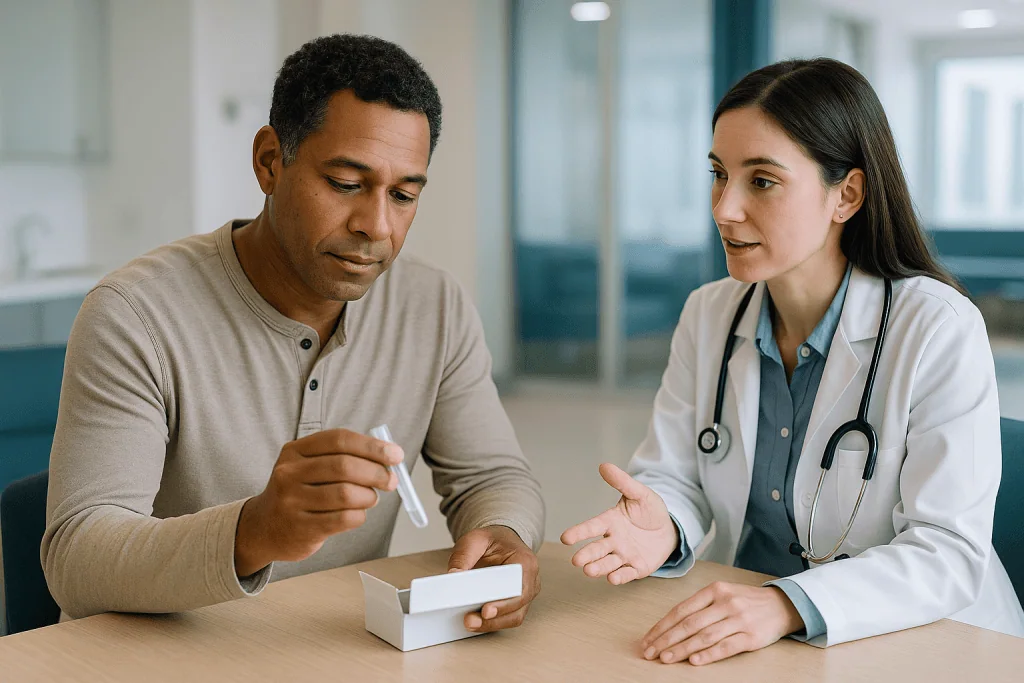
Most kits use one of two methods. The first is 16S rRNA sequencing, which reads a single gene shared by all bacteria and uses small variations in it to sort them into groups, a bit like identifying cars by their license-plate format. It is cheap and fast but often cannot distinguish closely related species. The second is shotgun metagenomics, which sequences all the DNA in the sample at random and reassembles it; this can identify species and even some of their genes, at higher cost and with more complex analysis.
What you get back is a relative abundance report: not how many bacteria you have, but what percentage of the detected DNA belongs to each group. The report typically includes:
- A diversity score, usually alpha diversity, meaning how many different types of microbes were found and how evenly they are distributed.
- Named “beneficial” and “concerning” groups, such as Akkermansia, Bifidobacterium or Faecalibacterium.
- Comparisons against the company’s own database of other customers.
- Food and supplement suggestions generated by a proprietary algorithm.
What an at home gut health test does not measure is equally important. It does not test for inflammation, blood, parasites, infections or cancer markers, and it does not sample the bacteria attached to your intestinal lining, only those that exit in stool. That distinction turns out to matter a great deal.
How stool microbiome analysis works, from the bathroom to the pie chart
Follow the sample. You collect a pea-sized amount, usually on a swab or spatula, and seal it in a tube containing a preservative buffer. That buffer is the first weak point: if it fails, or the sample sits warm in a mailbox, some bacteria keep multiplying and others die, shifting the proportions before the laboratory ever opens the tube.
In the lab, technicians break open the microbial cells to release DNA. Different bacteria have different cell walls; some rupture easily and some resist, so the extraction method itself biases which organisms are overrepresented. Then the DNA is amplified, sequenced, and matched against a reference database. Databases differ between companies, and many gut organisms remain unnamed or poorly catalogued, so the same genetic sequence can be labelled differently, or discarded, depending on who is reading it.
Only after all that does the software take over. A stool microbiome analysis report translates thousands of sequence reads into a handful of graphics and a recommendation list. Companies rarely publish how their scoring works, which means two kits can process an identical sample and return different “gut health” verdicts without either being demonstrably wrong.
Researchers have shown that nearly every step, collection kit, storage time, extraction chemistry, sequencing platform, database, introduces measurable variation. In research settings, teams control these variables so results can be compared within a study. Consumer kits compare your single sample against a moving reference of other customers, collected and processed under uncontrolled conditions.
None of this makes the technology fraudulent. It makes it a measurement with wide error bars, presented in a format that hides the error bars.
What does a healthy gut microbiome look like? The honest answer is nobody knows
Here is the finding from the Human Microbiome Project that consumer kits tend to skip: healthy people do not share a single microbial profile. The project sequenced hundreds of volunteers screened for good health and found enormous variation in which species dominated. What was more consistent was function, meaning the collective jobs the community performed, such as breaking down fiber and producing short-chain fatty acids, the compounds (butyrate, acetate, propionate) that nourish colon cells and influence immune signaling.
That means a report saying your Bacteroides is “high” or your Firmicutes ratio is “off” is comparing you against an average that no clinical body has endorsed as a target. Cleveland Clinic’s patient education on the gut microbiome makes the same point plainly: there is no established definition of a normal or ideal microbiome, only broad associations.
Diversity is the one metric with some support. Observational studies repeatedly link lower diversity with conditions such as inflammatory bowel disease, obesity and antibiotic exposure. But diversity is a population-level pattern, not an individual diagnosis. Plenty of healthy people have modest diversity; some people with severe gut disease have respectable scores.
Then there is the problem of change. Your microbiome shifts with travel, a course of antibiotics, a bout of food poisoning, a week of unusual eating, even the time of day you collect the sample. One snapshot is a weather report, not a climate record.
The concept of an “enterotype,” a handful of recurring microbial community types, was proposed in 2011 and is still debated; most researchers now see a continuum rather than discrete types. If the field cannot agree on what normal is, a kit cannot credibly tell you how far from normal you are.
Why are doctors skeptical of microbiome testing?
Ask a gastroenterologist and the skepticism usually comes in five parts, none of which is hostility toward the science.
First, no reference range. Every blood test you have ever had comes with a validated interval derived from large, defined populations. Microbiome testing has none; each company sets its own.
Second, correlation is not causation. Dozens of conditions are associated with microbial differences, but in most cases researchers cannot say whether the bacteria changed first or the disease did. Inflammation alters the gut environment, and medications, diet and transit time change what grows. A report that links your profile to a condition is describing an association seen in groups, not a mechanism in you.
Third, no outcome data. A useful medical test changes a decision that improves health. There are no randomized trials showing that acting on a consumer microbiome report improves symptoms, weight, blood sugar or anything else compared with standard advice.
Fourth, the risk of false reassurance and false alarm. A patient with rectal bleeding who orders a kit, receives a “good” diversity score and delays a colonoscopy has been harmed by a test that was never designed to detect what they had. Conversely, a healthy person labelled “dysbiotic,” a vague term meaning an imbalanced microbial community, may start restrictive diets or buy supplements for a problem that may not exist.
Fifth, the business model. Many kits are sold alongside the products the report recommends. That is a conflict of interest a clinician is trained to notice, and it is the main reason the profession asks for independent validation before endorsing any of it.
Skeptical, then, is the right word, but it is a specific skepticism: not “the microbiome is unimportant” but “this measurement is not yet actionable.”
Are gut microbiome tests accurate? What reproducibility studies found
Accuracy has two parts: does the test measure what it claims, and does it give the same answer twice? On the first, sequencing genuinely detects bacterial DNA, so the organisms listed are mostly real. On the second, the record is poor.
Investigators have sent split samples from the same stool to multiple commercial laboratories and received reports that disagreed, sometimes on the dominant bacterial groups, often on the “good versus bad” verdict, and almost always on the recommendations. Within a single laboratory, the same sample resequenced can return different relative abundances because sequencing samples DNA randomly, and low-abundance organisms appear or vanish by chance.
Biology adds its own noise. Studies tracking individuals daily show that a person’s microbiome fluctuates meaningfully from one bowel movement to the next, and that the first and last portions of a single stool differ. Diet in the preceding 48 hours leaves a visible mark. A kit cannot tell you whether your result reflects your long-term ecosystem or last night’s dinner.
The deeper limitation is location. Stool reflects the luminal community, the microbes washing through the center of the colon. Many of the organisms thought to influence immunity live in the mucus layer against the gut wall and are underrepresented in what you flush. Sampling the lining requires endoscopy, which is why clinical research on diseases like Crohn’s often uses biopsies rather than stool.
So the fair answer to “are gut microbiome tests accurate” is: accurate enough to say roughly which major groups are present, not accurate enough to track small changes, compare you with a norm, or anchor a health decision. A bathroom scale that drifts by several pounds between weigh-ins is still a scale; you would not use it to dose a medication.
What the evidence actually says, graded by strength
Evidence in medicine comes in tiers. Randomized controlled trials, where people are assigned by chance to an intervention or a comparison, sit at the top because they can show cause and effect. Observational studies, which watch groups without intervening, reveal associations. Expert opinion and mechanistic plausibility sit below both.
Applying that ladder to microbiome testing:
- That the gut microbiome influences health: strong. Randomized trials of fecal microbiota transplantation for recurrent C. difficile show high success rates, and animal studies demonstrate causal effects on metabolism and immunity. This is settled science.
- That microbial patterns differ in disease: moderate, observational. Reproducible associations exist for inflammatory bowel disease, obesity, type 2 diabetes and others, but direction of causation is usually unknown.
- That a consumer stool test can identify your personal pattern reliably: weak. Reproducibility studies are small and mostly negative.
- That acting on a kit’s recommendations improves outcomes: essentially absent. No randomized trial has tested a commercial report against standard advice.
- That the “gut score” predicts future disease: absent. No prospective validation has been published.
Notice the gradient. The evidence is strongest for the biology and weakest for the product. Marketing copy borrows the credibility of the first tier to sell the fourth and fifth.
Harvard Health’s overview of the gut-brain connection captures the mature position: the links between gut bacteria, mood and metabolism are real and under active study, yet translating them into individual advice remains ahead of the data. Johns Hopkins researchers have made similar points about the gap between population findings and bedside use. When a claim about microbiome testing sounds certain, check which rung of the ladder it is standing on.
At-home kits versus clinical stool tests: a side-by-side comparison
Confusion often starts with the word “stool test.” Doctors order stool tests constantly; almost none of them are microbiome sequencing. The table below separates the consumer product from the tests a clinician might actually use when you report gut symptoms.
| Test | What it measures | Validated reference range | Typical clinical use |
|---|---|---|---|
| Consumer microbiome sequencing | Relative abundance of bacterial DNA groups; diversity score | No | Research and curiosity; not used for diagnosis |
| Fecal calprotectin | A protein released by white blood cells, signalling intestinal inflammation | Yes | Distinguishing inflammatory bowel disease from irritable bowel syndrome; monitoring flares |
| Fecal immunochemical test (FIT) | Hidden blood in stool | Yes | Colorectal cancer screening, typically from age 45 in US guidance |
| Stool culture or PCR panel | Specific infectious organisms such as Salmonella, Giardia or C. difficile toxin | Yes | Diagnosing infectious diarrhea |
| Fecal elastase | A pancreatic enzyme; low levels suggest poor digestion of fat | Yes | Investigating malabsorption |
Every clinical row shares two features the consumer row lacks: a defined threshold and a decision that follows from crossing it. Calprotectin above a cutoff prompts a colonoscopy; a positive FIT triggers the same; a positive culture leads to targeted treatment. A microbiome diversity score prompts, at most, a suggestion to eat more fiber, which is advice you could receive without the test.
There is one more practical difference. If you have symptoms, a clinician can order the relevant clinical test and interpret it in the context of your history and examination. A consumer kit is interpreted by software that knows nothing about you beyond a questionnaire. The same symptom, say, loose stools for three weeks, can mean a dozen different things, and the kit tests for none of them.
Common myths about gut microbiome test results
Viral claims cluster around a few recurring misreadings. Each is worth correcting with what the data actually support.
“My Firmicutes-to-Bacteroidetes ratio shows why I can’t lose weight.” Early mouse studies linked this ratio to obesity, and the idea spread. Later human analyses pooling thousands of samples found the ratio does not reliably separate lean from heavier people and varies more with methodology than with body weight. Reputable researchers largely abandoned it as a marker years ago.
“Low Akkermansia means my gut lining is damaged.” Akkermansia muciniphila is a bacterium that lives in the mucus layer and has drawn interest in metabolic research. Its levels fall with some diets and rise with others, and a single stool reading says nothing about the integrity of your intestinal barrier, which is not measured by sequencing at all.
“I have dysbiosis.” Dysbiosis is a descriptive research term, not a diagnosis. There are no diagnostic criteria for it, no ICD code in routine use, and no treatment indicated by the label alone.
“The test found I have leaky gut.” Increased intestinal permeability is a real phenomenon studied in certain diseases, but it is measured with specialized tracer tests in research settings, not inferred from bacterial proportions.
“My report says I should avoid gluten and dairy.” Food-tolerance recommendations from kits are algorithmic guesses. Celiac disease is diagnosed with blood antibodies and biopsy; lactose intolerance with breath testing or supervised elimination. Removing whole food groups on a kit’s advice can narrow your diet and, ironically, reduce the very diversity the kit praises.
Gut microbiome test results can be a conversation starter. They should not be a verdict, and the louder the claim attached to them, the more it deserves a question about which study it came from.
Can microbiome testing personalize your diet? What the personalized nutrition trials show
The most sophisticated kits lean on a genuinely interesting body of research. Beginning around 2015, studies in Israel and later large cohorts in the US and UK showed that people respond very differently to identical meals, with blood-sugar spikes after white bread, for example, varying several-fold between individuals. Algorithms combining microbiome data with blood tests, body measurements and continuous glucose monitoring predicted those responses better than carbohydrate counting alone.
Read carefully, though, and three caveats emerge. The microbiome was one input among many, and in follow-up analyses it added modestly to prediction once blood lipids, fasting glucose and body composition were included. The outcomes measured were short-term post-meal responses, not long-term health. And the algorithms were trained on research-grade data collected under controlled protocols, not on a single mailed stool swab.
A small number of randomized trials have since compared algorithm-guided diets with standard dietary advice. Results have been mixed: some showed modest improvements in glycemic measures over a few months, others found no meaningful difference, and none isolated the microbiome component from the rest of the inputs. That is a meaningful distance from “your bacteria told us you should eat blueberries, not bananas.”
What does hold up across this literature is less glamorous. The dietary patterns that improved responses tended to be higher in fiber, legumes and intact whole grains and lower in refined carbohydrate, which is roughly what every mainstream dietary guideline already says. The personalization layer adjusted the details; the direction was never in doubt.
If you enjoy data and find a kit motivating, that is a legitimate reason to use one. Expecting it to reveal a diet science has not yet discovered is not. The evidence supports personalization as a research direction and does not yet support it as a validated consumer service.
The probiotics and supplements sold alongside the kit
Many microbiome testing companies earn ongoing revenue from what they recommend after the report: probiotic capsules, prebiotic powders, enzyme blends, sometimes a monthly “personalized” formulation. The science behind these deserves its own evidence grade.
Probiotics are live microorganisms taken in the hope of a health benefit; prebiotics are fibers or compounds that feed existing gut bacteria. The NIH Office of Dietary Supplements, in its fact sheet for health professionals, summarizes decades of trials: specific strains have moderate-quality evidence for a few defined uses, such as reducing the risk of antibiotic-associated diarrhea and shortening some infectious diarrhea in children. For general “gut health” in people without symptoms, evidence is weak or absent. The NHS reaches a similar conclusion, noting that most probiotic products are regulated as foods, not medicines, and that evidence for benefit is limited.
Two points matter for anyone holding a kit report. First, probiotic effects are strain-specific; a benefit shown for one named strain does not transfer to another, and a recommendation to “take probiotics” without a strain and a condition is not evidence-based advice. Second, most probiotic organisms pass through without colonizing; studies that resequence stool after supplementation often find the supplement strain disappears within days of stopping. The idea that a capsule will permanently reshape the ecosystem the kit measured is not supported.
Supplements also carry quality concerns: independent testing has repeatedly found products whose contents did not match their labels. Anyone taking prescription medication, anyone who is immunocompromised, and anyone with a serious illness should discuss probiotics with their clinician before starting, since rare cases of bloodstream infection with probiotic organisms have been reported in vulnerable patients.
Fiber from food, by contrast, has consistent evidence and no label problem.
Where microbiome science is already working in the clinic
It would be a mistake to walk away thinking the whole field is vapor. In defined situations, manipulating gut bacteria is standard medical care, and the contrast with consumer kits is instructive.
The clearest example is recurrent Clostridioides difficile infection. After antibiotics wipe out competing bacteria, C. difficile can take over the colon, causing severe diarrhea and, in some cases, life-threatening colitis. Fecal microbiota transplantation, the transfer of processed stool from a screened donor, restores competing organisms and prevents recurrence in the large majority of patients who have failed antibiotic treatment. Randomized trials established this, and the FDA has since approved standardized microbiota products for the indication. CDC guidance on C. difficile describes it as a leading cause of healthcare-associated infection, which is why this success matters so much.
Notice what made it work. A specific disease, a clear mechanism, a measurable outcome, randomized trials, and regulatory review. None of those steps involved a diversity score.
Elsewhere, microbiome science informs practice indirectly. Clinicians prescribe antibiotics more cautiously partly because of what is now known about collateral damage to gut bacteria. Dietary fiber recommendations for irritable bowel syndrome, inflammatory bowel disease and constipation reflect short-chain fatty acid research. Trials are underway using microbial signatures to predict who will respond to cancer immunotherapy, and to engineer defined bacterial consortia for inflammatory bowel disease, though these remain investigational and are not available outside clinical studies.
The pattern is consistent. Microbiome knowledge has entered medicine through the front door, one validated indication at a time. Consumer sequencing is trying to enter through the side, and the profession’s hesitation is really a request that it come around to the front.
When to see a doctor: gut symptoms a stool kit will not catch
The most serious risk of at-home microbiome testing is not a wrong diet tip; it is delay. People buy kits because something feels off, and a reassuring report can postpone an evaluation that matters. Mayo Clinic’s guidance on irritable bowel syndrome lists the features that separate a functional gut complaint from something needing urgent attention, and they apply here regardless of what any kit reports.
Make an appointment promptly, rather than ordering a test, if you notice:
- Blood in the stool, whether bright red or dark and tarry.
- Unintended weight loss, especially more than 5 percent of body weight over six months.
- Diarrhea that wakes you from sleep, or persists beyond two weeks.
- Persistent abdominal pain, particularly if it is new after age 50.
- Difficulty swallowing, persistent vomiting, or a feeling of fullness after small meals.
- Fever with gut symptoms, or symptoms after recent antibiotics or hospitalization.
- A family history of colorectal cancer, inflammatory bowel disease or celiac disease alongside new symptoms.
- Anemia or unexplained fatigue found on routine blood work.
Seek same-day care for severe abdominal pain, signs of dehydration (dizziness, very dark urine, inability to keep fluids down), or heavy rectal bleeding.
Separately from symptoms, colorectal cancer screening is recommended for adults of average risk starting at age 45 in US guidance, through colonoscopy or validated stool-based tests such as FIT. A microbiome kit is not a substitute for any of these, and no kit on the market is approved to screen for cancer.
If you already have results from a consumer test, bring them to your appointment by all means, but expect your clinician to set them aside and start with your history. Any decision about further testing, dietary change or medication belongs to the clinician who knows your full picture, not to an algorithm that has seen one sample.
What to do instead: evidence-backed ways to support your gut microbiome
Here is the quietly frustrating truth about microbiome testing: the advice most kits deliver after sequencing is the advice the evidence already supports before sequencing. You can skip the swab and start today.
Fiber is the single best-supported lever. Most US adults eat roughly 15 grams a day against guideline targets of about 25 grams for women and 38 grams for men. Fiber reaches the colon undigested and feeds bacteria that produce short-chain fatty acids; observational studies and feeding trials consistently show higher fiber intake tracks with greater diversity and more butyrate production. Beans, lentils, oats, barley, berries, nuts and vegetables of every color cover it. Variety matters as much as quantity; different fibers feed different organisms.
Fermented foods have a smaller but growing evidence base. A 2021 randomized trial from Stanford found that ten weeks of daily fermented foods such as yogurt, kefir, kimchi and sauerkraut increased microbial diversity and lowered several inflammatory markers, an effect not seen in the high-fiber comparison group over that short window. Harvard Health has summarized this work as encouraging though preliminary.
Antibiotics should be taken when prescribed and avoided when not needed; a single course can reduce diversity for weeks to months. Regular physical activity, adequate sleep and limiting ultra-processed food are each linked to healthier microbial profiles in observational data, with plausible mechanisms.
None of this requires knowing your Bifidobacterium percentage. If curiosity draws you to a kit anyway, treat the report as a snapshot taken with a shaky camera: interesting to look at, not something to act on alone. And if symptoms, not curiosity, are what sent you to the checkout page, that is the moment to close the tab and call a clinician.
Frequently asked questions
What does an at home gut health test actually tell you?
It tells you which bacterial groups were detected in your stool sample and in what proportions, plus a diversity score. It does not detect inflammation, infection, blood or cancer, and it cannot diagnose any condition. The report compares you with the company’s own customer database, not with a medically validated reference range, so the labels “good” and “bad” reflect the company’s algorithm rather than clinical criteria.
Are gut microbiome tests accurate enough to guide treatment?
No. Sequencing does detect real bacterial DNA, but reproducibility is poor: the same sample analyzed twice, or by two laboratories, often yields different proportions and different recommendations. Because stool reflects only microbes passing through the colon and varies day to day, major gastroenterology bodies advise against using consumer microbiome results to diagnose conditions or choose treatments.
Why are doctors skeptical of microbiome testing when the microbiome clearly matters?
Because the measurement has not been validated, even though the biology has. There is no agreed healthy reference range, most disease links are observational associations rather than proven causes, and no trial shows that acting on a kit’s report improves health. Clinicians also worry that a reassuring score could delay evaluation of serious symptoms such as rectal bleeding or weight loss.
How should I read my gut microbiome test results?
Treat them as a rough snapshot, not a diagnosis. Diversity scores have some population-level support, but individual thresholds are arbitrary. Ratios such as Firmicutes to Bacteroidetes have been largely discarded by researchers, and terms like dysbiosis or leaky gut are not clinical diagnoses. If you have symptoms, show the report to a clinician, who will start with your history rather than the pie chart.
Can a stool microbiome analysis detect colon cancer or inflammatory bowel disease?
No. Consumer microbiome kits are not approved or validated for cancer screening or for diagnosing inflammatory bowel disease. Colorectal cancer screening uses colonoscopy or validated stool tests such as the fecal immunochemical test, recommended from age 45 for average-risk adults in US guidance. Inflammatory bowel disease is investigated with fecal calprotectin, blood work and endoscopy, all of which have defined reference ranges.
Is microbiome testing useful for irritable bowel syndrome?
Not currently. Irritable bowel syndrome is diagnosed by symptom pattern after ruling out other causes, and no microbial signature reliably identifies it or predicts which treatment will help. Evidence-based management includes dietary approaches such as a supervised low-FODMAP trial, soluble fiber and, when appropriate, prescribed medication. Any treatment decision belongs to the clinician managing your care, not to a kit’s algorithm.
Will probiotics recommended by my test permanently change my microbiome?
Probably not. Most probiotic strains pass through the gut without colonizing, and studies that resequence stool after supplementation usually find the supplement organism disappears within days of stopping. Benefits are strain-specific and best supported for defined uses such as antibiotic-associated diarrhea. People who are immunocompromised or seriously ill should discuss probiotics with their clinician before starting.
Does the time of day or what I ate affect microbiome testing results?
Yes, both. Research tracking individuals daily shows that microbial proportions shift between bowel movements and even within a single stool, and that food eaten in the previous one to two days leaves a visible mark on the sample. Transit time, recent antibiotics, travel and illness all change results. A single kit cannot distinguish your long-term ecosystem from short-term noise.
What is the difference between 16S sequencing and shotgun metagenomics in gut tests?
16S sequencing reads one gene shared by all bacteria and sorts organisms into groups, usually to genus level; it is cheaper but cannot reliably tell closely related species apart. Shotgun metagenomics sequences all DNA in the sample and can identify species and some genes, at higher cost and complexity. Neither method resolves the lack of a validated reference range or the day-to-day variability of stool.
Is there any situation where a doctor would order a microbiome test?
In routine practice, almost never. Clinicians order stool tests for calprotectin, hidden blood, infectious organisms or pancreatic enzymes, each with defined cutoffs and decisions that follow. Microbiome sequencing is used in research studies and in specialized settings such as donor screening for fecal microbiota transplantation. If your clinician wants microbial information, they will choose the validated test for your specific question.
References
This article is for general information only and is not a substitute for professional medical advice. Please consult a qualified doctor about your individual situation.

More from the Blog

Gastroenteritis in Older Adults and People With Diabetes: Why Fluids Are Watched Closely
Gastroenteritis in older adults and people with diabetes is watched closely because the fluid and salt losses from vomiting and diarrhea are less forgiving…

Why a CT Scan Is Often Ordered for Diverticulitis and What It Shows Your Doctor
A CT scan is usually the first imaging test for suspected diverticulitis because it confirms inflammation in the colon wall and, just as importantly,…

When Cirrhosis Leads to Transplant Evaluation: The Signs That Prompt a Referral
Cirrhosis usually prompts a transplant evaluation at the first sign of decompensation: fluid in the abdomen (ascites), bleeding from swollen veins in the esophagus,…

Life After Hepatitis C Treatment: Liver Health Habits, Vaccines and Ongoing Checks
Life after hepatitis C treatment starts with an HCV RNA test at least 12 weeks after the course ends to confirm the virus is…
Laparoscopic Gallbladder Removal for Cholecystitis: Step by Step in the Operating Room
Laparoscopic cholecystectomy for cholecystitis is keyhole surgery that removes an inflamed gallbladder through three or four small abdominal incisions. Under general anesthesia the surgeon…

Eating With Crohn’s Disease: How Diet Works Alongside Treatment, Not Instead of It
Diet can ease Crohn's disease symptoms and correct nutritional shortfalls, but it does not replace medical treatment. Current evidence supports using food alongside prescribed…