

Healing After Gingival Aesthetics: Soft Diet, Gentle Brushing and How the Gum Line Settles

Key Takeaways
- Soreness after gum contouring usually lasts a few days, but the gum line continues to remodel and settle for weeks, so final appearance is judged later.
- Cleveland Clinic gives one to two weeks as a typical surface-healing window for gum graft sites, with the palate donor site often the sorer area.
- A whitish or gray film over the healing gum edge is a normal fibrin layer, not a sign of infection; worsening pain after day three is the warning sign.
- Gum tissue can partially rebound toward its old position when only gum, not bone, is trimmed, which is why bone recontouring is chosen for lasting height change.
- Lost gum tissue from recession does not regrow with rinses, oils or brushing technique; only grafting replaces it, though good habits stop further loss.
- Smoking constricts the small blood vessels a healing gum depends on and is identified by the NHS and Mayo Clinic as a leading contributor to poor gum health.
Gum reshaping healing is usually quick compared with other dental surgery. Soreness and mild swelling are common for a few days, and the surface tissue often looks healed within one to two weeks, though the gum line can keep settling for several weeks afterwards. A soft diet, gentle brushing away from the treated edge and your dentist's specific aftercare instructions support recovery. Exact timelines depend on the technique used and how much tissue was reshaped.
The mirror check happens about six hours after the appointment. The numbness has faded, the lip feels oddly heavy, and there it is: a new gum line, slightly pink-red, sitting where a fuller curve of tissue used to be. The teeth look longer. The smile looks different. And the questions arrive in a rush. Is that edge supposed to look that raw? Can I eat tonight? What if I brush the wrong spot?
Gum reshaping healing is one of those topics where the internet offers plenty of confident answers and very little context. Some pages promise you will be fine by tomorrow. Others describe a week of misery. The honest version sits in between and depends on what was actually done to your gums, with what instrument, and how you treat the tissue while it knits back together.
This explainer walks through what happens under the surface, what the first days and weeks usually feel like, what to eat, how to clean, and which signs should send you back to the chair rather than back to the search bar.
What gingival aesthetics and gum reshaping actually involve
Gingival aesthetics is the umbrella term for procedures that change the shape, height or symmetry of the gum tissue you see when you smile. The gum itself, called the gingiva, is a band of dense connective tissue covered by a tough surface layer that hugs each tooth like a collar.
The most common procedure is gum contouring, sometimes called gingivectomy or gingivoplasty. A gingivectomy removes a measured strip of excess gum; a gingivoplasty reshapes the edge that remains so it follows a smooth, scalloped curve. Cleveland Clinic describes contouring as a way of trimming or reshaping tissue when the gums cover too much of the teeth or sit unevenly from one side to the other. The dentist or periodontist (a specialist in gums and the structures supporting teeth) numbs the area, marks the intended new line, and removes tissue with a scalpel, an electrosurgery tip or a dental laser.
Sometimes the gum alone is not the issue. If the bone under the gum sits too close to where the new edge needs to be, the clinician may reshape a small amount of bone as well. This is called crown lengthening, and it matters for healing because bone work extends the timeline and increases post-operative swelling compared with a surface-only trim.
The reverse procedure, a gum graft, adds tissue rather than removing it. Mayo Clinic explains that soft tissue grafts move a small piece of tissue, usually from the roof of the mouth, to cover exposed roots where gums have receded. People searching for gum reshaping healing often have one of these in mind, so this article covers both, because the aftercare principles overlap and the differences are worth knowing.
How long does gum reshaping healing take?
The answer depends on which of three layers you are asking about: comfort, surface appearance and the final position of the gum line.
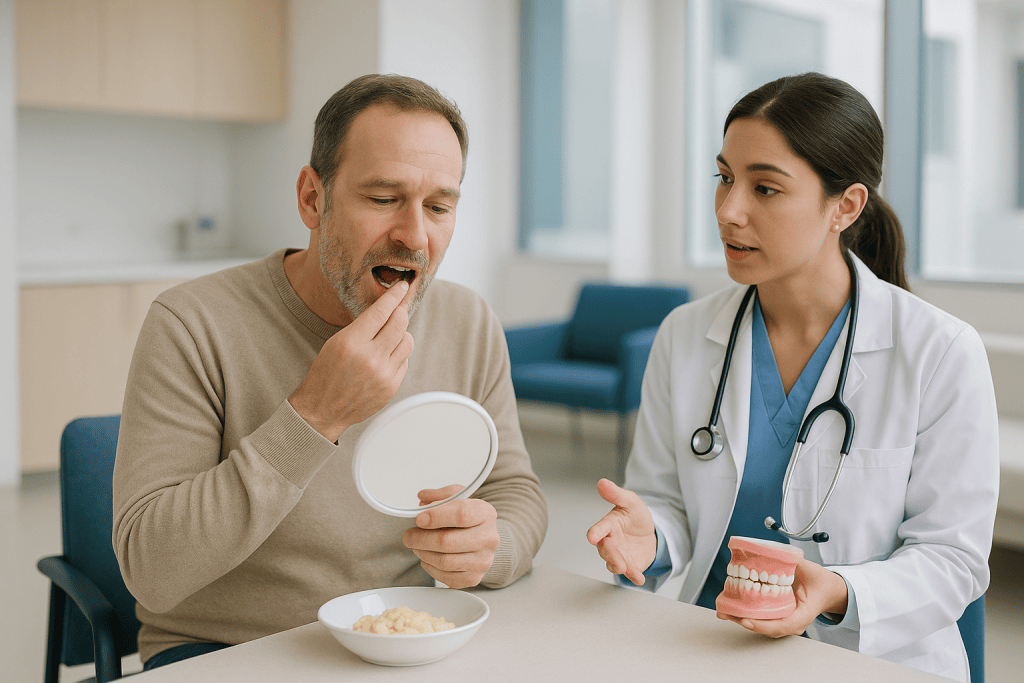
Comfort returns first. Cleveland Clinic notes that soreness and tenderness after gum contouring usually last a few days, with most people back to normal routines within about a week. The tissue has a rich blood supply, which is why it bleeds readily during surgery and why it also closes over faster than skin in many other parts of the body.
Surface healing comes next. For a gum graft, Cleveland Clinic gives a typical window of one to two weeks for the treated site to heal enough that eating and cleaning feel routine again, with the donor site on the palate often being the more uncomfortable of the two areas during that period. For a simple contouring procedure without bone involvement, the visible wound edge is often no longer raw within a similar range, though this varies with how much tissue was removed.
The final settling of the gum line is the slowest part and the one most often glossed over. Gum tissue that has been cut shrinks slightly as it matures, then stabilizes. Clinicians typically avoid judging the final cosmetic result, or placing veneers and crowns at the new margin, until the tissue has had weeks to months to settle. Your treating team will tell you the specific review dates they want for your case.
Two practical points follow. First, feeling fine does not mean the tissue is finished. Second, a gum line that looks slightly different at week two than at day two is expected, not a sign that something went wrong.
Who is usually a candidate, and who is usually asked to wait
Gum reshaping is an elective procedure, and clinicians tend to be selective about timing because healthy tissue heals predictably and inflamed tissue does not.
The usual candidates are adults whose gum line is uneven, sits low enough to make teeth look short, or has an asymmetry that bothers them, and whose gums are otherwise healthy. Some people have excess gum tissue related to certain medicines, to mouth breathing, or to the way their teeth erupted; others have a high lip line that shows a lot of gum when they smile. In each case the dentist checks how much true tooth structure sits under the gum, often with X-rays, because trimming tissue over a tooth that is not actually short would expose root rather than enamel.
People are commonly asked to wait, or to treat something else first, in a few situations:
- Active gum disease. The NHS describes gingivitis as red, swollen gums that bleed with brushing, and periodontitis as the deeper form that damages the bone supporting the teeth. Surgery on inflamed tissue heals poorly, so the infection is brought under control first.
- Uncontrolled diabetes or smoking. Both slow wound healing in the mouth; Mayo Clinic lists them among the main risk factors for periodontitis.
- Planned orthodontics. Braces or aligners can change where the gum line sits, so reshaping is often sequenced after tooth movement.
- Pregnancy. Hormonal changes make gums more reactive, and elective procedures are frequently deferred.
None of these is a permanent bar. They are reasons to fix the ground before building on it, and the decision rests with the periodontist or dentist who has examined you.
Gum contouring recovery time: what the first days and weeks usually look like
Recovery unfolds in fairly consistent stages, even though the exact days shift from person to person.

The first evening is dominated by the wearing-off of local anesthetic. As sensation returns, the treated edge feels tender and may throb slightly. A little oozing of blood-tinged saliva is common and typically settles with gentle pressure from a clean, damp gauze, as Cleveland Clinic advises. Swelling of the lip or gum peaks in the first day or two.
Days two to four are usually the least comfortable. The gum edge may look whitish or grayish in patches. This is not infection; it is a normal film of fibrin and dead surface cells that forms over a healing wound in the moist environment of the mouth, and it lifts away on its own. Hot, spicy or crunchy foods sting, and brushing directly on the site feels sharp.
By the end of the first week the sting fades, the tissue turns from angry red toward healthy pink, and most people eat and speak normally. Cleveland Clinic’s one-to-two-week range for graft sites to heal applies to the surface stage; a simple contouring wound often reaches this point sooner.
From week two onward the work is invisible. Collagen in the connective tissue remodels, the edge firms up, and the gum line drifts a fraction toward its final position. Follow-up appointments in this phase let the clinician check that the margin is settling evenly and that no plaque is building along the new edge. If a crown or veneer is planned, this waiting period is what protects you from a restoration that no longer matches the gum months later.
Soft diet after gum reshaping: what to eat and why texture matters
Food does two things to a healing gum edge: it presses on it, and it leaves residue on it. A soft diet limits both.
Cleveland Clinic’s aftercare guidance for gum contouring and gum grafts is consistent: for the first several days choose soft, cool or lukewarm foods, and avoid anything sharp, crunchy, sticky, very hot or heavily spiced. The reason is mechanical. A tortilla chip fractures into edges that can catch the wound; a piece of crusty bread drags across it; seeds lodge along the margin where you cannot yet brush.
Temperature matters because freshly cut tissue has exposed nerve endings and dilated blood vessels. Very hot food increases blood flow and can restart oozing. Cool food does the opposite and is often soothing, which is why yogurt, smoothies (eaten with a spoon rather than a straw), cottage cheese, scrambled eggs, mashed vegetables, oatmeal, well-cooked pasta and soft fish tend to appear on every dentist’s list.
Two habits deserve specific mention:
- Chew on the opposite side. If only one region was reshaped, direct food to the other side of the mouth for the first week.
- Rinse gently after eating. A brief, gentle rinse with lukewarm water or a rinse your clinician recommends clears residue without disturbing the clot. Forceful swishing in the first day or two can dislodge early healing tissue.
Nutrition also has a quiet role. Wound healing anywhere in the body draws on protein and on vitamin C for collagen formation, so a soft diet does not have to be a poor one. Soups with lentils or blended beans, eggs and soft fruit keep intake up while the gum line does its work.
Gentle brushing and cleaning around the healing gum line
The instinct after gum surgery is either to avoid the area entirely or to scrub it clean. Both cause problems. Plaque that builds along a healing margin drives inflammation and delays closure; a stiff brush dragged across raw tissue tears it.
The middle path, which mirrors Cleveland Clinic’s aftercare advice, has three parts.
Brush everything else normally. Teeth away from the treated site still need twice-daily cleaning with a soft-bristled brush. Skipping brushing for a week because one area is sore raises plaque levels across the whole mouth, and inflamed neighbors do not help a healing site.
Approach the treated edge indirectly. For the first few days, most clinicians ask you to clean the crowns of the treated teeth while keeping bristles off the cut edge itself, then to move progressively closer as tenderness eases. An extra-soft brush, held with a light grip and small strokes rather than long sweeps, does this well. Some clinicians supply a surgical brush or recommend a cotton swab for the margin.
Use rinses as directed. Chlorhexidine, an antiseptic mouth rinse, is often prescribed for short-term use after gum surgery to control bacteria where brushing is limited. It works by binding to the tooth surface and gum and slowly releasing; it can stain teeth and alter taste with longer use, which is why it is typically limited to a defined period set by the prescriber. Whether you need it, and for how long, is a decision for your treating team.
Flossing at the surgical site usually waits until the clinician clears it, because the floss can slide under a healing margin and separate it from the tooth. Interdental cleaning elsewhere continues as normal.
Laser vs scalpel: does the tool change gum reshaping healing?
Marketing around gum contouring often frames laser treatment as bloodless and pain-free and scalpel work as old-fashioned. The evidence supports a more measured view.
A dental laser seals small blood vessels as it cuts, so there is usually less bleeding during the procedure and the surgeon has a clearer view. Cleveland Clinic notes that laser contouring may involve less bleeding and a faster recovery than scalpel techniques, while also acknowledging that both are in routine use. Electrosurgery, which uses a fine electrical current, sits between the two. Scalpel surgery produces a clean incision with a well-defined edge that many periodontists prefer when precise margins are needed, especially with bone recontouring, and its healing outcomes are well established.
| Feature | Scalpel | Laser |
|---|---|---|
| Bleeding during procedure | More; controlled with pressure | Less; vessels sealed as tissue is cut |
| Sutures | Sometimes, depending on extent | Rarely for surface contouring |
| Early discomfort | Common for a few days | Often reported as milder, still present |
| Bone recontouring | Standard approach | Some lasers can, depends on type |
| Final gum position | Determined by tissue biology | Determined by tissue biology |
The last row is the one that matters most. Whichever instrument is used, the gum line settles according to how the tissue heals over the underlying tooth and bone, not according to the tool. Long-term appearance is driven by surgical planning and by how well the new margin is kept free of plaque. Ask about the technique your clinician uses and why, but treat the instrument as one factor among several rather than the deciding one.
Managing discomfort and swelling without guesswork
Most people describe the days after gum reshaping as sore rather than painful, but soreness in the mouth is hard to ignore because eating, speaking and swallowing all press on it.
Cold helps early. A cool compress against the cheek or lip in the first day narrows blood vessels and reduces swelling, in short intervals rather than continuous contact. From the second day, some clinicians switch to warmth to encourage circulation, so follow whichever pattern your team recommends.
Head position matters more than people expect. Sleeping with the head slightly raised for the first night or two reduces the throbbing that comes from lying flat, because it lowers blood pressure in the tissues of the face.
Medicines for discomfort fall into two broad classes. Non-steroidal anti-inflammatory drugs reduce production of prostaglandins, the chemical signals that drive both pain and swelling at a wound; acetaminophen works centrally on pain perception without the anti-inflammatory effect. Which is appropriate depends on your medical history, other prescriptions, kidney and stomach health, and bleeding risk, so the prescribing clinician chooses, and you should follow the plan they give rather than a generic one.
A few things reliably make discomfort worse: smoking, alcohol, vigorous exercise in the first days, straws (the suction can dislodge early clot), and touching the site with a tongue or finger to check on it. Smoking deserves emphasis. Nicotine constricts the small vessels that a healing gum depends on, and the NHS and Mayo Clinic both identify smoking as a leading contributor to gum disease and poor gum healing. If you smoke, the period around gum surgery is a strong reason to pause, and your care team can direct you to support.
Can gums grow back after contouring?
This is the question people ask with two opposite hopes: those who fear the procedure will simply undo itself, and those who regret it and wonder whether the tissue will return.
Gum tissue does regenerate to a degree; that is why a contouring wound closes within a couple of weeks rather than remaining open. But the healed gum sits where the underlying anatomy tells it to sit. The connective tissue attaches to the tooth and bone at a fairly consistent distance from the bone crest, a relationship periodontists call the biologic width. When only excess gum is removed and the bone is left in place, the tissue can partially rebound toward its original position over months because the bone still sits high. This is one reason crown lengthening, which reshapes bone as well as gum, is chosen when a lasting change in gum height is the goal.
So the realistic answer runs like this. After a well-planned procedure, some minor rebound is normal and is factored into the design; the surgeon typically removes tissue with that in mind. Significant regrowth to the original outline is uncommon when bone has been recontoured. Regrowth is more likely when gum overgrowth had an ongoing cause, such as certain medicines (some blood pressure, anti-seizure and immunosuppressant drugs are known to enlarge gums), poor plaque control, or persistent mouth breathing. If the cause remains, the tissue can enlarge again.
For the person hoping tissue will return after removal they now regret: the gum will heal and mature, but it will not reliably regrow to cover more tooth. Options in that situation, including grafting, are a conversation for a periodontist.
Can you rebuild gums naturally? Recession, grafts and what helps them heal
Searches for how to rebuild gums naturally are usually about recession, where the gum edge has migrated down the root, making teeth look long and sometimes sensitive. The honest answer is that lost gum tissue does not regrow on its own, and no rinse, oil, herb or brushing technique has been shown in mainstream evidence to regenerate it. What good habits can do is stop recession from progressing, which is genuinely valuable.
The NIH’s National Institute of Dental and Craniofacial Research describes gum disease as the main driver of tissue and bone loss around teeth, and the NHS lists brushing twice daily, cleaning between teeth and not smoking as the core of prevention. Aggressive brushing with a hard brush is another common cause of recession that people can change immediately.
When tissue needs to be replaced, a gum graft is the established option. Mayo Clinic describes soft tissue grafts, in which a small piece of tissue from the palate or a donor material is stitched over the exposed root. Cleveland Clinic gives one to two weeks as a typical healing window for the graft site and notes the palate donor site can be sore during that time.
What helps a graft heal is mostly what protects it from movement and infection:
- Leave it alone. The graft survives its first days on diffusion from the underlying tissue before new vessels grow in; tongue prodding, straws or lip-pulling to look at it can shear it loose.
- Keep to the soft diet and avoid heat for the period your clinician specifies.
- Use prescribed rinses as directed and avoid brushing the graft until cleared.
- Do not smoke.
A graft that looks pale or slightly gray in the first days is often normal; a graft that shifts, or bleeds persistently, is not, and warrants a call.
Risks and alternatives in plain terms
Gum reshaping is low risk as surgery goes, but no procedure on living tissue is risk-free, and a candid clinician will walk you through the possibilities before you consent.
Common, short-lived effects include soreness, swelling, minor bleeding and temporary sensitivity to cold, especially if a small amount of root surface was exposed near the new margin. Less common problems include infection, delayed healing, uneven settling that leaves the gum line asymmetric, and, with over-aggressive trimming, recession that exposes root and makes teeth look too long. Grafts carry an additional small risk of the graft failing to integrate, and of prolonged soreness at the palate donor site. Mayo Clinic and Cleveland Clinic both describe these as generally uncommon with appropriate case selection.
Alternatives depend on why the gum line bothers you:
- If gum inflammation is making tissue puffy, treating the gingivitis with professional cleaning and improved home care often reduces the bulk without surgery.
- If the concern is a high lip line rather than the gum itself, some clinicians discuss lip repositioning or muscle-relaxing injections to reduce lip lift; these carry their own considerations and evidence base, and are separate decisions.
- If teeth look short because of wear rather than gum coverage, restorative options may address proportion without cutting gum.
- Orthodontic movement can change where the gum sits and is sometimes chosen instead of, or before, reshaping.
Doing nothing is also a legitimate choice. Gum aesthetics is elective, and an uneven gum line that is healthy poses no medical threat. The treating team’s job is to lay out these paths neutrally; yours is to decide which, if any, matches what you want.
What people often get wrong about gum reshaping healing
A few misconceptions come up so often they are worth naming directly.
Myth: the whitish film on the wound means infection. In most cases it is a normal fibrin layer, the mouth’s version of a scab, which sheds on its own. Infection announces itself differently, with worsening pain after day three, spreading swelling, pus or fever.
Myth: more rinsing means cleaner healing. Vigorous swishing in the first day or two can strip the early clot. Gentle rinsing, at the frequency your clinician sets, is the balance.
Myth: laser treatment means no downtime. Laser contouring may reduce bleeding and early discomfort, but the tissue still has to heal biologically, and the settling timeline is not shortened by the instrument.
Myth: once it stops hurting, it is finished. Comfort returns within days; the gum line continues to remodel for weeks. Judging the result, or bonding veneers at the new margin, before the tissue matures is a common cause of disappointment.
Myth: salt water or oil pulling will regrow receded gums. Warm salt water can soothe and help keep a site clean, but no natural remedy has been shown to regenerate lost gum tissue. Preventing further loss is possible; rebuilding requires grafting.
Myth: you should stop brushing the whole mouth to protect the site. Plaque elsewhere fuels inflammation that spreads to the healing edge. Brush the rest normally and treat the treated area with care.
Myth: the same result lasts forever regardless of habits. Overgrowth linked to medicines, mouth breathing or poor hygiene can return if the cause persists, and recession can progress with hard brushing or untreated gum disease.
Questions to ask your care team before and after gum contouring
Good aftercare starts before the appointment, when you still have time to understand the plan. These questions tend to produce the most useful answers.
Before the procedure:
- What exactly will be reshaped, gum only or gum and bone, and why does that choice suit my case?
- Which instrument will you use, and what does that mean for bleeding, sutures and the first few days?
- How much of the change you are planning is likely to hold once the tissue settles, and how do you account for rebound?
- Are there signs of gum disease, smoking, diabetes or medicines that we should address first?
- If I am planning crowns or veneers, how long will you want to wait before taking impressions?
For the days after:
- How should I clean the treated teeth on day one, day three and day seven, and when can I floss there again?
- Do you want me to use a prescribed rinse, and for how many days?
- Which pain relief plan fits my medical history, and what should I avoid?
- What is normal for bleeding, color and swelling, and what is not?
- When are my review appointments, and how do I reach you out of hours if something worries me?
Write the answers down or ask for them in writing. People routinely forget verbal instructions given while still numb, and a one-page sheet covering diet, cleaning and warning signs prevents most of the anxious late-night searching that follows any mouth surgery.
When to call your doctor
Most gum reshaping recoveries are uneventful, and the tenderness, minor oozing and pale film described above are expected. A short list of signs, though, should prompt a same-day call to your dentist or periodontist rather than a wait-and-see approach.
- Bleeding that does not slow after firm, steady pressure with clean gauze for a sustained period, or that restarts repeatedly.
- Pain that increases after the third day instead of easing, or pain not controlled by the plan you were given.
- Swelling that spreads to the face, jaw or neck, or that makes swallowing or opening the mouth difficult.
- Fever, a bad taste with visible pus, or a foul odor from the site.
- A graft that has visibly moved, come loose or turned dark.
- Numbness that persists well beyond the expected wearing-off of local anesthetic.
- Sutures that come out early with the wound edges separating.
Seek urgent care through emergency services if swelling threatens your airway, if you have difficulty breathing or swallowing saliva, or if bleeding is heavy and will not stop. These are rare after gum procedures, but they are not situations for a next-day appointment.
For everything in between, your treating team is the right first call. They know what was done, with which instrument, and what your tissue looked like at the end of the procedure. A photo sent through their patient channel can often settle a worry in minutes. Cleveland Clinic and Mayo Clinic both emphasize that following individualized post-operative instructions, and attending scheduled follow-ups, is the single most reliable way to catch a problem early, and every decision about further treatment, including whether anything more is needed at all, rests with the clinicians caring for you.
Frequently asked questions
How long does it take for gum contouring to heal?
Soreness typically fades within a few days and the surface tissue usually looks healed within about one to two weeks, according to Cleveland Clinic aftercare guidance. The gum line itself keeps settling for weeks to months, which is why clinicians wait before judging the cosmetic result or fitting crowns or veneers at the new edge. Procedures that include bone reshaping take longer than surface-only trims.
What is the typical gum contouring recovery time before I can eat normally?
Most people return to a normal diet gradually over the first week, starting with soft, cool foods and adding texture as tenderness eases. Cleveland Clinic advises avoiding hard, crunchy, sticky, spicy and very hot foods in the early days. Chewing on the opposite side and rinsing gently after meals protects the healing edge. Your clinician will give a timeline based on how much tissue was reshaped.
Can gums grow back after contouring?
Some minor rebound toward the original position is normal and is planned for, especially when only gum tissue and not bone was removed. Significant regrowth is uncommon after crown lengthening that reshapes bone. Regrowth is more likely if an underlying cause remains, such as certain medicines that enlarge gums, mouth breathing or plaque buildup. Removed tissue will not reliably regrow to cover more tooth if you later wish it would.
Can you rebuild gums naturally after recession?
No. Gum tissue lost to recession does not regenerate on its own, and no rinse, oil, herb or brushing method has been shown in mainstream evidence to rebuild it. What you can do is stop further loss by brushing gently with a soft brush, cleaning between teeth, not smoking and treating gum disease. Replacing lost tissue requires a gum graft performed by a dentist or periodontist.
What helps gum grafts heal faster?
Protecting the graft from movement and infection matters most. Avoid touching it with your tongue or fingers, skip straws, keep to a soft cool diet, do not smoke, and use any prescribed rinse exactly as directed while brushing the rest of your mouth normally. Cleveland Clinic gives one to two weeks as a typical healing window for graft sites. Attend follow-up visits so the clinician can confirm the graft is integrating.
What should gum contouring aftercare include on the first night?
Expect tenderness as the anesthetic wears off, a little blood-tinged saliva and some swelling. Apply gentle pressure with clean gauze if oozing continues, use a cool compress on the cheek in short intervals, sleep with your head slightly raised, eat only soft cool food, and avoid rinsing forcefully. Follow the pain relief plan your clinician gave you rather than a generic one, and keep their contact details handy.
Does gum contouring hurt?
The procedure itself is done under local anesthetic, so you should feel pressure but not pain. Afterwards most people describe soreness rather than severe pain, lasting a few days. Laser techniques may involve less bleeding and milder early discomfort than scalpel techniques according to Cleveland Clinic, though both are routine. Pain that worsens after the third day is not typical and should prompt a call to your dentist.
Why does my gum look white or gray a few days after reshaping?
A whitish or grayish film over a healing gum edge is usually a normal layer of fibrin and shed surface cells, the mouth’s equivalent of a scab, and it lifts away on its own as the tissue heals. It is not infection by itself. Infection is more likely if you also have increasing pain after day three, spreading swelling, pus, a foul taste or fever, in which case contact your clinician.
When can I brush and floss the treated area again?
Brush the rest of your mouth normally from day one with a soft brush, keeping bristles off the cut edge for the first few days and approaching it gradually as tenderness fades. Flossing directly at the surgical site usually waits until your clinician clears it, because floss can slide under a healing margin. Prescribed antiseptic rinses fill the gap while brushing is limited, for the period the prescriber sets.
Is gum reshaping suitable if I have gum disease or smoke?
Usually not straight away. Inflamed gums heal unpredictably, so gingivitis or periodontitis is treated first, and clinicians commonly ask smokers to stop or pause because nicotine narrows the vessels healing tissue depends on. Uncontrolled diabetes, pregnancy and planned orthodontics are other reasons to wait. These are timing issues rather than permanent barriers, and the decision rests with the periodontist or dentist who examines you.
References
- NHS: Gum Disease
- NIH National Institute of Dental and Craniofacial Research: Gum Disease
- MedlinePlus: Gum Disease
This article is for general information only and is not a substitute for professional medical advice. Please consult a qualified doctor about your individual situation.

More from the Blog
How Jaw Cyst Removal Surgery Protects Nearby Teeth and Nerves While the Cyst Comes Out
Jaw cyst removal surgery protects nearby teeth and nerves through planning and technique: three-dimensional imaging maps the cyst against tooth roots and the nerve…
Conscious Sedation in Dentistry: What You Feel, Remember and Need to Arrange
Conscious sedation in dentistry uses medication to make you deeply relaxed and drowsy while you stay awake enough to breathe on your own and…
Living With Aesthetic Dental Work: Staining, Biting Habits and Long-Term Upkeep
Maintaining cosmetic dental work rests on three habits: protecting the bond line where restoration meets tooth, controlling biting forces such as grinding, nail-biting and…
Composite Bonding Results: Blending With Natural Teeth and What the Resin Cannot Change
Composite bonding results depend on how carefully tooth-colored resin is shade-matched, layered, and polished onto natural enamel; done well, it can disguise small chips,…
After Dental Trauma Care: Splints, Follow-Up Visits and How the Tooth Is Monitored
Dental trauma recovery usually involves a flexible splint worn for about two to four weeks depending on the injury, a soft diet, careful hygiene…

Who Is a Candidate for Laser Dentistry? Gums, Small Cavities and Sensitivity Explained
Laser dentistry candidates are usually adults and older children who need gum treatment (deep-pocket cleaning, reshaping, small soft-tissue procedures), have small or early cavities…