

How Is Pain Managed After an Appendectomy? Anesthesia Wear-Off, Gas Discomfort and Day One

Key Takeaways
- Local anesthetic injected into the incisions fades over the first hours, which is why pain after appendectomy often feels worst on the evening of surgery rather than immediately after waking.
- Shoulder-tip ache after keyhole surgery is referred pain from carbon dioxide irritating the diaphragm, not a shoulder injury, and Cleveland Clinic notes it typically fades within a day or two.
- Multimodal pain plans layer acetaminophen, anti-inflammatories and local anesthetic so that opioids, with their nausea and constipation, are needed only for breakthrough pain, if at all.
- The NHS notes many people go home within 24 hours of an uncomplicated keyhole appendectomy, while a burst appendix can mean up to about a week in hospital.
- Return to normal activity is typically a couple of weeks after keyhole surgery, with strenuous activity avoided for four to six weeks after open surgery, according to the NHS.
- Adhesions form after almost every abdominal operation but are usually silent; their clearest harm is bowel obstruction, and later pain should be investigated rather than assumed to be scar tissue.
Pain after appendectomy is usually managed with a layered plan: local anesthetic in the wounds, scheduled non-opioid pain relievers such as acetaminophen or an anti-inflammatory, and opioids only for breakthrough pain. Soreness often peaks the first evening as the local anesthetic fades, and shoulder-tip ache from surgical gas typically settles within a day or two. Your surgical team sets the exact plan.
The call came at 2 a.m., the scan was done by four, and by breakfast the appendix was gone. Now it is the next morning and the hardest thing in the room is a glass of water on a table that seems a very long way from the bed. Sitting up pulls at three small dressings. There is a strange ache in the right shoulder that nobody operated on. And a quiet worry that hurting this much means something went wrong.
Pain after appendectomy is one of the most common reasons people phone a surgical ward in the first days, and most of those calls end with reassurance, because the pattern is remarkably consistent once you know what to expect: numbing medicine that fades on schedule, gas that borrows the shoulder’s nerves, a bowel that takes its time.
What follows is that pattern laid out hour by hour and week by week, with the evidence behind each piece and a clear list of the signs that do deserve a call.
What does pain after appendectomy feel like as the anesthesia wears off?
An appendectomy is the operation that removes the appendix, a finger-sized pouch attached to the large intestine. Most are done laparoscopically, meaning through three or four small cuts using a camera, so the picture of pain in the first hours is fairly predictable.
You wake in a recovery area with two kinds of pain relief already on board. The anesthesia team usually gives pain medicine before you surface, and the surgeon commonly injects a local anesthetic, a drug that temporarily blocks nerve signals, into each incision. That is why many people describe the first hour or two as strange rather than painful: a heavy, bruised sensation around the belly button and lower right side, a sore throat from the breathing tube, and a fog that makes time slippery. The NHS lists sore throat, shivering, nausea and temporary confusion among the common after-effects of a general anesthetic, and advises against driving or signing legal documents for 24 to 48 hours.
Then the local anesthetic fades. It does this over hours, not seconds, so soreness tends to climb steadily through the afternoon or evening of surgery. People often interpret that rise as something going wrong. Usually it is the opposite: the numbing agent is simply wearing off on schedule, revealing ordinary wound pain that the rest of the plan is designed to cover. The pain is typically sharpest at the incisions when you move, cough or laugh, with a duller ache deeper in the right lower abdomen where the appendix sat.
A useful mental note for that first evening: pain that is worse when you move and eases when you rest is the expected kind. Pain that is constant, escalating and unaffected by position is the kind to report.
How does pain relief after appendix surgery actually work?
Surgical pain travels a chain: nerve endings in the wound fire, signals pass up the spinal cord, and the brain reads them as hurt. Modern pain plans interrupt that chain at several points at once instead of leaning on one strong drug. Clinicians call this multimodal analgesia, which simply means using more than one class of pain reliever together so each can be used at a gentler intensity.
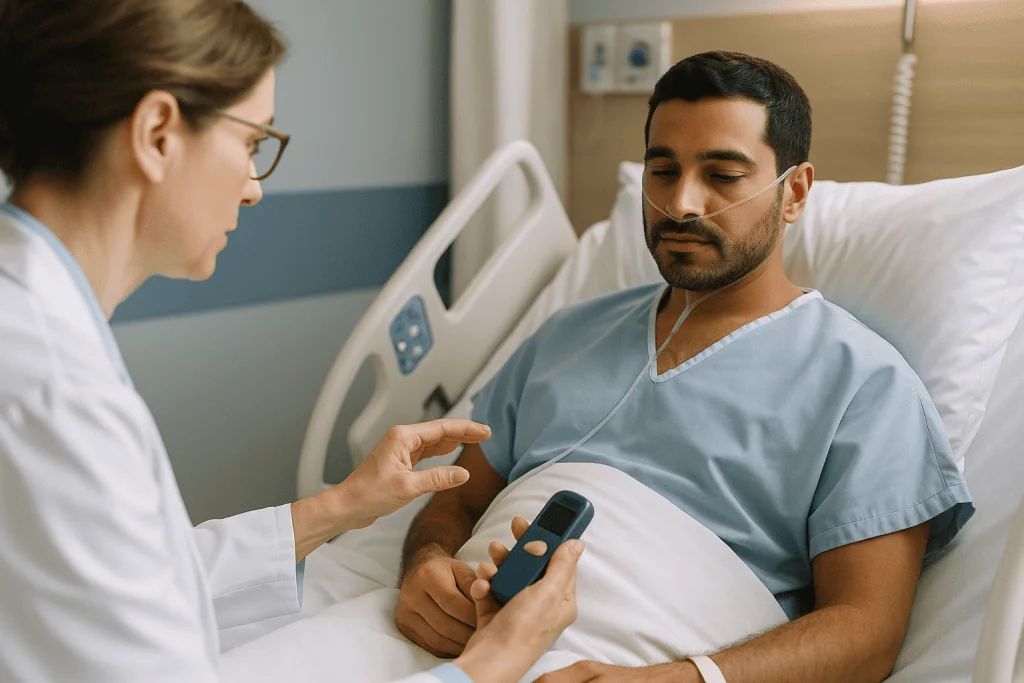
At the wound, local anesthetic stops nerves from sending the signal at all. Anti-inflammatory drugs (NSAIDs) work on the chemistry of injured tissue, reducing prostaglandins, the substances that make nerve endings hypersensitive after a cut. Acetaminophen acts mostly in the brain and spinal cord, turning down the volume on incoming signals. Opioids bind receptors in the nervous system and change how pain is perceived; they are effective but carry nausea, drowsiness, constipation and dependence risks, so most surgical teams now reserve them for pain that breaks through the other layers.
Timing matters as much as choice. Non-opioid medicines are often given on a fixed schedule at first rather than waiting for pain to build, because pain that has taken hold is harder to bring down than pain caught early. Think of it as keeping a floor under the discomfort rather than chasing peaks.
None of this is one-size-fits-all. Kidney function, stomach ulcers, asthma, blood thinners, pregnancy and allergies all shift which classes are suitable. The surgeon and anesthesiologist weigh those factors and write the plan; the job of the person recovering is to report honestly how well it is working so the team can adjust it.
Why does shoulder pain after appendectomy happen? The gas, explained
Few things puzzle people more than waking from abdominal surgery with a sore shoulder. The culprit is carbon dioxide. During laparoscopic surgery the abdomen is inflated with this gas to lift the wall away from the organs and give the camera room to see. The gas is released at the end, but a small amount lingers and irritates the diaphragm, the sheet of muscle separating chest from belly.
Here the wiring plays a trick. The diaphragm shares nerve roots with the skin over the shoulder through the phrenic nerve, so the brain locates the irritation in the wrong place. This is referred pain, and it explains why the ache sits at the tip of the shoulder or under the collarbone, often on the right, and why it can catch you when you take a deep breath or lie flat. The joint itself is fine. Cleveland Clinic lists shoulder pain from the gas among the expected after-effects of laparoscopic appendectomy and notes it generally fades over the first day or two as the body absorbs what remains.
Movement is the most reliable remedy. Walking, changing position and gentle shoulder rolls encourage the gas to shift and the diaphragm to settle. Lying flat or on the sore side can briefly make it worse; sitting upright and walking a corridor a few times tends to help. A warm compress on the shoulder is a reasonable comfort measure, and the pain relievers already in the plan cover it too.
This surgical gas is different from intestinal gas. Bloating, a swollen belly and trapped wind low in the abdomen come from the bowel waking up slowly after anesthesia, which is the subject of the day-one section that follows.
What does day one after appendectomy usually look like?
Picture the first 24 hours as three rough acts. Act one is the recovery room: a stretch of monitoring, sips of water once you are alert, and a nurse asking you to rate pain on a zero-to-ten scale. That number is not a test; it is how the team decides whether the plan needs more layers.
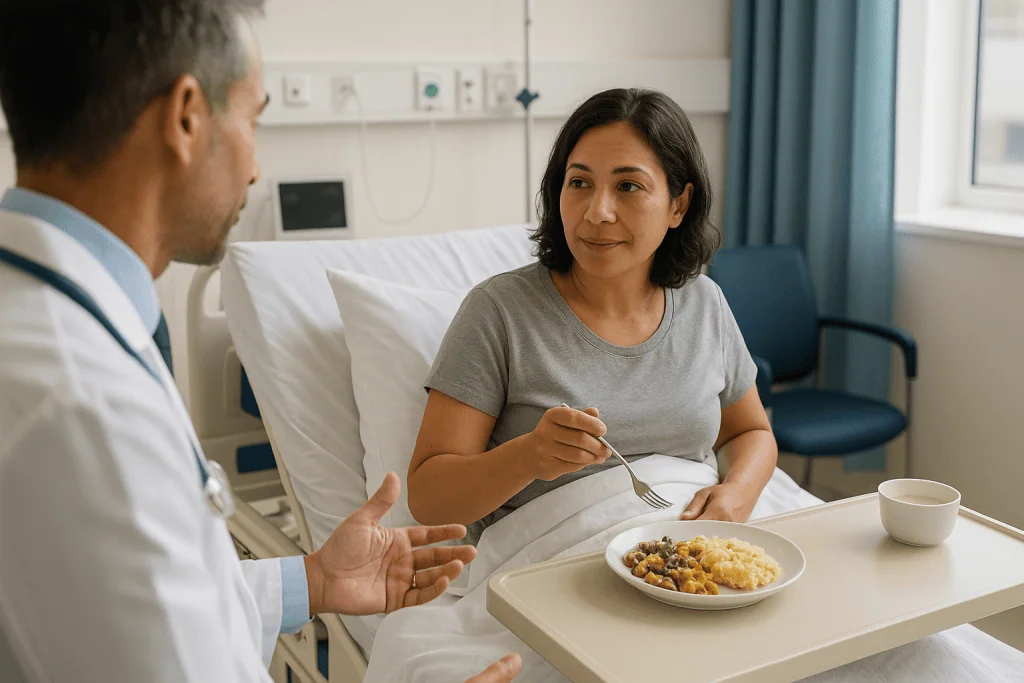
Act two is the first walk. Within hours of an uncomplicated laparoscopic appendectomy most people are helped to stand and shuffle a few steps. It feels alarming and then oddly reassuring. Standing pulls on the incisions and the deep ache flares, but walking gets the lungs expanding, moves the leftover surgical gas, wakes the bowel and lowers clot risk. Passing urine is another quiet milestone the nurses watch for, because anesthesia can make the bladder sluggish.
Act three is the first night, at home or on a ward. The NHS notes that after keyhole surgery for uncomplicated appendicitis many people go home within 24 hours; anyone whose appendix had burst, or who needs intravenous antibiotics, usually stays longer. Sleep is broken. Finding a comfortable position is hard, the belly feels tight and bruised, and burping or passing wind can hurt before it relieves. Nausea from the anesthetic and from opioid medicines is common on this first night and tends to ease as both leave the system.
What day one is not: it is not a day for judging the whole recovery. Pain on the first evening is usually the peak, precisely because the local anesthetic has gone and the bowel has not yet settled. Most people describe a clear step down by the second morning.
Laparoscopic vs open appendectomy: how the pain differs
Not every appendix comes out through keyhole cuts. When the appendix has burst, when there is a large abscess, or when scarring from earlier operations blocks the camera’s view, surgeons switch to an open approach through a single larger cut in the lower right abdomen. The choice is made for safety, not convenience, and it changes the pain story.
| Feature | Laparoscopic (keyhole) | Open |
|---|---|---|
| Incisions | Three or four small cuts, mostly around the navel and lower abdomen | One longer cut through the muscle layers of the lower right abdomen |
| Main early discomfort | Bruised port sites; shoulder-tip ache from gas | Deep wound pain with any movement of the trunk |
| Typical hospital stay | Often home within 24 hours if uncomplicated (NHS) | Up to about a week, especially if the appendix had burst (NHS) |
| Return to normal activity | Around a couple of weeks (NHS) | Strenuous activity usually avoided for four to six weeks (NHS) |
| Pain-relief approach | Local anesthetic plus scheduled non-opioids; opioids rarely beyond the first day or two | Same layers, often with more emphasis on regional nerve blocks and a longer taper |
Two honest caveats. First, a burst appendix, not the size of the cut, is the biggest driver of a slower, more painful recovery, because the infection inside the abdomen needs antibiotics and time regardless of the approach. MedlinePlus notes recovery is slower when the appendix has ruptured. Second, the ranges above are typical, not promises. A fit 20-year-old and a 75-year-old with heart disease can have the same operation and very different weeks. The treating team’s estimate for your case matters more than any table.
Who goes home the same day, and who is usually asked to stay?
The question everyone asks on day one is when they can leave, and the answer is about safety criteria rather than a clock. Surgical teams generally look for pain that is controlled with the medicines you will take at home, tolerance of fluids and light food, the ability to walk and pass urine, a stable temperature and someone to accompany you.
People who tend to meet those criteria quickly are those with uncomplicated appendicitis removed laparoscopically before it burst, without major other health problems. The NHS notes that after keyhole surgery many go home within 24 hours, and Mayo Clinic describes most people leaving hospital one to two days after surgery.
Those usually asked to wait fall into recognizable groups. Anyone whose appendix had perforated or formed an abscess needs intravenous antibiotics and monitoring for the pockets of infection that can form afterward; the NHS puts this stay at up to about a week. Older adults may be watched longer because anesthesia recovery and confusion risk run higher. People with diabetes, heart or lung disease, or those on blood thinners often stay for observation. Anyone who converted from keyhole to open surgery typically stays for wound and pain monitoring. Children are usually kept until they are eating, drinking and comfortable, and their families have a clear plan.
Being asked to stay is not a verdict on how well the operation went. It usually means the team wants to see a fever settle, a bowel wake up, or pain come under control with oral medicines before letting go. Discharge that happens a day later than hoped is far less costly to recovery than a return trip through the emergency department.
What to take for pain after an appendectomy? Understanding the classes
People search this question hoping for a name. The more useful answer is a map of the classes involved, because the specific choice, amount and schedule are set by the prescribing clinician who knows your kidneys, stomach, allergies and other medicines.
Acetaminophen, sometimes called paracetamol, is usually the foundation. It works centrally, dampening pain signals in the brain and spinal cord, and it is gentle on the stomach. Its main hazard is the liver, which is why clinicians are careful about combining it with other products that also contain it, including some cold remedies and some combination opioid tablets.
Non-steroidal anti-inflammatory drugs, such as ibuprofen, reduce the prostaglandins that make a healing wound tender and swollen. They are often paired with acetaminophen because the two act at different sites. They can irritate the stomach lining, strain the kidneys and interfere with blood thinners, so some people are advised to avoid them entirely.
Opioids are the reserve layer. They change how the nervous system perceives pain rather than treating inflammation, and they help with breakthrough pain in the first day or two. The price is drowsiness, nausea, constipation and, with longer use, dependence. Most surgical teams prescribe a short course, if any, and expect people to stop as soon as the non-opioid layers are enough.
Local anesthetic, injected during surgery, is already fading by the time you read the discharge sheet. Some teams also use nerve blocks, longer-acting injections near the nerves supplying the abdominal wall, which can push the comfortable window into the first night.
If the plan is not working, the answer is a phone call, not improvisation. Never change what was prescribed, add someone else’s medicine, or stop early because of side effects without checking with the team that wrote it.
Appendectomy recovery time: what the following days and weeks look like
Day two is usually a turning point. The anesthetic haze has cleared, the shoulder ache is receding and the incisions have moved from sharp to sore. Bowel function is the next hurdle: many people do not pass stool for the first few days, partly from anesthesia and partly from opioid medicines, and the resulting bloating can feel worse than the wounds.
By the end of the first week most people with an uncomplicated keyhole operation are off strong pain relievers, showering normally and walking outside. Wounds are typically closed with dissolvable stitches or skin glue, so there may be nothing to remove; a nurse or surgeon will say when the dressings can come off. The NHS advises that after keyhole surgery you can probably return to normal activities within a couple of weeks, while heavy lifting and strenuous exercise are generally avoided for four to six weeks after open surgery.
Driving and work deserve specific questions. The NHS suggests not driving until you can comfortably perform an emergency stop and are no longer taking medicines that cause drowsiness. Desk work often resumes within the same couple of weeks the NHS describes for normal activity; physical jobs wait longer, and the surgeon’s letter is the document employers want.
A slower path is normal after a burst appendix. MedlinePlus notes recovery takes longer when the appendix has ruptured, because the abdominal infection has to clear on antibiotics and there is a risk of an abscess forming afterward, which shows up as returning fever and pain in the second week rather than the first.
Fatigue outlasts pain. Feeling wiped out at the end of a normal day a few weeks on is common and is the body finishing a repair, not a sign the operation failed.
Laparoscopic appendectomy recovery tips: moving, coughing and sleeping
The single most useful object in early recovery is a firm pillow. Hold it against your abdomen when you cough, sneeze or laugh, pressing gently so the muscles do not have to brace against the wound on their own. Nurses call this splinting, and it turns a wince into a manageable twinge.
Getting out of bed has a technique too. Roll onto your side first, let your legs drop over the edge, then push up with your arms so your trunk rises as one piece. Sitting straight up from lying flat asks the cut abdominal wall to do all the work, and it will let you know.
Walk early and often, but briefly. Several short walks a day beat one long one. Each lap moves surgical gas out of the diaphragm’s way, wakes the bowel, expands the lungs and lowers the risk of blood clots in the legs, which rises after any operation and period of lying still. Slow deep breaths every hour, filling the lower chest, do similar work for the lungs.
Sleep is the hardest part for many people. Lying on your back with a pillow under the knees takes tension off the abdomen; some prefer a slight incline with pillows behind the shoulders, which also eases the referred shoulder ache. Side sleeping usually becomes comfortable again after a few days, often with a pillow tucked against the belly.
Keep wounds dry for as long as the discharge instructions say, then shower rather than soak, and pat dry. Avoid lifting anything that makes you hold your breath. Pace yourself: the day you feel good is the day people overdo it, and the next morning tells them so.
What foods should I avoid after an appendectomy?
There is no special appendectomy diet. Mayo Clinic and MedlinePlus both describe people resuming a normal diet as they feel able, usually starting with fluids and light meals on day one and building from there. The appendix has no role in digestion that needs compensating for.
That said, a few sensible limits help in the first days. While nausea from the anesthetic lingers, heavy, greasy or very spicy meals tend to sit badly; toast, rice, soups, yogurt and bananas are easier. Carbonated drinks can add gas to a belly already bloated by a sluggish bowel, so many people put them aside for a few days. Large portions stretch a stomach that has been empty for a day or more; small, frequent meals are kinder.
Constipation is the real dietary issue, and it is caused by the operation and by opioid pain relievers rather than by food. Fluids matter most: water, diluted juice and soups throughout the day. Fiber from fruit, vegetables, oats and whole grains helps once you are eating comfortably. If several days pass without a bowel movement, or straining hurts the wounds, ask the team rather than reaching for a laxative on your own, since some are unsuitable after abdominal surgery.
Alcohol deserves a pause. It deepens the drowsiness of opioid medicines, adds to acetaminophen’s load on the liver, and irritates a stomach that may already be taking anti-inflammatory drugs. The NHS advises avoiding alcohol for at least 24 hours after a general anesthetic; many teams suggest waiting until pain relievers are no longer needed.
A gentler appetite for a week or two is common and not a problem, as long as fluids are going in.
Can scar tissue pain after appendectomy show up months or years later?
Any operation inside the abdomen leaves adhesions: bands of scar tissue that form as the lining heals and can stick loops of bowel to one another or to the abdominal wall. Almost everyone who has had abdominal surgery has some. The important question is whether they cause pain, and here the evidence is more cautious than internet forums suggest.
Most adhesions are silent for life. The clearest harm they cause is bowel obstruction, when a loop of intestine kinks around a band; this produces cramping pain with vomiting and a swollen belly, and is a reason to seek urgent care rather than wait. MedlinePlus lists blockage of the bowel from scar tissue among the recognized longer-term risks of the operation.
Chronic abdominal pain blamed on adhesions is far harder to prove. Adhesions are invisible on standard scans, many people who have them have no pain, and many people with pain have other explanations. Reviews of recurrent pain after appendectomy in the medical literature point to a spread of causes: irritable bowel syndrome, gynecological conditions, hernias at the incision sites, nerve entrapment in the scar and, rarely, inflammation of a small remnant of appendix tissue left behind. Surgery to divide adhesions carries its own risk of creating new ones, so it is generally reserved for obstruction.
Wound-level pain is a separate and more common story. A small nerve can be caught in the healing scar and give a burning or electric sensation around one incision; most settle as the scar matures. A firm lump at the navel that comes and goes with straining may be a small hernia and is worth showing the surgeon.
If pain returns after you had recovered, the honest position is that it should be investigated, not assumed to be scar tissue.
What people often get wrong about pain after appendectomy
The first mistake is expecting a straight line down. Pain typically rises through the evening of surgery as local anesthetic wears off, dips, then flares on days two and three as the bowel fills with gas and the first real movement begins. A bad second night is not a failed operation.
The second is treating the shoulder as a separate problem. People book physical therapy, worry about a fall during the operation, or fear a heart problem. The shoulder-tip ache after keyhole surgery is referred pain from the diaphragm and it fades on its own; new chest pain or breathlessness is a different matter and belongs in the red-flag list.
The third is toughing it out. Skipping scheduled non-opioid pain relievers to be brave, then reaching for a strong opioid when the pain is severe, is backward. Pain kept low is easier to hold low, and controlled pain means deeper breaths, more walking and fewer complications.
The fourth is the opposite: assuming opioids are the real pain relief and the rest is decoration. For most people after a keyhole appendectomy the acetaminophen and anti-inflammatory layers do the heavy lifting, and opioid use beyond the first day or two brings more constipation and nausea than benefit.
The fifth is bed rest. Lying still feels protective; it actually prolongs bloating, stiffness and clot risk. The sixth is diet folklore. Nothing you eat will reopen the wound, and losing the appendix does not require avoiding seeds, nuts or fiber.
Last, people assume any later abdominal pain is scar tissue. Sometimes it is; often it is not, and new pain deserves a fresh look rather than a shrug.
Questions to ask your care team before you go home
Discharge conversations happen fast, usually while you are tired and sore. Writing questions down beforehand, or handing the list to whoever is collecting you, gets better answers.
- Which pain relievers am I to take on a schedule, which are only if needed, and for roughly how many days do you expect each?
- Are there medicines I already take that should be paused or adjusted while I am on these?
- What level of pain would you expect tonight and tomorrow, and what level should make me call?
- Was my appendix burst or intact, and does that change my recovery plan or antibiotic course?
- How were my wounds closed, when can they get wet, and is there anything to remove?
- When can I drive, return to work or school, and lift my child or groceries?
- Whom do I call at night or on a weekend, and where should I go if I cannot reach them?
- Is a follow-up visit booked, and what should happen at it?
Two questions are worth asking even if they feel awkward. The first is whether the pathology report on the removed appendix will be reviewed and how you will hear the result; occasionally an appendix contains an unexpected finding that changes follow-up. The second is what to do about constipation before it becomes a problem, since teams often have a preferred approach and would rather set it up in advance than field a call three days later.
Ask for the answers in writing where possible. Instructions absorbed through post-anesthetic fog have a way of rearranging themselves by morning.
When to call your doctor: red flags after appendix surgery
Most recovery worries are settled with a phone call to the surgical team or a nurse line, and calling is never the wrong move. Some signs, though, need same-day assessment or emergency care, because they can point to infection, bleeding, a bowel problem or a blood clot.
Seek urgent care for a fever that is new or rising after you had been improving, particularly in the second week, when an abscess inside the abdomen can declare itself; for abdominal pain that steadily worsens instead of easing, or that spreads across the whole belly and makes it rigid; for repeated vomiting, inability to keep fluids down, or a belly that swells while no wind or stool passes; for a wound that becomes increasingly red, hot, swollen or leaks pus or foul fluid, or whose edges open; for bleeding that soaks a dressing; for not passing urine for many hours despite drinking; and for a swollen, painful calf, sudden chest pain or breathlessness, which can signal a clot and are reasons to call emergency services.
Also report pain relief that is not working, side effects such as severe drowsiness, confusion or a rash, and yellowing of the skin or eyes. A new, growing lump at an incision is worth a call too, even without pain.
Trust the trend. Recovery after an appendectomy is rarely smooth hour to hour, but the direction over each day should be toward less pain, more movement and more food. When the direction reverses, the treating team wants to know, and they would far rather see you for a false alarm than late.
Frequently asked questions
How long does pain last after an appendectomy?
Wound soreness is usually sharpest on the first evening and eases noticeably over the following days, with most people off strong pain relievers within the first week after an uncomplicated keyhole operation. The NHS describes a return to normal activities in a couple of weeks after keyhole surgery and longer after open surgery. A burst appendix, older age or other health conditions can stretch these ranges, so your surgical team’s estimate is the one to rely on.
Why do I have shoulder pain after appendectomy?
The carbon dioxide used to inflate the abdomen during laparoscopic surgery irritates the diaphragm, which shares nerve pathways with the shoulder, so the brain places the ache at the shoulder tip. It is referred pain, not a joint or muscle injury, and Cleveland Clinic notes it generally settles over the first day or two. Walking and sitting upright help. New chest pain or breathlessness is different and needs urgent assessment.
What to take for pain after an appendectomy?
Most plans combine acetaminophen with an anti-inflammatory drug on a schedule, with a short supply of an opioid only for breakthrough pain if needed. The exact medicines, amounts and timing depend on your kidneys, stomach, allergies and other prescriptions, which is why the prescribing clinician sets them. Follow the written instructions you were given, and call the team rather than adjusting or adding anything yourself.
What foods should I avoid after an appendectomy?
No specific foods are forbidden; Mayo Clinic and MedlinePlus describe returning to a normal diet as you feel able. In the first days, greasy or very spicy meals can worsen nausea and carbonated drinks can add to bloating, so many people set them aside briefly. Fluids and fiber help counter the constipation caused by anesthesia and opioid medicines. Alcohol is best avoided while you are taking pain relievers.
Is it normal for pain to get worse the night after surgery?
Yes, this is one of the most common and least understood parts of recovery. The local anesthetic placed in the wounds wears off over several hours, so soreness rises through the first evening while the bowel is still sluggish and gassy. Pain that is worse with movement and eases at rest fits this pattern. Pain that is constant, spreading, or paired with fever or vomiting should be reported promptly.
Can scar tissue pain after appendectomy be diagnosed and treated?
Adhesions form after most abdominal operations and are usually silent. They can occasionally cause bowel obstruction, which is an emergency, but a link to chronic pain is hard to prove because adhesions do not show on standard scans and pain often has other causes such as hernias, nerve entrapment or bowel or gynecological conditions. New or returning pain deserves a proper evaluation rather than an assumption about scar tissue.
What are the best laparoscopic appendectomy recovery tips?
Splint your abdomen with a pillow when you cough or laugh, roll onto your side before sitting up, and take several short walks a day rather than resting in bed. Sleep on your back with a pillow under the knees or propped slightly upright. Keep wounds dry as instructed, take non-opioid pain relievers on the schedule given, drink plenty of fluids to prevent constipation, and avoid lifting anything heavy until the surgeon clears you.
When can I drive after an appendectomy?
The NHS advises not driving for at least 24 to 48 hours after a general anesthetic, and not until you can perform an emergency stop comfortably and are no longer taking medicines that cause drowsiness. For many people after keyhole surgery that means roughly a week or more, but it varies with pain and the type of operation. Ask the surgical team for a specific answer and check your insurer’s conditions.
How long is appendectomy recovery time after a burst appendix?
Longer than after an intact appendix. The NHS notes hospital stays can run up to about a week when the appendix has burst, because intravenous antibiotics and monitoring for abscess are needed, and MedlinePlus says overall recovery is slower after rupture. Fatigue and tenderness may persist for several weeks. A returning fever or worsening pain in the second week is a reason to call the team promptly.
Should I be worried about bloating and gas after appendectomy?
Some bloating and trapped wind is expected for the first few days as the bowel recovers from anesthesia and opioid medicines slow it further; walking, fluids and small meals help. Bloating that keeps worsening, a belly that becomes hard or swollen, repeated vomiting, or no wind or stool passing at all can signal a bowel blockage or infection and should be assessed urgently rather than waited out.
References
This article is for general information only and is not a substitute for professional medical advice. Please consult a qualified doctor about your individual situation.

More from the Blog

When Achalasia Symptoms Return After Treatment: Repeat Dilation, Redo Myotomy and Next Steps
Achalasia symptoms can return months or years after pneumatic dilation, Heller myotomy or POEM because the treated muscle can tighten again, scar tissue can…

Robotic Colorectal Surgery Recovery: Daily Walks, Small Meals and the Lifting Limit
Robotic colorectal surgery recovery usually means a hospital stay of a few days, then several weeks of gradual healing at home. Most care teams…

What Is Normal After Robotic Hernia Repair and What Signals Infection or Recurrence?
After robotic hernia repair, mild swelling, bruising, a firm ridge under the incisions, shoulder-tip gas pain and tiredness are common for one to two…

Helping a Family Member After Gallbladder Surgery: Meals, Movement and the First Night Home
Helping someone after gallbladder surgery mostly means covering three things for the first few days: small, low-fat meals that are easy to digest, short…
Hepatopancreatobiliary Surgery Explained: Liver Resection, Whipple and Bile Duct Operations
Hepatopancreatobiliary surgery procedures are operations on the liver, pancreas, gallbladder and bile ducts, most often for tumors, blockages or injuries. The main types are…

Before a Hemorrhoid Procedure: Blood Thinners, Bowel Preparation and Fasting Instructions
Preparing for hemorrhoid surgery usually means three things: a plan for any blood-thinning medicine made with the prescribing clinician, never on your own; a…