

How Long Does a Salmonella Infection Last? Recovery Pace and When You Can Handle Food Again
Key Takeaways
- The CDC reports that salmonella symptoms usually begin six hours to six days after exposure and last four to seven days in most healthy people.
- Diarrhea can persist up to about ten days and, per Mayo Clinic, bowel habits sometimes take several months to feel fully normal again.
- You can shed salmonella in stool for weeks after recovery, according to the CDC, so handwashing habits should outlast the illness itself.
- Antibiotics are not recommended for most uncomplicated cases and may actually prolong the period you carry the bacteria.
- NHS guidance advises staying away from work or school until 48 hours after the last episode of diarrhea or vomiting, and food handlers may face stricter local rules.
- Fever above 102°F, bloody stools, diarrhea lasting beyond three days, or signs of dehydration are the CDC's red flags for seeking medical care.
Most healthy adults with a salmonella infection are ill for about four to seven days, according to the CDC, with symptoms usually beginning six hours to six days after exposure. Diarrhea sometimes lingers for up to ten days, and the bacteria can remain in stool for weeks after you feel well. Anyone with a high fever, bloody stools, or signs of dehydration should contact a doctor rather than wait it out.
By the third morning she has memorized the tile pattern on the bathroom floor. The picnic was Saturday; the cramps arrived Sunday night, sharp enough to fold her in half, and the fever followed. The chicken salad is the obvious suspect. Now she is doing the arithmetic every sick person does: she is hosting eight people for dinner on Thursday, and she has no idea whether she should cancel.
Typing how long does salmonella last into a search bar at two in the morning gets you a jumble of numbers. Some pages say a few days. Others warn about weeks. Both are telling part of the truth, because a salmonella infection has two clocks running at once: the one that measures how long you feel awful, and the quieter one that measures how long the bacteria linger in your gut after you feel fine.
This explainer separates those two clocks, describes what a typical week looks like, and takes seriously the question almost nobody answers honestly: when can you safely make food for the people you love again?
How long does salmonella last for most healthy adults?
Start with the number most people want. The CDC states that symptoms of a salmonella infection usually begin six hours to six days after swallowing the bacteria and last four to seven days in most people. Mayo Clinic gives a similar span, noting that the diarrhea can continue for up to ten days and that bowels sometimes take several months to feel completely normal again.
Those are ranges, not promises. A twenty-eight-year-old who ate one contaminated bite may be back at her desk in three days. Someone who ate a full portion, or who was already run down, may feel wrung out for the better part of two weeks. The dose of bacteria, the particular strain, and the person on the receiving end all move the needle.
The illness itself usually follows a recognizable arc. The first day or two tend to be the harshest: cramping, frequent watery diarrhea, often fever and chills, sometimes vomiting. By day three or four the fever generally breaks and the trips to the bathroom thin out. The tail end is less dramatic but often more frustrating, because appetite, energy, and stool consistency lag behind the fever by several days.
What the four-to-seven-day figure does not capture is the second clock. Both the CDC and Mayo Clinic note that some people continue to shed salmonella in their stool for weeks, occasionally months, after symptoms have ended. You can feel entirely well and still be capable of passing the bacteria to someone else. That distinction matters for everything that follows, from hand hygiene to the Thursday dinner party.
What actually happens in your gut during a salmonella infection
Salmonella is a group of bacteria, not a single germ, and the strains responsible for ordinary food poisoning are called non-typhoidal salmonella to distinguish them from the strains that cause typhoid fever. When you swallow enough of them, they survive the acid bath of the stomach, travel to the small intestine, and do something most gut bacteria never manage: they invade the cells lining the intestinal wall.

That invasion is what makes you sick. The immune system floods the area with inflammatory signals, the lining becomes leaky and irritated, and the intestine responds by pouring fluid and electrolytes into the bowel while speeding everything toward the exit. Cramps are the muscular wall contracting against inflamed tissue. Fever is the body raising its thermostat to fight the infection. Nausea and vomiting are the upper gut’s attempt to reject what arrived.
The timeline of the illness mirrors the timeline of this battle. The incubation period, the gap between eating the food and feeling ill, is the time it takes for the bacteria to multiply and breach the lining. The peak of symptoms coincides with the peak of inflammation. Recovery begins when the immune system gains the upper hand and the damaged lining starts to repair itself, a process that takes days rather than hours because intestinal cells turn over on their own schedule.
In a small proportion of people, particularly infants, older adults, and those with weakened immune systems, the bacteria escape the gut and enter the bloodstream. The WHO fact sheet on non-typhoidal salmonella describes these bloodstream infections as the serious, sometimes life-threatening form of the disease. This is the scenario doctors are watching for when they ask about high fever and how you look overall, and it is the reason the advice to seek care for certain warning signs is not optional filler.
Salmonella symptoms timeline: what the first week usually looks like
Nobody’s illness reads like a textbook, but the broad shape is consistent enough to be useful. The following is a typical pattern drawn from the CDC and Mayo Clinic descriptions, not a checklist for diagnosing yourself; only a stool test can confirm salmonella.
Before symptoms. The incubation window, six hours to six days per the CDC, is why people so often blame the wrong meal. A restaurant lunch on Friday may be innocent; the leftover rice from Tuesday may not be.
Days one and two. This is the acute phase. Diarrhea is usually watery and frequent, cramps come in waves, and fever is common. Vomiting occurs in some people but not all. Sleep is fragmented. Fluids matter most now, because this is when the body loses the most.
Days three and four. For most people the fever settles and the interval between bathroom trips lengthens. Appetite may return in flickers. Fatigue often peaks here, partly because of poor sleep and partly because the body has been running a fever.
Days five to seven. Stools begin to firm up. Many people feel well enough to work, though energy is not back to baseline. Mayo Clinic notes diarrhea can persist to about day ten in some cases.
Week two and beyond. Symptoms should be gone. If they are not, or if they improved and then returned, that is a reason to talk to a clinician. Meanwhile the second clock is still running: the CDC notes that people can keep shedding bacteria in stool for weeks after recovery, so handwashing habits from the sick days should not be retired the moment you feel better.
Who recovers quickly, and who is usually watched more closely
The four-to-seven-day recovery figure describes a healthy adult with a working immune system and a normal stomach. Several groups fall outside that description, and clinicians treat them differently from the start.
Infants and children under five have the highest rates of salmonella infection of any age group, according to the CDC. Small bodies dehydrate fast, and very young infants have immune systems that are still learning, which raises the risk of the bacteria spreading beyond the gut. A parent of a baby with fever and diarrhea should not be applying adult timelines.
Adults aged sixty-five and older, pregnant people, and anyone with a weakened immune system, whether from chemotherapy, organ transplant, HIV, or certain long-term medicines, are also on the CDC’s list of people more likely to develop severe illness. In these groups, doctors are more willing to test early and to consider antibiotics, because the cost of waiting is higher.
Two less obvious factors matter. People with reduced stomach acid, including those taking acid-suppressing medicines, lose part of the natural barrier that kills swallowed bacteria; Mayo Clinic lists this among the risk factors. People with inflammatory bowel disease may find the infection harder to distinguish from a flare and may have a rougher course.
Then there is the group asked to wait in a different sense: otherwise healthy adults with mild to moderate illness. For them the standard guidance from the CDC and Mayo Clinic is supportive care rather than antibiotics, and the waiting is the treatment. That can feel like being ignored. It is actually the evidence-based path, and the next section explains why.
Do antibiotics shorten how long salmonella lasts?
The instinct is understandable. It is a bacterial infection; antibiotics kill bacteria; surely a prescription would end this faster. The evidence says otherwise for the typical case, and the reasoning is worth understanding rather than just accepting.
Antibiotics are medicines that kill bacteria or stop them multiplying. In an uncomplicated salmonella gut infection, the CDC and Mayo Clinic both advise against them for most people. The body clears the infection on its own within days, and studies have not shown that antibiotics meaningfully shorten that course in healthy adults. Worse, Mayo Clinic notes that antibiotics may prolong the period during which you carry and shed the bacteria, so the second clock can actually run longer, not shorter.
There is also the resistance problem. Salmonella strains that no longer respond to common antibiotics are a recognized public health concern, and every unnecessary course nudges that problem along. The WHO fact sheet flags antimicrobial resistance in salmonella as a global issue.
None of this means antibiotics are never used. When the infection has spread to the bloodstream, when fever is high and persistent, or when the patient is an infant, an older adult, or someone with a compromised immune system, the calculus changes. In those cases a clinician may prescribe an antibiotic, and the typical goal is to prevent or treat invasive disease rather than to trim a day off the diarrhea. Whether antibiotics are appropriate, which one, and for how long are decisions that belong entirely to the treating clinician, who has the test results and the full picture in front of them.
If you are already taking an antibiotic for another reason and develop diarrhea, mention it to your prescriber rather than stopping on your own.
How doctors confirm salmonella, and why the test rarely changes the clock
People often ask how you can tell whether you have salmonella rather than some other stomach bug. The honest answer is that you usually cannot tell from symptoms alone. Norovirus, campylobacter, certain E. coli strains, and salmonella can all produce cramping, fever, and diarrhea. Clinicians make an educated guess from the story, including what you ate and when, but only a laboratory test confirms it.
The standard test is a stool culture or a stool panel. A culture means a sample is placed on a growth medium to see whether salmonella grows; a panel uses molecular methods to detect the bacteria’s genetic material. Mayo Clinic describes stool testing as the way the infection is diagnosed, with blood tests reserved for cases where doctors suspect the bacteria have entered the bloodstream.
Here is the part that surprises people: for a healthy adult with moderate symptoms, a positive result often changes nothing about the treatment. The plan is still fluids, rest, and time. So why test at all? Several reasons. Results guide antibiotic decisions in high-risk patients. Public health departments use them to spot outbreaks; a cluster of positive cultures in one town is how a contaminated product gets pulled from shelves. A confirmed diagnosis also matters for anyone who works with food, in child care, or in health care, because employers and local health authorities may have specific return-to-work rules.
Doctors are more likely to order testing when diarrhea is bloody, when fever is high, when illness has lasted more than a few days, or when the patient belongs to one of the higher-risk groups. If you are sent home without a test, it is usually because the result would not alter what happens next, not because your illness is being dismissed.
Salmonella recovery time at a glance: typical ranges
The numbers below are typical ranges drawn from the CDC, Mayo Clinic, and NHS guidance. They describe what usually happens, not what will happen to any one person, and they assume an otherwise healthy adult unless stated.
| Phase | Typical range | Source |
|---|---|---|
| Incubation (exposure to first symptoms) | 6 hours to 6 days | CDC |
| Main illness (fever, cramps, diarrhea) | 4 to 7 days | CDC |
| Diarrhea in some people | Up to about 10 days | Mayo Clinic |
| Bowel habit fully back to normal | Sometimes several months | Mayo Clinic |
| Bacteria still shed in stool after recovery | Weeks, occasionally months | CDC |
| Stay away from work or school after last episode of diarrhea or vomiting | At least 48 hours | NHS |
| Reactive arthritis, when it occurs | Months to years | Mayo Clinic |
Two rows deserve emphasis. The gap between the second row and the fifth is the whole story of this article: you can be well for a month and still be a source of infection under the right circumstances. And the 48-hour rule, from NHS food poisoning guidance, is a floor rather than a ceiling. Local public health authorities may require food handlers, child care workers, and health care staff to meet stricter conditions before returning, sometimes including negative stool tests.
Where the table shows a wide range, that width is real uncertainty, not vagueness. How much bacteria you swallowed, which strain it was, and your own health at the time all shape where you land within it.
How contagious is salmonella, and for how long?
Salmonella is not airborne. You cannot catch it from sharing a room, and coughing does not spread it. It travels the fecal-oral route, a plain phrase for an unpleasant reality: microscopic amounts of stool from an infected person or animal reach someone else’s mouth, usually by way of hands, food, or surfaces.
In practice this means the infected person is most contagious while they have diarrhea, when the bacterial load in stool is highest and the frequency of bathroom trips makes hand contamination likely. A sick parent who wipes a toddler, then makes a sandwich without thorough handwashing, has built the exact bridge the bacteria need. The CDC advises washing hands with soap and water for at least twenty seconds after using the toilet, after changing diapers, and before preparing food.
Contagiousness does not end when the diarrhea does. The CDC notes that some people continue to shed salmonella in stool for weeks after symptoms resolve, and Mayo Clinic mentions the same lingering carrier period, potentially longer when antibiotics were used. The amount shed drops over time, and a person with normal, formed stools and good hand hygiene poses far less risk than someone in the acute phase. But the risk is not zero, which is why hygiene habits should outlast the illness.
Person-to-person spread within households is well documented, especially where young children are involved. Practical steps that lower it: the sick person uses their own towel, high-touch bathroom surfaces get cleaned and disinfected daily, diapers go straight into a lined bin, and anyone with diarrhea stays out of the kitchen entirely. Pets can carry salmonella too; reptiles, backyard poultry, and some pet foods are recognized sources in CDC guidance, so hand washing after handling animals is part of the same picture.
When can you handle food again after a salmonella infection?
This is the question in the title, and it deserves a straight answer with honest edges. There are really two questions inside it: when is it safe for you to cook for yourself, and when is it reasonable to cook for other people.
Cooking for yourself is a matter of comfort and stamina. Once you can stand at the counter without dizziness and tolerate the smell of food, you can prepare your own meals; you cannot reinfect yourself in any meaningful way from your own hands.
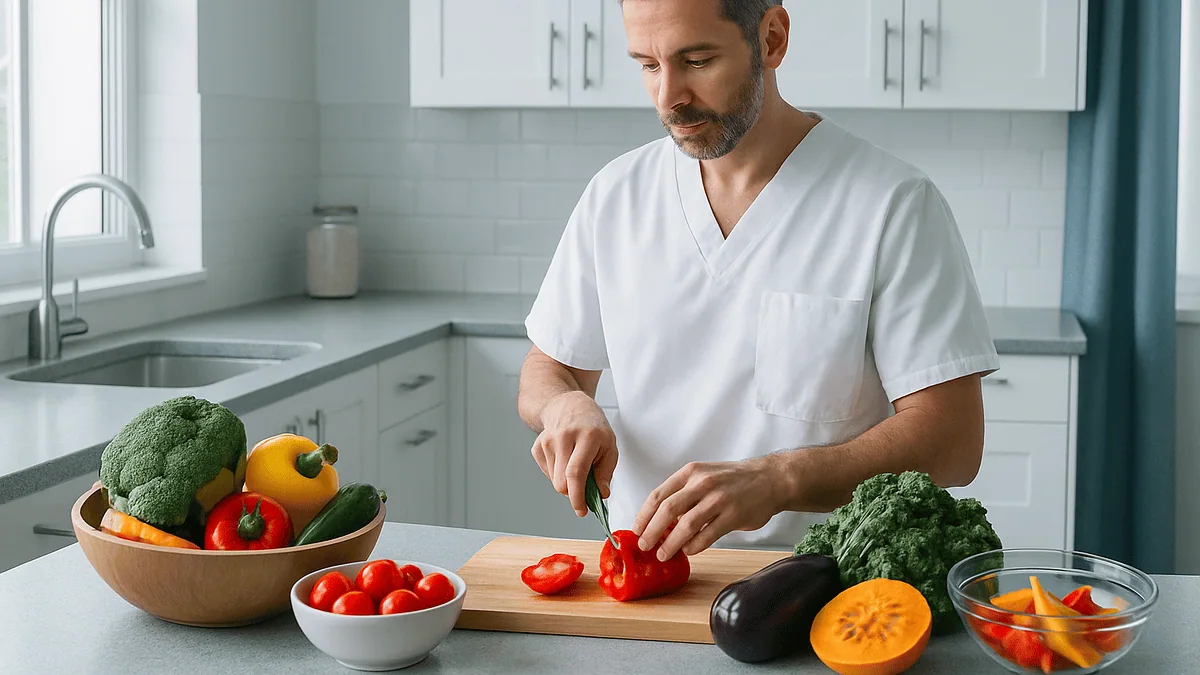
Cooking for others is different. The NHS food poisoning guidance advises staying away from work or school until you have had no vomiting or diarrhea for at least 48 hours, and the same logic applies to the family kitchen. Two full days without symptoms is the minimum before preparing food for anyone else, and during the illness itself the CDC is explicit: do not prepare food or drinks for other people while you are sick.
For people who cook professionally, the bar is often higher. Local and state health departments set return-to-work conditions for food handlers, and some require documented negative stool tests before a person with confirmed salmonella can return. If that is your situation, contact your employer and your local health department rather than guessing; the rules vary by jurisdiction and are not something a general article can settle.
Once you are back in the kitchen, the weeks-long shedding period argues for a few extra habits. Wash hands thoroughly before touching food and again after any bathroom visit. Avoid preparing food for infants, elderly relatives, or anyone with a weakened immune system during the first few weeks if someone else can reasonably do it. None of this is a life sentence; it is a short season of extra care that protects the people most vulnerable to the bacteria you are still clearing.
What people often get wrong about salmonella recovery
Illness invites folklore, and salmonella has collected plenty. Several of the most common beliefs work against recovery.
You can flush salmonella out. Search engines are full of this question, and the answer is that nothing you drink, fast from, or take as a cleanse evicts the bacteria faster than your immune system already does. Water, broth, and oral rehydration solutions replace what diarrhea removes; they do not rinse the gut. Purges and detox products add fluid loss to an illness whose main danger is fluid loss.
Stopping the diarrhea speeds recovery. Diarrhea is unpleasant, but it is also part of how the body expels the bacteria. Mayo Clinic cautions that anti-diarrheal medicines, which work by slowing bowel movement, may prolong the diarrhea in salmonella infection. Whether one is appropriate is a question for a clinician, not a decision to make from the pharmacy aisle.
Feeling better means you are no longer contagious. The CDC’s note about weeks of shedding after recovery disposes of this one. The risk falls; it does not vanish.
Antibiotics always help. For most healthy adults they are not recommended and may lengthen the carrier period, as discussed earlier.
It is only about chicken. Poultry is a major source, but the CDC lists eggs, beef, pork, unpasteurized milk, raw produce, sprouts, peanut butter, frozen entrees, pet food, and contact with reptiles and backyard birds among documented sources. Blaming the chicken and ignoring the cutting board misses the point.
You should starve the bug. There is no evidence that withholding food shortens the illness. Eating what you can tolerate helps the intestinal lining repair and keeps energy up.
Getting through the sick days: what actually helps at home
For the healthy adult with a straightforward infection, home care is the treatment, and its single most important job is keeping fluid and salt balance steady while the gut repairs itself.
Dehydration is the real hazard. Every watery stool carries water and electrolytes, the dissolved minerals such as sodium and potassium that nerves and muscles need. Replacing plain water alone can leave electrolytes short, which is why the CDC and Mayo Clinic both point to oral rehydration solutions, drinks formulated with a specific balance of sugar and salts that the intestine absorbs efficiently even when inflamed. Broth and diluted juice are reasonable supplements. Alcohol and drinks with large amounts of caffeine tend to worsen fluid loss.
The pattern of drinking matters as much as the volume. Small, frequent sips are held down more reliably than large glasses, particularly while nausea is present. A useful home gauge is urine: pale yellow and regular is reassuring; dark, scant, or absent for many hours is a warning.
Food can follow appetite. Bland, low-fat, easily digested choices such as rice, toast, bananas, crackers, and plain cooked potatoes are usually tolerated first. Fatty, spicy, or very sugary foods often provoke more cramping. Dairy can be a problem for a while, because the inflamed intestinal lining temporarily makes less lactase, the enzyme that digests milk sugar; that usually resolves as the lining heals.
Rest is not a platitude here. Fever and fluid loss are metabolically expensive, and people who try to push through a workday on day two commonly describe day three as worse. Fever-reducing medicines are commonly used for comfort; which one is suitable, and whether it interacts with anything else you take, is a question for a pharmacist or clinician.
Wash hands relentlessly, keep your own towel, and clean the bathroom daily. These protect everyone else in the house while you focus on getting through the week.
After the diarrhea stops: lingering effects some people notice
Most people finish a salmonella infection and never think about it again. A minority find that the week of illness has a tail, and knowing what those tails look like prevents both needless worry and needless delay.
The most common is a gut that stays unsettled. Mayo Clinic notes that it may take several months before bowel habits return fully to normal after the diarrhea itself has stopped. Loose stools some mornings, bloating after meals that never used to bother you, a new sensitivity to dairy or to large meals: these are typical of a lining that is still healing and a gut microbiome that was disrupted. Some people go on to receive a diagnosis of post-infectious irritable bowel syndrome, a functional bowel disorder that can follow gut infections; it is uncomfortable but not dangerous, and a clinician can help distinguish it from something that needs further testing.
Less common but well documented is reactive arthritis. Mayo Clinic describes it as joint pain that can develop after salmonella infection, sometimes accompanied by eye irritation and pain on urination, and notes that it can last for months or years in some people. It is an immune reaction rather than an ongoing infection; the bacteria are not living in the joints. New joint pain in the weeks after a bout of food poisoning is worth mentioning to a doctor precisely because the connection is easy to miss.
Fatigue that outlasts the fever by a week or two is ordinary. Fatigue that persists for months, or weight loss that continues after eating has normalized, is not, and should prompt a conversation with your clinician.
None of these outcomes is inevitable, and none should be assumed from an internet article. They are simply the possibilities worth knowing so that, if they appear, you recognize them as something to raise rather than something to endure in silence.
Salmonella in babies, older adults, and travelers
Three groups deserve their own paragraph because the general timeline fits them poorly.
Infants and young children. The CDC identifies children under five as having the highest rate of salmonella infection. A baby has little fluid reserve, so a day of diarrhea that would inconvenience an adult can dehydrate an infant. Signs parents are commonly advised to watch for include fewer wet diapers than usual, a dry mouth, crying without tears, unusual sleepiness or irritability, and a sunken soft spot on the head. Any fever in an infant under three months, and bloody diarrhea at any age, are reasons to seek care promptly rather than to wait out the standard four to seven days. Whether a child needs any medicine, and what kind, is entirely a decision for the pediatric team; this article deliberately offers no dosing information.
Older adults. People over sixty-five are more likely to become seriously ill, according to the CDC. Thirst perception weakens with age, many older adults take medicines that affect kidney function or fluid balance, and the bacteria are more likely to reach the bloodstream. Family members should treat confusion, dizziness on standing, or a fever that does not settle as reasons to call, not observations to note.
Travelers. Salmonella is a common cause of travelers’ diarrhea worldwide, and the WHO describes it as one of the major global causes of diarrheal disease. The recovery timeline abroad is the same as at home, but the logistics differ: rehydration solutions may be sold under unfamiliar names, and local water quality matters when mixing them. Travelers with high fever, bloody stools, or inability to keep fluids down should seek medical care where they are rather than trying to fly home first. Anyone who develops symptoms shortly after returning should tell their clinician where they have been, because that history shapes which tests are ordered.
Questions to ask your care team
Most salmonella infections never involve a doctor’s visit, but when one does, the appointment is short and the fog of illness makes it hard to think. A few prepared questions help you leave with what you need.
- Based on what you are seeing, do I need a stool test, and how will the result change what we do?
- Am I in a group where antibiotics are usually considered, and if so, what is the goal of treatment in my case?
- Is there any medicine I already take that could make dehydration more dangerous or that I should discuss pausing?
- What specific signs mean I should come back or go to an emergency department, rather than continue at home?
- How much and what kind of fluid should I aim for, and how will I know I am keeping up?
- When is it reasonable for me to return to work, and do my job or my household circumstances change that answer?
- Do I need any clearance or follow-up testing before handling food for others, given what I do for a living?
- If my bowels are still unsettled in a month, is that expected, or should I be seen again?
- Should the rest of my household take any particular precautions, especially around the baby or my elderly parent?
- Is there anything about this infection that public health should be notified of, and will you handle that?
Write the answers down or ask someone to come with you. The point is not to interrogate the clinician but to convert a frightening week into a plan with clear checkpoints. Every treatment decision, from testing to medicine to return-to-work timing, rests with the team that has examined you; these questions simply make sure you understand the reasoning behind it.
When to call your doctor
The great majority of salmonella infections resolve at home. The minority that do not tend to announce themselves with a recognizable set of warning signs, and the CDC’s guidance on when to seek care is specific enough to be useful.
Contact a clinician promptly, or seek emergency care if symptoms are severe, for any of the following:
- Diarrhea that lasts more than three days without improving
- Bloody stools, or stools that are black and tarry
- Fever higher than 102°F (38.9°C)
- Vomiting so frequent that you cannot keep liquids down
- Signs of dehydration: very little urine or none for many hours, a dry mouth and throat, dizziness when standing, or a racing heartbeat
- Severe abdominal pain that is constant rather than cramping, or a belly that is rigid or tender to touch
- Confusion, extreme drowsiness, or fainting
Lower the threshold for calling if the sick person is an infant, is over sixty-five, is pregnant, or has a weakened immune system from illness or medicines. For a baby under three months, any fever warrants a call. For an infant of any age, fewer wet diapers than usual, no tears when crying, or a sunken soft spot are reasons to seek care the same day.
Call as well if you improve and then relapse, if you develop new joint pain, eye redness, or pain on urination in the weeks after the infection, or if you work in food service, child care, or health care and need guidance about returning to work. A stool that stays loose for a month or more after the illness is worth a conversation too, even though it is usually benign.
None of the timelines in this article are a reason to delay. If something feels wrong, the four-to-seven-day average is irrelevant; the person in front of you, not the statistic, decides when it is time to call.
Frequently asked questions
How long does salmonella last in adults?
Most healthy adults are ill for four to seven days, according to the CDC, though Mayo Clinic notes diarrhea can continue for up to about ten days. Fever usually settles within the first few days, while loose stools and fatigue lag behind. Bowels may take longer to feel completely normal. These are typical ranges rather than guarantees, and people with weakened immune systems or other health conditions may have a longer or more complicated course.
How do you tell if you have salmonella poisoning?
You usually cannot tell from symptoms alone, because salmonella, norovirus, campylobacter, and other gut infections all produce cramps, fever, and diarrhea. Only a stool test confirms the diagnosis. Clinicians consider what you ate, when symptoms began, and how severe they are. Testing is more likely if diarrhea is bloody, fever is high, illness lasts more than a few days, or you belong to a higher-risk group such as infants, older adults, or people with compromised immunity.
How do you flush out salmonella?
You cannot flush it out; your immune system clears the infection over several days on its own. Drinking fluids and oral rehydration solutions replaces what diarrhea removes but does not rinse the bacteria away, and purges or detox products only worsen fluid loss. Anti-diarrheal medicines may prolong the illness, according to Mayo Clinic, so their use is a question for a clinician. Rest, hydration, and time are what genuinely help most healthy adults recover.
What do salmonella stools look like?
Salmonella diarrhea is typically watery and frequent during the acute phase, and it can sometimes contain blood. Stool appearance alone cannot distinguish salmonella from other infections, so it is not a way to diagnose yourself. What matters clinically is what to report: blood in the stool, black or tarry stools, or diarrhea lasting more than three days are among the CDC’s signs that warrant contacting a doctor rather than waiting at home.
How contagious is someone with salmonella?
Salmonella spreads through the fecal-oral route, meaning tiny amounts of stool reach another person’s mouth via hands, food, or surfaces. It is not airborne. People are most contagious while they have diarrhea, but the CDC notes that bacteria can be shed in stool for weeks after recovery. Thorough handwashing after using the toilet and before preparing food, along with staying out of the kitchen while symptomatic, greatly reduces the risk of passing it to others.
What is the typical salmonella recovery time before returning to work?
NHS guidance recommends staying away from work or school until you have had no diarrhea or vomiting for at least 48 hours. For most people that means roughly a week from the start of symptoms, given the CDC’s four-to-seven-day illness range. People who handle food professionally, work in child care, or work in health care may face stricter return conditions set by local health authorities, sometimes including negative stool tests, so check with your employer and health department.
When can I cook for my family again after salmonella?
Wait until at least 48 hours have passed with no diarrhea or vomiting, following NHS food poisoning guidance, and do not prepare food or drinks for others while you are sick, as the CDC advises. Because bacteria can be shed for weeks afterward, wash hands thoroughly before touching food and consider letting someone else cook for infants, elderly relatives, or immunocompromised household members during the first few weeks if that is practical.
Do antibiotics make salmonella go away faster?
Not for most healthy adults. The CDC and Mayo Clinic advise against antibiotics for uncomplicated salmonella infection because the body clears it on its own within days, and Mayo Clinic notes antibiotics may prolong the period you carry the bacteria. Antibiotics are reserved for severe illness, bloodstream infection, or higher-risk patients such as infants, older adults, and people with weakened immunity. Whether they are appropriate is a decision for the treating clinician.
Can salmonella cause problems after the diarrhea stops?
In some people, yes. Mayo Clinic notes that bowel habits may take several months to normalize, and a minority develop reactive arthritis, an immune reaction causing joint pain, sometimes with eye irritation and painful urination, that can last months or years. Temporary difficulty digesting dairy is also common while the gut lining heals. New joint pain, persistent fatigue, or ongoing weight loss in the weeks after infection should be mentioned to your doctor.
When should I see a doctor for salmonella?
The CDC advises contacting a doctor for diarrhea lasting more than three days without improvement, bloody stools, fever above 102°F, vomiting that prevents keeping liquids down, or signs of dehydration such as very little urine, dry mouth, or dizziness on standing. Seek care sooner for infants, adults over sixty-five, pregnant people, and anyone with a weakened immune system. Any fever in a baby under three months warrants a prompt call.
References
- CDC – About Salmonella Infection
- CDC – Salmonella Infection: Symptoms
- NHS – Food poisoning
- WHO – Salmonella (non-typhoidal) fact sheet
This article is for general information only and is not a substitute for professional medical advice. Please consult a qualified doctor about your individual situation.

More from the Blog

Dengue Recovery Timeline: The Fever Phase, the Critical Window and When Strength Returns
Dengue usually follows three phases. A fever of 2 to 7 days comes first, then a critical window of roughly 24 to 48 hours…

Antibiotic Side Effects: The Common, the Rare and How to Protect Your Gut
Antibiotics side effects are usually mild and digestive: loose stools, nausea, bloating or a yeast infection, affecting roughly one in five people. Rarer problems…

Sun Poisoning: When Sunburn Becomes a Medical Problem
Sun poisoning is an informal name for a severe sunburn, or occasionally a sun-triggered rash, that produces whole-body symptoms: widespread blistering, fever, chills, headache,…
When a Household Member Is Treated for Tuberculosis: Contact Screening and Everyday Precautions
Living with someone with tuberculosis usually means the local health department or care team will offer you a TB skin or blood test, often…
Malaria Treatment During Pregnancy: Why the Plan Differs and How Mother and Baby Are Monitored
Malaria treatment in pregnancy differs because the parasite can lodge in the placenta, the mother is more prone to severe illness and low blood…

Pneumonia and Tdap Boosters: The Adult Vaccines Most People Forget
Adults need a Tdap booster, or a Td booster, every 10 years, with Tdap given during each pregnancy, ideally between 27 and 36 weeks.…