

Hypoglycemia in Type 1 Diabetes: Recognizing a Low Early and When to Seek Urgent Help

Key Takeaways
- Hypoglycemia in type 1 diabetes is defined by the CDC and NIDDK as blood glucose below about 70 mg/dL (3.9 mmol/L), while severe hypoglycemia is defined by needing another person's help, whatever the reading.
- The adrenaline-driven early signs, shaking, sweating, racing heart and sudden hunger, arrive before the brain-related ones, which is the window in which a person can still treat the low themselves.
- Fast-acting carbohydrate means sugar without fat, protein or fiber, so glucose tablets, juice and regular soda work within minutes while chocolate and cookies do not.
- Guidance from NIDDK and the Mayo Clinic describes waiting about 15 minutes after glucagon for a response and calling emergency services if the person has not come round.
- Alcohol and exercise can both lower glucose for many hours afterward, which is why nighttime lows so often follow an active or social evening.
- The NHS advises not driving below 5 mmol/L and waiting 45 minutes after a low has been treated, because judgment recovers more slowly than the meter reading.
In type 1 diabetes, hypoglycemia means blood glucose below about 70 mg/dL (3.9 mmol/L). Early signs such as shakiness, sweating and sudden hunger are the moment to act with fast-acting carbohydrate. Seek urgent help by calling emergency services if the person is confused, having a seizure, unable to swallow safely, or unconscious, or if repeated treatment fails to raise glucose. Always report severe lows to the treating team.
The lecture hall is warm, the slides are dull, and somewhere around minute forty a sophomore notices her handwriting has gone wobbly. She blames the coffee. Then the sweat starts at the hairline, the sort that has nothing to do with temperature, and her stomach announces a hunger that was not there five minutes ago. She has lived with type 1 diabetes since she was nine. She knows exactly what this is. She also knows the hardest part is not recognizing it; it is stopping, in front of forty strangers, to deal with it.
That small hesitation sits at the center of every conversation about hypoglycemia in type 1 diabetes and when urgent help is needed. Most lows are caught early and handled quietly with a juice box and a pause. A few are not, and the difference usually comes down to how quickly someone acts, who is nearby, and whether anyone knows what to do if the person cannot help themselves.
This explainer walks through what a low actually is, what works fast and what only feels like it does, and the specific signs that turn a routine wobble into a reason to call for help.
What actually happens in the body during a low in type 1 diabetes?
Hypoglycemia is simply blood glucose that has fallen below the level the brain and body need to run normally; the National Institute of Diabetes and Digestive and Kidney Diseases (NIDDK) and the CDC both set that line at roughly 70 mg/dL, or 3.9 mmol/L. The brain cannot store glucose in any meaningful amount, so it depends on a steady delivery from the bloodstream, minute by minute. When supply dips, thinking is among the first things to suffer.
In a person without diabetes, falling glucose triggers an elegant correction. The pancreas stops releasing insulin, which lets stored sugar leave the liver. At the same time, glucagon, a hormone made in the pancreas that tells the liver to release glucose, rises sharply. Adrenaline follows. Within minutes, glucose drifts back up without the person ever noticing.
Type 1 diabetes breaks that loop in two places. Insulin is injected or pumped in from outside, so it cannot switch itself off once a meal turns out smaller than planned or a walk runs longer. The glucagon response also fades over the years, a change that NIDDK describes as common in long-standing type 1 diabetes. What remains is adrenaline, and adrenaline is a blunt instrument: it produces most of the classic warning sensations but does less to actually raise glucose.
That is why a low in type 1 diabetes rarely fixes itself. Insulin keeps pushing glucose into muscle and fat, the liver has lost one of its two main signals to release more, and the only thing standing between a mild wobble and a serious drop is the person, or someone nearby, putting carbohydrate into the system. Understanding this mechanism matters because it reframes the whole situation: a low is not a lapse of willpower or a sign the diabetes is poorly managed. It is a predictable consequence of replacing a hormone the body once released with exquisite precision.
What are the early warning signs of hypoglycemia, and why do they arrive in that order?
The first wave of a low is adrenaline talking. The Mayo Clinic groups these early sensations together: shakiness, sweating, a racing or pounding heartbeat, sudden hunger, pallor, anxiety or irritability, and a tingling around the lips or fingertips. They tend to appear together and quickly, which is useful, because they arrive while the person can still think clearly enough to act.

The second wave is the brain itself running short. Concentration slips, speech may slur, coordination goes, vision blurs, and the person may seem drunk, dazed or oddly stubborn. Headache and a heavy drowsiness are common. If glucose keeps falling, confusion deepens into unresponsiveness, and a seizure or loss of consciousness becomes possible. NHS guidance notes that these later signs mean the person may no longer be able to treat the low themselves.
The order matters for a practical reason. The adrenaline signs are an alarm; the brain signs are the damage the alarm was meant to prevent. People who act during the first wave almost always stay in charge of the situation. People who try to finish the email, the drive or the set first often find that the window closes faster than expected.
Two caveats shape how this plays out in real life. Lows at night can skip the obvious alarm entirely and show up as sweat-soaked sheets, vivid dreams or a headache at breakfast. And in people who have had many lows, the adrenaline response can weaken, a problem covered in its own section below. For everyone else, the lesson is the one that sophomore learned in the lecture hall: the body is rarely subtle about a falling glucose, and the sensible response is to trust it, check if a meter or sensor is handy, and treat without waiting for permission from the room.
What helps hypoglycemia immediately? The 15-15 rule, explained
What helps hypoglycemia immediately is glucose that the gut can absorb within minutes, and nothing else comes close. The CDC and NIDDK both describe the same simple sequence, often called the 15-15 rule: take a measured amount of fast-acting carbohydrate, roughly 15 grams for most adults, wait about 15 minutes, then recheck. If glucose is still below 70 mg/dL, repeat. Once it has recovered, eat a snack or meal containing slower carbohydrate and some protein if the next meal is more than an hour away, so the number does not sag again.
Why the wait? It takes time for sugar to move from the stomach into the small intestine, cross into the bloodstream and reach the brain. Fifteen minutes feels like an eternity when hands are shaking, and the temptation is to keep eating. That is how a low turns into a steep high an hour later, followed by a correction, followed by another low. The pause is the discipline that breaks the swing.
Fast-acting means pure or nearly pure sugar with little fat, protein or fiber to slow it down: glucose tablets or gel, regular (not diet) soda, fruit juice, hard candy, honey or a spoonful of sugar dissolved in water. Chocolate, cookies, milk and peanut butter crackers all contain sugar, but their fat and protein delay absorption, which is the opposite of what a falling glucose needs.
Children and smaller adults are usually given a smaller amount, and people using an insulin pump or a continuous glucose monitor (CGM, a sensor worn on the skin that reads glucose every few minutes) may have slightly different instructions from their care team. The right amount for a specific person is set by that team, not by a magazine, and the number of glucose tablets depends on how much glucose each tablet contains, which varies by product. Read your label, follow your plan, and when in doubt, treat first and tidy the details later.
Which foods raise blood sugar fastest during a low?
Not all carbohydrate behaves the same way when the clock is running, and the difference comes down to what travels alongside the sugar. Fat and protein slow stomach emptying; fiber slows absorption in the gut. During a low, every one of those is a brake. The table below sorts common options into what guidance from the CDC, NIDDK and Cleveland Clinic treats as fast, slower, and best saved for the follow-up snack.
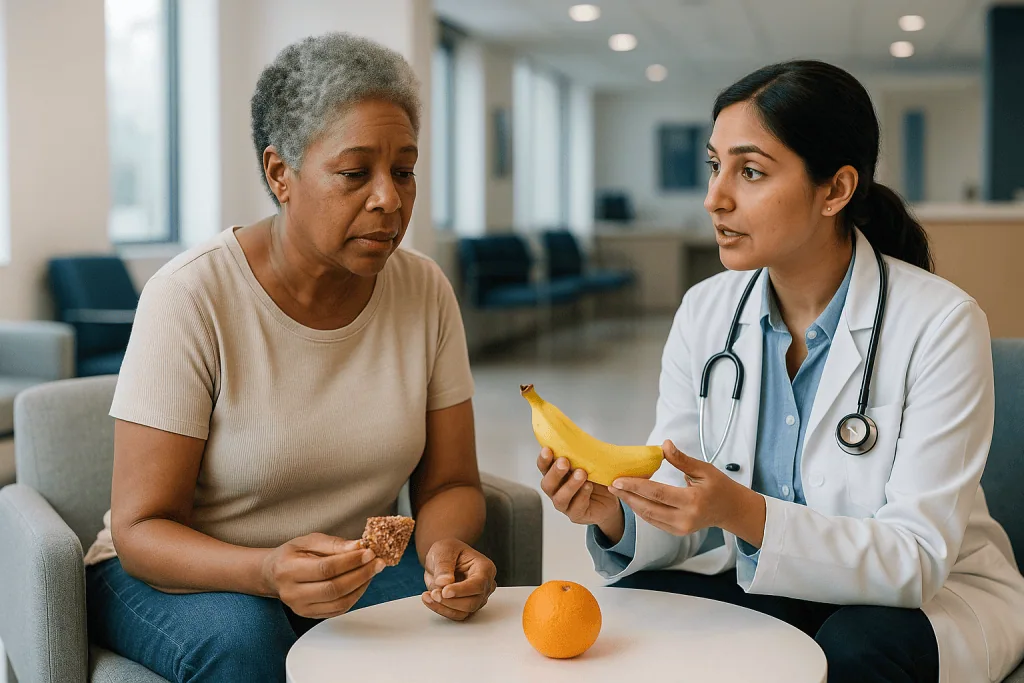
| Option | Speed | Why |
|---|---|---|
| Glucose tablets or gel | Fastest | Pure glucose, no digestion required, predictable amount per serving |
| Fruit juice, regular soda | Fast | Simple sugars in liquid form leave the stomach quickly |
| Hard candy, jelly beans, honey | Fast | Mostly sugar; chewing or dissolving takes a little longer |
| Milk | Slower | Lactose plus fat and protein delay absorption |
| Chocolate, cookies, ice cream | Slow | High fat content holds sugar in the stomach |
| Fruit, bread, crackers with cheese | Follow-up snack | Useful after recovery to hold glucose steady, too slow for the rescue itself |
| Diet soda, sugar-free candy | Does nothing | No glucose to absorb |
A few practical notes sharpen this list. Liquids tend to beat solids for someone whose mouth is dry or who feels nauseated. Glucose tablets are favored by many clinicians precisely because they are boring: nobody overeats them, and the amount is printed on the label. Juice boxes are easy to carry but easy to over-drink. Whatever a person chooses, the real test is whether it is actually with them at the moment they need it, in the bag, the car door, the bedside drawer and the gym locker.
One more point the table cannot show: speed also depends on the person. Someone with gastroparesis, a diabetes complication that slows stomach emptying, may find even liquids act sluggishly, and their care team may suggest a different plan. If treatment seems to take far longer than the 15 minutes guidance describes, that pattern is worth raising at the next appointment.
What is severe hypoglycemia, and when does it become an emergency?
Severity is defined by function, not just by the number on the meter. Clinical guidance summarized by the Cleveland Clinic and the CDC describes three levels: glucose below 70 mg/dL, glucose below 54 mg/dL (3.0 mmol/L), where brain symptoms become more likely, and severe hypoglycemia, which is any low where the person needs another person’s help to recover, regardless of the reading. A severe hypoglycemia emergency is therefore a situation, not a threshold.
The transition from a manageable low to an emergency usually shows itself in one of four ways. The person becomes too confused to understand what is happening or to follow a simple instruction. They cannot chew or swallow safely, which turns any attempt to feed them into a choking hazard. They have a seizure. Or they lose consciousness. Any one of these means oral treatment is no longer an option and glucose must come from outside: glucagon if someone trained is present, or intravenous glucose from emergency responders.
There is a fifth, quieter version worth naming. A conscious person who treats correctly two or three times and still cannot get above 70 mg/dL is also in trouble, because something is driving glucose down faster than the gut can replace it. Too much insulin on board, alcohol blocking the liver, or a long bout of exercise are common explanations. Mayo Clinic guidance treats failure to improve after repeated attempts as a reason to seek emergency care rather than keep trying alone.
Severe lows are not rare curiosities. They happen to careful, experienced people, often after an ordinary day with one unusual variable: a missed snack, a hot afternoon, a celebratory drink. What protects people is not perfection but preparation, which is why the next two sections deal with who to call and what glucagon actually does.
Hypoglycemia in type 1 diabetes: when to seek urgent help, and can urgent care treat a low?
The urgent help question has two honest answers depending on who is asking. If the person with diabetes is awake, able to swallow, and improving with carbohydrate, the right place is wherever they already are, followed by a call to their own care team if the low was unusual, repeated, or unexplained. If they are confused beyond simple instructions, seizing, unable to swallow, or unresponsive, the right call is emergency services, not a drive anywhere.
Can urgent care help with hypoglycemia? For a mild or moderate low in someone who is conscious, an urgent care clinic can check glucose, give oral or sometimes intravenous glucose, and observe for a short while. What most urgent care settings cannot reliably offer is the thing a severe low demands: immediate intravenous access in a person who is seizing or unconscious, airway protection, and prolonged monitoring if glucose keeps falling. Emergency medical services carry glucagon and intravenous dextrose and can treat in the living room, which is why the CDC and Mayo Clinic direct bystanders to call emergency services for an unconscious person rather than transport them.
Driving someone who is semi-conscious to any facility carries two risks: they may vomit or seize in the car, and the trip wastes the minutes in which glucose is still dropping. Calling first and treating while help is on the way is the sequence every major guideline describes.
Even after a successful glucagon rescue at home, the episode is not over. NIDDK advises that the person should eat once awake and able to swallow, because glucagon’s effect is temporary, and that the treating team should be told the same day. A severe low often signals that something in the insulin plan, the eating pattern or the activity level has shifted, and that is a decision for the prescribing clinician, not for the kitchen table. Hypoglycemia in type 1 diabetes and urgent help are linked by one principle: act where you are, call early, and never let a recovered person skip the follow-up.
How does glucagon work, and who is usually asked to keep it nearby?
Glucagon is the body’s own counter-signal to insulin: a hormone that instructs the liver to break down its stored glucose and release it into the blood. Given as a medicine, it does the same job from the outside. It is available as an injection and as a powder sprayed into the nose, and both forms are designed for a helper to use on a person who cannot safely take anything by mouth.
Three features explain why it is reserved for severe lows. First, it depends on the liver having glucose in storage; after heavy alcohol, prolonged fasting or a very long bout of exercise, those stores may be depleted and the response can be weaker. Second, it works on a timescale of minutes, not seconds. NIDDK and Mayo Clinic guidance describes waiting around 15 minutes for the person to respond and calling emergency services if they have not. Third, its effect is temporary, and nausea or vomiting afterward is common, which is why guidance recommends turning the person on their side after giving it and offering food once they are awake and swallowing normally.
Who is usually asked to keep it close? In practice, clinicians commonly discuss it with anyone using insulin who has had a severe low, who has reduced awareness of lows, who lives alone, or who is a child in school, since teachers and coaches may be the only adults present. The decision about whether a particular person should have it, and in which form, sits with the prescribing clinician, who will also check that at least one other person knows where it is stored and how to use it.
A kit nobody can find or operate is a kit that does not exist. Pharmacists and diabetes educators routinely walk partners, parents and roommates through the steps, and expiration dates deserve a place on the calendar alongside sensor changes and clinic visits.
Low blood sugar at night: why it happens and what to eat
Low blood sugar at night is the version of hypoglycemia people with type 1 diabetes tend to fear most, and for understandable reasons: the adrenaline alarm may not wake a deep sleeper, and nobody is watching the meter. NIDDK and the Mayo Clinic point to a familiar set of causes, among them an active afternoon or evening, alcohol with dinner, a smaller supper than the insulin anticipated, and the simple fact that overnight insulin keeps working while the body is not eating for eight hours.
Alcohol deserves particular attention. The liver prioritizes clearing alcohol over releasing stored glucose, so a few drinks can suppress the body’s backup supply for many hours, well into the night and sometimes into the next morning, a delayed effect the CDC specifically warns about. Exercise behaves similarly: muscles keep refilling their own glucose stores for hours after activity ends, and the CDC notes that lows can appear up to a day afterward.
Nighttime lows announce themselves indirectly. Damp sheets, nightmares, waking with a pounding heart, a morning headache, unusual tiredness, or a partner noticing restlessness or odd talking in sleep are all patterns worth logging. A CGM with alarms changes this picture considerably, which is one reason many clinicians raise the option with anyone who has had unexplained nighttime symptoms.
What to eat when sugar is low at night follows the same logic as daytime: fast-acting carbohydrate first, because speed matters more than nutrition at that moment, then a recheck after about 15 minutes. Once glucose has recovered, a small snack that pairs slower carbohydrate with protein, such as crackers with cheese or a glass of milk, is what guidance typically suggests to hold the level until breakfast. Keeping the fast option within arm’s reach of the bed, rather than in the kitchen, removes the stumble down a dark hallway on unsteady legs. If nighttime lows are happening more than occasionally, that is a pattern for the care team, who may adjust the overnight plan.
Hypoglycemia unawareness symptoms: when the body's alarm goes quiet
Hypoglycemia unawareness is the loss of the early adrenaline warning, so that glucose falls into the range where the brain is affected before the person feels anything at all. The first clue is often someone else’s: a colleague noticing vagueness, a partner noticing slurred words, a CGM alarm sounding when the person feels completely fine. By the time hypoglycemia unawareness symptoms show up, they are usually the second-wave signs, confusion or clumsiness, rather than the shakes and sweat that give everyone else a head start.
NIDDK explains the mechanism plainly: the more often glucose dips low, the less vigorously the body responds the next time. Each low raises the threshold at which adrenaline is released, so repeated lows gradually teach the system to stay silent. Long duration of type 1 diabetes, very tight glucose targets, and certain blood pressure medicines in the beta-blocker class, which blunt adrenaline’s effects, can all contribute. Sleep and alcohol mask the warning further.
The encouraging part, also from NIDDK, is that the alarm can often be partly restored. Strictly avoiding lows for several weeks tends to let the adrenaline response recover, which usually means the care team deliberately loosening glucose targets for a period. That trade feels uncomfortable to people who have worked hard for tight numbers, and it is worth saying clearly that it is a clinical strategy, not a failure.
Living safely with reduced awareness relies on substitutes for the missing alarm. More frequent fingerstick checks, a CGM with low and predicted-low alerts, always checking before driving, telling colleagues and friends what a low looks like from the outside, and making sure glucagon is accessible all take over the job the body used to do. People with unawareness are also among those for whom the question of when to seek urgent help is most pressing, because their lows tend to be discovered later and deeper. Anyone who suspects their warning signs have faded should raise it at their next appointment rather than adapt around it quietly.
Who is most at risk of lows, and who is usually asked to wait before driving or exercising?
Everyone who uses insulin can have a low, but risk is not spread evenly. Guidance from NIDDK and the Mayo Clinic highlights several groups: people with a history of severe lows or reduced awareness, young children whose eating and activity are unpredictable, adolescents navigating growth and independence, older adults, anyone with kidney disease (which slows insulin clearance), people who drink alcohol, and those going through a change in routine such as a new job, a new sport, illness, or travel across time zones. Skipped or delayed meals and increases in activity without a matching plan are the most common triggers in all of these groups.
Then there is the question of who is asked to wait. The clearest example is driving. The NHS advises checking glucose before getting behind the wheel, not driving if the reading is below 5 mmol/L (about 90 mg/dL), and waiting 45 minutes after treating a low and returning to a normal reading before setting off, because judgment and reaction time lag behind the meter. Rules for drivers with diabetes vary by country and license type, so the specifics belong in a conversation with the care team and local licensing authority, but the principle is universal: a recovered number is not the same as a recovered brain.
Exercise follows a similar logic. The CDC advises checking glucose before activity and treating a low before starting rather than hoping to power through, since muscles pull glucose from the blood faster once they are working. After a severe low, many clinicians suggest a day or two of gentler activity while the body restocks, though the exact advice depends on the person.
People who are unwell, vomiting or unable to keep food down are in a special category. They may be asked to check more often, follow their sick-day plan, and seek care early, because a stomach that will not accept carbohydrate removes the first line of defense. In each case the waiting is not a punishment; it is a margin of safety that the person, and everyone on the road or the field with them, benefits from.
What do the hours and days after a severe low usually look like?
A severe low does not end when the glucose returns to range. The first hours are often marked by a hangover-like fog, headache, nausea, aching muscles if there was a seizure, and a deep tiredness that can last into the next day. Mayo Clinic guidance notes that confusion can linger briefly even after glucose normalizes, so the person is usually asked not to drive, operate machinery or be alone for a while.
Appetite can be strange. Some people feel ravenous and overcorrect into a high; others feel too queasy to eat, especially after glucagon, which commonly causes nausea. The practical goal of the first few hours is steady intake of mixed carbohydrate and protein and more frequent checks than usual, because the factors that caused the low, such as insulin still on board or depleted liver stores after alcohol, may still be in play. Rebound highs are common and do not need aggressive correction; care teams generally prefer a gentle approach after a severe episode.
Same-day contact with the care team is the step people most often skip, usually out of embarrassment or relief. It matters because a severe low is information. The clinician will want to know the timing, what preceded it, what was eaten, any activity or alcohol, and whether a CGM recorded the shape of the drop. That conversation may lead to a review of the overnight plan, exercise adjustments, a discussion about glucagon, or a check of awareness. Those are decisions for the prescribing clinician.
Over the following days, many people notice heightened anxiety about lows, which can tip into running glucose deliberately high for safety. That reaction is understandable and worth naming to the team, since fear of hypoglycemia is a recognized barrier to good management and has its own strategies, from CGM alarms to structured education programs. Within a week or two, most people are back to their usual routine, carrying the episode as a lesson rather than a shadow. If fatigue, headaches or mood changes persist well beyond that, it is worth a separate conversation.
What people often get wrong about lows in type 1 diabetes
The first myth is that chocolate is a good rescue. It is a pleasant one, but the fat in chocolate slows how quickly its sugar reaches the blood, which is exactly the wrong property during a low. Save it for later; reach for glucose, juice or regular soda first.
The second is that a diet soda or sugar-free candy will do in a pinch. They contain no glucose and will do nothing, and the minutes spent discovering that are minutes glucose keeps falling.
Third, and dangerous: the belief that an unconscious or seizing person can be helped by putting juice, honey or candy in their mouth. They cannot swallow safely, and the result can be choking or sugar in the lungs. NHS and CDC guidance are explicit that an unconscious person needs glucagon from a trained helper or emergency services, never anything by mouth.
Fourth, that an insulin pump or CGM makes lows impossible. Both reduce risk and some systems automatically pause insulin as glucose falls, but a pump can still be programmed for a meal that never happens, sensors can lag behind rapid drops, and alarms can be slept through or silenced. Technology shrinks the problem; it does not retire it.
Fifth, that a low means the person has failed. Lows are an expected part of insulin therapy and happen to meticulous people. Shame makes people hide episodes from their care team, which is the one response that reliably makes the next low more likely.
Sixth, that feeling fine after treatment means driving is fine. The NHS asks drivers to wait 45 minutes after recovery because the brain recovers more slowly than the meter.
And last, that nighttime lows will always wake you up. Sleep dampens the adrenaline response, and many people sleep straight through readings that would have had them sweating and shaking at midday. The soaked pillow and the morning headache are the alarm, after the fact.
Questions to ask your care team about hypoglycemia in type 1 diabetes and urgent help
Appointments are short and lows are rarely the headline topic, so it helps to arrive with specific questions. These are the ones diabetes educators most often wish people would ask.
- What exact amount of fast-acting carbohydrate should I use for a low, and does it change with my weight, my pump settings, or exercise?
- Should I have glucagon, which form suits my situation, and can you show the person I live with how to use it?
- How many lows in a week, or how much time below range on my CGM, should prompt me to contact you before the next appointment?
- Do you think my warning signs have faded, and if so, what would a plan to restore awareness look like for me?
- What should I do differently on days with alcohol, long exercise, or illness, and do I have a written sick-day plan?
- Which readings, and which situations, mean I should call emergency services rather than treat at home?
- What are the driving rules that apply to me, and what should I document before I drive?
- If a severe low happens overnight, who should my partner or family call first, and what should they tell the responders?
Bring data if you have it. A CGM report showing the time and shape of lows, a photo of a food diary, or even a note on the phone recording what happened before each episode turns a vague conversation into a precise one. Clinicians can adjust overnight insulin, exercise plans or targets far more confidently when they can see the pattern.
Ask, too, who else should know. Schools, employers, coaches and travel companions all benefit from a short, plain description of what your low looks like from the outside and what to do about it. The question of hypoglycemia in type 1 diabetes and urgent help is, in the end, a team question, and the team extends well beyond the clinic. Every change to insulin, targets or rescue plans remains a decision for the treating clinician, but the questions that prompt those changes can only come from you.
When to call your doctor
Some situations do not wait for an appointment. Call emergency services immediately if a person with type 1 diabetes is unconscious, having a seizure, too confused to follow simple instructions, or unable to chew and swallow safely. Do not try to feed them. If glucagon is available and someone present knows how to use it, give it while help is on the way, turn the person on their side, and stay with them. Call emergency services as well if a conscious person has treated correctly two or three times and glucose remains below 70 mg/dL, because something is driving it down faster than carbohydrate can replace it.
Contact your care team the same day, even if the episode resolved, after any low that required another person’s help, after glucagon has been used, after a low with a seizure or loss of consciousness, or after any low that occurred without the usual warning signs. Call the same day, too, if you are vomiting and cannot keep carbohydrate down, if you have had a low after a possible insulin mistake, or if you are unwell and glucose is swinging unpredictably.
Arrange a prompt but non-emergency conversation if lows are happening more often than usual, if they cluster at a particular time of day or night, if you are waking with sweat-soaked sheets or morning headaches, if your CGM shows more time below range than before, or if you have begun running glucose deliberately high out of fear. Each of these is a pattern a clinician can act on.
Red flags in a child deserve a lower threshold. A child who is unusually drowsy, floppy, irritable in a way that does not match the moment, or who cannot be roused easily should be checked and, if low, treated and discussed with the team promptly. Children also warrant a call whenever a parent is unsure, and no clinician will fault that instinct.
None of this replaces the individual plan you already have. It frames the moments when that plan needs the people who wrote it.
Frequently asked questions
Can urgent care help with hypoglycemia?
An urgent care clinic can usually check glucose and treat a conscious person who is able to swallow and is not improving quickly on their own. It is not the right destination for someone who is unconscious, seizing or unable to swallow; those situations need emergency services, who carry glucagon and intravenous glucose and can treat on the spot. Driving a semi-conscious person anywhere wastes minutes and risks choking or a seizure in the car.
What helps hypoglycemia immediately?
Pure or nearly pure sugar that the gut absorbs within minutes: glucose tablets or gel, fruit juice, regular soda, hard candy or honey. The CDC and NIDDK describe a 15-15 pattern, a measured amount of fast carbohydrate followed by a 15-minute wait and a recheck. Foods with fat or protein, like chocolate or milk, work too slowly for the rescue itself but are useful afterward to hold glucose steady.
What should I eat when my sugar is low at night?
Treat it the same way as a daytime low: fast-acting carbohydrate kept within reach of the bed, a recheck after about 15 minutes, and a repeat if still below 70 mg/dL. Once glucose has recovered, guidance generally suggests a small snack pairing slower carbohydrate with protein, such as crackers with cheese, to carry you to breakfast. Repeated nighttime lows are worth reporting so the overnight plan can be reviewed.
How many glucose tablets should I take if my blood sugar is low?
The number depends on how much glucose each tablet contains, which varies between products, and on the carbohydrate amount your care team has set for you, which can differ for children, smaller adults and pump users. Read the label on your tablets, follow the written plan from your diabetes team, and recheck after about 15 minutes as the CDC describes. If you do not have a written plan, ask for one.
What are the first signs of a severe hypoglycemia emergency?
The shift to an emergency shows as confusion deep enough that the person cannot follow simple instructions, slurred speech or marked clumsiness, inability to chew or swallow safely, a seizure, or loss of consciousness. Any of these means oral treatment is no longer safe and glucagon or emergency services are needed. A conscious person who cannot get above 70 mg/dL after repeated correct treatment is also considered urgent.
What are the symptoms of hypoglycemia unawareness?
Hypoglycemia unawareness means the early adrenaline warnings, shaking, sweating and hunger, no longer appear, so the first signs are often confusion, odd behavior or a CGM alarm while the person feels fine. Others frequently notice before the person does. NIDDK notes that strictly avoiding lows for several weeks can help restore the warning response, which is a strategy planned with the care team rather than attempted alone.
How long does glucagon take to work?
Glucagon signals the liver to release stored glucose, and NIDDK and Mayo Clinic guidance describes waiting around 15 minutes for the person to respond. If they have not come round in that time, emergency services should be called if they have not been already. Once awake and able to swallow, the person should eat, because the effect is temporary and nausea or vomiting afterward is common.
Why do I have low blood sugar at night after drinking alcohol?
The liver gives priority to clearing alcohol over releasing stored glucose, so the body’s backup supply is suppressed for many hours after drinking, often into the night and sometimes the next morning. The CDC specifically warns about this delayed effect. Eating carbohydrate with alcohol, checking before bed and discussing a plan with your care team are the usual approaches; the specifics belong to your clinician.
Can I drive after treating a low?
Not straight away. The NHS advises checking glucose before any drive, not driving if the reading is below 5 mmol/L (about 90 mg/dL), and waiting 45 minutes after a low has been treated and glucose has returned to normal, because reaction time and judgment recover more slowly than the number. Driving rules differ by country and license type, so confirm the ones that apply to you.
Should I tell my doctor about every low?
Not every mild one, but every severe low, every low that needed another person’s help or glucagon, every low without warning signs, and any pattern of lows clustering at a particular time deserves same-day or prompt contact. A low is information about insulin, food and activity that your clinician can act on. Hiding episodes out of embarrassment is the one response that reliably makes the next one more likely.
References
- NIDDK: Low Blood Glucose (Hypoglycemia)
- CDC: Treatment of Low Blood Sugar (Hypoglycemia)
- NHS: Low blood sugar (hypoglycaemia)
- Cleveland Clinic: Hypoglycemia (Low Blood Sugar)
This article is for general information only and is not a substitute for professional medical advice. Please consult a qualified doctor about your individual situation.

More from the Blog
Antithyroid Medicine, Radioactive Iodine or Surgery for Graves Disease: How Is It Chosen?
Graves disease is usually treated in one of three ways: antithyroid medicine that slows hormone production, radioactive iodine that shrinks overactive thyroid tissue, or…

Early Warning Signs of Diabetic Ketoacidosis and When to Head to the Emergency Room
Go to the emergency room, or call emergency services, if you have diabetes and are vomiting, cannot keep fluids down, have a blood ketone…

Living With Diabetes Insipidus: Fluid Routines, Follow-Up Tests and Daily Life on Treatment
Living with diabetes insipidus usually means settling into a steady daily rhythm: drinking when genuinely thirsty, taking any prescribed vasopressin replacement exactly as directed,…

Long-Term Surveillance in Acromegaly: Hormone Tests, Imaging, Blood Pressure and Sleep Checks
Acromegaly long term follow up means lifelong, scheduled checks after treatment: an age-adjusted IGF-1 blood test and often growth hormone measurement at each endocrine…
Why Do Tingling and Cramps Happen After Parathyroidectomy, and When Is a Call Needed?
Tingling and cramps after parathyroidectomy usually come from a temporary drop in blood calcium. Removing an overactive gland leaves the remaining glands sluggish, and…

How Is Adrenal Insufficiency Confirmed? Cortisol, ACTH and Stimulation Testing Explained
Adrenal insufficiency is confirmed with blood tests rather than symptoms alone. Clinicians usually start with an early-morning cortisol level, add an ACTH measurement to…