

Life After SRP: Gentle Brushing, Interdental Cleaning and Keeping Gum Pockets Clean
Key Takeaways
- Healthy gum pockets measure 1 to 3 millimeters; readings of 4 millimeters or more with bleeding are what usually prompt scaling and root planing, according to Cleveland Clinic.
- Roughly 47 percent of US adults aged 30 and older have some form of periodontal disease, the CDC reports, so this is a common condition rather than a sign of neglect.
- Mayo Clinic notes that treatment stops further bone loss but does not regrow bone or gum already lost, which is why teeth can look longer once inflammation resolves.
- Cold sensitivity after SRP comes from newly exposed root dentin and typically fades over weeks; fluoride toothpaste helps remineralize those softer root surfaces.
- Mouth rinses penetrate a pocket only a millimeter or two, so daily interdental cleaning with floss or sized interdental brushes remains the essential step.
- People treated for periodontitis are commonly placed on maintenance visits every three to four months because pocket bacteria re-establish over roughly that interval.
After scaling and root planing, care centers on keeping the treated gum pockets free of plaque while the tissue settles. Guidance from the NHS and Mayo Clinic supports gentle twice-daily brushing with a soft brush and fluoride toothpaste, daily cleaning between teeth, and avoiding tobacco. Mild soreness and sensitivity commonly ease over days to a few weeks, and the dental team schedules a re-check to measure the pockets.
The numbing wears off somewhere between the parking lot and the kitchen, and that is usually when the questions start. Your gums feel bruised. Your teeth ache when you sip cold water. The hygienist handed you a soft toothbrush and said something about “keeping the pockets clean,” and now you are standing at the bathroom sink wondering whether brushing is going to help or hurt.
Scaling and root planing, the procedure most people call a deep cleaning, is not glamorous. It is a careful scraping of hardened plaque from below the gumline and a smoothing of the root surface so the gum can reattach. The work in the chair matters. What you do at home over the next weeks matters at least as much, because bacteria begin recolonizing a cleaned pocket within days.
This guide walks through after deep cleaning care the way a good hygienist would if she had an hour instead of five minutes: what is normal, what is not, how to brush without damaging healing tissue, how to clean between teeth when everything feels tender, and why the follow-up appointment is where the real result gets measured.
What actually happens during scaling and root planing
Gum disease begins with plaque, the soft film of bacteria that forms on teeth every day. When plaque sits undisturbed near the gumline, it hardens into calculus, commonly called tartar, which a toothbrush cannot remove. The gum responds with inflammation, and over time the shallow groove between tooth and gum deepens into a pocket. Bacteria settle in that pocket, out of reach of brush and floss, and the bone that anchors the tooth slowly erodes. According to the CDC, roughly 47 percent of US adults aged 30 and older show some form of periodontal disease, so this is a common story rather than a rare one.
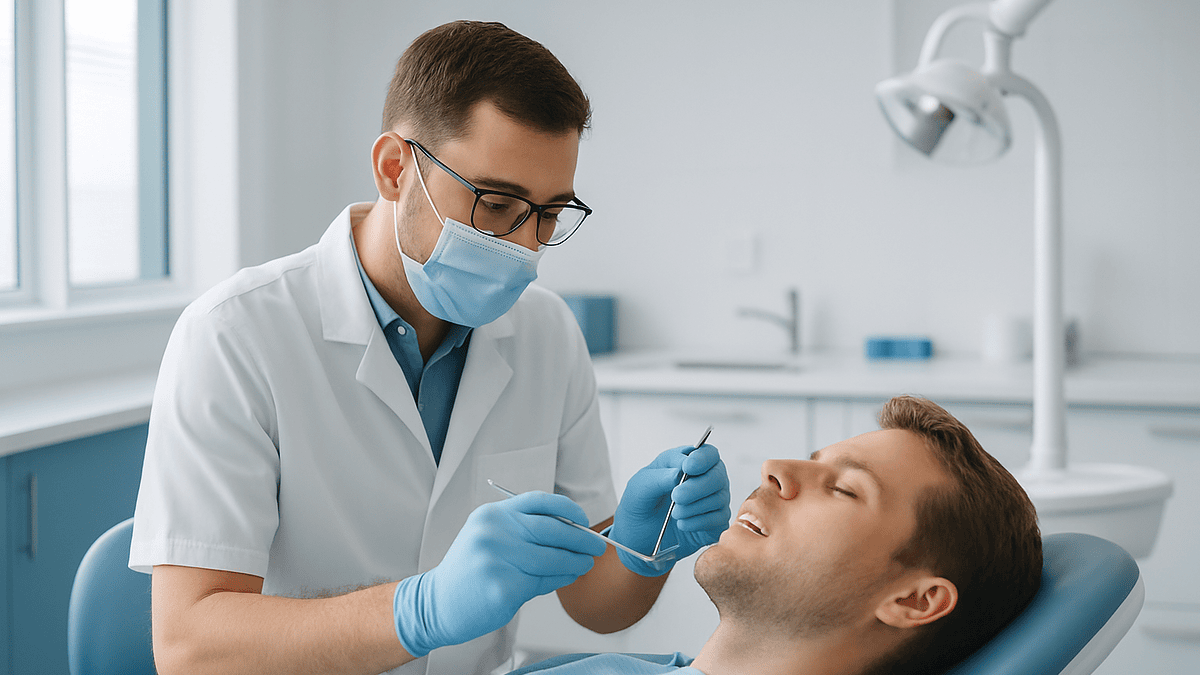
Scaling and root planing addresses the pocket directly. Scaling uses hand instruments or an ultrasonic tip that vibrates and sprays water to break calculus off the tooth above and below the gumline. Root planing follows: the clinician smooths the exposed root surface so that bacterial toxins embedded in the cementum are removed and the gum has a clean surface to heal against. Mayo Clinic describes both steps as routine components of nonsurgical periodontal treatment, usually performed under local anesthetic.
Most people are treated in sections. One or two quadrants of the mouth are cleaned at a visit, partly for comfort and partly because thorough work on a deep pocket takes time. Cleveland Clinic notes that the full course may need more than one appointment depending on how many teeth are involved and how deep the pockets run.
A useful way to picture the goal: the procedure does not fill in the pocket. It removes what was keeping the gum inflamed, so that the tissue can tighten back against the root and the pocket becomes shallower and easier for you to clean.
After deep cleaning care in the first 24 hours: what to avoid
The first day is about protecting numb, tender tissue. While the anesthetic is still working, it is easy to bite a cheek or scald your mouth without noticing, so waiting to eat until sensation returns is a small precaution with a real payoff. Once feeling comes back, soft foods that do not need much chewing tend to be more comfortable: yogurt, eggs, soups that are warm rather than hot, and cooked vegetables.
People often ask what not to do after deep cleaning. The list is short and practical:
- Skip very hot, spicy, acidic or crunchy foods for the first day or two, since they irritate exposed root surfaces and freshly instrumented gums.
- Avoid tobacco in any form. The NHS identifies smoking as a major factor in gum disease, and nicotine narrows blood vessels in the gum, which slows the healing you are trying to encourage.
- Do not skip brushing. Gentle cleaning is expected the same evening; a day without plaque removal gives bacteria a head start in the pocket.
- Hold off on vigorous rinsing or spitting on the first evening if there was bleeding, so that any small clots at the gumline are not dislodged.
- Leave whitening products aside for now. Exposed dentin near the gumline is sensitive, and bleaching agents can make it more so.
A little bleeding when you brush that first night is common. So is a dull ache once the numbness fades. If your clinician has suggested an over-the-counter pain reliever, follow their advice rather than guessing; if you take blood thinners or have other health conditions, that conversation should already have happened before the procedure.
By the second morning, most people are eating normally on the untreated side and cautiously on the treated side. The pattern from here is steady improvement.
How long does it take to heal after deep cleaning?
Healing after scaling and root planing happens in layers, and the layers move at different speeds. Understanding deep cleaning healing time makes the odd sensations of the first two weeks far less worrying.
Surface soreness is the fastest to resolve. The gum edge that was pushed aside and instrumented is typically tender for a few days, according to Cleveland Clinic’s patient guidance, and the gum may look redder or slightly swollen before it looks better. Sensitivity to cold, sweet or touch is the second layer. When calculus is removed from a root, the root is exposed to the mouth for the first time in months or years, and the tiny tubules in dentin transmit temperature straight to the nerve. Mayo Clinic lists this sensitivity as an expected effect that usually settles over a few weeks as the tooth lays down protective mineral and the gum tightens.
The third layer is the one that matters most and is invisible to you: reattachment. Connective tissue and a long junctional epithelium form against the cleaned root, which shrinks the pocket. This process is why your dental team schedules a re-evaluation several weeks after the last quadrant is completed rather than measuring on the day. Probing too soon would give a misleading number.
So the honest answer to “how long” has three parts. Days for soreness. A few weeks for sensitivity, longer in some people. Several weeks before the pockets can be fairly re-measured. None of these are promises; smokers, people with poorly controlled diabetes, and those with very deep pockets often move more slowly, which is exactly why the follow-up exists.
Who is usually offered SRP, and who is asked to wait
Scaling and root planing is the standard first-line treatment for periodontitis, the stage of gum disease in which pockets have deepened and some supporting bone has been lost. The dividing line is measured with a periodontal probe, a thin ruler-tipped instrument slipped between tooth and gum. Cleveland Clinic describes healthy pockets as 1 to 3 millimeters deep; readings of 4 millimeters or more, particularly with bleeding on probing, suggest the routine cleaning above the gumline is no longer enough. X-rays that show bone loss between teeth reinforce the decision.
Gingivitis, the earlier stage where gums are inflamed but bone is intact, generally does not need root planing. A standard cleaning plus improved home care is usually sufficient, and the NHS notes that gingivitis is reversible with good hygiene. Offering SRP to every patient with bleeding gums would be overtreatment, and a careful clinician distinguishes the two.
Some people are asked to wait or to prepare first. Anyone with an active mouth infection or an abscess may need that addressed separately. People with certain heart conditions or a history of joint replacement should tell the dental team, because MedlinePlus notes that some patients are advised to take an antibiotic before dental procedures that cause bleeding; that decision belongs to the prescribing clinician, not to the patient or the article. Those on anticoagulant medicines are not usually excluded, but the dental team needs to know so they can plan for bleeding. Pregnancy does not rule out treatment; in fact, hormonal changes can worsen gum inflammation, and the NHS encourages dental care during pregnancy.
Finally, if pockets are very deep or bone loss is severe, SRP may be a first step before referral to a periodontist, a dentist who specializes in gum treatment, to discuss surgical options. Your dentist should explain where you sit on that spectrum.
Gentle brushing after deep cleaning: technique beats force
The instinct after a deep cleaning is to either scrub hard to “keep it clean” or to avoid the sore area altogether. Both are mistakes, and both are understandable. The evidence-based middle path is gentle, thorough, twice-daily brushing that reaches the gumline without traumatizing it.
Start with the tool. A soft or extra-soft manual brush, or an electric brush with a soft head, is what most dental guidance recommends after gum treatment. Medium and hard bristles remove no more plaque and are associated with gum abrasion and recession over time. The NHS recommends brushing for about two minutes twice a day with fluoride toothpaste, and that advice does not change after SRP; only the pressure does.
Technique is where most people can improve. Angle the bristles roughly 45 degrees toward the gumline so the tips sit in the groove where tooth meets gum. Use small, short strokes or a gentle jiggle, moving two teeth at a time, rather than long sawing sweeps. Pressure should be just enough to feel the bristles flex slightly. A useful test: hold the brush between thumb and two fingers like a pencil rather than gripping it in a fist, which physically limits how hard you can press.
Expect a little bleeding for the first week or so. Bleeding from inflamed gums is a sign that plaque is being disturbed, and it decreases as inflammation resolves. What you should not see is bleeding that increases, or bleeding that continues weeks later, which is a signal to mention at follow-up.
Electric brushes with a pressure sensor can help people who tend to scrub, but the brush matters less than the habit. Two minutes, every gumline surface, twice a day, gently. That is the whole job.
What is the best toothpaste to use after a deep cleaning?
People search this question hoping for a brand. The evidence points somewhere more useful: to ingredients and to what problem you are trying to solve.
Fluoride is the non-negotiable. Root surfaces exposed by receding gums are softer than enamel and more prone to decay, and fluoride helps remineralize them. The NHS and MedlinePlus both recommend a fluoride toothpaste for adults as the foundation of daily care, and after SRP that recommendation carries more weight, not less.
Sensitivity is the second consideration. Toothpastes marketed for sensitive teeth generally work in one of two ways. Some contain potassium salts that calm the nerve response inside the tooth; others contain compounds such as stannous fluoride or arginine that physically block the dentin tubules carrying temperature signals. Both approaches have mainstream support, though they typically need consistent use over a couple of weeks before the effect is noticeable. If sensitivity is the main complaint after your deep cleaning, a fluoride toothpaste that also addresses sensitivity is a reasonable choice to discuss with your hygienist.
Whitening pastes are the ingredient category to set aside for now. Many rely on abrasives, and abrasion on exposed root surfaces increases both wear and sensitivity.
Tartar-control formulas, which use pyrophosphates to slow calculus formation above the gumline, are neither harmful nor essential. They do not reach into pockets, which is where your attention belongs.
A practical note on quantity: a pea-sized amount is enough for an adult. More paste produces more foam and no more cleaning, and heavy foam encourages people to finish early. Spit, do not rinse vigorously afterward, so the fluoride stays in contact with the teeth a little longer.
Interdental cleaning after SRP: floss, brushes and water flossers
A toothbrush cleans roughly three of the five surfaces of each tooth. The two surfaces facing neighboring teeth, and the gum tissue between them, depend entirely on interdental cleaning. After SRP this is not optional maintenance; it is where pockets most often remain and where disease most often returns.
Floss remains a good tool where teeth are tightly spaced and gums fill the space between them. Technique matters: wrap the floss into a C shape against one tooth, slide gently below the gumline until you feel light resistance, move up and down a few times, then repeat on the neighboring tooth. Snapping floss straight down onto the gum is the most common cause of the tenderness people blame on flossing.
Interdental brushes, the small bottle-brush style cleaners on a wire or plastic stem, come into their own after gum disease. As pockets shrink and inflammation resolves, gums often recede slightly, leaving small triangular gaps between teeth. Floss slides through those gaps without touching much; an interdental brush sized to fill the space cleans the walls of both teeth at once. The NHS names both floss and interdental brushes as acceptable ways to clean between teeth, and many hygienists size the brushes for each gap and note the sizes in your chart.
Water flossers direct a pulsed stream at the gumline and can flush loose debris from pockets. They are helpful for people with dexterity limits, braces or bridges, and they are gentler on sore tissue in the first weeks. They do not scrape plaque off a surface the way a bristle does, so most clinicians treat them as an addition rather than a replacement.
Whichever tool you choose, once a day, before brushing, is the routine that gum disease guidance consistently supports.
Keeping gum pockets clean between visits
A pocket is a pocket because it is deeper than your tools can reach. The purpose of home care after SRP is to keep the top of the pocket so clean that bacteria never build enough momentum to recolonize the bottom. Knowing your own numbers helps you focus effort where it counts.
Ask your hygienist to walk you through your periodontal chart. Each tooth has six probing sites, and the depths tell a story about where the disease is active. The table below summarizes how clinicians generally interpret those readings, drawing on descriptions from Cleveland Clinic and Mayo Clinic.
| Probing depth | What it usually means | What home care can realistically reach |
|---|---|---|
| 1–3 mm | Healthy or gingivitis if bleeding is present | Fully cleanable with brush and interdental tools |
| 4–5 mm | Early to moderate periodontitis | Top portion cleanable; base relies on professional care |
| 6 mm or more | Advanced periodontitis, often with notable bone loss | Largely beyond home tools; may prompt specialist referral |
The practical consequence: spend extra time on the sites that measured 4 millimeters or more. Angle the brush a little more deliberately into the gumline there. Choose a slightly larger interdental brush if the gap allows. If a water flosser is part of your routine, aim it along those sites.
Bleeding on probing at the follow-up is the marker clinicians watch most closely, because it indicates ongoing inflammation even when depth has not changed much. Your goal at home is not just clean-looking teeth but gums that do not bleed when the probe touches them.
Will my gums go back to normal after a deep cleaning?
This is the question underneath most of the others, and it deserves a direct answer: gums after deep cleaning usually become healthier, tighter and less prone to bleeding, but they do not always look exactly the way they did before disease began.
The reason lies in what inflammation does to tissue. Swollen, inflamed gums are puffy. As SRP removes the irritant and inflammation resolves, that swelling goes down, and the gum settles into a firmer, lower position. If bone was lost while the disease was active, the gum follows the bone. The result is what many people describe as “my teeth look longer” or “there are gaps between my teeth now.” Those gaps, sometimes called black triangles, are not caused by the cleaning. They were hidden by swelling and are now visible because the tissue is healthy.
Mayo Clinic notes that treatment aims to control infection and stop further bone loss; it does not regrow bone or gum that has already been lost. This is the single most important expectation to set. Reattachment shrinks pockets from the inside, but the outer contour of the gum reflects the underlying bone.
The good news is real, though. Pink, firm gums that do not bleed are the marker of health, and that is achievable for most people who maintain good home care and keep their follow-up schedule. Sensitivity from exposed roots typically fades over weeks. Bad breath tied to pocket bacteria often improves noticeably.
If the appearance of recession or gaps bothers you, that is a legitimate topic for your dentist. There are surgical and cosmetic options for some situations, and the treating team can explain whether any apply to you. What no one should do is stop cleaning the gaps in hope they will close; they will not, and neglected gaps become new pockets.
Mouth rinses and medicines: what they do, and what they cannot do
Rinses and medicines are the part of after deep cleaning care most surrounded by marketing. A grounded view helps.
Antiseptic mouthwashes reduce the bacterial load on surfaces they touch. The most studied class is chlorhexidine, an antimicrobial that binds to oral tissue and keeps working for hours. Dentists sometimes prescribe it for a short period after SRP to help control inflammation while sore gums are hard to brush. It has well-known drawbacks: brown staining of teeth and tongue, altered taste, and increased calculus formation with prolonged use. For those reasons it is typically used briefly, and only under the direction of the prescribing clinician, not chosen off a shelf as a long-term habit. Over-the-counter antiseptic rinses containing essential oils or cetylpyridinium chloride have gentler effects and fewer side effects but also less evidence in deep pockets.
A critical point about all rinses: liquid does not penetrate far into a pocket. A rinse cleans the visible mouth. It does not substitute for interdental cleaning.
Antibiotics enter the picture in specific circumstances. Mayo Clinic describes both topical antibiotics placed directly into pockets by the clinician and, less commonly, oral antibiotics for aggressive or persistent disease. Locally placed products release medicine slowly over days within the pocket. Oral antibiotics work systemically and carry the usual risks of resistance and side effects, which is why they are reserved for particular situations. Whether any of these is appropriate for you is a decision that rests entirely with your dental team, and no article can make it.
Warm salt-water rinses are the low-tech option that many hygienists suggest in the first days. Salt water does not kill bacteria in any meaningful way, but it soothes tissue and rinses away debris without stinging. Used gently, it is harmless.
Smoking, diabetes and the other things that slow gum healing
Two people can have identical pockets, identical cleanings and identical home care, and one heals faster. The difference usually sits in the body rather than the mouth.
Smoking is the largest modifiable factor. The CDC identifies tobacco use as one of the most significant risk factors for gum disease, and the NHS notes that smokers are more likely to develop it and respond less well to treatment. Nicotine constricts the small blood vessels in the gum, reducing the oxygen and immune cells that repair tissue. Smokers’ gums also bleed less, which masks inflammation and delays recognition of ongoing disease. Stopping, or even reducing, around the time of SRP gives the tissue a materially better chance, and it is one of the most useful conversations you can have with your dentist or primary care clinician.
Diabetes is the second. High blood glucose impairs the function of white blood cells and thickens blood vessel walls, and the relationship runs both ways: gum inflammation can make glucose harder to control. The NIH’s National Institute of Dental and Craniofacial Research describes diabetes as a well-established risk factor for periodontal disease. If you have diabetes, tell your dental team your recent control, and consider letting your diabetes team know you have had periodontal treatment.
Other factors deserve a mention. Medicines that cause dry mouth, including many antidepressants and antihistamines, remove saliva’s protective effect. Some drugs for blood pressure, seizures and organ transplant rejection can cause gum overgrowth. Stress, poor sleep and nutritional deficiency impair immune response generally. None of these are reasons to stop a prescribed medicine, and any concern should go to the prescribing clinician, but they are reasons to be more diligent with home care and more patient with healing.
Long-term after deep cleaning care: the maintenance visit
Deep cleaning is not a one-time fix. The bacteria that caused the disease live permanently in the mouth, and the pockets that remain after healing, even when shallower, will refill without regular professional attention. The follow-up structure is where results are actually kept.
The first appointment after SRP is the re-evaluation. Once tissue has had several weeks to reattach, the clinician re-probes every site and compares the readings with your original chart. Sites that improved to 3 millimeters or less with no bleeding are considered stable. Sites still at 5 millimeters or more, or still bleeding, may need repeat instrumentation, locally placed medicine, or discussion of surgical options with a periodontist. This visit is also where your home technique gets reviewed, and where a hygienist can show you the specific spots plaque is being missed.
After that, most people with a history of periodontitis move onto periodontal maintenance rather than routine six-month cleanings. Mayo Clinic notes that people treated for gum disease may need more frequent professional cleanings than those without it, and intervals of every three to four months are commonly used, because that is roughly how long it takes bacteria in a pocket to re-establish a disease-causing community. Your team sets your interval based on your probing depths, bleeding scores and risk factors; a smoker with residual 5 millimeter pockets is on a different schedule than a nonsmoker whose pockets resolved.
Maintenance visits are shorter than the original SRP but not simply a polish. The hygienist instruments below the gumline at any site with residual depth, re-measures, and updates the chart. Missing these appointments is the most common way people who did well initially slide back. Put the interval in your calendar the day you leave.
What people often get wrong about scaling and root planing aftercare
A few myths come up so often that they are worth naming plainly.
“Deep cleaning made my gums recede.” The cleaning revealed recession that inflammation was hiding. Swollen tissue shrinks as it heals; the underlying position was set by bone loss that happened while the disease was active. Mayo Clinic is explicit that treatment stops further loss rather than reversing what has occurred.
“If it bleeds, I should stop brushing that area.” The opposite is true. Bleeding gums are inflamed gums, and inflammation resolves with consistent gentle plaque removal. Avoiding a bleeding area lets plaque accumulate and keeps the cycle going. The exception is heavy or increasing bleeding, which needs a call, not a change in technique.
“Mouthwash reaches where floss can’t.” Rinses coat surfaces they touch and penetrate a pocket only a millimeter or two. They are an addition to mechanical cleaning, never a replacement.
“Once the pockets shrink, I’m done.” Periodontitis is a chronic, controllable condition. The bacteria remain, and without maintenance visits and daily interdental cleaning, pockets refill. The NIH describes gum disease as something that can be controlled with good care rather than eliminated.
“Sensitivity means the dentist damaged my teeth.” Removing calculus from a root exposes dentin that was covered for years. Sensitivity to cold in the weeks afterward is expected and usually fades as the tooth remineralizes and the gum tightens. Persistent, sharp pain on biting is different and should be checked.
“Hard brushing cleans better.” Plaque is soft and comes off with light pressure. Pressure beyond that wears the root and pushes the gum further down. Technique, coverage and time are what remove plaque; force only adds harm.
Questions to ask your care team before you leave the chair
The few minutes after your last quadrant is finished are your best chance to get personalized guidance. Most hygienists welcome questions, and the answers become your written plan. Consider asking:
- Which teeth had the deepest pockets, and what were the numbers? Knowing your worst sites tells you where to spend extra time at home.
- What size interdental brush fits each of my gaps? Ask them to write the sizes down; they vary across the mouth.
- How should I expect bleeding to change over the next two weeks, and at what point would you want me to call?
- Do you want me using any rinse, and for how long? If a prescription rinse is suggested, ask about staining and how to limit it.
- When is my re-evaluation, and what will you be measuring?
- What maintenance interval do you expect for me, and what would change it?
- Are there any sites where you think surgery or a specialist referral might be needed if the pockets do not respond?
- Is there anything about my medicines or health conditions that affects my healing or my care plan?
- If I smoke, what support is available to help me stop, and how much difference would it make to my gums?
- Can you show me, on my own teeth, the spots where I am missing plaque?
Write the answers on your phone before you leave. Aftercare instructions handed over while you are numb and slightly overwhelmed have a way of evaporating by dinnertime. A short recorded voice note, made in the parking lot, is another simple way to keep the specifics.
One more question worth asking, even if it feels awkward: what does success look like for me? Hearing your clinician describe realistic goals, whether that is no bleeding on probing or stability at a particular depth, gives you a target that is grounded in your own mouth rather than in a generic promise.
When to call your doctor or dentist after a deep cleaning
Most recovery from scaling and root planing is uneventful: a few sore days, a few sensitive weeks, and steady improvement. Some signs, though, fall outside that pattern and warrant a call to your dental office, or to a physician or urgent care if the practice is closed.
Contact your dental team promptly if you notice any of the following:
- Bleeding that is heavy, that does not slow with gentle pressure from a clean gauze pad, or that increases after the first day rather than decreasing.
- Swelling in the gum, jaw or face that grows over the following days rather than settling, particularly if the area feels hot or firm.
- Pain that worsens after the second or third day instead of easing, or throbbing pain that keeps you awake.
- A fever, chills, or a general feeling of being unwell after the procedure; these can signal infection and should not be waited out.
- A bad taste or pus coming from the gumline.
- A tooth that feels noticeably loose, or a bite that suddenly feels different.
- Sharp, lingering pain on biting a specific tooth, which can indicate a problem beyond normal root sensitivity.
- Numbness or tingling in the lip, tongue or chin that persists well beyond the expected wearing-off of local anesthetic.
Seek emergency care immediately if you have difficulty breathing or swallowing, rapidly spreading facial swelling, or swelling that closes the eye or extends under the jaw toward the neck. These are rare after periodontal treatment but are medical emergencies when they occur.
If you have diabetes, a heart valve condition, a weakened immune system or take anticoagulants, use a lower threshold for calling. Your dental and medical teams would rather hear from you about something minor than miss something that needed attention. Every decision about further treatment, medicines or referral rests with the clinicians who examined you.
Frequently asked questions
What should you not do after deep cleaning?
Avoid tobacco, very hot or spicy foods, hard or crunchy snacks, and whitening products for the first day or two, and do not eat until numbness has fully worn off. Do not stop brushing; gentle cleaning the same evening is expected. Skip vigorous rinsing on the first night if there was bleeding. Anything beyond these basics should follow the specific instructions your dental team gave you.
How long does it take to heal after deep cleaning?
Surface soreness usually eases within a few days, cold sensitivity commonly fades over a few weeks, and the gum needs several weeks to reattach before pockets can be fairly re-measured, according to Cleveland Clinic and Mayo Clinic patient guidance. Smokers, people with poorly controlled diabetes and those with very deep pockets often heal more slowly. Your re-evaluation appointment is where progress is actually assessed.
Will my gums go back to normal after a deep cleaning?
Gums usually become firmer, pinker and stop bleeding, but they may not look exactly as they did before disease. Swelling that was hiding recession goes down, so teeth can appear longer and small gaps may show between them. Mayo Clinic notes treatment controls infection and halts further bone loss rather than regrowing lost tissue. Cosmetic options exist for some situations; ask your dentist.
What is the best toothpaste to use after a deep cleaning?
A fluoride toothpaste is the foundation, because exposed root surfaces are more prone to decay and fluoride helps remineralize them. If sensitivity is the main issue, a fluoride paste formulated for sensitive teeth is reasonable to discuss with your hygienist; these usually need consistent use for a couple of weeks. Set whitening pastes aside for now, since their abrasives can worsen root sensitivity.
Is it normal for teeth to feel loose or sensitive after deep cleaning?
Mild cold sensitivity is normal and comes from root dentin that was covered by calculus for years. Slight looseness is sometimes noticed when thick calculus that was splinting teeth together is removed, and it often improves as gums tighten. Increasing looseness, a changed bite, or sharp pain on biting a specific tooth is not typical and should be reported to your dental team.
What do gums look like after deep cleaning, and when should bleeding stop?
Gums are commonly redder and slightly swollen for the first few days, then gradually turn firmer and paler pink. Light bleeding during brushing often continues for a week or so and should steadily decrease as inflammation resolves. Bleeding that increases after the first day, or that persists weeks later, suggests ongoing inflammation or missed plaque and should be discussed at your follow-up or sooner.
Can I use mouthwash as part of scaling and root planing aftercare?
You can, but a rinse supplements brushing and interdental cleaning rather than replacing them, because liquid penetrates a pocket only slightly. Some dentists prescribe a short course of an antiseptic rinse such as chlorhexidine after SRP; it can stain teeth and alter taste, so it is used briefly and only on clinician direction. Warm salt water is a gentle, low-risk option for soothing sore tissue.
How soon can I floss after a deep cleaning?
Most dental teams expect gentle interdental cleaning to resume within the first day or two, since keeping plaque off healing tissue is the point of the treatment. Use a soft C-shaped flossing motion or a correctly sized interdental brush, and expect a little bleeding at first. If your clinician gave you a different timeline based on your bleeding or specific sites, follow their instruction.
Does deep cleaning healing time change if I smoke or have diabetes?
Yes. The NHS and CDC identify smoking as a major risk factor that also reduces treatment response, because nicotine constricts gum blood vessels and masks inflammation. High blood glucose impairs immune function, and the NIH lists diabetes as an established risk factor for periodontal disease. Both slow reattachment and raise the chance of residual pockets, which is why your maintenance interval may be shorter.
How often do I need cleanings after scaling and root planing?
People with a history of periodontitis are usually moved from routine six-month cleanings to periodontal maintenance, commonly every three to four months, because pocket bacteria re-establish over roughly that time. Mayo Clinic notes that those treated for gum disease may need more frequent professional care. Your dental team sets your interval using probing depths, bleeding on probing and risk factors such as smoking.
References
- NHS: Gum disease
- MedlinePlus: Periodontitis
- NIH National Institute of Dental and Craniofacial Research: Gum (periodontal) disease
- CDC: About gum (periodontal) disease
This article is for general information only and is not a substitute for professional medical advice. Please consult a qualified doctor about your individual situation.

More from the Blog
When a Root Canal Fails: Retreatment, Apicoectomy and What Happens Next for the Tooth
A failed root canal is usually managed in one of three ways: nonsurgical retreatment, where a dentist or endodontist reopens the tooth, removes the…

How Long Until Gums Stop Bleeding After Treatment? What Usually Happens Week by Week
For gum inflammation without bone loss (gingivitis), bleeding typically eases within about one to two weeks of a professional cleaning combined with careful daily…

Preparing for Oral and Maxillofacial Surgery: Imaging, Blood Tests and Anesthesia Review
Oral surgery preparation usually involves three checks: imaging (a panoramic X-ray, sometimes a cone beam CT scan) to map teeth, nerves and bone; blood…

Can Laminate Veneers Chip? Hard Foods, Nail Biting and Night-Time Grinding to Avoid
Yes, laminate veneers can chip. They are thin shells of porcelain or composite bonded to the front of teeth, and the same things that…

When Does Gum Recession Need Treatment? Sensitivity, Root Exposure and Bone Support
Gum recession needs treatment when it is still progressing, when exposed root surfaces are sensitive or decaying, when the remaining gum is too thin…

Is the Space Maintainer Loose or Bent? What Parents Watch For and When to Book a Visit
A loose or bent space maintainer is seldom a true emergency, but it should not wait weeks. A loosened band traps food and irritates…