

Living With a Maxillofacial Prosthesis: Daily Cleaning, Adhesives, Skin Care and Safe Storage
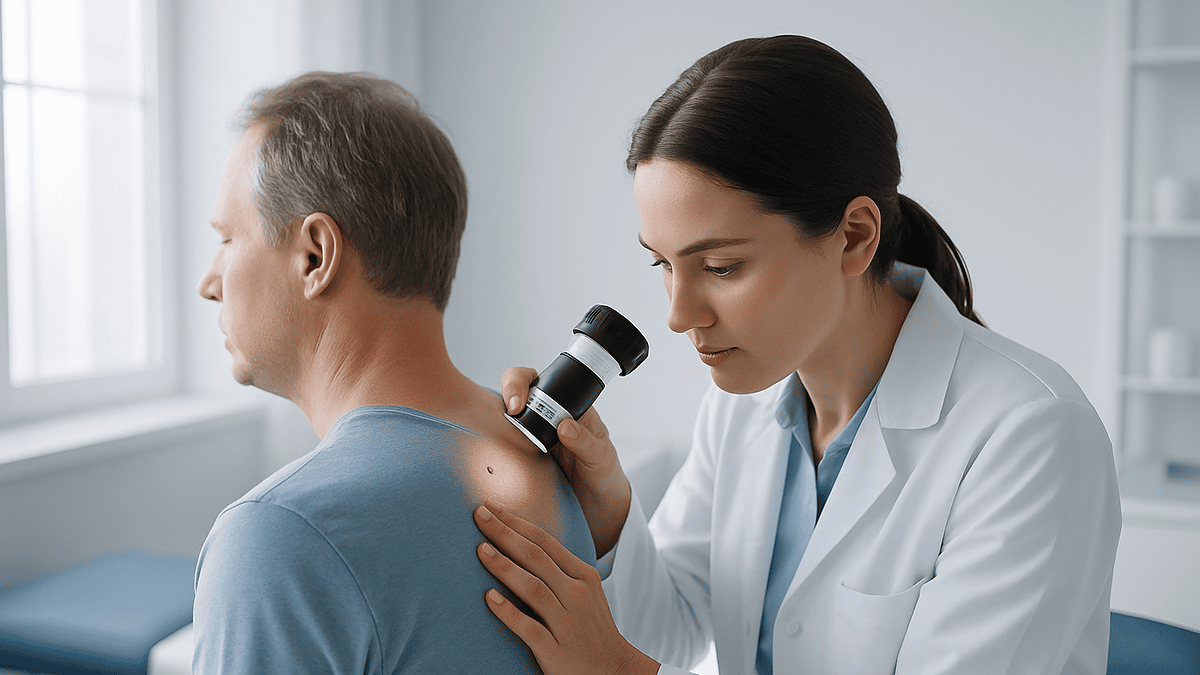
Key Takeaways
- The skin under a prosthesis and the prosthesis itself are two separate cleaning jobs done at the same time, and mixing them up is behind most adhesive and irritation problems.
- Adhesive bonds poorly to damp skin, so drying the site completely before applying a thin layer prevents the cycle of more glue, more remover and more irritation.
- Alcohol, nail polish remover and household cleaners dull silicone and strip its painted color layer; mild soap, lukewarm water and the clinic-supplied remover are the whole method.
- Contact dermatitis from adhesive typically appears within hours to days of exposure and can take weeks to settle once the trigger is removed, according to the Mayo Clinic.
- Ultraviolet light and heat are the two main causes of silicone fading and stiffening, so a closed case in a cool, dark place out of reach of pets extends the life of a prosthesis.
- No guideline sets a fixed replacement interval; color drift, curling margins and a surface that stays tacky when clean are the practical signs that a remake is due.
Caring for a facial prosthesis means gently washing the silicone with mild soap and lukewarm water, removing adhesive residue with the remover your clinic supplies, cleaning and drying the skin beneath it every day, taking it off at night unless your team advises otherwise, and storing it in a closed case away from heat, sunlight and pets. Redness that persists, pain, discharge or a loosening fit should be reviewed by your care team.
It is 6:40 in the morning and a retired schoolteacher is standing at his bathroom mirror with a silicone ear in one hand and a small tube of adhesive in the other. Two years ago a skin cancer took the ear itself. The prosthesis that replaced it is so close in color that his grandchildren have stopped noticing it. What nobody warned him about was the routine: the residue that gathers along the edge, the itch that comes on humid days, the panic the first time the color looked a shade too orange in the office light.
Caring for a facial prosthesis is where the craftsmanship of the clinic meets the ordinary discipline of a bathroom shelf. Nobody hands you a manual that fits your particular ear, eye or nose, because no two are alike. Yet the principles are shared, and most of them are simple.
This explainer walks through what actually keeps a prosthesis looking right and the skin under it healthy, what the evidence supports, and where the honest answer is that your own team knows your situation best.
What is a maxillofacial prosthesis, and are prosthetic faces really a thing?
A maxillofacial prosthesis is a custom-made artificial part that replaces a missing piece of the face or jaw region: an ear, a nose, an eye with its surrounding socket, a section of cheek, or the roof of the mouth. The word maxillofacial simply means the jaws and face. People often search whether prosthetic faces are a thing, and the answer is yes, though rarely a whole face. Far more commonly the prosthesis covers one defined area left behind by cancer surgery, an injury, a burn, or a condition present from birth such as microtia, where the outer ear does not fully form.
Head and neck cancers are a leading reason. The NHS notes that these cancers can affect the mouth, nose, sinuses and skin of the head, and that treatment often involves surgery that removes tissue. Some of that tissue can be rebuilt with the person’s own skin, bone and muscle. Some cannot, or the person is not well enough for long reconstructive operations. A prosthesis fills that gap without another major surgery.
Two kinds of specialist usually make and fit these devices. A maxillofacial prosthodontist is a dentist with extra training in prostheses for the face and mouth. An anaplastologist is a clinician-artist who sculpts and colors external prostheses. Both work from impressions or 3D scans of the face, sculpt a wax model, test the fit, then cast the final piece in medical-grade silicone, which is soft, skin-safe and holds pigment well.
Inside the mouth the most common device is an obturator, a plate that seals an opening in the palate so that speech and swallowing work properly. Care for an obturator overlaps with denture care and is touched on later, but the heart of this article is the external silicone prosthesis, because that is the one that lives on your skin all day.
How a silicone facial prosthesis actually stays on: adhesives, magnets and implants
Everything about daily care follows from how the prosthesis is held in place, so it is worth understanding the three common methods.
The first is medical adhesive. A thin layer of skin-safe glue is applied to the inner surface of the prosthesis, to the skin, or both, and the piece is pressed into position. Adhesives are inexpensive to make and need no surgery, but they must be applied fresh each day, they can lose grip in sweat or heat, and both the glue and the solvent used to remove it sit against the skin for hours.
The second is anatomical retention, where the shape of the defect itself grips the prosthesis. Some nasal and orbital pieces tuck into undercuts of the surgical site and stay put with little or no adhesive. This depends entirely on the individual anatomy and is decided by the surgeon and prosthetist together.
The third is implant retention. Small titanium posts, called osseointegrated implants, are placed in the bone of the skull around the defect. Osseointegration means the bone grows onto the metal surface and locks it in place, the same biology that anchors dental implants. Once healed, small connectors called abutments pass through the skin. The prosthesis then clips onto a bar or snaps onto magnets fixed to those abutments. Retention is more predictable and no glue touches the skin, but the skin around each abutment becomes a permanent opening that needs its own cleaning.
Which route a person is offered depends on bone quality, prior radiotherapy, general health, dexterity and preference. The trade-off is real: adhesive means more daily fuss and a higher chance of skin irritation; implants mean surgery and lifelong care of the skin penetration sites. Neither is universally better.
Who is usually offered a facial prosthesis, and who is asked to wait
A prosthesis is usually considered when part of the face cannot be rebuilt with living tissue, when a person prefers not to undergo further reconstructive surgery, or when the surgical site needs to remain visible so a team can watch for cancer recurrence. That last reason surprises people. A silicone nose can be lifted off at a clinic visit; a flap of transplanted skin cannot.
Children with microtia are often fitted with an ear prosthesis as one option alongside surgical reconstruction, and the choice is made with the family over time. Adults after cancer surgery are typically referred once the wound has healed and swelling has settled, because an impression taken of a swollen site produces a prosthesis that will not fit a few months later.
Some people are asked to wait. After radiotherapy, skin can stay fragile and prone to breakdown for a considerable period, and adhesives or implant surgery on irradiated tissue carry extra risk. Teams often delay definitive work until the skin has recovered and, for implants, until they have weighed the effect of radiation on bone healing. An open wound, active infection, or uncertain cancer margins are further reasons to pause. In those cases a temporary prosthesis may be made, sometimes without adhesive, simply to help someone feel able to leave the house.
People with limited hand function, poor eyesight or memory difficulties are not excluded, but the retention method is chosen with that in mind. Magnets are easier to align than adhesive for someone with tremor; a carer may need training. The honest framing is that suitability is a team judgment, revisited as health changes, rather than a one-time yes or no.
Caring for a facial prosthesis: the daily routine that protects silicone and skin
The single most useful habit is separating two jobs that people tend to blur: cleaning the prosthesis, and caring for the skin it covers. They happen at the same time of day but they are different tasks with different goals.
A typical evening looks like this. The prosthesis comes off, using remover if adhesive was used, and is set on a clean towel. The skin is washed with a mild, fragrance-free cleanser, patted dry, and checked in a mirror for redness, cracks or weeping. Only then does attention turn to the prosthesis: residue is lifted from the inner surface, the piece is washed, rinsed, dried and stored. In the morning the order reverses. Skin is checked again and must be completely dry before any adhesive is applied.
Why the fuss about drying? Adhesive bonds poorly to damp skin, so people compensate with more glue, which then takes more solvent to remove, which dries and irritates the skin further. Breaking that cycle at the drying step is the cheapest fix there is.
Frequency matters more than intensity. A gentle wash once daily protects the silicone edge far better than a scrub twice a week. The thin margins of a facial prosthesis, sometimes feathered to a fraction of a millimeter so they disappear against the skin, are the first thing to tear, and they tear when tugged, scrubbed or picked at.
People who do best tend to keep a small kit in one place: mild soap, a soft brush kept only for this purpose, the clinic-supplied remover, lint-free wipes, a hand mirror and the storage case. Everything else in this article is a refinement of that ten-minute routine.
How to clean a silicone prosthesis without dulling the color
Medical-grade silicone tolerates water well but it is not indestructible, and its colors are the most fragile part. Pigments sit within the silicone and in a thin painted layer on the surface. Anything that abrades that surface, or any solvent stronger than the one your clinic gave you, will fade or blotch the match over time.
Hand-wash the prosthesis in lukewarm water with a small amount of mild, unscented soap. Hot water can soften and distort the fine edges. Use fingertips or a very soft brush, working from the center outward so the margins are never pulled against their grain. Rinse thoroughly, because soap film attracts dust and makes adhesive grip unevenly. Pat dry with a lint-free cloth or leave to air dry on a clean surface; rubbing with a towel leaves fibers embedded in any tacky spots.
Adhesive residue on the inside surface is where most people go wrong. The temptation is to pick or peel it off, which stretches the silicone. The clinic-supplied remover is designed to dissolve it. Apply a little, wait as instructed, then roll the softened residue away with a fingertip or a cotton swab.
Things to keep away from the prosthesis: alcohol wipes, nail polish remover, household cleaners, bleach, toothpaste, dishwasher heat, ultrasonic denture baths unless your prosthetist has approved them, and any product marketed as a silicone restorer without checking first. Cosmetics used to blend the margin should be the ones your prosthetist recommended, since oil-based products can migrate into the silicone and change its tone.
If a stain will not shift, stop rather than escalate. A prosthetist can often clean, re-tint or re-seal a piece in the clinic, which is far less costly in wear than an aggressive home attempt.
Facial prosthesis adhesive: applying it, removing it and what remover does to skin
Adhesive is a compromise between grip and gentleness, and there is no product that maximizes both. Your clinic will have chosen one based on your skin, the site, your climate and how the prosthesis was designed. Changing brands or mixing products without asking is one of the more common causes of both loosening and skin trouble.
Application is a thin, even layer, not a thick one. Too much adhesive squeezes out at the margin, collects dust, dulls the edge and forms a rim that draws attention. Most teams teach applying to the prosthesis rather than the face, letting it become tacky for the time they specify, then seating the piece from one anchor point and pressing outward. Rushing this step is why pieces migrate by mid-afternoon.
Removal is where skin is most at risk. Peeling a well-stuck prosthesis off dry skin can lift the outer skin layer with it, especially skin that has been irradiated or is thin with age. Remover dissolves the bond so the prosthesis lifts away with minimal pull. Afterward, any remover left on the skin needs washing off, because solvents strip natural oils and dry the surface.
Skin reactions to adhesives fall into two types. Irritant contact dermatitis is the more common and comes from the physical and chemical stress of glue, solvent and occlusion. Allergic contact dermatitis is an immune response to a specific ingredient. The Mayo Clinic describes contact dermatitis as an itchy rash that usually develops within hours to days of exposure and can take weeks to settle once the trigger is removed. Distinguishing the two matters because an allergy means a permanent switch of product, while irritation often responds to technique changes alone. Persistent rash should be shown to your team rather than treated with over-the-counter creams under the prosthesis, which can themselves affect adhesion.
Caring for the skin under a facial prosthesis
The skin beneath a prosthesis spends the day covered, warm and slightly damp. That environment is the reason skin care is not an optional extra but the part of the routine most likely to determine whether you can keep wearing the device comfortably.
Wash the area daily with a fragrance-free cleanser, using fingertips rather than a washcloth, which can catch on scar tissue. Pat dry. If your team has approved a moisturizer, apply it at night only, so the skin is bare and dry by morning; moisturizer left on in the morning defeats adhesive and traps sweat. Fragrance and preservatives are frequent irritants, so plain is better.
Look, every day, in good light. You are checking for redness that does not fade within about half an hour of removal, cracking, weeping, small blisters, or a line of soreness where the margin sits. Early irritation almost always responds to a night or two without the prosthesis and a gentler routine; skin that is already broken does not.
Scarred and irradiated skin deserves extra caution. It has fewer oil glands, less feeling and a poorer blood supply, so it damages more easily and heals more slowly. Sun protection matters here too. The CDC recommends broad-spectrum sunscreen of SPF 15 or higher on exposed skin and reapplying it at least every two hours outdoors. Many prostheses cover part of a site while leaving scarred skin exposed at the border, and a prosthetist may advise which sunscreens are compatible with your adhesive.
For people with implant-retained pieces, the skin around each abutment is cleaned separately with a soft brush or the swabs your team supplies. Crusting around an abutment is normal in small amounts; increasing redness, swelling or discharge around it is not, and should be reviewed.
Prosthetic ear care, eye prostheses and nasal pieces: what changes by site
The principles are shared, but each site has its own weak point. The table below summarizes what tends to matter most.
| Prosthesis | Common retention | Main care challenge | Site-specific tip |
|---|---|---|---|
| Ear (auricular) | Implant bar or magnets, sometimes adhesive | Thin edges tear; glasses rub the top margin | Seat the ear before glasses; check the skin under the frame arm each night |
| Orbital (eye and socket) | Adhesive, magnets, or glasses-mounted | Eyelashes and eyelid detail are delicate; tears and moisture at the inner corner | Never brush the lashes; dab moisture at the medial margin rather than wiping |
| Nasal | Anatomical undercuts, adhesive or implants | Breath moisture inside; mucus at the margin; midline position is easy to misalign | Dry the inner surface fully; use a mirror at eye level when seating |
| Midfacial or combined | Usually implants | Large surface area traps sweat; heavier piece stresses abutments | Extra attention to abutment skin; report any wobble in the bar |
| Obturator (palate) | Clasps on teeth or implants | Food debris and plaque; oral tissue soreness | Clean after meals like a denture; remove at night as instructed |
Prosthetic ear care has a particular wrinkle: the ear carries glasses and hearing aids. Frame arms press on the same margin all day and can leave a groove or a sore spot behind the prosthesis. Some people alternate between a bone-conduction hearing device and the prosthesis on a schedule agreed with their audiologist and prosthetist.
Orbital pieces sit near a tear film and often near a healed socket that still produces some moisture. That moisture undermines adhesive at the inner corner, which is why orbital prostheses are more often mounted to glasses or magnets. Nasal pieces face the humidity of every breath, and the inside must be fully dry each morning or the adhesive fails from within. None of this is complicated once known, but nobody guesses it in advance.
Should you sleep with a facial prosthesis on?
For most people, no. Sleeping with a facial prosthesis on keeps skin occluded for the full twenty-four hours, and the skin needs the overnight break to dry, breathe and recover from adhesive and pressure. Nighttime is also when a pillow presses the piece against the face, distorting fine margins and wearing the paint on the outer surface faster than daytime wear does.
There are exceptions, and they are for your team to set rather than the internet. Some people with implant-retained pieces and no adhesive choose to wear them at night for psychological comfort, especially early on or when sharing a room. Some obturators are kept in overnight during an initial healing phase to hold tissue in shape, then removed nightly once the surgeon is satisfied. A child may sleep in a prosthesis during a hospital stay for reasons that have nothing to do with the device itself. If you have been told to keep yours in, follow that guidance and ask when it will change.
What if you fall asleep with it on? Nothing dramatic follows from one night. Remove it in the morning as usual, check the skin a little more carefully, and consider a lighter adhesive layer that day. Repeated nights in the prosthesis, though, is where irritation and margin damage accumulate.
Where the prosthesis spends the night matters almost as much as whether you wear it. On a bedside table it collects dust, gets knocked to the floor and, in a household with a dog or a toddler, disappears. A closed case in a cool spot solves all three. The next section covers storage in more detail, because it is the part of care that people underestimate until something is chewed.
Safe storage: heat, sunlight, pets and travel
Silicone ages by two main routes: ultraviolet light, which fades pigments and stiffens the material, and heat, which accelerates both. The best storage spot is therefore cool, dark, dry and closed. A bathroom cabinet works if the room does not steam up constantly; a windowsill or a car glove box does not.
Use the rigid case your clinic provided, or a hard-sided container lined with a clean, lint-free cloth. Place the prosthesis on its outer surface, never resting on a thin margin, and make sure the inside is dry so residual moisture does not sit against the silicone overnight. Keep magnets, if your piece has them, away from cards, phones and other magnets. Store adhesive and remover with their lids tight and away from heat, since both change consistency when warm.
Pets are the storage hazard nobody expects. Dogs in particular are drawn to the scent of skin and adhesive, and a silicone ear looks exactly like a chew toy. The case goes in a drawer or on a high shelf, not on the nightstand.
Travel needs a little planning. Carry the prosthesis, adhesive, remover and a spare if you have one in hand luggage, in the case, rather than checked bags where heat and rough handling are common. Adhesives and removers are liquids for security purposes, so check quantity rules for your route. Hot climates shorten adhesive life through the day, so pack more than you use at home. Humid climates mean more careful drying. Sunscreen on exposed skin near the margin is routine, and a hat does more for a prosthesis than any restorer product, because it keeps ultraviolet light off the silicone in the first place.
What are the common side effects of wearing a prosthesis?
People searching for side effects of wearing a prosthesis usually mean one of four things, and honesty about each helps set expectations.
Skin irritation is the most frequent. It ranges from mild redness after removal, which is expected and fades, to itchy, flaking dermatitis from adhesive or remover, to broken skin from peeling or friction. Most is preventable with technique; some people do turn out to react to a specific adhesive and need a change.
Loosening and movement come next. A prosthesis that lifts at the edge or shifts by afternoon is not a personal failing. Sweat, oil, humidity, a change in weight, or simple aging of the silicone all reduce grip. Repeated loosening is a signal to see the prosthetist, not to add glue.
Around implants, the skin at the abutments can become inflamed. Mild crusting is common; tenderness, thickened or overgrown skin, or discharge suggests the tissue is reacting and needs assessment. Very occasionally an implant loses its bond with bone and becomes mobile, which is a matter for the surgical team.
The fourth is emotional, and it belongs in a list of side effects because it is real. Many people describe a period of adjustment: relief at looking in the mirror, mixed with grief for the original, and self-consciousness about being seen without the prosthesis. Head and neck cancer support services, which MedlinePlus and the NHS both describe as part of standard follow-up, routinely include psychological support, and asking for it is ordinary rather than exceptional.
What a prosthesis does not do is cause cancer, damage healthy tissue by its presence, or interfere with scans and follow-up when the team knows it is there. Those fears come up often and are not supported by the evidence.
How often should a facial prosthesis be replaced?
There is no guideline that fixes a replacement interval, and anyone quoting a precise lifespan is describing an average that may not apply to you. What is well established is why a prosthesis wears out, and that gives you the signs to watch for.
Color drift is usually first. Silicone pigments fade with ultraviolet exposure and sometimes shift toward yellow or orange with contact with skin oils, adhesive and cosmetics. Because the surrounding face also changes color across seasons, a piece that matched in winter can look pale against a summer tan. Some clinics tint a piece for each season or adjust at review visits.
Edge deterioration follows. Feathered margins stiffen, curl and eventually tear, and once a margin is torn the line where prosthesis meets skin becomes visible. Adhesive also bonds poorly to a stiffened inner surface. Tackiness that will not wash away, or a surface that feels sticky even when clean, indicates the silicone itself is breaking down.
Fit changes independently of wear. Weight gain or loss, further surgery, scar maturation and the ordinary softening of facial tissue with age all alter the site. Children outgrow prostheses as their faces grow, which is why pediatric pieces are remade more often than adult ones.
Practically, most services see people for review at intervals set by the team and remake the prosthesis when color, margin or fit crosses a threshold the person notices. Some people find their piece lasts a long time in a temperate climate with careful storage; others in hot, sunny regions with adhesive retention need a remake sooner. Keeping the previous prosthesis as a spare, if the team agrees it is still safe, is common sense for the day the current one is lost or damaged.
What the first weeks with a new prosthesis usually look like
The fitting appointment is rarely the end of the process. In the first days, most people are learning three skills at once: applying and removing the piece, judging how much adhesive is enough, and reading their own skin. Expect the routine to take longer than it eventually will, and expect small mistakes such as seating the piece a few millimeters off. These are corrected by practice and by the mirror, not by force.
Skin often reacts mildly in the first week or two simply because it has not been covered and unglued before. Slight redness that fades after removal is expected. Redness that persists into the next morning, itching that worsens, or any break in the skin is a reason to go without the prosthesis for a night and call the clinic, since early technique adjustments prevent a small problem from becoming a cycle.
Many teams schedule an early review a short time after delivery, then further visits as the person settles. Those visits are for adjustments to margins, retention and color that can only be judged once the prosthesis has lived in real light and real weather. They are also where adhesive choice is confirmed or changed.
For implant-retained prostheses the timeline is longer at the front end, because the implants must integrate with bone before anything is attached to them. The surgical team decides when that has happened and only then is the prosthesis made. Skin around the abutments is tender at first and cleaning it feels awkward; that awkwardness passes.
Emotionally, the first weeks can be a mix of relief and heightened self-awareness. People report scanning others’ faces for reactions and slowly stopping when none come. Support from others who wear a prosthesis, where a service can arrange it, tends to shorten that stretch.
What people often get wrong about caring for a facial prosthesis
The myths here are stubborn because they sound sensible.
More adhesive means better hold. It does not. Excess glue oozes at the margin, collects dirt and makes removal harder, which leads to more remover and more skin damage. A thin, even layer on properly dried skin outperforms a thick one almost every time.
Alcohol wipes are a good quick clean. Alcohol dries silicone, dulls its surface and can strip the painted layer. It is also harsh on the skin under the prosthesis. Mild soap and water, then the clinic’s remover for residue, is the whole method.
A prosthesis that looks fine does not need review visits. Color fade and edge stiffening are gradual, and the person wearing the piece is the last to notice because they see it daily. Review visits catch drift before others do and catch skin changes at the site, which for people with a cancer history is part of follow-up rather than a cosmetic courtesy.
Wearing it at night saves time in the morning. It costs the skin its recovery period and wears the piece faster. Unless the team has said otherwise, off at night.
Once fitted, the prosthesis is permanent. Silicone is a consumable. It will be remade, and that is a sign of a service doing its job rather than of a fault.
Home repairs with household glue or nail polish are fine for a small tear. Household adhesives are not skin-safe, bond permanently to silicone and can make a professional repair impossible. A torn margin is a call to the prosthetist.
Any facial prosthesis is a poor substitute for reconstruction. For many people it is the better option: adjustable, reversible, and compatible with cancer surveillance. The comparison is one for the surgeon and the person to make, not a ranking.
Questions to ask your care team about your prosthesis
Consultations are short and the questions that matter tend to surface at home. Writing them down beforehand changes how much you leave with. These are the ones that most often turn out to be useful.
- Which retention method do you recommend for me, and what were the reasons for ruling out the others?
- Exactly which adhesive and remover should I use, and what should I do if I run out and cannot get the same one?
- How long should the adhesive sit before I seat the prosthesis, and how do you want me to remove it?
- Which cleanser, moisturizer, sunscreen and cosmetics are compatible with my prosthesis and adhesive?
- Should I wear it at night, and if so, for how long and when will that advice change?
- What does normal skin look like after removal, and what should make me take a night off or call you?
- For implant-retained pieces: how do I clean around each abutment, and what does early trouble at the skin look like?
- How often will you review the prosthesis, and what do those visits involve?
- What signs mean it is time for a remake rather than a repair?
- Can I keep my previous prosthesis as a spare, and is it safe to wear?
- How will the prosthesis interact with glasses, hearing aids or a mask?
- Is there peer support or psychological support available through the service?
Ask also who to contact between appointments, and whether photographs of the skin sent to the clinic are an acceptable way to get advice on a rash before it worsens. Many services prefer to see a problem early by photo than late in person.
None of these questions has a universal answer, which is the point of asking them. The right regimen for your skin, your climate and your device exists only in the conversation with the people who made it.
When to call your doctor: red flags for skin, implants and the prosthesis itself
Most problems with a facial prosthesis are minor and fixable at a routine visit. A short list deserves a call sooner.
Skin. Redness that does not fade after the prosthesis has been off for a few hours, skin that is cracked, weeping or bleeding, blisters at the margin, or a rash that spreads beyond where the prosthesis sits. Increasing warmth, swelling, tenderness and spreading redness may indicate cellulitis, a bacterial infection of the deeper skin layers. The Cleveland Clinic advises urgent assessment for cellulitis and same-day care if fever, chills or rapidly expanding redness develop, since infection of the face can spread quickly.
Implant sites. New or worsening pain around an abutment, thickened or overgrown skin, discharge with an odor, bleeding on gentle cleaning, or any sense that an abutment or the bar is loose. These belong to the surgical team and should not wait for the next scheduled review.
The surgical site itself. For anyone with a cancer history, a new lump, an ulcer that does not heal, a change in the shape of the defect, numbness, or a piece that suddenly fits differently for no obvious reason should be examined. The NHS lists persistent ulcers, lumps and unexplained changes in the head and neck region among symptoms that need medical review. Most such changes turn out to be benign, but the prosthesis should never be the reason a change goes unseen.
The prosthesis. A torn margin, a stiff or sticky surface, or repeated loosening despite correct technique are reasons to contact the prosthetist rather than to improvise a repair.
Seek emergency care for facial swelling that affects breathing or swallowing, high fever with facial redness, or sudden severe pain. For everything else, a phone call or a photograph to the clinic is the right first step, and the decision about what happens next rests with your treating team.
Frequently asked questions
Are prosthetic faces really a thing?
Yes, though rarely an entire face. Custom silicone prostheses most often replace a single area such as an ear, nose or eye and socket after cancer surgery, injury, burns or a condition present from birth. Larger midfacial prostheses exist and are usually anchored to titanium implants in the skull. Each piece is sculpted and colored to match the individual and is remade over time as the material and the face change.
Should you sleep with a facial prosthesis on?
For most people, no. Skin needs the overnight break from adhesive, occlusion and pressure, and a pillow distorts fine margins and wears the color faster. Exceptions exist, such as an obturator kept in during early healing or an implant-retained piece worn at night for comfort, but those are decisions for your care team. If told to keep yours in, ask when that advice is expected to change.
How often should a facial prosthesis be replaced?
No guideline fixes an interval, and the honest answer is that it depends on climate, retention method, storage and how the face changes. Prostheses are remade when the color no longer matches, the margins stiffen or tear, the surface stays tacky after cleaning, or the fit changes with weight, surgery or growth. Children need remakes more often as their faces grow. Regular review visits are where that judgment is made.
What are the common side effects of wearing a prosthesis?
The most frequent is skin irritation, ranging from mild redness after removal to dermatitis from adhesive or remover. Loosening during the day, especially in heat or humidity, is common and usually reflects technique or aging silicone. Around implants, the skin at the abutments can become inflamed or overgrown. Many people also describe a period of emotional adjustment, which support services routinely help with. A prosthesis does not cause cancer or damage healthy tissue.
What is the safest way to clean a silicone prosthesis?
Hand-wash it in lukewarm water with a small amount of mild, unscented soap, using fingertips or a very soft brush and working from the center toward the edges. Rinse well and pat or air dry on a clean surface. Remove adhesive residue with the remover your clinic supplied rather than by picking. Avoid alcohol, acetone, bleach, toothpaste, hot water and ultrasonic baths unless your prosthetist has approved them.
Which facial prosthesis adhesive should I use?
The one your clinic selected for you, applied and removed the way they showed you. Adhesives differ in strength, drying time and how they interact with skin and silicone, and switching or mixing products is a common cause of both loosening and rashes. If your usual adhesive is unavailable, contact the clinic before substituting. Persistent redness or itching may mean the product needs changing, which is a decision for your team.
How do I care for the skin under a facial prosthesis?
Wash the site daily with a fragrance-free cleanser using fingertips, pat dry and inspect it in good light for redness, cracks or weeping. Apply any approved moisturizer at night only so skin is bare and dry by morning. Protect exposed scarred skin from the sun; the CDC recommends broad-spectrum sunscreen of SPF 15 or higher, reapplied at least every two hours outdoors. For implant sites, clean around each abutment gently as instructed.
What does prosthetic ear care involve that other sites do not?
Ears carry glasses and sometimes hearing devices, so the frame arm presses on the same margin all day and can leave a groove or sore spot. Seat the prosthesis before putting glasses on and check that strip of skin each night. Auricular prostheses are often implant-retained with a bar or magnets, so the abutment skin needs its own cleaning. Thin outer edges tear easily and should never be picked or scrubbed.
How should I store my prosthesis when I am not wearing it?
In a closed, rigid case in a cool, dark, dry place, resting on its outer surface rather than on a thin margin, with the inside fully dry. Ultraviolet light and heat fade and stiffen silicone, so avoid windowsills, cars and steamy bathrooms. Keep the case out of reach of pets and children, and store adhesive and remover with lids tight. When traveling, carry everything in hand luggage.
When should I contact my care team about a problem with my prosthesis or skin?
Call if redness lasts after the prosthesis has been off for several hours, if skin is cracked, weeping or blistered, if an implant site becomes painful, overgrown or discharges, or if the prosthesis tears, stays sticky or repeatedly loosens. Seek urgent care for spreading facial redness with fever, swelling affecting breathing or swallowing, or a new lump or non-healing ulcer at the surgical site, which should always be examined.
References
- NHS: Head and neck cancer
- Cleveland Clinic: Cellulitis
- CDC: Sun safety
- MedlinePlus: Head and neck cancer
This article is for general information only and is not a substitute for professional medical advice. Please consult a qualified doctor about your individual situation.

More from the Blog
Dental Bone Grafts for International Patients: Planning the Healing Gap Between Two Trips
A dental bone graft usually needs roughly three to nine months to mature before an implant can be placed, so patients who travel for…
Getting Used to Removable Dentures: Speech, Sore Spots and Eating in the First Weeks
Most people need several weeks to get used to new removable dentures. During that time, speech usually sharpens with daily practice reading aloud, sore…
What a Well-Made Porcelain Crown Looks Like: Color Matching, Translucency and Gum Fit
A well-made porcelain crown blends with neighboring teeth in three ways at once: its color matches in brightness as well as shade, its edge…
When Does Socket Preservation Make Sense? A Small Dental Bone Graft Right After Extraction
A socket preservation graft is a small bone graft placed into the empty tooth socket immediately after an extraction to slow the natural shrinkage…
Dental Crowns for International Patients: Planning Two Visits, Temporaries and Follow-Up
Dental crowns for international patients are usually planned as two visits: the first shapes the tooth, records an impression and fits a temporary crown;…
Peri-Implantitis Warning Signs: Bleeding, Pus and Implant Mobility That Mean a Prompt Visit
Peri-implantitis warning signs include gums around a dental implant that bleed when brushed or probed, redness or swelling, pus or a persistent bad taste,…