

Dental Bridge Myths: Are Bridges Only for Older Adults and Do They Ruin Neighboring Teeth?
Key Takeaways
- A traditional bridge permanently removes enamel from the neighboring teeth to fit crowns, but a well-fitting, well-cleaned bridge does not cause those teeth to decay.
- Cleveland Clinic cites a typical bridge service life of 5 to 15 years, with decay at crown margins and gum disease around the anchors as the leading reasons for replacement.
- Bridges are used across adulthood; NIDCR data show working-age adults already average about 25 of 32 teeth, so tooth loss and bridge candidacy are not confined to older people.
- The real age restriction is at the young end: fixed bridges are usually deferred until jaw growth is complete, because a cemented span cannot move with erupting teeth.
- A resin-bonded bridge bonds wings to the backs of neighboring teeth with almost no reshaping, making it the usual choice for a single front tooth in a younger patient.
- Unlike an implant, a bridge does not stop jawbone shrinkage under the gap, which is one reason the Mayo Clinic notes implants placed years later may need a bone graft.
Dental bridges are not only for older adults; dentists use them in patients from young adulthood onward whenever a gap is flanked by healthy teeth or implants. A traditional bridge does require reshaping the neighboring teeth, which permanently removes enamel, but it does not rot or weaken them if the bridge fits well and is cleaned underneath daily. Your dentist weighs this against implants and partial dentures for each case.
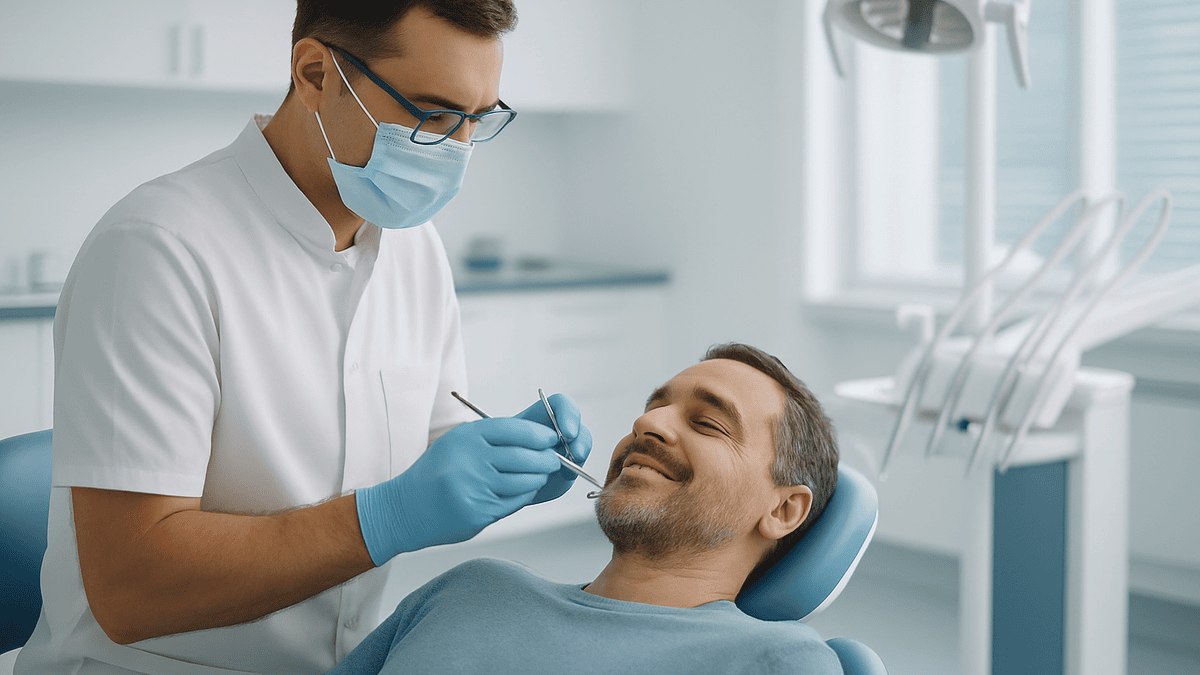
A thirty-four-year-old cracks a lower molar on a frozen bagel, and the fracture runs below the gum line. The tooth cannot be saved. Within a week she is sitting in a dental chair hearing the word “bridge” for the first time, and her first thought is her grandmother’s dentures soaking in a glass. Her second thought is a forum post warning that a bridge would “grind down two perfectly good teeth” on either side of the gap.
Both reactions are common, and both are shaped more by folklore than by evidence. Dental bridge myths tend to cluster around age and around what happens to the neighbors: the teeth that hold the bridge in place. Those questions deserve straight answers, because the decision between a bridge, an implant and a removable partial denture is one most adults will face at some point.
This explainer walks through how a bridge actually works, who tends to be a candidate, what the preparation really does to adjacent teeth, and where bridges genuinely fall short. The decision itself stays with you and your treating dentist.
What a dental bridge is and how it actually works
A dental bridge is a fixed replacement for one or more missing teeth that is cemented onto the teeth or implants on either side of the gap. The replacement tooth in the middle is called a pontic; the supporting teeth are called abutments. Think of a short footbridge: two piers at the banks, a span across the water. The pontic sits just above the gum and takes chewing load through the abutments rather than through the jawbone beneath it.
Cleveland Clinic describes four main designs. The traditional bridge uses crowns on both neighboring teeth, which is the version most people picture. A cantilever bridge is anchored on one side only, used where there is a tooth on just one side of the gap. A resin-bonded bridge, sometimes called a Maryland bridge, uses thin metal or ceramic wings glued to the back of the neighboring teeth with little or no reshaping, usually for a single front tooth. An implant-supported bridge rests on titanium posts placed in the bone instead of on natural teeth.
Materials matter for both looks and strength. Porcelain fused to a metal substructure has decades of track record and handles heavy back-tooth chewing well; all-ceramic bridges made from zirconia or layered porcelain offer better color matching at the front. Your dentist chooses the material based on where the gap is, how hard you bite and whether you grind your teeth at night.
The making of a bridge is a two-visit job in most practices. At the first, the abutment teeth are prepared, an impression or digital scan is taken, and a temporary bridge is fitted. A dental laboratory then fabricates the permanent piece, which is checked for fit and bite and cemented at the second visit. Same-day milled bridges exist in some settings, but the principle is identical: a rigid span, two anchors, no moving parts.
Dental bridge myths, part one: are bridges only for older adults?
No. This is the most persistent of the dental bridge myths, and it survives because tooth loss and age are linked in people’s minds. The link is real at a population level: data compiled by the National Institute of Dental and Craniofacial Research show that adults aged 20 to 64 keep an average of roughly 25 of their 32 permanent teeth, while adults over 65 keep fewer. Yet that same data set makes the opposite point. If the average working-age adult is already missing several teeth, the market for a bridge is not retirees; it is everyone.

Teeth are lost in young and middle adulthood for reasons that have nothing to do with aging. Sports injuries and cycling accidents knock out front teeth in the twenties. A cracked molar after a root canal is a classic thirties-and-forties story. Some people are born without certain adult teeth, a condition called hypodontia, and discover a gap when the baby tooth finally falls out in their teens or twenties. In every one of these cases a bridge is a standard, conventional option, and in some of them it is the option dentists reach for first.
Why does the myth cling on? Partly because older adults lose teeth more often to gum disease, which the Mayo Clinic identifies as a major cause of adult tooth loss, so older adults do receive more bridges in absolute terms. Partly because the word “bridge” gets muddled with “denture” in everyday speech. A removable partial denture and a fixed bridge are entirely different devices; only one of them comes out at night.
What age does change is the surrounding context: the health of the gums, the amount of jawbone, the presence of other crowns or fillings, and how many years of service you need from the restoration. Those factors shape the choice between a bridge and an implant far more than a birthdate does.
Who a dental bridge is usually for, and who is usually asked to wait
A bridge is usually considered when a gap of one to three teeth is bordered on at least one side by a strong, healthy tooth or an implant. The ideal abutment tooth has a sound root, healthy gum attachment and, ideally, an existing crown or large filling, so that reshaping it costs little that was not already lost. Dentists often favor a bridge when the neighboring teeth would benefit from crowns anyway, when the patient cannot have or does not want implant surgery, or when a result is needed within weeks rather than months.
People commonly asked to wait fall into a few groups. Anyone with active gum disease is typically treated for that first, because cementing a bridge onto inflamed, bleeding gums invites failure; the Mayo Clinic notes that untreated periodontitis destroys the bone and tissue that hold teeth, and a bridge is only as stable as its anchors. Patients with a fresh extraction are often asked to let the socket heal and the gum reshape, so that the pontic can be designed to meet the final gum contour rather than a swollen one. A temporary tooth, such as a resin-bonded bridge or a removable flipper, fills the gap in the meantime.
Younger patients whose jaws are still growing form a separate category discussed later in this article. Heavy, untreated tooth grinding may also prompt a dentist to recommend a night guard before investing in a bridge, since clenching forces concentrate on abutment teeth.
A bridge may be a poor fit when the neighboring teeth are entirely intact and the patient is young, because the enamel removed from those teeth cannot be restored. In that scenario many dentists discuss a single implant first. None of these are rules carved in stone. They are the questions a treating team works through, and the answer is individual.
Do dental bridges damage adjacent teeth? What preparation really involves
Here is the honest answer to the second great myth: a traditional bridge does change the adjacent teeth, permanently, but “ruin” is the wrong word. To fit a crown over an abutment tooth, the dentist removes a layer of enamel and some dentin from every surface, typically shaping the tooth into a smaller version of itself so the crown can slide over it. Enamel does not grow back. A tooth that has been prepared for a crown will need a crown for the rest of its life.

That is a real cost and it should be named plainly. Cleveland Clinic lists it as the main drawback of a traditional bridge, alongside the fact that the abutment teeth carry extra load. What it is not is decay, infection or weakening by itself. A well-fitting crown seals the prepared tooth, and the tooth underneath remains alive with its nerve intact in the great majority of cases. Root canal treatment is not a routine part of bridge preparation; it becomes necessary only if the tooth’s nerve is already compromised or becomes inflamed afterward.
The risk of harm comes from three directions, and all three are manageable. The first is decay at the crown margin, the line where crown meets tooth, which happens when plaque sits there undisturbed. The second is gum disease around the abutments, which loosens the anchor. The third is mechanical: a long span, a cantilever design or a heavy bite can overload an abutment tooth. The remedy for the first two is cleaning; for the third it is sensible design and, where needed, a night guard.
Resin-bonded bridges sidestep most of this. Because the wings are glued to the back of the neighboring teeth after only light roughening of enamel, the adjacent teeth are essentially unchanged. The trade-off is lower strength, which is why this design is mostly reserved for front teeth where chewing forces are lighter.
Dental bridge vs implant vs partial denture: a side-by-side summary
Every patient weighing a bridge is really weighing three options. The table below condenses what mainstream sources such as the Mayo Clinic and Cleveland Clinic say about each, stripped of marketing.
| Feature | Fixed bridge | Dental implant | Removable partial denture |
|---|---|---|---|
| Effect on neighboring teeth | Traditional design reshapes them; resin-bonded design barely touches them | None; the implant stands alone | None directly, though clasps can wear enamel over years |
| Surgery needed | No | Yes, to place a titanium post in the jawbone | No |
| Typical time to finished tooth | Weeks across two visits | Several months, because bone must fuse to the post before the crown is fitted (Mayo Clinic) | Weeks |
| Jawbone under the gap | Continues to shrink slowly | Stimulated by chewing load, which helps preserve bone | Continues to shrink |
| Typical service life | Commonly 5–15 years with good care (Cleveland Clinic) | Often longer, though the crown on top may need replacing | Usually shorter; relines and remakes are common |
| Cleaning | Floss threaders or interdental brushes under the pontic | Brush and floss like a natural tooth | Removed and cleaned separately |
| Who is often steered elsewhere | Young patients with pristine neighboring teeth | Smokers, uncontrolled diabetes, poor bone, certain medicines affecting bone | People who find removable appliances intolerable |
Two points in this table carry more weight than the rest. The first is bone: a bridge does nothing to stop the slow shrinkage of jawbone beneath a missing tooth, while an implant transmits chewing force into the bone and helps maintain it. The second is reversibility. An implant can be placed later if a bridge fails, provided enough bone remains; the enamel removed for a bridge cannot be put back. Neither option is “better” in the abstract. The right one depends on the gap, the neighbors and the person.
What happens if I don't get a dental bridge?
A single missing back tooth rarely causes trouble in the first months, which is exactly why people put off replacing it. The changes that follow are slow, quiet and largely one-directional. Cleveland Clinic lists the main consequences of an untreated gap: neighboring teeth drift and tilt into the space, the tooth in the opposite jaw over-erupts because nothing meets it, and the bite shifts. A tilted molar is harder to clean and traps food along its exposed root, raising the risk of decay and gum disease on a tooth that was healthy when the gap first appeared.
Chewing changes too. Most people unconsciously move food to the other side of the mouth, and over years that asymmetry can load one jaw joint more than the other and wear the teeth on the working side faster. Speech is affected mainly by front gaps, where air escapes through the space on “s” and “f” sounds.
Bone is the quieter story. The jawbone exists to hold teeth, and once a root is gone the bone in that spot begins to remodel and shrink. The Mayo Clinic notes that this loss of bone is one reason implants may require a bone graft if placement is delayed for years. A bridge does not prevent this shrinkage, but it does prevent the drifting and over-eruption that make later treatment of any kind more complicated.
Does every gap need filling? No. A missing wisdom tooth needs no replacement. Some second molars at the very back can be left if the bite is stable and the patient is comfortable, a judgment dentists call the “shortened dental arch” concept. The point is not that every gap must be bridged. It is that the decision to leave a gap should be a deliberate one made with a dentist, not a default reached by avoidance.
How long do dental bridges last, and what shortens that?
Cleveland Clinic gives a typical range of 5 to 15 years, and some bridges serve well beyond that. The wide spread is not a failure of the technology; it reflects how much the lifespan depends on the person wearing it. A bridge on two strong molars in a patient who flosses under it nightly and sees a hygienist twice a year is a different object from the same bridge in a clencher who skips cleanings.
The things that shorten a bridge’s life are, in rough order of frequency:
- Decay at the crown margins of the abutment teeth, the single most common reason bridges are remade.
- Gum disease loosening the abutment teeth, which turns a rigid span into a rocking one.
- Fracture of the porcelain veneer, especially on back teeth in people who grind.
- Loss of cement seal, which allows bacteria and fluid to creep under a crown long before anything feels wrong.
- Nerve death in an abutment tooth, requiring root canal treatment through the crown.
Design length matters as well. A three-unit bridge replacing one tooth has a far better record than a long span replacing three, because the abutments bear proportionally more load and the span flexes more. Cantilever bridges, anchored on one side only, are generally limited to single small teeth for the same reason.
Nothing here is a promise about your bridge. A dentist cannot forecast an individual lifespan, and reputable sources do not try. What the evidence supports is a simple hierarchy: cleaning under the pontic and around the margins does more for longevity than any choice of material, and a night guard protects a bridge in a grinder more than any lab technique can.
What the first days and weeks with a new bridge usually look like
The preparation visit is done under local anesthetic and the abutment teeth may feel tender for a few days afterward, particularly to cold. That sensitivity usually reflects freshly exposed dentin under a temporary bridge and settles once the permanent one is sealed on. Temporary bridges are glued with weak cement by design, so sticky and hard foods are best avoided until the final fitting; if a temporary comes loose, the usual advice is to call the practice rather than re-glue it at home.
Cementation day is quick. The dentist tries the bridge in, checks the contacts with floss and the bite with marking paper, adjusts, then cements. Many people notice the bridge feels large or slightly high for the first day or two. Cleveland Clinic notes that adjusting to the feel of a new bridge can take a few days to a couple of weeks as the tongue and cheeks learn the new shape. A bite that still feels high after that window should be rechecked, because a persistently high spot concentrates force on the abutment teeth.
Chewing can resume on the bridge once the cement has fully set, which the dentist will specify. Mild gum tenderness around the pontic is common in the first week, especially if the tissue had to be shaped. Speech adapts fast, usually within days, even for front bridges.
A review appointment a few weeks later lets the dentist check gum response, confirm the pontic is cleanable and refine the bite. From then on, the routine is ordinary: brushing twice a day with a fluoride toothpaste, daily cleaning under the pontic, and regular hygiene visits. The timeline above describes the typical course, not a guarantee; sensitivity that worsens rather than fades belongs in the red-flag section at the end of this article.
Why dental bridges fail, and why it is rarely the bridge itself
When a bridge comes out of service, the laboratory work is seldom the culprit. The porcelain and metal are durable; the biology around them is not. Understanding this shifts the question from “will my bridge fail?” to “what would make it fail, and can I influence that?”
The commonest failure is decay under a crown margin. The margin is a microscopic seam, and plaque that collects there is shielded from the toothbrush. Decay advancing beneath a crown is painless until it reaches the nerve or undermines the crown enough to loosen it, which is why dentists look for it on X-rays rather than waiting for symptoms. The NIDCR describes tooth decay as the result of acid produced by plaque bacteria; that process does not care whether the enamel is under a crown or not.
Second comes gum disease. The Mayo Clinic explains that periodontitis destroys the bone supporting teeth; an abutment that loses bone becomes mobile, and a rigid bridge attached to a mobile tooth transfers stress to the other abutment until both are compromised.
Third is mechanical overload. People who clench or grind generate forces well beyond ordinary chewing, and the pontic, which has no root to cushion it, transmits that load straight to the anchors. Porcelain chips, cement fatigues, and in time a crown loosens.
Less common causes include a root fracture in an abutment that was already heavily restored, a nerve that dies months after preparation, or a span that was simply too long for the teeth asked to carry it.
None of these are inevitable. They are, in the main, the same two enemies every tooth has, decay and gum disease, plus one extra enemy that bridges acquire: force. A person who controls all three is doing most of what can be done.
What is the most serious dental disease? Gum disease and your bridge
People searching for the “most serious” dental disease usually expect an answer like oral cancer, which is indeed the most dangerous condition a dentist screens for and is why every routine examination includes a look at the tongue, floor of the mouth and throat. In terms of sheer destruction of teeth across the population, though, the answer is periodontitis, advanced gum disease.
Gum disease begins as gingivitis, reversible inflammation of the gum edge caused by plaque. Left alone it can progress to periodontitis, where the inflammation moves down the root, destroying the fibers and bone that hold the tooth. The Mayo Clinic lists it as a leading cause of adult tooth loss, and the NIDCR reports that roughly four in ten adults aged 30 and over have some degree of periodontal disease. It is painless for most of its course, which is precisely what makes it serious.
For anyone with a bridge, this matters doubly. A bridge is a fixed structure resting on living anchors; if the gums around those anchors are inflamed, the structure is undermined from below. Bleeding when flossing under the pontic, a bad taste, or gums pulling away from the crown margins are early signals worth reporting rather than ignoring.
Research has also linked periodontitis to conditions beyond the mouth, including cardiovascular disease and poorer glucose control in diabetes. The Mayo Clinic describes these as associations, and the direction of cause remains under study; nobody should expect that treating their gums will prevent a heart attack. What is well established is that controlling gum disease protects teeth and, by extension, the bridges attached to them.
The practical implication is unglamorous: a bridge does not exempt anyone from hygiene appointments. If anything it raises the stakes, because the price of neglect is paid by three teeth at once instead of one.
What people often get wrong about dental bridges and dental myths worth retiring
Some beliefs about bridges and teeth deserve a direct correction, and several of them show up in questions people type into search engines every day.
“A bridge means the teeth under it will rot.” Not if it fits and is cleaned. Decay under a crown is a hygiene and margin problem, not a property of bridges. A sealed, cleaned abutment can serve for decades.
“Bridges are the old-fashioned option; implants have replaced them.” Implants have expanded the menu, not deleted an item from it. The Mayo Clinic lists bridges as a standard alternative when implant surgery is unsuitable, and plenty of dentists prefer a bridge when the neighboring teeth already need crowns.
“If my tooth doesn’t hurt, nothing is wrong.” Both tooth decay and periodontitis are painless until late. The NIDCR notes that early decay has no symptoms; by the time a tooth aches, the problem is often advanced.
“Bleeding gums are normal, especially around a bridge.” Bleeding is inflammation. Healthy gums do not bleed when cleaned. Around a bridge it is an early warning sign.
“Sugar-free means tooth-safe.” Acidic drinks, including sugar-free sodas and sparkling water with citrus, erode enamel regardless of sugar content.
“Whitening works on crowns and bridges.” It does not. Porcelain does not change color with bleaching, so a bridge made to match teeth that are later whitened may stand out.
A smaller curiosity, since people ask for unusual facts about dentists: tooth enamel is the hardest tissue in the human body, harder than bone, yet it is the one tissue that cannot repair itself once lost. That single fact underlies almost every judgment in this article, from why bridge preparation is irreversible to why fluoride and cleaning matter more than any material a laboratory can offer.
Is there a dental bridge age limit? Young adults, teens and growing jaws
At the upper end there is no age limit for a bridge. Older adults are often good candidates precisely because a bridge needs no surgery, no months of bone healing and no concerns about medicines that affect bone. What matters at any age is the health of the abutment teeth and gums, the patient’s ability to clean the bridge, and general health sufficient for ordinary dental visits.
The more interesting limit sits at the lower end, and it applies to fixed bridges and implants alike. Jaws keep growing into the late teens and, in some people, the early twenties. A fixed restoration placed on a growing jaw stays where it was cemented while the neighboring natural teeth continue to erupt around it, leaving the bridge sitting visibly short or out of line within a few years. For that reason dentists generally defer permanent bridges on natural teeth until growth is complete, and implants later still, with the exact timing judged from growth assessment rather than a birthdate.
Adolescents who lose a front tooth to injury or who were born without a lateral incisor are usually managed with interim solutions: a removable retainer with a tooth attached, or a resin-bonded bridge that can be replaced as the mouth changes. The resin-bonded design is popular here because it removes almost no enamel, keeping the door open for a different choice in adulthood.
Between those extremes, the twenties through the sixties, the question is never “am I the right age?” but “are my neighboring teeth the right teeth?” A twenty-five-year-old with two untouched premolars beside a gap has a strong case for an implant, because reshaping virgin enamel at that age commits those teeth to crowns for perhaps sixty years. A fifty-year-old with two large old fillings beside the same gap may be a textbook bridge case. Age informs the conversation; it does not decide it.
Questions to ask your care team
A good consultation is a conversation, and the questions below help turn a treatment plan into something you understand rather than something you sign. Bring them written down; the chair is a poor place to remember them.
- Which design are you recommending for my gap: traditional, cantilever, resin-bonded or implant-supported, and why that one over the others?
- What is the condition of the two teeth you plan to use as anchors? Do they already have fillings or crowns, and are their roots and gums healthy on the X-ray?
- How much tooth structure will be removed from each abutment, and would a resin-bonded bridge or an implant avoid that in my case?
- If I chose an implant instead, how long would the full process take for me, and is my bone adequate without a graft?
- What material do you suggest, and how does my bite or any grinding affect that choice?
- Will I need a night guard, and should I have it before or after the bridge is fitted?
- How exactly do I clean under the pontic, and can someone show me with a threader or interdental brush before I leave?
- What signs would tell me the bridge or an anchor tooth is in trouble, and how soon should I call?
- If the bridge fails in ten years, what would my options be then, and does anything we do now keep an implant possible later?
- Do I have any gum disease that should be treated first, and how will that change the timeline?
Two of these matter more than the rest. The question about tooth removal from the abutments gets to the irreversible part of the decision. The question about future options makes the plan a sequence rather than a single bet. A dentist who welcomes both is giving you the evidence-based conversation you deserve; the final call still belongs to you and that treating team together.
When to call your doctor or dentist
Most of what a new bridge produces in the first fortnight is ordinary: mild sensitivity to cold, a feeling of bulk, slight gum tenderness. Those fade. The signs below are different in kind and warrant a prompt call to the dental practice rather than waiting for the next scheduled visit.
- Pain on biting that persists or worsens beyond the first week, or a bite that still feels high after a few days; a high contact overloads the anchor teeth.
- Throbbing or spontaneous toothache in an abutment tooth, especially if it wakes you at night, which can signal an inflamed nerve.
- Swelling of the gum or face, a pimple-like bump on the gum near the bridge, pus, or a persistent bad taste, all of which suggest infection.
- Fever with facial swelling, or swelling that spreads toward the eye, under the jaw or into the floor of the mouth, or any difficulty swallowing or breathing; this is an emergency that needs urgent medical care, not a routine dental slot.
- A bridge that moves, rocks or has come loose, even if it does not hurt; bacteria enter under a loose crown quickly.
- A chipped or cracked pontic or crown, which can cut the tongue and leaves the structure weaker.
- Gums that bleed every time you clean under the pontic, or that recede to expose the crown margin.
- Numbness or altered sensation in the lip or chin after any dental procedure, which should always be reported.
Beyond the bridge itself, two general rules apply to everyone. A mouth ulcer, white or red patch, or lump that has not healed within three weeks should be examined by a dentist or doctor, because persistent lesions are how oral cancer is caught early. And unexplained tooth loosening, in a bridge or not, is never normal in an adult and usually points to gum disease that needs assessment. In every case, the people who examined your mouth and placed the bridge are the right first call; they can see what no article can.
Frequently asked questions
Do dental bridges damage adjacent teeth?
A traditional bridge changes the adjacent teeth permanently, because enamel and some dentin are removed so crowns can fit over them, and that tissue does not grow back. It does not, however, cause those teeth to rot or weaken on its own. Damage occurs when plaque collects at the crown margins or when gum disease loosens the anchors, both of which are preventable with daily cleaning under the bridge and regular hygiene visits.
Is there a dental bridge age limit?
There is no upper age limit; older adults are often good candidates because a bridge requires no surgery. The practical limit is at the young end. Dentists generally wait until jaw growth is complete, usually in the late teens or early twenties, before cementing a fixed bridge on natural teeth, because a fixed span cannot move as neighboring teeth continue to erupt. Teens are usually given interim options meanwhile.
How long do dental bridges last?
Cleveland Clinic gives a typical range of 5 to 15 years, and many bridges serve longer with good care. The lifespan depends far more on the person than on the materials: decay at the crown margins, gum disease around the anchor teeth and heavy grinding are the usual reasons a bridge is remade. No dentist can promise an individual lifespan, but cleaning under the pontic daily is the single most effective way to extend it.
Dental bridge vs implant: which is better?
Neither is better in the abstract. A bridge needs no surgery, is finished in weeks and suits patients whose neighboring teeth already need crowns, but it reshapes those teeth and does not preserve jawbone. An implant leaves neighbors untouched and helps maintain bone, yet it requires surgery and several months of healing, according to the Mayo Clinic, and is unsuitable for some medical situations. The right choice depends on the gap, the neighbors and the person.
What happens if I don't get a dental bridge?
Nothing dramatic at first, which is why gaps are often ignored. Over months to years, neighboring teeth drift and tilt into the space, the opposing tooth over-erupts, the bite shifts and the jawbone under the gap slowly shrinks. Tilted teeth trap plaque and become harder to clean. Not every gap needs replacing; a missing wisdom tooth does not. The decision to leave a gap should be deliberate and made with a dentist.
What is the most serious dental disease?
Oral cancer is the most dangerous condition dentists screen for, which is why routine examinations include the tongue and throat. In terms of teeth destroyed across the population, the most serious disease is periodontitis, advanced gum disease, which the Mayo Clinic identifies as a leading cause of adult tooth loss. It is largely painless until late, and for bridge wearers it threatens the anchor teeth the bridge depends on.
What are some common dental myths that should be debunked?
Several come up constantly: that a tooth which does not hurt must be healthy, when decay and gum disease are painless until advanced; that bleeding gums are normal, when bleeding signals inflammation; that sugar-free drinks are harmless, when acid erodes enamel regardless of sugar; that whitening will lighten crowns and bridges, which it cannot; and that bridges are only for older adults, which population data on tooth loss contradicts.
Does getting a dental bridge hurt?
The preparation of the anchor teeth is done under local anesthetic, so the procedure itself is usually not painful. Sensitivity to cold in the prepared teeth is common for a few days under the temporary bridge and generally settles once the permanent one is cemented. Mild gum tenderness around the new false tooth can last about a week. Pain that worsens, throbs or wakes you at night is not expected and should be reported.
Can I get a bridge if I have gum disease?
Usually not until the gum disease has been treated and stabilized. A bridge relies on its anchor teeth, and the Mayo Clinic notes that periodontitis destroys the bone and fibers that hold teeth; cementing a rigid span onto inflamed, loosening teeth is a recipe for early failure. Most dentists treat the gums first, reassess the anchor teeth, and only then plan a bridge or discuss implants as an alternative.
How do I clean under a dental bridge?
The false tooth sits just above the gum, so ordinary floss cannot pass between it and the anchors. People use a floss threader to pull floss beneath the pontic, a small interdental brush angled under the span, or a water flosser, once a day alongside brushing twice daily with fluoride toothpaste. Your dental team can demonstrate the method that suits your bridge, and hygienist visits catch early problems at the crown margins.
References
This article is for general information only and is not a substitute for professional medical advice. Please consult a qualified doctor about your individual situation.
Add us as a Preferred Source to see more of our trusted health content across Google Search, AI Overviews and Discover.

More from the Blog
Dental Implant Aftercare Red Flags: Bleeding That Persists, Numbness and Fever Explained
Dental implant aftercare red flags are signs that healing has moved outside the expected range: bleeding that keeps flowing despite firm pressure, numbness or…
All On 4 Myths: Are the Teeth Removable, and Do They Feel Like Dentures?
In standard All-on-4 treatment, the full-arch bridge is screwed onto four implants and cannot be taken out by the wearer; only a dentist removes…

All On 6 Anesthesia and Pain: Sedation Choices and Managing Discomfort in the First Days
All-on-6 pain is usually moderate rather than severe. The surgery itself is done under local anesthesia, often with sedation or general anesthesia, so the…

How Implantology Plans Treatment: Bone Volume, Bite and Timing Decide the Approach
Implantology plans treatment by measuring three things before anything is placed: how much jawbone is available in height, width and density; how the bite…

How Dentists Weigh a Sinus Lift Against Short Implants and Other Upper Jaw Alternatives
Dentists choose between a sinus lift or short implants mainly by measuring how much bone remains under the sinus floor in the upper back…

What a CT Scan Shows Before Zygomatic Implants: Cheekbone Volume, Sinus Anatomy and the Path
A CT scan for zygomatic implants gives the surgical team a three-dimensional map of the upper jaw and cheekbones. It shows how much bone…