

Malaria Treatment During Pregnancy: Why the Plan Differs and How Mother and Baby Are Monitored
Key Takeaways
- Plasmodium falciparum binds to a sugar molecule in the placenta and accumulates there, so a pregnant woman's finger-prick blood film can understate the true parasite load.
- The WHO now recommends artemisinin-based combination therapy for uncomplicated falciparum malaria in all trimesters, including the first, after safety data from large numbers of early-pregnancy exposures accumulated.
- Injectable artesunate is the recommended treatment for severe malaria at any stage of pregnancy, partly because the older alternative, quinine, carries a higher risk of dangerous low blood sugar in pregnant women.
- Primaquine and tafenoquine, the medicines that clear dormant liver forms of P. vivax and P. ovale, are postponed until after delivery because they can destroy red cells in a fetus of unknown enzyme status.
- CDC guidance is to repeat blood films every 12–24 hours for three sets before calling malaria negative, because parasites cycle in and out of the bloodstream and a single slide can miss them.
- The NHS notes malaria symptoms usually start 7 to 18 days after the bite but can appear up to a year later, so a fever months after travel still warrants a malaria test in pregnancy.
Malaria treatment in pregnancy differs because the parasite can lodge in the placenta, the mother is more prone to severe illness and low blood sugar, and a few antimalarial medicines are avoided or delayed until after delivery. Clinicians choose from a smaller set of pregnancy-compatible drug classes, usually admit for closer observation, and track both the mother's blood tests and the baby's heartbeat and growth throughout treatment and follow-up.
Twenty-six weeks pregnant, back from visiting family for a month, and now a fever that comes in waves, with a headache that paracetamol only dents. The first thought is a stubborn virus. The second, once someone remembers the mosquito bites on her ankles, is malaria. And with that word comes a different set of questions: not just how to get well, but what the medicine does to the baby, and whether being pregnant makes this more dangerous.
Both instincts are sound. Malaria treatment in pregnancy is genuinely handled differently from malaria in anyone else, and the reasons are specific and well understood. The parasite has a favorite hiding place in the placenta. Pregnancy changes how the body handles fever, fluids and sugar. A small number of antimalarial medicines are kept off the table until after birth.
What follows explains why the plan changes, what the care team is actually doing at each step, and how they keep watch over two patients at once.
Why malaria treatment in pregnancy follows a different plan
Malaria is an infection caused by Plasmodium parasites that mosquitoes pass into the bloodstream, where the parasites multiply inside red blood cells. The World Health Organization estimated around 263 million cases and 597,000 deaths worldwide in a single recent year, and it names pregnant women as one of the groups at highest risk of severe disease and death (WHO fact sheet).
Three things make pregnancy different, and each one changes a clinical decision. First, the placenta gives one species, Plasmodium falciparum, a place to accumulate out of sight of the spleen, so a mother can carry a heavy parasite load while a finger-prick blood film looks modest. Second, pregnancy itself dampens parts of the immune response and raises the body’s demand for glucose, so fever, dehydration and low blood sugar develop faster and hit harder. Third, some antimalarial medicines are avoided during pregnancy, either because they are known to harm the fetus or because the safety data are too thin to rely on.
The result is a plan built around a narrower menu of medicines, a lower threshold for hospital admission, and monitoring that watches two heartbeats rather than one. The Centers for Disease Control and Prevention describes malaria in pregnancy as a medical emergency that should be treated promptly and aggressively, with the choice of medicine shaped by trimester, species and severity (CDC clinical guidance).
If there is one idea worth holding onto, it is this: the biggest risk to the baby is untreated or under-treated malaria in the mother, not the treatment. Nearly every part of the plan flows from that fact.
How malaria affects the placenta: what actually happens
Red blood cells infected with P. falciparum grow sticky. The parasite pushes proteins onto the cell surface that act like grappling hooks, and in the placenta a particular version of that hook binds to a sugar molecule called chondroitin sulfate A, which lines the spaces where maternal blood bathes the fetal side of the placenta. Infected cells cluster there in large numbers, a process clinicians call placental sequestration: parasites gathering in one organ rather than circulating freely.
Why does that matter? A first pregnancy is when this is most pronounced, because the mother has never before encountered this placenta-specific strain and has no antibodies against it. Women in areas of steady malaria transmission gradually build that immunity over successive pregnancies; travelers and residents of low-transmission regions do not, which is one reason imported malaria in pregnancy is treated with particular urgency.
The consequences for the placenta are practical. Inflammation thickens the barrier through which oxygen and nutrients pass. Blood flow to the fetal side is reduced. The mother’s red cell count falls as parasites destroy cells and the bone marrow struggles to keep up, and anemia in the mother means less oxygen for the baby. Over weeks this shows up as slower fetal growth; more acutely, it can trigger preterm labor.
Placental sequestration also explains a diagnostic puzzle. A peripheral blood film, the standard microscope slide, samples blood from a fingertip or vein. Parasites hidden in the placenta are not on that slide. So a pregnant woman with a low or even negative peripheral count may still be carrying a meaningful infection, and clinicians treating pregnant patients keep that possibility in mind when results and symptoms do not seem to match (CDC clinical guidance).
Is malaria dangerous in pregnancy? The complications the team watches for
Yes, more so than outside pregnancy, and for both patients. Mainstream guidance from the WHO and CDC lists the same cluster of malaria in pregnancy complications, and it is worth knowing them because they explain what the monitoring is looking for.
For the mother, the two headline risks are severe anemia and severe malaria. Severe malaria is defined by organ involvement: confusion or seizures (cerebral malaria), breathing difficulty from fluid in the lungs, kidney injury, very low blood sugar, acidosis, or a very high parasite count. Pregnancy raises the chance of pulmonary edema and hypoglycemia in particular, and low blood sugar can be worsened by some treatment medicines, which is why glucose is checked so frequently in hospital (WHO guidelines for malaria).
For the baby, the risks run from miscarriage in early pregnancy to stillbirth, preterm birth and low birth weight. The WHO identifies low birth weight as one of the leading contributors to infant death in malaria-endemic regions and links a substantial share of it to malaria in pregnancy (WHO fact sheet). Congenital malaria, where parasites cross to the baby before or during birth, is uncommon but recognized, which is why newborns of treated mothers are watched in the weeks after delivery.
Timing shapes the picture. Infection in the first trimester carries a higher risk of pregnancy loss. Infection in the third trimester more often affects growth and triggers early labor. None of this is a forecast for any individual; most women treated promptly do well. It is, rather, the list of things the care team is actively trying to prevent, and the reason the plan is more intensive than a course of tablets taken at home.
How malaria is diagnosed when you are pregnant
The rule is simple: any fever in a pregnant woman who has been in a malaria area, even briefly and even months ago, should prompt a malaria test the same day. The NHS notes symptoms usually begin 7 to 18 days after the infective bite but can appear up to a year later for some species (NHS malaria). Symptoms in pregnancy can also be muted or atypical, so clinicians test on exposure history rather than waiting for a classic pattern.
Two tests do the work. A blood film, or smear, is a drop of blood spread on a glass slide, stained and examined under a microscope; it shows which species is present and what proportion of red cells are infected, a figure called parasite density or parasitemia. A rapid diagnostic test detects parasite proteins on a strip within minutes and is useful when a microscopist is not immediately available, though it does not measure density and can miss low counts.
Because parasites cycle in and out of the bloodstream, a single negative slide does not rule malaria out. CDC guidance is to repeat blood films every 12–24 hours for a total of three sets before considering the test negative (CDC clinical guidance). In pregnancy, where placental sequestration can hide parasites, clinicians are especially reluctant to stop at one result.
Alongside the parasite tests, a first blood draw typically checks hemoglobin for anemia, blood glucose, kidney and liver function, and a pregnancy assessment of the baby’s heartbeat and, depending on gestation, movement and fluid. Species identification matters because it steers the medicine choice: P. falciparum behaves and is treated differently from P. vivax, which can lie dormant in the liver and return later.
Which antimalarial drugs are considered safe in pregnancy, and why the answer changed
People searching for antimalarial drugs safe in pregnancy often find contradictory advice, and part of the reason is that the guidance genuinely shifted. For years the standard first-trimester treatment for uncomplicated P. falciparum was quinine, a plant-derived medicine used for centuries, given together with the antibiotic clindamycin. Artemisinin-based combination therapies, faster-acting medicines derived from a Chinese herb and paired with a longer-acting partner drug, were reserved for the second and third trimesters because early animal studies raised concern.
Accumulating safety data from thousands of first-trimester exposures changed that picture. The WHO now recommends the artemisinin combination artemether-lumefantrine for uncomplicated falciparum malaria in the first trimester as well, and artemisinin-based combinations across all trimesters (WHO guidelines for malaria). For severe malaria at any stage of pregnancy, injectable artesunate is the recommended treatment, replacing quinine, which carries a higher risk of dangerous low blood sugar in pregnant women.
Some medicines remain off the list. Primaquine and tafenoquine, the two medicines that clear dormant liver forms of P. vivax and P. ovale, are avoided throughout pregnancy because they can destroy red cells in a fetus whose enzyme status is unknown. The antibiotic doxycycline, sometimes used as a partner drug or preventive, is not used in pregnancy because it affects developing bone and teeth. Others, such as atovaquone-proguanil, have limited pregnancy data and are usually used only when alternatives are unsuitable (CDC clinical guidance).
None of this is a menu to choose from. The species, trimester, severity, local drug resistance and any allergy or other condition all feed into a decision made by the prescribing clinician, ideally with infectious disease and obstetric input together.
Uncomplicated versus severe malaria: how the pathway changes
The single most consequential fork in the plan is whether the illness counts as uncomplicated or severe. Uncomplicated means symptoms, a positive test, and no signs of organ involvement. Severe means one or more danger features are present. The table summarizes how the approach typically differs; the specifics for any individual sit with the treating team.
| Feature | Uncomplicated malaria | Severe malaria |
|---|---|---|
| Medicine route | Oral artemisinin-based combination, choice guided by trimester and species | Injectable artesunate first, switching to oral therapy once able to swallow and improving |
| Setting | Often admitted in pregnancy for observation; sometimes managed as outpatient if close follow-up is possible | Hospital, often high-dependency or intensive care |
| Parasite checks | Repeat blood films until clear | Frequent films until parasite density falls and clears |
| Maternal monitoring | Temperature, hemoglobin, glucose, fluid intake | Continuous observations, glucose checks around the clock, kidney function, lactate, fluid balance, oxygen |
| Fetal monitoring | Heartbeat check, movement, growth scan if later in pregnancy | Continuous or frequent heart-rate tracing when viable; obstetric team present |
Two details in that table deserve a word. The lower threshold for admission in uncomplicated disease reflects how fast a pregnant woman can deteriorate and how hard vomiting makes oral treatment. The switch from injectable to oral medicine in severe disease is standard practice, not a downgrade; the injectable clears parasites rapidly and the oral course finishes the job (WHO guidelines for malaria).
Vomiting is the most common reason an uncomplicated case ends up on intravenous therapy, and fever control with a pregnancy-appropriate antipyretic is part of the plan precisely because high fever itself raises the risk of preterm contractions.
Who is treated immediately and who is asked to wait
In one sense nobody waits. Guidance from the CDC and WHO is unambiguous that a pregnant woman with confirmed malaria should start treatment the same day, whatever the trimester. Delaying treatment to protect the fetus is a misunderstanding of where the danger lies; the parasites are the hazard, and every day of untreated infection is a day of fever, anemia and placental inflammation.
Waiting does apply to specific parts of the plan. The clearest example is P. vivax and P. ovale infection. These species leave dormant forms, called hypnozoites, in the liver, and the medicines that remove them, primaquine and tafenoquine, are not used in pregnancy. So the acute infection is treated now, and the liver-clearing course is postponed until after delivery and, where breastfeeding, until the baby’s enzyme status is known or feeding has finished. In the interval, clinicians usually offer an ongoing suppressive medicine to prevent relapses during the rest of the pregnancy (CDC clinical guidance).
A second kind of waiting concerns preventive medicine for travelers. Some antimalarial preventives are compatible with pregnancy and some are not, and a woman planning travel to a malaria area may be advised to postpone the trip rather than take a medicine with limited pregnancy data. The CDC’s position is that pregnant travelers should avoid travel to areas with malaria transmission where possible (CDC Yellow Book).
A third group is women who are well but have been exposed. Testing is immediate; treatment follows a positive result rather than a suspicion. Empiric treatment without a test is reserved for very sick patients when testing is not available, a situation that is uncommon in settings with laboratory access.
Everyone else, including women who are not yet sure they are pregnant, is treated on the assumption of pregnancy until a test says otherwise.
How the mother is monitored during treatment
Monitoring a pregnant woman with malaria is less about elaborate technology than about frequency. The variables that can turn quickly, temperature, blood sugar, hemoglobin and parasite count, are checked far more often than they would be in a non-pregnant adult with the same infection.
Blood glucose leads the list. Pregnancy raises glucose demand, the parasite consumes glucose, fever and poor eating deplete it, and quinine in particular stimulates insulin release. Hypoglycemia can mimic worsening malaria, with drowsiness and confusion, so in hospital it is measured at set intervals and treated promptly (WHO guidelines for malaria).
Parasite density is followed with repeat blood films. Clinicians expect the count to fall steadily once treatment starts; a count that rises or plateaus prompts a review of absorption, vomiting or resistance. Hemoglobin is tracked because anemia can deepen for days after parasites are gone, as damaged cells are cleared and the marrow catches up. Kidney function, liver enzymes and, in severe disease, blood acidity and oxygen levels round out the picture.
Fluid balance gets particular attention. Dehydration from fever and vomiting harms the kidneys and the placenta, but over-enthusiastic intravenous fluids in severe malaria can tip a pregnant woman into pulmonary edema. The middle path is careful measurement of what goes in and what comes out.
Obstetric observation runs alongside. Contractions, vaginal bleeding and abdominal pain are asked about and examined for, because fever and inflammation can provoke preterm labor. In a well-run pathway, the infectious disease clinician and the obstetric team review the same chart, and a midwife’s routine observations feed the medical decisions rather than sitting in a separate file.
How the baby is monitored during and after treatment
What can be measured depends on how far along the pregnancy is. Before viability, roughly the point at which a baby could survive outside the womb, monitoring is limited to confirming a heartbeat with a handheld doppler or ultrasound and watching the mother closely, because the mother’s stability is the baby’s best protection. After that point, the options widen.
Fetal heart-rate monitoring is the workhorse. A high maternal fever tends to raise the baby’s heart rate too, and a persistently fast, flat or irregular tracing during treatment signals distress. In severe maternal illness this may be continuous; in uncomplicated cases it is usually intermittent, and it eases as the fever settles.
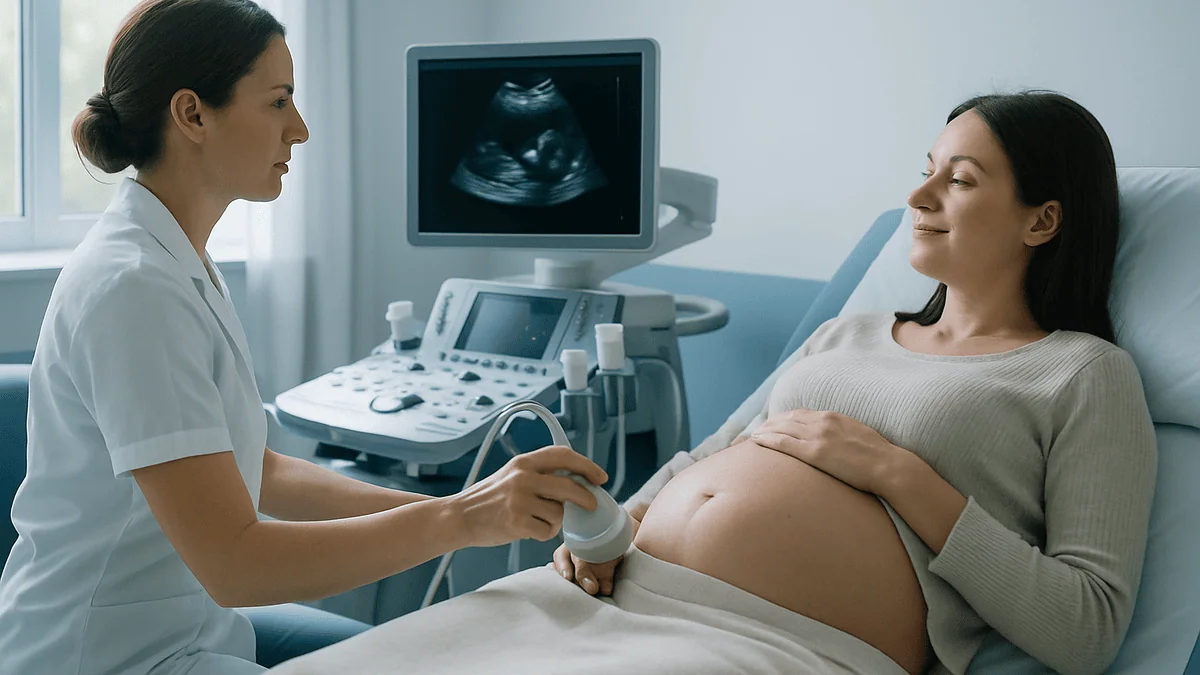
Ultrasound answers slower questions. A growth scan measures the baby against expected size for gestation; malaria’s effect on the placenta shows up over weeks as growth that lags, so a scan during the illness sets a baseline and later scans show whether growth has recovered. The scan also checks the volume of amniotic fluid and, in later pregnancy, blood flow through the umbilical cord, an indirect readout of how well the placenta is working.
Movement counts remain useful. Women in the second half of pregnancy are asked to notice the baby’s usual pattern and to report a clear reduction, both in hospital and after discharge.
After birth the attention shifts to the newborn. Congenital malaria is uncommon, but a baby born to a mother treated during pregnancy, especially late in pregnancy, may have a blood film taken from the cord or in the first days, and parents are asked to watch for fever, poor feeding, yellowing skin or unusual paleness in the following weeks (Mayo Clinic). Those newborn symptoms can appear well after discharge, which is why the pediatric team is told about the mother’s history.
What the days and weeks after treatment usually look like
Most women feel the fever break within the first few days of effective treatment; artemisinin-based medicines clear parasites quickly, and clinicians expect blood films to turn negative within about three days in uncomplicated disease (WHO guidelines for malaria). Fatigue lingers longer. Anemia takes weeks to correct as the bone marrow rebuilds red cells, and iron and folate needs, already high in pregnancy, are reviewed by the antenatal team.
Discharge from hospital usually follows once oral medicine is tolerated, parasites are falling or gone, glucose is stable and the obstetric picture is reassuring. The oral course continues at home to completion; stopping early because the fever is gone is the most common way an infection comes back, so the whole course matters even when you feel well.
Follow-up typically has two strands. The infection strand involves a repeat blood film in the weeks after treatment to confirm the parasites have not returned, a recurrence that can be either the original infection re-emerging or, for P. vivax and P. ovale, a relapse from the liver. Pregnant women are more prone to recurrence than others, partly because of placental sequestration, which is another reason the follow-up film is not skipped (CDC clinical guidance).
The pregnancy strand involves an extra growth scan a few weeks later and closer spacing of antenatal visits for the remainder of the pregnancy. Women who were unwell in the third trimester are often reviewed by the obstetric team about their birth plan, since a recent severe illness may influence where and how delivery is planned.
Emotionally, the weeks after are their own phase. Many women describe scanning every twinge for signs of harm to the baby. The reassurance that follow-up scans give is a legitimate part of the care, not an extra.
Delivery, the newborn and breastfeeding: what changes
Malaria in pregnancy does not by itself dictate a particular mode of delivery. Decisions about timing and method rest on the usual obstetric factors, the baby’s growth and wellbeing, and how recently and how severely the mother was ill. What does change is information flow: the delivery team and pediatricians need to know that malaria occurred, which species, and when.
At birth, the placenta may be sent for examination, since it can show evidence of past or current infection even when the mother’s blood is clear. A blood film from the umbilical cord or from the newborn in the first days may be taken, particularly if the mother’s infection was late in pregnancy or the baby is unwell. Congenital malaria can present days to weeks after birth with fever, irritability, poor feeding, anemia or jaundice, so parents are given clear instructions on what to report (Cleveland Clinic).
Breastfeeding is generally encouraged, and most antimalarial treatment medicines pass into breast milk in amounts considered compatible with feeding. The exceptions are the liver-clearing medicines for P. vivax and P. ovale, which are held until the baby has been tested for a red cell enzyme deficiency, and tafenoquine, which is avoided while breastfeeding altogether (CDC clinical guidance). Those postponed courses are scheduled after delivery and coordinated with the pediatric team.
A mother recovering from malaria may also be anemic and exhausted at exactly the time a newborn demands the most. Postnatal checks pay attention to hemoglobin and to mood, since prolonged illness in pregnancy is a recognized strain. Practical support at home in the early weeks is not a luxury in this situation; it is part of recovery.
Malaria prevention for pregnant travelers and residents of endemic areas
Prevention deserves its own section because the best malaria treatment in pregnancy is the one that never becomes necessary. The advice divides by where a woman lives.
For pregnant travelers, the CDC’s starting position is to avoid travel to areas with malaria transmission if the trip can be postponed or the destination changed (CDC Yellow Book). When travel cannot be avoided, protection has two layers. The first is avoiding bites: sleeping under an insecticide-treated bed net, using a skin repellent from the classes considered acceptable in pregnancy, covering arms and legs at dusk and dawn, and choosing screened or air-conditioned rooms. Mosquitoes that carry malaria bite mainly between dusk and dawn, so evenings are when this matters most.
The second layer is preventive medicine, chemoprophylaxis, a medicine taken before, during and after travel to stop an infection establishing. Only some of the options are considered suitable in pregnancy. Mefloquine is the one the CDC lists as usable in all trimesters; chloroquine is suitable where the local parasites remain sensitive to it, which is now a limited set of places; doxycycline is avoided, and atovaquone-proguanil has too little pregnancy data to be a first choice. Which, if any, is appropriate depends on destination, resistance patterns and the woman’s own history, and is a travel medicine consultation rather than a pharmacy decision.
For women living in areas of moderate to high transmission, particularly in sub-Saharan Africa, the WHO recommends intermittent preventive treatment in pregnancy, a full treatment course of an antimalarial given at antenatal visits from the second trimester regardless of symptoms, alongside insecticide-treated nets and prompt treatment of any infection (WHO fact sheet). This is delivered through routine antenatal care and is one of the reasons attending those visits matters so much.
What people often get wrong about malaria in pregnancy
Several misunderstandings come up repeatedly in clinic, and each one can delay care.
The first is that antimalarial medicines are more dangerous to the baby than the infection. The evidence points the other way. Untreated malaria causes miscarriage, stillbirth, preterm birth and low birth weight; the medicines recommended in pregnancy have been used in large numbers of pregnant women with reassuring safety records, which is precisely why the WHO extended artemisinin combinations to the first trimester (WHO guidelines for malaria). Refusing or delaying treatment protects no one.
The second is that a negative rapid test settles the question. It does not. Rapid tests can miss low counts, parasites cycle in and out of the blood, and in pregnancy they hide in the placenta. Repeat testing over one to two days is standard (CDC clinical guidance).
The third is that growing up in a malaria area confers lasting protection. Immunity fades within a few years of leaving, and even where it persists, first pregnancies expose women to a placenta-specific parasite strain they have never met. A woman visiting family in her childhood home is not protected because she was once a local.
The fourth is that malaria is a tropical illness that stays in the tropics. Symptoms can begin months after return, well past the point when anyone connects a fever with a trip; the NHS notes onset up to a year later for some species (NHS malaria).
The fifth is that feeling better means the parasites are gone. Fever settles before the blood clears, and incomplete courses are the usual reason infections return. The follow-up blood film exists to catch exactly this.
The last is that herbal or so-called natural remedies can stand in for treatment. Artemisinin came from a plant, but the unstandardized herb is not a treatment, and no supplement has evidence of clearing malaria in pregnancy.
Questions to ask your care team
Being treated for malaria while pregnant means absorbing a great deal quickly, often while feeling dreadful. A short list of questions, asked over a couple of conversations rather than all at once, helps you understand the plan and take part in it. Bring a partner or friend if you can; a second pair of ears is worth a lot when you have a fever.
- Which malaria species do I have, and does that change the treatment or the follow-up?
- Is my illness classed as uncomplicated or severe, and what would make you change that assessment?
- Why have you chosen this medicine for my stage of pregnancy, and what are the alternatives if I cannot tolerate it?
- How will you know the treatment is working, and how often will my blood be checked?
- How is the baby being monitored now, and what scans or checks are planned after I go home?
- What signs at home should make me come straight back?
- Is any part of my treatment being postponed until after the birth, and who will arrange it?
- How will this affect my antenatal schedule and my birth plan?
- What should the pediatric team know about my baby after delivery?
- Can I breastfeed while finishing my medicine?
- If I am traveling again or live in a malaria area, what prevention is appropriate for the rest of this pregnancy?
Write the answers down or ask for them in writing. Guidance changes, medicine names are unfamiliar, and the details of a follow-up plan are easy to lose between hospital and home. If the answers you get from the infectious disease team and the obstetric team seem to differ, say so; asking them to speak to each other is a reasonable request and often clears things up quickly.
When to call your doctor
Some situations need same-day contact with your care team or emergency services, whether you are waiting for test results, part-way through treatment, or in the weeks after finishing it.
- Any fever during or after a stay in a malaria area, at any point in pregnancy, before treatment has started. Do not wait to see whether it settles.
- Confusion, unusual drowsiness, difficulty waking, a seizure or fainting.
- Breathlessness, rapid breathing or chest discomfort.
- Repeated vomiting that means you cannot keep medicine down, or inability to drink fluids.
- Passing very little urine, or urine that is dark or cola-colored.
- Yellowing of the skin or eyes, or marked paleness with dizziness.
- Shakiness, sweating, sudden hunger or feeling faint, which can signal low blood sugar.
- Contractions, tightening, abdominal pain, vaginal bleeding or a gush of fluid.
- A clear reduction in the baby’s usual movements, at any stage where you have been feeling them.
- Fever returning after you have completed treatment and felt better.
- In a newborn whose mother had malaria in pregnancy: fever, poor feeding, unusual sleepiness, yellow skin, or paleness in the first weeks after birth.
These signs do not mean the worst has happened; several have ordinary explanations. They do mean the assessment should happen today rather than at the next scheduled visit. If you cannot reach your usual team, an emergency department is the right place, and telling them at the door that you are pregnant and have or may have malaria speeds everything that follows. Decisions about admission, medicine changes and delivery will be made by the clinicians who examine you, with the full picture in front of them.
Frequently asked questions
Is malaria dangerous in pregnancy even if the symptoms feel mild?
Yes. Pregnancy raises the risk of severe malaria, severe anemia and low blood sugar, and the placenta can harbor parasites that a blood film underestimates, so mild symptoms do not reliably mean mild infection. The WHO lists pregnant women among those at highest risk of severe disease and death. Any fever after exposure should be tested the same day, and treatment is started as soon as infection is confirmed, whatever the trimester.
Which antimalarial drugs are considered safe in pregnancy?
Current WHO guidance recommends artemisinin-based combination therapies for uncomplicated falciparum malaria in all trimesters and injectable artesunate for severe malaria at any stage. Primaquine, tafenoquine and doxycycline are avoided throughout pregnancy, and some other medicines are used only when alternatives are unsuitable. The choice for any individual depends on species, trimester, severity, local resistance and personal history, and rests with the prescribing clinician.
What are the main malaria in pregnancy complications for the baby?
The recognized complications are miscarriage, stillbirth, preterm birth, low birth weight and, less commonly, congenital malaria in the newborn. These stem from placental inflammation, reduced blood flow and maternal anemia rather than from treatment. Infection early in pregnancy is more associated with loss; infection later is more associated with slowed growth and early labor. Prompt treatment substantially reduces these risks, which is why delay is the thing clinicians most want to avoid.
Why is a pregnant woman with uncomplicated malaria often admitted to hospital?
Because deterioration can be fast and hard to predict. Vomiting can make oral medicine impossible, blood sugar can drop without warning, fever can provoke contractions, and a modest blood count may hide a heavier placental infection. Admission allows frequent glucose and parasite checks, fetal heart monitoring and an immediate switch to injectable treatment if needed. Some women are managed as outpatients when close follow-up is realistic; that is a case-by-case decision.
Will the malaria medicine harm my baby?
The medicines recommended for pregnancy have been used in large numbers of pregnant women with reassuring safety data, which is why the WHO broadened their use to the first trimester. The medicines with known fetal risks are not used during pregnancy. By contrast, untreated malaria has well-documented harms including miscarriage, stillbirth and low birth weight. Discuss any specific concern with your prescribing clinician rather than delaying or stopping treatment.
How long does malaria treatment in pregnancy take to work?
With artemisinin-based treatment, fever usually settles within the first few days and blood films are expected to clear within about three days in uncomplicated disease, according to WHO guidance. Fatigue and anemia recover more slowly, over weeks. The full oral course must be completed even after you feel well, and a follow-up blood film in the weeks after treatment checks that the parasites have not returned.
What is malaria prevention for pregnant travelers?
The CDC advises pregnant travelers to avoid malaria areas where possible. If travel cannot be postponed, prevention combines bite avoidance, including insecticide-treated nets, pregnancy-acceptable repellents and covering up from dusk to dawn, with a preventive medicine chosen for pregnancy. Only certain medicines are considered suitable; mefloquine is listed by the CDC for all trimesters, while others are avoided or have limited data. A travel medicine consultation before departure is the right route.
Can I breastfeed while being treated for malaria?
In most cases, yes. The treatment medicines recommended in pregnancy are generally considered compatible with breastfeeding. The exceptions are primaquine, which is held until the baby has been tested for a red cell enzyme deficiency, and tafenoquine, which is avoided while breastfeeding. If part of your treatment was postponed until after delivery, your team will coordinate its timing with the pediatric team. Confirm your specific medicines with your clinician.
How is my baby checked after I have had malaria in pregnancy?
During the illness, monitoring includes the fetal heartbeat and, later in pregnancy, heart-rate tracing and ultrasound of growth, fluid and cord blood flow. Afterward, an extra growth scan and closer antenatal visits are typical. At birth the placenta may be examined and the newborn may have a blood film. Parents are asked to report fever, poor feeding, jaundice or paleness in the first weeks, since congenital malaria can appear after discharge.
Why does P. vivax malaria need extra follow-up during pregnancy?
P. vivax and P. ovale leave dormant forms in the liver that can cause relapses months later. The medicines that clear them are not used in pregnancy, so the acute infection is treated now and the liver-clearing course is postponed until after delivery. In the meantime, clinicians usually offer ongoing suppressive medicine to prevent relapses and arrange repeat blood films. The postponed course is planned with the postnatal and pediatric teams.
References
- WHO: Malaria fact sheet
- WHO: Guidelines for malaria
- CDC: Clinical guidance for malaria (diagnosis and treatment)
- NHS: Malaria
This article is for general information only and is not a substitute for professional medical advice. Please consult a qualified doctor about your individual situation.

More from the Blog

Dengue Recovery Timeline: The Fever Phase, the Critical Window and When Strength Returns
Dengue usually follows three phases. A fever of 2 to 7 days comes first, then a critical window of roughly 24 to 48 hours…

Antibiotic Side Effects: The Common, the Rare and How to Protect Your Gut
Antibiotics side effects are usually mild and digestive: loose stools, nausea, bloating or a yeast infection, affecting roughly one in five people. Rarer problems…

Sun Poisoning: When Sunburn Becomes a Medical Problem
Sun poisoning is an informal name for a severe sunburn, or occasionally a sun-triggered rash, that produces whole-body symptoms: widespread blistering, fever, chills, headache,…
When a Household Member Is Treated for Tuberculosis: Contact Screening and Everyday Precautions
Living with someone with tuberculosis usually means the local health department or care team will offer you a TB skin or blood test, often…

Pneumonia and Tdap Boosters: The Adult Vaccines Most People Forget
Adults need a Tdap booster, or a Td booster, every 10 years, with Tdap given during each pregnancy, ideally between 27 and 36 weeks.…

Travelers’ Diarrhea: Prevention, Treatment and the Antibiotic Question
Travelers' diarrhea is a food- and water-borne gut infection, usually bacterial, that affects roughly 30 to 70 percent of people visiting high-risk regions. Most…