

Overnight Oats: Why the Breakfast Works for Blood Sugar and Gut, and the Add-Ins That Do Not

Key Takeaways
- A half-cup of dry rolled oats supplies about 4 grams of fiber, roughly 2 grams of it the soluble beta-glucan that randomized trials show lowers LDL cholesterol by about 10 mg/dL at intakes near 3 grams a day.
- Oats have a glycemic index in the mid-50s for rolled and low 50s for steel-cut, but flavored instant oats climb toward the high 70s because thinner processing digests faster.
- Cold soaking makes oats slightly gentler on blood glucose in small studies, but the effect is minor compared with portion size, oat type and added sugar.
- Gut bacteria ferment oat beta-glucan into butyrate, the primary fuel for colon lining cells, and several-week feeding trials show increases in Bifidobacterium species.
- One tablespoon of honey adds about 17 grams of sugar and a quarter-cup of sweetened dried cranberries about 25 grams, so two common add-ins can exceed the American Heart Association's daily added-sugar guidance for women.
- Oats are naturally gluten-free but often cross-contaminated with wheat and barley, so people with celiac disease need packages labeled and tested gluten-free.
Overnight oats are a genuinely healthy breakfast for most people: rolled oats soaked cold in milk or yogurt keep their beta-glucan, a soluble fiber that randomized trials show lowers LDL cholesterol and slows the rise in blood glucose after eating, and that gut bacteria ferment into beneficial short-chain fatty acids. The benefit depends heavily on add-ins; syrups, sweetened yogurt, granola and dried fruit can turn the jar into a dessert.
Scroll a food feed for five minutes and you will meet the jar: layered oats, a smear of peanut butter, a glucose-monitor screenshot beside it and a caption promising a flat blood-sugar line. As of March 2026, overnight oats are trending for a reason that has little to do with recipes. The wearable glucose sensors that spilled from diabetes care into wellness culture have turned breakfast into a live experiment, and oats are the food everyone is testing on camera. One creator’s line stays flat; another’s spikes; both go viral.
The oats themselves have not changed. What has changed is that people now want proof, not tradition. That is a good instinct, and it deserves a better answer than either the influencers or the recipe sites are giving.
So this is the honest version: what soaking does and does not do, where the cholesterol and gut evidence is strong, where the blood-sugar claims outrun the data, and which add-ins quietly undo the whole point.
What changed recently: why overnight oats are trending again
Three things collided. The first is technology. Continuous glucose monitors, small sensors worn on the arm that estimate blood glucose every few minutes, were designed for people with diabetes but are now marketed to healthy adults. Breakfast is the meal people film, and oats, the classic “healthy carb,” became the test case. Videos showing a steep rise after a syrup-heavy jar sit next to videos showing a gentle curve after a plain one, and viewers reasonably ask which is true.
The second is a viral misnomer. In spring 2024 a blended drink of oats, water and lime juice was nicknamed after a prescription diabetes medicine and promoted for rapid weight loss. Dietitians and hospital nutrition teams spent much of that year explaining that oats do not mimic a hormone-based medicine; the drink is simply a low-calorie oat porridge. The name stuck, and the search interest bled into overnight oats generally.
The third is regulatory, and it is the quiet one. In December 2024 the US Food and Drug Administration finalized an updated definition of the word “healthy” on food packaging, tying it to whole-grain content and limits on added sugar and sodium rather than fat alone. Plain oats meet the new standard. Many pre-sweetened oat cups and flavored instant packets do not, and manufacturers have been reformulating since. Shoppers who noticed labels changing went looking for the unflavored base recipe.
None of this rewrote the science. The cholesterol evidence for oat beta-glucan dates to randomized trials summarized in a 2014 meta-analysis, and the FDA’s oat heart-health claim has stood since 1997. What is new is the audience: people who want to understand the mechanism before they trust the meal.
Are overnight oats healthy? What is actually in the jar
Strip away the toppings and the base is unremarkable in the best sense. A half-cup of dry rolled oats delivers roughly 150 calories, 27 grams of carbohydrate, about 5 grams of protein and 4 grams of fiber, of which around 2 grams is beta-glucan. Beta-glucan is a soluble fiber, meaning it dissolves in water and forms a gel rather than passing through unchanged. That gel is the reason oats behave differently from toast made with refined flour, even though both are mostly starch.

Oats also carry magnesium, manganese, phosphorus, iron, B vitamins and a family of polyphenols called avenanthramides, plant compounds found almost exclusively in oats that have shown anti-inflammatory activity in laboratory and small human studies. The evidence for avenanthramides is early and should not drive anyone’s breakfast choice, but it is a reminder that a whole grain is more than its fiber count.
The liquid matters as much as the grain. Soaking in plain milk or unsweetened soy milk adds protein, which slows digestion further and improves fullness. Soaking in water adds nothing but hydration. Soaking in a sweetened plant milk adds sugar before a single topping goes on.
Compare the jar with what it usually replaces. A typical bowl of sweetened breakfast cereal contributes little fiber and a considerable dose of added sugar; a pastry contributes refined flour and fat. Against those, a plain oat jar with fruit and nuts is a clear upgrade on fiber, protein quality and sugar. Against a vegetable omelet or plain Greek yogurt with berries, it is roughly a peer, higher in carbohydrate and lower in protein. The honest answer to “are overnight oats healthy” is therefore yes, with the important footnote that the recipe decides how healthy.
Overnight oats and blood sugar: how beta-glucan slows the curve
Picture the gel. Once beta-glucan meets liquid it thickens, and that thickness persists in the stomach and small intestine. Digestive enzymes have to work through a viscous matrix to reach the starch, so glucose enters the bloodstream over a longer window instead of arriving all at once. The total carbohydrate is unchanged; the delivery is spread out.
This is measurable. Oats have a moderate glycemic index, a scale from 0 to 100 that ranks how quickly a carbohydrate food raises blood glucose compared with pure glucose. Large-flake rolled oats sit around the mid-50s, steel-cut oats slightly lower, and instant oats, which are rolled thinner and precooked, climb toward the high 70s. Processing matters because it breaks down the structure that keeps starch locked up.
Randomized crossover trials, the kind in which the same volunteers eat different breakfasts on different days and have blood drawn afterward, consistently show a lower post-meal glucose and insulin rise after oat-based meals than after equal-carbohydrate meals made with refined wheat or rice. Systematic reviews in adults with type 2 diabetes have found modest reductions in fasting glucose and hemoglobin A1c, the three-month average marker of blood glucose, when oats replace other grains, with typical A1c changes of a few tenths of a percentage point. That is meaningful at a population level and modest for an individual.
What the trials do not show is a flat line. Oats are carbohydrate; blood glucose will rise. A gentle, prolonged rise that settles within a couple of hours is the normal physiological response the fiber is designed to produce, not a failure. The dramatic spikes in some viral videos almost always trace back to what was stirred in, not to the oats.
Does soaking oats overnight change how your body handles them?
The most-shared claim about overnight oats is that cold soaking creates resistant starch, a form of starch that resists digestion in the small intestine and behaves more like fiber, and that this makes the jar dramatically better for blood sugar than hot oatmeal. The mechanism is real for some foods; the size of the effect for oats is where the evidence thins out.
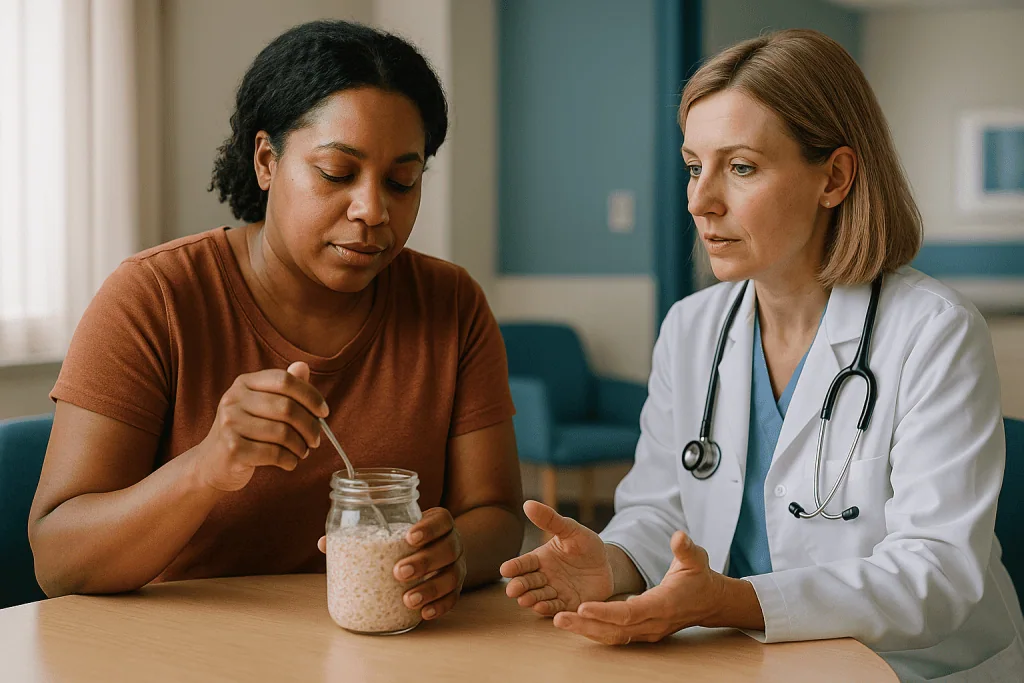
Resistant starch forms mainly when starch is cooked and then cooled, a process called retrogradation in which starch chains re-crystallize into shapes enzymes struggle to break. Cooked-then-chilled potatoes, rice and pasta show this clearly in controlled feeding studies. Raw rolled oats have not been gelatinized in your kitchen, so the classic retrogradation pathway does not apply in the same way. Commercial oats are steamed during processing, which partially cooks them, and small studies comparing raw soaked oats with hot cooked oats have found a somewhat lower glucose response to the uncooked version, plausibly because less-gelatinized starch digests more slowly.
Those studies are small, mostly in healthy volunteers and not uniform in their oat types or soaking times. The fair summary is that overnight oats are probably at least as gentle on blood glucose as cooked oatmeal and may be slightly gentler, but the difference is minor next to the effect of oat type, portion size and added sugar.
Soaking also softens the grain and reduces phytic acid, a naturally occurring compound that binds minerals such as iron and zinc. The reduction is modest and matters mainly in diets built heavily around unrefined grains and legumes; in a varied diet it is not a practical concern. Soaked oats are not a nutritional transformation. They are the same good food, made pleasant to eat cold.
Why overnight oats are good for your gut
Fiber is the nutrient Americans miss most reliably. National surveys put average intake around 15 grams a day against a recommended 25 to 38 grams depending on age and sex. A jar of oats with chia seeds and berries can supply a third of that target before lunch, and the type of fiber it supplies is the kind the colon’s bacteria prefer.
Beta-glucan is fermentable. Bacteria in the large intestine break it down and release short-chain fatty acids, small molecules such as butyrate, acetate and propionate that feed the cells lining the colon, help maintain a slightly acidic environment that discourages some harmful species, and act as signals to the immune system. Butyrate is the primary fuel of colon lining cells, which is why fermentable fiber is linked in observational studies to lower rates of colorectal problems and why it is under active investigation in inflammatory bowel conditions.
Human trials feeding oats or oat beta-glucan for several weeks have documented increases in Bifidobacterium and Lactobacillus species and higher stool short-chain fatty acid levels. These are consistent, mechanistically sensible findings, though most trials are short and the link between a shift in bacterial species and a change in health outcomes is still being worked out. The evidence that fiber intake overall predicts lower cardiovascular and colorectal risk is stronger and rests on very large cohort studies.
Add-ins can help here. Chia and flaxseed contribute additional soluble fiber; berries add polyphenols that bacteria also metabolize; plain yogurt or kefir contributes live cultures, though whether those cultures colonize the gut long-term is uncertain. The combination is less important than consistency. A gut microbiome responds to what it is fed most days, not to a single heroic jar.
What the evidence actually says, graded by strength
Not every claim about overnight oats deserves the same confidence. Here is how the main ones stack up when you separate randomized trials from observational data and expert opinion.
Strong evidence (multiple randomized controlled trials, meta-analyzed). Oat beta-glucan lowers LDL cholesterol. A 2014 meta-analysis of 28 randomized trials found that about 3 grams a day of oat beta-glucan reduced LDL by roughly 0.25 mmol/L, about 10 mg/dL, and total cholesterol by about 0.30 mmol/L, without lowering HDL. This is the basis of the long-standing regulatory heart-health claim for oats.
Moderate evidence (randomized trials, mostly small or short). Oat-based meals produce a lower post-meal glucose and insulin response than refined-grain meals. In adults with type 2 diabetes, replacing other grains with oats modestly improves fasting glucose and A1c over weeks to months. Oat fiber increases beneficial bacterial species and short-chain fatty acids over several weeks of intake.
Moderate observational evidence. Higher whole-grain and fiber intake is associated with lower rates of cardiovascular disease, type 2 diabetes and colorectal cancer across large cohort studies. These are associations, not proof of cause, though they are consistent and biologically plausible.
Weak or preliminary evidence. Cold-soaked oats produce a meaningfully lower glucose response than hot oatmeal (a few small crossover studies). Avenanthramides reduce inflammation in humans (mostly laboratory and small pilot studies). Oats improve satiety more than other grains (short-term studies with mixed results).
No credible evidence. Oats or oat drinks reproduce the effect of prescription weight-loss or diabetes medicines. Soaking “detoxifies” grains. Overnight oats cause meaningful weight loss on their own without changes to overall intake.
An opinion, grounded in that ranking: the cholesterol effect is the reason to eat oats regularly, the gut effect is a well-supported bonus, and the blood-sugar advantage is real but modest and easily erased by a spoon of syrup.
How to make overnight oats: the basic formula
Every recipe on the internet is a variation of one ratio, and the ratio is forgiving. Combine equal parts old-fashioned rolled oats and liquid by volume, roughly a half-cup of each for one serving, stir, cover and refrigerate for at least four hours or overnight. That is the whole method. The oats absorb the liquid, soften and thicken into something between porridge and pudding.
A few adjustments change the result more than any brand of oats does. Swapping half the milk for plain yogurt makes the texture creamier and adds protein. A tablespoon of chia seeds absorbs extra liquid and firms the mixture; if you use it, add an extra splash of milk. A pinch of salt sharpens flavor and reduces the urge to sweeten. Cinnamon, vanilla or unsweetened cocoa add taste without sugar, and there is modest trial evidence that cinnamon has a small effect on post-meal glucose, though not enough to rely on.
Food safety is straightforward but not optional. Commercial oats are heat-treated during processing, so eating them uncooked after soaking is safe. Once mixed with dairy or plant milk, the jar is a perishable food. Keep it refrigerated and eat it within about four days, the same window that applies to most cooked leftovers. Fresh fruit is best added the morning you eat it; berries stirred in on day one will soften and can ferment slightly by day four.
Warm eaters are not excluded. A soaked jar can be heated briefly in the morning; the soaking simply cuts the cooking time to a minute or two. Whether you eat it cold or warm, the nutrition is essentially the same, which is the point the trend tends to miss. The method is a convenience, not a mechanism.
How do you make the best overnight oats for steady energy?
“Best” on a recipe site means most photogenic. Best for the body means a jar that keeps you full until lunch without a mid-morning slump, and that comes down to three levers: protein, fat and portion.
Protein is the lever most breakfasts ignore. Oats alone supply about 5 grams per half-cup dry, well short of the 20 to 30 grams that satiety research suggests helps people feel full for several hours. Plain Greek yogurt, cow’s milk or unsweetened soy milk, a spoonful of nut butter or a scoop of unflavored protein powder each close the gap, and protein eaten alongside carbohydrate blunts the glucose rise in a way that is well documented in meal studies. Aim for a jar that looks like a meal, not a garnish.
Fat slows stomach emptying, which extends the same gentle curve the beta-glucan is already producing. Nuts, seeds and nut butters bring unsaturated fats along with more fiber; a tablespoon or two is enough. Coconut-based toppings and cream add saturated fat without the fiber, which works against the cholesterol benefit that makes oats worth eating.
Portion is where the online recipes drift. Many call for a full cup of dry oats, which doubles the carbohydrate to more than 50 grams before fruit. That is a reasonable amount for an athlete and a lot for a sedentary adult managing weight or glucose. A half-cup dry, bulked out with yogurt, seeds and fruit, is the more common sweet spot.
Texture is the final, unscientific lever, and it matters because a breakfast you dislike gets abandoned. Steel-cut oats stay chewy; rolled oats turn soft; a longer soak makes everything creamier. Find the version you will eat on a Tuesday in February, then keep making it.
What not to add to overnight oats: the sugar traps
The oats are rarely the problem. Search any popular recipe and the ingredient list reads like a dessert: maple syrup, honey, flavored yogurt, dried cranberries, granola, chocolate chips. Each is small on its own. Stacked, they routinely push a jar past the American Heart Association’s suggested daily limit for added sugar, about 25 grams for women and 36 for men, before 8 a.m.
Honey and maple syrup deserve special mention because they are marketed as natural. Nutritionally they are added sugars; the body metabolizes them as it metabolizes table sugar, and they raise glucose accordingly. Flavored and fruit-on-the-bottom yogurts are the stealthiest offender, because they replace the protein-rich plain yogurt that helps the jar and swap in a sweetened one that hurts it. Sweetened dried fruit concentrates sugar into a small volume; a quarter-cup of sweetened cranberries carries more sugar than a whole cup of fresh berries. Granola is oats with sugar and oil already baked in, so topping oats with granola is topping oats with worse oats.
| Common add-in (typical serving) | Approximate sugar added | Verdict |
|---|---|---|
| Honey, 1 tablespoon | About 17 g | Use sparingly or skip |
| Maple syrup, 1 tablespoon | About 12 g | Use sparingly or skip |
| Flavored yogurt, 6 oz | About 15 to 20 g | Swap for plain |
| Sweetened dried cranberries, 1/4 cup | About 25 g | Swap for fresh fruit |
| Granola, 1/4 cup | About 5 to 8 g | Swap for nuts |
| Chocolate chips, 1 tablespoon | About 8 g | Occasional treat |
| Sweetened almond milk, 1 cup | About 7 to 13 g | Swap for unsweetened |
| Fresh berries, 1/2 cup | 0 g added (natural sugar with fiber) | Add freely |
Figures are typical label values and vary by brand. The pattern does not: sweetness that arrives with fiber and water, as in fresh fruit, behaves very differently from sweetness that arrives concentrated.
Chia, flax, nuts and yogurt: the add-ins that earn their place
If the last section was the cautionary list, this is the one worth taping to the fridge. The best additions do one of three jobs: they add fiber, they add protein or unsaturated fat, or they add flavor without sugar.
Chia seeds are the trend’s most defensible ingredient. A tablespoon supplies about 4 grams of fiber, mostly soluble, plus plant omega-3 fats and a little protein, and the seeds swell into a gel that thickens the jar naturally. Ground flaxseed does similar work with a nuttier taste; it must be ground, because whole flax seeds pass through largely undigested. Both have small randomized trials suggesting modest improvements in LDL cholesterol and post-meal glucose, consistent with their soluble-fiber content.
Nuts and nut butters bring protein, unsaturated fat, magnesium and crunch. Walnuts, almonds and peanuts all have observational and trial evidence linking regular intake to better cholesterol profiles. Choose unsweetened nut butter; many jars list sugar as the second ingredient.
Plain Greek yogurt or skyr roughly doubles the protein of the jar and brings live cultures. Cow’s milk and unsweetened soy milk are the protein-rich liquids; oat milk and most almond milks are low in protein and should be paired with another protein source.
Fresh or frozen fruit is the sweetener that comes with a built-in brake. Berries, sliced apple, pear and kiwi carry fiber and water alongside their sugar, so the glucose effect is gentle. Banana is fine in moderation; a whole large banana adds about 27 grams of carbohydrate, so half is often plenty.
Spices finish the job. Cinnamon, cardamom, ginger, nutmeg, vanilla extract and unsweetened cocoa make a jar taste like a treat while adding effectively nothing to the sugar column. Salt, a small pinch, is the most underrated ingredient in the whole category.
Rolled, steel-cut or instant: which oats work best for blood sugar?
All oats begin as the same grain, an oat groat with its bran intact. What differs is how much the groat is cut, steamed and flattened before it reaches the box, and that processing history predicts how fast the starch digests.
Steel-cut oats are groats chopped into pieces. They retain the most structure, have the lowest glycemic index of the three, around the low 50s, and take the longest to soften. Soaked overnight they stay pleasantly chewy; some people prefer to soak them for a full 24 hours or briefly heat them.
Rolled oats, also sold as old-fashioned oats, are groats steamed and pressed flat. They hydrate quickly and give the classic overnight-oats texture. Their glycemic index sits in the mid-50s, still in the low-to-moderate range. For most people they are the practical choice, and they are the type used in the majority of clinical trials.
Quick oats are rolled thinner and cut smaller; instant oats are thinner still, precooked and often pre-flavored. Both digest faster, with glycemic index values reaching the high 70s. Plain quick oats are acceptable in a pinch. Flavored instant packets carry added sugar and sodium and are the versions least likely to meet the updated “healthy” labeling standard.
Oat bran, the outer layer alone, is the most concentrated source of beta-glucan by weight and can be stirred into a jar to boost fiber, though on its own it lacks the whole-grain texture most people want.
A practical note on gluten. Oats are naturally free of gluten but are frequently grown, transported and milled alongside wheat and barley, so ordinary oats can carry enough cross-contact to matter for someone with celiac disease. Packages labeled gluten-free are tested to a regulated threshold; unlabeled oats are not.
Common myths about overnight oats, corrected
Myth: overnight oats spike blood sugar like candy. The viral screenshots that show a steep climb almost always come from jars loaded with syrup, sweetened yogurt or a full cup of dry oats. Controlled trials comparing oat meals with refined-grain meals of equal carbohydrate consistently show a lower, slower glucose rise after oats. A rise is normal; a spike is a recipe problem.
Myth: raw oats are unsafe or indigestible. Commercial oats are steamed and kilned during processing, and soaking softens them further. Millions of people eat muesli and soaked oats daily. The only genuine caution is food-safety handling once dairy is added: refrigerate and eat within about four days.
Myth: soaking unlocks nutrients that cooking destroys. Soaking modestly lowers phytic acid and may slightly reduce the glucose response, but the fiber, protein, minerals and beta-glucan are essentially identical whether the oats are soaked or simmered. Hot oatmeal is not an inferior food.
Myth: an oat drink can stand in for a prescription weight-loss medicine. The blended oat-and-lime drink that went viral under a medicine-inspired nickname is a low-calorie porridge. It contains no hormone-mimicking compound and has no trials behind it. Any weight change comes from eating fewer calories, and the drink’s low protein makes hunger likely to return quickly.
Myth: overnight oats are high in protein. Oats supply a moderate amount; the protein people credit to the jar comes from the milk, yogurt, nuts or powder they add. A water-soaked jar with fruit is a carbohydrate-and-fiber breakfast, not a protein one.
Myth: oats are gluten-free, full stop. Naturally, yes; in practice, cross-contact with wheat and barley is common unless the package is labeled and tested gluten-free. People with celiac disease should not assume.
Who should be cautious with overnight oats
A food that suits most people still has exceptions, and the exceptions are worth naming plainly rather than buried in a footnote.
People with celiac disease need certified gluten-free oats, and a small minority react even to pure oats because of a protein called avenin. Anyone with suspected celiac disease should be tested before removing gluten from the diet, because the blood tests and intestinal biopsy become unreliable once gluten is gone. That decision, and the diagnosis, belong with a clinician.
People with irritable bowel syndrome sometimes find that a sudden increase in fermentable fiber worsens bloating and gas. Oats are generally well tolerated at a half-cup serving on low-FODMAP protocols, but adding a large dose of chia, dried fruit or inulin-based protein powder at the same time can overwhelm the gut. Increase fiber over a couple of weeks, not overnight.
People with chronic kidney disease may be asked to limit phosphorus and potassium. Oats contain both, and common add-ins such as banana, nuts, seeds and dairy add more. Portions and choices in that situation should follow the guidance of the renal dietitian and nephrologist, not a general article.
People taking insulin or other glucose-lowering medicines should know that changing breakfast carbohydrate content, in either direction, can shift glucose readings. A switch from a sugary cereal to a plain oat jar is generally favorable, but any pattern of unusually low or high readings should prompt a conversation with the prescribing clinician. Medicines should never be adjusted on the basis of a food trend.
People with a diagnosed oat allergy, which is uncommon but real, should avoid oats entirely. And anyone managing a history of disordered eating may find that glucose-monitor-driven breakfast scoring feeds anxiety more than health; a registered dietitian can help reframe the goal.
When to see a doctor
Breakfast is rarely a medical emergency, but a few situations connected to this topic should move you from the kitchen to the clinic.
Digestive symptoms that persist after adding oats or high-fiber foods deserve evaluation rather than another recipe tweak. Bloating that lasts weeks, a change in bowel habit that does not settle, abdominal pain, blood in the stool, black or tarry stools, or unintentional weight loss are not normal fiber adjustment. They can signal celiac disease, inflammatory bowel disease or other conditions that need testing, and the testing is more accurate before you change your diet.
Symptoms that appear after eating gluten-containing foods, such as diarrhea, fatigue, mouth ulcers or an itchy blistering rash, should prompt a request for celiac screening while gluten is still in the diet.
Glucose readings that stay high despite dietary changes, readings that drop low with shakiness, sweating or confusion, or any pattern that feels different from usual should go to the clinician who manages your diabetes. A wearable sensor is a tool for that conversation, not a replacement for it, and self-adjusting medicines based on breakfast experiments is unsafe.
Any signs of an allergic reaction after eating oats or a new add-in, including hives, swelling of the lips or face, wheezing or difficulty breathing, require urgent medical care; difficulty breathing or throat tightness is an emergency.
People with kidney disease who are unsure whether oats and typical toppings fit their potassium and phosphorus limits should ask their care team before making the jar a daily habit.
Every decision about medicines, screening or a therapeutic diet rests with your own clinician, who knows your history. An article can explain the evidence; it cannot examine you.
Frequently asked questions
Is oats overnight actually healthy for you?
Yes, for most people, provided the base is plain oats with unsweetened liquid. The oats provide soluble fiber with strong trial evidence for lowering LDL cholesterol and moderate evidence for a gentler post-meal glucose rise, plus fermentable fiber that feeds beneficial gut bacteria. The recipe, not the oats, determines whether the jar stays healthy; sweetened yogurt, syrups and granola can turn it into a dessert.
What is the basic formula for making overnight oats?
Equal parts rolled oats and liquid by volume, about a half-cup of each per serving, stirred, covered and refrigerated for at least four hours. Plain milk, unsweetened soy milk or a mix of milk and plain yogurt gives the best protein and texture. A tablespoon of chia seeds thickens the jar and adds fiber; if you use it, add a little extra liquid. Refrigerate and eat within about four days.
What not to add in overnight oats?
Avoid making sweetened ingredients the default: honey, maple syrup, flavored yogurt, sweetened dried fruit, granola, chocolate chips and sweetened plant milks. Each adds concentrated sugar without fiber, and stacked together they routinely exceed daily added-sugar guidance in one meal. Swap in fresh or frozen fruit, plain yogurt, nuts, seeds and spices such as cinnamon or vanilla for sweetness and flavor.
How do you make the best overnight oats for blood sugar?
Keep the portion to about a half-cup of dry rolled or steel-cut oats, add a protein source such as plain Greek yogurt or milk, include some unsaturated fat from nuts or seeds, and sweeten only with fresh fruit and spices. Protein and fat slow digestion alongside the oat fiber, producing a lower, longer glucose curve. Anyone managing diabetes should discuss carbohydrate targets with their clinician.
Do overnight oats spike blood sugar?
Plain overnight oats produce a moderate, gradual rise in blood glucose, not a spike, according to controlled meal studies comparing oats with refined grains. Beta-glucan forms a gel that slows starch digestion. The steep climbs shown in some viral glucose-monitor videos almost always trace to large portions or sugary add-ins. A modest rise that settles within about two hours is the expected response to any carbohydrate meal.
Are overnight oats better than cooked oatmeal?
Nutritionally they are nearly identical. A few small studies suggest cold-soaked oats produce a slightly lower glucose response than hot oatmeal, possibly because less-gelatinized starch digests more slowly, but the difference is small and the evidence limited. Fiber, protein, minerals and beta-glucan are the same either way. Choose whichever version you will eat consistently.
Are overnight oats good for gut health?
The evidence is supportive. Oat beta-glucan is fermented by colon bacteria into short-chain fatty acids such as butyrate, which nourish the intestinal lining, and feeding trials over several weeks show increases in beneficial species including Bifidobacterium. Adding chia, flaxseed or berries increases fermentable fiber further. Increase fiber gradually to limit bloating, especially if you have irritable bowel syndrome.
Can overnight oats help with weight loss?
They can support weight management as part of a lower-calorie pattern because the fiber and, with protein-rich add-ins, the protein promote fullness. No trial shows oats cause weight loss on their own, and the viral oat drink nicknamed after a prescription medicine has no evidence behind it and does not act like that medicine. Total daily intake and consistency matter far more than any single breakfast.
Are overnight oats gluten-free?
Oats do not naturally contain gluten, but they are commonly grown, transported and milled with wheat and barley, so ordinary oats can carry enough cross-contact to cause problems for people with celiac disease. Only packages labeled gluten-free are tested to a regulated threshold. A small number of people with celiac disease also react to avenin, an oat protein; a clinician can advise on individual tolerance.
How long do overnight oats last in the fridge?
About four days once mixed with milk, yogurt or plant milk, the same window that applies to most cooked leftovers. Keep the jar covered and refrigerated. Fresh fruit is best added the morning you eat it, since berries stirred in early soften and can begin to ferment. Discard any jar that smells sour or shows mold, regardless of the date.
This article is for general information only and is not a substitute for professional medical advice. Please consult a qualified doctor about your individual situation.

More from the Blog

Greek Yogurt vs Skyr: Protein, Sugar and the Gut Question
Plain skyr and plain Greek yogurt are nutritionally close cousins. Per 100 grams, plain nonfat skyr typically offers about 10 to 12 grams of…

Raw Milk: The Claimed Benefits vs the Documented Risks
Raw milk is milk that has not been heated to kill germs. The benefits claimed for it, such as easier lactose digestion, richer nutrition…

Grapefruit: Great Fruit, Serious Medication Interactions
Grapefruit is genuinely nutritious: half of one delivers roughly 40 percent of a day's vitamin C for about 50 calories, plus fiber and potassium.…

The Anti-Inflammatory Diet: What It Actually Is, What It Changes in Blood Tests and a Week of Meals
An anti-inflammatory diet is a Mediterranean-style pattern built on vegetables, fruit, legumes, whole grains, nuts, olive oil and fish, with fewer refined grains, sugary…

Hydrogen Water: The Viral Bottle Examined
Hydrogen water is ordinary water with molecular hydrogen gas dissolved into it. Small, short clinical trials suggest it may modestly lower some markers of…

Nutritional Yeast: The Vegan Staple With a B12 Catch
Nutritional yeast is a deactivated yeast prized for its savory, cheese-like flavor, complete plant protein, fiber, and B vitamins. The catch: yeast cannot naturally…