

Ponseti Method vs Surgery for Clubfoot: Why Casting Usually Comes First

Key Takeaways
- Clubfoot occurs in roughly 1 in 1,000 births, affects both feet in about half of children and is about twice as common in boys, according to MedlinePlus and Mayo Clinic.
- The Ponseti method corrects the foot in a strict order, fixing the high arch first and rotating the foot outward around the talus before bringing it up toward the shin, which is why untrained casting can create a rocker-bottom foot.
- The NHS reports that around four in five babies treated with casting need a minor Achilles tenotomy, a puncture-sized tendon release, so casting is not a surgery-free pathway.
- Bracing is described by the NHS as 23 hours a day for about three months and then nights until roughly age four or five, and Mayo Clinic ties relapse directly to inconsistent brace wear.
- Open surgical release fell out of favor as a first step because long-term follow-up showed scarred, stiff and weak feet that became painful in adolescence and adulthood.
- Relapse after casting is usually treated first with a few more casts and renewed bracing, and a tendon transfer is typically considered only for repeated recurrence in a child old enough for the operation.
For most babies born with clubfoot, the Ponseti method of gentle weekly casting, a small Achilles tendon release and years of nighttime bracing is tried first, and open reconstructive surgery is reserved for feet that do not correct or that relapse. Mainstream guidance favors casting because it straightens the foot with far less scarring and stiffness than surgery; the treating team decides which path suits each child.
The ultrasound picture is grainy, but the sonographer has already said the word: clubfoot. On the drive home, the phrases start circling. Will he need an operation? Will she walk? Somewhere between the parking garage and the kitchen table, most parents type the same thing into a phone: Ponseti method vs surgery.
It is a reasonable question, and it has an unusually clear answer for a field that loves nuance. Over the past few decades, pediatric orthopedics has moved almost entirely away from opening up a newborn’s foot as a first step. The current approach looks, to an outsider, oddly low-tech: a clinician’s hands, plaster, a tiny tendon release and a pair of boots on a bar.
What follows explains why that sequence became the standard, what surgery still does, where the honest uncertainties sit, and what a family actually lives through in the first months.
What is clubfoot, and why does it need treatment at all?
Clubfoot, known medically as congenital talipes equinovarus, is a birth difference in which one or both feet point downward and turn inward, so the sole faces the other leg. It is not a positional quirk that resolves with a few stretches. The bones of the foot sit in an abnormal alignment, the ligaments on the inner and back side are short and thick, and the calf muscle and Achilles tendon are tight.
It is also common as birth differences go. MedlinePlus puts the frequency at roughly 1 in every 1,000 births, and Mayo Clinic notes that about half of affected children have both feet involved and that boys are affected about twice as often as girls. In most babies the cause is unknown, a situation clinicians call idiopathic, meaning it arises on its own rather than as part of a broader condition. A smaller group have clubfoot alongside a neuromuscular or genetic disorder, and that distinction matters later when treatment paths diverge.
Why treat at all? An untreated clubfoot does not straighten with growth. The child eventually walks on the outer edge or top of the foot, where the skin was never designed to bear weight. Calluses, pain, ill-fitting shoes and an awkward gait follow. Treatment aims for a foot that is flat on the ground, flexible, pain-free and able to wear ordinary shoes, which is precisely how the NHS frames the goal. The good news, and it is genuinely good, is that the foot is at its most moldable in the first weeks of life, which is the whole premise behind casting first.
Ponseti method vs surgery: what each option really means
The phrase Ponseti method vs surgery sounds like a coin toss between two rival treatments. In modern practice it is closer to a sequence, with one step used first and the other held in reserve.
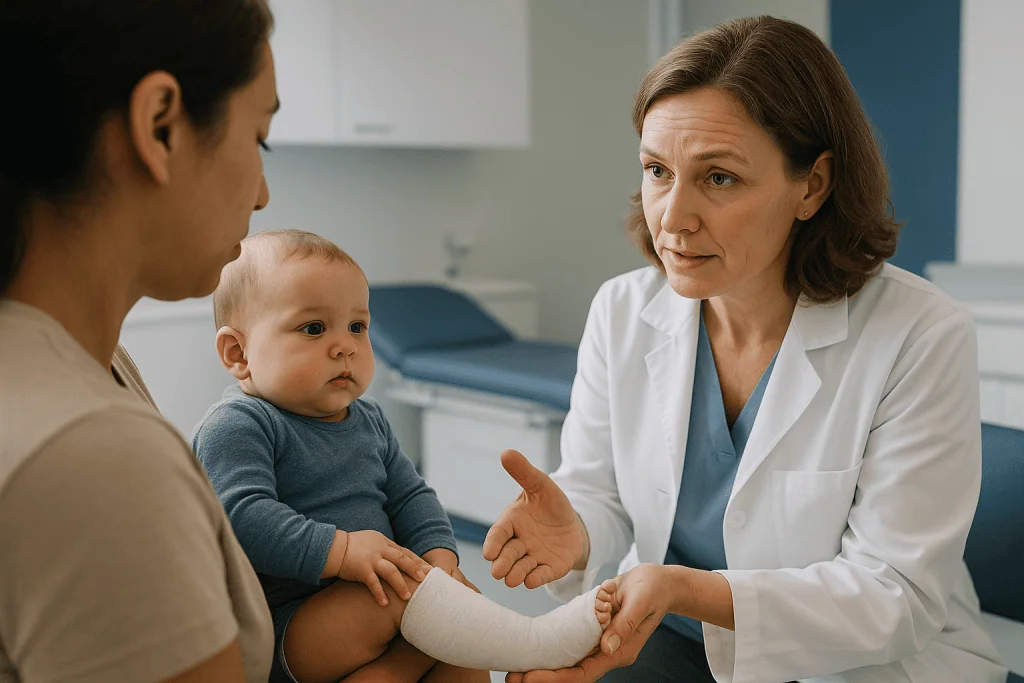
The Ponseti method is a non-operative technique developed by an orthopedic surgeon who spent decades studying the anatomy of clubfoot. It has three linked parts: a series of gentle manipulations and plaster casts changed weekly, a minor procedure to release the tight Achilles tendon in most children, and a long period of wearing a foot abduction brace, the boots-and-bar device that holds the correction while the child grows. The word method is doing real work here; skipping or shortening any part changes the result.
Surgery, in the clubfoot conversation, usually refers to open procedures that cut and lengthen multiple tendons and release joint capsules and ligaments on the back and inner side of the foot. The most extensive version is called a posteromedial release. Smaller operations also exist, such as transferring a tendon to rebalance a foot that keeps drifting inward after casting.
Mayo Clinic summarizes the current position plainly: stretching and casting is the most common approach, and surgery is considered when the deformity is severe, does not respond to casting, or recurs. The evidence base is not a set of large randomized trials pitting one against the other in newborns; it is decades of observational follow-up showing that feet corrected without extensive surgery tend to stay more supple. That is why the honest answer to which one is better begins with a different question: which one first, and for whom?
How the Ponseti method works, cast by cast
Watch a clinician apply a Ponseti cast and the first surprise is how gentle it looks. There is no forcing. The foot is held between a thumb and finger, the front part of the foot is coaxed a few degrees outward, and a long plaster cast from toes to upper thigh holds that new position. A week later the cast comes off, the tissues have quietly adapted, and the next cast takes the foot a little further.
The order of correction matters, and it is where the Ponseti approach differs from older casting techniques. The high arch, called cavus, is addressed first by lifting the first metatarsal, the long bone behind the big toe. Only then is the foot gradually rotated outward around the head of the talus, the ankle bone that sits at the pivot of the deformity. Trying to push the foot up toward the shin too early, before the rotation is complete, can jam the bones together and produce a rocker-bottom shape. The sequence exists to avoid exactly that.
Why does a newborn’s foot respond to something this modest? Ligaments and tendons in the first weeks of life are rich in collagen that is still being laid down, and they lengthen under sustained, low-level tension in a way that adult tissue never will. Each cast provides that tension for seven days.
The NHS describes casts being changed weekly for approximately 5–8 weeks, and Mayo Clinic gives a similar picture of several casts over a few months. A long-leg cast is used rather than a below-knee one because the knee bent at a right angle stops the cast from sliding down as the baby kicks. Most families are struck by how quickly the shape of the foot changes from one visit to the next.
Why the Achilles tenotomy is part of casting, not a surgical failure
Near the end of the casting series, many parents hear a sentence that briefly reopens the whole Ponseti method vs surgery debate: your child will probably need a tenotomy. It helps to understand what that word means before the worry sets in.
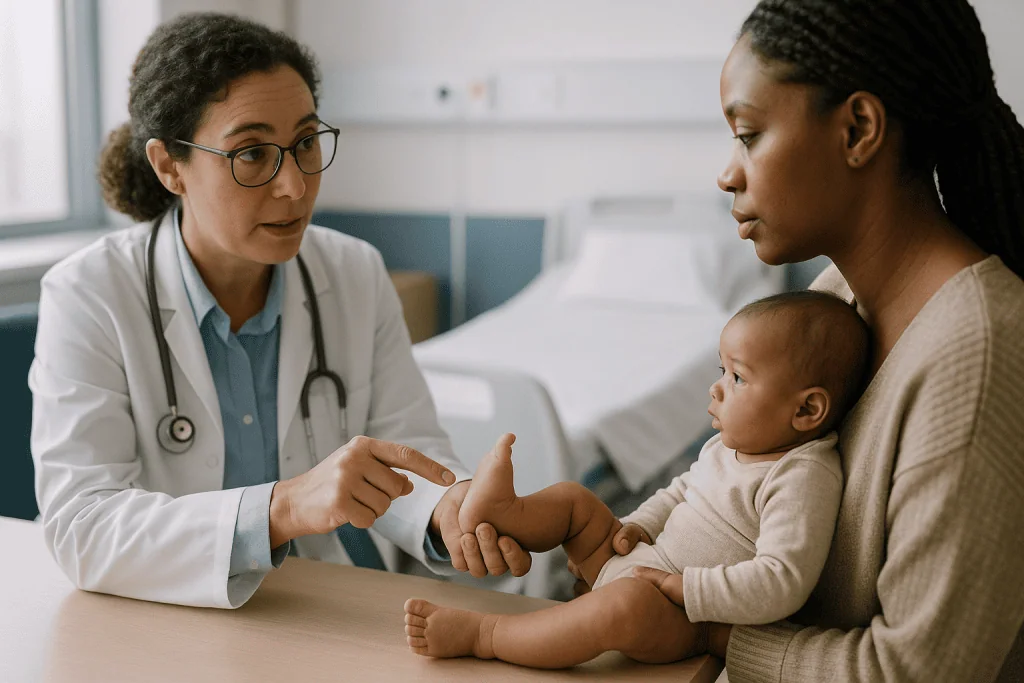
A tenotomy is a small cut through a tendon to let it lengthen. In clubfoot, the target is the Achilles tendon at the back of the heel, which is usually too short to allow the foot to come up toward the shin even after the rest of the foot has been rotated into position. Casting can lengthen ligaments, but a thick, mature tendon resists. Releasing it with a tiny blade through a puncture, then holding the foot in the corrected position in a final cast for about three weeks, lets the tendon heal at a longer length.
The NHS notes that around four in every five babies treated with the Ponseti method need this minor operation. It is typically done under local anesthetic in a clinic setting or under a brief general anesthetic, and the choice depends on the child, the team and local practice. There is no incision to close in the usual sense; the puncture is small and usually covered with a simple dressing under the cast.
Is this surgery? Technically, yes, a tendon is cut. Functionally, it is a world apart from a posteromedial release. Nothing is opened, no joint capsule is touched, and the scar tissue that stiffens surgically treated feet has very little chance to form. Clubfoot tenotomy recovery, in practical terms, means the final cast stays on while the tendon heals and the baby is then fitted for the brace. Most children are feeding, sleeping and behaving normally within a day, though the treating team will tell each family what to expect for their child.
Ponseti method boots and bar: the phase that decides the outcome
If the casting phase is the dramatic part, bracing is the long, unglamorous stretch that determines whether the drama was worth it. Once the last cast comes off, the child is fitted with a foot abduction brace: two open-toed boots attached to a bar that holds the feet turned outward and the ankles slightly up. The brace does not correct anything. Its job is to stop the same tissues that pulled the foot inward before birth from pulling it back.
The schedule is demanding. The NHS describes the brace being worn for 23 hours a day for about three months, then only overnight and during naps until the child is around four or five years old. Mayo Clinic gives a comparable picture of full-time wear for roughly three months followed by nighttime use for several years. Those are typical ranges from published guidance, not promises, and each team sets its own protocol.
Here is the uncomfortable truth that experienced teams emphasize. Relapse, the return of part of the deformity after correction, is closely tied to bracing. Mayo Clinic states that clubfoot may recur if the brace is not worn as prescribed. The foot that looked perfect at six months can drift back by age two if the boots sat in a closet.
Why is compliance hard? Toddlers object to anything that limits kicking. Boots rub. Grandparents worry the child is uncomfortable. Skin gets red. Good clinics teach parents to check the heel is seated fully, to use a thin cotton sock without seams, and to treat the brace like brushing teeth, a non-negotiable evening routine rather than a nightly negotiation. Babies do adapt, usually within a couple of weeks, and most learn to kick both legs together like a mermaid.
What clubfoot surgery involves, and why practice changed
For much of the twentieth century, the default treatment for a foot that did not respond to a few casts was a full surgical release, often performed toward the end of the first year. Understanding that operation explains why the field turned away from it as a first step.
A posteromedial release opens the back and inner side of the foot through one or more incisions. The surgeon lengthens the Achilles tendon and several other tendons, divides the tight joint capsules around the ankle and midfoot, and may pin the bones in their new position while everything heals. It is skilled, careful work and it does produce a foot that looks straight on the operating table.
The problem emerged with time. Long-term follow-up studies of surgically released feet described in the orthopedic literature found a pattern: stiffness, weakness of the calf, pain in adolescence and adulthood, arthritis developing earlier than expected, and a foot that was straight but not supple. Every cut tendon heals with scar, every opened joint capsule fibroses to some degree, and a foot is a machine of small joints that need to glide. Repeat surgery on a scarred foot is harder and tends to add more scar.
Against that backdrop, feet treated by the Ponseti sequence were followed for decades and found, in general, to be more flexible and less painful, which is why Mayo Clinic and the NHS now describe casting as the standard first approach and surgery as the option for feet that do not respond or that relapse.
Surgery has not disappeared, and it should not. Some feet are too rigid for casting to complete the job, some children arrive for care late, and some relapses need a targeted operation. The change is in the order of operations, not the abolition of one of them.
Who casting is usually for, and who may be asked to wait or consider surgery
Most babies with clubfoot are candidates for the Ponseti method, and that includes both mild and severe idiopathic feet. Severity at birth is not, by itself, a reason to skip to surgery; a stiff foot usually just needs a few more casts. The NHS describes treatment ideally beginning within a week or two of birth, though it also notes that older infants can still be treated with casting.
Certain situations change the calculation, and this is where the treating team’s judgment becomes central.
- Clubfoot linked to another condition, such as arthrogryposis (a disorder of multiple stiff joints) or spina bifida (an incomplete closure of the spine), is often called syndromic or non-idiopathic. These feet can be corrected with casting but tend to be stiffer, relapse more often and are more likely to need surgery eventually.
- Children who present after infancy, sometimes at age three, five or later, still frequently start with casting, since bones remain partly moldable through early childhood, but more of them go on to need a surgical step.
- Feet that have already had extensive surgery elsewhere and have relapsed present a different problem, because scar limits what casting can achieve.
- Recurrent deformity after successful Ponseti treatment is usually managed first with repeat casting and reinforced bracing, then with limited surgery if it keeps returning.
Who is asked to wait? Mostly, nobody waits on casting; early is better. Waiting applies to surgery. A team may deliberately hold off on any open procedure until a child is old enough for a particular operation to make sense, or until casting has been given a full chance. Delay in that context is a strategy, not neglect, and a good team will explain the reasoning rather than simply scheduling another appointment.
Clubfoot casting vs surgery: a side-by-side comparison
Laid out together, the two paths look less like competitors and more like tools suited to different jobs. This table summarizes what mainstream sources such as Mayo Clinic and the NHS describe; the details for any individual child come from the treating team.
| Feature | Ponseti method (casting, tenotomy, bracing) | Open surgical release |
|---|---|---|
| Usual place in the pathway | First-line treatment for nearly all newborns | Reserved for feet that do not correct or that relapse |
| What is done to the foot | Weekly manipulation and plaster casts; small puncture release of the Achilles tendon in most children | Incisions to lengthen several tendons and release joint capsules; sometimes pins |
| Anesthesia | None for casting; local or brief general anesthetic for tenotomy, by team preference | General anesthetic |
| Typical active phase | About 5–8 weekly casts, then a final cast of around three weeks (NHS) | One operation followed by weeks in a cast |
| Long-term commitment | Brace 23 hours a day for about three months, then nights until roughly age four to five (NHS) | Bracing often still recommended; follow-up for stiffness and recurrence |
| Main long-term concern | Relapse, strongly linked to brace use | Stiffness, weakness and later pain from scar tissue |
| Reversibility | A relapsed foot can usually be re-cast | Scar limits later options |
Two points deserve emphasis. First, the tenotomy row shows why the phrase clubfoot casting vs surgery is slightly misleading; the Ponseti sequence includes a tiny procedure, and pretending otherwise sets families up for a shock. Second, the reversibility row is the quiet argument that won the field over. A cast can be redone. A scar cannot be uncut.
What the first weeks of casting usually look like for a family
Nothing prepares a new parent for handing a five-day-old baby to a stranger with a bucket of plaster. The reality tends to be calmer than the anticipation.
The first visit often happens within the first two weeks of life, in line with NHS guidance on starting early. The clinician examines the foot, checks hips and spine, explains the plan and applies the first cast. Babies frequently fall asleep during the manipulation because the movements are slow and rhythmic. The cast is warm as it sets and dries firm over the next hours.
At home, the job is observation. Parents are usually asked to check the toes several times a day for color and warmth, to keep the cast dry, and to watch that it has not slid down the leg, which makes the toes disappear inside the plaster. Diapering takes practice; folding the top of the diaper under the cast edge keeps it clean. Most babies sleep, feed and gain weight normally in casts, and a few are calmer than before because the plaster acts like a swaddle.
Each week brings a return trip. Some clinics remove casts with a saw that vibrates rather than spins; others soak the plaster off, and a few ask parents to soak it at home the night before. The foot emerges looking visibly straighter each time, which is one of the more rewarding parts of the process for families to witness.
After the tenotomy, the final cast stays on for roughly three weeks, according to the NHS. The transition to the brace often falls somewhere between two and four months of age. Then the rhythm changes from weekly visits to periodic checks over years, and the work shifts from the clinic to the nursery, where the boots go on every night.
Does clubfoot need surgery if the foot relapses after casting?
Relapse is the word families dread, and it is worth demystifying. A relapse means part of the deformity has returned: the heel may tilt inward again, the foot may not come up as far, or the child may start walking on the outer border. It does not mean the original treatment failed or that the foot has gone back to the beginning.
Mayo Clinic identifies inconsistent brace use as the usual reason, and most teams see the pattern the same way. The muscles that pulled the foot inward before birth do not vanish; they are simply outmatched by growth as long as the brace holds the foot in position at night. Take the brace away for a few months in year two or three, and the balance can tip back.
The first response to a relapse is usually not an operation. A short series of casts, often two to four, can regain the correction in a young child, followed by a renewed and closely supervised bracing program. This is one of the practical reasons casting is preferred first: the fallback is more casting, not more scar.
When a relapse keeps recurring despite good brace use, or when a specific muscle imbalance is driving it, a limited operation may be discussed. The most common is a tibialis anterior tendon transfer, in which the tendon that lifts and turns the foot inward is moved to the outer side of the foot so that it lifts without turning. It is typically considered in children old enough for the relevant bone to have matured, which is often around age three or older, and the treating team will judge the timing. A repeat tenotomy is another option for a heel that will not come up. Full posteromedial release remains the last resort rather than the next step.
Risks and downsides of each path, in plain language
Every treatment carries trade-offs, and families deserve them described without softening or alarm.
With casting, the most common problems are practical. A cast can slip and press on the toes or the top of the foot, causing pressure sores that need the cast removed. Skin can become irritated or macerated if the cast gets wet. Rarely, a cast applied with too much force or in the wrong sequence can push the midfoot into a rocker-bottom shape, which is why training in the specific Ponseti sequence matters. The tenotomy carries small risks of bleeding, infection and, uncommonly, injury to nearby vessels or nerves; it is minor but not trivial, and the anesthetic carries its own small risks that the team will explain.
Bracing brings blisters, red pressure marks and the occasional child who simply will not tolerate it, plus the family strain of years of nightly routine. The biggest risk of the whole Ponseti pathway is not a complication of the treatment but the relapse that follows when bracing lapses.
Surgery carries the standard risks of any operation under general anesthetic: infection, wound problems, bleeding and anesthetic reactions. Its distinctive downside is the long-term one already described: scar, stiffness and weakness that may not declare themselves until the child is a teenager. Overcorrection into a flat, everted foot is another recognized outcome of extensive releases.
What about doing nothing? Untreated clubfoot in a walking child produces skin breakdown over bone never meant to bear weight, pain and a gait that limits activity. Among the three options, non-treatment carries the surest harm, which is why every mainstream source describes some form of early treatment as the expected path.
What people often get wrong about the Ponseti method and surgery
Clubfoot is old, and so are the misconceptions around it. A few come up in almost every clinic.
Casting means no surgery at all. The NHS figure of around four in five children needing a tenotomy says otherwise. The tenotomy is minor and does not involve opening the foot, but it is still a procedure, and families should hear about it early.
A severe foot needs surgery from the start. Severity mostly predicts the number of casts, not the need for an open operation. Rigid syndromic feet are the exception, and even those usually begin with casting.
Once the foot is straight, the job is done. The correction is the easy part. Holding it for years with the brace is the hard part, and Mayo Clinic explicitly links relapse to inconsistent brace wear.
The brace hurts the child. A correctly fitted brace holds a foot that has already been corrected; it does not stretch anything. Fussing in the first days is about restricted kicking, not pain, and persistent crying with red or broken skin means the fit needs checking, not that bracing should stop.
Something during pregnancy caused it. In most cases the cause is unknown. Mayo Clinic lists family history and smoking in pregnancy as factors that raise risk, but clubfoot occurs in families with none of these, and no parent should carry guilt for a foot that formed in the first trimester.
Surgery gives a permanent fix. Surgically released feet can also relapse and may still need bracing. No pathway removes the need for follow-up through childhood.
Casting only works in newborns. Early is best, but casting is regularly used in older infants and children and remains the usual starting point even for late presenters.
Questions to ask your care team
The best appointments are the ones where parents arrive with a list. These questions tend to produce the most useful answers, and none of them is rude to ask.
- Is this an idiopathic clubfoot, or do you see signs of a wider condition that might change the plan?
- How many casts do you expect, and what would make you extend or shorten the series?
- Will my child need a tenotomy, and how do you usually perform it: in clinic with local anesthetic, or under general anesthetic?
- Who applies the casts here, and how many clubfeet does the team treat in a typical year?
- What exactly should I check at home each day, and what would make you want to see us before the next visit?
- How do you handle a cast that slips or gets wet?
- Which brace will you use, how will I know it fits properly, and who adjusts it as the feet grow?
- What is your bracing schedule, and how long do you expect nighttime wear to continue?
- How will we recognize an early relapse, and what is your first response when one happens?
- Under what circumstances would you recommend surgery beyond the tenotomy, and which operation would you be considering?
- How often will we be seen once bracing is established, and until what age?
- Are there activities, shoes or physical therapy you recommend or advise against as my child starts walking?
A team that welcomes these questions and answers them in ranges rather than guarantees is behaving exactly as the evidence suggests it should. Clubfoot treatment is a relationship that lasts through the preschool years; a good start to that relationship matters as much as the first cast.
When to call your doctor
Most of clubfoot treatment is routine, but a handful of signs should prompt a same-day call to the treating team rather than waiting for the next scheduled visit.
During casting, watch the toes. If they turn pale, blue or dusky, feel cold compared with the other foot, or swell noticeably, the cast may be too tight and needs prompt attention. Toes that have disappeared up inside the cast mean it has slipped and is likely pressing on the foot; this is common and fixable, but it should not wait days. Call if the cast becomes soft, cracked or soaked, if there is a foul smell or discharge at the edges, if the baby is inconsolable in a way that is new, or if a fever develops in the days after the tenotomy, since these can signal a pressure sore or infection under the plaster. Bleeding that soaks through the cast after the tenotomy also warrants a call.
During bracing, contact the team about blisters, broken skin or deep red marks that have not faded an hour after the brace comes off, a heel that no longer sits down into the boot, or a child who has outgrown the boots. Skin problems are the usual reason braces get abandoned, and early adjustment prevents that.
At any stage, a foot that seems to be turning inward again, a heel that looks tilted, a child who walks on the outer edge of the foot or who limps, or a leg that seems weaker than the other, are all reasons to arrange a review. Persistent pain in an older child after treatment of either kind deserves assessment rather than reassurance. None of these signs means treatment has failed; they mean the plan may need adjusting, and the people who can adjust it are the team who know the child’s foot.
Frequently asked questions
Is the Ponseti method better than surgery for clubfoot?
For most newborns, yes, in the sense that mainstream guidance recommends it first. Mayo Clinic and the NHS describe casting as the standard initial treatment and surgery as the option for feet that do not respond or that relapse. Casting produces a more flexible foot with less scar tissue, and a relapsed foot can be re-cast. Surgery remains valuable for stiff syndromic feet, late presentations and persistent recurrence, and the treating team decides which fits each child.
Does clubfoot need surgery at some point regardless of casting?
Most children need one small procedure, the Achilles tenotomy, which the NHS reports in around four in five babies treated by casting. It is a puncture release of the tendon, not an open operation. Beyond that, surgery is not inevitable; it is considered when casting cannot fully correct the foot or when relapse keeps returning despite good bracing. A minority go on to a tendon transfer or larger release.
How long does clubfoot casting take with the Ponseti method?
The NHS describes weekly casts for approximately 5–8 weeks, followed by a final cast worn for about three weeks after the tenotomy. Mayo Clinic gives a similar picture of several casts over a few months. These are typical ranges rather than promises; stiffer feet, syndromic clubfoot and older children often need more casts, and the treating team will adjust the plan to how the individual foot responds.
What is clubfoot tenotomy recovery like for a baby?
Recovery is usually brief. The tendon is released through a tiny puncture, the foot is placed in a final long-leg cast for roughly three weeks according to the NHS, and the tendon heals at its new length inside the cast. Most babies feed and sleep normally within a day. Parents are asked to watch for bleeding through the cast, fever or unusual fussiness and to call the team if these appear.
How long does a child wear the Ponseti method boots and bar?
The NHS describes the brace being worn for 23 hours a day for about three months, then only at night and during naps until the child is around four or five years old. Mayo Clinic gives a comparable schedule of full-time wear for a few months followed by several years of nighttime use. Individual teams set their own protocols, and the schedule may be extended if the foot shows early signs of relapse.
Why did doctors stop doing clubfoot surgery first?
Long-term follow-up of children who had extensive surgical releases in infancy showed feet that were straight but stiff, weak and often painful by adolescence and adulthood, because every cut tendon and opened joint capsule heals with scar. Children treated with the Ponseti sequence and followed for decades generally had more supple feet. As that evidence accumulated, casting became the recommended first step and surgery was reserved for feet that did not respond.
Can the Ponseti method work for an older child with clubfoot?
Often, yes. Early treatment is ideal, and the NHS suggests starting within a week or two of birth, but foot bones remain partly moldable through early childhood, so casting is regularly used as the first step in toddlers and older children who present late. More casts are usually needed, and a higher proportion of older children eventually require a surgical step such as a tendon transfer or a more extensive release.
What are the signs that clubfoot is relapsing after treatment?
Common signs include a heel that begins to tilt inward, a foot that no longer comes up toward the shin as far as before, a child who walks on the outer edge of the foot, or a brace that suddenly seems hard to put on because the foot will not turn outward. Relapse is most often linked to reduced brace wear. Any of these changes should prompt a review with the treating team rather than waiting for the next scheduled visit.
Is the Ponseti tenotomy considered surgery?
Technically it is a surgical procedure, because a tendon is cut, but it differs greatly from open clubfoot surgery. The Achilles tendon is released through a small puncture, no joints are opened and no other tendons are touched, so scar formation is minimal. It may be done under local anesthetic in clinic or under a brief general anesthetic depending on the team and the child. Families should expect it as part of the casting pathway rather than a sign that casting failed.
What is the difference between clubfoot casting vs surgery for a syndromic clubfoot?
Syndromic clubfoot, meaning clubfoot linked to a condition such as arthrogryposis or spina bifida, is usually still treated first with casting, but these feet tend to be stiffer, need more casts, relapse more often and are more likely to need surgery eventually. Teams weigh the underlying condition, the child’s overall mobility goals and the foot’s response to casting when deciding whether and when a surgical step is appropriate.
References
This article is for general information only and is not a substitute for professional medical advice. Please consult a qualified doctor about your individual situation.

More from the Blog

Driving, Typing and Lifting After Carpal Tunnel Surgery: A Realistic Return-to-Work Guide
Most people drive again after carpal tunnel surgery once the dressing is off, the hand can grip and turn the wheel without sharp pain,…

What Happens During Knee Replacement Surgery: A Step-by-Step Look Inside the Operating Room
During knee replacement surgery, a surgeon opens the front of the knee, removes the worn cartilage and a thin layer of damaged bone from…

How Deformity Correction Works: Osteotomy, Fixation and Gradual Realignment Explained
Deformity correction surgery realigns a bone that has grown, healed or worn into the wrong shape. A surgeon cuts the bone at a planned…

Hip, Knee or Shoulder Replacement: How Recovery Differs Joint by Joint
Recovery after hip, knee and shoulder replacement follows the same broad arc but differs in detail. Hip replacement usually allows walking within a day…

Wound Care After Knee Replacement: What Healing Looks Like and When to Call Your Team
Wound care after knee replacement means keeping the incision clean, dry and covered as your surgical team instructs, changing dressings only when told, and…

How Is Pain Managed After Hand Surgery? Elevation, Splints and Safe Relief
Pain after hand surgery is usually managed with a combination of measures: keeping the hand raised above heart level to limit swelling, wearing the…