

Preparing for Varices Endoscopy: Fasting, Clotting Tests and the Blood Thinner Question

Key Takeaways
- An upper endoscopy is the standard way esophageal varices are found and graded, and the same session can include band ligation, which is why preparation is stricter than for a routine scope.
- The NHS advises a typical fasting window of 6 to 8 hours before gastroscopy, with drinks stopped a couple of hours beforehand, and slow stomach emptying in liver disease is one reason units rarely shorten it.
- A raised INR in cirrhosis reflects reduced production of both clotting and anti-clotting proteins, so it is a marker of liver function rather than a reliable predictor of bleeding at a band site.
- Anticoagulants slow the clotting cascade while antiplatelet drugs make platelets less sticky for their lifespan, and whether either is paused before banding is a joint decision between the endoscopist and the prescribing clinician.
- After sedation the NHS advises a responsible adult to take you home and no driving, alcohol or machinery for 24 hours, and arriving without an escort is a common reason banding sessions are cancelled.
- Banding scars individual veins shut but does not lower portal pressure, so beta blockers, treating the cause of the liver disease and surveillance endoscopy continue alongside it.
Preparing for varices endoscopy usually means fasting for several hours beforehand, having blood tests that check clotting and platelet levels, and reviewing every medicine you take, especially anticoagulants and antiplatelet drugs. Whether a blood thinner is paused, continued or bridged is a decision for the prescribing clinician and the endoscopy team together, weighing bleeding risk against clot risk. Never adjust these medicines on your own.
The letter arrives with a checklist, and the checklist raises more questions than it answers. Nothing to eat after a certain hour. A blood test at the lab first. And one line that stops most people cold: tell us if you take a blood thinner. For someone living with cirrhosis, that line lands with weight. The blood thinner might be protecting a heart valve, a stent or a leg that once clotted. The endoscopy is meant to protect against a different kind of bleeding altogether.
Preparing for varices endoscopy is not complicated, but it is specific. Varices are enlarged, thin-walled veins in the esophagus or stomach that form when blood struggles to pass through a scarred liver. The procedure looks for them, grades them and, when needed, treats them with small rubber bands. Every preparation step exists because of that goal.
This explainer walks through the three questions on the checklist: fasting, clotting tests and medicines. It also covers what the days afterward tend to look like, and where the evidence is thinner than the internet suggests.
Why preparing for varices endoscopy starts with the liver, not the stomach
It helps to understand what the endoscopist is actually hunting for. Blood leaving the gut normally flows through the portal vein into the liver, gets filtered and moves on to the heart. When the liver is scarred by cirrhosis, that flow meets resistance. Pressure builds in the portal system, a state called portal hypertension, meaning higher-than-normal pressure in the veins that drain the intestines into the liver. Blood looks for detours, and one of the easiest detours runs through small veins under the lining of the lower esophagus and upper stomach.
Those detour veins were never designed for the job. They swell, bulge into the food pipe and develop walls thin enough to tear. Mayo Clinic describes them as the most serious complication of portal hypertension because a bleed can be sudden and heavy. The National Institute of Diabetes and Digestive and Kidney Diseases lists variceal bleeding among the complications that turn compensated cirrhosis, where the liver still copes, into decompensated cirrhosis, where it no longer does.
So can esophageal varices be seen in an endoscopy? Yes, and that is precisely why the test exists. An upper endoscopy, a thin flexible camera passed through the mouth, gives a direct view of the esophageal lining. The endoscopist notes how large the varices are, whether they carry red markings on their surface that suggest a higher chance of bleeding, and whether the stomach has its own varices, which behave differently.
This is why the preparation feels different from a routine reflux scope. The team is not only looking. They are often prepared to treat during the same session, and treating a vein that bleeds under pressure changes how seriously fasting, clotting and medicines are handled. Every item on your checklist traces back to that possibility.
What actually happens during a varices endoscopy and banding
Most people are surprised by how ordinary the setting looks. You lie on your left side. A plastic guard sits between your teeth. A numbing spray, sedation through a small cannula, or both, depending on local practice and your health, take the edge off the gag reflex. The NHS notes that gastroscopy itself is usually brief, often completed within about 15 minutes, though treatment adds time.
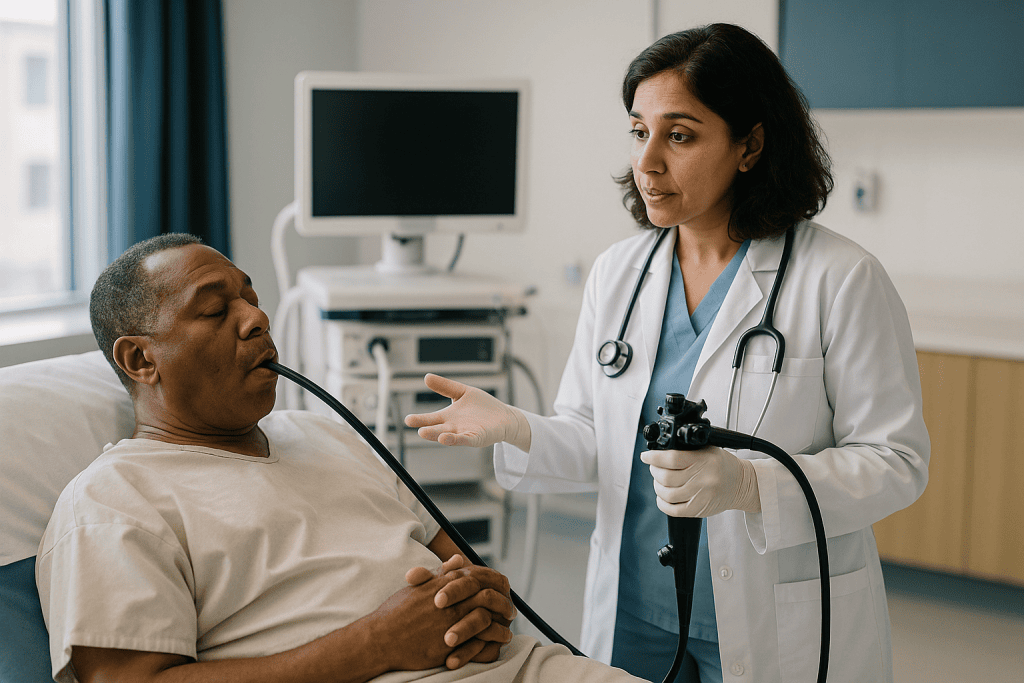
The endoscope passes over the tongue and down the esophagus. Air or carbon dioxide gently inflates the passage so the lining can be seen. Small varices may simply be recorded and photographed. If treatment is planned, the endoscopist fits a short cap loaded with tiny rubber bands onto the tip of the scope. Each varix is drawn into the cap with suction and a band is released around its base. Mayo Clinic explains that the banded tissue loses its blood supply, shrinks and falls away over the following days, leaving a small shallow ulcer that heals as the vein scars closed.
The technique is called endoscopic variceal ligation, which means tying off a vein from the inside using a camera. Several bands may be placed in one session, working upward from the junction with the stomach. Gastric varices, those in the stomach itself, are usually treated differently, often with an injected tissue adhesive rather than bands, because their size and position make banding less secure.
Afterward you are wheeled to recovery, watched until the sedation wears off and given written instructions. Many people remember little of the procedure. The sore throat and the feeling of fullness are far more memorable than the scope itself.
Who is usually offered varices endoscopy, and who is usually asked to wait
Three groups walk through the endoscopy door for this reason, and their preparation differs slightly.
The first is screening. Mayo Clinic advises that people newly diagnosed with cirrhosis are generally offered an upper endoscopy to check whether varices are already present, with repeat screening at intervals the liver specialist sets based on the findings and how advanced the liver disease is. The second is elective treatment, usually a series of banding sessions for varices considered at meaningful risk of bleeding, or follow-up sessions after a previous bleed to reduce the chance of another. The third is emergency endoscopy during an active bleed, where fasting rules and medication reviews are compressed into minutes and handled entirely by the hospital team.
Who is asked to wait? Anyone with an active chest infection or unstable heart or lung disease may have an elective scope postponed until they are steadier, because sedation and the procedure both place a mild strain on breathing and circulation. Someone whose platelet count or clotting result has shifted sharply since the last check may be called back for repeat tests before a banding session. And a person who has eaten within the fasting window is nearly always rescheduled, because food in the stomach blocks the view and raises the chance of inhaling stomach contents while sedated.
Pregnancy, recent abdominal surgery and known difficulty with sedation all prompt a conversation rather than an automatic cancellation. The point is not to exclude people. It is to make sure the moment the scope goes in, the team has the clearest view and the most stable patient they can arrange.
Fasting before endoscopy: how long, and why the rule is stricter than it looks
The fasting instruction is the one people most often test, and the one least worth testing. The NHS advises that you will typically be asked not to eat for 6 to 8 hours before a gastroscopy, and to stop drinking a couple of hours beforehand, with the exact window set by the unit performing your test. Some services allow clear fluids, meaning liquids you can see through such as water, closer to the appointment; others do not. Your own letter overrides anything written here.

Two reasons sit behind the rule. The first is visibility. Varices are graded partly by size and surface appearance, and a stomach coated in breakfast hides exactly the details that decide whether banding is needed. The second is safety. Sedation dulls the reflexes that keep food and acid out of the airway. An empty stomach means far less to inhale if you retch.
Liver disease adds a third reason. Portal hypertension can slow stomach emptying, and fluid in the abdomen, called ascites, presses on the stomach from outside. Both mean food may linger longer than in a healthy gut, which is why endoscopy units caring for people with cirrhosis rarely shorten the window.
Practical details matter more than heroics. Chewing gum and boiled sweets count as intake in many units. If your appointment is in the afternoon, ask whether a very early light breakfast is permitted rather than assuming. If you take medicines that must be swallowed with food, or diabetes medicines that depend on eating, raise this when the appointment is booked, not on the morning, so the team can tell you how to handle the fasting hours. The decision on every one of those medicines sits with them.
Why clotting tests before a varices endoscopy look different in liver disease
Most pre-procedure blood tests check three things: a full blood count including platelets, the small cell fragments that plug damaged vessels; a prothrombin time or INR, which measures how quickly plasma forms a clot; and sometimes kidney function. In liver disease each of these tells a more complicated story than it does in other patients.
The liver makes most clotting proteins, so a scarred liver often produces an INR that reads high. For years that number was treated as a simple bleeding-risk gauge. Modern liver guidance is more careful. The liver also makes the natural anticoagulant proteins that keep clotting in check, and those fall too. The result is a rebalanced system that can tip toward bleeding or toward clotting depending on the situation. An abnormal INR in cirrhosis is therefore a marker of how sick the liver is, not a reliable predictor of whether a band site will ooze.
Platelets are similar. Portal hypertension enlarges the spleen, and an enlarged spleen traps platelets, so counts are often low. Endoscopy units generally have thresholds below which they discuss options before banding, but the threshold and the response, whether that is a transfusion, a different product or simply proceeding with extra care, vary by service and by the individual.
Why test at all, then? Because the results shape the plan. They tell the team how much bleeding reserve you have, whether anything correctable stands out and whether the anesthetist or sedation nurse needs to adjust their approach. The NIDDK notes that blood tests also help track how cirrhosis is progressing. Treat the test as part of the map rather than a pass or fail exam.
Blood thinners before endoscopy: the question nobody should answer alone
Here is the tension in one sentence. Banding a varix creates a deliberate wound inside a vein that is already under pressure, and blood thinners make wounds bleed longer, yet the same drugs may be preventing a stroke or a lung clot. Neither risk can be dismissed, and the balance differs for every person.
It helps to know the two broad families. Anticoagulants slow the chemical cascade that builds a fibrin clot. Warfarin works by reducing vitamin K dependent clotting proteins, so its effect builds and fades over days and is tracked with the INR. The newer direct oral anticoagulants block a single clotting factor and wear off more quickly, which is why their timing around procedures is usually counted in days rather than a week or more. Antiplatelet drugs such as aspirin and clopidogrel do something different: they make platelets less sticky for the life of the platelet, so their effect lingers after the last dose.
Endoscopy societies classify variceal banding as a higher bleeding risk procedure, and the NHS gastroscopy guidance asks patients to declare any blood-thinning medicine well in advance for exactly this reason. What happens next is not a formula. The endoscopist weighs the bleeding risk of the planned treatment. The cardiologist, neurologist or hematologist who prescribed the drug weighs the reason for it. Someone with a recent coronary stent, a mechanical heart valve or a clot within the past few months sits in a very different place from someone taking a low-intensity antiplatelet for general prevention.
Your job is narrow and essential: list every anticoagulant and antiplatelet, including over-the-counter aspirin, at booking, and then follow the written instruction you receive. Do not pause a drug because a forum suggested it. Do not keep taking one because stopping felt risky. Ask, confirm, and let the prescribing clinician own the call.
Beta blockers, diuretics and diabetes medicines: the other pills people ask about
The blood thinner question gets the headlines, but the rest of the medicine cabinet deserves a look too, and the answers are mostly reassuring.
Many people with varices take a non-selective beta blocker, a class of heart-rate lowering medicine that also reduces pressure in the portal system. Mayo Clinic lists these drugs alongside banding as the main ways of lowering the chance of a first bleed or a repeat bleed. Units generally do not ask people to stop them for endoscopy, though the sedation team will want to know, because a slower baseline heart rate changes how they monitor you. Any change to a beta blocker is a matter for your liver specialist.
Diuretics, the water tablets used for ascites and swelling, come with a different practical issue. Fasting plus a diuretic can leave you dehydrated on the morning of the test, and low blood pressure under sedation is not welcome. Some services advise holding the morning dose; others do not. Ask.
Diabetes medicines are the group most often mishandled during fasting. Insulin and certain tablets can push glucose too low when no food is coming in. Others are better held while the stomach is empty. This is not a detail to improvise on the day. The booking team or your diabetes clinician should give you a specific plan for the fasting window, and if you have not received one, that is a phone call worth making.
Supplements matter as well. Fish oil, high-dose vitamin E and several herbal products have mild antiplatelet effects. Bring the full list, including anything bought without a prescription. The endoscopist would rather see a long list than discover an omission when a band site keeps oozing.
Sedation, driving home and the 24-hour rule
The choice between throat spray alone and intravenous sedation shapes your whole day, so it is worth deciding early. Throat spray numbs the gag reflex and leaves you fully awake; you can usually leave soon afterward and go about your day. Sedation, typically a short-acting drug given through a cannula, makes you drowsy and blurs memory of the procedure. Johns Hopkins describes both approaches as standard for upper GI endoscopy, with the decision resting on the length and complexity of what is planned and on your preference.
For banding sessions, most units lean toward sedation because the procedure takes longer than a diagnostic scope and involves repeated suction against the esophageal wall. Advanced liver disease complicates sedation slightly: the liver clears many sedative drugs, so they can linger, and some people with cirrhosis have subtle confusion called hepatic encephalopathy that sedation can worsen. The sedation team adjusts for this, which is one more reason to be honest about symptoms such as sleep reversal or forgetfulness in the days before.
The NHS is unambiguous about what follows sedation. You need a responsible adult to take you home and, ideally, to stay with you for 24 hours. During that day you should not drive, operate machinery, drink alcohol, sign legal documents or care for dependents alone. Judgment and reaction time remain impaired even when you feel normal.
Plan the logistics before the day. Public transport alone is usually not accepted after sedation. If you live alone and cannot arrange company, tell the unit in advance; some will offer throat spray instead, and others may arrange a longer recovery stay. Turning up without an escort is one of the most common reasons an otherwise well-prepared banding session is cancelled.
Banding, glue and beta blockers: how the main options compare
People often arrive believing banding is the only tool. It is the most visible one, but Mayo Clinic and Cleveland Clinic both describe a small toolkit, and the choice depends on where the varices sit, whether they have bled and how the liver is coping. The table summarizes the mainstream options in neutral terms; none of it replaces the plan your team draws up.
| Approach | What it involves | Usually considered when | Common trade-offs |
|---|---|---|---|
| Endoscopic band ligation | Rubber bands placed around esophageal varices through the scope; repeated sessions until varices are obliterated | Medium or large esophageal varices, or after an esophageal bleed | Post-banding chest discomfort, small ulcers at band sites, need for repeat visits and surveillance |
| Non-selective beta blockers | Daily oral medicine that lowers portal pressure | Preventing a first bleed, or alongside banding after a bleed | Tiredness, low blood pressure, not suitable for everyone; requires ongoing prescribing review |
| Endoscopic tissue adhesive injection | A medical glue injected into the varix to solidify it | Gastric varices, where bands hold poorly | Small risk of glue travelling in the bloodstream; specialist availability varies |
| TIPS (transjugular intrahepatic portosystemic shunt) | A radiologist places a stent inside the liver to create a bypass channel and drop portal pressure | Bleeding that recurs despite endoscopic treatment, or selected high-risk cases | Can worsen encephalopathy; requires careful selection and follow-up |
| Balloon tamponade or esophageal stent | Temporary pressure device to control heavy bleeding | Emergency bridge only, when endoscopy cannot stop bleeding immediately | Short-term measure; not a treatment plan on its own |
Two things stand out. Banding and beta blockers are often partners rather than rivals, particularly after a bleed. And the emergency tools at the bottom of the table are not failures of preparation; they are the reason emergency departments exist. What good preparation does is make the top rows more likely and the bottom rows less necessary.
Esophageal varices banding recovery: what the first days usually look like
The first evening is usually about the throat. A scratchy soreness, a sense of something stuck behind the breastbone and mild discomfort on swallowing are common after banding, and MedlinePlus lists chest pain and difficulty swallowing among the expected short-term effects. Cool fluids and soft foods help more than anything else. Most units suggest a liquid or soft diet for a short period and then a gradual return to normal texture as swallowing eases; follow the written instruction you were given rather than a general rule.
Over the following days the banded tissue dies back and the bands fall away, passing unnoticed through the gut. Where each band sat, a small shallow ulcer remains. This is the expected healing pathway, not a complication, though it explains why sharp, hot or very crusty foods can sting during that window and why some services prescribe an acid-suppressing medicine for a short course to let the ulcers settle. Whether you need one is a prescribing decision, not a default.
Fatigue is normal for a day or two, partly from sedation and partly from a fasting morning followed by a small internal wound. Hydration matters, especially if you take diuretics, and gentle movement is better than bed rest for most people.
What people do not expect is the follow-up rhythm. Cleveland Clinic describes banding as a course rather than a single event: sessions repeated a few weeks apart until the varices are gone, then surveillance endoscopies at intervals set by the liver team. Each session comes with the same fasting, clotting and medicine review as the first. Keeping a written record of your medicines and the last blood results makes each round easier for everyone.
How long does it take for esophageal varices to heal after banding?
This is the most common search after a first session, and the honest answer has two layers. The wound heals fairly quickly; the underlying condition does not heal at all, it is managed.
Start with the wound. The band ulcer is small and shallow, and in most people the discomfort of swallowing fades over the days after the bands drop off, well before the next planned session. Endoscopists expect to see the sites healed or nearly healed when they return for the following round, which is part of why sessions are spaced weeks rather than days apart.
Now the varices themselves. Banding works by scarring individual veins shut. It does nothing to the portal pressure that created them, so new detour veins can form over time, particularly if the liver disease progresses or if alcohol or other drivers continue. Mayo Clinic is clear that treatment aims to prevent bleeding and that varices can recur after successful banding, which is why surveillance continues indefinitely for most people with cirrhosis.
Can a person recover from esophageal varices? People live for years with varices that have been banded and are watched, and many never experience a bleed. Recovery in that sense is real and common enough to be the goal of every screening program. Recovery in the sense of the liver returning to normal depends on the cause: the NIDDK notes that treating the underlying disease, whether alcohol, viral hepatitis or fatty liver, can slow or stabilize cirrhosis and in some cases allow partial improvement. That is a different timeline, measured in months and years, and it runs alongside the endoscopy schedule rather than replacing it. Ask your liver team which of the two recoveries they are tracking at each visit.
What not to eat with esophageal varices: separating evidence from folklore
Type this question into any search engine and you will find confident lists: no nuts, no chips, no raw carrots, no crusty bread, because sharp food will scratch a varix and set off a bleed. It is an intuitive picture. It is also not what the evidence supports.
Varices sit beneath the esophageal lining, and bleeding is driven by pressure inside the vein, not by abrasion from outside. Mainstream guidance from Mayo Clinic and the NHS on preventing variceal bleeding focuses on lowering portal pressure with medication or banding, treating the cause of liver disease and avoiding alcohol. None of the major patient resources issue a texture-based ban for people whose varices have not been treated. There is a narrow exception: in the days after banding, while the small ulcers are healing, soft and cool foods are more comfortable and are often recommended for that short window. That is about comfort at a fresh wound, not about lifelong danger from a cracker.
Where diet genuinely matters is the liver itself. Alcohol is the single most important thing to stop for anyone with alcohol-related cirrhosis, and the NHS advises complete abstinence regardless of the cause once cirrhosis is present. Salt restriction helps control ascites when a clinician advises it. Adequate protein, spread through the day with a bedtime snack, is encouraged in cirrhosis to limit muscle loss, a shift from older advice that wrongly restricted protein.
So the useful answer is less dramatic than the internet’s. Eat a balanced diet your liver team endorses, avoid alcohol entirely, follow any salt guidance you have been given, and keep meals soft only for the short period after a banding session. If a specific food seems to trigger pain or difficulty swallowing, that is worth reporting rather than self-managing, because it may signal a narrowing or an ulcer that needs a look.
What people often get wrong about preparing for varices endoscopy
Some misunderstandings show up in almost every pre-assessment conversation, and correcting them saves cancelled slots and unnecessary worry.
“A high INR means I will bleed, so they will cancel.” As covered above, INR in liver disease reflects reduced production of both clotting and anti-clotting proteins. Units look at the whole picture, and an abnormal result more often changes the plan than cancels it.
“I should stop my aspirin a week early to be safe.” Stopping any antiplatelet or anticoagulant without instruction can expose you to the very clot it was prescribed to prevent. The NHS gastroscopy guidance asks you to declare these drugs so the team can advise; it does not ask you to act unilaterally.
“Black coffee doesn’t count as breaking the fast.” Milky drinks certainly count, and many units treat any drink other than water within the final hours as breaking the fast. Follow your letter to the word.
“If no varices were found, I never need another scope.” Mayo Clinic advises repeat screening because varices can develop as cirrhosis progresses. The interval is set by your specialist, but the need for surveillance rarely disappears.
“Banding fixes the problem.” It closes the veins that were banded. It does not lower portal pressure, which is why beta blockers, treating the cause of the liver disease and ongoing surveillance travel alongside it.
“Throat spray means I can drive myself.” Usually true for a diagnostic scope. For banding, most services strongly prefer sedation, and once sedation is given, the 24-hour restriction applies whether or not you feel fine.
“I feel well, so my varices must be small.” Varices cause no symptoms until they bleed. Feeling well is welcome news about your day, not information about your esophagus.
Questions to ask your care team before the appointment
A ten-minute conversation before the day answers most of what the checklist leaves open. Bring these questions, and write down the answers.
- Is this appointment for screening, for planned banding, or could it be either depending on what is found?
- Exactly how many hours should I stop eating, and when should I stop drinking water? Are clear fluids allowed at all?
- Which blood tests do I need, how far in advance, and will someone contact me if a result changes the plan?
- I take the following anticoagulant or antiplatelet medicines. Who is responsible for telling me whether to continue, pause or bridge, and when will I hear from them?
- Should I take my morning beta blocker, diuretic or diabetes medicine on the day? If not, when do I restart?
- Will I have throat spray, sedation or both, and what does that mean for getting home?
- If banding is done, what should I eat that evening and over the next few days, and will I be given anything for the healing ulcers?
- What symptoms after the procedure would you want a phone call about, and which would you want me to go straight to an emergency department for?
- When is the next session or surveillance scope likely, and who books it?
- Is there anything about my liver disease, such as fluid, confusion or kidney function, that changes how you will prepare me?
Two habits make these conversations more useful. First, bring a single up-to-date medicine list, including supplements and anything bought over the counter, rather than relying on memory. Second, ask for the plan in writing, especially anything involving a blood thinner. Instructions given verbally in a busy clinic are the ones most often misremembered, and this is a decision where the details carry real consequences. If two clinicians give you different instructions, say so, and ask them to agree before the day.
When to call your doctor: red-flag signs before and after a varices endoscopy
Most varices endoscopies pass without incident, and most of the aftermath is a sore throat that fades. A short list of symptoms should never be waited out, and knowing them in advance is part of good preparation.
Call emergency services or go straight to an emergency department, before or after the procedure, if you vomit blood or material that looks like coffee grounds, pass black tarry stools or fresh red blood from the bowel, feel faint or collapse, or become suddenly breathless or develop severe chest pain. MedlinePlus describes variceal bleeding as a medical emergency in which the amount of blood lost can be large and fast. Do not drive yourself.
Contact your endoscopy unit or liver team the same day if, after banding, you have swallowing pain that is worsening rather than easing, cannot swallow fluids, run a fever, develop increasing abdominal pain or swelling, or notice new confusion, drowsiness or a change in sleep pattern. Confusion in someone with cirrhosis can signal hepatic encephalopathy, which a bleed or an infection can trigger.
Before the appointment, ring the booking team promptly if you develop a chest infection, if a blood thinner has been started or changed by another clinician since you were booked, if a recent blood test showed a marked change, or if you have eaten within the fasting window. None of these are failures; all of them change the plan, and a quick call is far better than discovering the issue at the door.
Every decision described in this article, from whether to pause a medicine to whether to proceed on a given blood result, belongs to your treating team. This explainer is a map of the terrain; they hold the compass.
Frequently asked questions
Can esophageal varices be seen in an endoscopy?
Yes. Upper endoscopy is the standard test for finding esophageal varices because the camera views the lining of the esophagus directly. The endoscopist records their size, whether they carry red surface markings linked to higher bleeding risk, and whether varices are also present in the stomach. Mayo Clinic advises endoscopy for people with cirrhosis for this reason, and treatment such as banding can often be performed during the same session if needed.
How long do I need to fast before a varices endoscopy?
The NHS states you will usually be asked not to eat for 6 to 8 hours before a gastroscopy and to stop drinking a couple of hours beforehand, though your unit sets the exact window. Fasting keeps the stomach clear for a good view and lowers the chance of inhaling stomach contents under sedation. Because liver disease can slow stomach emptying, follow your own instruction letter exactly and ask about medicines that normally need food.
Should I stop blood thinners before endoscopy for varices?
Do not decide this yourself. Banding is considered a higher bleeding risk procedure, but anticoagulants and antiplatelet drugs are often protecting against stroke or clots, and stopping them carries its own danger. The NHS asks patients to declare these medicines in advance so the endoscopy team and the prescribing clinician can agree a plan together, whether that is continuing, pausing briefly or bridging. Follow the written instruction you receive and ask if anything is unclear.
Why is my INR high before endoscopy if I have cirrhosis?
The liver manufactures most clotting proteins, so a scarred liver produces less of them and the INR reads high. It also makes fewer of the natural anti-clotting proteins, so the system is rebalanced rather than simply prone to bleeding. Current liver guidance therefore treats INR as a measure of liver function rather than a dependable predictor of procedural bleeding. Your team uses it alongside platelet count and your overall condition to shape the plan.
What not to eat with esophageal varices?
There is no evidence-based list of textures to avoid with untreated varices; bleeding is driven by pressure inside the vein, not by scratching from food. What matters most is avoiding alcohol completely, as the NHS advises for anyone with cirrhosis, following any salt guidance for fluid retention, and eating adequate protein. In the days after banding, soft, cool foods are more comfortable while the small band ulcers heal, and that is a short-term comfort measure.
How long does it take for esophageal varices to heal after banding?
The small ulcers left when bands fall away are shallow and usually settle over the days that follow, which is why sessions are spaced weeks apart and endoscopists expect healed sites at the next visit. The varices themselves are not healed but obliterated by scarring, and because banding does not lower portal pressure, new varices can form. Mayo Clinic notes recurrence is possible, so surveillance endoscopy continues on a schedule your liver team sets.
Can a person recover from esophageal varices?
Many people live for years with varices that have been banded and monitored without ever having a bleed, which is the realistic meaning of recovery. Whether the liver itself improves depends on the cause. The NIDDK notes that treating the underlying disease, such as stopping alcohol or managing viral hepatitis, can slow or stabilize cirrhosis and sometimes allow partial improvement. That process runs over months and years alongside, not instead of, endoscopic surveillance.
What is esophageal varices banding recovery like on the first day?
Expect a sore throat, a sense of fullness behind the breastbone and mild discomfort on swallowing; MedlinePlus lists chest pain and difficulty swallowing as expected short-term effects. Cool fluids and soft foods help, and most units advise a liquid or soft diet for a short period. If you had sedation, the NHS advises an adult to take you home and no driving or alcohol for 24 hours. Worsening pain, fever or any bleeding warrants a call.
Do I need to stop beta blockers before a varices endoscopy?
Usually not, but ask. Non-selective beta blockers lower portal pressure and are one of the main ways of reducing bleeding risk, so units generally continue them. The sedation team will want to know you take one because a slower resting heart rate changes how they monitor you. Any change to a beta blocker, before or after the procedure, is a decision for your liver specialist, not something to adjust on your own.
Will I be sedated for a varices endoscopy or just have throat spray?
Both are standard for upper endoscopy, and the choice depends on what is planned and your preference. Diagnostic scopes are often done with throat spray alone. For banding, which takes longer and involves repeated suction, most services lean toward sedation. Advanced liver disease can make sedatives linger and can worsen mild confusion, so be open about symptoms such as forgetfulness or sleep reversal. Sedation means a 24-hour restriction on driving and an escort home.
References
This article is for general information only and is not a substitute for professional medical advice. Please consult a qualified doctor about your individual situation.

More from the Blog

Which H. Pylori Test Comes First for a Stomach Ulcer? Breath, Stool and Biopsy Compared
For a suspected stomach ulcer, most guidelines favor a non-invasive H. pylori test first, usually a urea breath test or a stool antigen test,…

What Remission Looks Like in Autoimmune Hepatitis and Why Monitoring Continues
Autoimmune hepatitis remission means the immune attack on the liver has quieted: liver enzymes and immunoglobulin G return to normal, and a biopsy, if…

Lactose Intolerance Myths: Do You Have to Give Up All Dairy for Good?
No. Most people with lactose intolerance do not need to give up all dairy. The condition means the small intestine makes less lactase, the…

Why Cirrhosis Patients Have Regular Ultrasound Scans and Blood Tests: Surveillance Explained
People with cirrhosis have an ultrasound scan and blood tests about every six months because scarred liver tissue carries a higher risk of liver…

Is the Virus Really Gone? The Follow-Up Test After Hepatitis C Treatment Explained
The follow-up test after hepatitis C treatment is a blood test for the virus's genetic material (HCV RNA), usually taken about 12 weeks after…

When Abnormal Liver Tests Need a Specialist: Who Refers, Who Waits and Who Is Scanned
Most abnormal liver tests are mild, temporary and managed in primary care with a repeat blood panel after a few weeks. A hepatologist referral…